Learning sign language in 2026 is easier, faster, and more practical than at any point in the last decade because mobile apps now combine structured lessons, video feedback, spaced repetition, and access to Deaf creators in one place. For anyone searching for the top apps for learning sign language in 2026, the real question is not simply which app has the most downloads. It is which tools help you build usable communication skills, cultural understanding, and long-term retention. Learning sign language means developing visual vocabulary, grammar, facial expression, receptive skills, and confidence in real conversations. It also means understanding that there is no single universal sign language. American Sign Language, British Sign Language, Auslan, Langue des Signes Française, and many others are distinct languages with their own grammar and communities. That distinction matters when choosing an app, because the best app for learning ASL may be useless if you need BSL for work, school, or family communication.
I have tested language-learning platforms, accessibility tools, and communication apps across classrooms, therapy settings, and workplace training programs, and one pattern is consistent: people progress when an app matches a specific goal. A parent of a Deaf child needs daily practical signs and family routines. A healthcare worker needs high-frequency medical vocabulary and clear receptive practice. A student may need a full curriculum with quizzes and revision paths. A traveler may only need common phrases and fingerspelling. In 2026, the strongest sign language apps no longer treat all learners the same. They segment by language variant, level, learning style, and use case. That shift matters because sign language is visual, embodied, and socially rooted. The closer an app gets to real interaction and accurate modeling, the better the outcome.
This hub article covers learning sign language comprehensively through the lens of today’s leading apps. It explains what features matter, which platforms stand out, where each app fits, and what limitations to watch for. It also serves as a starting point for deeper guides on ASL basics, fingerspelling practice, Deaf culture, classroom resources, and communication strategies for beginners. If you want one clear answer, here it is: the best app is the one built for your target sign language, offers native or fluent sign models, includes receptive and expressive practice, and supports consistent review over months rather than days.
What makes a sign language app truly effective
An effective sign language app does more than show isolated handshapes. It teaches signs in context, demonstrates movement from multiple angles, and explains when a sign changes meaning based on facial expression, body position, or grammar. High-quality apps use short video clips rather than static drawings because sign languages depend on motion, rhythm, and spatial placement. The strongest apps also separate beginner vocabulary from sentence structure, so learners do not confuse memorizing signs with actually acquiring the language.
From direct testing, five features consistently improve results. First, accurate video modeling by Deaf signers or highly qualified instructors is nonnegotiable. Second, spaced review helps learners retain signs after the first week. Third, receptive drills force users to recognize signs without written prompts. Fourth, progress tracking supports habit formation. Fifth, cultural guidance prevents learners from treating sign language as a simple code for spoken words. Apps that miss these fundamentals often feel engaging for a few sessions but fail to build real communicative ability.
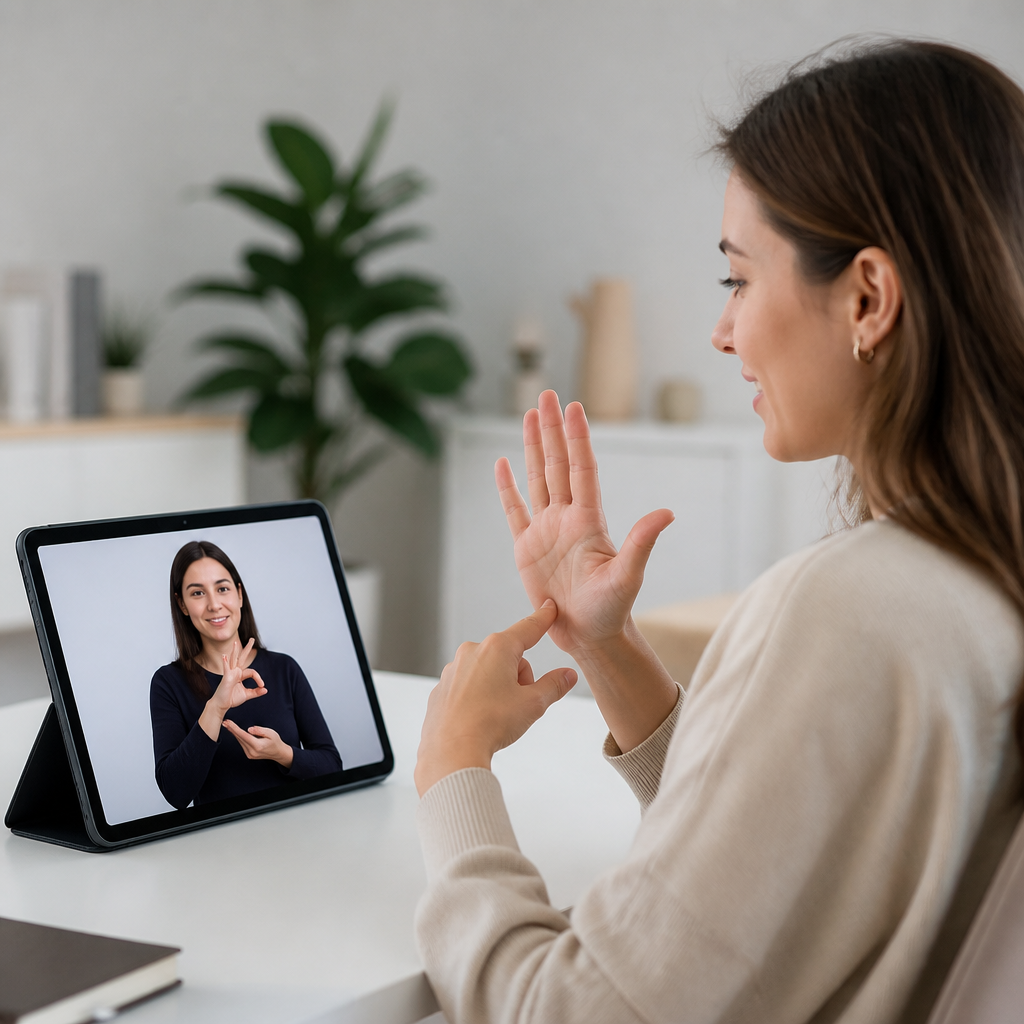
Accessibility and interface design also matter. Because sign language learners rely heavily on visual input, cluttered screens, tiny video windows, and distracting animations can slow progress. The best platforms use clean layouts, replay controls, adjustable speed, offline downloads, and category-based navigation. Some now include camera-based feedback, but this feature is only useful when it provides precise correction. Generic motion scoring can reward inaccurate signing if the system is not trained carefully. In practice, human-reviewed examples and detailed instructor feedback remain more reliable than automated scoring alone.
Top apps for learning sign language in 2026
The current leaders fall into three broad groups: full-course platforms, vocabulary builders, and live-practice communities. Full-course apps are best for beginners who want structure. Vocabulary builders work well for daily review and topic expansion. Live-practice platforms help bridge the gap between memorizing signs and participating in conversation. Most serious learners benefit from combining at least two of these types.
| App | Best for | Key strengths | Main limitation |
|---|---|---|---|
| Lingvano | ASL beginners | Structured lessons, native signers, quizzes, strong onboarding | Limited depth for advanced conversation |
| SignSchool | Flexible ASL study | Large free library, topic paths, fingerspelling practice | Less guided progression than course-first apps |
| The ASL App | Everyday practical signs | Natural video examples, family and school vocabulary | Feature set feels lighter than newer platforms |
| InterSign ASL | Gamified learning | Daily drills, bite-size practice, streak-friendly design | Game mechanics can outweigh grammar depth |
| Bright BSL | British Sign Language learners | BSL-specific curriculum, clear demonstrations, topic lessons | Smaller ecosystem than ASL-focused apps |
| Spreadthesign | Comparing sign languages | Multilingual dictionary, regional variety exposure | Best as a reference, not a full course |
| italki or live tutoring platforms | Conversation practice | Real-time feedback, customized lessons, accountability | Higher cost and scheduling required |
Lingvano remains one of the strongest choices for ASL beginners because it combines progressive lessons with practical sentence patterns. It does a good job of introducing visual grammar early instead of treating ASL as signed English. In workshops I have run with adult beginners, learners using Lingvano typically build confidence faster than those using dictionary-only apps because they see signs used in complete expressions. The weakness is that advanced learners eventually need richer conversational exposure elsewhere.
SignSchool is valuable because of its breadth and flexibility. It works especially well for self-directed learners who want category-based study such as food, education, work, or emotions. The fingerspelling tools are useful for beginners, and the free access lowers the barrier to entry. The tradeoff is structure. If you need a step-by-step path with clear mastery checkpoints, SignSchool may feel too open-ended unless paired with a study plan.
The ASL App still deserves a place in 2026 because it is practical, approachable, and rooted in natural signing. Parents, teachers, and support staff often like it because topic packs mirror real communication needs. InterSign ASL appeals to users who stay motivated through quick daily sessions and quizzes. For BSL learners, Bright BSL is a more relevant starting point than any ASL app, which highlights a basic rule: choose your target language first, then the platform. Spreadthesign is best treated as a multilingual sign reference for comparison and lookup, not as your only learning system.
Choosing the right app for your goals, language, and learning style
The best way to choose among top apps for learning sign language in 2026 is to start with purpose. If you are learning for family communication, prioritize high-frequency daily vocabulary, child-centered signs, and short practice sessions. If you are learning for professional settings, look for curriculum depth, specialized terminology, and chances to practice comprehension at natural speed. If your goal is fluency, plan on using an app plus live interaction, because no mobile platform can fully replace conversation with skilled signers.
Language variant is the next filter. This is where many beginners waste time. ASL and BSL are not interchangeable, and the same is true for Auslan and other national sign languages. Even within one language, regional variation exists. A good app acknowledges those differences rather than pretending one sign is universal. Dictionary and community-based apps can help expose learners to variation, but a core curriculum should stay internally consistent so beginners are not overwhelmed.
Learning style matters too. Some people retain signs through structured units and quizzes. Others need immersion-style video practice and repeated receptive drills. Gamified apps improve consistency for many users, but they are not automatically better. I have seen learners maintain a sixty-day streak while still struggling to understand natural signing because the app focused more on matching than comprehension. Review the lesson design, not just the app store rating. A strong sign language app should ask you to watch, recognize, recall, and produce signs, not merely tap the right answer.
How to use sign language apps effectively and avoid common mistakes
Using the best app poorly will produce weak results, while using a good app with a disciplined method can generate steady progress. The most effective routine is short, daily, and mixed. Aim for fifteen to twenty minutes of guided lessons, five minutes of review, and separate exposure to natural signing through videos or live practice. This pattern works because sign language memory depends on repeated visual recognition and physical recall. Long cram sessions feel productive, but retention drops sharply without spaced repetition.
One common mistake is learning signs without grammar. Another is relying on captions so heavily that you never train your eyes to process the sign itself. Turn captions off during some review sessions and test whether you can identify signs from movement, handshape, location, and facial expression alone. Record yourself signing simple phrases and compare your production to native models. Pay attention to palm orientation, movement path, and nonmanual markers. These details change meaning. In ASL, for example, facial grammar can signal a yes or no question, a wh-question, or emphasis.
A third mistake is stopping at vocabulary lists. Real communication requires turn-taking, receptive speed, clarification strategies, and cultural awareness. Join Deaf-led classes, tutoring sessions, or community events as soon as possible. Apps are excellent for repetition and convenience, but they are support tools, not complete environments. Learners who combine mobile practice with authentic interaction progress further and avoid fossilizing awkward habits. Treat apps as your daily training ground, then test what you learn in real conversations.
Why this hub matters for long-term sign language learning
A hub article on learning sign language should do more than rank apps. It should help you build a complete pathway. The top apps for learning sign language in 2026 are useful because they reduce friction, make practice portable, and improve consistency. They do not remove the need for accuracy, community connection, or sustained effort. If you remember one principle, make it this: choose the right sign language first, then choose the app that matches your goal, then pair that app with real visual communication practice.
For most beginners, a smart starting stack is one structured course app, one dictionary or review tool, and one live practice option. That combination covers instruction, reinforcement, and feedback. It also mirrors how language acquisition actually works: input, repetition, correction, and use. As you continue exploring the broader Sign Language & Communication topic, move from apps into related guides on Deaf culture, beginner mistakes, fingerspelling, conversation practice, and family communication strategies. The more connected your learning resources are, the more likely you are to keep going.
Start by identifying the sign language you need, download one primary app, schedule daily practice for the next two weeks, and add live interaction as soon as possible. That simple system turns curiosity into communication, and communication is the real goal.
Frequently Asked Questions
1. What should I look for in the best sign language learning app in 2026?
The best sign language learning app in 2026 should do more than teach isolated signs. A strong app helps you build real communication skills by combining structured lessons, clear video demonstrations, review tools, and opportunities to practice receptive and expressive signing. In practical terms, that means looking for features such as step-by-step courses, slow-motion playback, quizzes, spaced repetition, and video feedback so you can compare your signing to native or fluent models.
It is also important to choose an app that includes cultural context, not just vocabulary lists. Sign language is a living language tied closely to Deaf communities, identity, and social norms. The most useful apps explain facial expressions, body language, conversational flow, and etiquette, because these elements are essential to meaning. An app may look polished, but if it teaches signs without context or relies heavily on word-for-word translations, it may not prepare you for real conversations.
Another major factor is who creates the content. Apps built with input from Deaf educators, interpreters, and native signers are generally more trustworthy than apps that simply aggregate gesture videos. You should also consider whether the app matches your goals. Some learners want beginner-friendly daily practice, while others want travel phrases, family communication, classroom support, or professional vocabulary. The right app is the one that supports consistent practice, teaches accurate signing, and helps you retain what you learn over time.
2. Can you really learn sign language effectively using only an app?
You can make meaningful progress with an app, especially at the beginner and lower-intermediate levels, but most people learn best when apps are part of a broader practice routine. In 2026, sign language apps are far more advanced than they were just a few years ago. Many now offer guided lessons, AI-supported motion feedback, interactive drills, and libraries of real conversations. These features can help you build vocabulary, improve recognition, and develop stronger muscle memory through short, regular study sessions.
That said, sign language is visual, expressive, and highly interactive. An app can teach you signs and sentence patterns, but real fluency depends on live communication. You need exposure to different signing styles, speeds, facial expressions, and natural dialogue. Without that, it is easy to become comfortable with app exercises while still struggling in authentic conversations. This is why the strongest learning approach usually combines app-based study with live classes, conversation groups, Deaf community content, or one-on-one practice with fluent signers.
If you only have access to an app, you can still learn effectively by using it intentionally. Practice daily, record yourself often, review old material instead of only chasing new lessons, and watch signers in full conversations whenever possible. Focus on comprehension as much as production. In other words, apps are excellent tools, but they work best when treated as part of a complete language-learning system rather than as a total replacement for human interaction.
3. Are free sign language apps good enough, or is a paid app worth it?
Free sign language apps can be a very good starting point, especially if you are exploring whether you want to commit to learning. Many free options offer beginner lessons, fingerspelling practice, common phrases, and vocabulary review. For casual learners, parents, friends, or people who want a basic introduction, a quality free app may provide enough value to build a solid foundation.
However, paid apps are often worth it when you want a more complete and efficient learning experience. Premium plans typically unlock structured course paths, progress tracking, video assessments, larger phrase libraries, conversation practice, offline access, and fewer distractions from ads or upsells. In sign language learning, those extras matter because consistency, repetition, and feedback are essential. A paid app may help you advance faster simply because it keeps your learning organized and gives you better tools for correction and review.
The smartest approach is to evaluate value, not just price. A free app with accurate instruction and strong review tools can be better than an expensive app with weak pedagogy. Before subscribing, look at the lesson depth, instructor credibility, cultural content, and whether the app supports long-term retention. If an app helps you practice regularly, understand context, and communicate more confidently, then a paid plan can absolutely be worth the investment.
4. Which is more important in a sign language app: vocabulary size or practice features?
Practice features are usually more important than raw vocabulary size. A huge sign library may sound impressive, but memorizing hundreds or even thousands of signs does not automatically translate into communication skills. What matters most is whether the app helps you recognize signs in context, produce them accurately, and remember them weeks or months later. In other words, active learning beats passive browsing.
The most effective sign language apps in 2026 tend to focus on practical learning design. Features such as spaced repetition, short review cycles, category-based drills, receptive practice, signing prompts, and video comparison are far more useful than a giant dictionary you rarely revisit. If an app teaches 300 high-frequency signs really well and helps you use them in conversations, it is often more valuable than an app with 5,000 signs and very little guided practice.
That said, vocabulary still matters once you have a solid base. Ideally, the best apps balance both. They start with essential signs and sentence patterns, then gradually expand your vocabulary through themed modules such as family, school, work, health, travel, and everyday conversation. So if you are comparing top apps for learning sign language in 2026, prioritize apps that make vocabulary usable, not just available.
5. How can I choose the right sign language app for my personal goals?
Start by identifying exactly why you want to learn. Someone learning sign language to communicate with a Deaf child at home needs a different app experience than a college student, healthcare worker, teacher, traveler, or aspiring interpreter. Your goal determines what features matter most. If you need everyday conversation, look for phrase-based lessons and family or community vocabulary. If you want academic progress, choose an app with structured levels, assessments, and grammar support. If retention is your challenge, prioritize strong review systems and daily practice reminders.
You should also think about your preferred learning style. Some people stay motivated with bite-sized lessons and streaks, while others want in-depth instruction and longer tutorials. If you learn visually through repetition, an app with excellent video playback and self-recording tools may be ideal. If you are busy, look for lessons that can be completed in five to ten minutes without losing continuity. The right app is one you will actually return to consistently.
Finally, test the app for accuracy, usability, and relevance before committing. Check whether Deaf creators or qualified instructors are involved, whether the interface makes review easy, and whether the lessons feel connected rather than random. Read recent reviews, try a free trial if available, and compare more than one option. The top apps for learning sign language in 2026 are not just popular; they are the ones that align with your goals, respect the language and culture, and help you turn study time into real-world communication ability.