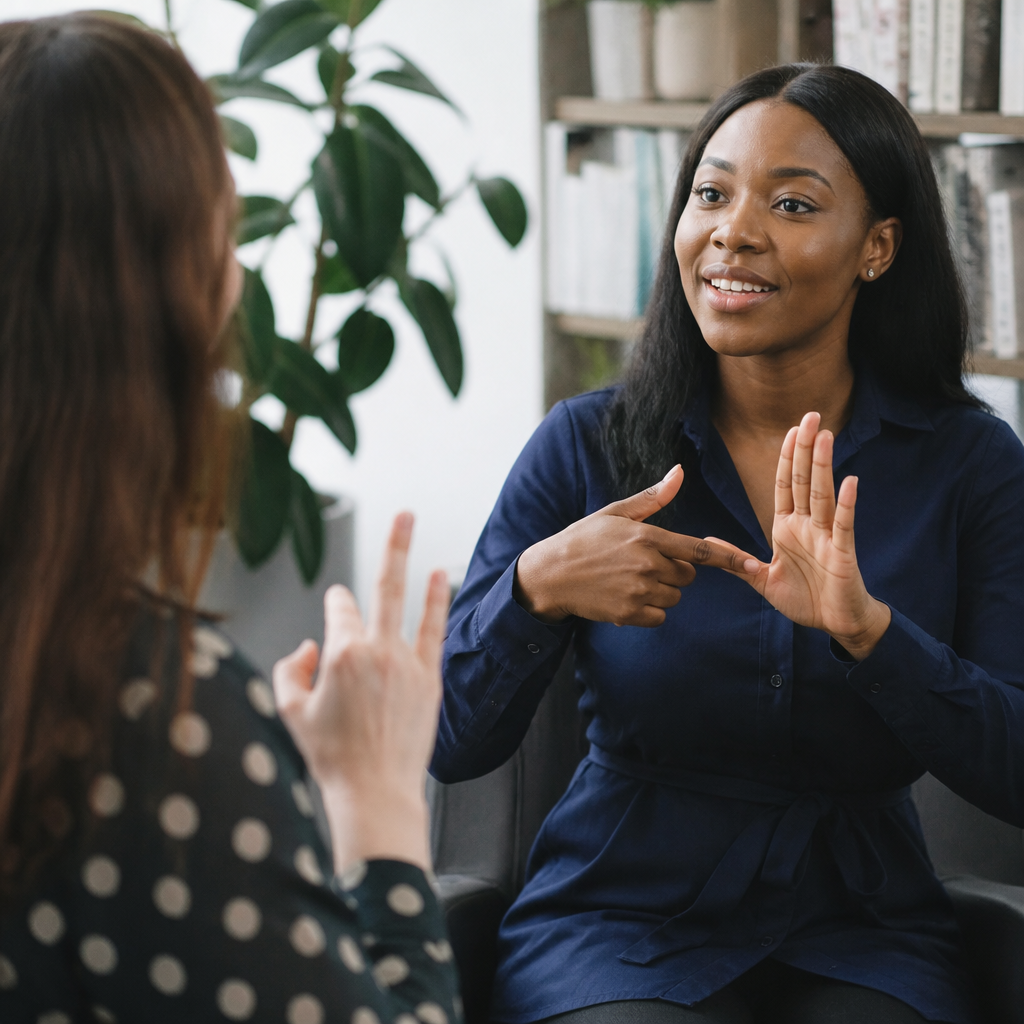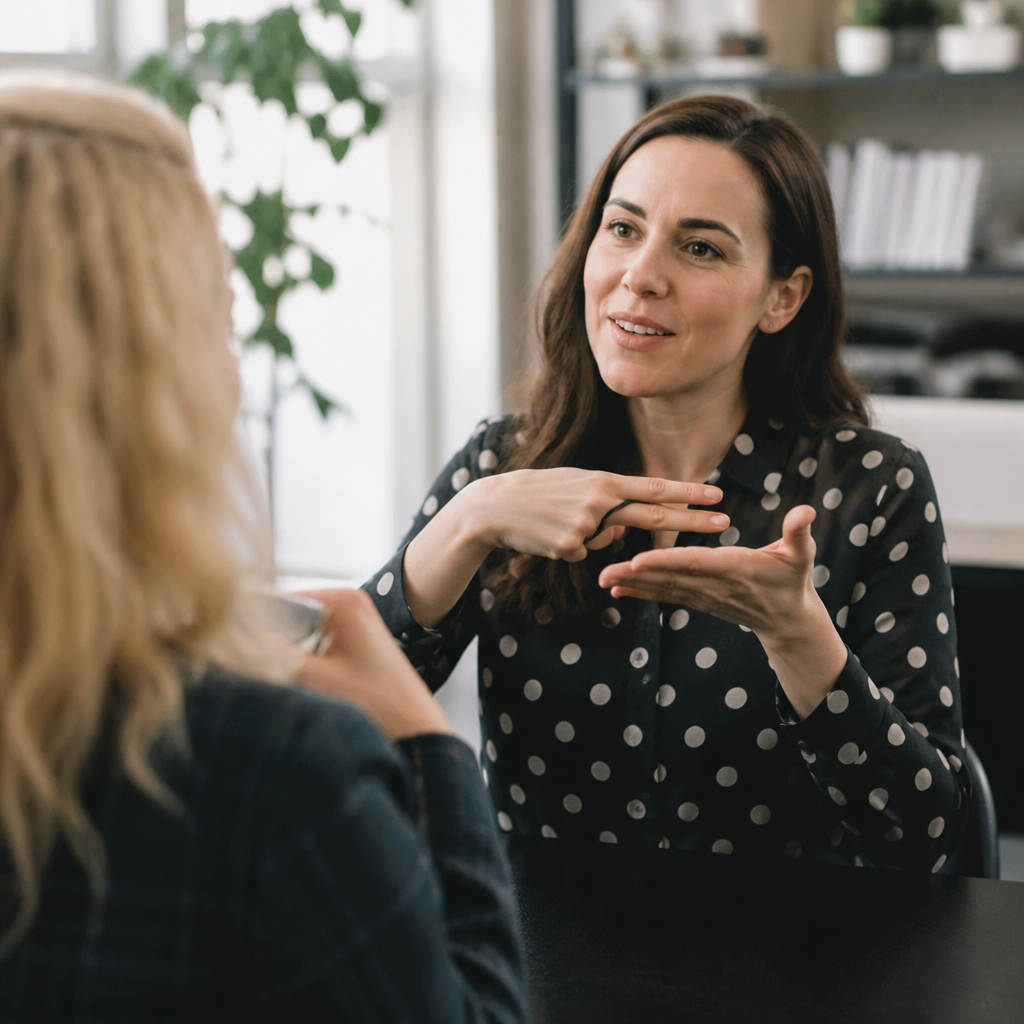

Many people assume that every deaf person uses American Sign Language fluently, but that belief is one of the most persistent misconceptions about sign language. In practice, deaf communication is shaped by age of hearing loss, family language, education, access to interpreters, geography, disability, and personal choice. American Sign Language, usually shortened to ASL, is a complete natural language with its own grammar, syntax, and cultural history, yet it is not universal, and it is not automatically acquired by every deaf child. Asking whether all deaf people are fluent in ASL is similar to asking whether all hearing people are fluent in English: the answer depends on where they grew up, what language was used at home, and what opportunities they had to learn.
This matters because assumptions about deaf people affect classrooms, workplaces, healthcare settings, public services, and everyday conversations. I have worked with deaf students, interpreters, captioning providers, and families, and the same misunderstanding appears repeatedly: people treat deafness as if it produces one communication style. It does not. Some deaf people sign natively from birth. Some learn ASL in school or adulthood. Some rely primarily on spoken English, lipreading, cued speech, signed exact English, home signs, tactile signing, texting, captioning, or a combination that changes by context. Misunderstanding that diversity can lead to exclusion, inaccurate accommodations, and poor policy decisions.
To answer the question directly, no, all deaf people are not fluent in ASL. In the United States, roughly ninety percent of deaf children are born to hearing parents, a statistic widely cited in deaf education and language access research. Many of those parents do not know ASL when their child is born. Some learn quickly and create a rich signing environment. Others are advised to prioritize speech only, especially if the child uses hearing aids or cochlear implants. Early language exposure is critical. Children who do not receive accessible language input, signed or spoken, risk language deprivation, a serious developmental issue that affects literacy, learning, and social growth.
A useful definition helps here. Deaf with a capital D often refers to cultural identity within the Deaf community, while deaf with a lowercase d can refer more broadly to audiological hearing loss. The terms overlap, but they are not identical. A person can be medically deaf and not use ASL. Another can be hard of hearing and deeply involved in the Deaf community, signing fluently. This article serves as a hub for misconceptions about sign language by explaining who uses ASL, why many deaf people do not, what alternatives exist, and how to communicate respectfully without relying on stereotypes.
Why not every deaf person learns ASL
The biggest reason not every deaf person is fluent in ASL is access. Language is learned through exposure, not through diagnosis. If a deaf child grows up in a hearing household where no one signs, ASL will not appear automatically. Parents may receive mixed guidance from doctors, audiologists, early intervention programs, and schools. In some cases, families are told that signing will interfere with speech development, even though research over many years has shown that accessible early language supports cognitive and social development and does not inherently prevent spoken language growth. The practical result is that many deaf children experience delayed or limited access to ASL during the years when language learning is easiest.
Education policy also matters. Historically, oralist approaches in American deaf education emphasized speech and lipreading while discouraging signing. Although that landscape has changed, the effects remain. Adults who were raised in oral programs may have limited ASL, strong spoken English, or mixed skills depending on later exposure. Others attended schools for the deaf and became native or near-native signers because they lived among fluent peers and teachers. I have seen both trajectories produce capable adults, but the communication strategies they use day to day can be very different.
Geography and community density influence fluency too. In areas with strong Deaf institutions, social clubs, schools for the deaf, interpreter training programs, and community events, ASL is easier to learn and maintain. In rural regions, deaf people may have little local access to fluent signers. They may depend more on family-created signs, messaging apps, captioned media, or speech. Immigration adds another layer. A deaf person who grew up using Mexican Sign Language, Chinese Sign Language, or another signed language is not automatically fluent in ASL after moving to the United States, just as a hearing newcomer may not speak English fluently on arrival.
ASL is not the only way deaf people communicate
A common misconception about sign language is that there is a single default method for all deaf people. Real communication is far more varied. Some deaf adults speak and use residual hearing supported by hearing aids or cochlear implants. Some use simultaneous methods, such as speaking while signing in a manually coded system. Some depend heavily on real-time captioning, especially in lectures, meetings, and medical appointments. Others use tactile sign language if they are deafblind. Many switch methods depending on who is present, how noisy the environment is, and whether communication needs to be fast, private, technical, or emotionally nuanced.
Lipreading is often overestimated. Even skilled speechreaders usually catch only part of what is said because many sounds look identical on the lips. Lighting, facial hair, accents, masks, and speaking speed all reduce accuracy. That is why asking a deaf person to “just lipread” is rarely an effective accommodation. Text can help, but written English may not be a first language for a native ASL signer because ASL has different grammar. Interpreting, captioning, writing notes, visual alerts, and clear turn-taking often need to work together rather than as isolated fixes.
The range of communication methods is easier to understand when compared directly.
| Method | How it works | Strengths | Limitations |
|---|---|---|---|
| ASL | Natural visual language with its own grammar | Rich, efficient, culturally central for many users | Requires shared fluency or an interpreter |
| Spoken language with devices | Uses residual hearing, hearing aids, or cochlear implants | Works well for some people in many hearing settings | Outcomes vary widely; background noise can be difficult |
| Lipreading | Interprets mouth movements and facial cues | Helpful as a supplement | Incomplete and tiring; many sounds look alike |
| Captioning | Displays spoken content as text in real time or recorded form | Useful in meetings, classes, and media | Quality depends on accuracy, lag, and vocabulary support |
| Home signs or family systems | Informal signs created within a household | Can support basic daily communication | Limited vocabulary and not broadly shared |
Common misconceptions about sign language
One myth is that sign language is universal. It is not. ASL differs from British Sign Language, Australian Sign Language, French Sign Language, and many others. ASL historically has roots connected to French Sign Language and the American Deaf community, which is why it is not simply a signed form of English. Another myth is that signing is just pantomime. Fluent signers know that ASL uses phonological parameters such as handshape, movement, palm orientation, location, and nonmanual markers. Facial expression in ASL is not decorative; it carries grammatical information, including yes or no questions, topic marking, and intensity.
Another misconception is that children can be made to choose between sign and speech. In reality, many deaf children benefit from bilingual or multimodal environments. Accessible language first is the essential principle. Some families worry that ASL will reduce motivation to speak, yet what I have observed in schools and family coaching is the opposite: children who can communicate clearly are less frustrated, more socially engaged, and better positioned to learn additional languages, including written and spoken English. The danger is not exposure to sign. The danger is delayed access to any fully accessible language.
A third misconception is that deaf people who do not sign are less authentically deaf, while those who speak are somehow less connected to deaf identity. That framing is inaccurate and harmful. Identity is shaped by culture, language, history, education, and personal experience. A late-deafened adult may never become highly fluent in ASL yet still need strong communication access. A native signer may prefer interpreters in one setting and texting in another. Respect starts by asking what works best for the individual rather than imposing a script.
How schools, families, and systems shape language outcomes
Language outcomes are not random; they reflect systems. Early hearing detection has improved in the United States, but identification alone does not guarantee language access. After screening, families need balanced information about communication options, including the benefits of early sign exposure. The Joint Committee on Infant Hearing and many pediatric language specialists emphasize timely intervention, family support, and ongoing monitoring of language milestones. When services focus narrowly on audibility without tracking full language development, children can appear medically managed while still falling behind linguistically.
Schools create long-term effects as well. In strong bilingual programs, deaf students gain direct access to instruction through ASL while developing literacy in English. In mainstream settings, outcomes vary based on interpreter quality, teacher preparation, classroom acoustics, and peer inclusion. An interpreter is not a magic solution if the student has limited sign proficiency, if technical vocabulary is unfamiliar, or if side conversations are missed. I have watched students exhaust themselves trying to piece together lectures from partial listening, partial lipreading, and delayed captions. Access must be designed, not assumed.
Healthcare and workplace systems often repeat the same mistakes. Providers may bring written forms when the patient needs an interpreter, or schedule video remote interpreting without checking bandwidth, camera angle, or visual privacy. Employers may assume captions alone solve everything, ignoring group discussions, hallway updates, and emergency communication. Good access planning begins with a direct question: what communication method is most effective for you in this setting? The answer may differ for consent discussions, training sessions, social events, or performance reviews.
How to communicate respectfully and effectively
If you are meeting a deaf person and do not know whether they use ASL, the best approach is simple and direct. Get the person’s attention visually, face them, and ask for their preferred communication method. Do not assume speech, signing, or lipreading. If an interpreter is present, speak to the deaf person, not to the interpreter. Keep your mouth visible, reduce background noise when possible, and support important information with text or visuals. In group settings, establish turn-taking so one person speaks at a time. These steps are basic, but they prevent many common breakdowns.
For organizations, respectful communication means building options instead of offering one generic accommodation. That can include qualified ASL interpreters, CART captioning, accessible video platforms, visual alarms, agendas shared in advance, and staff training on deaf awareness. Qualified matters. Friends, relatives, or untrained bilingual employees should not be used in place of professional interpreters for legal, educational, or medical discussions. Accuracy, confidentiality, and ethical practice are essential. Standards from the Americans with Disabilities Act and Section 504 support effective communication, but compliance is only the starting point. The real goal is meaningful participation.
The clearest takeaway is that deaf people are not a communication monolith, and fluency in ASL cannot be presumed from hearing status alone. Some deaf people are native ASL users, some learn later, some use other signed languages, and some rely mainly on spoken language, captions, or mixed methods. Understanding that diversity helps families make better early language decisions, helps schools and employers provide more accurate access, and helps the public avoid stereotypes that shut people out. The most important habit is to ask, not guess.
As a hub for misconceptions about sign language, this article points to the core truth behind many related questions: communication access works best when it is individualized, informed, and language-centered. If you support a deaf child, hire deaf employees, teach students, or serve the public, review your assumptions and your access practices. Start by learning how ASL differs from other systems, why early language exposure matters, and how to offer options that match real needs. Better communication begins with one practical step: ask each person what helps them understand and be understood.
Frequently Asked Questions
Are all deaf people fluent in ASL?
No. One of the most common myths about deafness is that every deaf person knows and uses American Sign Language fluently, but real-life communication is much more varied. Some deaf people grow up signing from birth in Deaf families and become native ASL users. Others are raised in hearing families where spoken English, lip reading, gestures, writing, cued speech, or other communication systems are emphasized instead. Many deaf people are introduced to ASL later in childhood or adulthood, which can affect fluency in the same way late exposure affects learning any language.
Fluency also depends on access. A person may want to learn ASL but have limited opportunities because of where they live, the schools they attended, whether their family supported signing, or whether qualified teachers and interpreters were available. In addition, not every deaf person lives in the United States or uses American Sign Language at all. Some use other signed languages, some rely mostly on spoken language with hearing technology, and some move between multiple communication methods depending on context. So while ASL is deeply important in Deaf culture and widely used by many people, it should never be assumed that all deaf people are fluent in it.
If a deaf person does not use ASL, how might they communicate?
There is no single communication method that fits every deaf person. Some communicate primarily through spoken language, especially if they have residual hearing, use hearing aids or cochlear implants, or received speech-focused education. Others may rely on lip reading, although lip reading is often much less complete and reliable than hearing people assume. Many use text-based communication such as messaging, email, live captions, speech-to-text apps, or writing notes in person. Some prefer gestures, home signs developed within a family, or combinations of signing and spoken language.
It is also common for communication styles to change depending on the situation. A deaf person might use ASL with friends, speak with family, text at work, and use an interpreter in medical or legal settings. Others may use Signed Exact English, another national sign language, tactile signing, or communication supports tailored to additional disabilities. The most respectful approach is simple: ask the person what works best for them rather than making assumptions. Deaf communication is highly individual, and flexibility is often part of everyday life.
Why are some deaf people not exposed to ASL early in life?
Early exposure to ASL is shaped by family, education, and social attitudes. Most deaf children are born to hearing parents, and many of those parents have little or no prior knowledge of sign language. After diagnosis, families are often guided by medical professionals, school systems, and intervention programs that may prioritize speech development, amplification devices, or mainstream integration over sign language access. In some cases, parents are incorrectly told that learning ASL will interfere with spoken language development, even though language access itself is the critical issue.
Educational policy has also played a major role. Some schools historically discouraged or even prohibited signing, while others offered limited qualified instruction in ASL. Geography matters too. A family living far from Deaf communities, sign language classes, or deaf schools may struggle to find consistent access to fluent signers. Economic barriers can make classes, transportation, and specialized services harder to obtain. Because language learning depends heavily on early, rich exposure, delayed access can have long-term effects on fluency. This is why many advocates emphasize that deaf children should have full access to language as early as possible, whether through ASL, spoken language supports, or ideally both when appropriate.
Is ASL a universal language used by deaf people everywhere?
No. ASL is a complete natural language, but it is not universal. Like spoken languages, signed languages develop within specific communities and countries. American Sign Language is used primarily in the United States and parts of Canada, but many other signed languages exist, including British Sign Language, French Sign Language, Mexican Sign Language, and hundreds more. These are not simply accented versions of one another. They have their own vocabularies, grammar, history, and cultural traditions.
This means that a deaf person from another country may not understand ASL at all, just as an English speaker may not automatically understand Japanese or Arabic. Even within the United States, people may use regional signs, different educational signing systems, or communication styles influenced by local Deaf communities. Assuming all deaf people share one universal signed language oversimplifies both language and culture. Understanding that signed languages are diverse helps replace stereotypes with a more accurate view of the Deaf world.
What is the respectful way to communicate if you do not know whether a deaf person uses ASL?
The best first step is to ask politely what communication method they prefer. A simple question such as “Do you prefer ASL, speech, writing, or something else?” shows respect and avoids assumptions. If the person uses ASL and the conversation is important, complex, or lengthy, a qualified interpreter may be needed. In everyday situations, communication might happen through typing on a phone, writing notes, using captions, speaking clearly at a natural pace, or using visual cues. The key is to focus on clarity and mutual understanding rather than guessing what should work.
It also helps to remember what not to do. Do not assume that all deaf people can lip read fluently, and do not exaggerate your mouth movements or shout, since that usually makes communication harder rather than easier. Face the person, keep your hands away from your mouth, and make sure the lighting is good. If you are using an interpreter, speak directly to the deaf person, not to the interpreter. Most importantly, treat communication as a shared process. Deaf people are experts in their own access needs, and asking respectfully is far more effective than relying on stereotypes about ASL fluency.