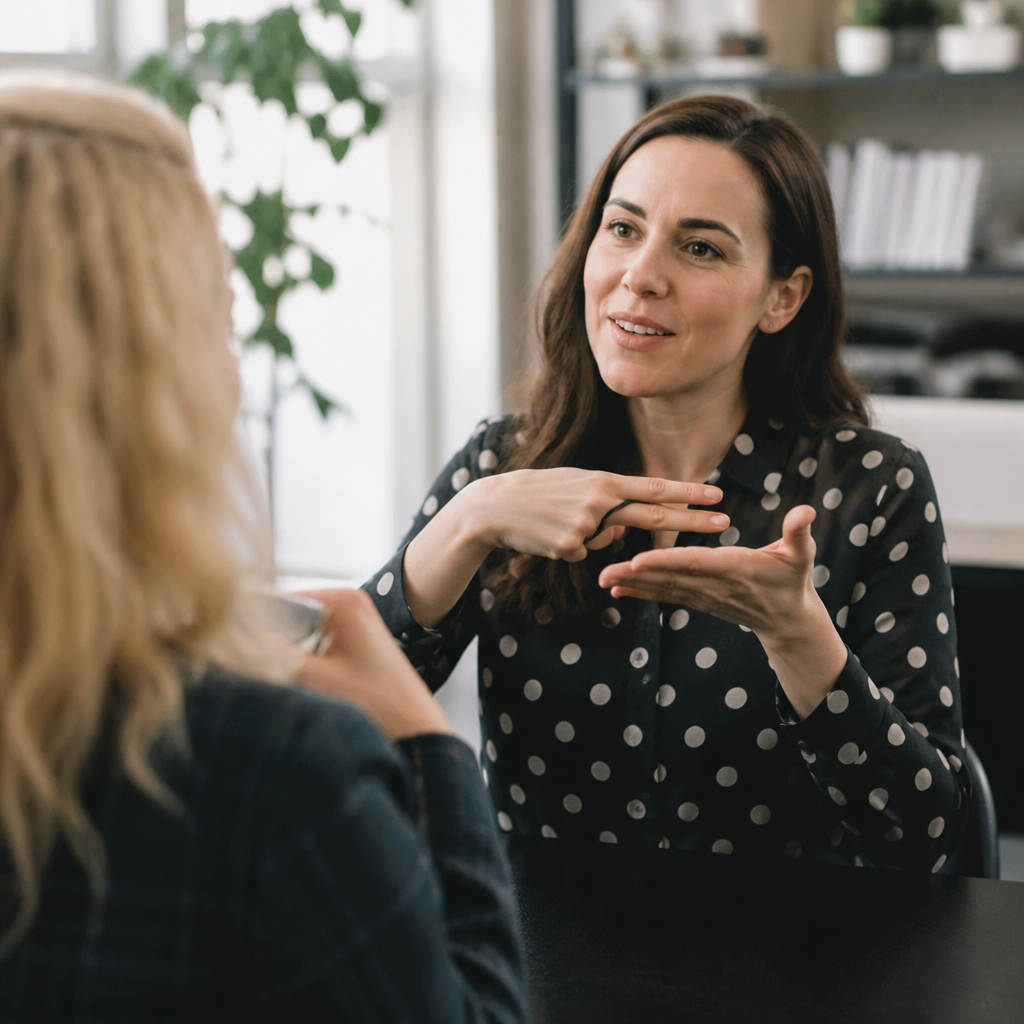
Communication barriers between Deaf and hearing people are not caused by hearing loss alone; they arise when language access, shared expectations, and communication methods do not match the situation. In practice, I have seen productive conversations fail in quiet classrooms, busy clinics, family kitchens, and video calls for the same reason: one person assumes speech is the default, while the other needs visual, tactile, or text-based access. Understanding those mismatches is the foundation of better communication. This hub article explains the main communication methods used between Deaf and hearing people, where each method works best, and why choosing the right approach matters in education, healthcare, work, and everyday life.
Three terms need clear definition at the outset. “Deaf” often refers to people with little or no functional hearing; it can describe an audiological condition and, for many, a cultural and linguistic identity. “Hearing” refers to people who rely primarily on spoken language and auditory cues. “Communication methods” are the practical systems people use to exchange information, including sign language, speech, lipreading, writing, captioning, interpreting, assistive listening technology, and visual alerting tools. No single method fits every Deaf person. Some use a natural sign language such as American Sign Language, British Sign Language, or another national sign language. Others prefer spoken language supported by hearing aids, cochlear implants, captioning, or writing. Many combine methods depending on context.
This topic matters because communication access affects safety, autonomy, education, employment, and relationships. The World Health Organization estimates that more than 430 million people worldwide have disabling hearing loss, and that number is expected to rise. Inaccessible communication can lead to medical errors, lower academic outcomes, missed job opportunities, and social isolation. It also creates avoidable friction: hearing people may think they are being clear when they are not, while Deaf people are left to carry the burden of repair. A better approach starts by treating communication as a shared responsibility. When hearing and Deaf people understand the main communication methods, they can choose effective strategies instead of relying on guesswork.
Why communication barriers happen
The most common barrier is not silence; it is assumption. Hearing people often assume that speaking louder, repeating the same sentence, or exaggerating mouth movements will solve the problem. Usually, it does not. Loudness can distort speech sounds, over-enunciation can make lip patterns harder to read, and repetition without rephrasing leaves the same missing information in place. Another frequent barrier is speed. Spoken conversations move quickly, with interruptions, side comments, and topic shifts. If one person depends on visual access through signing, lipreading, or captions, poor turn-taking can make the conversation collapse.
Environment matters just as much as language choice. Dim lighting obscures facial expressions and handshapes. Backlighting turns a signer into a silhouette. Background noise makes spoken language harder to process for people using hearing aids or cochlear implants. Masks block lip patterns and reduce speech clarity. Distance matters too: a person across a room cannot easily lipread, see fingerspelling, or catch subtle gestures. In workplaces and public services, institutional barriers add another layer. A hospital may schedule no interpreter, a school may provide captions with significant lag, or an employer may treat access tools as optional rather than necessary.
Culture also shapes communication. Deaf communities often prioritize direct visual attention, explicit turn-taking, and confirmation that information was actually received. Hearing people may rely more on implied meaning or talk while looking away. Neither pattern is inherently wrong, but misunderstanding follows when participants do not recognize the difference. Effective communication begins when both sides adjust behavior, not only the Deaf person.
Sign language as a primary communication method
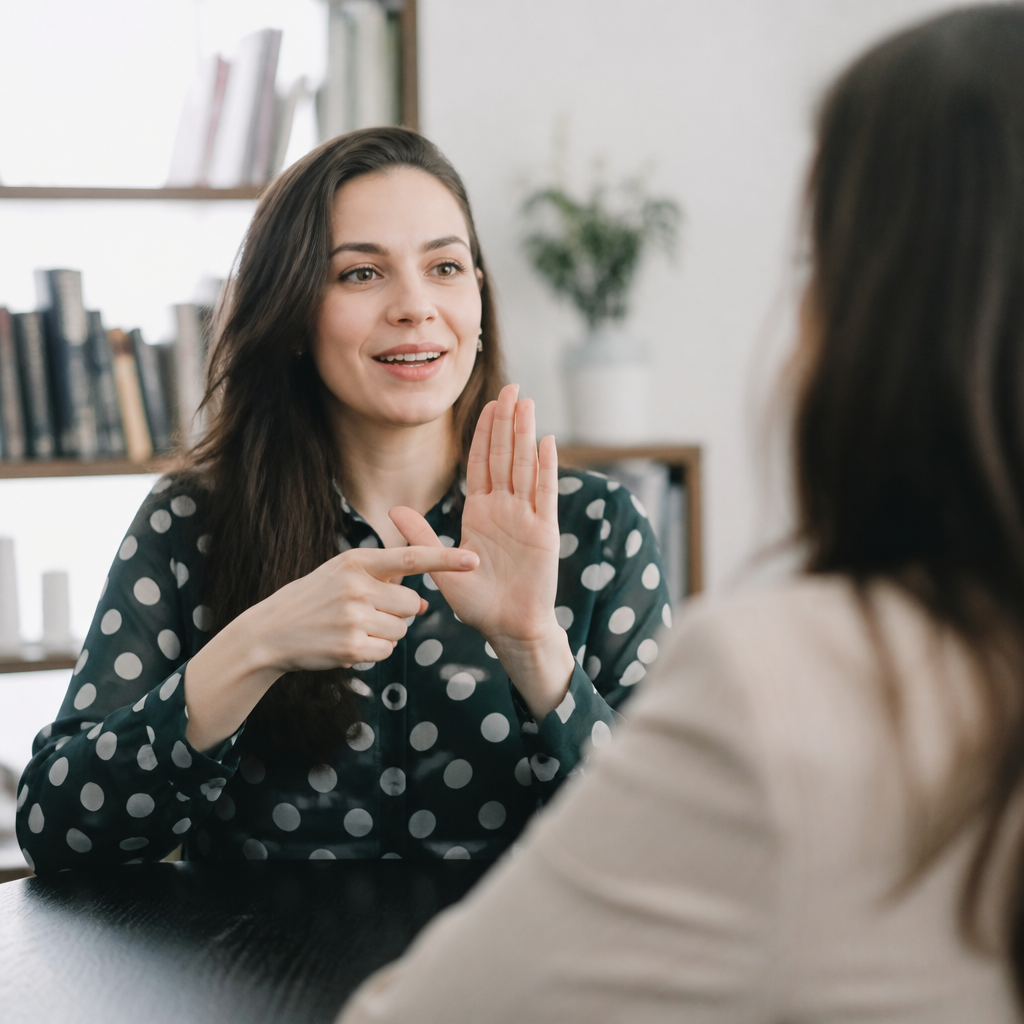
For many Deaf people, sign language is the most complete and natural communication method. Sign languages are full languages with their own grammar, syntax, and idioms; they are not manual versions of spoken languages. American Sign Language, for example, differs structurally from English, and British Sign Language is not mutually intelligible with ASL. This distinction matters because access improves dramatically when a Deaf person can communicate in their strongest language instead of being forced into a less efficient system.
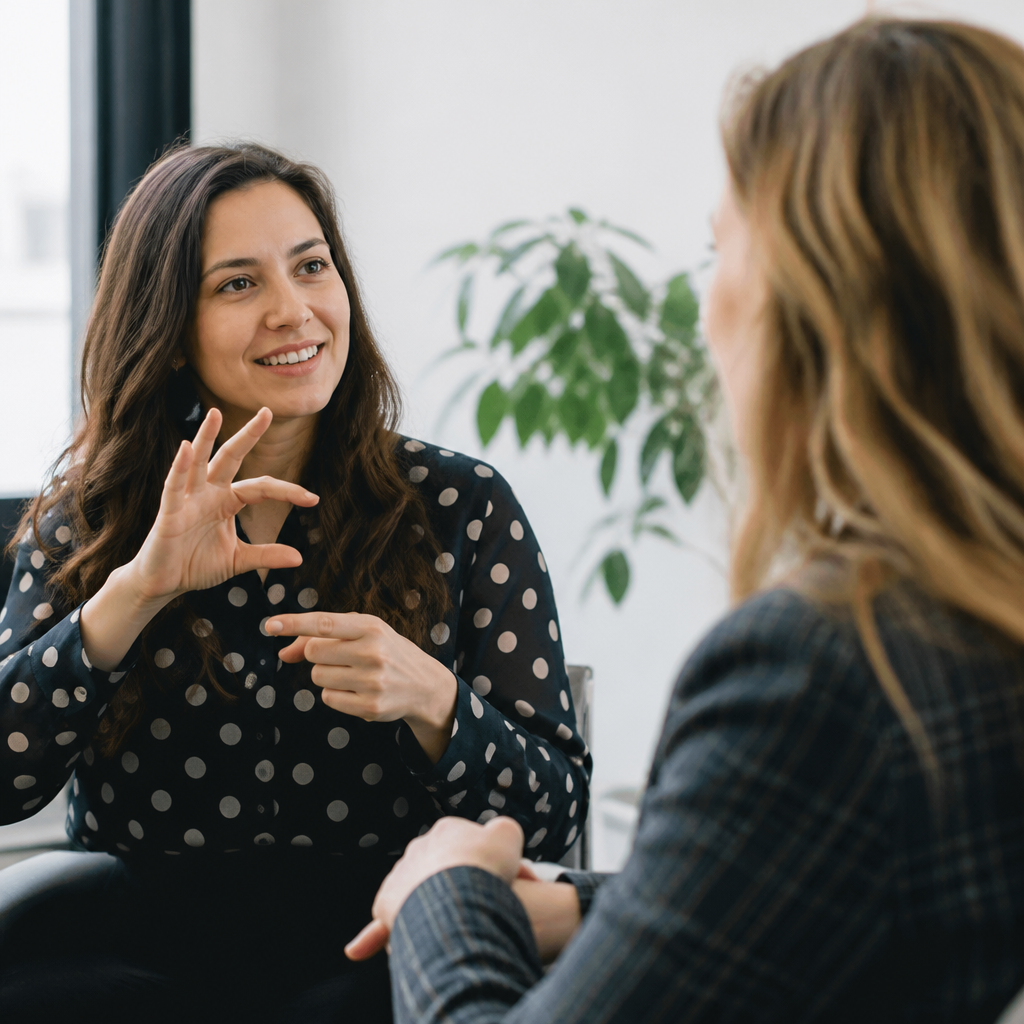
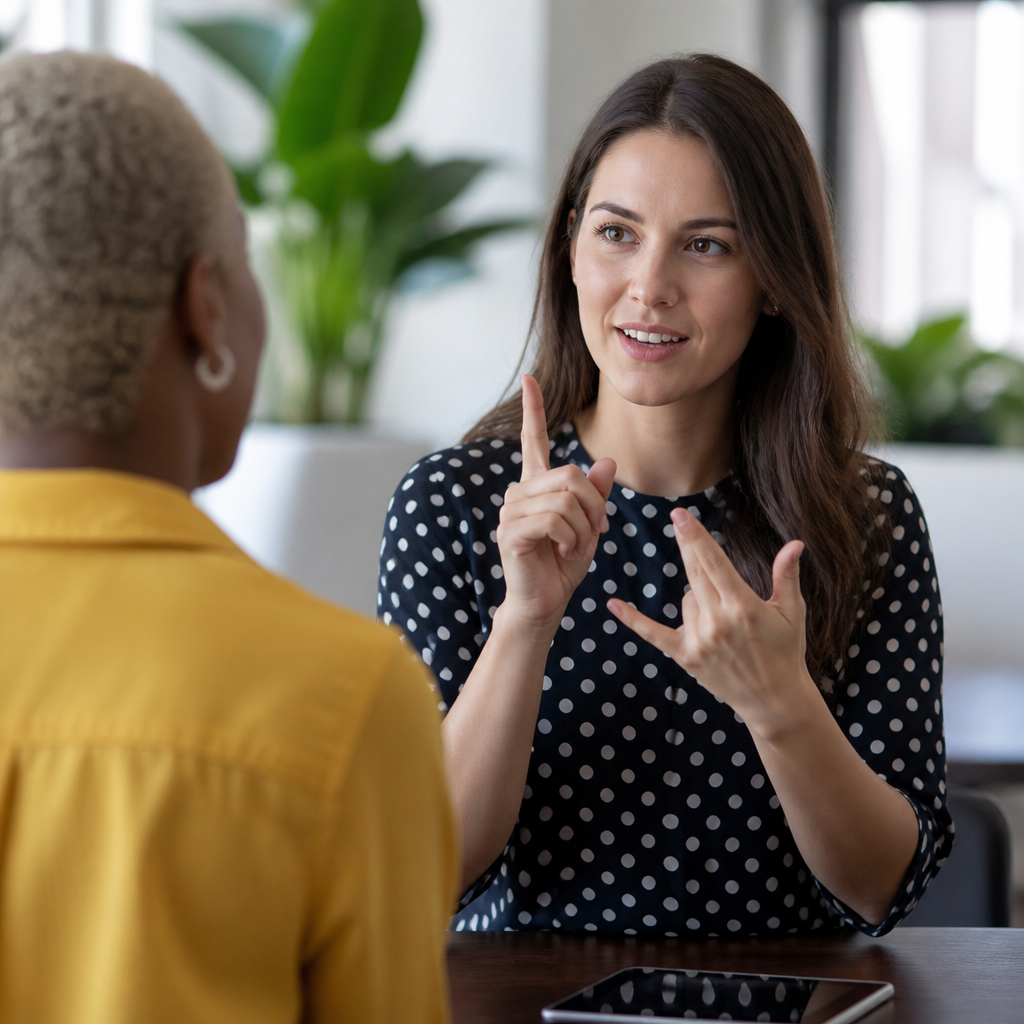
In real settings, sign language works best when hearing people meet it halfway. That may mean learning basic signs for routine interaction, hiring qualified interpreters, or providing direct service in sign language. I have seen front-desk exchanges transformed when staff know simple signs such as “wait,” “write,” “interpreter,” “appointment,” and “thank you.” Small gains in direct access reduce frustration and show respect. For longer or higher-stakes conversations, however, basic sign knowledge is not enough. Legal, medical, educational, and employment contexts require precision, and that usually means a fluent signer or a professional interpreter.
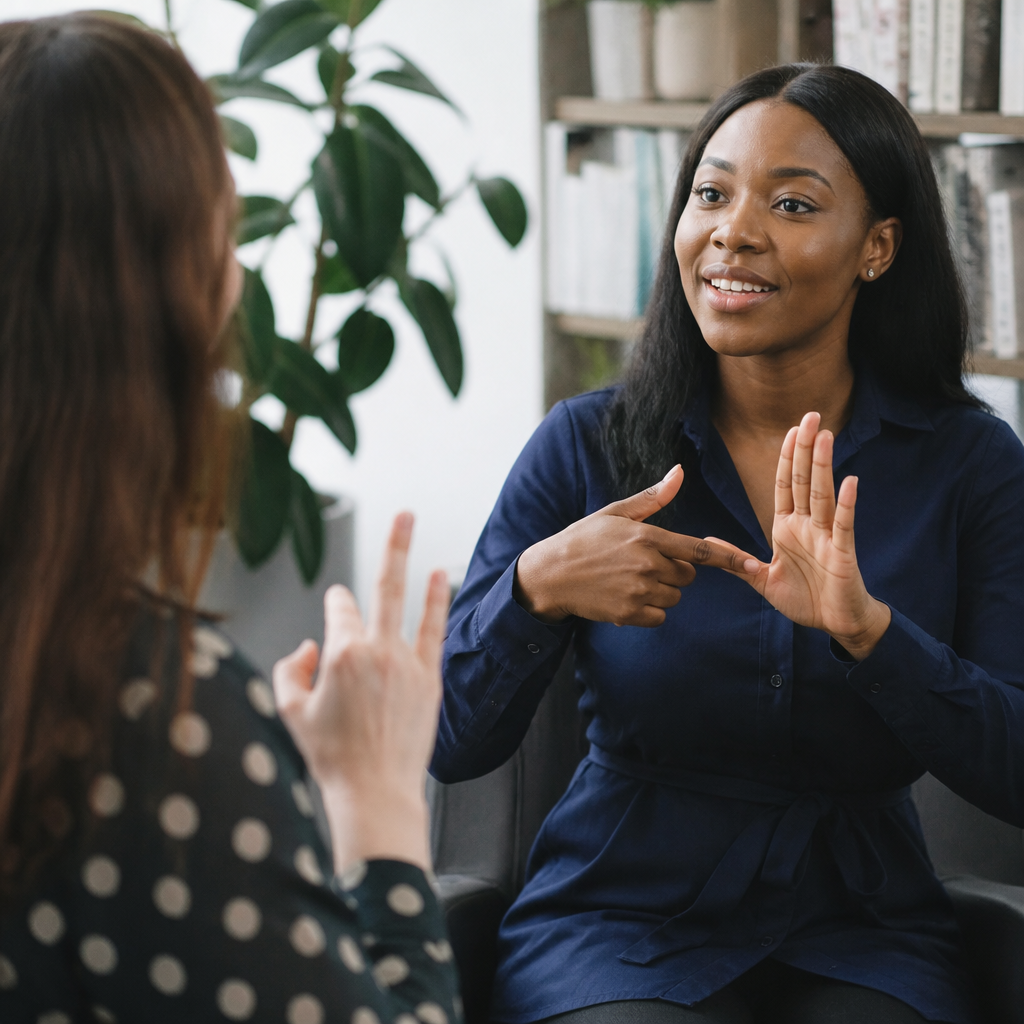
Sign language communication depends on visibility. Good lighting, a clear line of sight, and an appropriate pace are non-negotiable. Visual clutter behind the signer can reduce comprehension, as can signing while walking away or covering the mouth. Hearing people unfamiliar with sign language sometimes focus only on the hands, but meaning also comes from facial grammar, body posture, and spatial reference. When communication breaks down, the solution is often practical: slow down, reposition, confirm understanding, and remove visual obstacles.
Speech, lipreading, and spoken-language support
Some Deaf and hard of hearing people use spoken language as their main method, either exclusively or alongside signing. This may involve residual hearing, hearing aids, cochlear implants, auditory training, and speechreading, often called lipreading. Lipreading is valuable, but it is widely misunderstood. Only part of spoken English is visible on the lips; many sounds share the same mouth shape, and critical information comes from context, facial expression, and prior knowledge. Even skilled lipreaders do not catch every word. In ideal conditions, accuracy still varies significantly by speaker, lighting, distance, and topic familiarity.
Because of that limitation, hearing people should not assume lipreading is a complete solution. The best support is to face the person directly, keep hands away from the mouth, speak at a natural pace, and rephrase instead of merely repeating. Rephrasing matters because different words create different visual patterns and contextual clues. For example, if “The orthopedic clinic moved your appointment” is missed, “Your bone doctor changed the time” may be easier to catch. In customer service, healthcare, and classrooms, pairing speech with writing or captioning often prevents misunderstandings before they escalate.
Cochlear implants and hearing aids can improve access, but they do not restore typical hearing. Devices amplify or process sound; they do not eliminate noise, guarantee speech discrimination, or replace language access planning. People using devices still benefit from clear speech, acoustically treated rooms, remote microphones, captions, and visual supports. The practical rule is simple: assistive hearing technology can help a communication method succeed, but it is not itself a complete communication method.
Writing, text, and real-time captioning
Writing is often the fastest backup method when people do not share a language, and modern tools have made text-based communication far more flexible. Pen and paper still work well for brief exchanges about addresses, prices, symptoms, and instructions. Text messaging, chat, email, and speech-to-text apps support longer conversations and create a record that can be checked later. In my experience, written communication succeeds when sentences are short, concrete, and free of avoidable jargon. It fails when hearing people write fragments, use idioms heavily, or assume written English proficiency reflects intelligence rather than language background.
Captioning is one of the most effective bridges between Deaf and hearing people, especially in mixed groups. There are two main forms. Closed captions are prepared or embedded for recorded video. Real-time captioning, often delivered by a trained captioner using Communication Access Realtime Translation, converts live speech into text for meetings, classes, conferences, and events. Automatic speech recognition tools such as Google Meet captions, Microsoft Teams captions, Otter, Ava, and Live Transcribe have improved rapidly, but accuracy still drops with technical vocabulary, overlapping speakers, accents, and noise. In high-stakes settings, human captioners remain the more reliable option.
Good captioning follows standards. Captions should be synchronized, complete, and readable, identify speakers when necessary, and include meaningful non-speech audio when relevant to context. Poor captions create a false sense of access. A training video with missing terminology or a board meeting with delayed text can exclude users as surely as no captions at all.
Interpreters, transliterators, and mediated access
Professional interpreters are often essential when Deaf and hearing people do not share a direct communication method. A sign language interpreter conveys meaning between a signed language and a spoken language. A transliterator may represent spoken language visually in a different form, depending on the system used. In many settings, video remote interpreting can work well if internet quality, camera placement, lighting, and screen size are adequate. On-site interpreting is usually better for long, complex, emotionally sensitive, or highly interactive conversations.
Qualification matters. Interpreting is not simply “knowing some signs.” Skilled interpreters manage register, turn-taking, specialized terminology, and ethical duties such as accuracy, confidentiality, and impartiality. In healthcare, legal, and academic contexts, using an unqualified family member, friend, or child introduces serious risk. Important details may be softened, omitted, or misunderstood. I have watched meetings improve immediately when an organization stopped relying on ad hoc help and booked a trained interpreter who could handle technical vocabulary and fast discussion.
Hearing participants also need to know how to work with interpreters. Speak to the Deaf person, not to the interpreter. Use first person. Pause between major points. Share documents in advance when possible. In group meetings, identify speakers and avoid talking over one another. These are simple habits, but they materially improve accuracy and inclusion.
Choosing the right method for the situation
No communication method is universally best; the right choice depends on language preference, context, stakes, environment, and available support. The table below summarizes common methods and their strongest use cases.
| Method | Best use case | Main strengths | Key limitations |
|---|---|---|---|
| Sign language | Direct communication with fluent signers | Full language access, nuance, speed | Requires shared signing ability or interpreter |
| Lipreading plus speech | Short face-to-face exchanges in good conditions | No extra equipment, familiar for many hearing people | Limited visibility of speech sounds, tiring, error-prone |
| Writing or chat | Brief instructions, backup communication, remote contact | Simple, low cost, creates a record | Can be slow, depends on literacy and clarity |
| Real-time captioning | Meetings, classes, events, group discussions | Scales well for mixed audiences, searchable text | Auto captions may be inaccurate; human services cost more |
| Professional interpreting | Medical, legal, workplace, education, complex discussions | High accuracy, supports full participation | Scheduling, cost, and provider availability |
In healthcare, a qualified interpreter or high-quality captioning is usually necessary because consent, dosage, symptoms, and risk discussions demand precision. In classrooms, students may need a combination of interpreting, captions, note support, and visual teaching materials. At work, the correct method changes by task: a quick Slack message may handle routine coordination, while a performance review may require an interpreter. In families, methods often blend naturally across signing, texting, gesture, and speech. The central principle is to ask the Deaf person what works best and then match the method to the consequences of getting the message wrong.
Practical strategies for better everyday communication
Better communication does not always require advanced technology. It usually requires predictable habits. Get the person’s attention before starting by waving, tapping a shoulder appropriately, or using a visual signal. Face the person and keep lighting on your face. Reduce background noise when spoken communication is involved. Do not speak while chewing, turning away, or covering your mouth. If something is missed, rephrase. If the topic is important, write it down, show it on screen, or summarize key points visually.
In group settings, establish turn-taking rules. One speaker at a time improves access for signers, lipreaders, interpreters, and caption users. Share agendas and documents in advance. During presentations, avoid talking while facing a slide. In video calls, pin interpreters, enable captions, use a stable camera, and make sure faces remain visible. For public-facing services, train staff on basic Deaf awareness, not just equipment use. A clinic that owns a tablet for video interpreting but never tests the connection is not accessible in practice.
The most effective organizations build communication access into routine operations. They budget for interpreters and captioning, create booking processes, check room layout, and ask about preferred methods at intake. That approach prevents last-minute scrambling and signals that access is a standard service, not a special favor.
Building inclusion through communication choice
Communication barriers between Deaf and hearing people become smaller when access is planned, methods are matched to real conditions, and both sides share responsibility for understanding. Sign language, speech support, lipreading, writing, captioning, and interpreting each have a valid place. The mistake is not choosing one method over another; it is assuming one method should work for everyone in every context. When organizations and individuals stop guessing and start asking what access is needed, conversations become safer, faster, and more respectful.
The main benefit of understanding communication methods is practical inclusion. People make better medical decisions, learn more effectively, work with fewer errors, and build stronger relationships when information is actually accessible. If this article is your starting point within the Sign Language and Communication topic, use it as a hub: review the methods most relevant to your setting, identify where misunderstandings happen, and improve one communication practice this week. Small changes in method often produce immediate gains in trust and understanding.
Frequently Asked Questions
What are the most common communication barriers between Deaf and hearing people?
The most common barriers are usually not about hearing loss by itself. They happen when the communication method being used does not match what both people need in that moment. A hearing person may assume that speaking clearly, speaking louder, or repeating the same sentence will solve the problem, while a Deaf person may need sign language, captions, writing, visual cues, or a quieter and better-lit environment. When those needs are overlooked, even simple conversations can break down quickly.
Other frequent barriers include lack of shared language, poor access to qualified interpreters, limited captioning, talking while looking away, covering the mouth, speaking from another room, and relying on environments that are visually or acoustically chaotic. Fast turn-taking in group conversations can also leave Deaf participants out, especially when no one signals who is speaking or pauses to make sure information is accessible. In many cases, the barrier is created by assumptions: one person treats speech as the default, while the other depends on visual, tactile, or text-based communication. Once people recognize that communication access must fit the setting, the conversation usually improves.
Why does communication sometimes fail even in quiet rooms or one-on-one situations?
People often assume that a quiet room automatically makes communication accessible, but that is only one piece of the picture. A quiet classroom, office, or kitchen may still be difficult if the Deaf person does not have clear visual access, if the speaker mumbles, looks down, turns away, or uses unfamiliar vocabulary without clarification. If the conversation depends entirely on spoken language and there is no interpretation, captioning, or text support, the setting may still exclude the Deaf participant even when background noise is minimal.
One-on-one conversations can also fail because of mismatched expectations. A hearing person may believe they are being helpful by simplifying speech, speaking more loudly, or filling in gaps quickly, while the Deaf person may need more processing time, direct eye contact, or a switch to a different communication method. Video calls create similar issues when cameras are poorly positioned, captions are inaccurate, lighting is bad, or internet lag interrupts visual language. In other words, communication fails not because the room is noisy or the topic is difficult, but because the method of access has not been aligned with the person and the situation.
How can hearing people communicate more effectively with Deaf individuals?
The most effective starting point is simple: ask what communication method works best and be ready to adapt. Some Deaf people prefer sign language, some use speech and lipreading, some rely on captions or writing, and many use a combination depending on the setting. Hearing people should face the person directly, maintain good lighting, avoid covering their mouth, speak at a natural pace, and make sure attention is gained before beginning to talk. If something is missed, rephrasing is usually more useful than just repeating the same words louder.
It also helps to reduce avoidable barriers. That can mean moving to a better-lit area, turning off visual distractions, using live captioning, writing down key information, or arranging for a qualified interpreter when the conversation is important or complex. In group settings, hearing participants should take turns, identify speakers clearly, and avoid side conversations that split attention. Most importantly, hearing people should not assume one method works for every Deaf person or every context. Respect, flexibility, and a willingness to shift the communication approach are what make interactions more accurate, inclusive, and comfortable for everyone involved.
What role do interpreters, captions, and other access tools play in reducing barriers?
Interpreters, captions, note-taking tools, relay services, and visual communication supports are essential because they bridge gaps between different language systems and communication preferences. A qualified sign language interpreter does far more than repeat words; the interpreter helps carry meaning across languages, pacing, tone, and interaction styles. In medical, legal, educational, and workplace settings, this can be critical for accuracy, informed consent, participation, and safety. Captions are equally valuable for people who use spoken language access, especially during meetings, video calls, presentations, and public events.
That said, access tools are only effective when they are appropriate and used well. Automated captions may be helpful for casual communication, but they can fail with technical vocabulary, accents, poor audio, or multiple speakers. Family members and untrained staff are not substitutes for professional interpreters in high-stakes situations. Even the best tools must be paired with good communication habits, such as pacing the conversation, sharing materials in advance, and checking for understanding. Access is not a single device or service; it is a coordinated approach that matches the tool to the person, the topic, and the environment.
How can families, schools, workplaces, and healthcare providers reduce communication barriers long term?
Long-term improvement starts with treating communication access as a normal part of planning, not as a last-minute accommodation. Families can create more inclusive routines by learning basic signs if appropriate, making sure everyone faces each other during conversation, using text or visual supports, and avoiding the habit of speaking across rooms. Schools can build better access by providing qualified interpreters or captioning, training staff in Deaf awareness, sharing materials in accessible formats, and structuring classrooms so that students can see both the teacher and their peers clearly. Workplaces can strengthen inclusion by making meetings accessible, using captioned video platforms, documenting decisions in writing, and ensuring supervisors understand that access affects performance, participation, and retention.
Healthcare providers have a particularly important responsibility because communication errors can directly affect outcomes. Clinics and hospitals should not rely on guesswork, lipreading alone, or relatives to interpret sensitive information. They need clear procedures for arranging interpreters, using accessible intake methods, providing written follow-up instructions, and confirming understanding in ways that respect the patient’s language preferences. Across all of these settings, the key principle is consistency. When organizations stop assuming speech is always enough and instead plan for visual, tactile, and text-based access from the beginning, communication becomes more accurate, more respectful, and far more effective.