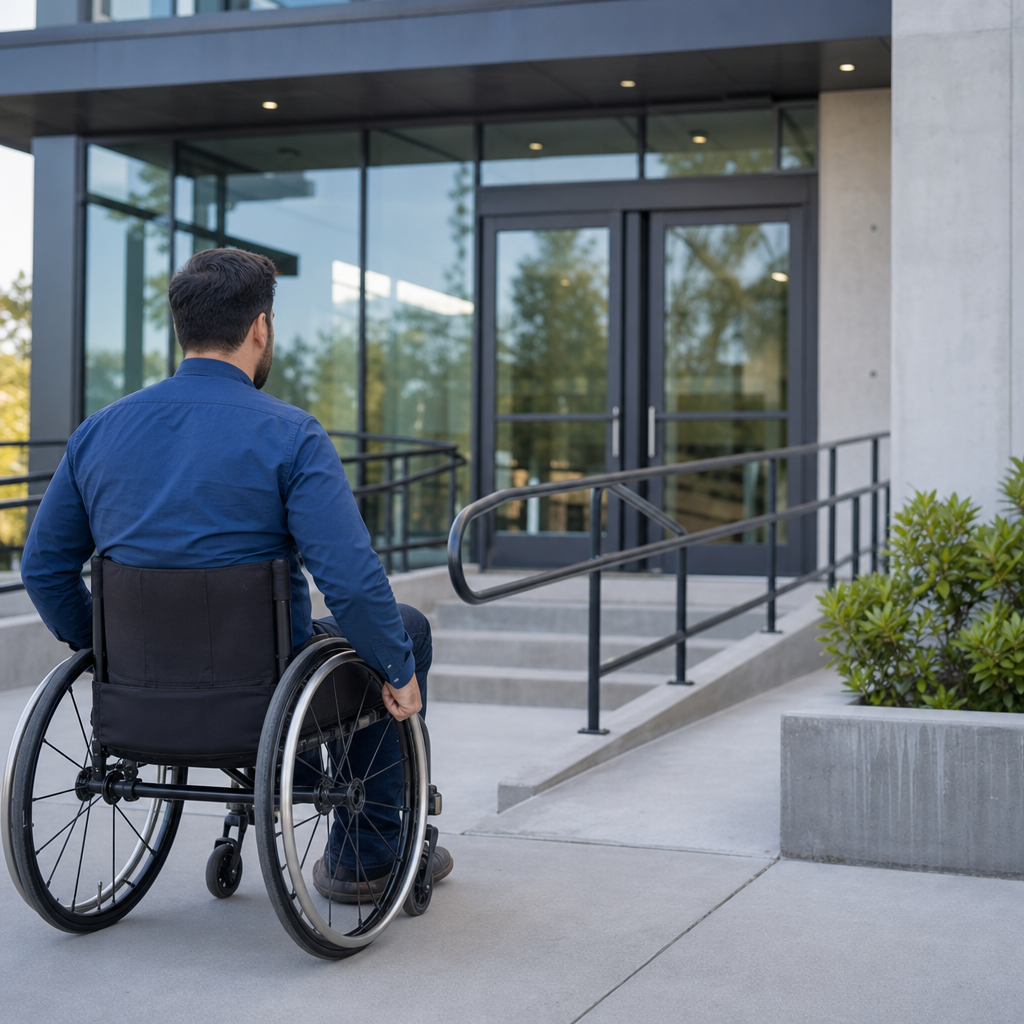

Deaf rights in the United States are the legal protections, civil liberties, and practical access measures that ensure deaf and hard of hearing people can participate fully in school, work, healthcare, government, transportation, and public life. This broad topic includes communication access, anti-discrimination law, language rights, educational services, technology access, and equal treatment by public and private institutions. I have worked with accessibility compliance, accommodation requests, and disability policy implementation, and one lesson stands out: rights only matter when people know what they are, when institutions understand their duties, and when enforcement is taken seriously. For deaf people, barriers are often not physical but communicative, such as the absence of qualified sign language interpreters, inaccessible emergency alerts, or employers who rely on spoken meetings without alternatives. The stakes are high because communication access affects safety, employment, income, education, health outcomes, and civic participation. A complete guide to deaf rights in the United States must therefore explain the governing laws, the most common settings where rights apply, the limits of those rights, and the practical steps people can take when access is denied. This overview serves as a hub for the wider advocacy and rights landscape by defining the core principles and showing how they operate in everyday situations.
What Deaf Rights Mean Under U.S. Law
In the United States, deaf rights are grounded primarily in disability civil rights law rather than in a single standalone deaf rights statute. The Americans with Disabilities Act of 1990, as amended by the ADA Amendments Act of 2008, is the central law. It prohibits discrimination and requires effective communication in state and local government services, public accommodations, employment, and telecommunications relay systems. Section 504 of the Rehabilitation Act of 1973 applies similar protections to entities that receive federal financial assistance, including many hospitals, universities, and public agencies. Section 1557 of the Affordable Care Act extends nondiscrimination protections in many healthcare settings. The Individuals with Disabilities Education Act governs special education services for eligible children, while the First Amendment, due process principles, and state laws can also shape specific claims.
The key legal concept is effective communication. Under ADA regulations, covered entities must provide appropriate auxiliary aids and services when needed to ensure communication with people with disabilities is as effective as communication with others. For deaf people, that may mean a qualified American Sign Language interpreter, real-time captioning, CART services, video remote interpreting, written exchange, captioned media, visual alerts, or assistive listening systems, depending on the situation. The correct aid depends on context, complexity, and the individual’s usual method of communication. A brief retail transaction may be handled through writing, while a medical consent discussion, college lecture, or courtroom proceeding often requires a qualified interpreter or live captioning. Rights are not satisfied by whatever option is cheapest or easiest for the institution; the method must actually work.
Major Federal Laws and Where They Apply
Different deaf rights protections apply in different settings, and understanding the framework helps people identify the strongest legal claim. The ADA is divided into titles. Title I covers employment and applies to employers with fifteen or more employees. Title II covers state and local governments, including public schools, courts, police departments, public hospitals, transit systems, and licensing offices. Title III covers public accommodations, such as private hospitals, doctors’ offices, hotels, restaurants, theaters, retail stores, museums, and colleges that are privately operated. Title IV addresses telecommunications relay services and is enforced through the Federal Communications Commission. Air travel access is governed largely by the Air Carrier Access Act rather than the ADA. Housing rights often arise under the Fair Housing Act and Section 504 for federally assisted housing.
Enforcement also differs. The U.S. Department of Justice enforces Titles II and III in many cases. The Equal Employment Opportunity Commission handles ADA employment charges. The U.S. Department of Education Office for Civil Rights investigates complaints against educational institutions receiving federal funds. The U.S. Department of Health and Human Services Office for Civil Rights plays a major role in healthcare access complaints under Section 504 and Section 1557. The FCC oversees relay service rules and captioning issues in its jurisdiction. In practice, strong advocacy often combines internal complaints, agency enforcement, and sometimes private litigation. I have seen many access disputes resolved before a lawsuit simply because an institution finally understood that interpreter services are not optional customer service extras but legal obligations.
| Setting | Main law | Typical deaf access right | Common issue |
|---|---|---|---|
| Workplace | ADA Title I | Reasonable accommodation and nondiscrimination | No interpreter for meetings or training |
| Public school or court | ADA Title II, Section 504 | Effective communication from government entities | Unqualified interpreter or delays |
| Hospital or doctor | ADA Title III, Section 504, Section 1557 | Qualified interpreter for complex medical communication | Reliance on family members to interpret |
| Private business | ADA Title III | Auxiliary aids and services when needed | No captioning or refusal to arrange access |
| Phone access | ADA Title IV | Relay services and functional equivalence | Businesses hanging up on relay calls |
Communication Access in Daily Life
Communication access is the operational core of deaf rights. A qualified interpreter is not merely someone who knows some signs; under ADA rules, the person must be able to interpret effectively, accurately, and impartially, both receptively and expressively, using any necessary specialized vocabulary. That standard matters in hospitals, legal settings, college science lectures, and workplace safety trainings, where errors can have serious consequences. Family members, minor children, or staff with limited signing skills generally are not appropriate substitutes except in narrow emergency circumstances or when the deaf person specifically requests that arrangement and it is appropriate. Even then, institutions should evaluate whether the choice truly ensures effective communication.
Captioning is equally important. Open or closed captions in classrooms, meetings, training videos, streaming media, and public information are often the fastest route to access for deaf and hard of hearing people, especially those who do not use sign language as their primary language. CART, now often called communication access real-time translation, provides live transcription for events and can be more effective than an interpreter for some users. Video remote interpreting can work in certain settings, but only when the connection is stable, the screen is large enough, the camera angle is appropriate, and the user can see and engage clearly. Many complaints arise because organizations assume remote interpreting is automatically sufficient. In reality, a chaotic emergency room, poor bandwidth, or a patient lying flat can make it ineffective.
Education Rights for Deaf Students and Families
Deaf students’ rights vary by age, school type, and eligibility status, but the common legal principle is equal access to education. In K through 12 public schools, the IDEA may require specialized instruction, related services, assistive technology, interpreting, speech services, or placement decisions through an individualized education program. Section 504 can require accommodations even when a student is not eligible under IDEA. Schools must also consider communication needs, opportunities for direct communication with peers and staff, and access to the academic curriculum and extracurricular activities. For deaf students, this can involve ASL interpretation, cued speech transliteration, captioning, note-taking support, visual alarms, and teacher training.
One of the most contested issues is language access and placement. Some children thrive in bilingual environments that treat ASL and English as complementary languages. Others use spoken language, cochlear implants, hearing aids, or total communication approaches. There is no single correct model for every child, but schools cannot make decisions based on stereotypes or administrative convenience. They must base services on individualized need. In colleges and universities, the ADA and Section 504 generally require auxiliary aids and services, such as interpreters, captioned lectures, accessible online course platforms, and timely accommodations for labs, internships, and campus events. Delayed implementation is a frequent problem. A student who receives an interpreter three weeks into the semester has already lost access, even if the school later tries to catch up.
Employment, Healthcare, and Public Services
At work, deaf employees and applicants have the right to equal opportunity and reasonable accommodation absent undue hardship. Common accommodations include interpreters for interviews and meetings, captioned training videos, speech-to-text apps for informal communication, relay-friendly phone procedures, visual alerts, and modified communication protocols during emergencies. Employers may not refuse to hire someone because accommodation might cost money without first assessing actual need and available options. They also may not ask disability-related questions before a job offer beyond limited lawful inquiries. In practice, the interactive process matters. A strong request explains the barrier, the accommodation needed, and why it will enable essential job functions. Documentation is sometimes useful, but employers should not demand excessive proof for obvious communication needs.
Healthcare remains one of the most critical and most litigated areas. Effective communication in medicine is tied directly to informed consent, diagnostic accuracy, medication safety, and patient autonomy. Federal enforcement actions have repeatedly found that hospitals violate the law when they rely on written notes for complex discussions, ask relatives to interpret, or fail to provide interpreters in emergency departments, labor and delivery, mental health treatment, and discharge planning. Public services raise similar concerns. Police interactions, court hearings, child welfare meetings, voting access, jury service, and public emergency announcements must be accessible. After several natural disasters and public health emergencies, agencies faced scrutiny for inaccessible press briefings and alert systems, reinforcing that deaf rights are inseparable from emergency preparedness and public safety.
Technology, Media, and Telecommunications Access
Technology has expanded access, but it has also created new compliance failures. Telecommunications relay services, including video relay service and text relay, are intended to provide functionally equivalent telephone communication for deaf users. Businesses cannot lawfully refuse relay calls simply because they are unfamiliar with them or mistake them for scams. Captioning requirements apply in several overlapping areas, including television programming, many online videos tied to previously aired content, educational media, workplace training, and public-facing digital communication. Streaming platforms, webinar software, and video conferencing tools now make captioning technically feasible at scale, which means excuses based on inconvenience carry less weight than they once did.
Digital accessibility increasingly intersects with deaf rights. A hospital portal without captioned video instructions, an employer onboarding system built around uncaptioned modules, or a university website that posts emergency updates only in audio format can exclude users as effectively as a locked door excludes a wheelchair user. I have seen organizations improve quickly by adopting simple practices: requiring captions by default, budgeting for live captioners and interpreters during event planning, testing visual notification systems, and training front-line staff on how to arrange accommodations. Technology is a tool, not a substitute for judgment. Auto-captions have improved, but they still struggle with names, technical terms, accents, and noisy environments, so high-stakes communication often needs human support.
How to Assert Deaf Rights and Resolve Violations
When access fails, documentation is the starting point. Keep records of dates, names, requests, responses, and the impact of the denial. Ask for accommodations early when possible, but remember that emergencies and short-notice needs do not erase legal obligations. Make requests in writing and be specific: identify the event or service, explain your communication method, and state the aid needed, such as a qualified ASL interpreter or live captioning. If an organization denies the request, ask for the reason. Some denials stem from misunderstanding and can be corrected by pointing to the effective communication standard, relevant regulations, or agency guidance. Others require escalation to an ADA coordinator, compliance office, human resources department, patient relations office, or school disability services office.
If internal efforts fail, formal complaints may be filed with the appropriate agency, and private legal counsel may be necessary. Deadlines matter. Employment claims through the EEOC have filing windows that vary by state, and education or healthcare complaints may involve separate administrative timelines. Advocacy groups such as the National Association of the Deaf, Disability Rights Education and Defense Fund, state protection and advocacy agencies, and local legal aid programs can help evaluate options. The most effective approach is often strategic rather than purely adversarial: know the law, describe the practical fix, preserve evidence, and escalate quickly when delay itself is causing harm. Deaf rights are strongest when individuals, families, advocates, and institutions treat access as a legal baseline, not a special favor.
Deaf rights in the United States rest on a clear principle: equal participation requires effective communication, and effective communication requires more than good intentions. Across employment, education, healthcare, public services, housing, transportation, telecommunications, and digital life, the law demands access that actually works for the individual and the situation. The most important statutes include the ADA, Section 504, IDEA, Section 1557, the Fair Housing Act, the Air Carrier Access Act, and FCC relay rules, but legal rights become meaningful only when they are applied consistently. Qualified interpreters, accurate captioning, accessible technology, visual alerts, and informed institutional policies are not optional extras. They are the mechanisms that make equality real.
This hub page is the foundation for deeper advocacy work because every related issue, from school placement to hospital access to workplace accommodation, grows out of the same core standards. If you are deaf, hard of hearing, a family member, an educator, an employer, or a service provider, use this guide as your starting point. Review the laws that fit your setting, document barriers carefully, and push for remedies that provide real communication access. Then continue to the more specific articles in this Advocacy and Rights section to build a stronger plan, protect your rights, and help create institutions that serve deaf people lawfully and respectfully.
Frequently Asked Questions
What laws protect deaf and hard of hearing people in the United States?
Several major federal laws protect deaf and hard of hearing people in the United States, and together they form the foundation of modern deaf rights. The Americans with Disabilities Act, or ADA, is one of the most important. It prohibits disability discrimination in employment, state and local government services, public accommodations, transportation, and telecommunications. In practical terms, that can include providing qualified sign language interpreters, real-time captioning, assistive listening systems, accessible customer service, and other auxiliary aids and services when needed for effective communication.
Section 504 of the Rehabilitation Act also plays a major role. It applies to programs and organizations that receive federal financial assistance, including many schools, hospitals, universities, and government-related entities. Section 504 requires equal access and reasonable accommodations, which often means communication access for deaf individuals in education, healthcare, and public services. Section 508 of the Rehabilitation Act adds digital accessibility requirements for federal agencies, which is especially relevant for accessible websites, online forms, video content, and electronic communication.
The Individuals with Disabilities Education Act, or IDEA, is critical for children in public education. It gives eligible students the right to special education and related services designed to meet their individual needs. For deaf and hard of hearing students, this may involve interpreting services, speech and language support, captioned media, assistive technology, and educational planning that considers language and communication needs. The Fair Housing Act, Air Carrier Access Act, and communications-related rules enforced by the Federal Communications Commission also provide protection in housing, air travel, and telecommunications access.
State laws may provide additional protections beyond federal law. Some states recognize sign language rights more explicitly, impose broader accessibility obligations, or create stronger complaint and enforcement systems. Because rights can depend on the setting, it is often helpful to look at both the federal law involved and any state-specific requirements. In day-to-day life, the legal standard is not just whether a service exists, but whether a deaf person can use it on an equal basis with others.
What does “effective communication” mean under deaf rights laws?
“Effective communication” is a core legal concept in deaf rights law, especially under the ADA and Section 504. It means communication with a deaf or hard of hearing person must be as clear, timely, accurate, and meaningful as communication with a hearing person. This is not satisfied by guessing, speaking louder, handing over a pen and paper in every situation, or relying on a family member to interpret when the discussion is complex, urgent, private, or legally important. The goal is equal understanding, not minimal effort.
The type of accommodation required depends on the context, the complexity of the communication, the person’s preferred method of communication, and the length and importance of the interaction. For example, a quick retail transaction may be accessible through typing on a tablet or exchanging written notes. A medical consultation, courtroom proceeding, college lecture, job interview, mental health appointment, or disciplinary meeting may require a qualified American Sign Language interpreter, CART captioning, or another high-quality communication aid. The law generally focuses on the effectiveness of the accommodation, not the convenience of the institution.
A “qualified” interpreter is also important. Under the ADA, a qualified interpreter is someone who can interpret effectively, accurately, and impartially, both receptively and expressively, using any specialized vocabulary necessary for the setting. That means a hospital, school, employer, or government office cannot simply use an untrained staff member or a relative if doing so would not ensure accurate communication. In many situations, especially those involving health, legal rights, safety, education, or employment consequences, professional-level communication access is essential.
In practice, effective communication also includes timeliness and dignity. If captioning is consistently delayed, if an interpreter is unavailable for critical meetings, or if accessible information is only provided after a decision has already been made, the communication may not be legally effective. Deaf rights are not limited to being physically present in a space; they include being able to understand, participate, ask questions, make informed choices, and receive information at the same level as everyone else.
Are employers required to provide accommodations for deaf employees and job applicants?
Yes. Employers covered by the ADA are generally required to provide reasonable accommodations to qualified deaf and hard of hearing employees and applicants, unless doing so would create an undue hardship. This protection applies not only after someone is hired, but also during the application and interview process. A qualified applicant must be able to compete fairly for the job, which may mean providing an interpreter for an interview, making pre-employment testing accessible, ensuring video interviews are captioned, or adjusting communication methods during recruitment and onboarding.
On the job, reasonable accommodations vary depending on the role and the communication demands of the workplace. Common examples include sign language interpreters for meetings and trainings, live captioning for virtual calls, videophones, text-based communication tools, visual alert systems, amplified or compatible devices, accessible emergency notifications, modified supervision methods, and adjustments to workplace policies that unintentionally create communication barriers. Employers do not get to refuse accommodations simply because they are unfamiliar with deaf access or have never provided it before.
The accommodation process should be interactive. That means the employer and the employee should communicate about the limitation, the job duties involved, and what accommodation would be effective. The employee’s stated communication needs matter. While an employer may have some flexibility in choosing among effective options, the accommodation must actually work in the specific setting. A cheaper or easier alternative that fails to provide meaningful access may not meet legal requirements. The employer also cannot retaliate against someone for requesting accommodation or asserting disability rights.
Confidentiality and inclusion matter too. Deaf employees should have equal access to informal and formal workplace communication, including trainings, staff meetings, safety instructions, performance discussions, and advancement opportunities. If a hearing employee can benefit from spontaneous discussion, policy updates, or networking events, a deaf employee should not be excluded because communication access was treated as optional. Equal employment rights include the right to be fully informed and fully included, not merely present in the room.
What rights do deaf students have in schools and colleges?
Deaf students have important rights in both K-12 schools and higher education, but the legal framework can differ depending on the type of institution and the student’s age. In public elementary and secondary schools, IDEA and Section 504 are often the main sources of protection. Eligible students may receive an Individualized Education Program, or IEP, that addresses academic instruction, communication access, language development, related services, assistive technology, and placement. Deaf students who do not qualify under IDEA may still have rights under Section 504 to accommodations and equal access.
For deaf and hard of hearing students, educational rights go beyond simply being placed in a classroom. Schools must consider communication needs, language access, direct instruction, social development, and opportunities to interact with peers and staff in an accessible way. Depending on the student, that could include ASL interpreters, captioning, note-taking support, speech services, FM or DM systems, visual aids, deaf education specialists, or placement in a program better suited to the student’s language and learning needs. The legal standard is not whether the school offered something generic, but whether the student can access education meaningfully and appropriately.
In colleges and universities, the ADA and Section 504 usually govern. Postsecondary institutions must provide reasonable accommodations and auxiliary aids to ensure equal access to courses, lectures, labs, housing services, campus events, advising, and digital learning platforms. That often includes interpreters, CART services, captioned videos, accessible online course materials, assistive listening technology, and timely accommodations for exams and class participation. Colleges cannot charge students extra for these services, and they generally cannot require students to arrange their own interpreters for institution-sponsored academic access.
One common issue is delay. Schools and colleges sometimes recognize the right to accommodation in theory but fail to provide services promptly or consistently. That can still amount to denial of access. A deaf student who misses instruction, falls behind because videos are not captioned, or cannot participate in class discussion due to communication barriers is not receiving equal educational opportunity. Strong advocacy, written documentation, and early coordination with disability services or school administrators can make a major difference, but the legal responsibility remains with the institution to provide access.
What should a deaf person do if their rights are violated by a hospital, business, school, or government agency?
If a deaf person believes their rights were violated, the first step is often to document exactly what happened. That includes the date, time, location, names of staff involved, what accommodation was requested, how the request was answered, and what harm resulted from the denial or delay. Saving emails, appointment records, screenshots, written policies, and witness information can be extremely useful. Clear documentation helps show whether the issue was an isolated misunderstanding, a systemic communication failure, or a direct legal violation.
In many cases, it makes sense to raise the issue internally first. A hospital may have a patient advocate or ADA coordinator. A school may have a Section 504 coordinator, disability services office, or special education administrator. An employer may have human resources or an accommodations team. A government agency may have a civil rights office. A concise written complaint that explains the communication barrier, cites the requested accommodation, and asks for a prompt remedy can sometimes resolve the