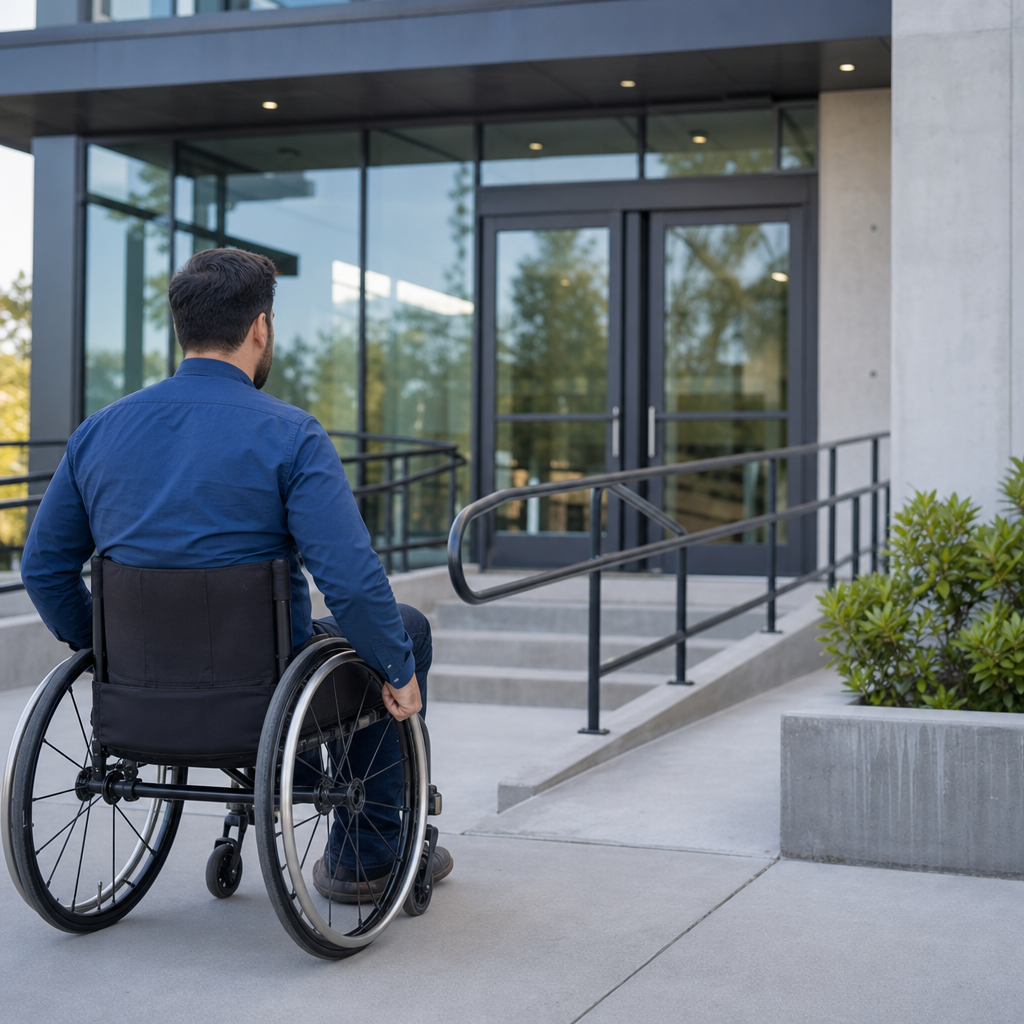
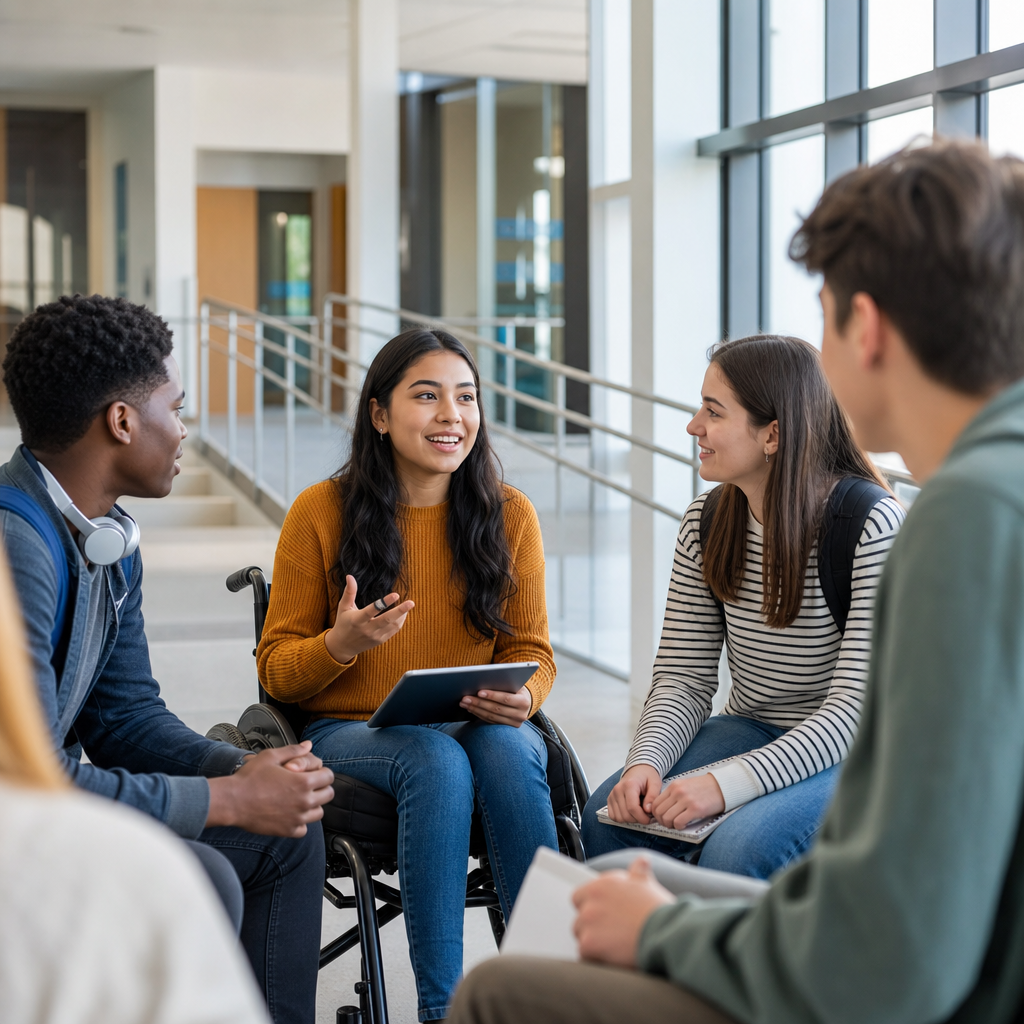
Accessibility in school is not a favor, a special perk, or an optional add-on; it is the practical condition that allows every student to learn, participate, and belong. When students advocate for accessibility in school, they are asking for environments, materials, policies, and teaching practices that remove barriers rather than forcing individuals to struggle around them. In day-to-day terms, accessibility can mean captions on videos, wheelchair-accessible routes, screen-reader-friendly documents, sensory-friendly spaces, flexible attendance policies for medical needs, sign language interpretation, readable fonts, extra time, or clear communication about accommodations. Self-advocacy skills are the abilities students use to identify barriers, understand their rights, communicate their needs, document concerns, and work with adults to secure effective support. I have seen that students who learn these skills early are better prepared not only to solve immediate school problems, but also to navigate college, work, and community settings with confidence.
This topic matters because schools often say they support inclusion while still leaving obstacles in place. A class may post scanned PDFs that a screen reader cannot read. A science lab may be physically reachable but impossible to use without adapted tools. A field trip may be announced without transportation details for students who use mobility devices. In many cases, the barrier is not bad intent; it is poor planning, limited awareness, or systems designed around a narrow idea of the “average” student. Student advocacy closes that gap. It turns vague requests into specific solutions and helps schools move from reactive fixes to accessible design. It also strengthens the broader Advocacy & Rights conversation, because students who understand accessibility can push for fair treatment in discipline, testing, extracurriculars, transportation, and digital learning. As a hub for self-advocacy skills, this guide explains what students need to know, what actions actually work, and how to build a clear, credible case for change.
Understand what accessibility means in your school
The first step in advocating for accessibility is naming the barrier accurately. Students often know something is wrong before they know the right language to describe it. That language matters. A barrier may be physical, such as a broken elevator or desks that cannot fit a wheelchair. It may be digital, such as image-only assignments, uncaptioned videos, inaccessible learning platforms, or online quizzes that time out before assistive technology can keep pace. It may be communication-based, such as teachers speaking while facing away from the class, refusing to share notes in advance, or giving instructions only verbally in a noisy room. It may also be policy-based, including inflexible attendance rules for students with chronic illness, participation grades that penalize disability-related communication differences, or emergency procedures that ignore disabled students entirely.
When I help students map barriers, I ask three direct questions: What task are you expected to do, what specific obstacle blocks you, and what change would make equal access possible? That framework turns frustration into evidence. For example, “I can’t keep up in class” becomes “The teacher posts scanned readings that my screen reader cannot parse; I need OCR-processed files or accessible text documents before class.” “The assembly is hard for me” becomes “The event uses flashing lights and amplified sound without a quiet space or advance warning; I need sensory accommodations and a lower-stimulation area.” The more concrete the description, the easier it is for a counselor, case manager, disability coordinator, or principal to act. Accessibility is not a vague idea. It is the removal of a defined barrier from a defined school activity.
Know your rights, your documents, and the people responsible
Students advocate more effectively when they understand the difference between rights, supports, and preferences. In the United States, disability access in public schools is shaped by laws including Section 504 of the Rehabilitation Act, the Americans with Disabilities Act, and the Individuals with Disabilities Education Act for eligible students. Private schools may operate under different legal structures, but many still have obligations under federal law or state nondiscrimination rules. The practical lesson is simple: if a student has a disability that substantially limits major life activities, the school may be required to provide access and prevent discrimination. That access can appear through a 504 plan, an Individualized Education Program, health plan documentation, or other formal supports, depending on the student’s situation.
Students should know what is written in their documents, who implements them, and where the breakdown happens. Read the plan. Highlight the accommodations that apply in each class. Identify whether the issue is noncompliance, an outdated accommodation, or a barrier that the current plan never addressed. A student may already have “preferential seating” but now needs captioned media, accessible lab equipment, or assignment formats compatible with speech-to-text. It also helps to know the chain of responsibility: classroom teacher, special education teacher, 504 coordinator, school nurse, counselor, assistant principal, principal, district disability office, and in some cases the superintendent. Advocacy is stronger when students can say, “My 504 plan includes extended time and accessible digital materials, but in biology the weekly quizzes are delivered through a platform my screen reader cannot navigate.” That statement is factual, document-based, and difficult to dismiss.
Build practical self-advocacy skills that schools respond to
Self-advocacy is a set of learnable habits, not an inborn personality trait. The strongest student advocates I have worked with are not always the loudest students; they are the ones who prepare clearly, communicate calmly, and follow up consistently. The core skills include self-awareness, problem definition, solution framing, documentation, meeting participation, and escalation when necessary. Self-awareness means understanding your disability, health condition, learning profile, or access need well enough to explain how it affects school tasks. Problem definition means describing the barrier without drifting into general frustration. Solution framing means proposing an accommodation, adjustment, or design change that addresses the actual obstacle. Documentation means saving emails, screenshots, assignments, medical notes, and meeting summaries. Meeting participation means asking questions, correcting misunderstandings, and making sure your voice is part of the record.
A useful way to strengthen these skills is to practice scripts before a real conflict happens. For instance: “I want to succeed in this class, but the current format is creating an access barrier. Can we switch the reading packets to accessible digital text?” Or: “My plan says I can use speech-to-text for essays. I need that accommodation on the in-class writing assessment too.” Students should also learn to separate urgency from emotion. Anger may be valid, especially after repeated barriers, but schools respond best to requests that are precise, respectful, and tied to educational access. That does not mean students must minimize harm. It means they should present harm in a way that creates accountability. A documented pattern of missed access, especially when connected to grades, attendance, participation, or safety, usually gets faster attention than a broad complaint that something “feels unfair.”
Use evidence, examples, and clear requests
Evidence changes advocacy from opinion to record. Schools manage many competing demands, and administrators often act fastest when a student can show a pattern, a timeline, and a reasonable solution. Keep a simple log with dates, classes, barriers, impact, and actions taken. Save inaccessible files. Take screenshots of missing captions, unusable portals, or assignment directions that conflict with your plan. If a physical barrier exists, note when it occurs and what activity it blocks. If a teacher refuses an accommodation, summarize the conversation in an email after class: “Thank you for speaking with me today. I want to confirm that I requested captioned videos and advance access to slides because of my hearing-related access needs.” Written follow-up matters because it prevents confusion later and shows that the student tried to solve the problem directly.
| Barrier | Impact on Student | Strong Advocacy Request |
|---|---|---|
| Videos in history class have no captions | Student misses key content and class discussion points | Provide captioned versions and transcripts before viewing |
| Assignments are uploaded as scanned image PDFs | Screen reader cannot access the text | Post OCR-corrected PDFs or accessible Word documents |
| Strict attendance policy during medical flare-ups | Absences lower grade despite completed work | Create disability-related attendance flexibility and make-up plan |
| Fire drill plan excludes elevator user | Student safety is compromised during emergencies | Develop and share an individualized evacuation procedure |
Notice that each request is specific, feasible, and directly connected to access. This is far more effective than saying, “Please be more inclusive.” Strong advocacy also anticipates the school’s next question: what would help, when is it needed, and who can implement it? If the issue affects many students, say that too. Captions help deaf and hard-of-hearing students, English learners, and anyone reviewing material in a noisy environment. Accessible digital documents support students using screen readers, text-to-speech, and translation tools. Universal design arguments are powerful because they improve access beyond one person’s case. Still, if a school delays by claiming it needs time to redesign everything, bring the conversation back to immediate access. Long-term improvement is good, but students need usable materials now.
Work with allies without giving up your own voice
Students do not have to advocate alone. Families, trusted teachers, school psychologists, counselors, disability service staff, coaches, club advisers, interpreters, and community advocates can all help. The best support network is one that amplifies the student’s priorities instead of speaking over them. In practice, that means deciding before meetings what the student wants, what outcome matters most, and who will say what. A parent may know the legal history and documentation. A teacher may describe academic impact. A student should still explain lived experience, because first-hand examples often shift the tone of a meeting. I have watched rooms change when a student calmly says, “I’m not asking for an advantage. I’m asking for the same chance to learn the material as everyone else.”
Peer advocacy also matters. Many access barriers affect clubs, sports, assemblies, theater productions, school websites, and student government events. Students can push for captioned announcements, accessible event registration forms, fragrance-aware practices, quiet zones, and routes that work for mobility devices. They can ask yearbook staff to add alt text to digital galleries or persuade debate teams to share materials in advance. These changes build an accessibility culture rather than treating access as a private issue hidden in paperwork. At the same time, students should protect their privacy. They do not owe classmates a medical explanation to justify a need. A simple statement such as “This support helps me access school equally” is enough. Effective advocacy balances collaboration with boundaries, and students should feel empowered to set both.
Escalate strategically when the school does not respond
Not every accessibility problem is solved by one email or one meeting. Some require escalation. Strategic escalation means moving to the next responsible person with a clear record of what happened, what was requested, and what remains unresolved. Start with the staff member closest to the issue when possible, then move to the counselor, 504 coordinator, case manager, assistant principal, principal, district office, or formal complaint route as needed. Keep the tone factual. List dates, attach prior messages, cite the accommodation or barrier, and state the educational impact. If safety is involved, say so directly. An inaccessible evacuation plan, denial of medically necessary supports, or repeated exclusion from required instruction should never be framed as a minor inconvenience.
Students should also know that escalation is not failure. It is part of advocacy when lower-level efforts have not worked. Sometimes a teacher needs training. Sometimes a software platform has to be replaced. Sometimes district leadership must step in because the issue affects multiple schools. If the problem continues, families may consult disability rights organizations, protection and advocacy agencies, legal aid groups, or state education departments. The goal is not conflict for its own sake. The goal is reliable access. Throughout the process, students should keep learning where possible, use interim supports, and ask for remedies when missed access caused academic harm. That can include retakes, deadline extensions, excused absences, alternate formats, or restored participation opportunities. A school that failed to provide access should also repair the consequences of that failure.
Accessibility advocacy in school starts with one clear truth: barriers are not personal shortcomings. They are conditions that can and should be changed. Students who build self-advocacy skills learn to identify access problems, connect them to rights and school responsibilities, communicate specific requests, document patterns, and involve allies without losing ownership of their own story. They also learn an essential long-term lesson: effective advocacy is both personal and structural. It helps one student get what they need today while pushing the school to design better systems for everyone tomorrow.
As the hub for self-advocacy skills within Advocacy & Rights, this guide points to the habits that make the biggest difference: knowing your documents, using precise language, keeping records, proposing workable solutions, and escalating strategically when needed. Whether the issue is inaccessible technology, classroom communication, mobility access, sensory overload, attendance policies, or emergency planning, the same principle applies: equal access should be built into school life, not negotiated as an afterthought. Start by identifying one barrier you face this week, write a clear request, and bring it to the right person. Small, well-documented actions often open the door to lasting change.
Frequently Asked Questions
Why is accessibility in school so important, and what does it actually include?
Accessibility in school matters because it is the foundation that allows all students to learn, participate, and feel included in daily school life. It is not a bonus feature or a special accommodation that only helps a small group of people. It is the practical design of classrooms, materials, technology, events, and policies so that students are not blocked by avoidable barriers. When a school is accessible, students can move through hallways and entrances safely, understand lesson materials, use digital platforms effectively, join clubs and assemblies, and take part in the full educational experience with dignity and independence.
In practice, accessibility includes many different things. It can mean wheelchair-accessible entrances, ramps, elevators, and restrooms. It can also mean captions on classroom videos, readable handouts, screen-reader-friendly digital documents, clear visual and audio communication, flexible seating, sensory-considerate spaces, and teaching methods that support different learning and communication needs. Accessibility also includes how school rules and routines are designed. For example, a field trip is not truly inclusive if transportation, location access, or communication supports are missing. A school website is not fully usable if important information cannot be read by assistive technology.
Students who advocate for accessibility are helping schools recognize that barriers are often created by systems, not by individuals. That is an important shift. Instead of expecting students to constantly adapt to inaccessible environments, advocacy pushes schools to remove barriers in advance whenever possible. This benefits disabled students directly, but it also improves the school experience for many others, including students with temporary injuries, multilingual learners, students with different learning styles, and families accessing school information online. Accessibility makes schools stronger, fairer, and more responsive to everyone.
How can students start advocating for accessibility without feeling overwhelmed?
A strong way to begin is by focusing on observation, listening, and one clear goal at a time. Students do not need to solve every accessibility issue in the school all at once. In fact, advocacy is usually more effective when it starts with a specific barrier and a practical recommendation. For example, a student might notice that videos shown in class do not include captions, that event flyers are posted in formats some students cannot access, or that a commonly used digital document is difficult for screen readers to interpret. Starting small allows students to build confidence, gather support, and demonstrate that change is possible.
It also helps to collect examples and, when appropriate, respectful input from classmates who are directly affected. Students can ask questions like: What is getting in the way of participation? When does the barrier happen most often? What change would make a real difference? Writing these observations down can be useful when talking with teachers, counselors, administrators, or student government leaders. Specific examples are usually more persuasive than broad complaints because they show exactly what is happening and how it affects learning and participation.
Another important step is finding allies. Advocacy is often easier and more sustainable when students work with others, such as a trusted teacher, special education staff member, librarian, counselor, disability affinity group, club advisor, or student council representative. A group can help organize concerns, identify priorities, and present recommendations more effectively. Students should also remember that advocacy does not have to be confrontational to be powerful. A respectful, informed approach that clearly explains the barrier, the impact, and the proposed solution can be very persuasive. The goal is not simply to point out problems; it is to help the school move toward practical, inclusive improvements.
What are the most effective ways to talk to teachers or school leaders about accessibility concerns?
The most effective conversations are clear, respectful, and solution-oriented. Students should be prepared to explain the barrier in concrete terms, describe how it affects participation or learning, and suggest a realistic improvement. For example, instead of saying, “This class is inaccessible,” a more effective approach might be, “The videos we watch in class do not have captions, which makes it harder for some students to fully follow the lesson. Could we use captioned versions or turn on accurate captions when possible?” This framing keeps the focus on problem-solving and makes it easier for staff to understand what action is needed.
Timing and format can also make a difference. Some students may feel comfortable speaking directly after class or during office hours, while others may prefer sending a thoughtful email or requesting a meeting with a counselor or administrator. In either case, it helps to be organized. Students can briefly outline the issue, share examples, explain the impact, and ask for a specific next step. If the issue affects more than one student, it may be helpful to note that as well. School leaders are often more responsive when they see that a concern is recurring and linked to broader access, not just personal preference.
It is also wise to keep records of important communication, especially for ongoing concerns. Saving emails, noting meeting dates, and documenting agreed-upon next steps can help students follow up professionally. If a concern is not addressed at first, students can escalate it respectfully by involving additional support, such as a parent or guardian, counselor, disability services coordinator, principal, or district-level staff member. Throughout the process, students should know that asking for accessibility is not asking for unfair treatment. It is asking for equal access to education and participation, which schools have a responsibility to take seriously.
What kinds of accessibility changes can students realistically ask schools to make?
Students can advocate for a wide range of meaningful improvements, and many of them are highly practical. Some of the most common requests involve accessible classroom materials and digital tools. This includes captions for videos, transcripts for audio content, digital documents that work with screen readers, readable font choices, strong color contrast, alt text for images, and learning platforms that are navigable by keyboard. Students can also ask teachers to share materials in advance when possible, provide information in multiple formats, and avoid relying on only one method of instruction or communication.
Physical accessibility is another major area. Students may advocate for ramps, elevator access, automatic doors, accessible seating arrangements, uncluttered classroom pathways, accessible restrooms, and routes that allow safe movement throughout the school. They can also raise concerns about assemblies, sports events, performances, cafeterias, labs, and field trips. Accessibility should not stop at the classroom door. School events and extracurricular activities must also be planned so students can attend, participate, and contribute fully.
Students can also advocate for policy and culture changes, which are often just as important as physical or technological fixes. Examples include training staff on accessible teaching practices, establishing clear procedures for requesting accessible materials, improving emergency planning for disabled students, creating more inclusive event planning checklists, and making school announcements available in accessible formats. In some cases, students may push for a school accessibility committee or student advisory group that regularly reviews barriers and solutions. These kinds of changes can create lasting improvement because they address accessibility as a normal part of school planning rather than as an afterthought.
How can student advocacy create long-term change in school accessibility?
Long-term change happens when accessibility becomes part of how a school routinely makes decisions, not just how it responds to individual complaints. Student advocacy can help create that shift by moving conversations from isolated incidents to broader systems. For instance, if one teacher forgets captions, solving that one problem matters. But if students encourage the school to adopt a standard that all instructional videos should be captioned, the impact is much larger and more lasting. The same is true for digital document standards, event planning, website updates, transportation, and classroom design.
One of the most powerful things students can do is connect accessibility concerns to school-wide values such as equity, belonging, student success, and participation. School leaders are more likely to support lasting change when they understand that accessibility is not a narrow issue affecting only a few people. It is part of creating a learning environment where all students can engage fully. Students can strengthen this case by bringing examples, gathering feedback, participating in committees, proposing action steps, and asking for timelines and accountability. Even small policy improvements can have a ripple effect over time.
Just as importantly, student advocacy changes school culture. When students speak up about accessibility, they help normalize the idea that barriers should be noticed and removed. They encourage peers and adults to think ahead, ask better questions, and design more inclusive experiences from the start. That kind of awareness can influence classrooms, clubs, leadership groups, and future school planning in lasting ways. Advocacy may not always produce immediate results, but it often plants the ideas, relationships, and expectations that lead to meaningful structural change. In that sense, students are not just asking for access in the present. They are helping build a school community that understands access as essential.