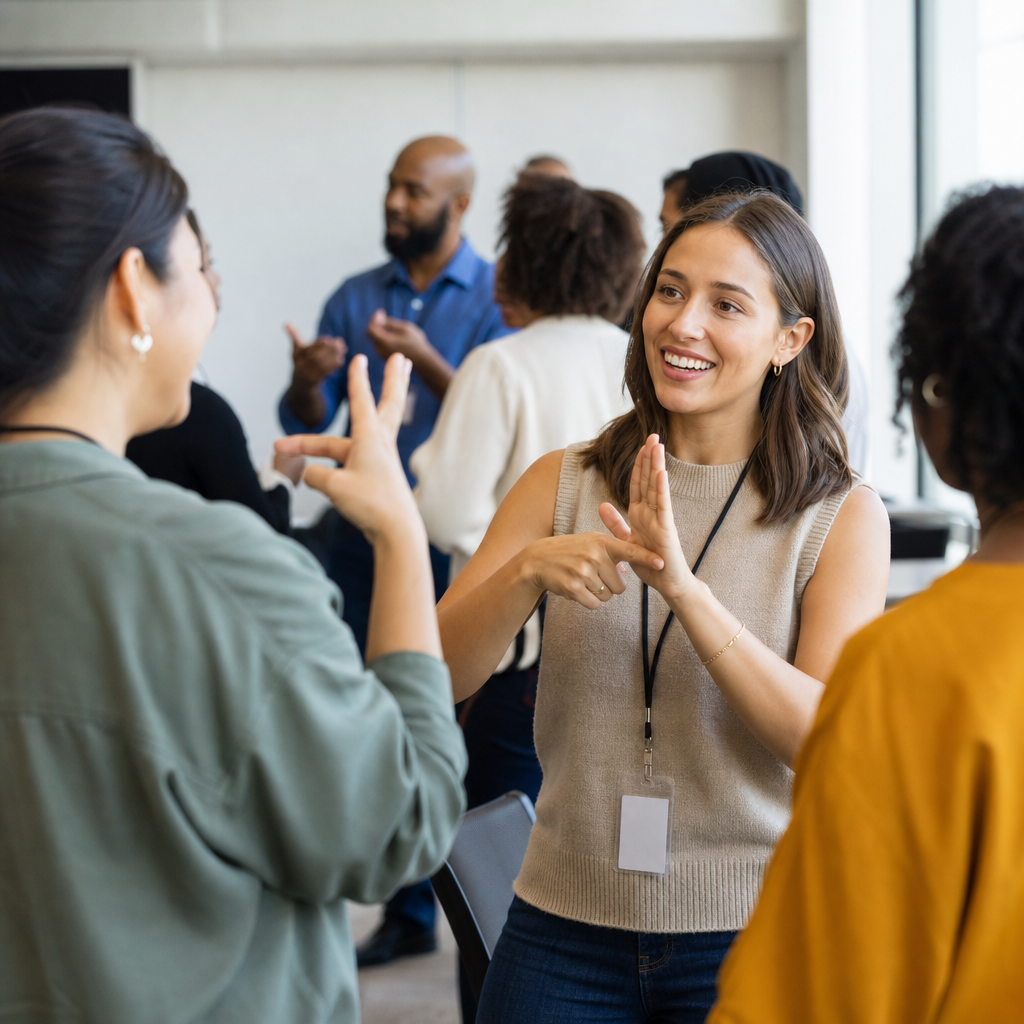
Getting involved in Deaf community events starts with understanding that these gatherings are not simply social activities; they are spaces where language, culture, access, and identity come together in practical, visible ways. In my work supporting community outreach and event accessibility, I have seen the difference between attending once out of curiosity and participating with respect, consistency, and a willingness to learn. The second approach builds trust. It also opens the door to richer relationships, better communication habits, and a more accurate understanding of Deaf life than any online summary can provide.
Deaf community events include a wide range of settings: local meetups at coffee shops, Deaf expos, school performances, advocacy rallies, sign language socials, sports tournaments, interpreted theater, workshops for parents, cultural festivals, and professional networking events. Some are designed primarily for Deaf attendees, while others are mixed spaces where Deaf, hard of hearing, hearing signing people, interpreters, educators, and family members interact. The phrase Deaf community usually refers not only to people with hearing loss, but to a cultural and linguistic community shaped by sign languages, shared experiences, access needs, and collective history.
This topic matters because community engagement affects belonging, employment connections, mental health, language development, civic participation, and cultural preservation. People often ask where to find Deaf events, how to act appropriately, whether beginners in sign language are welcome, and what mistakes to avoid. Those are the right questions. Successful involvement is less about showing enthusiasm and more about showing up prepared, following community norms, and understanding that access is a responsibility, not an afterthought. If you want to contribute meaningfully, you need to know how Deaf events are organized, what makes a space accessible, and how to move from guest to trusted participant over time.
What Deaf community events are and why they matter
Deaf community events serve practical and cultural functions at the same time. A Deaf night out at a restaurant may look casual, yet it can function as an informal language-rich environment, a mentorship network for younger signers, and a place to exchange information about jobs, interpreters, schools, and policy changes. Large public events often combine celebration with advocacy. For example, a Deaf awareness fair may include vendor booths, assistive technology demonstrations, voter registration, children’s activities, and workshops on communication rights under the Americans with Disabilities Act. These are not side benefits; they are central reasons people attend.
There is also no single model of the Deaf community. Some events center American Sign Language and Deaf culture. Others are tailored to late-deafened adults, oral deaf people, cochlear implant users, hard of hearing adults, DeafBlind participants, or families with deaf children. In the United Kingdom, events may center British Sign Language. In other countries, local sign languages shape the event. The first lesson is simple: never assume one Deaf experience represents all Deaf people. The strongest community participants learn the specific purpose and audience of each event before attending.
Where to find Deaf community events
The most reliable way to find Deaf community events is through organizations already embedded in the community. Start with local Deaf service agencies, Deaf clubs, state commissions for the deaf, centers for independent living, schools for the deaf, vocational rehabilitation networks, and advocacy groups such as the National Association of the Deaf in the United States. Many areas also have Deaf professional groups, Deaf athletic associations, church ministries with sign language access, and alumni networks linked to deaf schools and universities such as Gallaudet University or the National Technical Institute for the Deaf.
Social platforms are useful, but they work best when you know what to search. Look for terms such as Deaf event, ASL social, Deaf coffee chat, silent dinner, Deaf expo, interpreted performance, or sign language meetup plus your city or region. Facebook groups, Eventbrite, Meetup, Instagram, and community calendars often list events first. I have also found valuable gatherings through interpreter referral agencies, captioning providers, public libraries, museums, and arts centers that host accessible programming. Once you attend one event, ask three people what they recommend next. Word of mouth is still the strongest channel in most Deaf communities.
| Source | Best for | What to check |
|---|---|---|
| Deaf service agencies | Trusted local events and workshops | Registration rules, communication access, target audience |
| Schools for the deaf | Performances, sports, family programming | Visitor policies, parking, child-friendly activities |
| Social media groups | Informal meetups and last-minute updates | Organizer credibility, recurring attendance, event purpose |
| Arts and civic venues | Interpreted theater, museum nights, public forums | Interpreter placement, captioning, lighting, ticketing |
| Advocacy organizations | Policy events, town halls, leadership opportunities | Accessibility standards, volunteer roles, follow-up actions |
How to attend respectfully as a newcomer
If you are new, approach your first event as a learner, not an observer collecting an experience. Arrive on time, introduce yourself clearly, and be transparent about your communication skills. If you are learning sign language, say so directly and keep your language simple. Do not pretend fluency. People generally respond well to sincerity and patience, especially when they do not have to spend energy figuring out whether you are overstating your ability. In mixed groups, watch how people take turns visually, how they position themselves in the room, and how they get attention by waving, lightly tapping a shoulder, or flicking lights when appropriate.
Etiquette matters. Keep your hands visible when signing. Do not speak while expecting someone to lip-read unless they have asked for that. Maintain eye contact appropriate to signed conversation. Avoid walking between people who are signing without acknowledging the interruption. At performances or meetings, choose seating that preserves clear sightlines. If interpreters are present, speak to the Deaf person, not to the interpreter. If you miss something, ask for repetition briefly rather than forcing a long repair sequence. These habits may sound small, but they signal respect for visual communication and reduce friction immediately.
Understanding access, inclusion, and event design
Truly accessible Deaf community events are planned around visual communication from the start. Good lighting is essential, especially on faces and hands. Circular or semi-circular seating supports turn-taking. Background noise matters less than visual clutter, poor sightlines, and dim spaces. For public programs, organizers may provide qualified sign language interpreters, real-time captioning through CART, reserved seating, tactile interpretation for DeafBlind attendees, clear agendas, and visual announcements. The ADA and related state laws set a baseline in the United States, but effective event design often goes beyond legal compliance.
One common mistake I see is assuming an interpreter alone makes an event accessible. It does not. If the room is dark, the interpreter is badly placed, the speaker reads from slides too quickly, or audience questions are not repeated, access breaks down. Another mistake is treating Deaf attendees as a single group with identical preferences. Some people prefer sign language. Others rely on captions, assistive listening systems, or speech. Inclusive events ask about needs during registration and confirm logistics in advance. The best organizers do not improvise access on the day of the event; they build it into budgeting, staffing, rehearsal, and communication plans.
Ways to participate beyond simply showing up
Attendance is the entry point, not the end goal. If you want to become part of Deaf community engagement, volunteer in roles that match your skill and trust level. Community check-in tables, event photography with consent, transportation coordination, fundraising support, youth activities, social media updates, and post-event cleanup are useful tasks. If you are a hearing person with beginner signing skills, avoid taking communication-heavy roles unless specifically asked. Reliability matters more than visibility. In every community I have worked with, the volunteers who are invited back are the ones who follow through, communicate clearly, and understand boundaries.
You can also contribute professionally. Graphic designers can create visual flyers. Lawyers can support rights workshops. Employers can sponsor Deaf networking nights and commit to accessible recruitment practices. Therapists, librarians, health educators, and local businesses can partner with community leaders to host events that are fully accessible rather than performatively inclusive. If you run an organization, pay Deaf consultants and presenters for their expertise. Too many groups ask Deaf people to educate the public for free. Serious engagement means shifting resources, not just expressing support.
Building real relationships in the Deaf community
Trust develops through repeated, respectful contact. Going to one Deaf festival and posting photos online does not build community. Returning regularly, learning names, remembering communication preferences, and helping without centering yourself does. In practice, relationships often deepen through small recurring events: monthly coffee chats, school fundraisers, league games, arts workshops, and advocacy meetings. These settings give people time to assess whether you are dependable. That process is healthy. Many Deaf people have had experiences with hearing learners or organizations that treated the community as a project, then disappeared.
If you want deeper involvement, ask where help is actually needed. A parent of a newly identified deaf child may need recommendations for language-rich family events. A Deaf entrepreneur may need introductions to local chambers of commerce willing to provide interpreters. A student may need rides to a regional leadership conference. Community engagement becomes meaningful when it solves real problems and strengthens networks. Over time, you will also learn internal diversity and debate within the community, including different views on education, technology, identity labels, and communication choices. Respect does not require agreement on every issue; it requires listening before acting.
Common mistakes to avoid at Deaf events
The most common mistake is making the event about your own learning journey. Hearing attendees sometimes dominate conversations about the signs they know, ask intrusive questions about hearing levels or devices, or expect praise for basic efforts. That quickly creates fatigue. Another frequent problem is treating Deaf events as language practice sessions without understanding the social purpose of the gathering. If the event is a fundraiser, performance, memorial, or policy meeting, the priority is not helping beginners improve signing. Read the room, and if you are unsure, ask an organizer how newcomers can participate appropriately.
Other mistakes are logistical. Do not record people signing without permission. Do not assume children or interpreters can relay private information. Do not advertise an event as accessible if you have not confirmed interpreting, captioning, or DeafBlind accommodations. Do not use outdated or offensive language when promoting programs. And do not disappear after asking the community for advice, introductions, or unpaid labor. Communities remember patterns. A good rule is to leave an event having contributed more attention, care, or practical help than you consumed.
How this hub connects your next steps
This hub on Events and Community Engagement should help you move from broad interest to targeted action. From here, the next useful topics usually include how to find local Deaf organizations, beginner etiquette at ASL socials, planning accessible public events, volunteering effectively, supporting Deaf-owned businesses, attending Deaf arts and theater programs, and understanding Deaf advocacy campaigns. Each of those subjects deserves its own detailed guide because community participation is not a single skill. It is a collection of habits involving language, logistics, humility, and consistency.
The central lesson is straightforward: getting involved in Deaf community events means joining a living culture with respect for its language, leadership, and access needs. Start by finding reputable local organizations and attending events that fit your role. Learn visual communication norms, follow accessibility best practices, and look for practical ways to contribute beyond attendance. Return consistently enough that people know your name and intentions. If you do that, Deaf community events will stop feeling like separate occasions and start becoming part of your real social and civic life. Choose one local event this month, prepare well, and show up ready to listen.
Frequently Asked Questions
How can I respectfully start attending Deaf community events if I am new to the community?
The best way to begin is with humility, preparation, and a genuine willingness to learn. Deaf community events are often cultural and linguistic spaces, not just public gatherings, so it is important to approach them with respect rather than treating them as a novelty or learning lab. Start by researching local Deaf organizations, community centers, advocacy groups, schools for the Deaf, and social media pages that regularly post event information. Look for events that are clearly open to the public or welcome hearing allies, families, students, and community supporters. Before attending, learn basic etiquette such as maintaining eye contact, getting someone’s attention appropriately, and understanding that American Sign Language, or the relevant signed language in your area, has its own grammar, history, and cultural importance.
When you attend, observe first and follow the tone of the event. Introduce yourself simply, be honest about your experience level, and avoid dominating conversations or asking overly personal questions. If you do not sign fluently, that is fine, but it helps to communicate your intentions clearly and patiently. Use a notepad or phone only when necessary and do not assume everyone will want to switch to spoken communication for your convenience. Respect also means showing up consistently. One visit may help you learn the basics, but regular attendance is what helps build familiarity and trust over time. People tend to recognize when someone is making a sincere effort, and that steady, respectful presence often matters more than arriving with perfect signing skills.
Do I need to know sign language before getting involved in Deaf community events?
No, you do not need to be fluent in sign language before attending, but making an effort to learn is one of the strongest ways to show respect. Many people hesitate to participate because they worry they are not ready, yet waiting until you are fully fluent can keep you disconnected from the very experiences that help you learn. What matters most at the beginning is your attitude. If you arrive open-minded, patient, and willing to communicate in accessible ways, you can often participate meaningfully even while you are still developing your skills.
That said, learning sign language should be viewed as part of your commitment, not an optional extra. If you want to be involved in Deaf community events over time, studying sign language helps you move from being a passive observer to someone who can build real relationships. It shows that you value the language of the community rather than expecting the community to adapt entirely to you. You can start with basic conversation signs, fingerspelling, visual attention strategies, and common cultural norms, then build from there through classes, Deaf-led workshops, tutoring, and practice with consent. Progress may feel slow at first, but steady effort is often appreciated. Even limited signing, when paired with respectful behavior and active listening, can go a long way in showing that you are there to connect rather than simply consume the experience.
What is the difference between attending a Deaf event once and becoming meaningfully involved?
Attending once can be a useful first step, but meaningful involvement goes much deeper than simply being present. A one-time visit often gives you a snapshot of the atmosphere, communication style, and community dynamics, but it does not automatically create trust or belonging. Meaningful involvement develops when you return consistently, learn from the people around you, and begin to understand that Deaf events are connected to larger issues such as language access, education, advocacy, identity, and community care. In other words, the difference is not just frequency; it is the shift from curiosity to commitment.
People who become genuinely involved tend to ask themselves how they can contribute appropriately rather than what they can take away from the event. That may mean volunteering with access needs, supporting Deaf-led organizations, attending cultural programs, learning from Deaf mentors, promoting inclusive communication practices, or simply becoming a dependable participant who respects the space. Over time, repeated respectful engagement helps others see that you value the community on its own terms. That consistency often opens the door to deeper conversations, stronger relationships, and a better understanding of Deaf culture beyond surface-level impressions. In practical terms, meaningful involvement is built through trust, and trust is built through showing up, listening well, and honoring the community’s language and leadership.
How can hearing allies support Deaf community events without taking over or unintentionally causing harm?
Hearing allies can play a positive role when they understand that support should amplify Deaf leadership, not replace it. One of the most important things allies can do is follow the lead of Deaf organizers and participants. That means listening carefully, asking what is actually needed, and avoiding assumptions about what access or support should look like. In many cases, well-meaning hearing people unintentionally center themselves by speaking for Deaf individuals, taking visible leadership roles without invitation, or treating their attendance as a form of charity. Effective allyship is quieter, more accountable, and rooted in respect.
Practical support can include promoting Deaf-led events, paying for tickets or donations when appropriate, hiring qualified interpreters when organizing inclusive spaces, sharing resources, volunteering in ways requested by organizers, and advocating for accessibility in schools, workplaces, and community venues. It also means correcting harmful misconceptions, respecting communication preferences, and recognizing that Deaf culture is not defined by hearing standards. If you make a mistake, respond with openness rather than defensiveness. Learn, adjust, and keep going. The strongest allies are the ones who understand that support is ongoing work. They do not show up just to be seen helping; they show up to make participation more equitable while preserving Deaf voices, priorities, and cultural ownership at the center of the event.
What types of Deaf community events should I look for if I want to build real connections?
If your goal is to build real connections, look for a range of events rather than limiting yourself to one type of gathering. Social meetups such as Deaf coffee chats, dinners, game nights, and community mixers can be excellent for informal conversation and relationship-building. Cultural events such as theater performances, storytelling nights, film screenings, art exhibits, and Deaf history programs can deepen your understanding of identity, creativity, and shared experiences within the community. Educational workshops, advocacy meetings, and accessibility forums are also valuable because they show how Deaf community life intersects with policy, rights, interpretation, education, and public access.
It is also helpful to seek out recurring events rather than one-time festivals only. Recurring spaces give people a chance to recognize you, remember your effort, and interact with you over time. Consistency matters because trust usually grows through familiarity. If you are a parent, student, educator, interpreter-in-training, or community volunteer, there may also be specialized events that connect you with people who share your role while still being grounded in Deaf leadership. As you choose where to go, prioritize Deaf-led and community-rooted events whenever possible. Those spaces are often the best places to learn cultural norms, improve communication skills, and understand what respectful participation really looks like. The goal is not to attend as many events as possible, but to participate in ways that are steady, thoughtful, and genuinely relationship-centered.