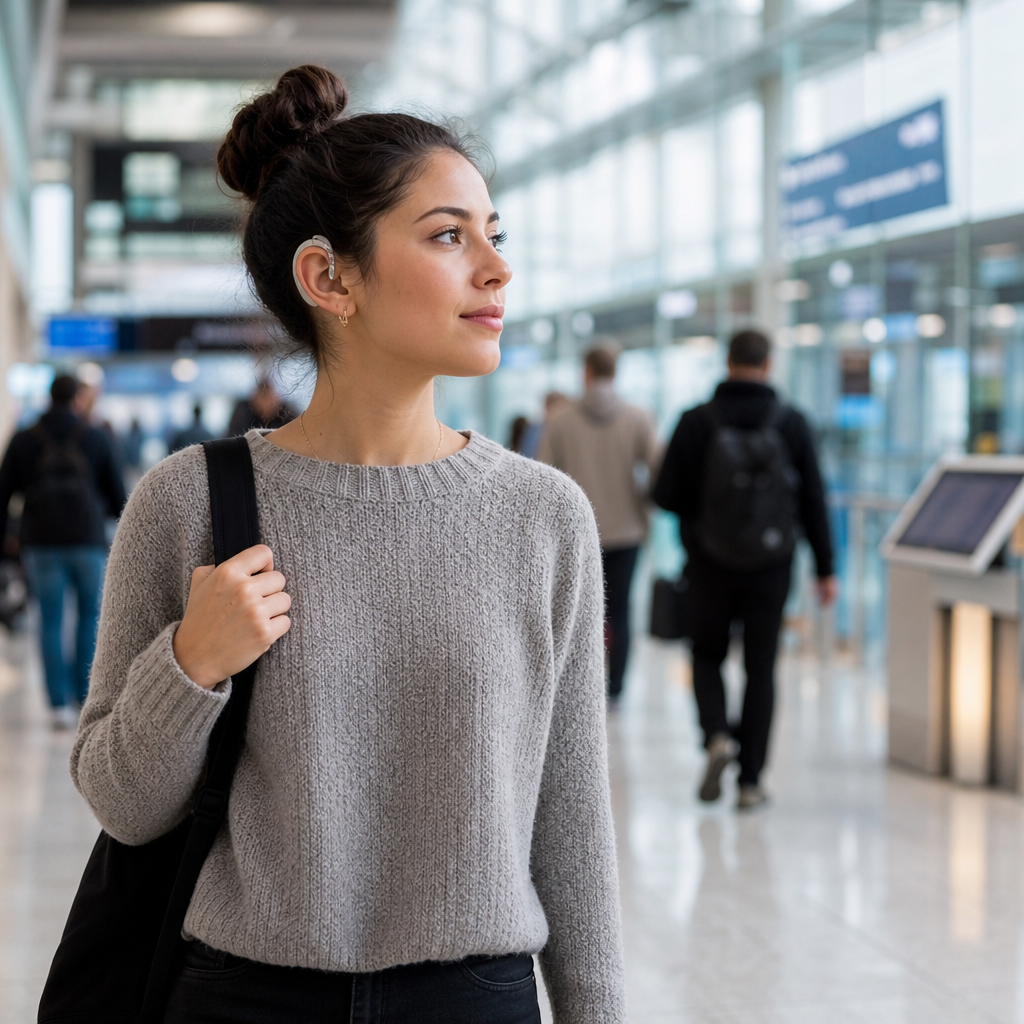
Navigating public spaces as a Deaf person is not a single skill but a collection of practical habits, accessibility strategies, and communication choices that make everyday life safer, smoother, and more independent. Public spaces include transport systems, shops, restaurants, government offices, healthcare settings, parks, schools, workplaces, event venues, and any shared environment where people move, gather, and rely on visual, spoken, or digital information. For Deaf people, the main challenge is rarely the place itself. It is the way information is delivered inside that place: over loudspeakers, behind masks, in fast verbal exchanges, or through staff who have never learned basic accessible communication.
In my work with Deaf community members and accessibility planning, the most effective approach has never been “try harder to fit in.” It has been learning how to read environments, set expectations early, use the right tools, and know your rights. Deaf people are not a single group, either. Some use sign language as their first language. Some are oral. Some rely on lipreading, captions, hearing aids, or cochlear implants. Some identify as culturally Deaf, while others describe themselves as hard of hearing. Public access needs vary widely, but the goal is the same: equal participation without unnecessary barriers.
This matters because public space is where daily life happens. Buying groceries, catching a train, asking for directions, attending a class, or responding to an emergency should not depend on hearing announcements perfectly. Good navigation skills reduce stress, prevent misunderstandings, and protect personal safety. They also improve confidence. When you know how to request written communication, position yourself for visibility, use live transcription apps, and identify accessible businesses, you spend less energy reacting and more energy living. This guide serves as a hub for everyday life tips, helping Deaf readers build repeatable systems for common situations while giving families, service providers, and allies a clearer view of what effective access looks like.
Prepare Before You Leave Home
The easiest public interaction is the one you set up before it becomes urgent. Preparation starts with route planning, because transit delays, platform changes, and gate announcements often appear first as audio. Check official transit apps before leaving. Many rail and bus systems now publish live service alerts in text. Save maps offline, screenshot booking confirmations, and keep important addresses pinned in your phone. If you are going to a clinic, hotel, municipal office, or event, contact the venue in advance and ask specific questions: Is there captioning, a visual queuing system, a text-based check-in option, or staff trained to communicate in writing?
I recommend building a small access kit. Mine usually includes a fully charged phone, portable battery, earbuds for speech-to-text accuracy if needed, a note app with saved phrases, identification, emergency contacts, and any assistive tech batteries or chargers. A simple phrase card can also help in noisy or rushed settings: “I am Deaf. Please face me, speak clearly, or type/write your message.” This saves time and removes guesswork. If you use sign language, storing a note that says “Please book a qualified interpreter” for future appointments can make follow-up easier. Preparation is not about expecting failure. It is about reducing avoidable friction in environments built around sound.
Use Visual Awareness as Your Main Navigation System
Public spaces reward visual scanning. Deaf travelers often become highly skilled at reading movement, signage, lighting, facial expression, and crowd behavior, and that skill deserves to be used deliberately. When entering a new place, pause for a few seconds and identify exits, screens, information desks, queue systems, and sightlines. In stations and airports, stand where boards are easy to read, not where announcements are loudest. In restaurants, ask for a seat with a clear view of staff movement and entrances. In waiting rooms, sit where your name can be called visually or where staff can approach you directly.
Lighting matters more than many hearing people realize. Backlighting makes lipreading and sign communication harder. Sunglasses, masks, chewing gum, and looking away while speaking all reduce understanding. If a staff member starts talking while walking away, stop them immediately and ask them to face you. In crowded environments, I tell people to “follow the information, not the noise.” That means tracking digital displays, body language, and process flow. If everyone in a queue suddenly moves, look for the trigger. If a platform empties, verify the board before assuming why. These habits turn confusion into information and help you stay ahead of abrupt changes.
Choose the Communication Method That Fits the Moment
No single communication method works everywhere. The best choice depends on speed, privacy, background noise, staff patience, and whether the topic is simple or high stakes. For quick exchanges, typed notes on a phone are often fastest. For more nuanced conversations, live transcription apps such as Ava, Otter, Google Live Transcribe, or built-in speech recognition tools can help, though accuracy depends on accents, internet connection, and noise. Lipreading can support communication, but it is not a complete solution; many speech sounds look identical on the lips, and even strong lipreaders miss meaning when speakers turn away or cover their mouths.
Clear requests get better results than general ones. Instead of saying “I can’t hear you,” try “Please type that,” “Please face me,” “Please point to the option on the screen,” or “One question at a time.” In service settings, I have seen communication improve immediately when Deaf customers direct the interaction instead of waiting for staff to guess. In longer appointments, especially legal, educational, or medical ones, written communication may be inadequate. That is the point where interpreter access, real-time captioning, or a support person may be necessary. Independence does not mean refusing accommodations. It means choosing the method that delivers accurate understanding.
Handle Common Public Settings With a Repeatable Plan
Everyday life gets easier when you use the same decision-making process in familiar places. Shops, cafés, transport hubs, banks, and public offices each have predictable pressure points, and a repeatable plan reduces cognitive load. Start by identifying where information appears visually, how queues move, and who has authority to solve problems. Then choose the quickest accessible communication method for that setting. The table below shows practical approaches that work well in real-world routine situations and can be adapted to local systems, whether you are in a small town library or a major international airport.
| Public setting | Common barrier | Best immediate strategy | Useful tool or support |
|---|---|---|---|
| Bus or train station | Audio-only delay announcements | Watch boards, verify with staff by text or notes | Transit app, screenshots, portable charger |
| Restaurant or café | Fast verbal ordering in noisy space | Point to menu items, ask staff to face you | Phone notes, QR menu, visual seating choice |
| Clinic or hospital desk | Name called aloud from waiting room | Tell staff you need visual notification | Alert note on file, companion, interpreter booking |
| Retail store | Questions asked while cashier looks away | Ask for itemized screen view or written total | Card reader display, note app |
| Government office | Complex forms and verbal instructions | Request written steps and slower pacing | Email follow-up, captioned remote meeting |
These strategies work because they reduce dependence on improvisation. For example, when using public transport, check the platform display every time the train stops unexpectedly, not only when others react. In cafés, order by pointing and confirming the price on screen. In clinics, tell reception at check-in that you will not hear your name called. Repetition builds confidence, and confidence makes public space feel less like a test and more like a place you belong.
Prioritize Safety and Emergency Access
Safety planning should be specific, not vague. Many public spaces still rely on sirens, shouted instructions, or spoken warnings, so Deaf people need visual alternatives wherever possible. When entering hotels, theaters, campuses, or large office buildings, note exits and look for flashing fire alarms, digital emergency boards, or staff who can provide visual guidance. If you travel often, choose accommodations that confirm accessible alarm systems in writing. In ride-share trips, use in-app messaging before pickup so the driver knows your communication preference and exact meeting point.
Emergency communication on smartphones has improved significantly. Features such as emergency SOS, medical ID, location sharing, and text-based contact shortcuts can speed response time. In some regions, text-to-911 or equivalent emergency SMS services are available, though coverage varies and must be verified locally. Save a short emergency template in your phone with your name, Deaf status, location details, and the help needed. In crowded public events, agree on a fallback meeting place with family or friends in case communication breaks down. The key principle is simple: never assume an emergency system is accessible until you have confirmed the visual or text pathway yourself.
Know Your Rights and Ask for Access Clearly
Accessible public life is not a favor. In many countries, it is a legal obligation grounded in disability rights law, public accommodation rules, transport standards, and education or employment regulations. The exact framework depends on where you live, but the practical principle is consistent: if a service is open to the public, communication access must be provided in a meaningful way. That may include qualified sign language interpreters, captioning, assistive listening systems, written communication, visual alerts, or adjusted service procedures. Hospitals, courts, schools, public agencies, and event venues generally carry stronger duties because the consequences of miscommunication are higher.
What works best in practice is a concise, documented request. State the barrier, the accommodation you need, and when you need it. For example: “I am Deaf and need a qualified interpreter for my appointment on Tuesday at 10 a.m.” or “I need staff to notify me visually when my table is ready.” Follow important requests by email or text so there is a record. If a business refuses or substitutes an ineffective option, escalate politely to a manager and repeat the specific need. Clear advocacy is not confrontation. It is how access becomes routine, both for you and for the next Deaf person who walks through the door.
Build Confidence Through Community and Everyday Practice
Confidence in public spaces grows from repetition, not personality. The Deaf people who appear effortlessly self-assured in airports, stores, or civic offices usually have systems they use over and over. Practice those systems in low-stakes settings first. Try ordering coffee with a note app, asking a librarian for help using speech-to-text, or requesting visual notification at a salon. Review what worked and what did not. Small adjustments matter: brighter seating, simpler phrases, slower pacing, or a different app can change the entire interaction.
Community knowledge is one of the strongest tools available. Local Deaf groups, online forums, disability organizations, and social media communities often know which venues caption events, which clinics communicate well, and which transport routes are easier to navigate. Share your own findings too. Everyday life tips become more valuable when they are specific: which museum uses vibrating pagers, which pharmacy accepts text questions, which gym provides visual class cues. If you are a family member, friend, or business owner reading this, the most helpful step is simple: make communication visible, flexible, and respectful. Public spaces become more usable when access is planned in, not added after someone struggles.
Navigating public spaces as a Deaf person becomes easier when you treat access as a practical system: prepare in advance, scan visually, choose the right communication method, use repeatable plans, and protect your safety with clear backup options. Everyday life tips are powerful because they turn uncertain situations into predictable ones. A checked transit app, a saved phrase card, a direct request for written instructions, or a confirmed visual alert can prevent stress before it starts. Over time, these habits support independence without forcing Deaf people to carry the entire burden of adaptation.
The broader benefit is participation. When Deaf people can move through stations, shops, clinics, schools, and public events with reliable access, daily life opens up. Errands take less energy. Social plans become easier to keep. Important decisions are made with full information, not guesswork. Businesses and institutions benefit too, because accessible communication improves service quality for everyone, including older adults, non-native speakers, and people in noisy environments. If you want to improve your everyday life tips, start with one setting you use every week and make it more accessible on purpose. Then build from there.
Frequently Asked Questions
What are the most effective ways for a Deaf person to navigate public spaces safely and confidently?
Navigating public spaces as a Deaf person usually works best when it is approached as a set of practical habits rather than one single technique. Safety and confidence often come from combining visual awareness, planning ahead, and clear communication strategies. Many Deaf people find it helpful to check a location before leaving home, including opening hours, layout information, accessibility features, digital ticketing options, and whether the venue offers text-based support, captioning, or sign language interpretation. This kind of preparation reduces uncertainty and makes it easier to focus on the environment once you arrive.
In the space itself, visual positioning matters a great deal. Standing where entrances, exits, display boards, staff counters, and movement around you can be clearly seen helps reduce missed information. On transport systems, for example, it can be useful to stay near digital announcement screens rather than relying on spoken updates. In shops, restaurants, and offices, choosing a place with good lighting and a clear line of sight makes communication easier. Many Deaf people also use smartphones as core navigation tools for maps, live text, note-writing, messaging, translation apps, and emergency contact access.
Confidence also improves when communication methods are established quickly and directly. Simple steps such as pointing to your ear, signing that you are Deaf, typing a short message on your phone, or using a prepared note can immediately shift the interaction into a more accessible format. The goal is not to make the other person perfect at communicating, but to help them adjust in a way that is efficient and respectful. Over time, these habits create a strong sense of independence because they reduce reliance on unpredictable spoken information and replace it with methods you control more easily.
How can Deaf people communicate effectively with staff, service workers, and strangers in public places?
Effective public communication often starts with being clear, calm, and direct about what works best for you. In many situations, hearing people simply do not realize that spoken instructions, calling out from behind, or rapid conversation are inaccessible. A quick visual signal can make a big difference. Some Deaf people point to their ear and then gesture for writing, while others use a phone screen that says something like, “I’m Deaf. Please face me and type or write if needed.” This saves time and sets expectations immediately.
Face-to-face communication tends to work better when the other person is positioned properly. Good lighting, unobstructed facial visibility, and slower pacing can all improve understanding for people who use lipreading, residual hearing, or sign-supported communication. It is reasonable to ask someone to repeat themselves, rephrase rather than just repeat, or write down key information such as directions, prices, appointment details, gate changes, or safety instructions. In busy environments like train stations, clinics, restaurants, or government offices, written confirmation is often more reliable than trying to piece together partial spoken information.
Technology can be extremely helpful here. Notes apps, speech-to-text tools, messaging platforms, QR-code ordering systems, online check-in forms, and customer service chats can reduce friction in places where verbal interaction is the default. For more complex settings such as hospitals, schools, workplaces, legal appointments, or official meetings, requesting formal accommodations may be necessary. Depending on the situation, that could include a qualified sign language interpreter, real-time captioning, or written information provided in advance. Effective communication in public spaces is not about making do with inaccessible systems; it is about using the tools, rights, and strategies that allow information to be exchanged clearly and accurately.
What accessibility features should Deaf people look for when using transport, shops, healthcare services, and other public environments?
The most useful accessibility features are the ones that make important information available visually and consistently. In transport systems, this includes digital departure boards, platform screens, text alerts, app-based journey updates, visual emergency notices, and clearly marked changes to routes or stops. Reliable visual information is essential because spoken announcements about delays, platform changes, or service disruptions are easy to miss. If a system has an official app, it is often worth using it, since push notifications may provide updates faster and more accurately than waiting for staff to relay information.
In shops, restaurants, and service counters, accessibility often comes down to communication flexibility. Staff who are willing to write things down, point to options, confirm totals on a screen, and maintain eye contact make the experience much smoother. Self-service kiosks, digital menus, table-ordering apps, and text-based customer support can also improve independence. At event venues, parks, schools, and workplaces, helpful features include captioned videos, visual schedules, screen-based announcements, flashing emergency alarms, and designated staff who understand accessible communication methods.
Healthcare and government settings require especially strong accessibility because misunderstanding critical information can have serious consequences. Deaf people should look for appointment reminders by text or email, online forms, visible check-in systems, written aftercare instructions, captioned educational materials, and interpreter booking processes that are clear and dependable. In emergency or high-stakes settings, visual alarms and written communication protocols are not optional conveniences; they are central accessibility measures. The best public environments are not those that force Deaf people to ask for every adjustment individually, but those that are designed from the start to communicate visually, clearly, and inclusively.
How can a Deaf person prepare for emergencies or unexpected situations in public spaces?
Preparation for emergencies begins with the understanding that many public warning systems still rely too heavily on sound. Because of that, Deaf people often benefit from building a personal emergency strategy before problems happen. This can include keeping a fully charged phone, portable charger, emergency contact list, medical details if relevant, and location-sharing options readily available. It is also useful to save key phrases in a notes app, such as “I’m Deaf,” “Please type,” “What is happening?” “Where is the exit?” and “I need help.” In stressful moments, having prewritten communication can save valuable time.
Situational awareness is also important. On entering a building, it helps to notice exits, information desks, digital screens, staff positions, and any visible alarm systems. In stations, venues, hospitals, or offices, identifying where visual updates are likely to appear can make a major difference if an evacuation, closure, or delay occurs. If you are attending an event or appointment, letting a companion, staff member, or organizer know your communication preferences in advance can improve safety if plans suddenly change. Some Deaf people also prefer to sit or stand in places where they can easily observe crowd movement, because the behavior of others often signals that something important is happening even before details are clear.
For recurring environments such as work, school, or frequently used transport routes, it is worth learning the emergency procedures and asking specifically how alerts will be made accessible. A flashing alarm, text alert, written instructions, or direct visual notification from staff should be part of that plan. In healthcare settings, transport hubs, and large venues, staff should be able to adapt communication quickly during urgent situations. Preparation does not eliminate risk, but it increases control, speeds up decision-making, and reduces the chance of missing critical information when conditions become confusing or fast-moving.
What rights and self-advocacy strategies can help Deaf people get better access in public spaces?
Self-advocacy is one of the most important tools a Deaf person can use in public life. In practical terms, it means recognizing that access is not a favor but a basic requirement for equal participation. While the exact legal protections vary by country, Deaf people are often entitled to reasonable accommodations in many public and professional settings, especially in healthcare, education, employment, government services, and large public venues. These accommodations may include interpreters, captioning, written communication, accessible alerts, or alternative methods of receiving important information.
Strong self-advocacy usually works best when it is specific. Instead of only saying “I can’t hear,” it is often more effective to say exactly what is needed: “Please face me and speak clearly,” “Please type that information,” “I need written instructions,” or “I need an interpreter for this appointment.” Clear requests make it easier for staff to respond appropriately and reduce misunderstandings. If the situation is more formal, such as a medical consultation, legal meeting, workplace event, or school process, it can help to request accommodations in writing ahead of time and keep copies of messages or confirmations.
It is also useful to escalate respectfully when access is not provided. Asking for a supervisor, accessibility coordinator, patient advocate, or customer service manager can move the issue to someone with more authority. Many barriers in public spaces are not caused by bad intentions but by poor systems, lack of training, or assumptions that everyone can rely on spoken information. Speaking up helps address the immediate problem and can improve access for others in the future. The most effective mindset is to see self-advocacy not as being difficult, but as being informed, prepared, and clear about what equal access actually requires.