
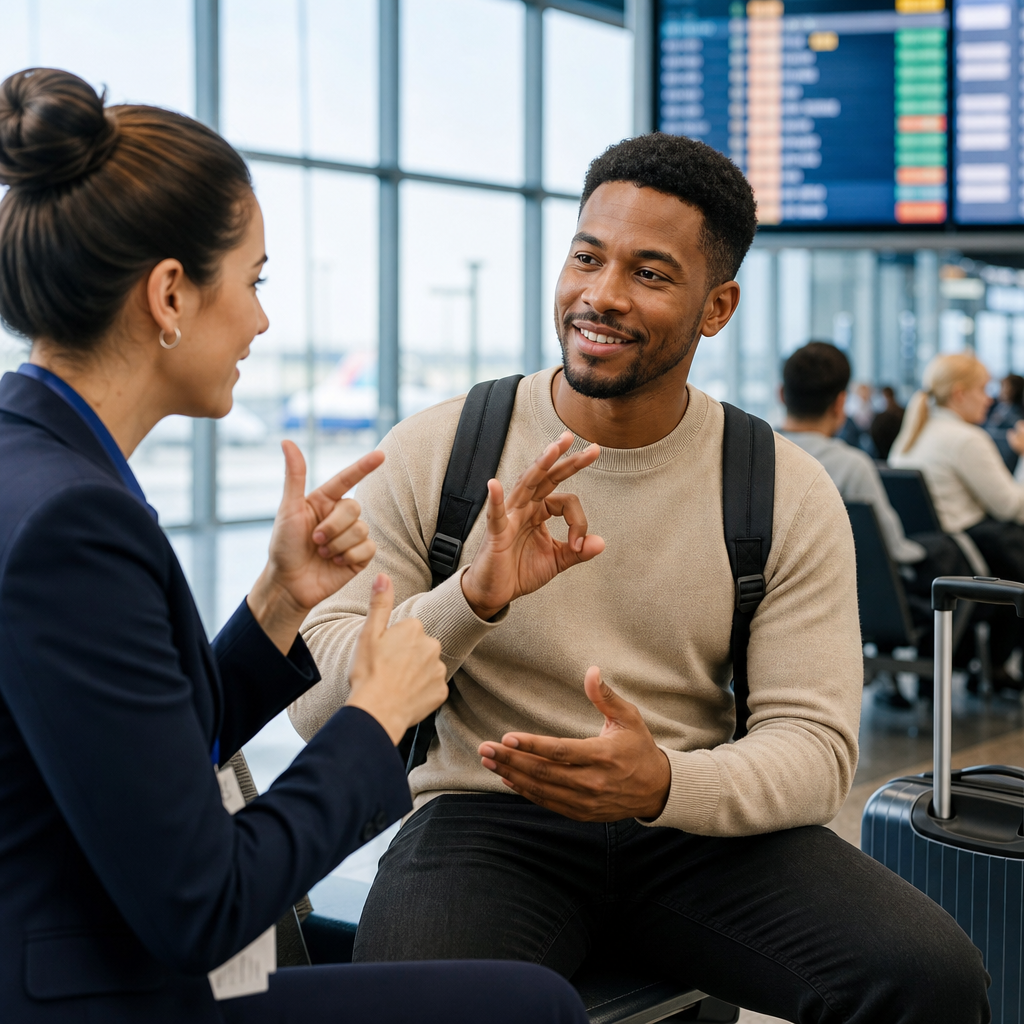
Travel as a deaf individual becomes easier, safer, and far more enjoyable when preparation focuses on access, communication, and confidence rather than limitations. Deaf travel refers to any trip taken by people who are deaf, hard of hearing, late-deafened, or who primarily rely on sign language, captions, visual alerts, hearing technology, or written communication to navigate the world. In everyday life, the same habits that support work, school, appointments, and social plans also shape successful trips: confirming details in writing, choosing accessible services, using dependable apps, and planning for breakdowns before they happen.
I have worked with deaf travelers, accessibility coordinators, and service teams across hotels, airports, and group tours, and the pattern is consistent: the best trips are built on systems, not luck. A missed gate announcement, an inaccessible hotel fire alarm, or a tour guide who only speaks while facing away from the group can turn a simple journey into a stressful one. On the other hand, a traveler who prebooks written check-in instructions, stores offline maps, requests visual safety alerts, and knows how to escalate an access problem usually stays in control even when plans change.
This matters because travel compresses ordinary daily tasks into unfamiliar environments. Booking transport, asking for directions, checking in, ordering food, handling emergencies, and understanding safety information all happen quickly and often under pressure. Deaf individuals may face barriers at each step, but those barriers are predictable. That is good news, because predictable problems can be managed. This hub article covers the everyday life tips that make deaf travel practical, from trip planning and airports to hotels, tours, dining, safety, and technology. It is designed to give direct answers and a strong foundation for deeper guides on specific travel situations.
Plan the trip around access, not just price or location
The most useful deaf travel tip is to evaluate accessibility before you book anything. A cheap flight with frequent gate changes and poor app support may be a worse choice than a slightly more expensive airline with strong mobile notifications. A stylish hotel without visual fire alarms or text-based guest communication is not a good deal. Start by identifying your communication needs in plain terms. Do you use American Sign Language, British Sign Language, another national sign language, speechreading, hearing aids, cochlear implants, captions, or text chat? Do you need visual emergency alerts, vibrating alarms, or written tour materials? Once you define those needs, you can ask precise questions instead of generic ones.
When I help travelers compare options, I tell them to build a short access checklist and use it for every booking. For flights, ask whether schedule changes, gate changes, and boarding notices are sent through the airline app, SMS, or email in real time. For trains, verify platform alerts and disruption notices. For hotels, ask whether rooms have visual alert systems for fire alarms, door knocks, and phone calls. For tours, request written itineraries and confirm whether guides can use microphones linked to assistive listening systems or provide captioned content. Accessibility statements on websites are useful, but direct written confirmation is better because you can save it and refer to it later if staff on site are unaware.
Insurance also deserves attention. Many travelers buy the cheapest policy and never review the wording. Check how the insurer handles emergency communication, medical interpretation, replacement of hearing devices, and travel disruption. If you use hearing aids or a cochlear implant processor, confirm whether loss or damage is covered and whether limits are realistic. Keep model numbers, serial numbers, audiologist details, and photos stored in a secure cloud folder. That level of organization sounds small, but it saves hours during a stressful claim.
Use technology that supports independent communication
Technology is one of the biggest practical advantages for deaf travelers because it turns spoken-only situations into readable, visible, and documented exchanges. The smartphone is the core tool. Before any trip, install airline, rail, hotel, rideshare, maps, translation, messaging, notes, and weather apps. Turn on push notifications and test them. Download offline maps through Google Maps or another navigation tool, and save your accommodation, embassy, clinic, pharmacy, and meeting points as starred locations. If cellular service fails, those saved points still matter.
Live transcription apps can help with check-in counters, taxi rides, and short service interactions. Accuracy varies with accents, noise, and internet quality, so they are support tools rather than perfect solutions. Built-in features such as Live Transcribe on Android, speech recognition on iPhone, and captioning within video platforms can reduce friction in many situations. Translation apps are also useful, especially those that convert typed phrases into the local language. Keep a note on your phone with common travel sentences such as “I am deaf, please type your answer,” “Please face me when speaking,” “Where is platform 6?” and “I need the written safety instructions.”
Power management is part of accessibility. If your phone battery dies, you can lose captions, maps, booking records, digital boarding passes, and emergency contacts at once. Carry a charged power bank, a wall adapter that fits the destination, and any cables specific to your hearing technology. If you rely on disposable hearing aid batteries, pack more than you think you need. If you use rechargeable devices, check voltage compatibility and charging times. For longer travel days, I recommend splitting chargers and batteries between carry-on bags so one lost bag does not wipe out your communication setup.
Handle airports, stations, and flights with fewer surprises
Airports and train stations are challenging because they are noisy, fast-moving, and heavily dependent on audio announcements. The solution is to reduce dependence on public announcements before you arrive. Check in online, choose seats in advance, and use the carrier’s app for updates. At the airport, tell the gate staff early that you are deaf or hard of hearing and ask how they will notify you of boarding changes or delays. Many staff members are willing to help when informed clearly and early; problems usually arise when access needs are revealed only after disruption begins.
Security screening may require brief communication about hearing devices or implants. If you use a cochlear implant or hearing aids, know the manufacturer guidance and carry a medical card if available. TSA Cares in the United States and similar support services elsewhere can provide assistance, but the quality varies by airport. Request support in advance if the environment is likely to be difficult. During the flight, visual safety cards matter, but so does direct access to crew communication. If there is an issue such as turbulence, diversion, or a medical event, ask the cabin crew to provide written updates when possible.
For trains and buses, platform changes are a common problem. Do not assume station screens are enough, because some smaller stations update late. Follow the operator app, and if the route is important, ask station staff to type any disruption details. On long-distance coaches or shuttle buses, confirm pickup points in writing. I have seen more missed rides caused by vague pickup instructions than by any other communication issue. “Outside the main entrance” is not specific enough in a large terminal.
| Travel stage | Main risk for deaf travelers | Best prevention step |
|---|---|---|
| Airport check-in | Verbal changes to baggage or gate rules | Use app alerts and request written instructions at the desk |
| Security screening | Misunderstanding around devices or instructions | Carry device information and ask staff to face you or type |
| Boarding | Missing spoken boarding calls | Stay near the gate screen and notify gate agents early |
| Train platform | Last-minute platform change | Monitor operator app and verify changes with station staff |
| Hotel arrival transfer | Missing driver contact or pickup point | Confirm vehicle details, location, and messaging method in advance |
Choose lodging that is truly accessible and safe
Hotels often describe themselves as accessible while only addressing mobility access. Deaf travelers need a more specific review. Ask whether the room has visual fire alarms, vibrating or flashing door alerts, caption-enabled televisions, text-based room service options, and staff who can communicate through chat or writing. If the hotel says “we can note your file,” that is not the same as confirming an actual device in the room. Ask what equipment is installed permanently, what can be added on request, and whether it will be tested before arrival.
Short-term rentals can be comfortable, but they require extra caution because safety standards vary. Verify smoke and carbon monoxide alarms, building entry instructions, internet reliability, and host response methods. If the only way to reach the host is by voice call, that is a red flag. Hotels usually offer better backup support during late-night problems, while rentals can provide more space and kitchen access. The right choice depends on your trip, but safety communication should decide the tie.
Once you arrive, do a quick access audit. Check the alarm features, door notifications, lighting near entrances, and whether the front desk can message you. Take photos of any missing equipment and raise it immediately in writing. If staff cannot resolve a safety issue, escalate to a manager and document the conversation. This is not being difficult; it is routine risk management. In real terms, an inaccessible emergency alert system is not an inconvenience. It is a safety failure.
Navigate tours, restaurants, and daily interactions with confidence
Everyday travel life includes far more than transport and lodging. The quality of a trip is often decided by small interactions: ordering breakfast, joining a museum tour, asking for directions, checking market prices, or understanding a local safety warning. A useful strategy is to lead with a short, calm communication cue. Something as simple as “I am deaf, please type” or “Please face me” often resets the interaction quickly. Most people respond well when the request is specific.
Group tours can be rewarding, but only if information is accessible. Ask whether the guide can provide a written summary, route map, or stops list before the tour begins. Museums increasingly offer captioned videos, induction loops, and app-based transcripts, but availability differs widely by country and by venue. If the tour depends heavily on storytelling while walking, position matters. Stand where you can see the guide’s face clearly and avoid backlighting that makes speechreading difficult. If the guide wears a microphone, ask whether there is a compatible assistive listening option.
Restaurants present a different set of barriers. Loud spaces reduce speechreading and make hearing devices less effective. QR-code menus and table ordering can improve access, while spoken specials and shouted order numbers can create problems. In food halls or busy cafés, I often recommend mobile ordering when available because it removes multiple points of confusion. For dietary or allergy needs, use written messages rather than relying on quick verbal exchanges. Accuracy matters more than social smoothness in those moments.
Prepare for emergencies, cultural differences, and travel stress
Emergency planning is where everyday life habits matter most. Save local emergency numbers, your accommodation address, and key medical information in your phone and on paper. Some countries support text emergency services, while others still rely mainly on voice. Research this before departure. If text access is limited, identify alternatives such as hotel staff, local relay services, emergency apps, or nearby police and medical centers. Share your itinerary with a trusted person and set regular check-in times for longer solo trips.
Cultural differences also affect communication. Sign languages are not universal, and gestures that seem obvious at home may be unfamiliar elsewhere. Learn a few local signed or written basics if you will interact often with deaf communities in the destination. At the same time, do not assume every access request will be understood in the same legal or social framework. Standards influenced by the Americans with Disabilities Act, the Equality Act, or EU accessibility rules may not apply everywhere in the same way. Knowing that helps you plan more realistically and advocate more effectively.
Finally, manage energy as seriously as logistics. Deaf travel can require more concentration because you are constantly monitoring visual information, adapting communication, and checking for missed details. Build in recovery time. Choose one or two key activities per day instead of overscheduling. Keep snacks, water, and a quiet reset plan for delays. Confidence does not come from pretending barriers do not exist. It comes from expecting them, preparing for them, and knowing you have practical tools to respond.
Travel as a deaf individual is not about waiting for perfect accessibility. It is about using clear systems that make everyday life on the road manageable: confirm access in writing, rely on strong visual and text-based tools, choose transport and lodging that communicate well, and treat safety features as essential, not optional. Those steps reduce missed information, lower stress, and preserve independence. They also make room for what travel is supposed to offer: connection, discovery, rest, and real participation in the places you visit.
The biggest benefit of smart planning is freedom. When your alerts work, your bookings are documented, your devices are charged, and your accommodation is prepared, you spend less energy fixing preventable problems and more energy enjoying the trip. That is true for weekend breaks, business travel, family visits, and long international journeys. Everyday life tips are the foundation of successful deaf travel because travel is simply everyday life in a less familiar setting, with higher stakes and less margin for confusion.
Use this guide as your hub, then build your own travel checklist from it before the next trip. Review your communication needs, update your apps, confirm accessible lodging, and save your safety information today. A smoother journey usually starts long before departure.
Frequently Asked Questions
How can a deaf traveler prepare for a trip to make communication easier?
The best travel experiences usually start with preparation, and that is especially true for deaf and hard of hearing travelers. Before leaving, it helps to identify the communication tools that work best for you, whether that means sign language, speechreading, captions, hearing aids, cochlear implants, text-based communication, or a mix of methods. Save hotel confirmations, transportation details, tour bookings, and emergency contacts in an easy-to-access place on your phone. Many travelers also prepare short written notes explaining their communication preferences, such as asking staff to speak clearly, type messages, or face them directly. If you use hearing technology, pack extra batteries, chargers, drying kits, adapters, and protective cases in your carry-on rather than checked luggage.
It is also smart to research accessibility before you go. Contact hotels to ask about visual alarm systems, door knock alerts, captioned televisions, and text-based communication options. Check whether airlines, train companies, or cruise operators offer pre-boarding assistance, visual announcements, or app-based updates. If you are traveling internationally, learn a few key phrases in the local written language and remember that sign language is not universal, so local signs may differ from your own. A little planning reduces stress and gives you more control, which often makes travel feel safer, smoother, and far more enjoyable.
What should deaf individuals know about flying and airport accessibility?
Airports can be noisy, fast-moving, and highly dependent on spoken announcements, so deaf travelers benefit from taking a proactive approach. Most airlines allow passengers to add accessibility notes to a reservation, and it is worth doing that in advance. You can request communication support, ask gate agents to notify you of changes directly, and explain that you may not hear boarding calls or last-minute announcements. Once at the airport, check in with the airline staff at the counter or gate so they know your preferred communication method. Many deaf travelers ask agents to tap them, wave, or show written updates if there is a gate change, delay, or boarding adjustment.
Technology can help a great deal during air travel. Airline apps often provide real-time notifications for gate changes, delays, and boarding status, which can be more reliable than waiting for overhead announcements. Keep your phone charged and carry a portable battery pack. During security screening, you can inform officers if you wear hearing devices or need visual communication. On the plane, it helps to tell flight attendants how you prefer to receive safety or service information. Some airlines offer captioned entertainment systems, but availability varies, so bringing your own captioned content is often a good backup. The key is not to assume others will automatically know what you need; a brief explanation early on can prevent confusion later.
How can deaf travelers stay safe in hotels, public spaces, and unfamiliar places?
Safety while traveling is not only about avoiding danger; it is about making sure you can receive important information clearly and quickly. In hotels, ask for an accessible room or accessibility features that match your needs. Many properties can provide visual or vibrating fire alarms, door knock signalers, bed shakers, or rooms with better communication access. Confirm these requests before arrival and again at check-in, because accessibility setups are not always automatic. It is also wise to learn the layout of the building, identify emergency exits, and understand how staff will contact you if there is an emergency or major disruption.
In public places, visual awareness becomes especially important. Navigation apps, written directions, offline maps, and transportation apps can help you stay oriented without depending on spoken instructions. If you are in a country where you do not speak the local language, having key phrases translated on your phone can make asking for help much easier. Some travelers wear medical or accessibility identification, though that is a personal choice. If you are traveling alone, share your itinerary with someone you trust and schedule regular check-ins by text or messaging app. Confidence comes from systems, not guesswork, and when you build those systems in advance, unfamiliar places become much easier to manage.
What are the best communication tools and strategies for deaf people while traveling?
The most effective communication tools are the ones that fit your daily life, because travel tends to go more smoothly when you rely on familiar methods. Smartphones are often the most useful all-in-one travel tool for deaf individuals. They can be used for text messaging, note writing, live transcription, speech-to-text apps, translation apps, maps, booking confirmations, and emergency communication. Video relay or video calling may also help in some settings if you have strong internet access. Many travelers keep a notes app ready with common requests, such as asking for written instructions, explaining dietary needs, or confirming a reservation without needing a spoken conversation.
Simple in-person strategies also make a big difference. Face the person you are speaking with and encourage them to face you as well. If someone is wearing a mask, standing in poor lighting, or speaking while looking away, ask them to repeat or type the information. Do not hesitate to use gestures, written messages, or translation tools when necessary. In group tours, transportation hubs, or busy restaurants, it helps to identify one point person who can give you updates directly. Communication access is not about forcing one method in every situation; it is about being flexible, clear, and ready with backups. The more options you carry, the less likely a communication barrier will disrupt your trip.
Can deaf individuals travel independently, and what builds confidence for solo travel?
Yes, deaf individuals can absolutely travel independently, and many do so successfully for work, study, leisure, and family visits. Independent travel is less about hearing and more about planning, problem-solving, and self-advocacy. The strongest confidence usually comes from understanding your needs and preparing for predictable challenges. Start with destinations, accommodations, and transportation systems that provide strong digital information and visible updates. Build routines for keeping devices charged, saving reservations offline, checking schedules in apps, and carrying written details for your lodging and emergency contacts. When basic logistics are organized, you have more energy to enjoy the experience instead of constantly reacting to surprises.
Confidence also grows with practice. Some travelers begin with short trips close to home, then gradually take on busier cities, flights, or international destinations. Each trip teaches what works best for you, from hotel communication to airport timing to backup alert systems. Self-advocacy is a major part of successful solo travel, and that means calmly telling people what you need instead of waiting for them to guess. If a staff member does not understand at first, try another method rather than assuming the interaction has failed. Travel as a deaf individual is not defined by limitation; it is shaped by preparation, access, and the willingness to create a communication-friendly environment wherever you go.