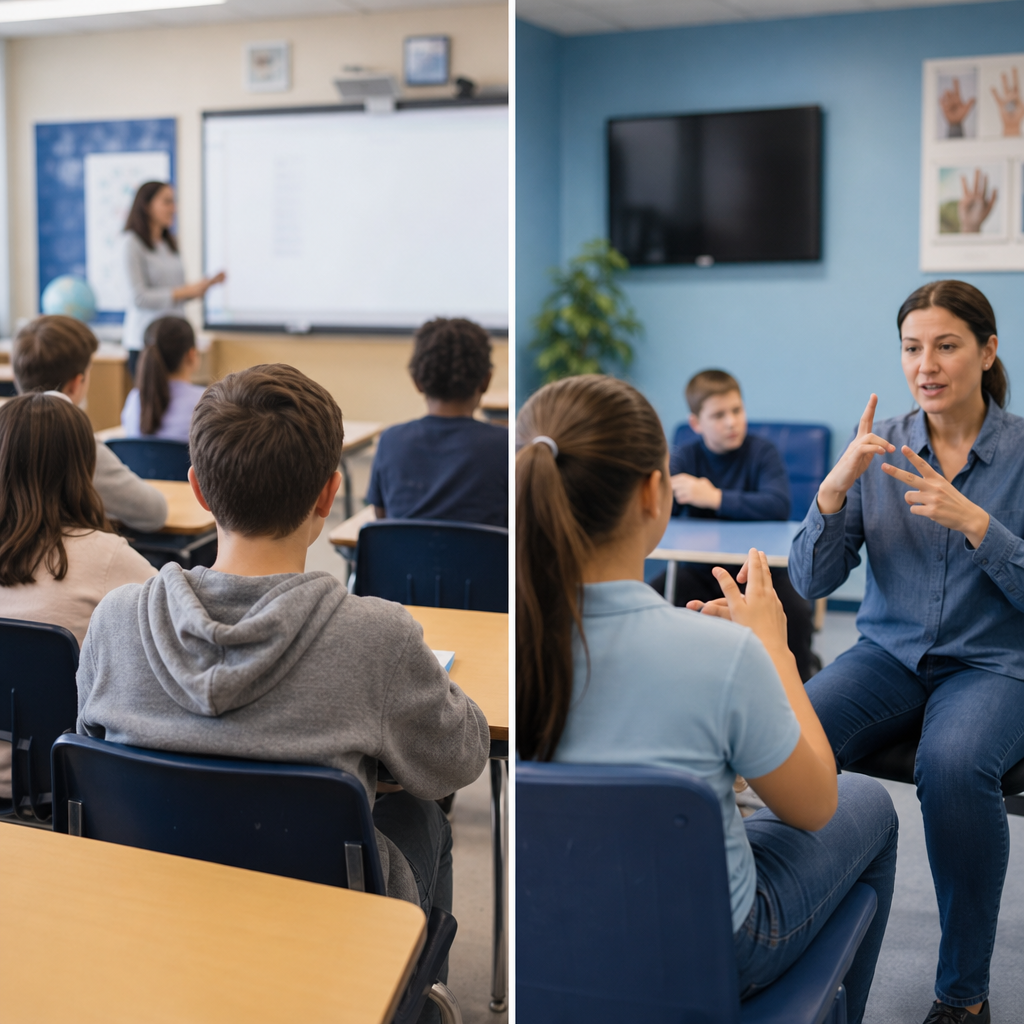
Choosing between mainstream and Deaf schools shapes a child’s language access, academic progress, identity development, and long-term inclusion. In education accessibility, this decision is not simply about placement; it is about whether a student can fully participate in learning from the first bell to the last assignment. Mainstream schools generally serve hearing and deaf students together, often with accommodations such as interpreters, captioning, assistive listening systems, or note-taking support. Deaf schools are designed around deaf learners, with communication, staffing, and school culture built to support signed language, visual access, and deaf community norms.
When families ask which setting is better, the honest answer is that accessibility depends on fit, quality, and consistency. I have worked with school teams reviewing classroom access plans, and the biggest difference is not ideology. It is whether the student can directly access instruction, peer interaction, extracurricular life, assessments, and informal learning moments without constant barriers. Education accessibility means more than legal compliance. It includes language acquisition, teacher communication, visual classroom design, social belonging, access to specialized services, and readiness for college or work.
This hub article explains the accessibility differences between mainstream and Deaf schools in practical terms. It defines the key issues families, educators, and advocates should evaluate: communication access, curriculum delivery, support services, social inclusion, academic expectations, and transition planning. It also places these choices within the broader standards that shape accessible education, including individualized planning, language-rich environments, and equal opportunity principles. For readers exploring education accessibility, this page provides the core framework that connects related topics such as classroom accommodations, interpreting quality, captioning, deaf identity, assistive technology, and inclusive school policy.
The goal is not to present one universal answer. Some deaf students thrive in mainstream settings with excellent supports and strong family advocacy. Others gain far better access in Deaf schools where signed communication is embedded into every part of the day. Understanding the differences helps families make informed decisions and helps schools improve the environments they offer.
What accessibility means in mainstream and Deaf school settings
Accessibility in education means a student can receive information, express knowledge, and participate in school life on equal terms. For deaf and hard of hearing students, that starts with communication access but does not end there. A student may have an interpreter and still miss side comments, peer discussion, science lab safety instructions, or lunch-table conversations. Another student may be in a Deaf school with fluent signers but face limited course options if the program is small. Accessibility is therefore multidimensional: linguistic, instructional, social, technological, and environmental.
In mainstream schools, access is usually added onto a system originally designed for hearing students. Common supports include sign language interpreters, Communication Access Realtime Translation, FM or DM systems, soundfield amplification, speech-to-text apps, captioned media, preferential seating, and itinerant teacher support. These tools can work well, especially when the student has a strong language foundation, teachers know how to pace communication, and support staff are qualified. The challenge is variability. One excellent interpreter can transform access, while inconsistent staffing can undermine an entire semester.
In Deaf schools, access is usually built into the educational environment. Teachers and staff often sign directly with students. Visual alerts, signed assemblies, and deaf-aware classroom routines reduce friction. Peer communication is immediate rather than mediated. This directness matters because children learn continuously, not just during formal instruction. Incidental learning, jokes, hallway reminders, group work, and emotional cues all affect development. In my experience, families often underestimate how much is lost when every interaction depends on relay through a single adult.
Communication access and language development
The most important accessibility question is simple: does the child have full access to language all day? Research across deaf education consistently shows that early, rich language exposure supports literacy, cognition, and social development. For some students, that means spoken language with hearing technology and strong auditory support. For others, it means sign language, either as a primary language or alongside spoken and written language. The school setting should match the student’s actual communication needs, not an aspirational model.
Mainstream schools can support communication access effectively when systems are well coordinated. Teachers face the student when speaking, videos are captioned, interpreters are certified and prepared, and classroom discussion is structured so one person speaks at a time. But mainstream access often becomes fragile in fast-moving environments: class debate, recess, sports, field trips, and substitute-teacher days. If a child spends substantial energy trying to catch up linguistically, learning suffers. Listening fatigue is real, and it often appears as inattention, withdrawal, or behavioral strain rather than obvious academic failure.
Deaf schools usually offer stronger direct language environments, particularly for students who use American Sign Language or another sign language. Language models are available across classrooms, hallways, and social spaces. Students can ask spontaneous questions without waiting for interpretation, and they see peers using language fluidly. That depth of access can accelerate confidence and participation. However, families should still evaluate language quality. Not every program has equally strong bilingual approaches, literacy instruction, or speech and listening services for students who use multiple communication modes.
Academic delivery, classroom design, and support services
Academic accessibility depends on how instruction is delivered minute by minute. In mainstream classrooms, teachers may lecture while writing on the board, show uncaptioned clips, or continue talking during transitions. These habits create access gaps even when formal accommodations exist. Effective mainstream practice includes advance distribution of slides, explicit turn-taking rules, captioned multimedia, clear sightlines, reduced background noise, and collaboration between general educators, special educators, and deaf education specialists. Universal Design for Learning often improves access for all students, not only deaf learners.
Deaf schools tend to design classrooms visually from the start. Seating supports eye contact, lighting reduces glare, and visual attention strategies are normalized. In science labs, physical education, and performing arts, direct signed instruction can remove delays created by interpreted communication. Specialized staff may include teachers of the deaf, speech-language pathologists familiar with deaf learners, audiologists, counselors, and dorm staff in residential programs. These supports can create a more coherent educational experience, especially for students with complex communication profiles.
Still, neither model is automatically superior across every academic area. Large mainstream schools may offer Advanced Placement courses, dual enrollment, robotics, and niche electives that small Deaf schools cannot match. Deaf schools may provide better access to core instruction but fewer advanced sections due to enrollment size. Families should compare actual offerings, not assumptions.
| Accessibility Factor | Mainstream School | Deaf School |
|---|---|---|
| Daily communication | Often mediated through interpreters, captioning, or hearing technology | Usually direct through sign-fluent staff and peers |
| Peer interaction | Can be limited without inclusive facilitation | Typically immediate and natural |
| Course variety | Often broader in large districts | May be narrower in smaller programs |
| Deaf role models | May be rare | Usually built into school life |
| Support consistency | Depends heavily on staffing and training | More integrated into the environment |
Social inclusion, identity, and emotional well-being
Accessibility is also social. A student who can technically follow a lesson but cannot easily join friendships is not fully included. In mainstream schools, deaf students may be the only deaf learner in the building. Some do well, especially when classmates know basic signing, teachers intentionally include them in discussion, and extracurricular activities are accessible. Others report isolation, especially during lunch, assemblies, and after-school events where supports are weaker than in class. Social access often breaks down first in the unstructured parts of the day.
Deaf schools often provide a stronger sense of belonging because communication is shared and deaf identity is visible rather than exceptional. Students see adults and older peers who are deaf succeeding academically, socially, and professionally. That representation matters. It can reshape self-expectations and reduce the burden of always adapting to hearing norms. In practice, I have seen students become more participatory within weeks of entering a language-rich Deaf environment because they no longer need to negotiate every conversation.
That said, mainstream settings can offer important inclusion benefits too. They may connect students more directly to neighborhood peers, local sports, and community life. For some families, remaining in the local district supports logistical stability and sibling connection. The key question is whether the student is included in reality, not merely enrolled in theory.
Legal rights, individualized planning, and how families should evaluate options
Families should assess schools using evidence, not promises. In the United States, accessibility decisions often intersect with the Individuals with Disabilities Education Act, Section 504, and the Americans with Disabilities Act. These frameworks require appropriate access, but legal entitlement alone does not guarantee quality implementation. A school may comply on paper while the student still misses content because interpreters are unqualified, devices are poorly maintained, or teachers are not trained in accessible communication.
A strong evaluation process includes classroom observations, meetings with deaf education staff, review of language and literacy data, and direct input from the student. Ask specific questions. Who provides interpreting, and what credentials do they hold? Are all videos captioned by default? How are assemblies, clubs, and field trips made accessible? How often are hearing devices checked? Are there deaf adults on staff? What is the school’s plan for social inclusion, not just academics? If considering a Deaf school, ask about graduation pathways, advanced coursework, speech and listening options, and transition services.
No placement should be treated as permanent if it is not working. Education accessibility is an ongoing process of matching environment to need. The best decisions come from honest review of language access, academic growth, and well-being over time. If you are building an education accessibility plan, start by mapping where the student has direct access, where access depends on accommodations, and where access regularly breaks down. That analysis will guide better choices, stronger advocacy, and a school experience that is genuinely inclusive.
Mainstream and Deaf schools differ most in how access is delivered: added supports in one setting, built-in communication design in the other. Neither option guarantees success by name alone. What matters is whether the student can learn, communicate, and belong without chronic barriers. Mainstream schools may offer broader programs and local continuity, but they require consistent, high-quality accommodations and staff expertise. Deaf schools often provide stronger direct language access, peer connection, and deaf-centered culture, though course breadth may vary by size and funding.
For families and educators working in education accessibility, the right comparison is not mainstream versus Deaf school as abstract categories. It is this specific student in this specific environment with these actual services, teachers, peers, and outcomes. Review language access first, then academic performance, social inclusion, extracurricular participation, and transition planning. Look beyond compliance documents to daily experience. If access fails in the hallway, cafeteria, lab, or school play, the educational model needs adjustment.
Use this hub as your starting point for deeper decisions about classroom accommodations, interpreting, captioning, assistive technology, and inclusive policy. The best next step is simple: visit programs, ask detailed questions, and measure accessibility by what the student can fully access every day.
Frequently Asked Questions
What is the main accessibility difference between mainstream schools and Deaf schools?
The biggest accessibility difference is whether communication access is built into the school day by default or added through accommodations. In many mainstream schools, deaf and hard of hearing students are educated alongside hearing peers and may receive support such as sign language interpreters, real-time captioning, FM or DM systems, note-taking services, preferential seating, or speech-to-text tools. These supports can be valuable, but they are still layered onto an environment that is usually designed for hearing students first. That means access may depend on schedules, staffing, teacher cooperation, classroom acoustics, technology reliability, and how consistently accommodations are provided across subjects and activities.
In Deaf schools, accessibility is typically more direct and more constant because the learning environment is designed around deaf students from the start. Instruction, announcements, classroom discussion, peer interaction, and extracurricular participation are more likely to happen in a fully visually accessible way, often through sign language and deaf-centered communication practices. This can reduce the constant effort many students in mainstream settings must make just to keep up with conversation, transitions, and informal learning moments. In practical terms, the difference is not just about whether a student has access to the lesson content, but whether they can access everything else that supports education: side comments, social interaction, group work, school culture, and spontaneous communication throughout the day.
Do mainstream schools provide enough accommodations for deaf and hard of hearing students to succeed?
Mainstream schools can absolutely support deaf and hard of hearing students well, but “enough” depends on the quality, consistency, and completeness of the access provided. A student may have an interpreter in one class, but still miss hallway announcements, lunchroom conversations, after-school activities, or group discussions where multiple students speak at once. Captioning may be available for videos but not always accurate for live instruction. Assistive listening devices may help in quiet classrooms but become less effective in noisy, fast-moving, or discussion-based settings. Success in a mainstream school often depends not just on the accommodations listed on paper, but on whether they work seamlessly in real life, every day, across all settings.
Another important point is that academic success is only one part of school access. A student may earn good grades and still experience fatigue, isolation, or limited participation because so much energy goes into managing communication barriers. Families should look closely at whether the student can ask questions easily, follow peer conversation, participate in class discussions without delay, and feel genuinely included. Effective accommodations are not measured only by compliance with legal requirements; they are measured by whether the student can fully engage in learning, relationships, and school life without constantly being placed at a disadvantage.
How do Deaf schools support language development differently from mainstream schools?
Deaf schools often support language development through direct, consistent, and accessible communication from the earliest part of the school day. For many students, especially those who use sign language, this means they are surrounded by fluent language models in class, during social time, in school events, and in interactions with both staff and peers. That level of access can be especially important because language development does not happen only through formal instruction. It also grows through casual conversation, storytelling, peer interaction, observation, jokes, conflict resolution, and shared cultural experiences. When all of that is accessible, language learning is more natural and more complete.
In mainstream schools, language development may depend more heavily on the student’s individual accommodations and communication mode. Some students do very well with spoken language supports, cochlear implants, hearing aids, captioning, or interpreters. Others may receive fragmented access, especially if instruction moves quickly or if communication outside the classroom is limited. A key concern is whether the student has full exposure to an accessible language all day, not just during structured instructional time. When comparing schools, families should ask who the child communicates with directly, how often language access is uninterrupted, and whether the child is developing both academic language and social language in a way that feels natural and sustainable.
How does school setting affect a deaf child’s social inclusion and identity development?
School setting can play a major role in whether a child feels understood, connected, and confident. In mainstream schools, social inclusion may vary widely. Some deaf students build strong friendships with hearing peers and feel supported by inclusive teachers and staff. Others may struggle with the hidden parts of school life: fast lunch conversations, whispered jokes, sports communication, group projects, or the general pace of social interaction in hearing environments. Even when classmates are kind, communication barriers can create distance. Over time, that can affect belonging, confidence, and willingness to participate.
Deaf schools often provide a different social experience because students are surrounded by peers and adults who share similar communication experiences. That can strengthen identity development by showing students that deafness is not simply a challenge to be managed, but also a valid way of being in the world. Many students benefit from seeing deaf teachers, leaders, coaches, and older peers who reflect their own possibilities. This can support self-advocacy, emotional well-being, and a stronger sense of community. For many families, the question is not whether one setting is automatically better, but which environment allows the child to develop both a solid academic foundation and a healthy sense of identity and belonging.
What should families consider when choosing between a mainstream school and a Deaf school?
Families should start by asking one central question: where will this child have the fullest and most reliable access to learning and daily communication? That includes classroom instruction, peer interaction, extracurricular activities, staff communication, and opportunities for leadership and independence. Important factors include the child’s communication preferences, current language development, academic needs, social comfort, personality, availability of qualified support staff, and whether the school can provide access consistently rather than occasionally. A placement that looks appropriate on paper may still fall short if access breaks down during group work, assemblies, lunch, field trips, or informal interactions.
It is also helpful to look beyond the immediate school year and think long term. Families should consider how each setting may influence language growth, self-esteem, identity, friendships, and future readiness. Visiting schools, observing classrooms, asking to meet support staff, and speaking with other families can reveal far more than brochures or policy documents. Questions worth asking include: Does the child have direct access to teachers and peers? Is communication immediate or delayed through mediation? Are deaf role models present? Does the student seem energized or exhausted by the school day? The best choice is the one that gives the child meaningful access from the first bell to the last assignment, while also supporting growth as a learner and as a person.