
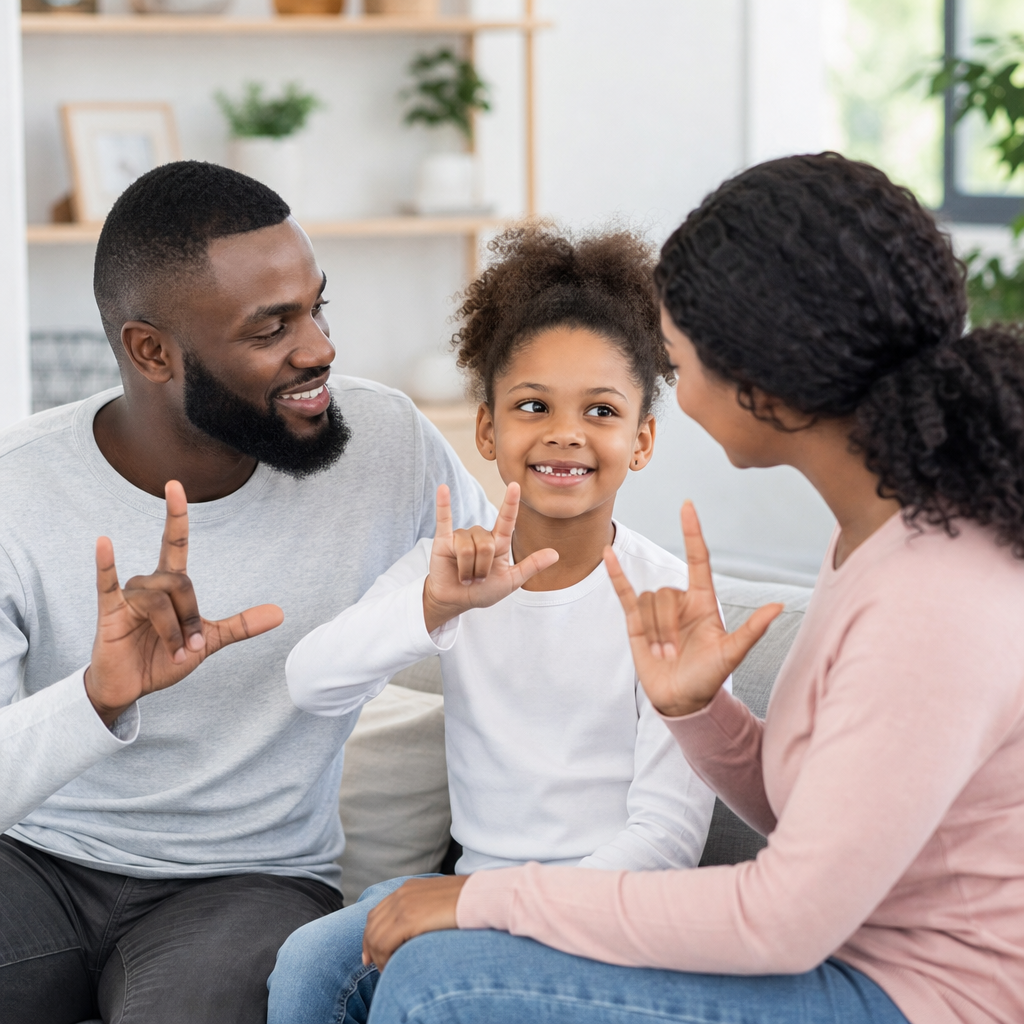
Navigating family dynamics in deaf households requires more than learning a few signs. It means understanding how communication, identity, routines, and relationships are shaped when deafness is part of everyday family life. In practice, deaf households are not all the same. Some include deaf parents and hearing children, often called CODAs, or Children of Deaf Adults. Others include hearing parents raising a deaf child, mixed-hearing couples, multigenerational deaf families, or households where hearing loss appears later in life. Each arrangement brings distinct strengths and pressure points, but one principle stays constant: family health depends on accessible communication, shared respect, and informed decisions.
When I have worked with families, the biggest misunderstandings rarely came from deafness itself. They came from assumptions about what deaf family members could access, what language should be used at home, and who carried the burden of adapting. Deafness refers broadly to significant hearing loss, yet culture matters as much as audiology. Many people identify as Deaf with a capital D to signal belonging to a language-based cultural community, often centered around a signed language such as American Sign Language, British Sign Language, or Auslan. Others prefer medical terms, use spoken language with hearing technology, or move fluidly between worlds. Family dynamics improve when relatives treat those identities as lived realities rather than abstract labels.
This topic matters because family is where language is acquired, confidence is built, and conflict patterns are learned. Research over decades has shown that early accessible language exposure supports social development, school readiness, and emotional regulation. The World Health Organization and pediatric language specialists have repeatedly emphasized the importance of timely communication access for deaf children. In adults, family inclusion strongly affects mental health, independence, and relationship satisfaction. A deaf child who cannot follow dinner conversation, a deaf parent excluded from school updates, or a hearing spouse forced into constant interpretation all experience the strain in specific, daily ways. Strong family systems do not happen automatically. They are intentionally built.
Communication access is the foundation of family stability
In deaf households, communication is not a soft skill. It is the operating system of the home. Families function better when everyone can access information at the same time, in the same room, without guesswork. That means choosing communication methods deliberately: sign language, spoken language, cued speech, assistive listening devices, captions, texting, visual alerts, or a combination. The right approach depends on age of onset, language history, technology use, educational setting, and personal identity. What does not work is relying on fragments. If one family member consistently misses jokes, instructions, arguments, or affection, distance develops quickly.
One common question is whether families should learn sign language if a deaf member uses hearing aids or a cochlear implant. The answer is yes if sign improves access, reduces fatigue, and broadens communication. Hearing technology can help, but it does not restore natural hearing. Background noise, device maintenance, listening fatigue, and variable speech perception all affect outcomes. In family homes, where people speak from other rooms, cover their mouths, multitask, and talk over each other, visual language often provides the most reliable access. Families that build strong signing habits early usually report less conflict, fewer repetitions, and more spontaneous conversation.
Practical communication habits matter as much as formal language learning. Good homes use visual attention-getting methods such as waving, light tapping, flashing lights, or line-of-sight positioning. They avoid speaking while walking away. They keep faces visible and reduce visual clutter during important conversations. They caption media and summarize side comments that might otherwise be missed. Parents who sign and speak clearly during routines like meals, school preparation, and bedtime create repeated language-rich moments. Over time, these habits become family culture, and that culture lowers stress.
Parenting, roles, and the balance of responsibility
Family roles can become distorted when access is poor. In hearing families with a deaf child, parents may overprotect because they confuse communication barriers with lack of capability. In families with deaf parents and hearing children, children may be pushed into adult responsibilities too early, especially when schools, clinics, landlords, or service providers expect them to interpret. I have seen both patterns create long-term resentment. Healthy households keep parental authority with parents and do not let access gaps quietly shift responsibility onto the most available hearing person.
For hearing parents raising a deaf child, one of the most important early decisions is to stop centering convenience. If a child only receives partial access to language because adults never become proficient communicators, the cost falls on the child. That can show up as delayed language, behavioral frustration, weaker family attachment, or social withdrawal. The better model is full participation. Parents should learn the family’s chosen communication modes, coordinate with early intervention providers, and track whether the child understands not just instructions but emotional nuance. A child who can ask deep questions, tell stories, and express anger safely is developing real family connection.
For deaf parents raising hearing children, a different challenge often appears. CODAs may become bilingual and bicultural very early, which is a strength, but they can also become informal brokers with the hearing world. Families need firm boundaries around interpreting. Children should not handle medical appointments, legal matters, disciplinary school meetings, or emotionally loaded conversations. Qualified interpreters, captioned phone solutions, relay services, and direct communication tools exist for a reason. When deaf parents insist on professional access support, they protect both their parental role and their child’s emotional development.
| Family situation | Common challenge | Best response |
|---|---|---|
| Hearing parents with deaf child | Child misses conversation at home | Learn sign language, use captions, create visual routines |
| Deaf parents with hearing child | Child asked to interpret adult matters | Use qualified interpreters and relay services |
| Mixed-hearing couple | Unequal effort in communication | Set shared rules for access and repair breakdowns quickly |
| Older adult loses hearing | Family mistakes withdrawal for disinterest | Assess hearing needs and rebuild communication habits |
Identity, belonging, and intergenerational tension
Deaf households often navigate identity questions that hearing families rarely notice. Is deafness treated as a disability, a culture, a language community, or all three depending on context? Should a child attend a neighborhood school, a mainstream program with support services, or a school for the deaf? Are hearing devices presented as tools, expectations, or symbols of normalcy? These questions are not theoretical. They shape self-worth, peer relationships, and family belonging.
Intergenerational tension can emerge when relatives hold different views. A grandparent may focus on speech and lipreading because that was the only model available in their era. A younger deaf adult may prioritize sign language and community ties. A hearing parent may feel pressure from clinicians to choose one route, while deaf mentors recommend a bilingual approach. The most successful families do not force a false either-or decision where it is unnecessary. They recognize that language access must come first, then educational and technological choices can be built around the child’s actual needs.
Belonging also matters inside the home. Deaf family members should not be treated as guests in hearing conversation, and hearing members in Deaf-centered homes should not be shamed for asking cultural questions. In strong families, everyone learns how the household communicates and why. Shared stories help. Deaf adults often describe the relief of growing up where no one had to explain visual alerts, signing at the table, or the need to face each other before speaking. Hearing relatives who understand that relief become better partners, siblings, and parents because they stop framing access as a burden and start treating it as basic respect.
Conflict, emotional expression, and relationship repair
Conflict in deaf households is not inherently more severe, but it can escalate faster when access breaks down. Arguments are harder to repair when one person leaves the room mid-conversation, when messages are relayed through others, or when emotional tone is lost. Signed communication can appear intense to people unfamiliar with visual language because facial expression, body position, and movement carry grammatical and emotional meaning. Families need to distinguish between expressive communication and aggression. Misreading that difference causes unnecessary fear and defensiveness.
Clear repair strategies make a measurable difference. Couples and parents should agree on basic rules: important discussions happen face to face, not from another room; no one turns off devices, walks away without signaling a pause, or uses silence as punishment when visual communication is available. If a discussion becomes heated, set a visible time to resume it. Texting can help organize thoughts, but it should not replace difficult conversations that require nuance. For children, emotional coaching must be accessible. Naming feelings in sign, modeling apology, and explaining family decisions directly are more effective than assuming a child understood because they nodded.
Relationship repair also depends on inclusion after the conflict. A deaf teenager who misses the follow-up explanation, or a hearing spouse left out of signed side conversations, will carry confusion long after the visible argument ends. Families should close the loop by summarizing decisions, checking comprehension, and inviting questions. In counseling settings, therapists familiar with deaf communication norms are often more effective because they can assess whether the issue is emotional, linguistic, or both. That distinction matters.
School, community, and the wider support system
No family operates alone. Schools, clinics, workplaces, faith communities, and extended relatives all influence how deaf households function. Problems often arise when outside systems expect the family to absorb every access failure. A school that sends voice-only robocalls to deaf parents, a pediatric clinic without an interpreter, or relatives who refuse to sign during holidays all push labor back onto the household. Over time, that labor drains energy needed for parenting and relationship care.
Families do better when they build an intentional support network. For hearing parents of deaf children, that usually means early intervention, deaf adult mentors, audiology support where relevant, speech and language professionals who respect visual language, and connections with local deaf community events. For deaf parents, it may include accessible school communication protocols, interpreter request systems, and trusted hearing allies who understand boundaries. In both cases, community reduces isolation. Children benefit when they meet peers and adults who share their communication style, because it normalizes their experience and widens their future picture of who they can become.
This hub article connects naturally to deeper family and relationship topics. Parents often want guidance on raising confident deaf children, helping siblings communicate fairly, setting interpreter boundaries for CODAs, supporting deaf-hearing marriages, and navigating holidays with extended family. Others need practical advice on captioning tools, visual home safety systems, Individualized Education Program meetings, or mental health support with accessible providers. Taken together, those subjects form the real map of family life. The central lesson is simple: deaf households thrive when communication access is treated as nonnegotiable, identity is respected, roles stay healthy, and outside institutions are required to meet the family halfway.
Navigating family dynamics in deaf households becomes easier when families stop looking for one perfect model and start building reliable access, clear roles, and mutual respect. Every household will make different choices about sign language, spoken communication, school placement, technology, and cultural identity. Those choices can all work better when they are guided by one test: can every family member participate fully, understand what matters, and express themselves without chronic strain? If the answer is no, the issue is not personality. It is access, and access can be improved.
The strongest families I have seen share a few habits. They communicate in ways everyone can follow. They do not place adult burdens on children. They treat deaf identity with seriousness rather than sentimentality. They prepare schools, relatives, and service providers to communicate properly instead of apologizing for their needs. They repair conflict directly and check understanding instead of assuming. Most importantly, they recognize that family belonging is built through repeated, ordinary moments: being included at the table, understanding the joke, catching the warning, asking the hard question, and being answered clearly.
As a hub for family and relationships, this topic points toward practical next steps. Review your household routines, identify where communication breaks down, and fix those points first. Learn or strengthen the language your family needs. Set boundaries around interpreting. Ask schools, clinics, and relatives for accessible communication in concrete terms. Small changes applied consistently create safer, calmer, more connected homes. Start with the next conversation and make sure everyone can truly be part of it.
Frequently Asked Questions
What makes family dynamics in deaf households different from other families?
Family dynamics in deaf households are often shaped by communication access, cultural identity, and the way daily routines are organized around hearing status. That does not mean these families are fundamentally different in their love, values, or goals, but it does mean that everyday interactions may look different from those in fully hearing households. For example, attention-getting strategies might involve visual cues, tapping, waving, or flashing lights rather than calling someone from another room. Family members may naturally orient themselves toward one another so everyone can see facial expressions, signing space, and body language, which are central parts of clear communication.
Another important factor is that deafness is not only a medical condition for many families; it can also be part of a strong cultural and linguistic identity. In households that use American Sign Language or another signed language, communication is not simply adapted speech. It is a complete language with its own grammar, tone, humor, and norms. That can influence how parents discipline, how affection is expressed, how stories are told, and how family traditions are passed down. In mixed-hearing households, dynamics may also involve navigating different communication preferences, such as signing, spoken language, lipreading, interpreters, hearing technology, or a blend of several approaches.
It is also important to recognize that there is no single “deaf household experience.” Some families include deaf parents and hearing children, some include hearing parents with a deaf child, and others span multiple generations with both deaf and hearing relatives. The family dynamic depends heavily on whether everyone has equal access to communication. When communication is shared and respected, families often build very strong bonds. When access is inconsistent, frustration, misunderstandings, or feelings of exclusion can develop. In that sense, the defining issue is not deafness itself, but whether the family creates an environment where everyone can fully participate.
How can families improve communication in a deaf household beyond just learning a few signs?
Improving communication in a deaf household starts with treating access as a daily commitment, not a one-time skill. Learning signs is valuable, but fluency, consistency, and shared habits matter much more than memorizing a small vocabulary. Families benefit most when everyone makes communication a priority across all settings, including meals, car rides, appointments, school events, bedtime routines, and extended family gatherings. If one person is constantly expected to “catch up” or piece together missing information, the family is not truly communicating as a unit.
Practical strategies make a major difference. Families can establish visual communication habits such as facing one another before speaking or signing, keeping hands and faces visible, reducing background distractions, and making sure lighting supports clear visibility. In homes where both signed and spoken language are used, family members should avoid talking from another room, speaking while turned away, or allowing side conversations to happen without interpretation or inclusion. Technology can also help, including video calls for signed conversations, captioned media, vibrating alarms, text-based communication, and visual notification systems around the home.
Just as important is emotional communication. Families should check in regularly about what is and is not working. A deaf child may need more than accommodation; they may need the reassurance that they are fully included in family jokes, discipline, decision-making, and spontaneous conversation. Hearing children of deaf adults may need space to talk about their own experiences navigating both deaf and hearing worlds. Communication improves when everyone is encouraged to be honest, patient, and flexible. In many cases, working with deaf mentors, sign language instructors, family therapists familiar with deaf culture, or community organizations can help a household build stronger and more equitable communication patterns over time.
What should hearing parents understand when raising a deaf child?
Hearing parents raising a deaf child should understand first and foremost that deafness does not limit a child’s potential. What matters most is whether the child has early, consistent, and rich access to language and connection. One of the most damaging misconceptions is the idea that a child should wait to develop language until a single communication path is chosen or perfected. In reality, children thrive when they are given accessible language as early as possible, whether through sign language, spoken language supports, or a combination of approaches that genuinely meets their needs.
Parents should also understand that raising a deaf child often involves more than managing audiology appointments, devices, or educational plans. It means learning how deafness shapes social experiences, self-esteem, and identity. Many deaf children benefit from seeing deaf adults who are confident, capable, and successful, because that helps them imagine a future where deafness is not viewed as a problem to be fixed. Exposure to deaf role models and deaf community spaces can be deeply affirming, even for families still figuring out their communication approach. It shows the child that they are not alone and that deafness can be a source of belonging as well as difference.
Equally important, hearing parents should avoid making their child responsible for bridging every communication gap. The burden should not fall on the child to lipread constantly, guess what was said, or sit through inaccessible family interactions. Parents can lead by making family life visibly accessible: learning sign language if needed, advocating at school, ensuring the child has communication access during gatherings, and including them fully in conversations, chores, rules, humor, and affection. When parents approach deafness with openness, humility, and a willingness to learn, they create a home where the child can develop language, confidence, and a secure sense of identity.
What unique challenges and strengths do CODAs often experience in family life?
Children of Deaf Adults, often called CODAs, can grow up with unique strengths that come from living across both deaf and hearing worlds. Many develop strong communication awareness at an early age. They may become highly observant, adaptable, and sensitive to nonverbal cues. In families where sign language is the primary language at home, CODAs may be bilingual and bicultural, moving between signed and spoken environments with ease. They often gain a deep appreciation for deaf culture, community values, and the importance of accessible communication from a very young age.
At the same time, CODAs can face pressures that are often misunderstood by outsiders. In some situations, hearing children are expected to interpret for deaf parents in settings such as schools, stores, medical appointments, or government offices. While this may happen informally in daily life, it can place adult responsibilities on a child before they are emotionally ready. It may also expose them to information or decisions that should be handled by qualified interpreters or by adults directly. Over time, that role reversal can create stress, confusion around boundaries, or guilt if the child feels responsible for helping the family navigate inaccessible hearing systems.
Healthy family dynamics support CODAs by recognizing both their strengths and their limits. They should be allowed to be children, not default communication brokers. Families can help by using professional interpreters in formal settings, creating open conversations about identity, and acknowledging that CODAs may sometimes feel deeply connected to deaf culture while also feeling different from both deaf and hearing peers. Giving them space to talk about those experiences without judgment is important. When their bilingual and bicultural lives are respected, CODAs often grow into adults with strong empathy, resilience, and a sophisticated understanding of communication, culture, and family loyalty.
How can extended family members support healthy relationships in a deaf household?
Extended family members play a major role in whether a deaf household feels supported or isolated. The most meaningful thing relatives can do is commit to accessible, respectful communication rather than expecting the deaf family member to adapt constantly. That may mean learning sign language, using captions during shared media, speaking one at a time, facing the person when communicating, or slowing down enough to make sure everyone is included. Even small, consistent efforts send a powerful message that the deaf family member belongs fully in the family and is not an afterthought during gatherings or conversations.
Support also means avoiding common mistakes. Relatives should not speak about a deaf person as though they are not present, rely on one family member to summarize everything later, or assume that hearing technology automatically solves communication barriers. They should not treat sign language as optional if it is the family’s primary language, nor should they view deafness only through a lens of pity or limitation. Respect grows when extended family members ask thoughtful questions, stay open to learning, and understand that accessibility is a form of care. Inclusion happens through habits, not intentions alone.
Finally, strong relationships are built when extended family members participate fully in the family’s communication culture. That can include attending sign classes, hiring interpreters for major events when needed, planning gatherings with visual access in mind, and making sure deaf relatives are included in spontaneous moments, not just formal conversations. It also helps to respect the identity and choices of each household, since no two deaf families operate exactly the same way. When relatives lead with curiosity, consistency, and inclusion, they strengthen trust across generations and help create a family environment where everyone can connect more naturally and meaningfully.