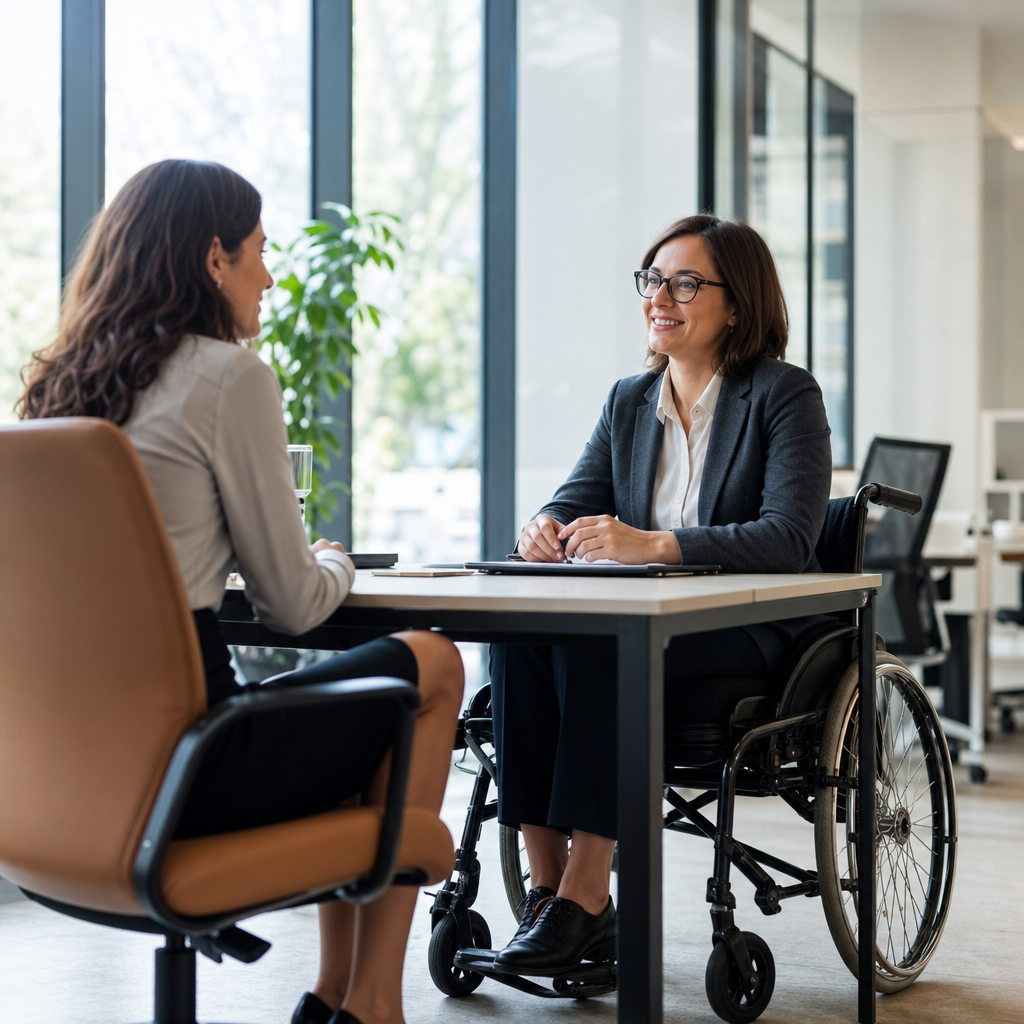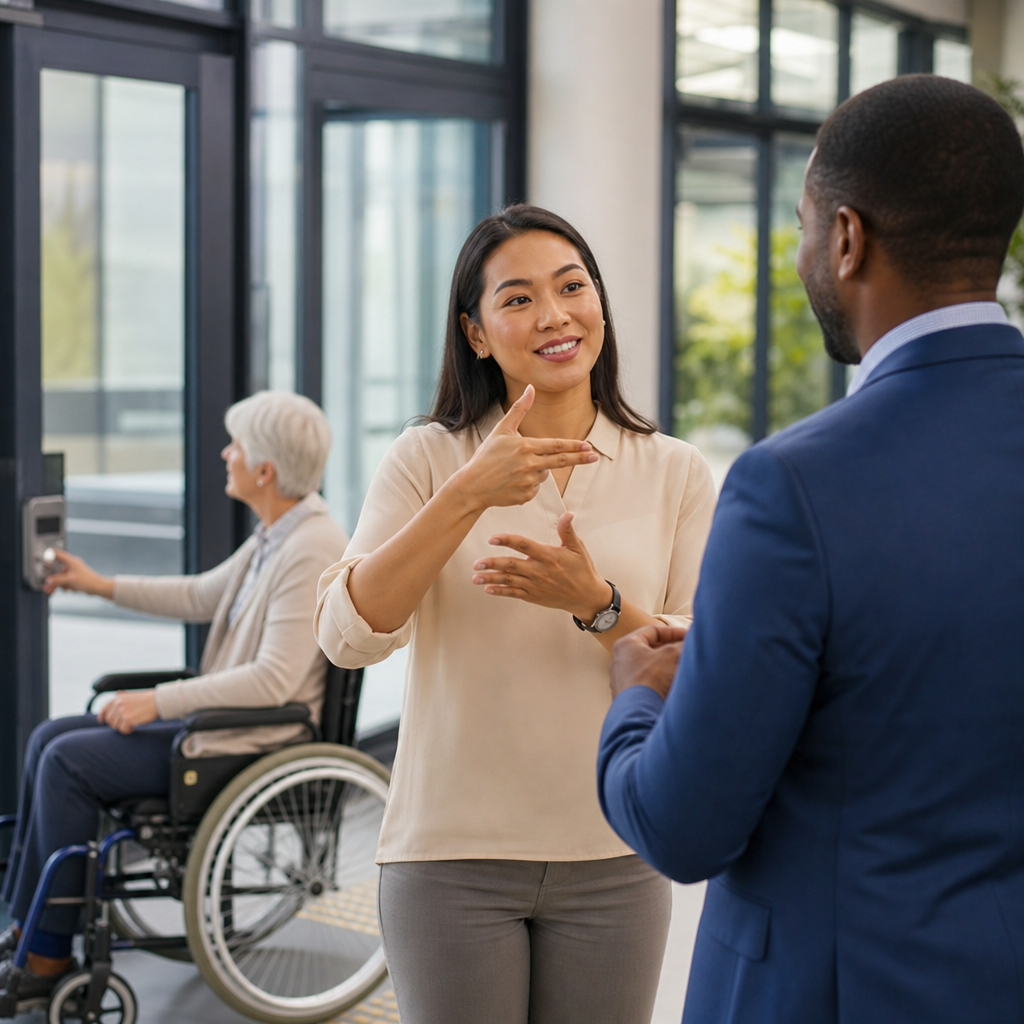

Simple ways to support deaf inclusion start with one practical idea: hearing people can remove barriers every day when they understand communication access, respect Deaf culture, and act consistently in schools, workplaces, healthcare settings, and public life. Deaf inclusion means building environments where deaf and hard of hearing people can participate fully without being forced to adapt to systems designed only for hearing people. Allyship is the ongoing practice of listening, learning, and taking action. Advocacy is using your position, vote, voice, budget, and influence to improve access and rights. I have seen the difference firsthand: a meeting with captions, clear turn-taking, and an interpreter becomes productive; the same meeting without those supports becomes exclusion in real time. This matters because deaf people still face preventable barriers in employment, education, emergency communication, customer service, and civic participation. Supportive hearing allies help close those gaps by changing habits, pushing institutions to comply with accessibility law, and treating communication access as essential rather than optional.
Hearing individuals often ask what inclusive behavior looks like in practice. The answer is not complicated, but it does require intention. It includes facing the person when speaking, reducing background noise, using accurate captions, booking qualified sign language interpreters when needed, sharing written follow-ups, and asking for preferences instead of making assumptions. It also means understanding that deaf and hard of hearing people are not one uniform group. Some use sign language as their primary language. Some rely on spoken language, hearing technology, cued speech, lip reading, or a combination. Some identify culturally as Deaf, with a strong connection to Deaf community, language, and history; others do not. Good allyship begins when hearing people stop treating deafness solely as a medical issue and start recognizing access, identity, and rights.
Understand deaf inclusion before trying to help
The most effective support begins with a clear understanding of what deaf inclusion actually requires. Inclusion is not just inviting a deaf person into a room. It is making sure they can fully access information, contribute, and influence outcomes. In my experience, hearing organizations often confuse presence with participation. A deaf employee may be hired, but if training videos lack captions, team calls have poor audio, and side conversations drive decisions, that employee is still excluded. Real inclusion is measured by access to communication, advancement, social connection, safety information, and decision-making power.
Language choices matter here. Many people prefer identity-first language such as Deaf person or deaf person, while others prefer person who is deaf or hard of hearing. The best approach is simple: ask and mirror the person’s preference. It is also important to distinguish between deaf, hard of hearing, and Deaf with a capital D, which often refers to cultural and linguistic identity tied to sign language communities. Hearing allies do not need to master every term immediately, but they do need enough awareness to avoid flattening all experiences into one story.
One foundational concept is the social model of disability. Under this model, disability is created as much by inaccessible systems as by an individual condition. A deaf customer is not excluded because they are incapable of communication; they are excluded because a clinic refuses text-based appointment systems and only accepts phone calls. This distinction changes behavior. Instead of asking how a deaf person can adapt better, ask what barrier the environment is creating and how to remove it.
Communicate in ways that create access
The fastest improvement most hearing people can make is to communicate accessibly. Start by gaining attention before speaking, either with a wave, light tap on the shoulder if appropriate, or by moving into the person’s visual field. Face the person directly. Keep your mouth visible. Do not speak while turning away, covering your face, or eating. In group settings, take turns and identify speakers. These basics improve speechreading, reduce fatigue, and make conversations easier even when interpreters or captions are available.
Do not assume lip reading solves access. Even skilled speechreaders only catch part of spoken content because many sounds look identical on the lips. Background noise, facial hair, poor lighting, and fast speech make it harder. A better practice is to use plain language, confirm key points in writing, and repeat or rephrase rather than simply speaking louder. Loudness does not equal clarity. In fact, exaggerated shouting can distort mouth shapes and feel patronizing.
Digital communication offers major opportunities for inclusion when used correctly. Email, chat, shared documents, text messaging, and visual project tools often provide better access than phone-dependent workflows. Video calls should include high-quality live captions, stable lighting, and camera framing that keeps faces visible. Platforms such as Zoom, Microsoft Teams, and Google Meet now support captioning, but auto-captions vary in accuracy, especially with names, technical terms, and accented speech. For high-stakes events, human captioning remains the better standard.
| Situation | Common hearing-first habit | Inclusive alternative | Why it works |
|---|---|---|---|
| Work meeting | Fast overlapping discussion | Turn-taking, captions, shared agenda | Improves comprehension and equal participation |
| Medical visit | Phone-only scheduling | Text, portal, email, interpreter booking | Removes access barriers before the appointment |
| Classroom | Teacher talks while facing the board | Face students, caption media, provide notes | Supports visual access to instruction |
| Customer service | Calling out names aloud | Visual displays or text alerts | Prevents missed turns and confusion |
When communication breaks down, handle it respectfully. Repeat the sentence once, then rephrase it with different words. Write it down if needed. Move to better lighting or lower noise. Ask, “What is the best way to make this easier?” That question signals respect and usually leads to a workable solution quickly.
Provide accommodations without making deaf people fight for them
Accommodation should be routine, not a personal favor that deaf people must repeatedly justify. In many countries, legal frameworks require communication access. In the United States, for example, the Americans with Disabilities Act and Section 504 establish obligations for many employers, schools, healthcare providers, and public entities. Comparable duties exist elsewhere through equality and human rights laws. Hearing allies should know the basic standard: if communication is central to the service, access must be effective, timely, and appropriate to the individual context.
Qualified sign language interpreters are essential in many settings, but booking them properly matters. Family members, friends, or untrained staff should not be used as substitutes in formal, sensitive, or complex situations. Interpreting requires linguistic skill, ethical judgment, and subject knowledge. Medical, legal, and educational contexts especially demand qualified professionals. The same is true for captioning. Auto-generated captions can help informally, but for training, public events, policy meetings, and webinars, Communication Access Realtime Translation providers deliver far more accurate text.
Planning is where many hearing-led organizations fail. They wait until a deaf participant asks, then scramble. A better approach is proactive access planning built into standard workflows. Event registrations should include accommodation requests. Budgets should include interpreting and captioning line items. Videos should be captioned before publication, not weeks later. Emergency procedures should include visual alerts and text-based notifications. Once these systems are routine, inclusion becomes cheaper, faster, and more reliable.
There are tradeoffs to acknowledge. Smaller organizations may worry about cost or scheduling delays, particularly in areas with interpreter shortages. Those constraints are real, but they do not justify inaction. Hybrid solutions such as remote interpreting, remote captioning, and asynchronous written communication can bridge gaps when planned carefully. The key principle is to avoid pushing the burden onto deaf individuals to solve access barriers that institutions created.
Practice allyship in workplaces, schools, and public spaces
Hearing allies have the most impact where routines are entrenched. In workplaces, inclusion starts long before onboarding. Job postings should focus on essential duties rather than unnecessary hearing-based assumptions like “excellent phone manner” when email, messaging, or video relay options can perform the same function. Interviews should include requested accommodations without penalizing the candidate for using them. Once hired, deaf employees need equal access to hallway information, training, mentorship, and promotion pathways, not just the basic tools to complete assigned tasks.
Managers set the tone. I have seen teams become dramatically more inclusive when a manager normalizes captions on every call, distributes agendas in advance, summarizes decisions in writing, and stops side conversations from overtaking meetings. Those habits help everyone, but they are especially important for deaf staff because missing one informal exchange can mean missing context that others absorb effortlessly. Performance reviews should assess results, not hearing-based communication style preferences dressed up as professionalism.
In schools, hearing parents, teachers, and administrators play a major role in whether deaf students feel respected or isolated. Inclusive practice includes captioned classroom media, visual instructions, accessible extracurriculars, and teachers who understand how to work effectively with interpreters. Deaf children also benefit from exposure to deaf adults and peers, because representation supports language development, identity, and confidence. If a school talks about inclusion while leaving a deaf student to navigate lunch, assemblies, and group work alone, the school is not truly inclusive.
Public spaces present another set of barriers that hearing people often overlook. Train stations that rely on audio announcements, restaurants that call names aloud, museums without captioned media, and emergency alerts that lack visual communication all create unequal access. Hearing allies can help by noticing these failures and reporting them, not just compensating individually. Structural problems need structural fixes.
Advocate for rights, representation, and lasting change
Individual kindness matters, but lasting deaf inclusion depends on advocacy. Hearing allies should support policies that expand communication access, fund interpreter services, improve inclusive education, and strengthen enforcement of disability and civil rights laws. This can mean backing accessible procurement rules, asking elected officials about emergency alert systems, or supporting school board policies requiring captioned media and accessible family communication. Advocacy becomes effective when it moves from private sympathy to public accountability.
Representation is equally important. Deaf people should be present in leadership, planning groups, advisory boards, and public campaigns that affect them. A common hearing mistake is speaking for deaf people instead of creating space for deaf expertise. The better model is “nothing about us without us” in practice: invite deaf professionals early, pay them for their time, and act on what they say. Lived experience is not a symbolic extra; it is essential operational knowledge.
Hearing allies can also improve media and community narratives. Avoid framing deaf people as inspirational merely for existing or succeeding in ordinary life. Avoid treating sign language as a novelty. Share accurate information about access rights, Deaf culture, and inclusive communication. Recommend deaf-led organizations, creators, trainers, and consultants. When misinformation appears, correct it calmly with facts. Over time, these actions build a more informed environment where inclusion is expected rather than exceptional.
Simple ways to support deaf inclusion are most effective when they become habits, systems, and shared standards. Learn the difference between access and token inclusion. Communicate visually and clearly. Use captions, interpreters, written follow-up, and accessible digital tools. Build accommodation into budgets and workflows before anyone has to ask. Challenge hearing-first assumptions in hiring, education, customer service, and public design. Most importantly, follow deaf leadership when decisions affect deaf lives.
The benefit of this approach is straightforward: people gain equal access to information, opportunity, safety, and community. Teams work better. Schools teach better. Services reach more people. Rights move closer to reality. If you are a hearing reader, choose one setting you influence today—your workplace, classroom, family, organization, or local community—and improve one barrier now, then keep going until access is standard.
Frequently Asked Questions
What does deaf inclusion mean in everyday life?
Deaf inclusion means creating spaces, systems, and routines where deaf and hard of hearing people can participate fully without having to constantly work around hearing-centered barriers. In everyday life, that can look like making sure important information is shared in accessible formats, facing a person when speaking, using captions during meetings or videos, reducing background noise when possible, and being willing to communicate in the way that works best for the individual. Inclusion is not just about being polite or helpful in isolated moments. It is about designing communication and access so deaf people are not excluded from conversations, decisions, services, education, employment, or community life.
It also means recognizing that access is a shared responsibility, not something deaf people should have to fight for over and over again. For example, in schools, inclusion may involve qualified interpreters, captioned media, and teachers who know how to manage classrooms visually. In workplaces, it may mean accessible meetings, clear written follow-ups, and alert systems that do not rely only on sound. In healthcare and public services, it means providing effective communication access rather than expecting patients or visitors to manage without it. Everyday deaf inclusion starts when hearing people stop asking deaf people to adapt to inaccessible environments and instead begin removing barriers proactively.
How can hearing people support deaf inclusion in respectful and practical ways?
Hearing people can support deaf inclusion by combining respect, consistency, and a willingness to change habits. A good first step is to ask what communication preferences work best rather than making assumptions. Some deaf people use sign language, some prefer speechreading, some rely on captions or written communication, and many use a combination depending on the setting. Respectful support includes getting the person’s attention before speaking, keeping your face visible, speaking clearly at a natural pace, and not covering your mouth or turning away mid-sentence. It also means understanding that repeating “never mind” when communication breaks down is dismissive and can leave someone excluded from information that others received.
Practical allyship goes beyond one-on-one communication. Hearing people can advocate for captions in videos, accessible event planning, visual announcements, interpreter booking when needed, and meeting practices that make group conversations easier to follow. They can learn basic sign language if it is relevant to their environment, but they should also remember that knowing a few signs does not replace full communication access. Most importantly, hearing allies should be open to learning from Deaf people and Deaf culture, accept correction without defensiveness, and understand that inclusion is an ongoing practice. Small daily actions, especially when done consistently, can make schools, workplaces, healthcare settings, and public spaces far more welcoming and equitable.
Why is Deaf culture important when talking about inclusion?
Deaf inclusion is stronger and more respectful when it includes an understanding of Deaf culture. Deafness is not only a medical condition or hearing level; for many people, it is also a cultural and linguistic identity. Deaf culture includes shared experiences, values, history, community connections, and, for many, the use of sign languages as complete natural languages. When hearing people view deafness only through a deficit lens, they may focus exclusively on “fixing” the person rather than improving access and respecting identity. That approach can lead to exclusion, patronizing behavior, and communication decisions that ignore what deaf people actually want and need.
Recognizing Deaf culture helps hearing people move from charity-based thinking to respect-based inclusion. It encourages them to understand that direct communication, visual access, community belonging, and language rights all matter. It also reminds people that deaf and hard of hearing individuals are not all the same. Some identify strongly as Deaf, some as hard of hearing, some use spoken language primarily, and others use sign language as their first language. Respecting Deaf culture means listening to these differences, honoring preferred terminology, and avoiding assumptions about ability, intelligence, independence, or communication style. True inclusion happens when deaf people are not only accommodated but also valued as full participants with their own perspectives, identities, and expertise.
What are some simple ways to make schools and workplaces more deaf-inclusive?
Schools and workplaces can become more deaf-inclusive by improving both communication systems and everyday practices. In schools, this may include using captioned educational videos, ensuring interpreters or other communication supports are qualified, sharing written instructions clearly, and arranging classrooms so students can see the teacher and one another. Teachers can pause before speaking, repeat comments from across the room, and make sure important announcements are available visually as well as orally. Deaf-inclusive education also depends on social access, not just academic access, so group work, assemblies, extracurricular activities, and emergency procedures should be designed with communication equity in mind.
In workplaces, simple improvements can have a major impact. Meetings should include captions, interpreters when needed, agendas shared in advance, and written summaries afterward. Team members should avoid talking over one another and should identify who is speaking in virtual meetings. Employers can also improve access through visual alert systems, accessible onboarding materials, flexible communication options, and a culture where requesting accommodations is normal rather than stigmatized. Managers should not assume that informal hallway conversations or last-minute spoken updates are enough. Deaf inclusion at work means ensuring access to the same information, opportunities, networking, and decision-making as everyone else. The most effective environments are the ones that build accessibility into the routine from the start instead of treating it as an afterthought.
How can healthcare providers and public services better include deaf and hard of hearing people?
Healthcare providers and public services play a major role in deaf inclusion because communication access affects safety, dignity, and equal participation. In healthcare, inclusion means more than speaking loudly or handing over a form. Patients must be able to understand diagnoses, treatment options, consent information, follow-up instructions, and emergency communication. Depending on the person’s needs, that may require a qualified sign language interpreter, real-time captioning, written communication, accessible digital systems, or other supports. Providers should ask about communication preferences in advance whenever possible and should never rely on family members, especially children, to interpret sensitive medical information.
Public services such as government offices, transportation systems, community programs, and emergency response systems also need to communicate accessibly. Visual announcements, captioned public information, text-based contact options, trained staff, and emergency alerts that do not depend only on sound are all essential. Inclusion improves when deaf and hard of hearing people can access services independently, privately, and without unnecessary delays. Staff training matters as much as technology, because respectful communication and informed decision-making can prevent many common barriers. When healthcare systems and public services treat deaf inclusion as a core part of quality service rather than an extra accommodation, they create environments that are safer, fairer, and more effective for everyone.