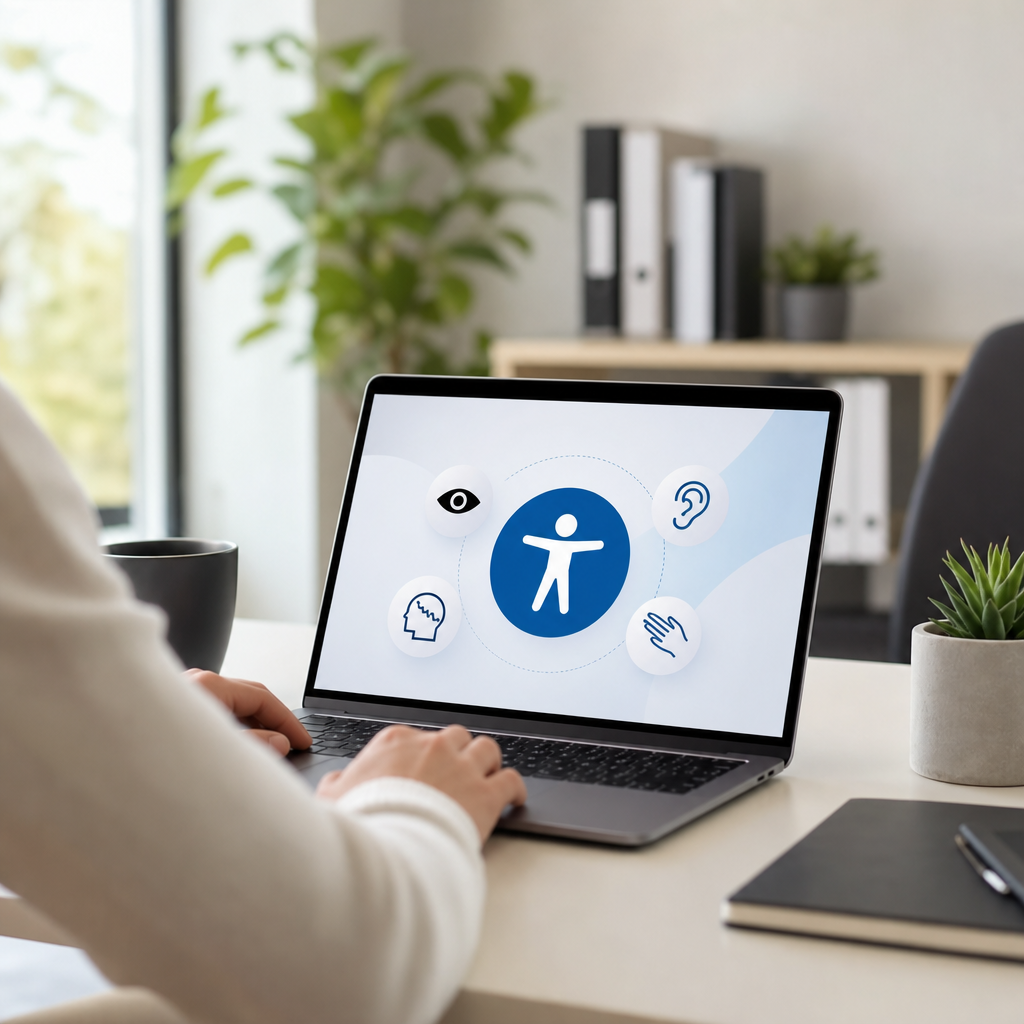

Workplace accessibility is often framed as a legal obligation or a human resources initiative, but the strongest organizations treat it as a core business strategy that improves hiring, productivity, retention, innovation, and brand trust. In practical terms, workplace accessibility means designing physical spaces, digital systems, communication methods, policies, and job processes so people with disabilities can participate fully and perform effectively. That includes visible disabilities, such as mobility impairments, and nonvisible conditions, including hearing loss, neurodivergence, chronic illness, mental health conditions, and low vision.
The business case matters because disability is not a niche issue. The World Health Organization estimates that more than 1.3 billion people worldwide live with a significant disability, representing roughly 16 percent of the global population. In labor markets already strained by skills shortages and aging workforces, excluding disabled talent is an avoidable commercial mistake. I have seen companies spend heavily on recruitment while overlooking straightforward adjustments that would allow qualified candidates and employees to succeed. Accessibility closes that gap. It helps employers remove friction that blocks performance, from inaccessible applicant tracking systems to meetings without captions and office layouts that limit movement.
For a hub page on workplace accessibility, it is useful to define the main categories. Physical accessibility covers entrances, workstations, restrooms, lighting, acoustics, signage, and emergency procedures. Digital accessibility addresses websites, intranets, software, documents, video, and collaboration tools, often measured against the Web Content Accessibility Guidelines, or WCAG. Process accessibility includes recruitment, onboarding, performance reviews, learning programs, and communication norms. Accommodation refers to specific adjustments, such as screen readers, flexible schedules, ergonomic equipment, interpreters, or modified workflows. Inclusion is the cultural layer that ensures accessibility is practical, respected, and consistently applied.
Why does this matter to executives and managers? Because accessibility affects revenue, cost control, risk, employee experience, and operational resilience at the same time. A workplace that is easier to navigate physically and digitally is usually easier for everyone to use. Clear documents reduce errors. Captioned meetings help nonnative speakers and remote employees. Flexible schedules support workers managing health conditions, caregiving, or fatigue. Better ergonomics can lower injury rates. Accessible design is not charity, and it is not a side project. It is disciplined operational improvement with measurable returns. When organizations embed accessibility into how work gets done, they gain access to more talent, reduce avoidable attrition, and build a more adaptable business.
Why workplace accessibility delivers measurable business value
The most direct business benefit is access to talent. Many employers say they cannot find people with the right skills, yet their recruitment systems block applicants from the start. Common failures include job descriptions with unnecessary physical requirements, assessment platforms that do not work with assistive technology, interview processes that penalize different communication styles, and office-first expectations that ignore reasonable flexibility. When those barriers are removed, the candidate pool expands. In sectors such as technology, customer service, finance, healthcare administration, and public services, accessible roles can unlock skilled workers who are often underrecruited despite strong qualifications.
Retention is equally important. Replacing an employee is expensive once recruiting fees, manager time, onboarding, and lost productivity are counted. Accessibility reduces preventable turnover by making it easier for people to stay effective as needs change over time. An employee may develop arthritis, experience migraines, return after an injury, or need captioning because of hearing changes. A company that can adapt quickly keeps institutional knowledge and avoids disruption. In my experience, small adjustments often prevent exits that leaders incorrectly assume are unavoidable. A second monitor, voice recognition software, quieter space, schedule flexibility, or revised meeting norms can make the difference between disengagement and high performance.
Productivity gains are often underestimated because they are spread across teams. Accessible tools reduce time wasted on workarounds. Employees using keyboard navigation can move faster through systems when interfaces are designed properly. Well-structured documents are easier to scan, edit, and translate. Recorded meetings with transcripts improve follow-up accuracy. Adjustable desks, seating, and input devices reduce discomfort that would otherwise drain concentration. These improvements benefit disabled employees first, but they also create smoother workflows for everyone else. That is why accessibility should be tracked alongside other operational excellence measures, not isolated as a compliance metric.
There is also a brand and customer dimension. Employees notice whether a company follows through on inclusion commitments. So do customers, investors, and partners. A business that markets itself as inclusive but runs inaccessible recruitment and collaboration systems creates visible contradiction. By contrast, organizations that demonstrate accessible practices internally are better positioned to serve diverse customers externally. That connection matters in procurement as well. Many enterprise buyers, universities, and public sector organizations now assess supplier accessibility practices, particularly for software and digital services. Internal accessibility maturity can therefore support sales and partnership opportunities.
What workplace accessibility includes in practice
Workplace accessibility is broader than ramps and elevators. A complete program looks at the employee journey from application to advancement. Recruitment should include accessible career pages, alternative contact methods, interview adjustments, and skills-based evaluation rather than narrow proxies for competence. Onboarding should provide documents in accessible formats, clear orientation materials, and technology that works with assistive devices from day one. Daily work should support multiple ways to communicate, consume information, and complete tasks. Performance management should focus on outcomes and ensure managers understand how accommodations interact with expectations.
Digital accessibility is now central because work happens through software. Employees rely on email, chat platforms, HR portals, learning systems, expense tools, calendars, and project management applications. If any of these are inaccessible, work slows or stops. WCAG 2.2 provides a recognized benchmark for digital content, covering issues such as keyboard access, color contrast, text alternatives, focus visibility, and error identification. For documents, accessible PDFs, tagged headings, readable tables, alt text, and plain-language structure matter. For video, captions are essential, and transcripts are often valuable for search, note-taking, and compliance records.
Physical accessibility remains foundational. Accessible entrances, route widths, workstation layouts, restroom access, and emergency egress cannot be afterthoughts. Good design also considers sensory environments. Harsh lighting, constant noise, and crowded layouts can reduce effectiveness for people with migraines, autism, ADHD, anxiety, or hearing conditions. A well-designed workplace offers options: quiet rooms, varied seating, adjustable lighting where possible, and spaces for private calls or decompression. Hybrid work adds another layer. Employers should consider home-office accessibility, remote meeting etiquette, and equitable participation for people who are not in the room.
Policies and culture determine whether technical accessibility actually works. Employees need a clear, confidential process to request accommodations without fear of stigma or retaliation. Managers need training on how to respond, what documentation is appropriate, and how to distinguish essential job functions from historical habits. Procurement teams need accessibility criteria in vendor selection. Facilities, IT, legal, HR, and communications teams need shared ownership. Without governance, accessibility becomes inconsistent and dependent on individual managers, which increases risk and weakens employee trust.
Common barriers and the cost of inaction
Many barriers are invisible to decision-makers because leaders can complete tasks without noticing where others get stuck. I often see organizations assume they are accessible because they have an accommodation policy, yet employees still face broken processes every day. Examples include online forms that time out before someone using assistive technology can finish, training videos without captions, open-plan offices with no quiet alternative, inaccessible PDF policies, interview panels that refuse to share questions in advance, or emergency alerts issued only as audio. Each problem may look minor in isolation, but together they create a system that excludes talent and consumes time.
The cost of inaction appears in several places. First, there is lost productivity when employees rely on manual workarounds, informal help, or delayed approvals for adjustments. Second, there is turnover when people leave because the effort required to do basic tasks becomes exhausting. Third, there is legal and compliance exposure. In the United States, the Americans with Disabilities Act requires reasonable accommodation and prohibits discrimination. Similar obligations exist in the United Kingdom under the Equality Act 2010, in the European Union through the European Accessibility Act for relevant products and services, and in many national labor frameworks. Litigation is not the only risk; complaints, reputational damage, and procurement losses can be just as costly.
There is also strategic risk. Companies that do not build accessibility into technology purchasing often lock themselves into tools that are expensive to retrofit later. A new HR system, intranet, or learning platform can become deeply embedded before anyone tests whether it works with screen readers or keyboard-only navigation. Retrofitting after rollout means duplicated cost, rushed fixes, frustrated employees, and weakened adoption. By contrast, integrating accessibility requirements into procurement and design reviews is usually cheaper and faster. This is a classic case where prevention beats remediation.
| Barrier | Operational impact | Business consequence |
|---|---|---|
| Inaccessible recruiting platform | Qualified applicants cannot complete applications | Smaller talent pool and longer time to hire |
| Meetings without captions or transcripts | Missed information and weaker follow-up | Lower productivity and collaboration quality |
| Delayed accommodation approvals | Employees work below capacity for weeks or months | Higher absenteeism, disengagement, and attrition |
| Software not compatible with assistive technology | Manual workarounds and support burden | Higher operating cost and adoption failure |
| Poor physical layout or sensory overload | Fatigue, discomfort, and concentration loss | Reduced performance and retention |
How to build an effective workplace accessibility strategy
An effective strategy starts with leadership ownership and a realistic baseline. Begin by mapping the employee lifecycle: attraction, hiring, onboarding, daily work, development, promotion, leave, and exit. Then identify barriers in each stage. Use multiple inputs: accessibility audits, employee surveys, accommodation data, focus groups, help desk tickets, and usability testing with disabled employees. The most useful programs combine qualitative insight with operational measures. For example, track time to fulfill accommodation requests, captioning coverage for meetings and training, accessibility defects in internal systems, and completion rates for accessible onboarding materials.
Governance matters because accessibility cuts across functions. HR owns policy and manager guidance. IT and product teams address software and device compatibility. Facilities manages physical environments and emergency planning. Procurement sets vendor requirements. Internal communications ensures documents, announcements, and multimedia are accessible. Legal interprets obligations, but should not be the only voice shaping decisions. The best models use a cross-functional steering group with executive sponsorship, clear standards, and defined escalation paths. That structure prevents accessibility from becoming an unfunded volunteer effort.
Training should be practical, not abstract. Managers need scripts for accommodation conversations, examples of essential versus nonessential job tasks, and guidance on confidentiality. Recruiters should learn how to write inclusive job descriptions and offer interview adjustments consistently. Content owners should know how to create accessible slides, spreadsheets, documents, and videos. Developers and IT administrators need testing protocols that include keyboard navigation, screen reader checks, zoom behavior, and color contrast verification. Tools such as Microsoft Accessibility Checker, Adobe Acrobat accessibility features, axe DevTools, WAVE, and platform-specific captioning tools can support this work, but tools alone do not replace user testing.
Finally, prioritize changes with the highest business impact. Quick wins might include captioning all-hands meetings, publishing accommodation guidance, fixing inaccessible forms, and standardizing accessible document templates. Longer-term work may involve procurement reform, office redesign, technology replacement, and formal accessibility standards. The key is consistency. Accessibility succeeds when it becomes part of normal operating discipline, with accountability, budget, and regular review rather than isolated fixes after complaints.
Measuring return on investment and sustaining progress
Accessibility should be evaluated the same way other business initiatives are evaluated: through outcomes. Useful measures include applicant conversion rates, time to hire, retention of employees who receive accommodations, engagement scores, absenteeism, productivity indicators, software adoption rates, and the number of recurring accessibility defects. Some organizations also track the average time between an accommodation request and implementation, because delay is a hidden cost. When I have reviewed these programs, the strongest evidence often comes from connecting accessibility improvements to existing performance metrics rather than creating a separate reporting universe.
Case evidence consistently supports the investment. Inclusive design practices at major technology firms have produced products and internal tools that work better across devices, contexts, and user needs. Captioning and transcripts, once considered niche supports, are now standard features in platforms such as Microsoft Teams, Zoom, and Google Meet because they improve usability broadly. Flexible work arrangements initially expanded for accessibility reasons have helped many employers retain experienced staff. These examples show a recurring pattern: when organizations solve for barriers at the margins, they often improve the experience at the center.
Sustaining progress requires listening mechanisms and continuous improvement. Accessibility is not finished after one audit or policy launch because workplaces, technologies, and employee needs change. Build regular review cycles into procurement, office changes, software releases, and communication standards. Include disabled employees in testing and decision-making, and compensate that expertise appropriately. Maintain transparency about what is improving, what is still difficult, and how employees can raise issues safely. This hub should guide readers to deeper articles on digital accessibility, office design, accommodations, accessible recruitment, inclusive meetings, assistive technology, and legal compliance, because workplace accessibility is an ecosystem, not a single project.
The business case for accessibility in the workplace is clear: it expands talent access, strengthens retention, improves productivity, reduces risk, and supports a more credible inclusive brand. More importantly, it removes avoidable barriers that keep capable people from doing their best work. The organizations that lead in this area do not treat accessibility as an exception-handling process. They build it into hiring, technology, facilities, communication, and management practice from the start. If you are shaping an accessibility and inclusion strategy, use workplace accessibility as the operational hub: audit where barriers exist, fix high-impact issues first, and make accessibility part of how your business runs every day.
Frequently Asked Questions
Why is workplace accessibility a business strategy, not just a compliance issue?
Workplace accessibility delivers measurable business value because it expands who can contribute, how effectively they can work, and how long they stay with an organization. While legal compliance matters, companies that stop there miss the larger opportunity. Accessible workplaces make it easier to recruit qualified candidates from a broader talent pool, including people with disabilities, aging workers, and employees managing temporary injuries or health conditions. They also reduce friction in everyday work by making tools, spaces, and processes easier to use for everyone. When employees can access information, communicate clearly, and perform tasks without unnecessary barriers, productivity improves.
Accessibility also strengthens retention. Employees are more likely to remain with organizations where they can work effectively without having to constantly ask for workarounds or navigate avoidable obstacles. That lowers turnover costs, preserves institutional knowledge, and improves team stability. In addition, companies that prioritize accessibility often see gains in innovation because inclusive design encourages teams to solve problems more creatively and build systems that work under a wider range of conditions. From a brand perspective, accessibility signals that the organization is thoughtful, modern, and trustworthy. Customers, job candidates, investors, and business partners increasingly pay attention to whether a company’s practices align with its stated values. In that sense, accessibility is not a side initiative; it is a practical operating strategy that improves workforce performance and business resilience.
How does accessibility improve hiring and recruitment outcomes?
Accessibility improves hiring by removing barriers that prevent qualified candidates from finding, applying for, and succeeding in the recruitment process. If a careers page is difficult to navigate with assistive technology, a job application times out too quickly, interview materials are not available in accessible formats, or assessments rely on narrow methods that do not reflect actual job performance, employers can lose strong candidates before they ever enter the pipeline. An accessible hiring process widens access from the start. That includes accessible job descriptions, user-friendly application systems, clear communication, inclusive interview practices, and reasonable accommodations throughout recruitment.
The business impact is significant. A larger and more diverse candidate pool increases the odds of finding high-performing employees, especially in competitive labor markets where skilled talent is hard to secure. It also improves employer reputation. Candidates notice when organizations communicate clearly, offer flexibility, and design fair processes. Those signals influence whether people complete applications, accept interviews, and speak positively about the company afterward. Accessibility in hiring can also reduce bias by encouraging employers to focus on essential job functions rather than outdated assumptions about how work must be done. In many roles, performance depends on outcomes, not on a single rigid process. When companies build recruitment systems that reflect that reality, they make better hiring decisions and create a stronger foundation for long-term workforce success.
What kinds of workplace accessibility investments typically produce the strongest return?
The strongest returns usually come from investments that remove recurring barriers across multiple parts of the employee experience. Digital accessibility is a major example. When core platforms such as email systems, HR portals, collaboration tools, training modules, and internal documents are accessible, employees spend less time troubleshooting and more time doing productive work. Accessible communication practices, such as captioned meetings, readable document formats, plain language, and multiple ways to share information, also create broad benefits. These improvements support employees with disabilities while also helping remote workers, multilingual teams, and anyone operating in fast-paced environments.
Physical and procedural improvements can be equally valuable. Adjustable workstations, accessible entrances, ergonomic equipment, quiet work areas, flexible scheduling, and clearly structured job processes often benefit a wide range of employees, not only those who formally identify as disabled. Another high-return area is manager training. Leaders who understand accommodations, inclusive communication, and barrier removal can resolve issues earlier, support employee performance more effectively, and reduce the risk of disengagement or attrition. Importantly, many accessibility improvements are not expensive compared with the cost of replacing employees, correcting poor system design, or losing productivity due to preventable obstacles. The best accessibility investments are often those embedded into standard operations, procurement, technology selection, facilities planning, and policy design, because they prevent problems before they become costly.
How does accessibility affect employee productivity, retention, and overall performance?
Accessibility affects performance by reducing the mismatch between what employees are capable of doing and what the work environment allows them to do. When systems, spaces, and expectations are designed inclusively, employees can focus their energy on the job itself rather than on compensating for barriers. That can mean being able to use software with a screen reader, follow a meeting through live captions, manage sensory load in a quieter workspace, access materials in a format that works with assistive technology, or complete tasks through a flexible process that still meets business goals. These changes are often the difference between inconsistent performance and full contribution.
Retention improves for similar reasons. Employees are more likely to stay when they feel supported, respected, and able to succeed without unnecessary friction. An inaccessible environment can quietly push people out by creating stress, fatigue, and the impression that they must continually fight to do their jobs. In contrast, an accessible workplace increases engagement because it communicates that the organization expects people to work differently and has planned for that reality. Teams also benefit when accessibility is normalized. Coworkers communicate more clearly, managers become better at setting expectations, and workflows become more adaptable. Over time, these effects contribute to stronger morale, lower absenteeism tied to preventable strain, better continuity, and higher-quality output. In practical business terms, accessibility helps employees do their best work consistently, which is one of the clearest paths to stronger organizational performance.
How can a company build a strong business case for accessibility internally?
The most effective internal business case connects accessibility to priorities leaders already care about: revenue growth, talent acquisition, productivity, employee retention, risk management, customer trust, and operational efficiency. Start by identifying where barriers are currently creating measurable costs. That might include candidate drop-off in the application process, delays caused by inaccessible software, avoidable accommodation issues, turnover in key roles, poor employee experience scores, or inconsistent training completion. Framing accessibility as a way to remove these inefficiencies makes the conversation more concrete and actionable. It also helps to show that accessibility is not limited to one department. It touches HR, IT, facilities, procurement, communications, legal, operations, and leadership.
Strong business cases also combine data with real-world examples. Metrics such as time-to-hire, turnover rates, absenteeism, employee engagement, help-desk volume, and platform usability can help quantify impact. At the same time, employee stories and practical demonstrations of barriers make the issue tangible. From there, organizations should present accessibility as an ongoing capability, not a one-time fix. That means setting standards for digital tools, training managers, improving policies, involving disabled employees in decision-making, and incorporating accessibility into design and purchasing decisions from the beginning. When leaders understand that accessibility reduces friction, strengthens culture, improves performance, and protects brand reputation, it becomes easier to secure support. The goal is to move accessibility out of the category of exception handling and into the category of smart business design.