Deaf events and festivals are more than dates on a calendar; they are the meeting points where language, identity, advocacy, entertainment, and community leadership come together in visible, memorable ways. In practical terms, these gatherings include local Deaf expos, national conferences, film festivals, cultural celebrations, sports competitions, youth camps, and international congresses designed by and for Deaf, hard of hearing, and signing communities. As someone who has worked around accessibility planning and community programming, I have seen the same pattern repeatedly: when people attend a well-run Deaf event, they do not just consume a program, they gain belonging, information, and a stronger sense of possibility. That is why this topic matters for families, educators, interpreters, employers, allies, and Deaf individuals themselves.
The phrase Deaf events and festivals covers a wide range of formats. Some are explicitly cultural, centered on sign language performance, Deaf art, and shared history. Others are professional or policy driven, focusing on education, technology, interpreting standards, captioning access, or disability rights. Still others are social spaces, from Deaf coffee chats to large-scale expos where attendees can compare hearing technology, meet service providers, and reconnect with friends from school or previous conferences. A strong hub article on events and community engagement needs to explain not only which gatherings matter, but also why each kind of event serves a different purpose inside the wider Deaf ecosystem.
These events matter because Deaf community life is still shaped by access gaps in mainstream spaces. Even when venues provide interpreters or captions, many public events remain hearing-centered in pace, layout, and communication norms. Deaf festivals reverse that assumption. Sign language is centered. Visual communication drives stage design, lighting, seating, and announcements. Networking happens naturally rather than through constant accommodation requests. For many attendees, that shift is powerful. It creates an environment where culture is not translated after the fact but built into the event itself. That distinction explains why Deaf cultural events remain essential even as accessibility laws and technologies improve.
For readers using this page as a starting point, the best way to understand major Deaf events is to group them by purpose: cultural festivals, advocacy and leadership conferences, film and arts showcases, sports events, educational gatherings, and local community engagement opportunities. The sections below map the landscape, highlight widely recognized examples, and explain what to expect if you plan to attend, sponsor, volunteer, or build a related community resource.
Major Deaf cultural festivals and community celebrations
The most important Deaf festivals are the ones that visibly celebrate Deaf culture rather than treating deafness only as a medical or service category. Deaf culture refers to the shared values, sign languages, history, humor, storytelling traditions, social norms, and collective identity formed within Deaf communities. In the United States, that often means spaces where American Sign Language is the primary language and where visual expression is central to programming. Internationally, festivals may feature British Sign Language, French Sign Language, Auslan, International Sign, or regional sign languages with their own traditions and politics.
One of the best-known recurring community gatherings is DeafNation World Expo, which combines trade show energy with cultural programming. It typically brings together exhibitors, service organizations, schools, artists, employers, advocates, and attendees looking for both practical resources and social connection. What makes an expo like this valuable is scale: you can watch performances, learn about Deaf-owned businesses, compare accessibility tools, and meet people from different generations in one place. Similar regional Deaf festivals often include silent dinners, talent showcases, vendor halls, family programming, and workshops on topics such as mental health, legal rights, and communication access.
Another category includes Deaf awareness festivals organized by local nonprofits, schools for the Deaf, universities, and municipal disability offices. These events may be smaller, but they often have the strongest local impact. A city Deaf festival can connect newly deafened adults to support groups, introduce hearing parents to sign language classes, and give Deaf performers a local stage. In community engagement terms, these events act as entry points. They are where first-time attendees learn that Deaf community life is active, organized, and welcoming rather than isolated.
Many readers ask what makes a Deaf event genuinely useful rather than symbolic. The answer is straightforward: language access, Deaf-led planning, and consistent opportunities for interaction. If the event relies entirely on spoken announcements, poor sightlines, or last-minute interpreting, people notice. The strongest festivals are designed visually from the beginning, with clear screens, lighting that supports signing, quiet social areas, and staff who understand Deaf norms around attention, introductions, and shared information.
Conferences, leadership gatherings, and advocacy events
Conferences play a different role from festivals. They are where strategy, policy, and professional networks develop. National Association of the Deaf conferences in the United States are a clear example. These gatherings bring together advocates, attorneys, educators, accessibility specialists, students, and community leaders to discuss legislation, civil rights enforcement, language deprivation, emergency communication, education policy, employment barriers, and media access. If someone wants to understand the current priorities of organized Deaf advocacy, conference agendas are often the best place to look.
International leadership events are equally important. The World Federation of the Deaf Congress, for example, has long served as a global forum on human rights, sign language recognition, inclusive education, political representation, and access to public information. These events matter because Deaf communities face both shared and local challenges. Sign language recognition may be established in one country and still contested in another. Captioning standards may be mature in one media market and weak elsewhere. An international congress allows leaders to compare policy models and organize around common goals.
Professional conferences for interpreters, educators of Deaf students, audiologists, and disability service providers also shape the lived reality of Deaf people, even when the attendee base is mixed. I have found that the strongest events in this category are the ones that include Deaf presenters in decision-making roles rather than on symbolic panels. When Deaf professionals lead sessions on interpreter teaming, classroom language access, workplace inclusion, or telecommunication standards, the content becomes more accurate and more useful. Readers looking to engage this subtopic deeply should track not only big-name conferences but also recurring state association meetings and university-hosted symposia.
| Event type | Main purpose | Who benefits most | Typical features |
|---|---|---|---|
| Cultural festival | Celebrate identity and build community | Families, artists, local attendees | Performances, vendors, food, social gatherings |
| Advocacy conference | Advance rights and policy priorities | Leaders, organizers, legal advocates | Keynotes, panels, resolutions, training |
| Film or arts festival | Showcase Deaf storytelling and creators | Artists, students, media audiences | Screenings, Q&A sessions, exhibitions |
| Sports event | Competition and international representation | Athletes, youth, supporters | Tournaments, ceremonies, team networking |
| Educational expo | Share tools, services, and opportunities | Parents, students, professionals | Workshops, booths, demonstrations |
If you are building internal content around events and community engagement, conferences deserve their own supporting articles on Deaf advocacy organizations, policy milestones, and accessible event planning. They sit at the center of the ecosystem because they influence funding priorities, training standards, and how institutions talk about Deaf inclusion.
Film festivals, arts showcases, and storytelling spaces
Film and arts events are essential because they challenge one of the most persistent problems Deaf people face: being represented by hearing systems instead of speaking for themselves. Deaf film festivals, Deaf theater productions, sign language poetry showcases, and visual art exhibitions create space for authentic storytelling. Deaffest in the United Kingdom is one recognized example in the film world, highlighting Deaf filmmakers and signed or accessible screen content. Similar festivals and curated programs appear through universities, independent cinemas, arts councils, and Deaf cultural organizations in multiple countries.
These events matter beyond entertainment. They preserve language, circulate political ideas, and give younger attendees visible role models. A Deaf short film about family communication, for example, can communicate more about language deprivation or identity conflict than a policy brief ever could. Sign language theater and poetry also demonstrate that signed languages are not merely functional communication systems. They are artistic languages with rhythm, metaphor, spatial structure, and distinct performance traditions. That is a point many first-time attendees understand only after seeing Deaf performers command a stage.
Community engagement in the arts also tends to be intergenerational. Elders bring historical memory, middle-generation professionals bring production knowledge, and young creators bring digital fluency through short-form video, animation, and online distribution. That combination is one reason arts-centered Deaf events often feel especially dynamic. They are not only preserving tradition; they are actively updating it. For a hub page like this, it is useful to treat arts events as gateways into wider topics such as Deaf creators, accessible media, captioning quality, and the growth of signed content online.
Sports, youth events, and identity-building experiences
Sports events deserve much more attention in discussions of Deaf community life. The Deaflympics is the most prominent example, operating under rules and communication norms tailored for Deaf athletes rather than hearing audiences. Unlike Paralympic classification models, Deaf sport is organized around access and fairness for athletes with hearing loss who rely on visual cues instead of auditory starting signals or announcements. That distinction matters because it reflects a cultural and communication framework, not just a medical one.
National and regional Deaf sports associations also organize basketball, volleyball, soccer, swimming, track, and other competitions that strengthen community ties. For teenagers and young adults, these events can be identity-defining. I have seen youth who felt isolated in mainstream schools become confident almost overnight after attending a Deaf camp, academic bowl, or sports tournament where communication was effortless. Events such as youth leadership camps, college preview days at Deaf-friendly institutions, and regional student gatherings create the same effect. They give participants a live answer to a common question: where do I fit?
Families often underestimate how important these youth-centered events are. A child may have interpreters in school and still feel socially alone. Meeting peers who sign, play, joke, debate, and compete in the same communication mode changes that experience. For parents, these events also provide informal education. They meet Deaf adults with careers, families, and strong identities, which can counter the deficit-based messaging that still appears in some clinical and educational settings.
How to choose the right Deaf event and what to expect
The best Deaf event for you depends on your goal. If you want celebration and broad community exposure, start with a regional Deaf festival or expo. If you want policy insight or professional development, choose a conference hosted by a major advocacy or professional organization. If you want creativity and cultural depth, attend a Deaf film or arts event. If you are supporting a young person, prioritize camps, student programs, and sports tournaments where repeated peer interaction is possible.
Before attending, check five basics: primary languages used, interpreting and captioning arrangements, venue sightlines, registration cost, and whether the event is Deaf-led. Also look at the session schedule. Strong events publish concrete content, not vague promises. A useful agenda lists speakers, topics, access details, and whether networking sessions are structured. For travel, confirm hotel accessibility, shuttle communication methods, emergency alert systems, and whether social events are held in spaces with adequate lighting. These details affect the actual experience more than branding does.
For organizations and sponsors, the lesson is simple: community engagement is not achieved by attaching a logo to a Deaf event. It requires accessible planning, payment for Deaf presenters and interpreters, visual-first communication design, and year-round follow-through. The most respected events build trust because they create recurring value, not one-time visibility. If you want to explore this subtopic further, use this hub as your starting point, then dive into related guides on Deaf culture, advocacy groups, accessible travel, Deaf-owned businesses, and community storytelling. The more intentionally you engage, the more meaningful these events become.
Deaf events and festivals are where community becomes tangible. They celebrate language, connect generations, launch advocacy, develop leaders, and give people a space where access is expected rather than negotiated. Some are large and internationally known; others are local and deeply personal. Both matter. If you want to understand Deaf life beyond headlines or accommodation checklists, follow the event calendar, attend with purpose, and keep learning from the people who build these spaces year after year.
Frequently Asked Questions
What types of Deaf events and festivals are most popular, and what makes each one unique?
Deaf events and festivals cover a wide range of experiences, and that variety is exactly what makes them so important. Some of the most popular categories include Deaf expos, cultural festivals, film festivals, leadership conferences, sports tournaments, youth camps, advocacy summits, and international congresses. A Deaf expo often brings together service providers, educators, technology companies, interpreters, nonprofits, and community members in one accessible space, making it a practical place to discover resources, network, and learn about new tools. Deaf cultural festivals, on the other hand, tend to focus more on identity, language, performance, and celebration, often featuring sign language poetry, visual art, theater, comedy, live music adapted for visual access, and local community traditions.
Film festivals are especially meaningful because they showcase Deaf creators, Deaf-centered storytelling, and more accurate representation than mainstream media often provides. Conferences and summits usually emphasize policy, education, accessibility, employment, interpreting standards, or Deaf leadership, giving attendees a chance to engage with experts and decision-makers. Sports competitions and youth gatherings create a different kind of connection by building confidence, lifelong friendships, and a shared sense of belonging. International Deaf events add another dimension by bringing together people from multiple countries, exposing attendees to different sign languages, advocacy approaches, and cultural perspectives. What makes each type unique is not just the programming, but the fact that these spaces are typically designed with visual communication and Deaf experience at the center rather than as an afterthought.
Why are Deaf festivals and community events so important beyond entertainment?
Deaf festivals and community events matter because they do far more than provide a fun day out. They serve as powerful spaces for language access, cultural affirmation, networking, education, and leadership development. For many attendees, especially those who may live in areas with a small Deaf population, these events provide a rare chance to be in an environment where sign language is widely used, visual communication is expected, and Deaf identity is fully understood. That experience can be deeply validating. It reminds people that Deaf community is not defined by isolation or limitation, but by shared history, creativity, resilience, and connection.
These gatherings also help strengthen advocacy and community infrastructure. Many events include workshops on rights, education access, employment, mental health, interpreting quality, technology, and public policy. That means attendees often leave with practical knowledge they can use in school, work, healthcare, and civic life. At the same time, Deaf-owned businesses, artists, filmmakers, educators, and nonprofit leaders gain visibility and support. For younger attendees, these festivals can be life-changing because they offer role models and a clearer sense of what Deaf success and leadership look like. For families of Deaf children, they can be an entry point into the broader Deaf world. In short, these events are not only cultural celebrations; they are engines of community continuity, representation, and empowerment.
How can someone choose the best Deaf event or festival to attend?
The best Deaf event to attend depends on your goals, communication preferences, budget, location, and experience level. If your main interest is culture and community, a Deaf festival or arts-focused event may be the best fit because it offers performances, social interaction, and a strong sense of shared identity. If you want professional development or policy insight, a national conference, educational summit, or advocacy event may be more valuable. If you are interested in storytelling and media representation, a Deaf film festival can provide a rich look at Deaf voices on screen. Families may prefer events with children’s programming, workshops for parents, and community resource booths, while students and young adults may benefit more from youth leadership camps, college-focused gatherings, or networking conferences.
It is also smart to review the event’s accessibility details before registering. Look for information about sign language use, interpreting services, captioning, DeafBlind access, visual alerts, venue layout, and whether the event is community-led or simply marketed to Deaf audiences. Checking the speaker lineup, schedule, and sponsoring organizations can tell you a lot about the event’s quality and values. Social media, past attendee reviews, and event photos can also help you understand the atmosphere. Some people thrive in large national gatherings, while others prefer smaller local events that feel more personal and easier to navigate. Choosing well is really about matching the event to your purpose: celebration, learning, networking, advocacy, or discovery. When you approach it that way, you are much more likely to have a meaningful and worthwhile experience.
What should first-time attendees expect at a Deaf event or festival?
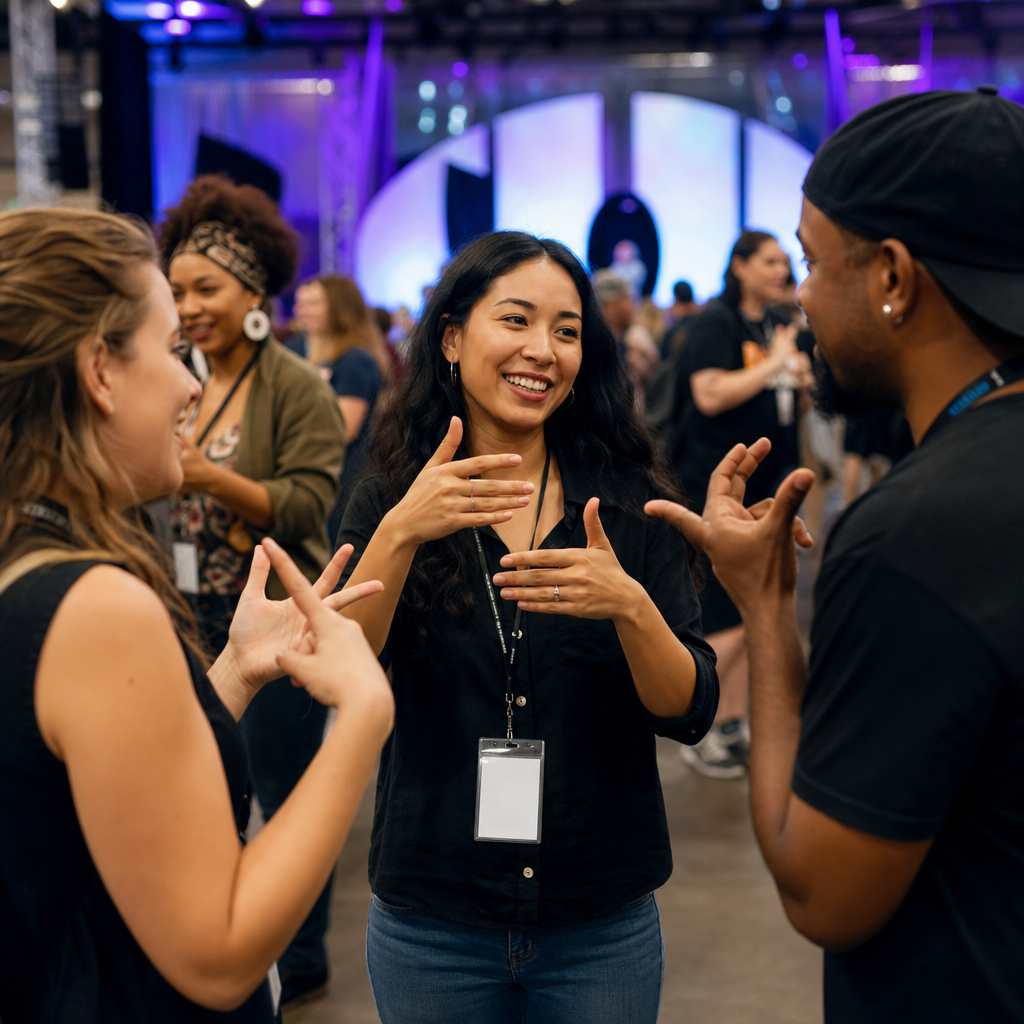
First-time attendees should expect a highly visual, socially interactive environment where communication norms may feel different from mainstream public events. In many Deaf-centered spaces, people use sign language openly, maintain visual attention during conversations, and rely on visual cues such as waving, tapping, or light signals to get someone’s attention. That can feel energizing and refreshing, especially for Deaf and hard of hearing attendees who are used to constantly adapting in hearing-dominant settings. Depending on the event, you may find vendor booths, performances, workshops, panel discussions, meet-and-greets, art displays, film screenings, athletic competitions, and community announcements all taking place in one busy venue.
It is helpful to arrive with curiosity, flexibility, and respect for community norms. If you sign, be ready for a lot of introductions and conversations. If you are still learning, it is completely fine to be honest about your skill level and engage respectfully. If you are hearing and attending as a family member, ally, educator, or professional, the best approach is to listen, observe, and avoid treating the event like a novelty. Comfortable clothing, a charged phone, water, and enough time to move through the space without rushing can make a big difference. If the event includes workshops or screenings, check schedules early because popular sessions can fill quickly. Most of all, expect a sense of connection that often goes beyond the official program. Some of the most valuable moments happen in informal conversations, reunions, and spontaneous community interactions between scheduled activities.
How do Deaf events and festivals support accessibility, inclusion, and community leadership?
The strongest Deaf events support accessibility by designing the experience around Deaf, hard of hearing, and signing participants from the beginning. That often includes sign language-first communication, captioned presentations, large visual displays, clear sightlines, strong lighting, visual alert systems, and stage setups that allow audiences to follow both speakers and interpreters when needed. Some events also provide DeafBlind accommodations such as tactile interpreting, close-vision access, preferred seating, or orientation support. Accessibility is not only about adding services; it is about understanding how environment, communication, pacing, and technology affect participation. Well-organized events make it easier for people to engage fully rather than struggle to keep up.
These gatherings also play a major role in building inclusion and leadership within the community. When Deaf professionals, artists, organizers, youth leaders, and advocates are centered as planners, speakers, judges, performers, and decision-makers, the event becomes a platform for representation in action. Attendees see who is shaping the conversation, who is creating opportunity, and who is modeling effective leadership. That matters because leadership visibility helps strengthen the next generation and pushes back against the common pattern of hearing-led systems making decisions for Deaf people. Festivals and conferences can also create space for intersectional conversations involving race, disability, gender, education, technology, and language access. In that way, the best Deaf events do more than gather people together for a few days; they help grow stronger networks, sharper advocacy, and a more confident, community-led future.