Can babies learn sign language? Yes, babies can learn simple signs before they can speak, and in my experience working with early communication strategies, that early signing often reduces frustration, strengthens caregiver bonding, and gives families a practical bridge to spoken language rather than a replacement for it. In this context, baby sign language usually means a small set of gestures, often borrowed from American Sign Language, British Sign Language, or another national sign language, used with hearing or deaf babies to express needs like milk, more, sleep, all done, and help. It is important to define terms carefully because true sign languages are complete natural languages with their own grammar, while many baby signing programs teach selected vocabulary without the full linguistic system. That distinction matters when discussing development, cultural respect, and misconceptions about sign language. Parents often ask whether signing delays speech, whether only deaf children benefit, or whether babies are too young to learn intentional gestures. Research in child development and language acquisition shows that infants communicate long before first words through eye gaze, facial expression, joint attention, pointing, and turn taking. Signing fits into that broader developmental pathway. This topic matters because communication difficulties in the first two years can create stress at home, missed cues in care settings, and confusion about normal language milestones. It also matters because misinformation is common. Some families are told signing is a gimmick, while others hear exaggerated claims that it will raise IQ or create advanced readers. Neither extreme is accurate. A balanced view is better: babies can learn meaningful signs, results vary by child and consistency, and signing works best when adults pair signs with speech, responsive interaction, and realistic expectations. As a hub topic within sign language and communication, misconceptions deserve special attention because they shape whether parents seek support, whether educators use inclusive practices, and whether deaf culture is treated respectfully. Understanding what baby sign language can and cannot do helps families make informed choices, spot quality instruction, and support communication from the earliest months with confidence.
How babies learn signs and when to start
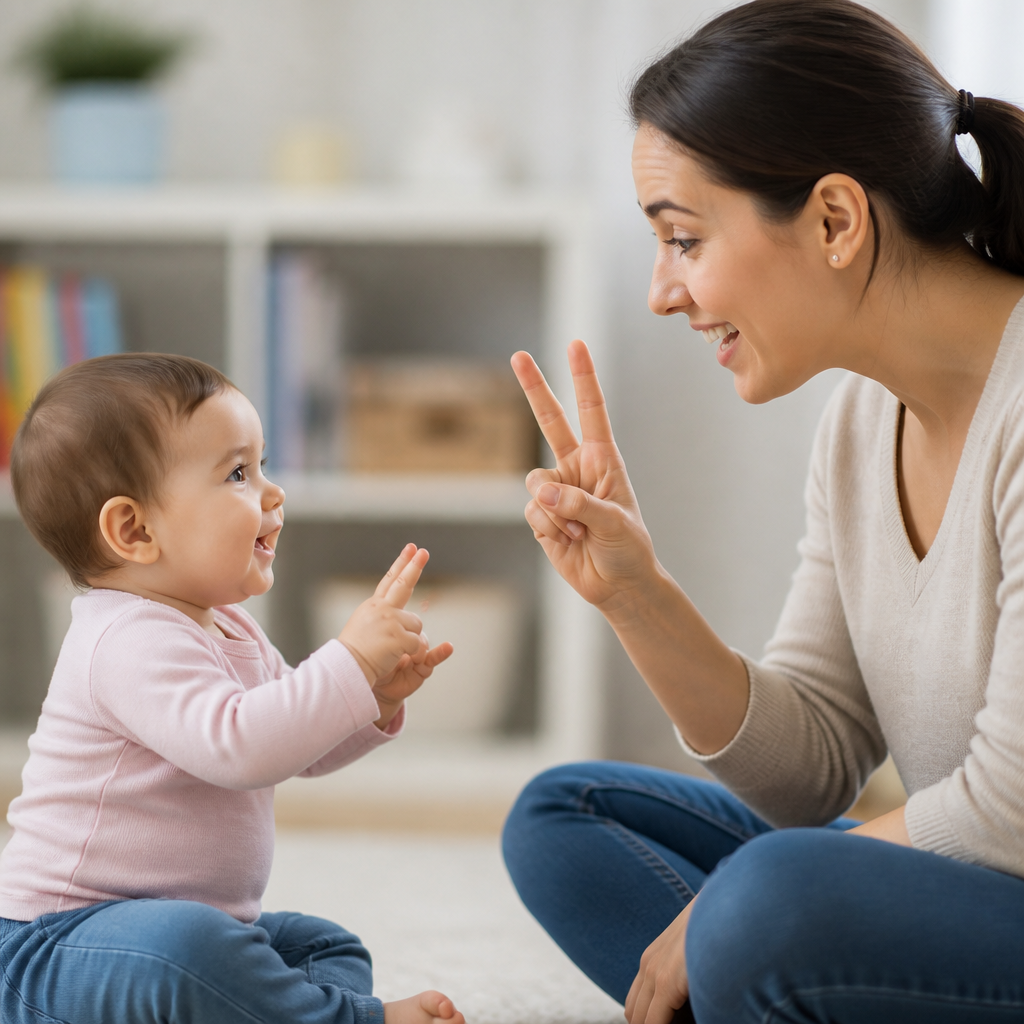
Most babies are ready to notice repeated hand movements well before they can reproduce them accurately. In practice, I usually see strong readiness signs between six and nine months, when infants begin sustained joint attention, copy simple actions, and anticipate routines. That does not mean a six month old will immediately sign back. Receptive understanding comes first. A caregiver might sign milk at every feeding for weeks before the baby attempts an approximation. Early attempts can be imprecise, just as first spoken words are often simplified. A baby may tap fingertips together for more or flap a hand loosely for all done. Those approximations still count if they are used consistently and intentionally.
The mechanism is straightforward. Hand control often develops earlier than the fine oral motor coordination needed for clear speech. Babies can therefore use gestures to represent meaning before they can pronounce words. This is not unusual or artificial; it builds on normal preverbal communication. Pointing, reaching, showing objects, and waving are all symbolic or social gestures. Adding a few meaningful signs simply extends a system babies already use. The strongest results happen when adults sign in context, say the word aloud, look at the child, and respond immediately. Repetition during routines matters more than formal lessons. Mealtime, bath time, bedtime, diaper changes, and favorite songs create predictable opportunities that help infants map movement to meaning.
Questions about timing are common. There is no single perfect starting age, but waiting until a child shows communicative interest is more useful than following a strict month marker. Some children produce their first sign around eight or nine months; others do so closer to twelve months. Premature babies, children with motor differences, and multilingual children may show different timelines. The practical rule is simple: start when communication routines are stable, model consistently, and judge progress over months rather than days.
Common misconceptions about sign language and babies
The biggest misconception is that signing delays speech. Evidence does not support that claim. When used responsively, signing generally supports language development because it increases the number of meaningful communication exchanges a child has each day. Adults who sign and speak tend to label more objects, pause for turn taking, and notice communication attempts sooner. Those behaviors are good for spoken language. Another misconception is that baby sign language must be taught through flashcards, drilling, or expensive classes. It does not. The best teaching tool is daily life. A sign introduced naturally during a real need is easier to learn than a sign presented out of context.
A third misconception is that sign language is universal. It is not. American Sign Language and British Sign Language are different languages, not accent variations. Families should choose signs from the language used in their community, school system, or deaf services network whenever possible. A fourth misconception is that hearing families using signs are somehow doing the same thing as learning a full sign language. They are not necessarily. Using a dozen functional signs can help communication, but fluency in a sign language involves grammar, syntax, discourse conventions, and cultural knowledge. Being precise about that difference prevents confusion and respects deaf communities.
Another persistent myth is that signing guarantees advanced intelligence. Some early marketing made inflated claims about cognitive leaps. What the evidence more reliably shows is reduced frustration, earlier expressive options, and potentially richer language interaction. Those are meaningful benefits, but they are not magic. Finally, many people assume babies who do not sign quickly are not ready or that the method has failed. In reality, progress depends on consistency, motor planning, temperament, sensory profile, and how often caregivers respond to attempts. A child who watches signs for two months before producing one is still learning.
Benefits, limits, and what the evidence actually shows
Baby sign language is most useful as a communication support, not as a miracle intervention. In homes where I have seen it work well, the immediate benefit is clarity. A child who can signal more, eat, water, help, or stop has fewer moments of helplessness. Caregivers also become better observers because signing encourages them to slow down, wait, and confirm meaning. For some babies, especially those with hearing loss, speech delays, Down syndrome, autism, apraxia risk, or broader developmental differences, signs can provide an important expressive route while other skills develop. In inclusive childcare settings, simple signs can improve transitions and reduce conflict around routines.
There are limits. Signing does not replace a developmental assessment when milestones are significantly delayed. It does not resolve hearing problems, oral motor issues, or language disorders on its own. It also should not be used to pressure children into performance. If adults turn signs into constant testing, communication quality drops. Research summaries from pediatric and speech language literature generally find no evidence that signing harms speech and some evidence of communication benefits, but study quality varies, sample sizes can be small, and outcomes differ across populations. That is why the most defensible conclusion is practical rather than sensational: signing is a low risk, potentially helpful strategy when paired with spoken language and responsive caregiving.
| Question | Short answer | What matters most |
|---|---|---|
| Can babies learn signs? | Yes, often before clear speech | Consistency, repetition, real-life context |
| Does signing delay talking? | No evidence shows it causes delay | Pair signs with spoken words |
| Is baby signing a full sign language? | Usually no, it is limited vocabulary | Respect the difference from fluent signing |
| When should parents start? | Often around 6 to 9 months | Follow the child’s readiness and routines |
| Who benefits most? | Many babies, especially those needing communication support | Responsive adults and regular practice |
Best practices for teaching signs at home
The most effective approach is simple and repeatable. Choose five to ten high value signs tied to daily needs. Good starters include milk, more, eat, all done, help, mommy, daddy, sleep, water, and book. Model each sign exactly when the related event happens. Say the word, make the sign in the child’s visual field, and respond immediately if the baby attempts it. If a child reaches toward a cup, you can say and sign water, then hand over the cup. That immediate connection teaches faster than any isolated practice session.
Keep your pace natural. Over-signing every word can make input cluttered and hard to follow. One or two key signs per sentence is enough for beginners. Use exaggerated but accurate movement, not invented motions unless advised by a local professional or deaf mentor. If multiple caregivers are involved, agree on the same form for each sign to avoid confusion. Songs, books, and routines are excellent reinforcers because they provide repetition without pressure. I have found bedtime signs particularly effective because the context is consistent and distractions are lower.
Watch for approximations and honor them. Babies rarely produce textbook forms at first. If a child uses a simplified motion consistently for more, accept it, model the standard sign back, and continue the interaction. Reinforcement should focus on successful communication, not correction. If progress stalls, reduce the number of target signs, increase opportunities during preferred activities, and check whether adults are signing often enough. Two common mistakes are introducing too many signs at once and expecting immediate imitation. Think in months of exposure, not days of training.
Respecting sign languages and deaf culture
Any discussion of babies learning sign language should include cultural respect. Sign languages are not collections of gestures invented for convenience. They are complete languages shaped by deaf communities over generations. When hearing families borrow signs for babies, they benefit from that linguistic heritage, so accuracy and acknowledgment matter. Whenever possible, learn from qualified instructors, deaf educators, or reputable organizations connected to the local sign language community. This improves sign quality and avoids the spread of incorrect forms that become difficult to unlearn later.
Respect also means understanding the difference between communication support and language access. For a deaf or hard of hearing baby, sign language may be a primary language, not a supplemental technique. In those cases, limited baby signs are not enough. The child needs rich, fluent input from adults or community members who can provide full language exposure. Professional bodies such as the American Academy of Pediatrics and early hearing detection programs emphasize early accessible language because language deprivation carries serious developmental risks. Families navigating hearing loss should seek guidance from audiologists, early intervention teams, speech language pathologists, and deaf mentors together rather than treating signing as an optional add on.
Even for hearing babies, framing matters. Present signing as one useful communication tool, not as a trend or performance skill for social media. That mindset keeps the focus where it belongs: responsive interaction, child development, and respect for a real language tradition.
When to seek extra help and how this hub supports next steps
Parents should seek professional advice if a baby shows limited eye contact, poor response to sound, minimal babbling, loss of previously used skills, difficulty with joint attention, or very few communicative attempts by the end of the first year. Signing can help, but it should not delay referrals for hearing tests or developmental evaluation. Trusted pathways include a pediatrician, an audiologist, a speech language pathologist, and early intervention services. These professionals can determine whether a child needs broader support while preserving every communication option available.
As a hub for misconceptions about sign language, this page should guide your next questions. Families often want deeper information on whether sign language is universal, whether signing and speech can be taught together, how baby signs differ from full ASL, and which signs are most useful at different ages. Educators may need practical classroom routines, while parents of deaf or hard of hearing children may need language access planning rather than a short starter list. The core takeaway is consistent across those paths: babies can learn signs, signing does not inherently block speech, and the best outcomes come from accurate information, steady modeling, and timely support when concerns appear.
If you want to use baby sign language well, start small, stay consistent, pair every sign with speech and context, and learn from credible sources. That approach builds clearer communication now and creates a stronger foundation for every later conversation.
Frequently Asked Questions
Can babies really learn sign language before they can talk?
Yes, babies can often learn simple signs before they are able to say words clearly. This is because the motor skills needed for basic hand gestures usually develop earlier than the precise mouth and tongue movements required for speech. In practice, many babies begin understanding repeated signs well before they can use them consistently, and some start signing simple ideas such as “more,” “milk,” “all done,” or “mom” during late infancy. That does not mean a baby is learning full formal sign language in the same way an older child or adult might. More often, baby sign language refers to a small, practical set of gestures used to support early communication. These signs are often borrowed from systems such as American Sign Language, British Sign Language, or another national sign language and adapted for everyday routines. The goal is not perfection. The goal is helping babies express needs, participate in interaction, and feel understood during a stage when they know far more than they can say out loud.
Does teaching a baby sign language delay speech development?
No, using signs with babies does not typically delay speech, and for many families it works as a bridge to spoken language rather than a replacement for it. When caregivers speak and sign at the same time, babies get repeated, meaningful language input in context. For example, when a parent says “milk” while making the sign during feeding, the baby receives both a visual and auditory cue connected to a real experience. That repeated pairing can support understanding and make communication easier during the months before speech becomes reliable. In early communication work, one of the most helpful outcomes is reduced frustration: babies have a way to express basic wants, and caregivers have an easier time responding accurately. As spoken language develops, many children naturally rely less on signs because speech becomes faster and more flexible. The important point is to keep talking while signing. Signs are most effective when they are used alongside spoken words, facial expression, eye contact, and responsive interaction.
What are the main benefits of baby sign language?
The biggest benefits are usually clearer communication, less frustration, and stronger caregiver-child connection. Babies often become upset when they understand what they want but cannot yet say it in words. A small set of signs can give them a practical way to communicate everyday needs and experiences, such as wanting more food, asking to be picked up, showing they are finished, or labeling familiar people and objects. That early success can make daily routines smoother and more interactive. Another important benefit is bonding. When caregivers consistently watch, respond, and communicate through both speech and gesture, interaction becomes more back-and-forth, which supports emotional connection and language learning. Signing can also encourage adults to slow down, repeat key words, and be more intentional during routines like meals, bath time, play, and bedtime. It is helpful to keep expectations realistic, though. Baby sign language is not a shortcut to advanced language, and it is not necessary for healthy development. It is simply a useful communication tool that can support understanding and participation during early childhood.
When should parents start teaching baby sign language, and which signs should they begin with?
Many families start introducing signs around 6 months of age, especially when babies are becoming more attentive to routines, faces, and repeated words. Some babies may not use signs back right away, but they can still begin learning through repeated exposure. Others may start signing later, often closer to 8 to 12 months or beyond, depending on their development and opportunities for practice. A good place to start is with signs that are highly motivating and easy to use many times each day. Common first signs include “milk,” “more,” “all done,” “eat,” “drink,” “mom,” “dad,” “sleep,” and “help.” The best first signs are the ones that match your baby’s real daily life. To teach them effectively, use the sign consistently at the exact moment the word matters, say the word clearly, and repeat it during the routine. Keep sessions natural rather than turning them into drills. Babies learn best through warm, repeated, real-world interaction. Consistency matters much more than teaching a large number of signs.
Is baby sign language the same as American Sign Language or other full sign languages?
Not exactly. Baby sign language usually refers to a limited set of simple gestures used with hearing babies to support early communication, while full sign languages such as American Sign Language, British Sign Language, and others are complete natural languages with their own grammar, structure, and cultural context. Many baby signs are borrowed from these established languages, but using a handful of practical signs does not mean a child is learning the full language system. That distinction is important. For hearing families, baby signing is often used as an early communication strategy alongside spoken language. For Deaf and hard of hearing children, however, access to a full sign language can be essential for language development, identity, and communication. So while the signs may overlap, the purpose and scope are different. If parents want to use baby signs respectfully and effectively, it helps to learn accurate forms, stay consistent, and understand that these gestures come from real languages and communities. Used thoughtfully, baby sign language can be a practical, supportive tool for early communication at home.