Parents often ask whether using sign language delays speech development, especially when a baby is not talking as quickly as expected or a child has a speech delay. The short answer is no: using sign language does not cause speech delays, and in many cases it supports language growth by giving children a clear, accessible way to communicate before spoken words are reliable. That distinction matters because speech is the physical act of producing sounds, while language is the broader system of understanding and expressing meaning through words, signs, gestures, symbols, and social interaction. When families and educators confuse speech with language, they may avoid helpful tools out of fear. I have worked with signing children, late talkers, autistic learners, and Deaf mentors in classrooms and family coaching settings, and the same pattern appears repeatedly: when communication becomes easier, frustration drops and language opportunities increase. This article addresses the most common misconceptions about sign language, explains what research and practice show, and gives parents a practical foundation for making informed communication choices.
Why the “sign language causes delay” myth persists
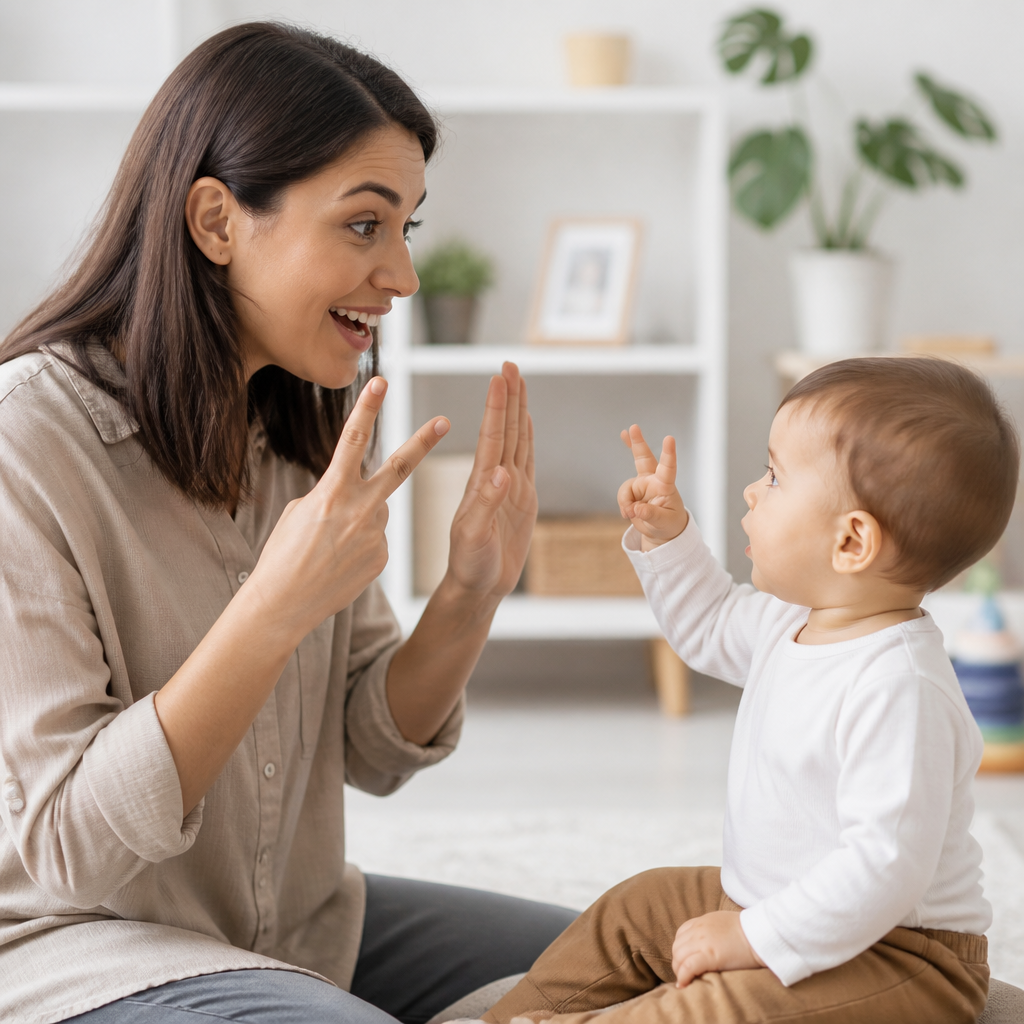
The myth survives because it sounds intuitive. Many adults assume that if a child can get needs met by signing “more,” “milk,” or “help,” the child will have less reason to speak. In practice, children are not choosing between two competing systems the way adults choose between keyboards. Young children are building a communication system from every channel available to them: eye gaze, facial expression, pointing, vocalization, gesture, sign, and eventually spoken words. Reducing communication options rarely strengthens language; it usually narrows practice. Professionals in speech-language pathology often explain this through multimodal communication, the idea that multiple forms of expression can coexist and reinforce one another. A child who signs “ball” while hearing an adult say “ball” is getting repeated, meaningful mapping between concept and label.
Another reason the myth persists is timing. Parents often introduce signs when they are already worried about speech, so the sign use and the delay appear connected even when one did not cause the other. This is a classic confusion of correlation and causation. A toddler with motor speech difficulties, hearing loss, apraxia, autism, or general developmental delay may begin signing because spoken output is hard. The underlying issue affects speech development; signing is the support strategy, not the source of the problem. I have seen families blame signs when progress is slow, only to discover later that the child had chronic ear infections, oral-motor planning difficulties, or receptive language weaknesses that needed direct attention.
Cultural misunderstandings also play a role. Some people treat sign language as a backup system rather than a full language. That is inaccurate. Natural sign languages such as American Sign Language have their own grammar, word order patterns, morphology, and discourse conventions. Using a robust sign language model does not weaken language development. It strengthens access to language, which is the essential ingredient children need for cognitive, social, and academic growth.
What research and clinical practice actually show
Research across early communication, Deaf education, augmentative communication, and speech-language intervention does not support the idea that signing delays speech. Instead, studies generally show neutral or positive effects on spoken language, vocabulary, joint attention, and parent-child interaction. The exact outcome depends on the child’s profile, hearing status, quality of language input, and consistency of use, but the broad conclusion is stable: accessible communication helps. For hearing infants, symbolic gestures and baby signs are associated with earlier functional communication and often reduced frustration. For Deaf and hard of hearing children, access to sign from the beginning protects language development during periods when spoken access may be inconsistent or incomplete.
Clinical organizations have long emphasized early language access. In intervention planning, the priority is not forcing one output mode; it is ensuring the child can understand and express meaning reliably. That is why speech-language pathologists may recommend signs, picture systems, speech-generating devices, or a combination. These supports do not replace speech therapy goals when speech is appropriate. They create a bridge. A child who can request, protest, answer, and comment through sign is practicing core language functions that later support spoken communication as well. In my work, children who gain an effective sign for “finished,” “stop,” or “my turn” often become more available for social interaction, imitation, and verbal modeling because daily conflict decreases.
It is also important to separate baby sign systems from natural sign languages. Baby sign often borrows a limited set of signs for hearing infants. Natural sign languages are complete languages used by Deaf communities. Both can support communication, but they are not interchangeable. Saying that “signing delays speech” oversimplifies two very different contexts and ignores decades of evidence about how children learn language.
How sign language supports speech and language development
Sign language can support development in several concrete ways. First, signs are visible and often easier to imitate than spoken sounds. A toddler may be unable to coordinate the oral movements for “banana” but can learn a handshape and movement approximation that carries the same meaning. That success creates a communicative payoff. Second, signs slow adult language down. When a parent says and signs “eat,” “drink,” or “all done,” the message becomes more salient. Children can see it, hear it, and connect it to the routine. Third, signing strengthens joint attention, a foundational skill in language learning. When adult and child look at the same object and share a sign or spoken word, the child gets a clear lesson in reference.
Signing can also reduce the cognitive load required to express needs. Many speech-delayed children know more than they can say. Giving them a sign for “open” or “help” lets them demonstrate knowledge without waiting for speech motor skills to catch up. That matters emotionally as well as linguistically. Communication breakdowns often lead to tantrums, withdrawal, or learned helplessness. Once a child sees that communication works, motivation usually rises. This is one reason signs are commonly used alongside verbal models, naturalistic developmental behavioral interventions, and parent-coaching approaches.
For bilingual or multilingual families, sign can complement spoken languages rather than compete with them. I have coached families who use spoken Spanish at home, English at school, and key signs across both settings. The signs provide continuity while the child hears rich spoken input from each environment. The child is not confused by multiple systems; children are built to sort patterns when input is consistent and meaningful.
Misconceptions about sign language across different groups of children
The fear of delayed speech shows up differently depending on the child. For hearing babies, some worry that baby sign is a shortcut that will replace words. In reality, hearing babies naturally use gestures before speech anyway, including waving, reaching, and pointing. Teaching a few consistent signs simply makes that preexisting stage more intentional. For late talkers, families may worry that signs will become a crutch. But a crutch is useful when walking is unstable. Communication support should be judged by whether it increases interaction, not by whether it looks like typical speech.
For autistic children, misconceptions can be especially harmful. Some adults assume that if an autistic child can sign, speech will never emerge. That is not supported by practice. Autistic children often benefit from visual supports and predictable motor patterns. Sign can align well with those strengths. At the same time, not every autistic child will prefer or tolerate manual signs, so the decision should be individualized. A child with significant motor imitation challenges may do better with pictures or a device. The key principle is access, not ideology.
For Deaf and hard of hearing children, the misconception can be most damaging of all because delayed language access carries long-term risk. If a child cannot fully access spoken language through hearing technology alone, withholding sign while waiting for speech can create a language deprivation scenario. Cochlear implants and hearing aids are valuable tools, but they do not guarantee effortless access in every acoustic setting. Sign language provides complete visual access and should be treated as a strength, not a last resort.
Common myths and the practical reality
| Myth | What actually happens | Practical example |
|---|---|---|
| Signing makes children lazy about talking | Children usually use the method that works best in the moment while continuing to learn from speech models | A toddler signs “more” and soon pairs it with “mo” during snack time |
| Only nonverbal children need sign language | Sign can help verbal, minimally verbal, Deaf, hard of hearing, and typically developing children | A hearing infant uses “all done” months before saying the words clearly |
| Sign language is just gesture, not real language | Natural sign languages have grammar, vocabulary, and community standards | American Sign Language uses structured sentence patterns and nonmanual markers |
| If a child can sign, speech therapy is unnecessary | Sign and speech therapy often work together, addressing different parts of communication | A child practices consonants in therapy while signing to request at home |
| Using sign will confuse bilingual children | Children can map meaning across multiple systems when input is consistent | A child hears Arabic and English and signs “help” in both settings |
When sign language is most helpful, and what its limits are
Sign language is especially helpful when a child has limited spoken output, unreliable intelligibility, hearing differences, motor speech challenges, or high frustration around communication. It is also useful in early childhood settings because caregivers can model signs during routines without interrupting play. In my experience, the strongest gains happen when adults choose functional vocabulary first: “more,” “eat,” “help,” “stop,” “go,” names of favorite people, and social words like “hi” and “bye.” These signs deliver immediate value, which increases repetition and learning.
Still, sign language is not a universal solution. Some children have motor impairments that make handshapes difficult. Some families struggle with consistency because only one caregiver learns the signs. Some school teams promise sign support but do not provide fluent models. And for children who need broad communication across unfamiliar partners, a speech-generating device or picture-based system may be more transparent than sign alone. Sign works best when communication partners understand it. That limitation does not make sign ineffective; it means support plans should match real-world environments.
Parents should also know that a few isolated signs are not the same as rich language exposure. If a Deaf child receives only occasional signed labels without fluent interaction, that is not full access. Language grows through back-and-forth conversation, storytelling, commenting, joking, and emotional connection. Whether a family chooses spoken language, sign language, or both, depth and consistency matter more than isolated drills.
How families can use sign language without losing focus on speech goals
The most effective approach is usually “sign plus speech,” not “sign instead of speech,” unless a child cannot access spoken language adequately. Model the sign and say the word at the same time. Use signs in routines the child loves, such as meals, bath, songs, outdoor play, and books. Wait expectantly after modeling so the child has a turn. Accept approximations. A rough hand movement that clearly means “more” is a communication success, just as “ba” for “ball” is a speech success. Respond immediately so the child learns that communication changes the environment.
If you are concerned about development, track both receptive and expressive skills. Can the child follow directions, point to named items, imitate actions, use eye contact purposefully, combine signs, or pair signs with sounds? These indicators often tell more than raw spoken word count. Seek evaluation from a licensed speech-language pathologist, and for hearing concerns, request a full audiological assessment. For families interested in sign as a long-term language, learn from qualified Deaf instructors or established community resources rather than random social clips.
As a hub for misconceptions about sign language, the main point is straightforward: communication support does not create communication disorders. When sign language is introduced thoughtfully, it expands access, lowers frustration, and gives children more chances to practice meaning. That is the path toward stronger language, and often toward stronger speech as well. If you are deciding whether to start, begin with a few functional signs today, use them consistently, and get professional guidance if your child’s progress concerns you.
Frequently Asked Questions
Does using sign language delay speech development?
No. Using sign language does not cause speech delays. Research and clinical experience consistently show that signs give children another way to communicate while spoken words are still developing. That is an important distinction, because speech refers to producing sounds with the mouth, while language includes understanding, expressing ideas, and using symbols or words to connect with others. A child can be building strong language skills even before clear speech emerges. For many babies and toddlers, signs reduce frustration, support comprehension, and create more opportunities for back-and-forth interaction with caregivers. Those repeated communication exchanges are exactly what help language grow. In many cases, signing acts as a bridge to spoken language rather than a barrier to it.
If my child uses signs, will they become dependent on them instead of talking?
That is a very common concern, but for most children the answer is no. Children generally prefer the most efficient and effective communication method available to them. As speech becomes easier, clearer, and faster, many children naturally begin to rely less on signs and more on spoken words. Signs do not “trap” a child in nonverbal communication. Instead, they help a child successfully express wants, needs, feelings, and ideas during a stage when speech may not yet be consistent. This success can actually encourage more communication overall. A child who learns that communication works is more likely to keep trying, imitating, and engaging. Parents can also model both the sign and the spoken word together, which helps connect the two systems and supports the transition to verbal expression when the child is ready.
How can sign language support language development if a child is not talking yet?
Sign language can support language development by making communication visible, concrete, and accessible. Before a child can clearly say a word, they may still understand it, recognize routines, and want to participate in social interaction. Signs allow them to do that sooner. For example, learning signs for words like “more,” “eat,” “help,” or “all done” teaches a child that specific symbols carry meaning. That is a foundational language skill. Signing also strengthens joint attention, imitation, turn-taking, and vocabulary growth, all of which are closely tied to later spoken language development. When caregivers pair signs with spoken words, facial expression, and context, children receive language input through multiple channels at once. That rich input can make words easier to understand and remember. In other words, signing does not replace language learning; it often expands and reinforces it.
Should I use sign language if my baby is not talking as quickly as expected or has a speech delay?
In many situations, yes. Using signs can be a very helpful support for babies who are late to talk and for children with speech delays, because it gives them a functional way to communicate right now rather than waiting passively for speech to catch up. That can lower frustration for both the child and the parent, improve daily routines, and increase meaningful interaction. However, signs should not be viewed as the only step if there are concerns about development. If a child is not meeting expected communication milestones, it is wise to speak with a pediatrician or a licensed speech-language pathologist for a fuller evaluation. A professional can help determine whether the issue involves speech production, language comprehension, social communication, hearing, or another factor. Sign language can be part of a strong support plan, but it should be used alongside responsive communication strategies and, when needed, professional guidance.
What is the difference between a speech delay and a language delay, and why does that matter when talking about signs?
This distinction matters a great deal. A speech delay refers to difficulty producing speech sounds, words, or clear verbal output. A language delay refers to challenges with understanding language, using words and symbols meaningfully, combining ideas, or communicating effectively overall. A child may have difficulty with speech while still understanding a lot, or they may have broader language challenges that affect both understanding and expression. Sign language is especially relevant here because it supports communication even when spoken output is hard. If a child knows what they want to say but cannot reliably produce the spoken word, a sign can provide access to expression. That means signs can reveal strengths that speech alone may hide. They can also help parents and professionals better understand whether a child’s difficulty is mainly with speech production or with broader language development. For that reason, signs are often a valuable tool, not just for communication, but for understanding a child’s needs more clearly.