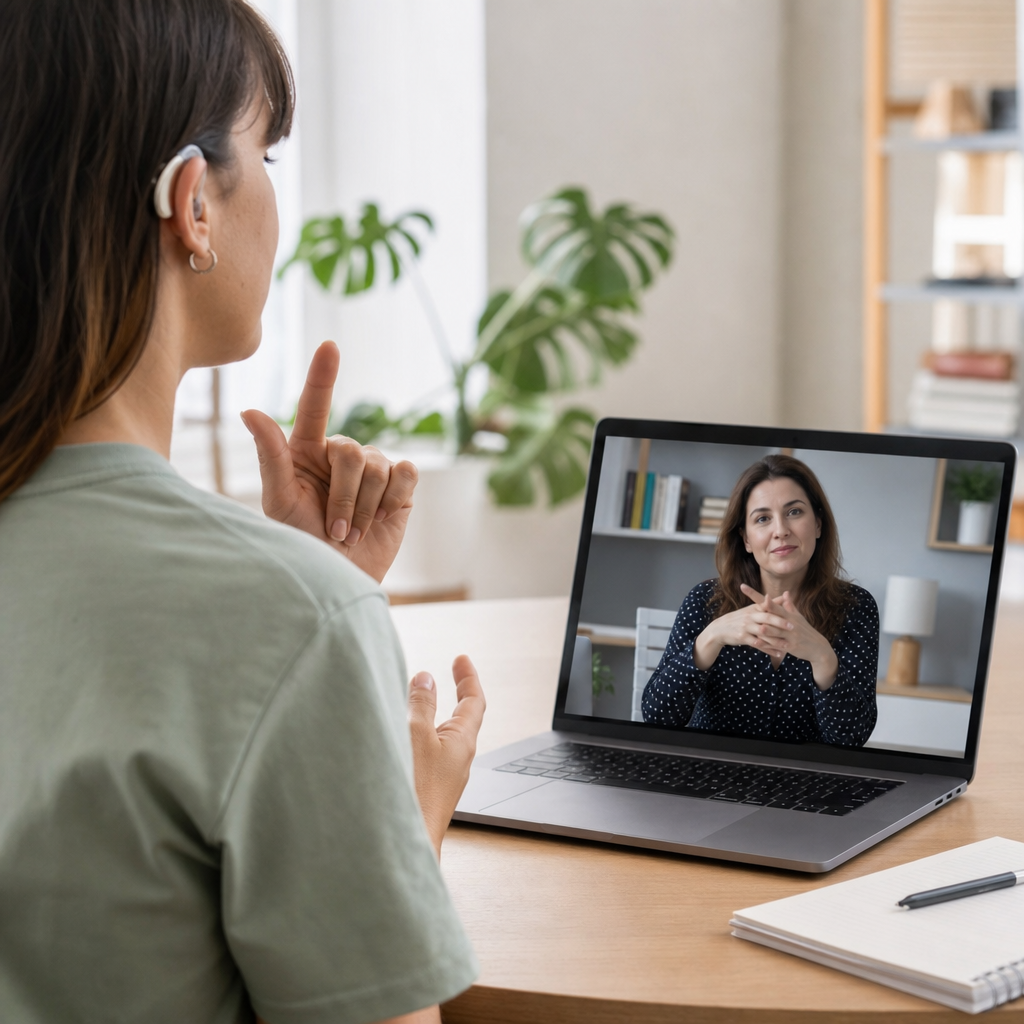
Deaf-friendly therapy helps Deaf, hard of hearing, late-deafened, and deafblind people access mental health care without communication barriers, cultural misunderstandings, or unsafe assumptions. In practice, that means much more than finding a kind therapist. It means finding a clinician, clinic, or support program that can communicate clearly, respect Deaf identity, adapt methods appropriately, and build care around the client rather than forcing the client to fit a hearing-centered system. I have seen the difference this makes in real clinical settings: when access is built in from the first phone call or online form, clients spend their energy on healing instead of decoding speech, lip-reading through masks, or explaining basic Deaf culture to providers.
The term Deaf-friendly therapy includes several layers of access. Communication access may involve American Sign Language, other national sign languages, certified interpreters, real-time captioning, video relay services, text-based scheduling, visual alerts, or written materials in plain language. Cultural access means understanding that many Deaf people do not view deafness solely as a medical deficit. It also means recognizing common stressors such as language deprivation, educational exclusion, family communication gaps, workplace bias, and trauma related to inaccessible systems. Clinical access involves adapting assessment, rapport-building, psychoeducation, crisis planning, and group participation so they actually work for Deaf clients.
This matters because Deaf and hard of hearing communities face elevated mental health risks while often receiving poorer care. Research and public health reporting have repeatedly linked communication barriers with delayed diagnosis, lower treatment adherence, social isolation, and dissatisfaction with care. Deaf people also encounter higher rates of adverse childhood experiences, interpersonal trauma, and barriers to emergency support. Yet many mainstream therapists have little formal training in sign language access or Deaf mental health. A therapist may be excellent with anxiety, grief, or couples counseling in general and still provide ineffective care if sessions depend on rapid spoken conversation or if the clinician mistakes language difference for cognitive impairment. Choosing the right therapist is therefore not a minor preference; it is a core quality and safety issue.
As a hub topic, Deaf-friendly therapy and support covers individual counseling, family therapy, child and adolescent services, group therapy, crisis resources, psychiatric care, telehealth, peer support, and school or workplace accommodations that affect treatment success. It also intersects with disability law, interpreter ethics, trauma-informed care, and evidence-based approaches such as cognitive behavioral therapy, dialectical behavior therapy, acceptance and commitment therapy, and family systems work. The goal is not to lower standards. The goal is to deliver the same clinical rigor hearing clients expect, while removing preventable barriers and honoring how Deaf people communicate and live.
What Deaf-friendly therapy includes
A truly Deaf-friendly therapy practice is accessible before the first appointment, during treatment, and between sessions. The first test is simple: can a prospective client contact the practice without using a voice call? High-quality providers offer email, secure messaging, online scheduling, text-capable office numbers, or video options. Intake paperwork should ask about preferred language, signing style, hearing technology, interpreter needs, captioning needs, and whether family members or support people require accommodations too. Front-desk staff should know how to book interpreters, set up telehealth captions, and document communication preferences so clients do not have to repeat them at every visit.
Inside the session, communication must be direct and accurate. Best practice is therapy in the client’s preferred language whenever possible, including treatment by a signing clinician when that is clinically and logistically appropriate. If the therapist does not sign fluently, the clinic should use a qualified interpreter with mental health experience rather than relying on family members, friends, or untrained staff. In the United States, the Americans with Disabilities Act generally requires health care providers to furnish effective communication, and the National Association of the Deaf has long emphasized that choice of accommodation depends on the individual and the context. Effective communication is not achieved by simply speaking louder, turning on generic auto-captions, or handing over a worksheet after an inaccessible appointment.
Environment matters too. Deaf-friendly offices use visual calling systems, good lighting for signing and lip visibility, seating arranged for sightlines, reduced background glare, and clear mask policies when facial information is essential. Telehealth setups should prioritize camera framing, stable bandwidth, caption support, and platforms compatible with interpreters or additional video feeds. Treatment materials should be visually organized and discussed interactively, not delivered as dense spoken lectures. For many clients, especially those with uneven language access growing up, therapists need to check comprehension carefully without sounding patronizing. Good clinicians do this by summarizing, asking clients to explain ideas in their own words, and using examples anchored in everyday situations.
| What to look for | Strong sign | Warning sign |
|---|---|---|
| First contact | Online, email, text, or video options are easy to use | Office requires phone calls or responds only by voicemail |
| Language access | Provider signs fluently or arranges qualified interpreters/captioning | Provider suggests lip-reading, family interpreting, or note passing only |
| Deaf cultural competence | Therapist understands Deaf identity, schooling history, and access barriers | Therapist frames deafness only as loss or pathology |
| Telehealth readiness | Platform supports captions, clear video, and interpreter integration | Poor camera setup, lag, or no plan for accessibility failures |
| Crisis planning | Written, visual, and local emergency options are discussed clearly | Provider assumes standard phone-based hotlines work for everyone |
How to evaluate therapist qualifications and fit
The best therapist for a Deaf client is not always the one with the longest resume; it is the one with relevant skill, humility, and accessible systems. Start by asking direct questions. Do you sign, and at what level? Have you worked with Deaf, hard of hearing, or deafblind clients before? How do you handle interpreters in trauma therapy, couples therapy, or group work? What accommodations do you provide for telehealth? How do you adapt evidence-based treatments for clients with varied language backgrounds? Strong therapists answer concretely. Weak therapists answer vaguely, overstate limited signing ability, or say they “treat everyone the same,” which usually signals a lack of disability competence.
Clinical approach matters because mental health methods depend on language. Cognitive behavioral therapy, for example, often uses links among thoughts, feelings, behaviors, and body sensations. With Deaf clients, I have found it essential to make these links visually explicit through diagrams, examples, and repeated checks for shared meaning. Dialectical behavior therapy skills like distress tolerance and emotion regulation can work very well when presented visually and practiced actively, but they fail if the client is trying to follow inaccessible spoken explanations. Trauma-focused therapy requires even more care. The therapist must know how to pace interpretation, preserve confidentiality, minimize visual overload, and account for the client’s history of being misunderstood in medical, school, or family settings.
Look for licensed professionals whose scope matches the problem. Psychologists, licensed clinical social workers, licensed professional counselors, marriage and family therapists, and psychiatrists all play different roles. Psychiatrists and psychiatric nurse practitioners can evaluate medication needs; therapists provide counseling; case managers may help with benefits, school supports, or referrals. For children, ask whether the clinician understands language development, signed language acquisition, and how delayed access to language can affect behavior and emotional expression. For couples or families, ask whether the therapist can manage mixed communication environments, such as one Deaf partner and one hearing partner with very different assumptions about access, conflict, and responsibility.
Common barriers and how good providers address them
The most common barrier is not a lack of need; it is a system that assumes hearing by default. Many clinics still route all new patients through telephone intake. Others say interpreters can be arranged but then reschedule repeatedly, bill the client for interpreter costs, or use platforms where the interpreter disappears whenever someone shares a screen. These are operational failures, not minor inconveniences. A competent practice has a documented process for scheduling accommodations, confirming them before appointments, and troubleshooting breakdowns quickly. If a clinic treats access as optional or exceptional, that attitude will usually show up again in treatment.
Another barrier is cultural misunderstanding. Some providers misread direct visual attention, pauses in interpreted conversation, or different turn-taking patterns as resistance, flat affect, or poor insight. Others focus narrowly on hearing technology, assuming a cochlear implant or hearing aid eliminates access needs. In reality, device benefit varies widely by person, setting, fatigue, background noise, age of language exposure, and the emotional complexity of the conversation. A Deaf client may function well at work meetings and still need an interpreter for therapy because therapy demands precision, nuance, and sustained emotional processing. Good therapists understand this distinction and never use surface functionality as proof that accommodation is unnecessary.
Cost and geography also limit access. In rural areas, there may be no local signing therapist and few interpreters with mental health experience. Telehealth has improved options significantly, especially since regulatory changes expanded remote care, but quality still depends on licensure rules, insurance coverage, and platform accessibility. Interstate practice can be complicated because clinicians usually must be licensed where the client is located. This is one reason hub resources on Deaf-friendly therapy should include state or regional referral pathways, community mental health centers, Deaf service agencies, interpreter referral services, and national organizations that maintain provider lists. When local options are thin, coordinated support often matters as much as the therapist alone.
Support beyond therapy: family, peers, crisis care, and community resources
Therapy is one part of Deaf-friendly mental health support, not the whole picture. Many clients improve faster when family communication improves too. For Deaf children and teens, parent education can be transformative. Families who learn sign language, use visual routines, and communicate directly at home reduce chronic frustration and isolation. For adults, couples counseling may focus on access equity, conflict repair, and the hidden labor Deaf partners often carry when navigating appointments, finances, or social events in hearing spaces. A skilled therapist can help families separate relationship issues from access issues, which are often intertwined but not identical.
Peer support is equally important. Deaf peer groups, recovery groups with qualified interpreters, and community-based programs can reduce isolation and normalize shared experiences such as communication fatigue, school trauma, or medical mistrust. Peer spaces do not replace therapy for conditions like major depression, post-traumatic stress disorder, bipolar disorder, or suicidality, but they often strengthen treatment by increasing belonging and practical problem-solving. I have seen clients stay engaged in care longer when therapy is paired with Deaf community connection, whether through local centers, advocacy groups, online meetups, or identity-affirming workshops.
Crisis care deserves special scrutiny because standard emergency pathways remain heavily voice-dependent. A Deaf-friendly support plan should include text-based or video-accessible crisis options, local emergency numbers if alternatives to 988 or phone dispatch are needed, trusted contacts, medication information, and clear written steps for what happens if the client cannot safely remain alone. Providers should discuss how hospitals handle interpreters, what to do if emergency staff rely on note writing, and how to advocate for communication access during involuntary or high-acuity situations. The best crisis planning is specific, local, rehearsed, and updated over time, not a generic handout tucked into a file.
How to choose the right service and make the first appointment
Choosing Deaf-friendly therapy starts with matching your needs to the right level of care. If you need weekly counseling for anxiety or grief, an outpatient therapist may be enough. If you have severe depression, active self-harm, substance use, or unstable housing, you may need coordinated outpatient care, intensive outpatient treatment, psychiatry, or social service support in addition to therapy. Write down your preferred language, communication method, insurance information, symptoms, and any past treatment that helped or failed. Then contact two or three providers and compare their responses. Fast, respectful, accessible replies usually predict better ongoing care.
During the first visit, pay attention to process as much as personality. Did the therapist confirm accommodations without making you negotiate for them? Did they ask about language history, school experiences, family communication, trauma exposure, and identity in a respectful way? Did they explain confidentiality, treatment goals, and crisis steps clearly? Were they comfortable slowing down, clarifying terms, and checking understanding? Trust your reaction. A therapist does not need to be perfect to be effective, but they must be curious, prepared, and willing to correct mistakes quickly. If sessions leave you exhausted mainly because of access problems, the fit is poor even if the therapist seems caring.
Deaf-friendly therapy is not a niche luxury. It is the standard that allows mental health care to work as intended. The right provider offers effective communication, cultural understanding, clinically sound treatment, and practical support before, during, and after sessions. The wrong provider can unintentionally add stress, delay recovery, and make clients feel unseen. As you explore Deaf-friendly therapy and support, focus on access, qualifications, fit, and community connection together. Use this hub as a starting point, ask direct questions, and choose care that lets you focus on healing rather than overcoming barriers. If a provider cannot explain how they make therapy accessible, keep looking until you find one who can.
Frequently Asked Questions
What does “Deaf-friendly therapy” actually mean?
Deaf-friendly therapy means mental health care is designed to be accessible, respectful, and effective for Deaf, hard of hearing, late-deafened, and deafblind clients. It is not limited to a therapist being “nice” or willing to write things down when communication gets difficult. A truly Deaf-friendly therapist understands that communication access is a clinical necessity, not an extra convenience. That may include fluency in ASL, use of qualified interpreters when appropriate, comfort with visual communication, captioning for virtual sessions, adapted materials, and clear planning for how the client prefers to communicate.
It also means the therapist does not treat Deafness as a problem to be fixed. Instead, they recognize Deaf identity, culture, community, language access, and lived experience as important parts of the client’s life. A Deaf-friendly provider understands that many mental health struggles may be shaped by chronic inaccessibility, language deprivation, discrimination, family communication barriers, educational trauma, or isolation in hearing-centered spaces. In other words, the therapist should be able to separate the client’s mental health concerns from the harmful effects of communication exclusion and ableism.
In practice, Deaf-friendly therapy feels collaborative rather than exhausting. The client should not have to spend every session teaching the provider basic access etiquette or defending their communication needs. The right therapist builds care around the person in front of them, checks whether the environment is accessible, and adapts methods so therapy works in a visually oriented, linguistically appropriate way.
What qualifications or experience should I look for in a Deaf-friendly therapist?
Start with the basics: the therapist should be properly licensed in their field and trained to treat the concerns you are bringing to therapy, whether that involves anxiety, trauma, depression, grief, family conflict, identity issues, or another mental health need. After that, look closely at Deaf-specific competence. A strong provider should be able to explain their experience working with Deaf, hard of hearing, late-deafened, or deafblind clients and describe how they make therapy accessible in real terms.
If the therapist says they know ASL, it is reasonable to ask about their fluency level and whether they conduct full therapy sessions directly in ASL. Basic conversational signing is not the same as being able to discuss trauma, relationships, emotions, or clinical concepts accurately. If they do not sign fluently, ask how they work with qualified mental health interpreters, CART services, captioning, assistive technology, or tactile communication supports when needed. The provider should already understand that using family members, children, or untrained staff as interpreters is not appropriate or ethical.
You should also look for cultural competence, not just language accommodation. A Deaf-friendly therapist should understand common issues such as hearing privilege, audism, barriers in schools and workplaces, the impact of inaccessible health systems, and the diversity within Deaf communities. They should avoid assumptions about speech, cochlear implants, hearing aids, lipreading, or whether a person identifies as Deaf, deaf, hard of hearing, or late-deafened. The best therapists are open, informed, and humble enough to ask respectful questions when needed without placing the burden of education entirely on the client.
How can I tell if a therapist or clinic will communicate well before I book an appointment?
The intake process often tells you a great deal. Pay attention to whether the clinic offers multiple ways to communicate, such as email, text, online forms, videophone, relay-friendly contact options, or accessible telehealth platforms. If a practice only relies on phone calls and seems confused when you ask for another communication method, that may be an early sign of a hearing-centered system that has not thought seriously about access.
When you contact the therapist or clinic, ask direct questions. You might ask how sessions are conducted for Deaf or hard of hearing clients, whether the therapist signs fluently, whether interpreters are provided, whether captioning is available for teletherapy, how emergencies are handled accessibly, and whether written materials are adapted for different language backgrounds. Their answers should be specific and confident, not vague or defensive. A good clinic can explain its access process clearly because it has one.
It is also useful to notice attitude. If staff treat access requests as inconvenient, unusual, or optional, that is a red flag. You want a provider who responds as though accessibility is a normal part of competent care. During a consultation, look for signs that the therapist makes eye contact appropriately, allows visual pacing, checks for understanding without being patronizing, and does not assume lipreading will solve everything. Effective communication in therapy requires more than exchanging words; it requires a provider who respects how communication actually works for you.
Are interpreters enough, or is it better to find a therapist who signs directly?
Direct communication with a therapist who is fluent in the client’s primary language is often ideal because it allows therapy to move naturally, with fewer interruptions and less risk of emotional nuance being lost. For many Deaf clients, especially those who use ASL as a primary language, working directly with a signing therapist can improve trust, speed up rapport, and make emotionally complex work feel more immediate and accurate.
That said, a qualified interpreter can still support excellent care when a signing therapist is not available, especially if the therapist is otherwise skilled, culturally informed, and committed to accessible practice. The interpreter should be professionally trained, bound by confidentiality, and experienced enough to handle mental health settings, where emotional tone, pacing, and subtle meaning matter greatly. Not every interpreter is equipped for therapy work, so it is appropriate to ask whether the interpreter has mental health experience.
The best option depends on the client’s language preferences, region, clinical needs, and available providers. Some people strongly prefer direct communication and will only feel fully comfortable with a therapist who signs. Others are comfortable working through an interpreter if the therapeutic match is strong. The key point is that access should support the therapy, not interfere with it. If the presence of an interpreter makes it harder to discuss sensitive issues, or if the therapist clearly does not know how to work effectively in an interpreted setting, that arrangement may not be the right fit.
What are the biggest red flags that a therapist is not truly Deaf-friendly?
One major red flag is treating communication access like a burden rather than a professional responsibility. If a therapist resists using interpreters, expects you to rely on lipreading, insists that email or text is “too complicated,” or asks you to bring a relative to interpret, that is a serious sign the provider does not understand accessible care. Another warning sign is overconfidence without real competence, such as claiming to know sign language but being unable to communicate about therapy topics clearly or accurately.
Cultural misunderstandings are another problem. Be cautious if the therapist frames Deafness only as loss, assumes all Deaf clients want to be more hearing, or interprets your communication style through a hearing-centered lens. For example, they may pathologize directness, misunderstand visual attention patterns, or overlook the role of systemic exclusion in your stress. A therapist who minimizes audism, family language barriers, or years of inaccessible experiences may miss the real context of your mental health concerns.
Finally, watch for a lack of flexibility. Deaf-friendly therapy should adapt to the client, not force the client to fit a standard hearing model. If the therapist cannot explain how they would make telehealth accessible, provide visual materials, pace sessions appropriately, or coordinate support for deafblind communication needs, they may not be prepared to offer safe and effective care. A good therapist does not need to know everything on day one, but they do need the right foundation: competence, respect, willingness to adapt, and a clear commitment to communication access.