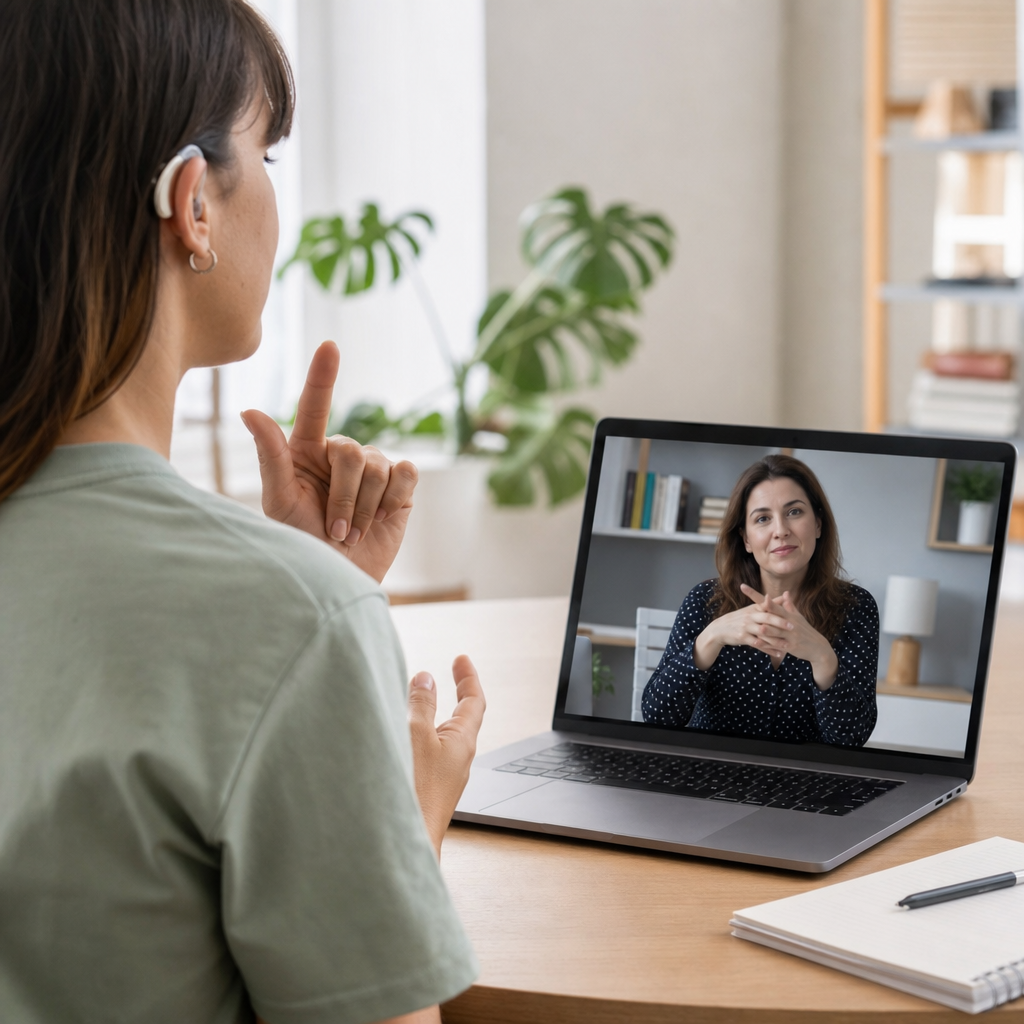
Online therapy options for Deaf individuals have expanded rapidly, making mental health care more accessible, but access still depends on choosing services that are truly Deaf-friendly rather than merely available through the internet. In practice, Deaf-friendly therapy means more than offering a video call. It includes communication access in American Sign Language, captioning that is accurate enough for clinical conversations, therapists who understand Deaf culture, and technology that does not create barriers during emotionally complex sessions. I have worked with digital mental health programs where a platform claimed accessibility yet failed at basic needs such as interpreter integration or turn-taking on video, and those gaps directly affected trust, disclosure, and treatment outcomes.
For Deaf individuals, mental health support often sits at the intersection of language access, cultural identity, disability rights, privacy, and clinical quality. Deaf people are not a single group. Some use ASL as a primary language, some are late-deafened adults who prefer spoken language with captions, some identify as culturally Deaf, and some use cochlear implants or hearing aids without wanting their therapy framed through a medical deficit model. Good online therapy starts by recognizing these differences. It also addresses practical concerns such as whether a therapist can work directly in sign language, whether family sessions can include interpreters, and whether crisis support is usable without a voice call.
This matters because Deaf people face elevated mental health risks tied to communication barriers, social isolation, trauma, discrimination, and delayed access to care. Research across Deaf health consistently shows poorer access to preventive and behavioral health services when communication support is inadequate. In mental health, that problem becomes sharper. Nuance matters in therapy: a missed sign, lagging caption, or uninformed assumption about Deaf identity can alter assessment, diagnosis, and rapport. The right online therapy option can reduce travel burdens, expand therapist choice across regions where licensing allows, and create a more comfortable environment for clients who communicate best from home. This hub explains the main online therapy options for Deaf individuals, how to evaluate them, what services to expect, and where each model works best.
What Deaf-friendly online therapy actually includes
Deaf-friendly online therapy is remote mental health care designed around communication access from the first contact through follow-up. At minimum, that means intake forms that ask about preferred language and accommodations, scheduling tools that do not require phone calls, and sessions delivered in a format the client can use reliably. For many Deaf clients, the strongest option is direct therapy with a fluent signing clinician. Direct communication avoids the delay, cognitive load, and emotional filtering that can occur when an interpreter mediates sensitive discussions about trauma, grief, sexuality, or family conflict.
When a signing therapist is not available, the next best option may be teletherapy with a qualified interpreter integrated into the session. In the United States, interpreters for clinical care should be able to handle mental health terminology and session dynamics, not just general conversation. Some settings use Certified Deaf Interpreters in addition to hearing interpreters for clients with unique language profiles, language deprivation, or international sign variation. Caption-based therapy can also work well, especially for hard of hearing or late-deafened adults, but only if captions are accurate and the therapist understands pacing, overlap, and repair strategies when meaning is unclear.
Cultural competence is equally important. A Deaf-aware therapist understands that experiences commonly treated as individual pathology may be responses to chronic exclusion or audism. They know that “hearing loss” language is not always preferred, that eye contact and visual attention are central in signed communication, and that family communication barriers can shape attachment, identity, and stress. In my experience, clients disengage quickly when they have to spend half the session educating the clinician about Deaf life. A usable platform, clear communication plan, and culturally informed therapist are the core components of online support that feels safe and clinically effective.
Types of online therapy available to Deaf individuals
There are four main online therapy models for Deaf individuals: direct ASL therapy, interpreted teletherapy, caption-supported talk therapy, and text-based mental health support. Direct ASL therapy is usually the gold standard for ASL users because it preserves emotional nuance and reduces miscommunication. These services may come from private practices, Deaf-serving clinics, university training centers, or specialized telehealth networks. The challenge is supply. Qualified signing therapists remain limited, and cross-state practice depends on licensure rules, though interstate compacts are improving options for some professions.
Interpreted teletherapy widens access when no signing clinician is available locally. It can be highly effective if the interpreter is clinically experienced, the therapist knows how to work triadically, and confidentiality roles are explained from the start. Problems arise when platforms do not support a third video participant cleanly, or when agencies rely on interpreters without mental health experience. Caption-supported therapy serves many hard of hearing adults well, particularly those comfortable with spoken English and live captions. Here, technology quality matters. Auto-captions can misrender medication names, trauma narratives, and fast emotional speech, so therapists need a backup process for clarification.
Text-based support, including secure messaging or structured chat therapy, can help with check-ins, psychoeducation, and lower-barrier contact. It is rarely sufficient alone for severe depression, psychosis, active suicidality, or complex trauma. It also changes how emotion is expressed and interpreted. The best programs make clear what text support can and cannot do, how fast clinicians respond, and when a video session or higher level of care is needed.
| Option | Best for | Main advantage | Key limitation |
|---|---|---|---|
| Direct ASL therapy | ASL-first clients | Natural communication without mediation | Limited therapist availability |
| Interpreted teletherapy | Clients needing broad therapist choice | Access to specialists outside Deaf-focused practices | Quality depends on interpreter skill and workflow |
| Caption-supported therapy | Hard of hearing or late-deafened adults | Works with many mainstream providers | Caption errors can affect meaning |
| Text-based support | Low-barrier follow-up and coaching | Flexible and accessible asynchronously | Not enough for higher-acuity needs |
How to choose a therapist and platform
The best way to choose online therapy is to evaluate both the clinician and the technology. Start with the therapist’s communication ability. Ask whether the therapist signs directly, what fluency level they have, whether they have worked with Deaf clients before, and how they adapt assessment tools that rely heavily on spoken language or hearing norms. Also ask about therapeutic approach. Cognitive behavioral therapy, dialectical behavior therapy, trauma-focused therapies, and couples counseling can all be delivered online, but they must be adapted for visual communication and linguistic access. A good therapist can explain those adaptations clearly.
Next, assess the platform itself. It should support stable video, clear lighting, screen layout that keeps hands and facial expressions visible, live captions when needed, secure messaging, and simple inclusion of interpreters or family members with permission. HIPAA-compliant telehealth platforms are standard in the United States for protected health information, but compliance alone does not guarantee usability. I have seen secure platforms with tiny video windows that made signing impractical. Ask whether the platform allows pinning participants, whether internet bandwidth affects sign clarity, and whether there is a backup plan such as rescheduling, switching devices, or moving to secure chat if video fails.
Cost and insurance also matter. Verify whether the therapist accepts your plan, whether interpreter costs are included, and whether out-of-network reimbursement is possible. Under disability access rules, the client generally should not bear the cost of required communication accommodations in covered health care settings. Finally, consider fit. The therapist may be technically accessible but still not right if they dismiss Deaf culture, pathologize communication differences, or treat every issue as caused by deafness. Good fit means you feel understood, not managed.
Common therapy needs within Deaf-friendly support
Deaf-friendly therapy and support should address the same full range of mental health concerns seen in the general population while also recognizing Deaf-specific stressors. Anxiety and depression are common reasons people seek care, but the underlying drivers may include inaccessible workplaces, strained family communication, educational language deprivation, or chronic effort spent navigating hearing-centered systems. Trauma care is another major need. Many Deaf adults report histories of bullying, neglect, misdiagnosis, or abuse made harder to disclose because they lacked accessible communication with trusted adults when younger.
Relationship and family therapy can be especially valuable. Conflict between Deaf and hearing partners often stems from communication fatigue rather than lack of commitment. Parent-child therapy may focus on reducing misunderstandings, improving emotional vocabulary in sign, and helping hearing parents engage more consistently. For Deaf children and teens, teletherapy often works best when caregivers are coached on visual routines, device placement, and privacy boundaries. Group support also has a role. Deaf peer groups, identity-affirming spaces, and skills groups delivered in sign language can reduce isolation and normalize shared experiences in ways individual therapy alone cannot.
Therapy should also account for comorbid issues such as substance use, sleep problems, chronic illness, or neurodivergence. For example, a Deaf autistic client may need highly structured visual supports, explicit turn-taking cues, and a clinician who can separate language difference from social communication traits. A late-deafened older adult may need grief support related to identity shifts and reduced social participation. The point is simple: effective online therapy does not treat Deaf clients as a niche category. It provides the same clinical depth anyone deserves, delivered in an accessible and culturally informed way.
Accessibility, privacy, and crisis planning
Accessibility is not complete without privacy and safety. Many Deaf clients prefer home-based teletherapy because it removes transportation barriers and creates better control over communication conditions. Yet home is not always private. Clients may live with family members who sign, monitor devices, or interrupt sessions. Therapists should help create a privacy plan, such as using headphones for voiced participants, placing the screen away from shared spaces, using visual door signals, and confirming at the start of each session who is present off camera. For interpreted sessions, confidentiality roles should be explained directly, not assumed.
Crisis planning deserves special attention because many mainstream emergency pathways still rely on voice communication. Before treatment begins, the therapist should review local crisis options that are accessible by text, video relay, chat, or direct mobile response. In the United States, 988 offers text and chat, which can be critical for Deaf users, though local implementation quality varies. If a client may need a higher level of care, ask whether the referral site can provide interpreters, captioning, or direct sign language services. Inpatient and emergency settings often remain the weakest link in Deaf mental health access.
Documentation and informed consent should be accessible too. Consent forms, safety plans, homework instructions, and psychoeducation materials need plain language and visual clarity. Some clients benefit from short video summaries in sign language or written recaps after sessions. These are not extras. They improve comprehension, follow-through, and trust. When accessibility, privacy, and crisis planning are handled proactively, online therapy becomes not just possible for Deaf individuals, but dependable.
Building a long-term support system online
Online therapy works best when it is part of a broader support system rather than the only source of connection. For Deaf individuals, that system may include Deaf community groups, peer mentors, primary care providers, school counselors, interpreters, vocational rehabilitation services, and family education resources. A strong therapist helps coordinate, with consent, across these supports. For example, a college student using teletherapy for anxiety may also need disability services to secure reliable captioning in class. A Deaf parent in couples therapy may benefit from parenting resources in ASL and referrals to community networks that reduce isolation.
This hub should guide readers toward specialized topics: how to find ASL-fluent therapists, how interpreted teletherapy works, what to know about insurance and accommodation rights, how Deaf teens and older adults differ in support needs, and how to prepare for a first online session. The central message remains consistent. The best online therapy options for Deaf individuals are those that match the client’s language, identity, clinical needs, and technology realities. Accessibility is not a side feature. It is the foundation of effective care. If you are comparing providers now, start by asking direct questions about communication access, cultural experience, privacy, and crisis readiness, then choose the option that lets you focus on healing instead of overcoming barriers.
Frequently Asked Questions
What makes an online therapy service truly Deaf-friendly?
A truly Deaf-friendly online therapy service goes far beyond simply offering appointments over video. The most important factor is communication access that works reliably in a clinical setting. For many Deaf individuals, that means direct therapy in American Sign Language with a therapist who is fluent, not a provider who depends on basic signs or assumes written chat can replace nuanced conversation. If ASL therapy is not available, the service should offer high-quality captioning, support for qualified interpreters when appropriate, and a platform that allows clear visual communication without lag, freezing, or poor image quality.
Deaf-friendly care also includes cultural competence. Therapists should understand that Deafness is not just a medical condition but often a cultural and linguistic identity. That affects how clients experience family relationships, education, employment, trauma, discrimination, and mental health systems. A provider who understands Deaf culture is more likely to recognize the impact of audism, language deprivation, isolation, and communication barriers without forcing the client to explain basic realities at every session. In practical terms, a strong online therapy option will clearly explain its accessibility features, communication methods, therapist qualifications, privacy standards, and technology requirements before treatment begins.
Can Deaf individuals use standard teletherapy platforms, or should they look for specialized services?
Some standard teletherapy platforms can work well, but only if they are designed or adapted with Deaf users in mind. A general telehealth service may be technically available to everyone while still being difficult to use for Deaf clients. For example, many platforms have video, but not all provide stable picture quality, pinning options for interpreters, accurate live captions, or enough visual clarity for ASL. In therapy, missed facial expressions, delayed signing, or poor caption accuracy can affect emotional understanding, trust, and treatment progress. Because of that, availability alone is not the same as accessibility.
Specialized services may offer a better experience because they are more likely to match clients with ASL-fluent therapists, coordinate interpreters appropriately, and understand privacy and workflow issues unique to Deaf mental health care. That said, a mainstream platform may still be a good choice if it can connect the individual with a culturally competent clinician and provide dependable communication access. The best approach is to evaluate each option carefully. Ask whether the therapist signs fluently, whether captions are available and accurate enough for sensitive conversations, whether the platform supports multiple participants if an interpreter is needed, and whether the provider has experience working with Deaf clients. The goal is not simply to find online therapy, but to find online therapy that supports full and equal participation.
How important is it for a therapist to understand Deaf culture during online counseling?
It is extremely important. A therapist can be well-intentioned and clinically skilled yet still miss critical parts of a Deaf client’s experience if they do not understand Deaf culture. Mental health concerns do not exist in isolation. They are shaped by communication access, family dynamics, school experiences, employment barriers, medical interactions, and social inclusion. Many Deaf individuals have spent years navigating environments built for hearing people, and that can affect stress levels, identity development, self-advocacy, and trust in providers. A therapist who lacks cultural knowledge may accidentally interpret these experiences incorrectly or minimize their impact.
When a therapist understands Deaf culture, therapy often becomes more efficient, affirming, and emotionally safe. The client does not have to spend as much time teaching the provider basic concepts such as audism, Deaf identity, the role of ASL, or the exhaustion that comes from constant communication barriers. This cultural understanding can be especially important when discussing trauma, family conflict, loneliness, anxiety, depression, or experiences of exclusion. In online therapy, where communication already depends heavily on technology, cultural competence becomes even more valuable because it helps the therapist recognize and respond to access barriers in real time. In short, cultural understanding is not an optional bonus; it is often central to effective care.
What should Deaf individuals ask before starting online therapy?
Before committing to a provider, Deaf individuals should ask direct and detailed questions about communication, technology, and clinical experience. Start with the basics: Does the therapist communicate fluently in ASL? If not, what accommodations are offered? Are live captions available, and how accurate are they? Can a qualified interpreter join the session if needed, and who arranges that service? What video platform is used, and does it support clear, high-resolution visual communication? It is also worth asking whether the therapist has worked with Deaf clients before and how they approach Deaf culture in treatment.
Other important questions involve privacy, logistics, and treatment fit. Clients should ask how confidential communication is handled when interpreters or captioning services are involved, whether the platform is secure, and what happens if the technology fails during a session. It can also help to ask how the therapist manages pacing in signed or interpreted sessions, since online communication can take more effort and attention than in-person conversation. Finally, ask about the therapist’s experience with the specific concern you want help with, whether that is anxiety, trauma, relationship issues, burnout, or depression. These questions help identify whether a service is merely technically available or genuinely equipped to provide accessible, respectful, and effective care.
Are online therapy options improving access to mental health care for Deaf individuals?
Yes, online therapy has significantly expanded access for many Deaf individuals, especially those who live in areas with few or no local Deaf-aware mental health providers. Teletherapy can make it easier to connect with ASL-fluent clinicians, therapists who understand Deaf culture, or specialists in issues such as trauma, identity, family stress, and isolation. It can also reduce common barriers like transportation, long travel times, and limited local provider networks. For some people, being able to receive care from home creates a more comfortable and consistent therapy experience.
At the same time, access has improved unevenly. Not every online service is truly accessible, and some platforms still treat Deaf communication needs as afterthoughts. Poor video quality, inaccurate captions, therapists without cultural competence, and unclear accommodation policies can turn a convenient service into a frustrating one. Internet availability, device quality, and insurance coverage can also affect whether teletherapy is practical. So while online therapy has opened important doors, the quality of access still depends on choosing services that are intentionally Deaf-friendly. The strongest options combine communication access, cultural understanding, strong technology, and clinicians who see accessibility as part of care itself rather than an extra feature.