
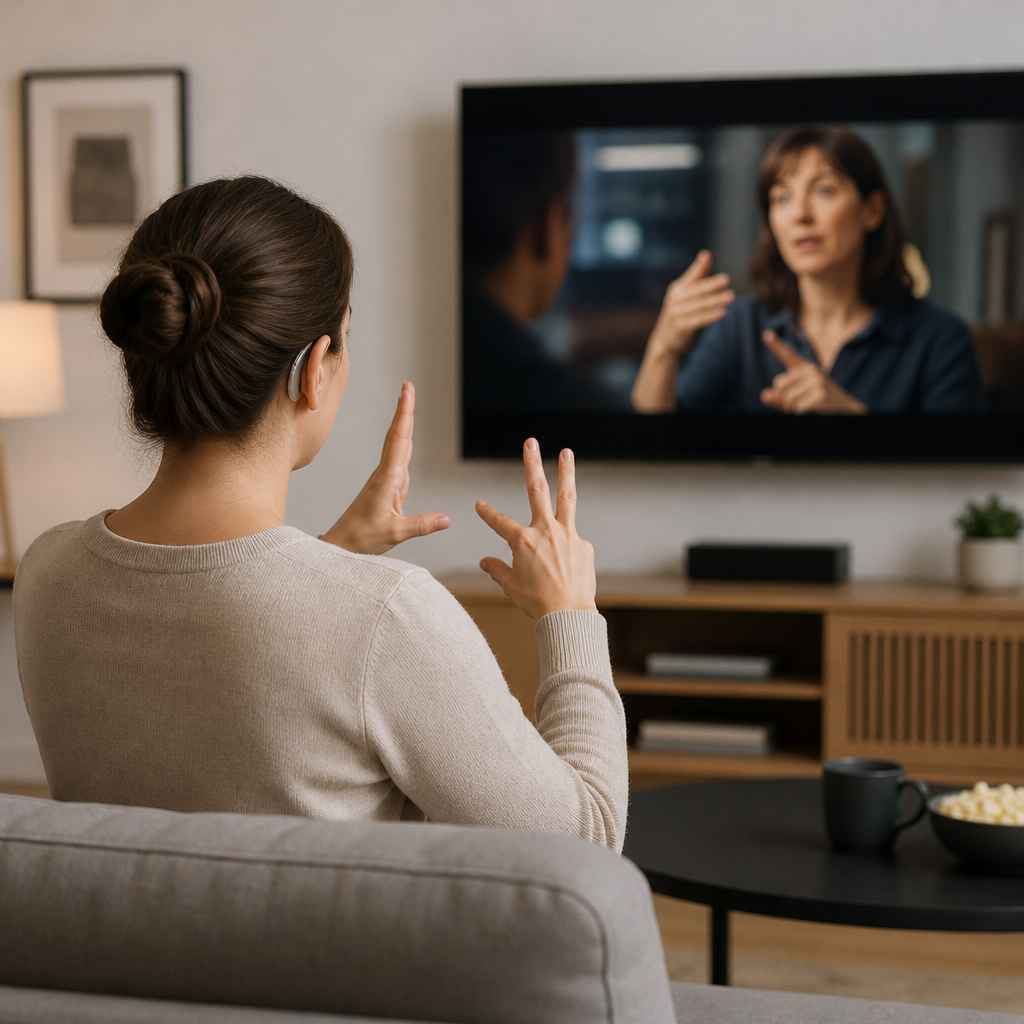
Deaf characters in film and television shape how millions of viewers understand deafness, sign language, disability, and access, so their portrayal carries cultural weight far beyond entertainment. In this context, deaf representation in media means more than simply placing a deaf person on screen. It includes who writes the character, who performs the role, whether sign language is treated as a full language, how captions and sound design are used, and whether the story presents deaf people as complete human beings rather than symbols. I have worked on accessibility reviews for media projects, and one lesson appears consistently: audiences notice when deaf characters are built from stereotype instead of lived reality. They also notice when a production gets the details right, from visual communication norms to casting choices and the everyday logistics of navigating hearing spaces.
Good portrayal matters because media influences public expectations in schools, workplaces, healthcare settings, and families. A parent whose child has just been identified as deaf may learn more from a television drama than from a pamphlet. A teacher may unconsciously absorb false ideas about lip-reading. A hearing viewer may think all deaf people want cochlear implants, or that all signers use the same language, if that is all the screen ever shows. At the same time, strong deaf representation in media can normalize interpreters, captions, Deaf culture, bilingual identity, and community belonging. It can also create jobs for deaf actors, writers, consultants, interpreters, dialect coaches, and access coordinators. That combination of cultural influence and industry impact is why this topic deserves close attention as a core part of media, representation, and awareness.
Historically, film and TV have swung between invisibility and distortion. Earlier portrayals often framed deafness as tragedy, isolation, or inspiration for hearing characters. The deaf character might be pitied, “fixed,” or used as a plot device in a crime story. In many scripts, deafness was reduced to silence, despite the fact that Deaf communities are rich in language, humor, social norms, politics, and art. More recent productions have improved by showing deaf families, sign language as central communication, and deaf characters with careers, relationships, and flaws unrelated to hearing status. Yet progress remains uneven. Some projects still cast hearing actors in deaf roles, simplify communication for convenience, or treat captions as optional rather than fundamental. To understand how deaf characters are portrayed in film and TV, it helps to break the topic into recurring patterns, production choices, and standards for better representation.
Common stereotypes and why they persist
The most persistent stereotype is the “deaf equals broken” narrative. In this framework, the character’s entire dramatic purpose is to overcome a lack, usually defined by hearing norms. Stories then revolve around cure, rescue, or assimilation. This approach persists because it offers easy conflict and because many writers still begin from a medical model of disability rather than a cultural and linguistic one. In practice, that means a script may ask, “How can this person become more like hearing people?” instead of, “How does this person live, communicate, and belong on their own terms?” The result is a flattened character whose life is reduced to deficit.
Another stereotype is the “super-observant deaf witness,” common in thrillers and crime dramas. The character compensates for hearing loss with implausibly heightened visual perception, making deafness a dramatic gimmick. There is a grain of truth here: many deaf people rely heavily on visual cues, environmental awareness, and pattern recognition. But realistic visual attention is not the same as supernatural ability. When productions lean on this trope, they often avoid portraying the actual communication barriers, fatigue, access planning, and negotiation that shape daily life. The same problem appears in the saintly inspiration trope, where a deaf character exists mainly to teach hearing characters resilience or gratitude.
A third stereotype involves sign language itself. Film and TV have repeatedly treated signing as universal pantomime, slow and simplistic, or interchangeable across countries. In reality, American Sign Language, British Sign Language, and other signed languages have distinct grammar, lexicons, and regional variation. Signing speed, facial grammar, turn-taking, and body positioning all matter. I have seen productions spend heavily on sets and locations while underfunding sign language coaching, then wonder why deaf audiences criticize authenticity. The reason is simple: language errors are as visible in signed performance as bad accents are in spoken dialogue. When sign is inaccurate, the character stops feeling real.
Casting, authorship, and production access
Authentic representation starts before the camera rolls. Casting deaf actors in deaf roles is not symbolic politics; it is a craft issue. Deaf performers bring embodied knowledge about eye contact, conversational timing, spatial orientation, attention-getting methods, and the emotional texture of navigating mixed deaf-hearing environments. Hearing actors can study these elements, but they rarely reproduce them with full fluency, especially if a production gives them a few weeks of sign training and calls it enough. When viewers praised the performances in CODA, much of that credibility came from casting deaf actors Troy Kotsur, Marlee Matlin, and Daniel Durant in a deaf family whose dynamics felt lived-in rather than demonstrated.
Authorship matters just as much. A series can cast one deaf actor and still fail if no deaf writers, consultants, or directors influence story decisions. In my experience, the most common preventable errors happen in scripts: implausible lip-reading, interpreter behavior that violates professional norms, and family scenes that ignore basic communication accommodations. Bringing in deaf creatives early fixes these problems at low cost compared with repairing them later in production. It also broadens the kinds of stories that get told. Deaf characters deserve genres beyond issue-driven drama: comedy, romance, sci-fi, horror, and procedural television all have room for nuanced deaf leads and supporting roles.
Production access is another overlooked factor. If a set lacks interpreters, captioned dailies, visual call systems, and inclusive blocking practices, deaf cast and crew cannot participate equally. That inequality affects performance and ultimately appears on screen. The following table summarizes core choices that influence deaf representation in media and how those choices affect authenticity.
| Production choice | Weak approach | Strong approach | Effect on portrayal |
|---|---|---|---|
| Casting | Hearing actor in deaf role with minimal signing skill | Deaf actor cast, supported with language and access resources | Improves physical authenticity, signing fluency, and community trust |
| Writing | Deafness used only as tragedy or inspiration | Character has goals, flaws, work, humor, and relationships beyond deafness | Creates dimensional storytelling instead of stereotype |
| Language portrayal | Sign treated as gesture or universal code | Specific signed language shown accurately with coaching and consultation | Respects linguistic reality and improves credibility |
| Accessibility on set | Ad hoc interpreting and inaccessible workflows | Qualified interpreters, captioned materials, visual cues, inclusive meetings | Enables stronger collaboration and better performances |
| Sound and captions | Captions omitted or sound design used as gimmick | Captions integrated and sound perspective used intentionally | Supports access while deepening audience understanding |
What accurate portrayal looks like on screen
Accurate portrayal does not require a single model of deaf identity. Some deaf characters sign fluently and identify strongly with Deaf culture. Others are oral, use hearing technology, speak, or move between communities. Some are born deaf; others become deaf later in life. A credible film or series makes these distinctions clear through behavior and context rather than exposition alone. For example, a deaf child with deaf parents will likely have a different communication experience from a deaf child in a hearing family discovering sign language for the first time. Those differences affect home dynamics, confidence, education, and social belonging.
Strong portrayals also show communication as interactive rather than one-sided. Hearing people often assume the burden falls entirely on the deaf person to adapt. Realistic scenes distribute responsibility: people face one another, secure attention before speaking, write things down when needed, use interpreters appropriately, and make environmental adjustments. Small details matter. In a group dinner scene, who controls turn-taking? Does everyone talk over each other, making access impossible, or do they naturally pause and reorient? In a hospital scene, is the interpreter positioned correctly, and does staff speak to the deaf patient rather than about them? These choices signal whether a production understands deaf experience.
Sound design can either deepen or distort representation. Some films use muffled audio or sudden silence to simulate deafness, but this technique is limited because deaf experience is not a single auditory state. Many deaf people perceive some sound, vibration, rhythm, or amplified speech differently depending on technology and environment. Better sound design links perspective to character reality instead of using silence as a shortcut for pity or suspense. Captions are equally important. Open captions in-story, stylized subtitles, and careful translation of signed dialogue can guide hearing audiences without erasing the visual centrality of sign language. When done well, access tools become part of storytelling craft rather than an afterthought.
Notable shifts in film and television
Several productions mark visible progress. Children of a Lesser God put a deaf woman at the center of a major romantic drama and made Marlee Matlin the first deaf actor to win an Academy Award. Its framing has limitations by current standards, especially in how hearing desire shapes the narrative, but it remains historically significant. Television later offered recurring deaf characters, though often sporadically and unevenly. More recent work has gone further by centering deaf families and community life. CODA reached mainstream audiences with a family dynamic that showed arguments, humor, sexuality, work stress, and interdependence instead of reducing deafness to solemn symbolism.
On television, series such as Switched at Birth expanded public familiarity with sign language and deaf cultural issues. The show featured multiple deaf actors, substantial use of ASL, and even an episode told largely through signing, demonstrating that visual storytelling could carry emotional and commercial weight. It was not perfect, and some advocates debated specific choices, but it proved that deaf-centered narratives could sustain audience interest over time. Reality programming, children’s media, and streaming originals have also widened the field, though quality varies dramatically depending on whether deaf creatives hold real decision-making power.
Internationally, portrayal differs by region, funding model, and national sign language visibility. Public broadcasters in some countries have a stronger tradition of accessibility and educational programming, while commercial markets may prioritize speed over consultation. Streaming platforms have created new opportunities because they serve global audiences already accustomed to subtitles and multilingual content. That shift lowers one barrier that once made executives skeptical about sign-heavy stories. Still, scale alone does not guarantee quality. The difference between token inclusion and meaningful representation almost always comes down to process: who is hired, who is heard, and whether deaf people can shape the story from concept through post-production.
How audiences and creators can evaluate representation
A useful test is whether the deaf character would remain compelling if deafness were not the only point of conflict. If the answer is no, the portrayal may be underwritten. Viewers should also ask whether the character has agency, whether communication scenes feel plausible, and whether the story recognizes Deaf culture as more than a backdrop. Another practical question is whether the production treats access as normal. If captions, interpreters, and visual communication appear only during “very special” moments, the story may still be centering hearing comfort rather than deaf reality.
Creators can evaluate representation through a straightforward checklist. Was a deaf consultant involved before the script was locked? Are signed lines translated by qualified language professionals rather than improvised on set? Were deaf actors considered widely, not just after hearing casting failed? Are editors preserving the duration and framing sign requires, or cutting too tightly for aesthetic reasons? Is promotional material accessible, including trailers and interviews? These are operational questions, but they have artistic consequences. In every project I have reviewed, the strongest outcomes came when access was treated as production infrastructure, not a courtesy.
Because this is a hub topic, it connects naturally to deeper conversations about disability casting, caption quality, sign language on screen, Deaf culture in storytelling, and accessibility standards in production workflows. Readers exploring deaf representation in media should look across all those areas rather than isolating one film or one controversy. Patterns become clearer at that wider scale. You can then distinguish progress that is structural from progress that is merely cosmetic.
Deaf characters are portrayed well in film and TV when creators understand that deafness is not a plot twist, a moral lesson, or a shorthand for silence. It is a lived reality that can include language, culture, technology, frustration, pride, humor, and ordinary routine. The best deaf representation in media comes from accurate casting, informed writing, accessible production, and respect for signed languages as complete languages. When those pieces align, audiences get richer stories and deaf viewers get something too rare in entertainment: recognition without distortion.
The central benefit of improving portrayal is not only fairness, though fairness matters. It is better storytelling. Characters become more specific, scenes become more believable, and entire genres open up when writers move past stereotype. Viewers also gain practical understanding that carries into real life, from communication etiquette to awareness of access barriers. That is why this subject belongs at the center of any serious discussion of media, representation, and awareness.
If you are building knowledge in this area, use this article as your starting point, then continue into related topics such as sign language accuracy, deaf casting, captions, and Deaf culture on screen. The more precisely we evaluate representation, the easier it becomes to support films and series that portray deaf people with depth, accuracy, and respect.
Frequently Asked Questions
Why does the portrayal of deaf characters in film and TV matter so much?
The portrayal of deaf characters matters because film and television strongly influence how audiences understand identity, language, disability, and social inclusion. For many viewers, media may be their first or only exposure to deaf people, Deaf culture, or sign language. That means the choices made on screen can either reinforce outdated assumptions or expand public understanding in accurate, respectful ways. When deaf characters are presented as complex people with their own perspectives, relationships, and agency, audiences are more likely to see deafness as a lived human experience rather than a limitation or plot device.
Representation also has real-world consequences beyond entertainment. Media portrayals can shape attitudes about education, communication access, employment, and the legitimacy of sign languages. If deaf characters are repeatedly shown as isolated, helpless, or defined only by tragedy, viewers may absorb the idea that deafness is primarily something to be fixed or pitied. On the other hand, when stories acknowledge deaf identity, community, language, and accessibility without reducing a character to any one of those elements, they help normalize a broader and more accurate understanding of deaf life.
Just as importantly, portrayal matters to deaf audiences themselves. Seeing deaf characters who feel authentic can offer recognition, validation, and a sense of belonging that has often been missing from mainstream media. It also signals whether an industry is willing to include deaf creators, performers, and consultants in meaningful ways. In that sense, representation is not only about what appears on screen, but about whose experiences are respected in the storytelling process.
What makes a deaf character portrayal accurate and respectful?
An accurate and respectful portrayal goes beyond giving a character a hearing loss and calling that representation. It starts with treating the deaf character as a fully developed person with goals, flaws, humor, relationships, and decision-making power. Deafness may shape the character’s experience, but it should not erase the rest of their personality. Strong portrayals avoid turning the character into a symbol of inspiration, suffering, or moral instruction for hearing people.
Another major factor is how sign language is represented. A respectful portrayal recognizes sign language as a complete language with its own grammar, cultural meaning, and emotional depth. It is not simply a visual substitute for spoken English. The way characters sign, the fluency they demonstrate, and the role sign language plays in family, school, work, and community life all contribute to whether the portrayal feels authentic. If a production treats signing as decorative, awkward, or secondary, it often reveals a shallow understanding of deaf experience.
Accuracy also depends on context and point of view. Deaf people are not a monolith, and there is no single universal deaf experience. Some deaf characters may identify strongly with Deaf culture, while others may be oral, late-deafened, hard of hearing, or navigating multiple communication methods. Respectful storytelling leaves room for that variety without implying that one path is more valid than another. The most effective portrayals are usually built with input from deaf actors, writers, coaches, and consultants who can catch errors, add nuance, and help the story reflect real lived experience.
Why is casting deaf actors in deaf roles considered so important?
Casting deaf actors in deaf roles is important because lived experience brings a level of authenticity that is difficult to replicate. Deaf performers often have a deeper understanding of the physical, linguistic, and social realities involved in the role, from how sign language is naturally used to how communication barriers, access needs, and cultural cues shape daily interactions. Their presence can make performances more grounded, more specific, and more believable to both deaf and hearing audiences.
There is also an ethical and industry-wide dimension to the issue. For many years, deaf roles were frequently given to hearing actors, even as deaf performers faced limited opportunities in mainstream entertainment. That pattern not only excluded qualified talent but also sent the message that deaf stories could be told without deaf people. Prioritizing deaf actors helps correct that imbalance and supports a more inclusive industry in which representation is not purely cosmetic.
In addition, casting decisions influence the entire production. When deaf actors are involved, productions are more likely to think seriously about interpreters, accessible communication on set, sign language accuracy, and broader inclusion practices. Their participation can improve not just one performance, but the quality of the storytelling environment as a whole. While acting is always an interpretive craft, authentic casting in deaf roles is widely seen as a meaningful step toward representation that is both credible and respectful.
How do captions, sound design, and visual storytelling affect the representation of deaf characters?
Captions, sound design, and visual storytelling play a major role in how audiences experience deaf characters and understand their world. Captions are not just a technical accessibility feature; they can shape inclusion by determining who gets full access to dialogue, tone, and narrative detail. When captions are accurate, well-timed, and thoughtfully integrated, they support deaf and hard-of-hearing viewers while also signaling that accessibility is part of the storytelling, not an afterthought.
Sound design can be especially powerful when used to reflect perspective. Some films and television shows adjust audio levels, use silence strategically, or shift sonic textures to help hearing audiences engage with a deaf character’s sensory experience. Done well, this can create empathy and immersion without turning deafness into a gimmick. Done poorly, it can feel simplistic or misleading, especially if it suggests that deaf experience is defined only by silence. In reality, many deaf people experience sound in different ways, and not all deafness looks or feels the same.
Visual storytelling is equally important because deaf communication often relies heavily on facial expression, body language, eye contact, spatial awareness, and signed conversation. Directors and editors who understand this tend to frame scenes differently, allowing viewers to see signing clearly and follow interactions naturally. Fast cuts, obstructed hands, or poor camera placement can undermine both authenticity and comprehension. When productions respect the visual nature of deaf communication, they not only represent deaf characters better but also enrich the storytelling for everyone watching.
What are the most common stereotypes about deaf characters in media?
One of the most common stereotypes is portraying the deaf character primarily as tragic, broken, or in need of rescue. In these stories, deafness becomes a source of constant suffering, and the character’s role is often to inspire compassion or personal growth in hearing characters. This framing can flatten the character into a lesson rather than a person. It also reinforces the harmful idea that a deaf life is automatically defined by loss instead of culture, adaptation, identity, and community.
Another frequent stereotype is the “superhuman” or symbolic deaf character, who is either unrealistically wise, unusually pure, or granted heightened perception as compensation for deafness. While these portrayals may appear positive on the surface, they are still limiting because they replace complexity with myth. Similarly, some media reduce deaf characters to communication barriers alone, using misunderstandings for drama or comedy without exploring the person behind them. In these cases, deafness functions more like a narrative obstacle than an authentic identity.
There is also the problem of treating sign language as simplistic, exotic, or universally interchangeable. This can lead to inaccurate signing, vague depictions of Deaf culture, or the assumption that all deaf people communicate in the same way. Better portrayals move past these shortcuts. They show that deaf characters can be funny, flawed, ambitious, romantic, angry, ordinary, and culturally grounded. The more media embraces that range, the less likely it is to rely on stereotypes that distort public understanding.