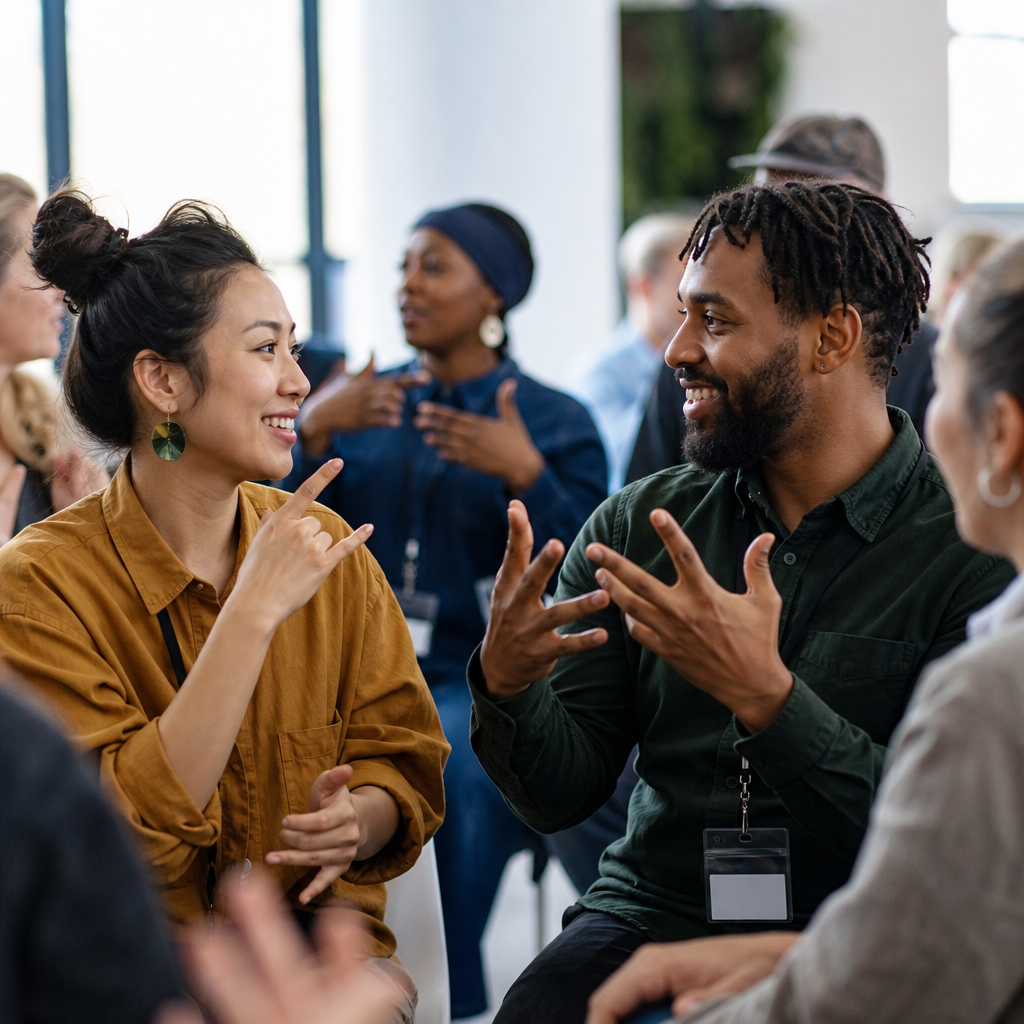
Deaf culture grows strongest when people gather in shared spaces built around sign language, mutual access, and collective identity. Events are not just social occasions; they are the infrastructure of community life, where values are practiced, language is transmitted, and new members learn what belonging feels like. In this context, Deaf culture refers to the traditions, communication norms, history, arts, and social networks centered on Deaf people, especially those who use signed languages and view deafness as a cultural identity rather than only a medical condition. Community engagement includes formal conferences, local meetups, sports tournaments, theater performances, advocacy rallies, school reunions, church groups, and online events designed for visual communication. These gatherings matter because culture is sustained through repeated contact, not abstract statements. I have seen community momentum rise after one well-run festival, and I have also seen local networks weaken when accessible events disappear. For readers exploring events and community engagement, this hub explains how gatherings strengthen language, leadership, visibility, economic opportunity, and intergenerational ties across Deaf communities.
Events create language-rich spaces where Deaf identity becomes visible and practical
The most immediate benefit of Deaf events is simple: they create environments where signed language is the default, not the accommodation. That change alters everything. In hearing-dominant settings, Deaf people often spend energy managing access through interpreters, captions, note apps, or lipreading, which is cognitively expensive and often incomplete. At Deaf-centered events, visual communication norms shape the room from the start. Lighting is better, sight lines are clearer, side conversations remain accessible, and people gain full participation without constant negotiation. That difference is not cosmetic. It directly supports language fluency, confidence, and identity development.
For children and teenagers, especially those born to hearing parents, events can be the first place they meet large numbers of Deaf adults using sign naturally across generations. That exposure is foundational. Research and community practice consistently show that language develops best when children have abundant, direct access to communication. At Deaf expos, youth leadership weekends, and school events, young attendees see humor, debate, storytelling, and problem-solving in sign. They learn regional variations, etiquette, and the rhythm of visual conversation. Just as important, they see Deaf adulthood modeled in real occupations and family roles.
Adults benefit too. New signers gain immersion that no classroom can fully replicate. Elders pass along idioms, stories, and historical references that would otherwise be lost. I have watched first-time attendees arrive cautiously, then leave with faster receptive skills simply because they spent a weekend in an environment where visual language was constant. Events turn language from a lesson into lived experience, and that is how culture becomes durable.
Community gatherings preserve history, transmit values, and connect generations
Culture survives when its stories are told repeatedly in communal settings. Deaf events do this through awards ceremonies, alumni banquets, heritage celebrations, museum programming, and milestone anniversaries for schools, clubs, and advocacy groups. These moments are not nostalgia alone. They preserve collective memory about language suppression, education battles, technological change, and civil rights progress. When older community members explain the impact of oralism, residential schools, or the fight for interpreting access under the Americans with Disabilities Act, younger attendees gain historical context for present-day issues.
Intergenerational connection is especially important because Deaf communities are not always formed inside biological families. Most Deaf children are born to hearing parents, which means cultural transmission often happens through peers, mentors, educators, coaches, and community leaders. Events bridge that gap. A Deaf senior center luncheon, a statewide association conference, or a Deaf church retreat can create the kind of relationship network that hearing people may take for granted within extended family structures. Through these encounters, values such as direct communication, shared responsibility for access, visual attentiveness, and pride in signed language are demonstrated rather than merely described.
Real-world examples make the point clear. Deaf schools often host homecoming events where graduates from multiple decades reconnect with students. National conferences bring together educators, interpreters, artists, and families around a common agenda. Cultural festivals may feature signed poetry, historical exhibits, and panels on DeafBlind access or youth mentoring. Each format carries memory forward. Without recurring events, community knowledge fragments. With them, traditions stay attached to people, places, and living practice.
Events build social capital, leadership pipelines, and practical support networks
Strong communities depend on social capital: trusted relationships that help people exchange information, solve problems, and mobilize resources. Deaf events are highly effective at creating this kind of network. A weekend gathering can connect someone to a job lead, an interpreter referral, a Deaf-friendly therapist, a housing tip, or a sports team. In my experience, many of the most useful community connections are made informally in hallways, meals, and post-event conversations rather than on the main stage. That is why event design should allow time for unstructured interaction, not only presentations.
Leadership development is another major function. Event committees teach budgeting, sponsorship outreach, volunteer coordination, accessibility planning, promotion, and conflict resolution. Youth emcees learn public presence. Panelists learn how to advocate clearly. Community organizers learn how to build coalitions with schools, nonprofits, employers, and public agencies. Over time, these practical roles create a leadership pipeline. Today’s volunteer registration coordinator can become tomorrow’s board member or legislative advocate.
Events also reduce isolation. This matters in rural areas and smaller cities where Deaf people may have limited daily contact with one another. A monthly coffee chat, bowling night, or signing dinner can be more significant than it sounds. Regular gatherings provide predictable access to peers and affirm that no one has to navigate communication barriers alone. The strongest local communities are rarely built only through large annual conferences; they are built through repeated, reliable, smaller events that make relationships habitual.
Arts, sports, and public celebrations turn participation into cultural visibility
One reason events strengthen Deaf culture so effectively is that they make culture visible to both insiders and the wider public. Performance and competition are especially powerful. Deaf theater companies, signed music performances, comedy shows, film festivals, and storytelling nights highlight forms of expression that rely on visual timing, spatial grammar, and embodied meaning. These are not adaptations of hearing culture; they are cultural forms with their own aesthetics. When audiences attend Deaf arts events, they encounter creativity grounded in signed language and visual experience.
Sports events have a similar impact. Deaf basketball tournaments, volleyball leagues, and international competitions such as the Deaflympics generate pride, teamwork, and public recognition. They also challenge stereotypes. A well-organized tournament demonstrates that Deaf community life includes athletic excellence, coaching traditions, and broad family participation. Local events matter as much as elite ones. School rivalries, recreation leagues, and charity runs create repeated opportunities for gathering and identity building.
Public celebrations, including Deaf awareness weeks, parade participation, and civic proclamations, extend that visibility beyond the community itself. They help businesses, schools, and local governments see Deaf people as a cultural and linguistic group with clear access needs and substantial contributions. When municipalities host accessible events with interpreters, captions, and Deaf presenters, the result is not only inclusion. It is a public statement that Deaf culture belongs in civic life.
Well-designed events improve access, strengthen trust, and expand participation
Not every event strengthens Deaf culture equally. The strongest ones are designed around access from the beginning, not patched together after complaints. That means choosing venues with clear lighting, unobstructed sight lines, minimal visual clutter behind speakers, and enough space for circular or semi-circular conversation. It means using CART captioning when appropriate, hiring qualified interpreters for mixed audiences, planning visual alerts for schedule changes, and ensuring DeafBlind participants have tactile or close-vision options. Access is logistical, but it is also relational. People return when they trust that organizers understand how Deaf communication works.
Digital access now matters just as much. Many community organizations use Zoom, livestream platforms, email newsletters, Facebook groups, and event apps to reach people who cannot attend in person. Online events can widen participation for parents, rural residents, disabled elders, and people with limited transportation. However, video quality, camera framing, spotlighting of interpreters, and moderation practices must be handled carefully. A webinar with poor lighting and tiny signer windows is technically available but practically inaccessible.
| Event Type | Main Community Benefit | Best Access Practices |
|---|---|---|
| Local social meetup | Reduces isolation and builds recurring friendships | Quiet venue, open seating, strong lighting, clear host introductions |
| Conference or summit | Develops leadership and shares specialized knowledge | Interpreters, CART, visual agenda screens, moderated Q&A, livestream options |
| Arts festival | Showcases Deaf creativity and public visibility | Stage sight lines, captioned media, Deaf presenters, accessible ticketing |
| Youth camp or retreat | Supports identity formation and language immersion | Deaf role models, visual safety protocols, peer mentoring, family follow-up |
Good planning also includes affordability. Ticket prices, travel distance, childcare, and meal costs can quietly exclude participants. The most resilient organizations use sponsorships, sliding-scale registration, volunteer exchange, and hybrid formats to broaden access. Inclusion is not an abstract value; it is the cumulative result of many operational decisions made before the first guest arrives.
Events support advocacy, local economies, and the future of Deaf community engagement
Community events do more than serve attendees in the moment. They create a platform for advocacy and economic growth. Town halls, legislative days, and policy forums allow Deaf residents to speak directly with decision-makers about interpreting standards, school services, emergency alerts, healthcare communication, and employment access. When these conversations happen in organized settings, communities can move from isolated complaints to collective action. I have seen attendance at one policy briefing lead to sustained campaigns because people finally met others facing the same barrier and had a structure for responding together.
There is also a practical economic effect. Conferences and festivals create demand for interpreters, captioners, Deaf presenters, vendors, artists, filmmakers, caterers, and accessible venue staff. Deaf-owned businesses often gain their best visibility at community events because attendees can interact directly in sign. Organizations that host regular gatherings also become stronger media contacts, grant applicants, and community partners. In other words, events generate both cultural value and measurable local activity.
Looking ahead, the future of Deaf community engagement will likely be hybrid, more specialized, and more collaborative. We already see growth in niche gatherings for Deaf professionals in technology, Deaf parents, Deaf LGBTQ+ groups, DeafBlind advocates, cochlear implant users within culturally Deaf spaces, and multilingual signers. This specialization is healthy when it remains connected to the broader community. A strong hub model helps by linking social events, arts programs, advocacy campaigns, family resources, and local meetups instead of treating them as separate worlds.
The main lesson is clear: events strengthen Deaf culture because they give people a place to use language freely, learn history, build trust, find leadership roles, and act together. They turn identity into shared practice. If you organize, attend, sponsor, or simply promote Deaf-centered events, you are supporting the conditions that keep culture alive. Start with one gathering, make access intentional, and help connect people to the wider community calendar. That is how engagement becomes continuity, and continuity becomes culture.
Frequently Asked Questions
Why are events so important to Deaf culture?
Events are important to Deaf culture because they create spaces where Deaf people can communicate freely, build relationships, and experience community without needing to adapt to hearing-centered norms. In everyday life, many Deaf people navigate environments where access is inconsistent, communication can be limited, and signed languages may not be fully understood or respected. Deaf-centered events reverse that dynamic. They place sign language, visual communication, and shared cultural understanding at the center, which allows people to interact more naturally and confidently.
These gatherings also help preserve and strengthen the traditions, values, and social practices that define Deaf culture. Through festivals, conferences, performances, community celebrations, and local meetups, people share stories, history, humor, art, advocacy, and lived experience. Events become places where cultural knowledge is passed from one generation to the next, where Deaf identity is affirmed, and where belonging becomes visible and tangible. In that sense, events are not just enjoyable occasions. They are one of the main ways Deaf culture stays vibrant, connected, and resilient over time.
How do Deaf events help pass down sign language and cultural knowledge?
Deaf events play a major role in transmitting both sign language and cultural knowledge because they bring people together in environments where visual communication is the norm rather than the exception. At these gatherings, younger Deaf people, new signers, DeafBlind participants using adapted communication methods, and even hearing family members or allies can observe how fluent signers communicate in real time. This includes not only vocabulary and grammar, but also facial expression, body language, turn-taking, storytelling style, humor, etiquette, and the subtle social cues that make signed communication rich and meaningful.
Just as important, events provide access to cultural memory. People learn about Deaf history, important leaders, civil rights struggles, community values, artistic traditions, and shared experiences that may not be fully represented in mainstream institutions. This learning often happens informally as much as formally. A conversation in a lobby, a story told on stage, a joke shared across generations, or a panel discussion about language access can all teach participants what Deaf culture looks and feels like in practice. For many people, especially those who did not grow up with strong access to Deaf community life, events serve as an essential entry point into language, identity, and collective heritage.
What kinds of events strengthen Deaf community and identity the most?
A wide range of events can strengthen Deaf community and identity, and their impact often depends on how well they center access, participation, and cultural relevance. Large-scale gatherings such as Deaf expos, sign language conferences, film festivals, advocacy summits, and cultural celebrations can create a strong sense of collective visibility. These events connect people across regions, highlight Deaf talent and leadership, and remind participants that they are part of a larger cultural and linguistic community. They are especially powerful for showcasing Deaf arts, education, entrepreneurship, and social issues in ways that affirm pride and shared purpose.
At the same time, smaller local events are just as important. Community dinners, sports leagues, storytelling nights, school reunions, family workshops, and informal social gatherings often build the day-to-day relationships that sustain culture over time. These settings allow people to develop trust, mentorship, friendship, and intergenerational ties. Identity grows strongest not only through major public celebrations, but also through repeated participation in spaces where Deaf norms are understood and respected. The most effective events are often those that feel welcoming, accessible, and rooted in the actual needs and experiences of Deaf people rather than simply including them as an afterthought.
How do events support belonging for Deaf children, teens, and new community members?
Events can be life-changing for Deaf children, teens, and adults who are new to Deaf community life because they offer direct experiences of belonging. Many Deaf young people grow up isolated, particularly if they are the only Deaf person in their family, school, or neighborhood. When they attend Deaf-centered events, they often encounter something deeply affirming: people who communicate like they do, shared references they immediately understand, and an environment where they do not need to explain or defend their access needs. That experience can reduce isolation, strengthen self-esteem, and help them see Deafness not as a deficit, but as part of a meaningful cultural identity.
For new members of the community, events also provide informal pathways into connection and learning. They can meet role models, ask questions, observe community norms, and begin building relationships that may continue long after the event ends. Teens may discover leaders and peers who inspire confidence. Parents of Deaf children may gain a better understanding of language access and identity development. Adults learning sign language later in life may find community support and mentorship. In all of these cases, events help transform abstract ideas about Deaf culture into lived experience. They show people what participation, inclusion, and cultural connection actually feel like.
What makes a Deaf event truly strengthen culture instead of simply gathering people in one place?
A Deaf event strengthens culture most effectively when it is intentionally built around Deaf ways of communicating, interacting, and leading. Simply bringing people together is not enough if the event still operates according to hearing-centered assumptions. Strong cultural events prioritize visual access, signed communication, clear sightlines, accessible lighting, inclusive pacing, and leadership by Deaf organizers, presenters, artists, and community members. They make Deaf participants central to the experience rather than peripheral. When that happens, the event becomes a site where community values are not just discussed, but practiced in real time.
It also matters whether the event creates opportunities for meaningful exchange rather than passive attendance. Events that encourage conversation, storytelling, performance, mentorship, education, and collaboration tend to leave a deeper cultural impact. They help people contribute to community life instead of only consuming it. When participants can share their experiences, celebrate language, discuss challenges, support one another, and see Deaf excellence represented across generations, the event reinforces identity and continuity. In other words, a culture-strengthening event does more than entertain. It creates connection, transmits knowledge, models access, and reminds people that Deaf culture is active, collective, and alive.