Online communities for deaf individuals have become essential spaces for connection, advocacy, education, and everyday belonging. In practical terms, an online community is any digital environment where people gather around a shared identity or goal, including forums, social media groups, video platforms, event hubs, chat servers, and learning networks. For deaf individuals, these spaces do more than replicate in-person interaction. They extend access across distance, reduce communication barriers, support sign language visibility, and create room for nuanced conversations about culture, technology, accessibility, employment, parenting, and health. As someone who has worked on accessible digital communities and moderated deaf-centered event programs, I have seen the difference between a generic group and a truly inclusive one. The best communities are not simply active. They are designed around communication preferences, moderation standards, language access, and trust.
This matters because deaf experiences are not uniform. Some members identify culturally Deaf and use American Sign Language or another national sign language as a primary language. Others are late-deafened, hard of hearing, oral, bilingual, cochlear implant users, hearing aid users, or family members learning to communicate better. A useful hub page on events and community engagement must recognize that diversity and explain where different forms of online participation fit. It must also answer a practical question many searchers have: where can deaf individuals find supportive, relevant, and accessible online communities that lead to real relationships and meaningful events? The answer spans nonprofit organizations, creator-led spaces, local and national advocacy groups, disability networks, virtual conferences, livestreamed cultural events, and private peer circles. Understanding how these communities work helps people find information faster, avoid unsafe spaces, and choose platforms that support sustained engagement rather than one-time interaction.
What makes an online community valuable for deaf individuals
A valuable online community for deaf individuals does three things well: it supports accessible communication, creates consistent opportunities for participation, and builds trust through shared norms. Accessibility starts with basics that many mainstream groups still overlook, including accurate captions, interpreters for live sessions, visual-first moderation, alt text for images, clear turn-taking in video meetings, and platform choices that do not punish people who communicate differently. In my experience, communities grow fastest when they treat these features as infrastructure instead of optional extras. A weekly event with professional captioning and clear host facilitation will outperform a larger but inaccessible group because members can actually participate without fatigue.
Consistency matters just as much. Members need recurring touchpoints: monthly Deaf coffee chats, virtual game nights, policy briefings, parenting circles, job clubs, or creator livestreams. These repeat events create familiarity and lower the social risk of joining. Trust is the third requirement. Good communities publish conduct rules, explain how moderators handle conflict, and protect members from ableism, harassment, and misinformation. This is especially important in spaces discussing assistive technology, education rights, interpreting access, or medical decisions, where advice can affect real outcomes.
Strong communities also acknowledge differences in language and identity. A group designed for ASL users may not serve someone who relies on captions and speech. An advocacy forum focused on disability law may not meet the needs of deaf teens seeking friendship and identity formation. The most useful hub for events and community engagement helps readers match purpose to platform. It explains not only where to join, but why a community exists, what communication style it favors, and how events are structured.
Types of online communities and the role each one plays
Not all online communities for deaf individuals serve the same function. Social media groups often provide fast discovery and casual interaction. Facebook groups, for example, remain common for local Deaf events, interpreter referrals, buy-and-sell posts, and parent support. Instagram and TikTok are powerful for Deaf creators, language visibility, and short-form event promotion. Reddit-style forums can support anonymous question asking, which is useful for people navigating hearing loss, school accommodations, or workplace disclosure. Discord and similar chat platforms tend to work well for younger users, gaming communities, and interest-based subgroups that want live text channels, scheduled voice or video rooms, and mod-led events.
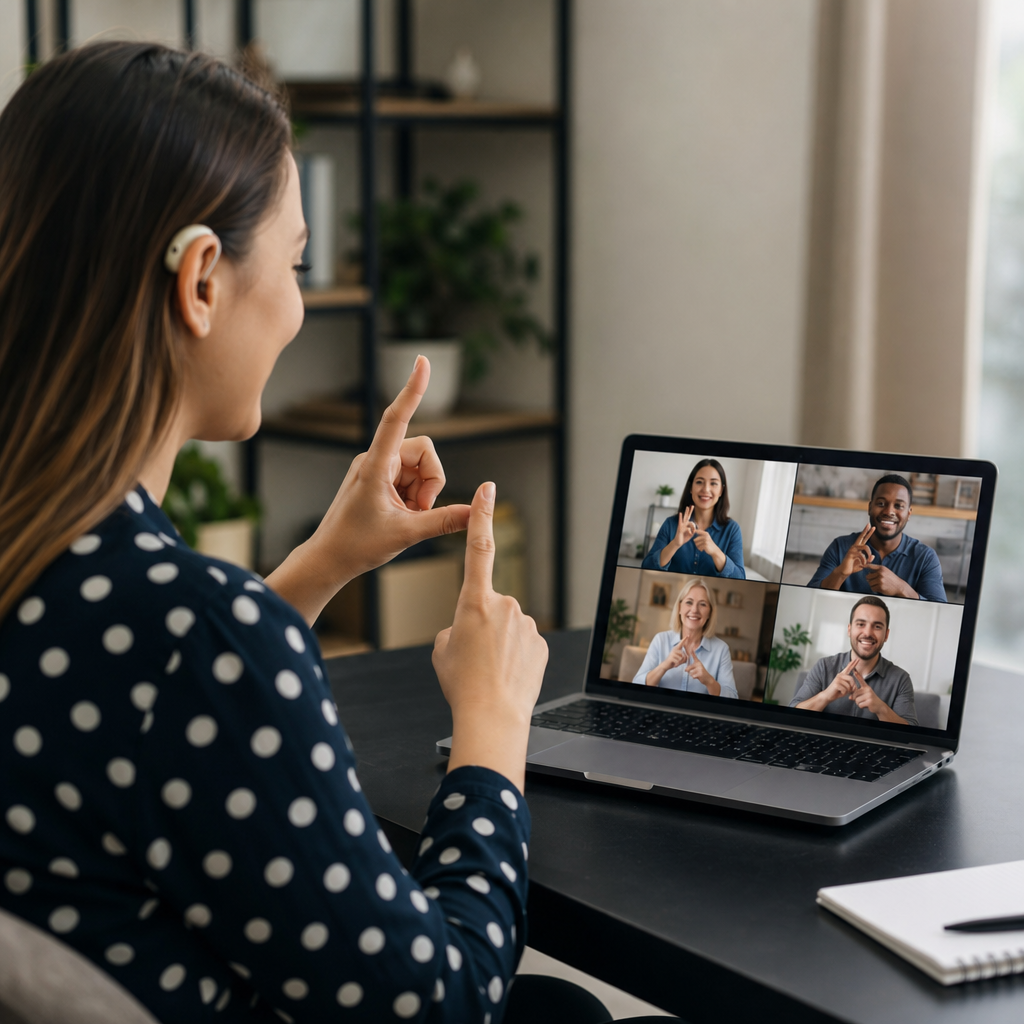
Video-first spaces play a special role because signed communication is visual and expressive. Communities built around livestreams, webinars, or virtual meetups allow sign language users to interact more naturally than text-only systems. However, video platforms vary widely in accessibility. Auto-captions can help but are often unreliable for names, technical vocabulary, and sign-supported speech. The strongest communities either add human captioning, share transcripts afterward, or combine live video with active text chat and visual facilitation.
Nonprofit and association-led communities often bring the highest level of structure. Organizations such as the National Association of the Deaf, state Deaf associations, schools for the Deaf alumni networks, disability rights centers, and deaf service agencies frequently host webinars, advocacy trainings, and public events calendars. These groups can connect online engagement to offline services, scholarships, mentorship, and legislative action. Creator-led communities, by contrast, may feel more personal and culturally dynamic. A Deaf educator running a regular livestream on ASL learning or accessibility at work can build trust quickly because members see real-life experience, not just institutionally polished messaging. Both models matter, and many people participate in several at once.
How events turn digital interaction into real community
Events are the engine of community engagement because they convert passive following into participation. A person may join an online group and never post, but if the same group hosts a captioned town hall, an interpreted book club, or a Deaf professionals networking session, the relationship deepens. I have watched attendance patterns for virtual community programs, and the strongest predictor of retention is not audience size. It is whether members leave with a next step: another event date, a follow-up thread, a resource link, or a direct connection to someone they met.
Different event formats meet different needs. Social events reduce isolation. Educational events answer immediate questions about employment rights, school accommodations, mental health, or assistive devices. Cultural events reinforce identity through storytelling, performance, humor, and shared language. Advocacy events mobilize members around captioning policy, interpreter access, emergency communication, and media representation. Hybrid events are increasingly effective because they let local communities welcome remote participants while preserving face-to-face energy. A Deaf festival might livestream keynote sessions, post schedules on social channels, and host follow-up discussions in a private group, extending the life of a one-day event into an ongoing online community.
Good event design is specific. Start times should list time zones. Registration pages should state whether interpretation, CART captioning, or sign language support will be provided. Hosts should explain camera expectations, chat etiquette, and how audience questions will be handled. When these details are visible in advance, trust increases and attendance improves.
| Community type | Best use | Typical events | Key accessibility considerations |
|---|---|---|---|
| Social media groups | Discovery, local updates, casual support | Meetups, announcements, live Q&A sessions | Captioned video, image descriptions, clear admin rules |
| Chat servers and forums | Ongoing discussion, niche interests, peer advice | AMA sessions, game nights, topic threads | Readable channel structure, moderation, transcript sharing |
| Nonprofit or association hubs | Advocacy, education, formal resources | Webinars, trainings, policy briefings | Professional captioning, interpreters, archived resources |
| Creator-led communities | Cultural connection, learning, personality-driven trust | Livestreams, workshops, community challenges | Reliable captions, visual framing, consistent posting |
Where to find trustworthy communities and event opportunities
The most reliable places to find deaf community events online are organizations with established reputations, transparent leadership, and a record of accessible programming. National and regional advocacy groups are a logical starting point because they usually maintain newsletters, event calendars, and social channels. Schools for the Deaf, alumni associations, interpreting programs, deaf studies departments, vocational rehabilitation agencies, and hearing loss nonprofits also publish online events that attract engaged audiences. If someone is searching for a community tied to a life stage, targeted groups are often better than broad ones: deaf parents, deaf professionals in technology, deaf artists, deaf seniors, late-deafened adults, and deaf youth each benefit from specialized programming and peer knowledge.
Search quality improves when people look for signals of seriousness. Check whether organizers list accessibility details before the event. See if past events are archived with captions or summaries. Review how moderators respond to questions. Look for named partnerships with known organizations, such as local deaf service agencies, universities, vocational programs, or civil rights groups. Trustworthy communities do not hide who is in charge, and they do not rely on vague promises of inclusion without operational detail.
It is also worth evaluating whether a group understands the difference between audience growth and community care. Some large pages post constant awareness content but offer little member interaction. Smaller communities may have fewer followers yet provide better support through recurring meetups, skilled moderation, and direct answers. For many users, especially those newly deaf or newly seeking community, that depth matters more than scale. A well-run local Deaf chat group with monthly virtual socials can be more life-changing than a huge generic disability page.
Accessibility standards that separate strong communities from weak ones
Accessibility is not a single feature. It is a system of decisions that affects whether people can understand, participate, and return. For live events, the gold standard is to provide both high-quality captions and sign language interpretation when the audience is mixed. CART remains more accurate than most automated caption tools for complex discussions, legal topics, and multi-speaker panels. If the event is sign-led, visual layout matters: interpreters and speakers must be pinned properly, lighting should be even, backgrounds should not distract, and turn-taking should be moderated to avoid visual chaos. For recorded content, captions should be edited, not merely auto-generated.
Platform choice also influences access. Zoom generally offers flexible pinning and interpretation workflows. YouTube is useful for replay libraries and discoverability. Discord supports persistent text interaction but may require stronger moderation and onboarding. Eventbrite can streamline registration, but the accessibility information must be written clearly on the event page. Communities that use several tools well usually outperform those forcing every interaction into one platform.
There are tradeoffs. Some private groups feel safer but are harder to discover. Public livestreams attract newcomers but may invite trolling. Highly structured webinars can deliver clean information yet leave little room for social bonding. Strong community leaders acknowledge these limitations and design around them with moderator teams, application gates for sensitive spaces, community guidelines, and post-event networking channels.
How this hub connects the wider topic of community, lifestyle, and real stories
As a hub under community, lifestyle, and real stories, this topic should lead readers toward deeper articles that answer specific event and engagement questions. One branch can cover virtual Deaf events, including webinars, conferences, sign language meetups, and online festivals. Another can focus on local event discovery, explaining how to use social groups, nonprofit calendars, and school networks to find gatherings nearby. A separate article can examine Deaf social media creators and why creator-led communities shape language visibility, identity, humor, and activism. Other useful pieces include guides to accessible event hosting, online safety in Deaf spaces, community options for deaf teens, and networking communities for deaf professionals.
This hub role matters for navigation as much as content depth. Readers often arrive with one immediate need, such as finding a Deaf event this weekend or joining a support group after hearing loss. Once their first question is answered, they often need adjacent guidance: what platform should they use, how can they tell if a group is safe, what accessibility features should they expect, and how can online participation lead to real friendships or advocacy involvement? A strong hub anticipates that journey and points to the next article naturally.
The broader benefit is continuity. Community engagement is rarely a one-click solution. People move between discovery, attendance, participation, volunteering, and leadership. The best online communities for deaf individuals make that path visible. They welcome newcomers, create regular events, and show members how to contribute, whether by mentoring, sharing resources, organizing meetups, or advocating for better access. That progression turns digital contact into community in the full sense of the word.
Online communities for deaf individuals are most effective when they combine accessibility, recurring events, skilled moderation, and a clear sense of purpose. Social groups help people discover others like them. Structured organizations provide advocacy, education, and trusted resources. Creator-led spaces add culture, identity, and day-to-day connection. Events tie those elements together by turning passive audiences into active participants. When registration details are clear, captions and interpretation are reliable, and follow-up pathways are easy to find, engagement becomes sustainable rather than accidental.
For readers exploring events and community engagement, the central lesson is simple: choose communities that are designed for participation, not just visibility. Look for transparent leadership, specific accessibility practices, recurring programming, and evidence that members are heard and protected. Start with one event, one group, or one trusted organization, then build outward into the wider network of Deaf community life. If you are developing this subtopic further, use this hub as the starting point for finding virtual events, local meetups, support circles, advocacy forums, and real stories that turn online connection into lasting belonging.
Frequently Asked Questions
What are online communities for deaf individuals, and why are they so important?
Online communities for deaf individuals are digital spaces where people connect around shared experiences, communication preferences, cultural identity, advocacy goals, and practical daily needs. These communities can take many forms, including social media groups, discussion forums, chat servers, virtual event platforms, video-sharing channels, educational networks, and professional communities. What makes them especially important is that they offer access to connection without many of the barriers that can exist in face-to-face settings, such as limited local resources, geographic isolation, or environments that are not designed with deaf communication needs in mind.
For many deaf individuals, online communities provide more than casual interaction. They create opportunities for belonging, peer support, and cultural exchange. Someone might join to discuss hearing technology, learn sign language, ask for advice about school or work accommodations, find deaf-friendly events, or simply spend time with others who understand their lived experience. These spaces can also help people explore identity, especially those who are newly deaf, hard of hearing, late-deafened, or part of deaf families with varied communication styles.
They are also important because they support visibility and advocacy. Community members often share resources on accessibility, legal rights, captioning, interpreting, education, and employment. In that sense, online communities help people stay informed while also strengthening collective voices. Instead of being limited to one city or one institution, deaf individuals can connect across regions and countries, building networks that are educational, social, empowering, and deeply practical.
What kinds of online platforms do deaf communities typically use?
Deaf communities use a wide range of online platforms, and each type serves a slightly different purpose. Social media groups are often used for quick updates, shared stories, event promotion, and informal discussion. Forums and message boards can be useful for more in-depth conversations, especially on topics like accessibility rights, education, parenting, cochlear implants, hearing aids, Deaf culture, or sign language learning. Chat-based platforms, including private group spaces and community servers, allow real-time interaction and often build strong day-to-day social ties.
Video platforms are especially valuable because they support visual communication, which is central for many deaf users. People may share signed content, captioned educational videos, advocacy messages, tutorials, interviews, and community updates. Virtual event platforms are also increasingly common, giving people access to workshops, webinars, meetups, conferences, and cultural events without needing to travel. Some communities are built specifically around learning, where members exchange language resources, accessibility tools, and advice on navigating schools, workplaces, and public systems.
The best platform often depends on the individual’s communication preferences and goals. Some people prioritize spaces with strong captioning support, active sign language content, or better moderation. Others look for communities based on age, profession, location, parenting, education level, or identity intersections such as LGBTQ+ deaf communities or spaces for deaf people of color. In practice, many people participate in several platforms at once, using each one for a different kind of connection, support, or information.
How do online communities help deaf individuals with education, advocacy, and everyday life?
Online communities can play a major role in helping deaf individuals navigate education, advocacy, and daily living. In educational settings, community members often share firsthand advice about accommodations, interpreters, captioning tools, note-taking support, accessible classrooms, and communication strategies. Students may learn how to advocate for themselves in school, while parents and educators can find guidance on language access, inclusive teaching practices, and deaf-centered learning resources. These communities often make it easier to find information that is practical, current, and rooted in lived experience rather than theory alone.
In advocacy, online communities help people stay informed about policy changes, disability rights, accessibility standards, and legal protections. Members frequently exchange templates for accommodation requests, explain how to address discrimination, and organize around issues such as caption quality, interpreter access, healthcare communication, and public inclusion. Because these conversations happen in real time, communities can respond quickly to emerging concerns and help individuals take action with confidence. This kind of peer-driven knowledge is often one of the most valuable features of digital deaf spaces.
For everyday life, the benefits are just as significant. People use online communities to ask about technology, relationships, travel, job interviews, telehealth, parenting, entertainment access, and local services. They also use them for emotional support and simple companionship. Sometimes the most meaningful value is not a formal resource but the reassurance that others have faced similar situations and found solutions. That combination of practical information and social understanding makes online communities a powerful part of everyday belonging.
What should someone look for when choosing a safe and welcoming online community for deaf individuals?
When choosing an online community, it is important to look for accessibility, respect, and clear moderation. A strong community should support the communication needs of its members, whether that means encouraging captioned content, welcoming sign language users, making room for text-based discussion, or offering a mix of formats so different people can participate fully. Accessibility is not just a technical feature; it is a sign that the community takes inclusion seriously. If a space consistently ignores communication access, it may not be a good fit.
Moderation is another key factor. Healthy communities usually have clear rules around harassment, misinformation, discrimination, and privacy. This matters because deaf individuals are not a single, uniform group. Communities may include people with different identities, technologies, communication preferences, and cultural perspectives. The best spaces allow respectful discussion while setting boundaries against behavior that makes others feel unsafe or dismissed. A good moderation approach helps conversations stay supportive, informative, and welcoming even when opinions differ.
It is also wise to consider the purpose and tone of the group. Some communities are social and casual, while others are focused on activism, education, professional networking, or language learning. Reading recent posts, reviewing group guidelines, and observing how members respond to newcomers can reveal a great deal. If possible, look for communities where members share reliable resources, answer questions thoughtfully, and treat deaf identity and accessibility issues with nuance. A welcoming community should make people feel informed, respected, and able to participate without constantly having to justify their needs.
Can online communities replace in-person deaf spaces and relationships?
Online communities can be incredibly meaningful, but they do not always replace in-person deaf spaces in a complete sense. Instead, they often expand and strengthen connection in ways that physical spaces alone cannot. Digital communities allow people to meet others across large distances, stay involved when travel is difficult, and participate even when local deaf resources are limited. For someone living in a rural area, attending a mainstream school, or navigating a schedule that makes in-person events hard to access, online communities may be the primary source of deaf connection and support.
At the same time, in-person spaces can offer forms of interaction that are unique, especially for visual communication, spontaneous conversation, shared cultural experiences, and local community building. Deaf events, schools, organizations, and social gatherings often create a sense of immersion and immediacy that online spaces complement rather than fully duplicate. Many people find the strongest outcome comes from using both: online communities for constant access and broad networks, and in-person spaces for local relationships and embodied cultural connection.
Rather than thinking of it as one replacing the other, it is more accurate to view online communities as an essential part of the larger deaf social ecosystem. They make community more continuous, flexible, and inclusive across distance and circumstance. For some individuals, they are the first doorway into Deaf culture or peer connection. For others, they are an ongoing source of friendship, information, and advocacy that deepens relationships formed offline. In either case, their value is clear: they help create connection, participation, and belonging on terms that are far more accessible and far-reaching than ever before.