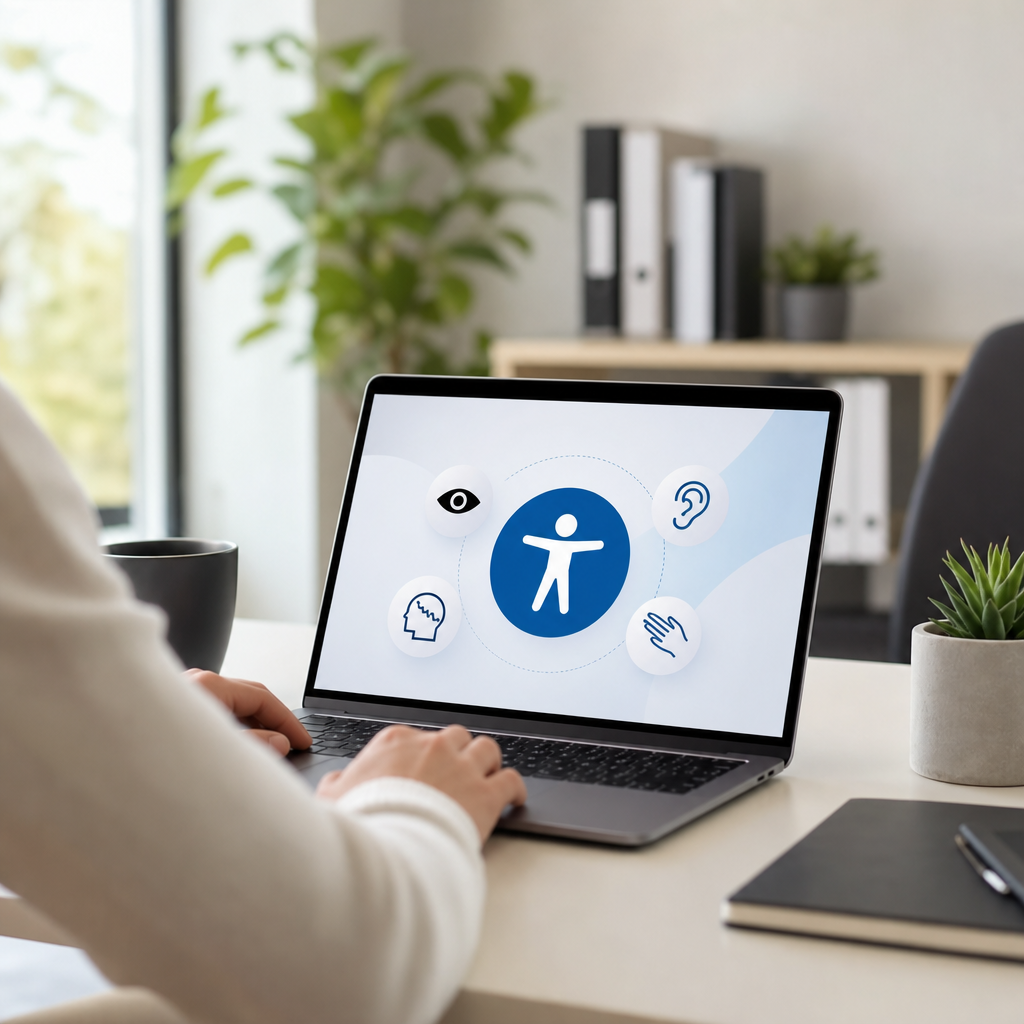

Accessibility-first thinking means designing products, content, and services so people with disabilities can use them from the start, not as an afterthought. In practice, accessibility covers websites, apps, documents, videos, customer support, physical touchpoints, and internal systems. It includes visual, auditory, motor, cognitive, speech, and temporary disabilities, plus situational limitations such as bright sunlight, a broken arm, or a noisy train. When teams ask what is accessibility, the most useful answer is simple: accessibility is the deliberate removal of barriers that prevent equal access.
This matters because disability is common, permanent barriers are expensive to fix later, and inclusive design improves outcomes for everyone. The World Health Organization estimates that more than 1.3 billion people live with significant disability worldwide. In digital work, accessibility aligns with established standards such as the Web Content Accessibility Guidelines, commonly called WCAG, and with laws including the Americans with Disabilities Act, Section 508, and the European Accessibility Act. I have seen teams treat accessibility as a final compliance scan, then spend months rewriting components that should have been built correctly on day one. An accessibility-first mindset avoids that waste by changing how teams define quality, make decisions, and measure success.
To build that mindset, organizations need a shared understanding of accessibility, a practical process, and habits that show up in everyday work. This hub article explains what accessibility is, why it matters, which barriers are most common, how standards work, what accessible design looks like in real products, and how to embed inclusive thinking into strategy, design, development, content, and testing. If you want a durable approach instead of a checklist, start here.
What Accessibility Is and What It Is Not
Accessibility is the practice of making experiences usable by as many people as possible, especially people with disabilities. In digital environments, that means content can be perceived, interfaces can be operated, information can be understood, and systems work reliably with assistive technologies such as screen readers, magnifiers, switch devices, voice control, captions, and braille displays. The standard framework behind most digital accessibility work is organized around four principles: content must be perceivable, operable, understandable, and robust. Those principles sound abstract until you apply them to real tasks. A form field needs a visible label, a clear programmatic name, keyboard access, error prevention, and instructions that make sense when read aloud.
Accessibility is not the same as usability, though they overlap. A product can meet technical requirements and still be frustrating. It is also not identical to inclusive design, universal design, or accommodation. Inclusive design is the broader practice of considering diverse human needs. Universal design usually refers to environments and products intended to work for the widest range of people without adaptation. Accommodation is a specific adjustment for an individual, such as extended time or an alternate format. Accessibility-first teams understand all four, but they prioritize building the mainstream experience so fewer people need separate treatment.
A common misconception is that accessibility serves only a small group. In my work, the opposite is usually true. Captions help deaf users, multilingual viewers, and anyone watching muted video. Strong color contrast helps users with low vision and people using a phone outdoors. Clear headings help screen reader users and skimmers alike. Keyboard support helps power users, people with motor impairments, and anyone whose trackpad fails. Accessibility improves reach, task completion, customer satisfaction, and maintainability because it makes interfaces more structured and content more precise.
Why an Accessibility-First Mindset Changes Outcomes
An accessibility-first mindset changes when and how decisions get made. Instead of asking whether a finished design can be remediated, teams ask earlier: Can every user complete the core task? What happens with keyboard only? What will a screen reader announce? Are instructions understandable under stress? Can a user pause motion, enlarge text, or recover from errors? These questions influence architecture, component libraries, content models, research plans, procurement, and quality assurance. They are much cheaper to answer in discovery than after launch.
I have seen three patterns separate mature teams from reactive ones. First, accessibility is defined as a product requirement, not a specialist review. Second, design systems include accessible defaults, such as semantic components, focus states, contrast tokens, and error messaging patterns. Third, teams test with disabled users and assistive technologies before release. When those patterns are present, accessibility stops being a heroic cleanup project and becomes part of normal delivery.
There is also a business case. Legal exposure gets attention, but the stronger reason is operational. Retrofitting inaccessible code is slower than building correctly with semantic HTML, proper labeling, and tested interaction patterns. Search performance often benefits because accessible content tends to have better structure, descriptive links, and meaningful headings. Support costs can fall when forms are clearer and workflows are more forgiving. Most importantly, inaccessible products shut people out of jobs, education, healthcare, commerce, and civic participation. Accessibility-first work reduces that harm directly.
Common Barriers and How People Experience Them
To build the right mindset, teams need to recognize barriers as lived experiences, not abstract defects. Blind users may rely on screen readers such as JAWS, NVDA, VoiceOver, or TalkBack. If buttons have no accessible name, images lack alternative text, headings are skipped, or modal dialogs trap focus, basic tasks become confusing or impossible. Users with low vision may zoom to 200 percent or more, use magnification, or change contrast settings. Fixed layouts, tiny hit targets, and text embedded in images create avoidable friction.
Deaf and hard of hearing users need captions for video, transcripts for audio, and visual alternatives to sound-based alerts. People with motor impairments may navigate by keyboard, switch control, eye tracking, or voice input. That means every interactive element must be reachable without a mouse, focus order must follow logic, and gestures should have simple alternatives. Cognitive accessibility is often the most neglected area. Dense language, inconsistent navigation, time limits, jargon, distracting motion, and complex error recovery can block users with dyslexia, ADHD, memory limitations, brain injury, or anxiety.
Temporary and situational constraints make these barriers familiar to almost everyone. A parent holding a child may browse one-handed. A commuter in glare may need stronger contrast. A user recovering from surgery may depend on speech input. When teams understand this spectrum, accessibility stops looking like edge-case work. It becomes standard risk management and better design.
| Barrier | Typical impact | Practical response |
|---|---|---|
| Low contrast text | Content is hard to read in low vision or bright light | Use WCAG contrast targets and test tokens in real interfaces |
| Mouse-only interactions | Keyboard and switch users cannot complete tasks | Ensure full keyboard access, visible focus, logical tab order |
| Unlabeled controls | Screen readers announce vague or empty names | Use semantic elements, labels, and accessible names |
| Auto-playing media | Users lose control, concentration, or context | Provide pause controls and avoid unexpected motion or sound |
| Complex forms | Errors are hard to find and fix | Give clear instructions, inline validation, and specific recovery steps |
Standards, Laws, and the Role of WCAG
When people ask what counts as accessible, WCAG is the baseline reference for digital products. The current widely adopted version is WCAG 2.2, published by the World Wide Web Consortium. It includes testable success criteria at levels A, AA, and AAA. Most organizations target AA because it balances broad coverage with practical implementation. WCAG does not tell you exactly how to design every interface, but it defines outcomes that can be verified, such as minimum contrast, keyboard access, focus visibility, resize behavior, and error identification.
Legal requirements vary by jurisdiction. In the United States, the ADA has been applied to many digital services, and Section 508 governs federal technology. In Europe, EN 301 549 aligns procurement requirements with accessibility standards, and the European Accessibility Act extends obligations across sectors. The exact legal exposure depends on the organization, market, and product type, so legal counsel matters. Still, teams should not confuse compliance with usability. Passing automated scans and checking criteria does not guarantee a smooth experience for a screen reader user completing a purchase or a cognitively overloaded user filling out a benefits form.
That is why mature programs combine standards-based audits with manual testing and research. Automated tools like axe DevTools, WAVE, Lighthouse, and Accessibility Insights are excellent for catching missing labels, low contrast, and structural issues, but they only detect a portion of problems. They cannot reliably judge link purpose in context, reading clarity, or whether an error message truly helps someone recover. The standard gives the floor, not the ceiling.
What Accessible Design and Development Look Like in Practice
Accessible products are built through specific choices, not good intentions. In design, that means sufficient color contrast, scalable typography, meaningful hierarchy, consistent navigation, clear states, and motion used carefully. Buttons must look and behave like buttons. Links should describe destinations, not say “click here.” Error messages need to be specific, placed near the problem, and announced properly to assistive technology. If a checkout form rejects a card number, the user should know what failed, where, and how to fix it.
In development, semantic HTML is still the strongest foundation. Use real headings, lists, buttons, labels, fieldsets, and tables where appropriate instead of recreating them with generic containers. Native controls carry keyboard behavior, focus management, and accessibility mappings that custom widgets often break. When custom components are necessary, teams should follow WAI-ARIA Authoring Practices carefully and test them with actual assistive technologies. ARIA can enhance semantics, but misused ARIA often makes interfaces worse. A plain button element is more reliable than a scripted div pretending to be one.
Content design is equally important. Plain language, short paragraphs, descriptive headings, and predictable structure reduce cognitive load. Alternative text should communicate purpose, not simply describe pixels. A product image on an ecommerce page may need brand, model, and distinguishing features; a decorative flourish needs no description at all. Video should include accurate captions, and transcripts should preserve meaning, speaker changes, and relevant sounds. PDFs, if used, need proper tagging, reading order, headings, and form fields; otherwise an accessible web page is usually the better choice.
How to Build Accessibility Into Team Habits
Mindset becomes real when roles are clear. Leaders set policy, budget, and expectations. Product managers write accessibility acceptance criteria and prioritize remediation based on user impact. Designers annotate focus behavior, zoom expectations, contrast requirements, and interaction states. Engineers use semantic code, test keyboard flow, and fix defects before merge. Content teams own readability, alt text, transcripts, and link language. QA verifies with manual scenarios, not only automated scans. Procurement screens vendors for accessibility conformance and evidence, not just a template statement.
The most effective starting point is a baseline audit of your highest-value journeys: home page, navigation, search, sign-in, forms, checkout, support, and account management. From there, create a remediation backlog ranked by severity and task criticality. I recommend adding accessibility gates to design reviews, pull requests, and release criteria. Even a short checklist helps: keyboard only, screen reader spot check, zoom to 200 percent, contrast review, form errors, captions, and mobile orientation. Over time, move recurring fixes into the design system so each team does not solve the same problem repeatedly.
Training should be role-specific. A designer needs pattern guidance and contrast practice. A front-end developer needs semantics, focus management, and ARIA literacy. A writer needs plain language and meaningful link text. General awareness sessions are useful, but they do not change delivery unless people learn the decisions attached to their role. If possible, include sessions led by disabled users demonstrating real workflows. Watching a screen reader user struggle through an unlabeled payment form changes behavior faster than any slide deck.
Measuring Progress and Sustaining the Mindset
Accessibility work sticks when teams measure it like any other quality discipline. Track audit findings by severity, but also monitor user-centered indicators: task completion, support tickets, form abandonment, caption coverage, keyboard defects, and time to remediate issues. Maintain an accessibility statement that explains your standard, known limitations, contact path, and improvement process. For larger programs, appoint champions in each discipline and review accessibility metrics in regular product governance, not just after incidents.
Do not aim for perfection before shipping improvements. Prioritize barriers on critical paths and fix them continuously. At the same time, avoid the trap of treating accessibility as only defect reduction. The deeper goal is confidence: teams naturally ask who could be excluded, which assumptions are risky, and how to make the default experience work for more people. That is the core of an accessibility-first mindset.
Accessibility is not a niche add-on. It is a practical, standards-based way to build better products, reduce avoidable barriers, and serve people fairly. If you are building an Accessibility & Inclusion program, use this hub as your foundation: define accessibility clearly, learn the common barriers, apply WCAG thoughtfully, strengthen design and code practices, and embed accountability across the team. Start with one critical journey this week, test it with real users and assistive technology, and turn what you learn into your new default.
Frequently Asked Questions
What does an accessibility-first mindset actually mean?
An accessibility-first mindset means building products, content, and services so they work for people with disabilities from the very beginning, rather than trying to fix barriers later. Instead of treating accessibility as a final checklist item, teams use it as a design and decision-making principle across the entire process. That includes websites, mobile apps, PDFs, forms, videos, customer support channels, kiosks, and internal tools. The goal is simple: make sure as many people as possible can perceive, understand, navigate, and use what you create without unnecessary friction.
In practice, accessibility-first thinking recognizes a wide range of needs. It includes people with visual, auditory, motor, cognitive, speech, and neurological disabilities, as well as people experiencing temporary or situational limitations. Someone may be navigating with a screen reader, using captions in a noisy environment, completing a form with one hand, or trying to read content on a phone in bright sunlight. When teams understand accessibility this broadly, they stop seeing it as a niche concern and start recognizing it as a core part of usability, inclusion, and quality.
Why should teams prioritize accessibility from the start instead of adding it later?
Prioritizing accessibility early is more effective, less expensive, and far more sustainable than retrofitting barriers after launch. When accessibility is considered at the beginning, teams can make better choices about layouts, color contrast, interaction patterns, semantic structure, error handling, media formats, and content clarity before those decisions become deeply embedded in the product. By contrast, fixing inaccessible components late in development often requires redesign, rework, engineering time, legal review, and repeated testing, all of which increase cost and slow delivery.
There is also a stronger business and operational case for starting early. Accessible experiences tend to improve usability for everyone, not just people with permanent disabilities. Clear headings help scanning, captions support comprehension, keyboard access improves efficiency, and plain language reduces confusion. Accessibility-first teams often produce cleaner code, better content structure, and more consistent design systems because they are forced to think carefully about how things actually work in real-world conditions. That leads to better user satisfaction, broader reach, reduced legal risk, and a stronger brand reputation. Most importantly, it helps organizations avoid excluding people from essential information, services, and opportunities.
What areas should be included when building an accessibility-first culture?
An accessibility-first culture should extend well beyond website design. It needs to cover every place where people interact with your organization, including mobile apps, digital documents, email campaigns, videos, social media, chat tools, support systems, onboarding flows, self-service portals, physical environments, and employee-facing platforms. Accessibility is not owned by one department alone. Designers influence visual hierarchy and interaction patterns. Developers shape technical implementation. Content teams control readability and structure. Product managers set priorities. Customer support teams affect communication access. Procurement teams determine whether third-party tools meet accessibility requirements.
For that reason, culture matters as much as compliance. Teams need shared expectations, practical training, accessible templates, and accountability built into daily work. An organization with a true accessibility-first mindset creates standards for design systems, content publishing, QA testing, multimedia production, and vendor selection. It includes disabled users in research and testing, documents accessibility requirements in project briefs, and treats accessibility issues with the same seriousness as security or performance issues. Over time, this shifts accessibility from a specialized task to a normal part of how quality work gets done.
How can a team start building an accessibility-first mindset if they are new to it?
The best place to start is by reframing accessibility as a core product and service requirement, not an optional enhancement. Teams that are new to accessibility should begin with education, but they should quickly connect that education to real workflows. Learn the basics of inclusive design, assistive technology, keyboard interaction, semantic HTML, captioning, color contrast, focus states, form labeling, and plain language. Then review your current process and identify where accessibility should be built in: discovery, research, design reviews, content creation, development, QA, procurement, and launch. Accessibility becomes practical when it is attached to specific decisions and roles.
It also helps to start with a few strong habits. Use accessible components and patterns in your design system. Write clear, structured content with meaningful headings and link text. Test basic keyboard navigation on every feature. Add captions and transcripts to media. Audit forms, error messages, and interactive controls. Include people with disabilities in user research whenever possible. Most importantly, create a team norm that asking accessibility questions early is expected. Questions like “Can this be used without a mouse?”, “Will a screen reader understand this?”, and “Is this content easy to follow under stress or distraction?” can dramatically improve outcomes. Small consistent actions usually matter more than a one-time accessibility push.
How do you know whether your organization is truly thinking accessibility-first?
You can usually tell by looking at when accessibility enters the conversation and how consistently it appears across the organization. If accessibility only comes up near launch, after complaints, or during legal review, it is probably still being treated as an afterthought. In an accessibility-first organization, accessibility requirements appear in project briefs, acceptance criteria, design critiques, code reviews, content workflows, and vendor evaluations. Teams anticipate barriers before users report them, and they understand that accessibility applies to all touchpoints, including internal systems used by employees.
There are also measurable signals of maturity. Design systems include accessible defaults. Teams regularly test with keyboards, screen readers, zoom, and captions. Documents and videos are published in accessible formats. Support channels offer multiple communication options. Accessibility issues are tracked, prioritized, and resolved through normal product operations. Leadership supports training and allocates time for remediation and prevention. Perhaps the clearest sign is mindset: people stop asking whether accessibility is necessary and start asking how to make experiences usable for a wider range of people from the outset. That shift in thinking is what turns accessibility from a reactive obligation into a durable, organization-wide practice.