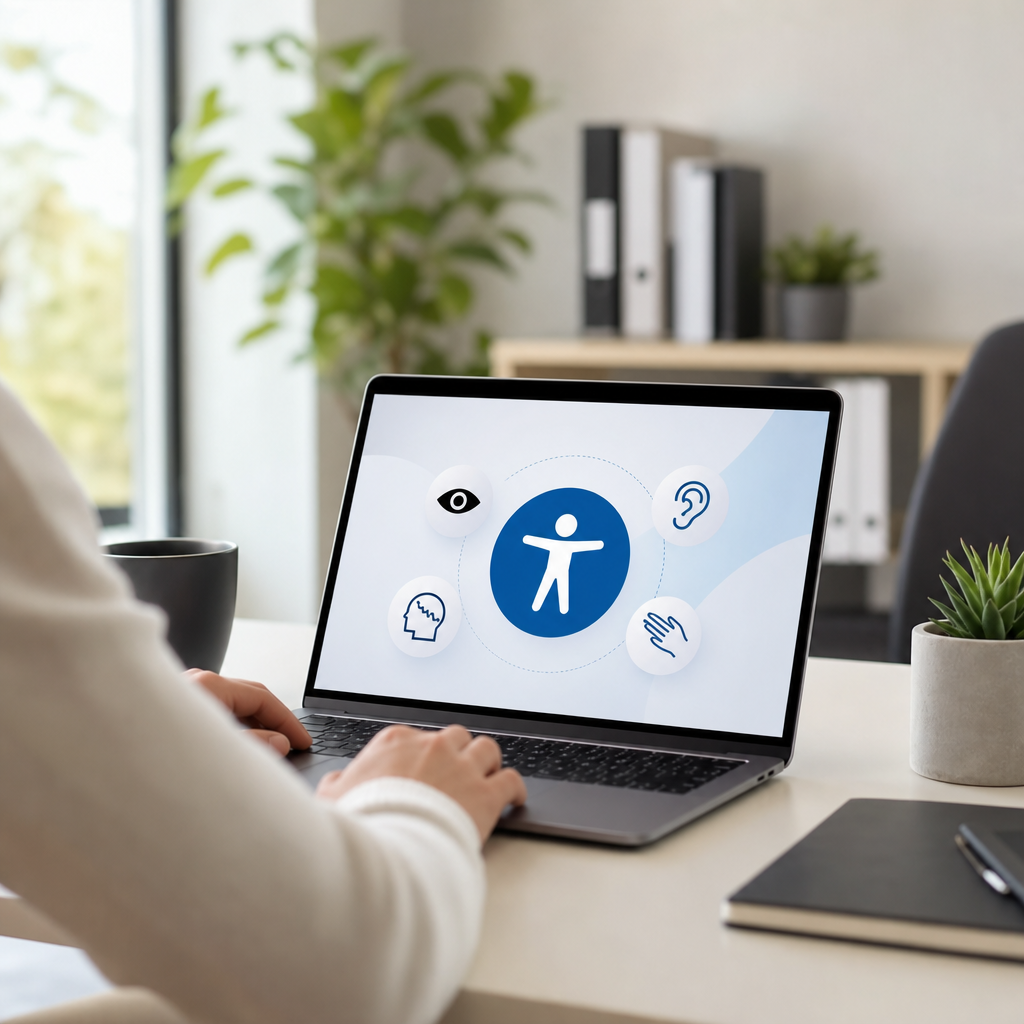

Universal design is the practice of creating products, spaces, services, and digital experiences that work for the widest possible range of people without requiring special adaptation, and it sits at the heart of accessibility. Accessibility means removing barriers so people with disabilities can perceive, understand, navigate, interact with, and contribute to the world around them. In practical terms, that includes wheelchair users entering a building without a side-door workaround, Deaf users accessing accurate captions, blind users navigating a website with a screen reader, and people with cognitive differences completing tasks without confusion or time pressure. I have worked on accessibility programs across websites, forms, documents, and customer journeys, and the consistent lesson is simple: when inclusion is built in from the start, quality rises for everyone. That is why the importance of universal design in accessibility extends beyond compliance. It influences independence, dignity, customer reach, legal risk, operational efficiency, and brand trust.
To understand why this matters, it helps to separate a few related concepts. Accessibility focuses on whether people with disabilities can use something successfully. Universal design is the broader design strategy of making that thing usable by as many people as possible from the beginning. Inclusive design overlaps with both by considering diverse needs, contexts, and identities throughout the design process. These terms are connected, but not identical. A ramp is accessible; a step-free entrance integrated into the main route is universal design. A website with image alt text is accessible; a site with strong color contrast, keyboard support, clear headings, readable content, captions, transcripts, and forgiving forms reflects universal design. The distinction matters because organizations often treat accessibility as a checklist applied late. In reality, the most effective accessibility work starts upstream in research, content strategy, procurement, architecture, and testing.
Accessibility also matters because disability is common and varied. The World Health Organization estimates that roughly 16 percent of the global population lives with a significant disability. That number does not capture temporary impairments like a broken arm, situational limitations like carrying a child, or age-related changes in vision, hearing, dexterity, memory, and stamina. When I audit digital systems, I rarely find a single accessibility issue affecting only one narrow group. Low contrast harms users in bright sunlight. Tiny tap targets frustrate commuters using a phone one-handed. Complex jargon excludes people with lower literacy and users reading in a second language. Captions help not only Deaf viewers but also anyone in a noisy office. Universal design matters because human ability is variable, and good design anticipates that variability instead of treating it as an exception.
For organizations building an Accessibility & Inclusion strategy, this topic works best as a hub because it connects every other subtopic. If you want to understand what accessibility is, you need to look at physical accessibility, digital accessibility, communication accessibility, policy, training, assistive technology, content design, procurement, and usability testing together. Universal design provides the common thread. It gives teams a practical standard: design for range, reduce avoidable barriers, and keep necessary accommodations available when broad design alone is not enough. That combination is what makes accessibility effective in the real world.
What Accessibility Is and How Universal Design Supports It
What is accessibility? Accessibility is the condition in which people with disabilities can use environments, information, products, and services with comparable ease, privacy, safety, and independence. In the built environment, that means entrances, circulation routes, restrooms, signage, lighting, acoustics, and emergency procedures that do not exclude people. In digital products, it means interfaces compatible with assistive technologies and usable through multiple input and output methods. On content teams, it means clear language, meaningful structure, and alternatives for visual or audio information. In customer service, it means communication channels and trained staff that can respond effectively to different needs. Accessibility is not a feature you add to a finished product. It is an operational quality.
Universal design supports accessibility by reducing the need for separate solutions. The classic principles developed at North Carolina State University, including equitable use, flexibility in use, simple and intuitive use, perceptible information, tolerance for error, low physical effort, and appropriate size and space, remain useful because they force teams to think beyond an average user. In practice, I have seen these principles translate into concrete decisions: automatic doors instead of heavy manual doors, plain-language instructions instead of legalistic text, form validation that explains errors inline, video players with keyboard controls, and meeting rooms with hearing loop systems. None of these choices lower standards. They improve core usability.
There is an important limitation to acknowledge. Universal design does not eliminate the need for individual accommodations. A broadly usable campus still needs sign language interpreters for some events. An accessible website may still need a staffed support channel for complex transactions. A well-designed office may still require ergonomic adjustments or assistive software for individual employees. The point is not that one design solves every need. The point is that universal design moves the baseline upward so fewer people hit preventable barriers in the first place.
Why Universal Design Matters in Physical, Digital, and Communication Access
Many organizations think accessibility only applies to websites or only to buildings. In reality, barriers often stack across channels. Consider a patient booking a medical appointment. If the website cannot be used with a screen reader, the phone system lacks relay-friendly options, the clinic entrance has poor wayfinding, and the receptionist speaks behind a plexiglass barrier without captioning or assistive listening support, the problem is not one isolated failure. It is a broken service journey. Universal design matters because people do not experience organizations in silos. They experience end-to-end interactions.
In physical spaces, universal design improves circulation, orientation, and comfort. Step-free routes, curb cuts, tactile indicators, accessible parking, lever handles, visual alarms, high-contrast signage, and adjustable counters benefit far more people than those covered by minimum code requirements. Anyone pushing a stroller uses curb cuts. Travelers with luggage benefit from elevators. Clear signage helps visitors with cognitive disabilities and first-time guests alike. In retail and hospitality, I have seen accessible fitting rooms and intuitive room controls directly improve customer satisfaction scores because they reduce friction for everyone.
In digital products, universal design aligns closely with the Web Content Accessibility Guidelines, widely known as WCAG. The current stable version used in many programs is WCAG 2.1, while WCAG 2.2 adds success criteria such as Focus Not Obscured and Dragging Movements. The structure is clear: content should be perceivable, operable, understandable, and robust. That means text alternatives for images, sufficient contrast, full keyboard access, descriptive headings, consistent navigation, visible focus indicators, error prevention, and compatibility with assistive technologies like JAWS, NVDA, VoiceOver, TalkBack, switch devices, and screen magnifiers. When teams build to these standards early, remediation costs drop sharply because they avoid redesigning components after launch.
Communication accessibility is equally critical. Plain language, captions, transcripts, sign language interpretation, accessible PDFs, readable slide decks, and multiple contact methods are not cosmetic extras. They determine whether information can be understood and acted on. During public health campaigns, for example, inaccessible communication can become a safety issue. I have reviewed notices where key updates were buried in dense text, images of text, and uncaptioned videos. Rewriting in plain language, adding semantic headings, publishing transcripts, and ensuring mobile readability did more than satisfy a requirement. It improved comprehension rates and reduced support calls.
Core Areas of Accessibility Every Organization Should Address
Because this article serves as a hub for “What Is Accessibility?”, it is useful to map the main areas organizations need to cover. Most mature programs include policy, governance, design standards, procurement controls, testing, training, and ongoing monitoring. They also define accessibility across channels rather than assigning it to one department. The table below summarizes the core areas I typically use when assessing program maturity.
| Area | What it covers | Practical example |
|---|---|---|
| Physical accessibility | Entrances, routes, furniture, signage, restrooms, alarms | Main entrance is step-free, signage has strong contrast, reception desk has an accessible height section |
| Digital accessibility | Websites, apps, software, documents, kiosks | Booking form works by keyboard, errors are announced to screen readers, PDFs use tags and heading structure |
| Communication accessibility | Language, captions, transcripts, interpretation, contact channels | Webinars include live captions and transcripts, customer support offers relay-friendly options |
| Operational accessibility | Policies, training, accommodations, emergency procedures | Staff know how to arrange interpreters, evacuation plans include people with mobility and sensory disabilities |
| Procurement and governance | Vendor standards, audits, accountability, reporting | Contracts require WCAG conformance and a current VPAT using the ACR format |
Each area affects the others. A company can publish an accessible career site and still lose candidates if interviews are scheduled in inaccessible locations or if recruiters do not know how to arrange accommodations. A museum can have a ramp and still exclude visitors if exhibit audio lacks transcripts and labels are too small to read. Accessibility becomes sustainable when the organization treats it as a system, not a project.
Standards, Laws, and Testing Methods That Make Accessibility Real
Universal design gains force when it is connected to recognized standards and enforceable processes. In digital work, WCAG is the benchmark most teams use. For websites and software sold into the United States public sector, Section 508 requirements matter. In Europe, EN 301 549 is a key accessibility standard for ICT procurement. The Americans with Disabilities Act shapes obligations in the United States across many public-facing services, while building codes and local regulations govern physical access. The exact legal framework varies, but the operational lesson is consistent: relying on minimum interpretation is risky. Standards should inform design decisions before procurement and launch.
Testing is where theory meets reality. Automated tools such as axe, WAVE, Lighthouse, and Accessibility Insights are valuable for detecting recurring issues like missing form labels, empty links, and low color contrast. But automation catches only part of the problem. In most audits I have led, the highest-impact failures were manual findings: confusing focus order, unclear link purpose, inaccessible drag-and-drop interactions, modal dialogs that trapped users, error messages not connected to fields, and instructions that depended on shape, color, or sound alone. Manual keyboard testing, screen reader testing, zoom and reflow checks, and review against real user tasks are essential.
User testing with people with disabilities is indispensable. It reveals whether a technically conforming experience is actually usable. A navigation structure may pass formal checks and still create cognitive overload. Captions may exist and still be inaccurate enough to reduce meaning. A kiosk may have a headphone jack and still place controls out of reach. Universal design becomes credible only when the people affected by design decisions are involved in research, testing, and governance.
Business, Social, and Ethical Benefits of Universal Design
The importance of universal design in accessibility is often framed as a moral obligation, and that is true, but it is also a measurable business advantage. Accessible websites typically show stronger task completion because clearer structure, better forms, and cleaner content help all users. Search visibility can improve because semantic headings, descriptive links, alt text, and transcripts create more understandable content. Customer service costs fall when users can complete tasks independently. Recruitment broadens when application systems, interviews, and workplaces are accessible. In enterprise settings, accessible design also reduces rework because teams standardize better patterns earlier.
There is a strong social case as well. Accessibility supports participation in education, employment, healthcare, finance, transport, culture, and civic life. When services exclude disabled people, the harm is cumulative. Missed appointments, abandoned applications, inaccessible learning materials, and difficult benefit forms can all reduce economic security and independence. Universal design addresses this by normalizing participation instead of treating access as a favor. That shift matters. It changes accessibility from exception handling to good service design.
Ethically, universal design reflects a basic principle: people should not have to ask for dignity in order to use everyday systems. A separate entrance, a hidden contact channel, or a document that only becomes understandable after repeated clarification communicates that some users were not considered. The best accessibility work I have seen removes that message. It makes inclusion visible in ordinary interactions.
How to Build Accessibility Into Strategy From the Start
If your organization wants to make universal design part of accessibility, start by setting a clear standard, assigning ownership, and embedding requirements into everyday workflows. Define the baseline you expect for digital products, documents, spaces, and communications. Train designers, developers, writers, procurement teams, and front-line staff on their specific responsibilities. Include accessibility acceptance criteria in design systems, content templates, QA plans, and vendor contracts. Require accessibility statements, conformance reports, and remediation timelines where needed. Most importantly, measure outcomes: audit critical journeys, track issue severity, and retest after fixes.
In practice, the fastest progress usually comes from focusing on high-impact journeys first. Pick the tasks that matter most: applying for a job, booking an appointment, paying a bill, finding contact information, reading a policy, joining an event, completing a checkout. Review them across devices and channels. Fix heading structure, labels, focus order, contrast, captions, language clarity, and error handling before moving to lower-priority pages. This approach builds momentum because teams can see accessibility improving real outcomes, not just audit scores.
Universal design is important because it turns accessibility into a durable quality of the whole experience rather than a patch for predictable failures. It helps organizations serve more people, reduce friction, meet standards, and earn trust through competent design. As the hub for “What Is Accessibility?”, the key takeaway is straightforward: accessibility is the removal of barriers across physical, digital, and communication environments, and universal design is the most effective way to remove many of those barriers early. Use this principle to guide every project, then go deeper into each connected topic across your Accessibility & Inclusion program. Start with one core journey, test it with disabled users, and improve it systematically.
Frequently Asked Questions
What is universal design, and how does it relate to accessibility?
Universal design is the approach of creating environments, products, services, and digital experiences that work for the widest possible range of people from the start, without requiring separate solutions or special accommodations whenever possible. Accessibility is closely connected, but it is often discussed in terms of identifying and removing barriers that prevent people with disabilities from fully participating. In other words, accessibility focuses on usable access, while universal design helps make that access more seamless, inclusive, and built into the core experience rather than added later.
That relationship matters because many barriers are created by design decisions, not by people’s abilities. A building entrance with only stairs excludes wheelchair users and can also create problems for parents with strollers, travelers with luggage, and older adults with mobility limitations. A website with poor color contrast, missing keyboard support, or videos without captions may block people who are blind, have low vision, are Deaf or hard of hearing, or have mobility or cognitive disabilities. Universal design addresses these issues proactively by asking a simple but powerful question: how can this work well for more people under more circumstances?
At its best, universal design does not lower standards or create one-size-fits-all experiences. It encourages flexible, thoughtful design that anticipates human diversity. That means clearer navigation, multiple ways to access information, intuitive layouts, readable content, and environments that do not force people to use separate entrances, special requests, or workaround processes just to participate. When universal design is taken seriously, accessibility becomes stronger, more consistent, and more dignified.
Why is universal design so important in accessibility planning?
Universal design is important in accessibility planning because it shifts the conversation from reactive fixes to intentional inclusion. When accessibility is treated as an afterthought, organizations often end up patching barriers after people encounter them. That approach is usually slower, more expensive, and less effective. It can also create unequal experiences, such as requiring a disabled person to ask for help, use a separate entrance, or wait for an alternative format that should have been available from the beginning.
By contrast, universal design improves accessibility planning at the earliest stages of decision-making. It influences how a building is laid out, how a public service is delivered, how software is coded, how forms are written, and how communication is presented. This early planning reduces the likelihood of exclusion and helps teams build systems that are easier for everyone to use. Features such as ramps integrated into the main entrance, automatic doors, captions on videos, plain-language instructions, accessible navigation menus, and adjustable text display options are all examples of choices that support both accessibility and overall usability.
It is also important because people do not experience the world in identical ways. Disability can be permanent, temporary, situational, visible, or invisible. Someone may have low vision, limited dexterity, hearing loss, chronic pain, a learning disability, sensory sensitivities, or a short-term injury. Universal design recognizes that variation is normal, not exceptional. Accessibility planning becomes more effective when it is built around that reality. The result is a more resilient, equitable experience that serves more users more consistently across different contexts.
What are some real-world examples of universal design improving accessibility?
Real-world examples of universal design are everywhere once you know what to look for. In physical spaces, step-free entrances, wide doorways, lever-style door handles, clear signage, elevators with audible and tactile indicators, and restrooms designed for varied mobility needs all improve access. These features support wheelchair users, people who use walkers or canes, individuals carrying bags or pushing carts, and anyone who benefits from simpler, safer movement through a space. Importantly, when these features are integrated into the main design rather than added as separate alternatives, the experience is more equal and respectful.
In digital environments, universal design can be seen in websites and apps that support keyboard navigation, screen readers, captions, transcripts, descriptive link text, consistent heading structures, sufficient color contrast, and forms with clear labels and error guidance. A Deaf user benefits from captions on a training video, but so does someone watching in a noisy environment. A blind user benefits from proper semantic markup and alternative text, but so does someone using voice technology. A person with a cognitive disability benefits from simple navigation and plain language, but so do first-time visitors trying to complete a task quickly.
Public services offer strong examples as well. Forms that are available digitally and in accessible formats, customer service channels that include text, phone, and relay options, and transportation systems with visual and audio announcements all demonstrate universal design in practice. Even curb cuts, often cited as a classic example, show how an accessibility feature can create broad benefit. Originally vital for wheelchair access, curb cuts also help parents with strollers, delivery workers, cyclists, and travelers with rolling luggage. That is the power of universal design: solutions created to remove barriers often improve convenience, independence, and participation for many people at once.
Does universal design only benefit people with disabilities?
No. Universal design absolutely benefits people with disabilities, but its value extends far beyond any single group. One of the most important things to understand is that accessible, inclusive design tends to make experiences better for everyone. When information is easier to read, navigation is more predictable, entrances are easier to use, and systems offer more than one way to interact, the result is broader usability across ages, abilities, devices, and situations.
Consider captions. They are essential for many Deaf and hard of hearing users, but they also help people watching videos in quiet offices, crowded airports, classrooms, or homes where they cannot use sound. Clear wayfinding in a building supports people with cognitive disabilities, but it also helps visitors who are unfamiliar with the space, people who speak different first languages, and anyone in a hurry. Adjustable text size, strong color contrast, and plain-language writing help users with low vision or learning disabilities, while also improving comprehension for older adults, mobile users, and busy readers scanning for key information.
Universal design also supports changing needs across the lifespan. A person may not identify as disabled today, but could experience temporary limitations from illness, injury, fatigue, stress, or environment. Designing for human variability creates systems that are more adaptable and forgiving. From an organizational perspective, that means wider reach, better customer satisfaction, stronger compliance outcomes, and fewer barriers to participation. From a human perspective, it means people can engage with greater independence, dignity, and confidence. That is why universal design should be viewed not as a niche concern, but as a foundational principle of good design.
How can organizations apply universal design principles more effectively?
Organizations can apply universal design more effectively by treating it as a strategic priority rather than a final checklist item. That starts with leadership commitment and a clear understanding that accessibility is part of quality, not separate from it. Teams should include universal design thinking from the beginning of planning, procurement, design, development, testing, and maintenance. If accessibility only appears at the end, many barriers will already be built into the experience, making them harder and costlier to fix.
A practical first step is to involve people with disabilities throughout the process. Their lived experience can reveal issues that standards alone may not fully capture. Organizations should also use recognized accessibility guidelines, train staff across departments, and build repeatable processes for inclusive design reviews. In digital settings, that means accessible design systems, semantic code, keyboard testing, captioning workflows, and content standards for headings, links, and alternative text. In physical spaces, it means considering circulation paths, entrances, seating, signage, acoustics, lighting, restroom access, and emergency procedures with a broad range of users in mind.
It is equally important to think beyond compliance. Meeting legal requirements matters, but universal design aims for real-world usability, not minimum technical adherence. Organizations should ask whether people can complete tasks independently, understand information clearly, and participate without unnecessary friction or stigma. Regular audits, user feedback, and continuous improvement are essential because needs evolve and barriers can reappear as systems change. The most effective organizations understand that universal design is not a one-time project. It is an ongoing commitment to creating experiences that are inclusive by design, accessible in practice, and better for everyone who uses them.