
Public spaces shape daily life, yet many still exclude deaf people in ways hearing planners rarely notice. Accessibility for deaf individuals means designing environments, services, and events so essential information is available visually, clearly, and in real time without depending on sound alone. In practice, that includes captioned announcements, qualified sign language interpreters, visual alarms, induction loops, trained staff, and communication policies that work during routine visits and emergencies. I have helped audit venues, museums, transit hubs, and community events, and the pattern is consistent: when information is delivered only through loudspeakers or spoken interactions, deaf visitors are forced to guess, wait for help, or leave.
This matters because public spaces are not optional. People use transport systems, libraries, government offices, parks, sports arenas, schools, clinics, and cultural venues to participate in civic life. Deaf people are not a single, uniform group. Some use sign language as a first language, some rely on speechreading, some are late-deafened, and some use hearing aids or cochlear implants. Effective planning respects that diversity by offering multiple communication channels at the same time. Accessibility also improves operations for everyone: visual wayfinding helps tourists, captions assist non-native speakers, and clear emergency messaging reduces risk across the board.
For organizations building an Accessibility & Inclusion strategy, public spaces and events deserve hub-level attention because they combine architecture, technology, staff behavior, and legal compliance. Standards vary by country, but the direction is clear. The Americans with Disabilities Act, the Equality Act 2010, Web Content Accessibility Guidelines for digital touchpoints, ISO-style emergency planning practices, and local building codes all push providers toward equal access. The most successful sites do more than meet minimum rules. They map the visitor journey from arrival to departure, identify every point where audio carries important meaning, and create visual or signed alternatives that are equally timely and easy to understand.
Start with communication access, not assumptions
The first rule in making public spaces accessible for deaf individuals is simple: never assume spoken communication is enough. When I assess a venue, I begin by listing every moment where a visitor might need information: buying a ticket, asking for directions, hearing a schedule change, understanding a guided tour, receiving safety instructions, or responding to an emergency. Each moment needs a visual equivalent. If a train platform announces a gate change over a speaker, the same update must appear on a clear display immediately. If a receptionist calls names aloud, there should be a screen, text alert, or vibrating pager system.
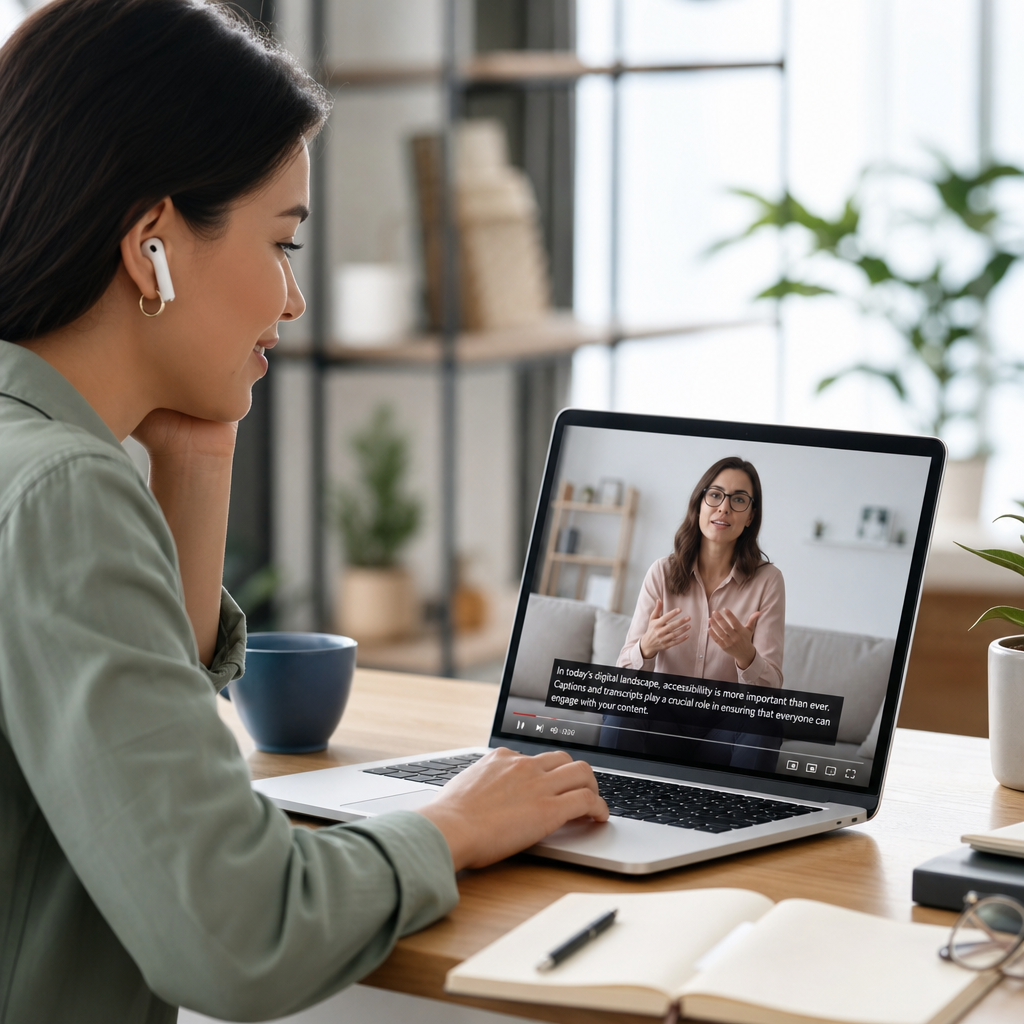
Good communication access depends on redundancy. Deaf visitors should not have to request basic information that hearing visitors receive automatically. Digital signage, captioned video, speech-to-text tools for front desks, QR-linked text information, and printed summaries all help. For more complex interactions, organizations need qualified sign language interpreters or remote interpreting options. Qualification matters. A bilingual staff member or volunteer who knows a little signing is not a substitute for a professional interpreter in legal, medical, educational, or safety-critical situations. The goal is equivalent access, not improvised support that works only when conditions are ideal.
Plain language also matters. Captions, signs, and written instructions should be concise, literal, and easy to scan. Overly technical wording slows comprehension, especially in stressful moments. In museums and civic buildings, I recommend pairing text with icons and consistent terminology. For example, do not alternate between “assembly point,” “muster area,” and “evacuation zone” on different signs. Use one term everywhere. Consistency reduces cognitive load and makes environments easier to navigate, particularly for visitors who are processing information visually at speed.
Design the built environment for visual access
Physical design has a major impact on accessibility for deaf individuals. Sightlines are crucial because many deaf people depend on seeing faces, hands, screens, and surroundings clearly. Reception desks should have good front lighting so speechreading and signing are possible. Avoid strong backlighting from windows behind staff, which turns faces into silhouettes. Waiting areas should be arranged so people can see entry points, display screens, and one another. In meeting rooms and classrooms, horseshoe or semicircle seating works better than rows because participants can follow signed or spoken discussion visually.
Visual alerts must be part of the core infrastructure. Fire alarms, severe weather warnings, security instructions, and evacuation orders need flashing beacons and text-based messaging, not just sirens or public-address announcements. Restrooms, changing areas, and enclosed rooms are often overlooked; they need alert coverage too. Transportation sites should provide platform displays that show delays, boarding changes, and service disruptions in real time. Sports venues and concert halls should ensure emergency instructions can override entertainment screens instantly. During one arena review I worked on, the biggest risk was not entry access but the inability to deliver urgent information visually to people facing the field rather than the concourse.
Acoustics are still relevant, even in deaf accessibility planning, because many visitors use residual hearing, hearing aids, or cochlear implants. Reverberant halls, poor microphone technique, and overlapping sound make speech less usable. Hearing loops, FM systems, or infrared assistive listening systems can improve access significantly when staff know how to maintain and promote them. Signage should state where these systems are available and how to connect. Too many venues install loops to satisfy procurement requirements, then fail to test them, train staff, or mark hearing loop zones clearly.
Make events accessible from promotion to exit
Accessible events begin long before doors open. The event page, registration flow, and ticket confirmation should state what communication supports are available, such as live captions, interpreters, hearing loops, quiet service points, or text-based customer assistance. Attendees should be able to request accommodations through a simple form, with clear deadlines and a contact method that does not require a phone call. Email, SMS, chat, and online forms are essential. If requests are limited by venue capacity, explain that honestly and confirm what will be provided on the day.
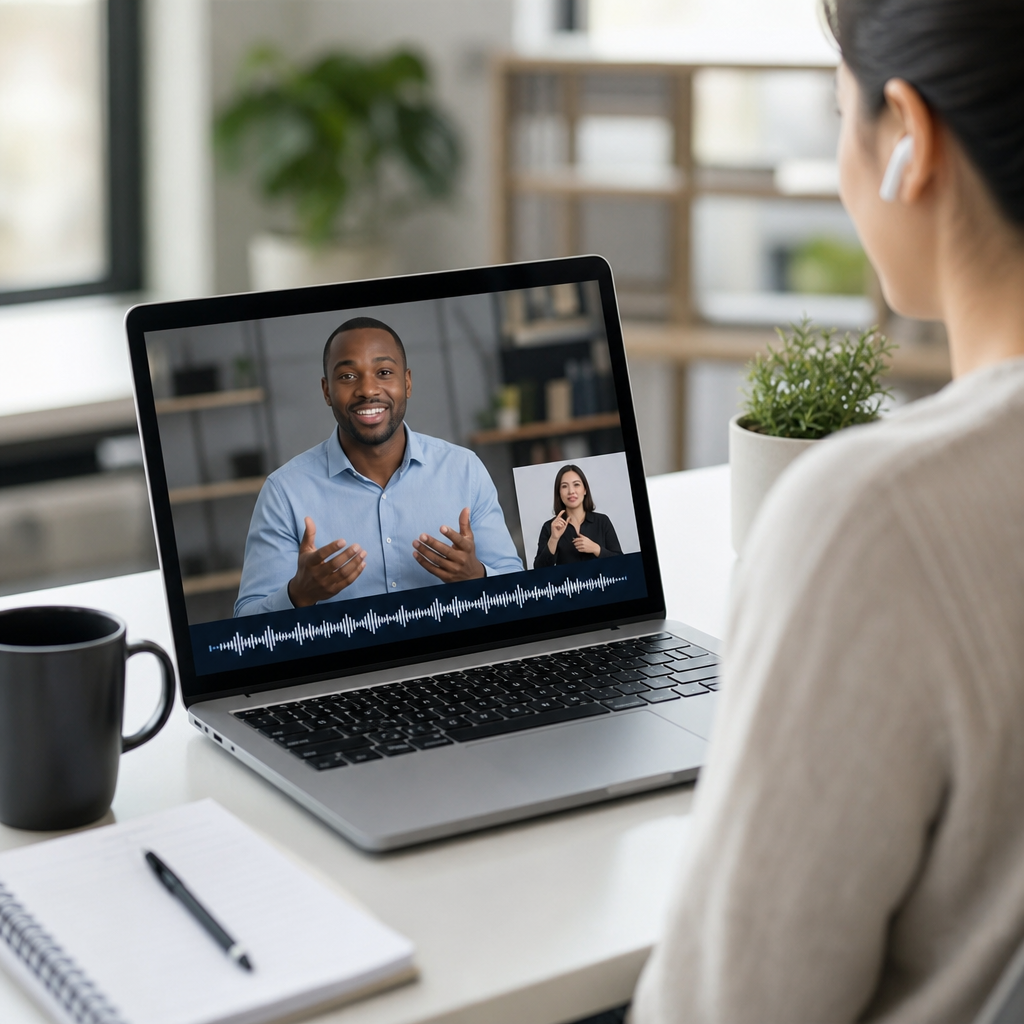
On site, event organizers need a communication access plan that covers stage content, audience questions, breakout sessions, networking, and emergency procedures. Captions should be live, accurate, and displayed where attendees can see both the text and the speaker or interpreter without constant head-turning. Interpreters need proper placement, lighting, and sightlines; putting them in a dark corner near a decorative plant is a common and avoidable mistake. For panels, moderators should repeat audience questions into microphones and enforce turn-taking so captioners and interpreters can keep pace. Video content should be open-captioned or reliably closed-captioned, including pre-show announcements and sponsor reels.
Events also need accessible social interaction. Networking is where many deaf attendees are excluded because support disappears once the formal program ends. Simple measures help: designated quieter conversation zones, staff trained to facilitate written or signed introductions, table numbers displayed clearly, and messaging channels for schedule updates. Festivals, markets, and outdoor events should think about distance and glare. Large high-contrast screens, printed maps, visual queue systems, and staffed information points with tablets for text communication can make a substantial difference when the environment is busy and loud.
Use technology that solves real problems
Technology can close access gaps quickly, but only when matched to actual visitor needs. Automatic speech recognition has improved enough to support front-desk conversations, guided tours, and many live events, especially when paired with a quality microphone and trained operator. Tools such as CART captioning, cloud-based live caption platforms, speech-to-text apps, digital wayfinding kiosks, and SMS notification systems are now practical for many organizations. However, technology is not a universal substitute for human support. Auto captions still struggle with names, specialized terms, accented speech, and noisy environments, so high-stakes settings need professional captioners or interpreters.
The most effective technology choices are usually the least flashy. Clear departure boards in transit stations, tablets at service counters for typed exchanges, QR codes linking to text guides, and well-maintained induction loops solve everyday barriers consistently. Museums can offer captioned media guides and transcripts for audio installations. Parks can provide map apps with visual alerts and text descriptions of ranger talks. Government buildings can use queue systems that display numbers and service windows instead of calling them only by voice. These upgrades are affordable compared with major renovations, and they often deliver immediate usability gains.
| Public space | Common barrier | Effective accessibility measure |
|---|---|---|
| Transit station | Audio-only delay announcements | Real-time visual display boards and SMS alerts |
| Museum | Uncaptioned exhibits and tours | Open captions, transcripts, and interpreted tours |
| Government office | Names called aloud in waiting rooms | Ticket screens, text notifications, and visual counters |
| Sports arena | Emergency directions over loudspeakers | Screen takeovers, beacons, and staff visual guidance |
| Conference venue | Fast spoken panels and networking noise | Live captions, interpreter sightlines, and quiet zones |
Procurement should include accessibility criteria from the start. When buying kiosks, screens, paging systems, ticketing tools, or event platforms, specify caption support, visual notification capability, compatibility with assistive listening systems, and maintenance requirements. Ask vendors for evidence, not promises. I routinely request demo environments, accessibility conformance reports, and test scenarios based on actual visitor tasks. If a system cannot display urgent text updates in large type, or if staff need ten clicks to enable captions, it will fail under pressure.
Train staff and build reliable operating procedures
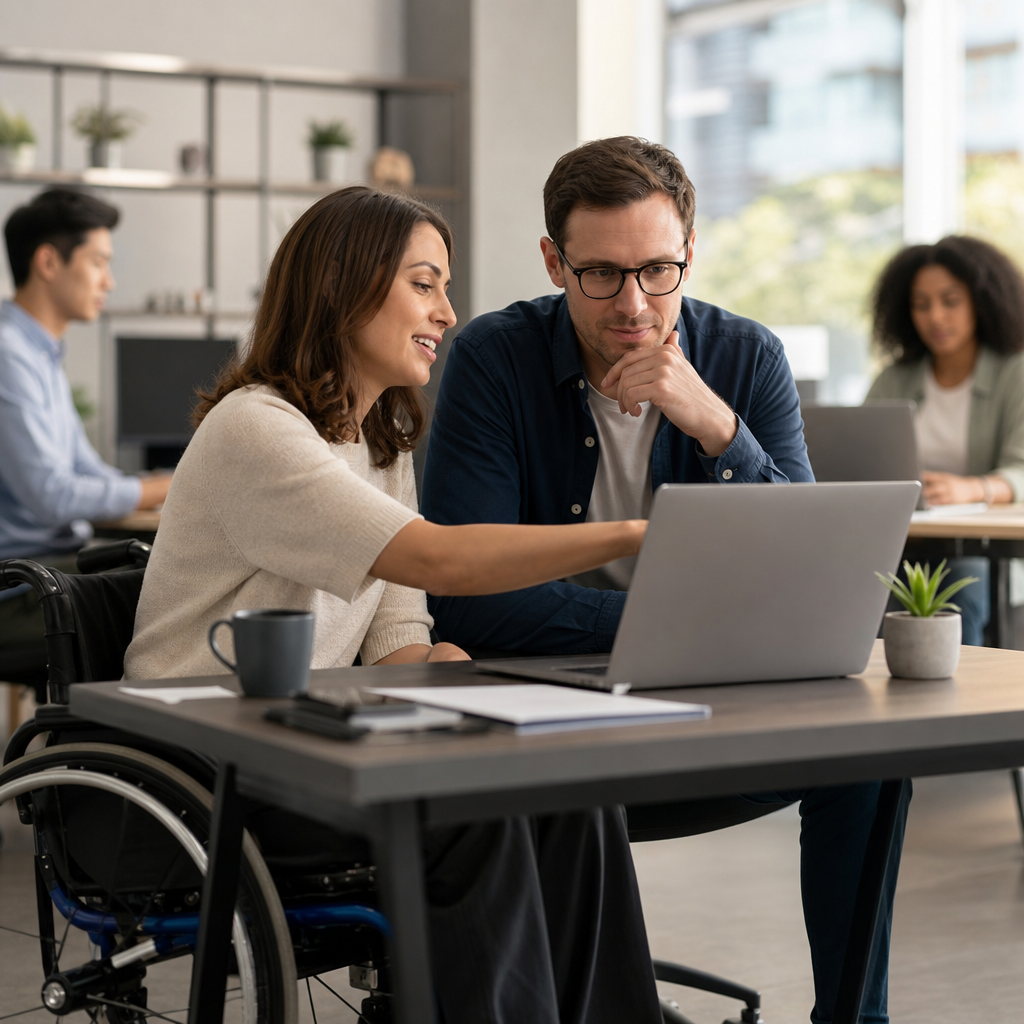
Even well-designed spaces fail when staff do not know how to communicate accessibly. Training should cover deaf awareness, respectful etiquette, and practical service behaviors. Staff should face the person when speaking, avoid covering their mouth, use plain writing when needed, and confirm understanding without being patronizing. They should know how to summon an interpreter, enable captions on venue systems, check a hearing loop, and use text-based tools. Just as important, they should understand that shouting does not solve communication barriers and can make interactions more uncomfortable.
Procedures matter more than one-off training sessions. Build accessibility into opening checklists, event run sheets, emergency drills, and contractor briefs. Test visual alarms monthly. Verify that captioned screens are working before audiences arrive. Confirm interpreter locations during technical rehearsals. Include deaf-access steps in incident response plans, especially for evacuations and shelter-in-place scenarios. Frontline teams should have quick-reference cards with simple instructions and escalation contacts. In large venues, appoint a named accessibility lead for each shift so decisions are not delayed when something changes.
Community input is the fastest way to improve performance. Partner with local deaf organizations, sign language interpreters, caption providers, and deaf consultants to review plans and observe live operations. Paid user testing is especially valuable because it reveals barriers staff no longer notice, such as screens obscured by reflections or queue displays hidden behind columns. After events, collect feedback in accessible formats and track recurring issues. If multiple visitors report that captions were accurate but unreadable from the back rows, the fix may be screen placement, not caption quality. Measuring the right problem saves money and improves trust.
Governance, budgeting, and continuous improvement
Lasting accessibility requires ownership. Public spaces and events improve fastest when leaders set clear standards, assign budgets, and measure results. A practical governance model includes an accessibility policy, design standards for visual communication, procurement rules, maintenance schedules, and an escalation path for accommodation requests. Budgeting should distinguish between permanent infrastructure, such as beacons and display boards, and event-specific services, such as interpreters or CART. Both are necessary. Treating access only as an occasional special request leads to inconsistent service and avoidable risk.
Accessibility should be reviewed like safety or cybersecurity: routinely and with evidence. Use audits, mystery shopping, event debriefs, and user feedback to assess whether deaf visitors can access information independently. Track metrics such as caption availability, response time for accommodation requests, assistive listening uptime, percentage of videos captioned, and staff training completion. Include digital touchpoints because many public experiences start online. If the booking form cannot request interpreting, or if the event app pushes audio alerts without text equivalents, the access chain is already broken before arrival.
The core benefit is straightforward. When public spaces accessible for deaf individuals are planned well, people participate more fully, services run more smoothly, and organizations meet both ethical and legal responsibilities. Start by identifying every audio-dependent moment, then provide visual, written, or signed alternatives that are equally timely. Upgrade alarms, displays, and service counters; publish event accommodations clearly; train staff; and test systems with deaf users. Accessibility in public spaces and events is not a niche enhancement. It is competent public service. Audit one venue or event journey this month, fix the most visible communication gap, and build from there.
Frequently Asked Questions
1. What does it really mean to make a public space accessible for deaf individuals?
Making a public space accessible for deaf individuals means ensuring that important information, safety instructions, services, and everyday interactions do not rely on sound alone. In an accessible environment, people can understand what is happening, where to go, and how to communicate without being excluded by spoken announcements, audio-only alerts, or staff who are unprepared to adapt. This applies to city halls, hospitals, schools, museums, transportation hubs, parks, event venues, government offices, and retail spaces alike.
In practical terms, accessibility includes clear visual communication systems such as captioned announcements, digital displays, wayfinding signage, visual emergency alarms, and written instructions that are easy to find and easy to understand. It also means offering qualified sign language interpreters when needed, using assistive listening systems like induction loops where appropriate, and training staff to communicate respectfully and effectively with deaf visitors. The goal is not to add a single accommodation after a complaint is made. The goal is to build an environment where access is expected, planned, and available in real time.
True accessibility also recognizes that deaf individuals are not a single, uniform group. Some people use sign language as their primary language, some prefer written communication, some rely on speechreading, and others may use hearing devices in certain situations. Public spaces work better when they provide multiple communication options rather than assuming one solution fits everyone. When planners design for visual clarity, predictable communication, and equal access to information, they create spaces that are safer, more welcoming, and more usable for everyone.
2. What are the most important accessibility features public spaces should prioritize first?
The most important features to prioritize are the ones that affect safety, communication, and independent use of the space. A strong starting point includes visual emergency alarms, captioned public announcements, high-quality signage, and clear visual displays for schedule changes, service updates, and directional information. If a building announces important updates over a loudspeaker but does not display the same information visually, deaf visitors are immediately placed at a disadvantage. The same is true in emergencies. Alarm systems must include visible alerts so people are not left unaware of urgent instructions.
Beyond safety systems, communication access should be a top priority. Public-facing service points should be equipped with tools that make interactions easier, such as writing tablets, speech-to-text technology, video remote interpreting options where appropriate, and policies for booking qualified sign language interpreters in advance for appointments, meetings, and events. For lectures, performances, tours, and public meetings, live captioning can be essential, especially when information is complex or delivered quickly.
Staff readiness is another high-impact priority that is often overlooked. Even well-designed spaces can fail if employees do not know how to respond when a deaf person asks for assistance. Staff should understand basic communication etiquette, know what accommodations are available, and be able to connect visitors to them quickly. Public spaces should also review layout and lighting. Good lighting supports sign language communication and speechreading, while sightlines matter in reception areas, service counters, and meeting rooms. Prioritizing these features first creates a foundation that improves daily access immediately and makes future improvements easier to implement.
3. How can public spaces improve communication during routine visits, services, and events?
Improving communication starts with removing the assumption that spoken interaction is the default. During routine visits, deaf individuals should be able to check in, ask questions, receive instructions, and resolve problems through methods that are clear and reliable. That means reception desks should have simple communication tools ready, such as pens and paper, tablets, text-based check-in systems, and staff who are comfortable slowing down, facing the person directly, and confirming understanding. Information about available accommodations should be posted clearly so visitors do not have to guess what support exists or advocate repeatedly for basic access.
For scheduled services such as medical appointments, government meetings, classes, and community programs, communication access should be built into the booking process. Visitors should be able to request interpreters, captioning, or other accommodations at the time they register. Just as important, organizations should have clear internal procedures to fulfill those requests without delay or confusion. If the process depends on individual staff discretion, access becomes inconsistent. Consistency matters because people need to trust that communication support will be there when they arrive.
Events require especially careful planning because they often involve multiple speakers, background noise, dim lighting, fast-moving programs, and last-minute announcements. Best practice includes live captions displayed in a visible location, qualified sign language interpreters positioned with good lighting, presentation materials shared in advance when possible, and all verbal announcements mirrored visually on screens or signs. Audience participation should also be accessible, with questions repeated or captioned and microphone use managed so information is not lost. When organizers design communication access into the event from the beginning instead of treating it as an add-on, deaf attendees can participate fully rather than watching from the margins.
4. Why are trained staff and clear accessibility policies so important for deaf inclusion?
Physical tools alone do not create accessibility. Staff behavior, organizational awareness, and written policies determine whether accommodations actually work in real life. A public space may have captioning technology, interpreter booking procedures, or visual alert systems, but if staff do not know they exist or do not understand when to use them, deaf visitors still encounter barriers. Training is what turns accessibility features into reliable access.
Effective staff training should cover more than basic courtesy. Employees should learn how to get a person’s attention respectfully, maintain eye contact, avoid speaking while turning away, use plain written communication when needed, and understand that not all deaf people communicate in the same way. They should also know the difference between informal assistance and qualified language access. For example, using an untrained person to interpret sensitive information may be inappropriate or inaccurate. Staff should know when to provide a qualified sign language interpreter, when live captioning is needed, and how to activate those services quickly.
Clear policies are equally important because they create accountability. Public spaces should have written procedures for requesting accommodations, responding to urgent communication needs, maintaining visual alert systems, and ensuring that audio-only information is also shared visually. Policies should define roles, timelines, and standards so access does not depend on who happens to be on duty that day. Good policies also include emergency planning, complaint resolution, and regular review of accessibility practices. When accessibility is embedded in policy, staff can respond with confidence and visitors can expect consistent treatment. That consistency is one of the strongest signs that deaf inclusion is being taken seriously.
5. How can planners and organizations evaluate whether a public space is truly accessible for deaf individuals?
The best way to evaluate accessibility is to look at the full visitor experience from arrival to departure and ask a simple question at every stage: can a deaf person access the same information, at the same time, with the same level of independence as a hearing person? That assessment should include entrances, reception areas, ticketing, waiting rooms, announcements, service counters, meeting spaces, restrooms, emergency procedures, and exits. If any essential information is available only through sound, that is a clear gap.
Organizations should conduct accessibility audits that specifically address deaf access rather than treating it as a minor part of general disability planning. An audit should review visual signage, display systems, emergency alerts, interpreter procedures, captioning capacity, assistive listening technology, lighting, acoustics, and staff training. It should also examine websites, booking systems, and event registration forms to make sure people can request accommodations easily before they arrive. Policies should be checked alongside physical features because inaccessible procedures can undermine accessible design.
Most importantly, evaluation should involve deaf individuals directly. Feedback from deaf community members, accessibility consultants, and advocacy groups can reveal barriers that hearing planners often miss, such as poor interpreter sightlines, unreadable display placement, unclear service workflows, or staff assumptions that make communication harder. User testing, surveys, and post-event reviews are all valuable, but they should lead to concrete action plans with deadlines and follow-up. Accessibility is not a one-time checklist. It is an ongoing process of design, testing, training, and improvement. Public spaces that commit to that process are far more likely to provide meaningful, lasting access for deaf individuals.