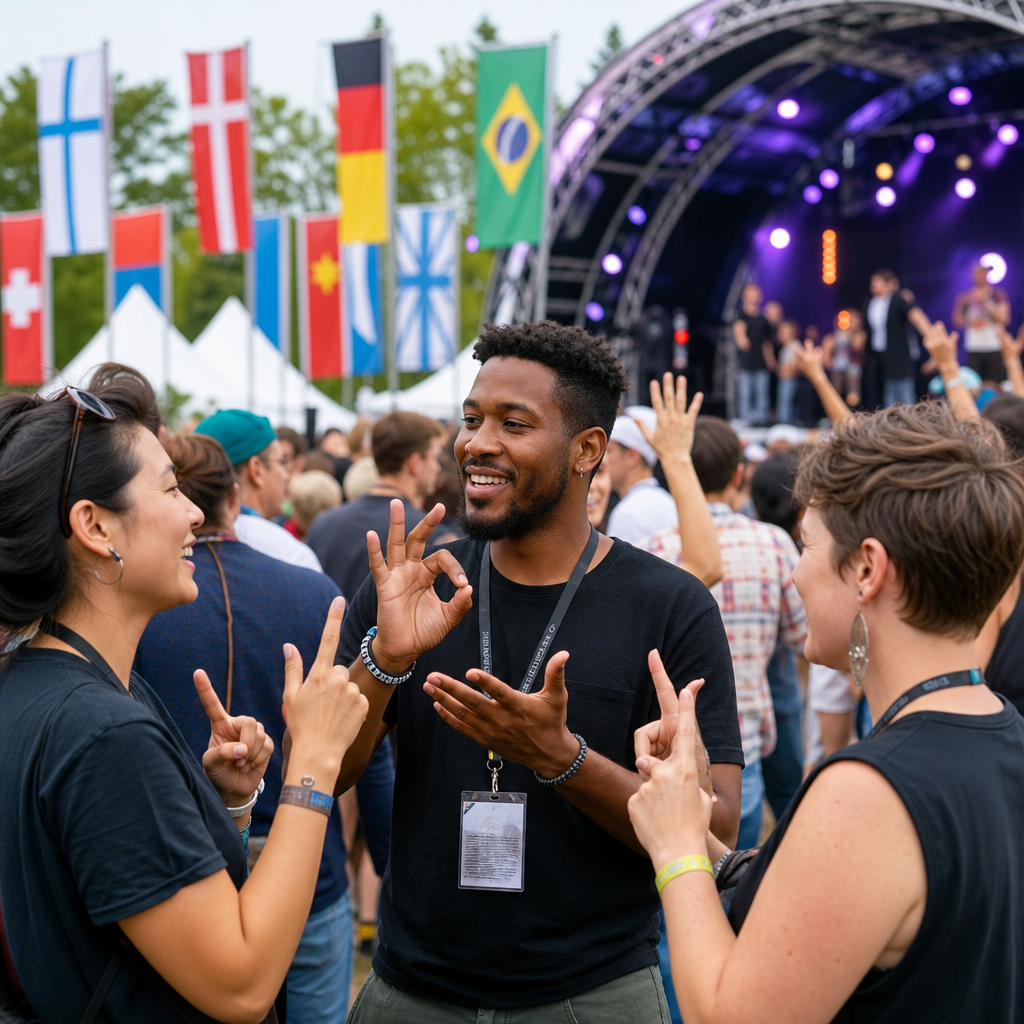
Popular Deaf festivals around the world do far more than fill an events calendar; they create spaces where sign languages, cultural identity, advocacy, performance, and community leadership are visible on their own terms. In the Deaf community, a festival is not simply a gathering with entertainment. It is a social and cultural forum where Deaf people meet across regions, share language and lived experience, celebrate creative work, mentor younger generations, and connect with interpreters, educators, allies, and organizations. I have worked with community event planning and accessibility coordination, and the pattern is consistent: when Deaf-led festivals are funded well and designed thoughtfully, they strengthen belonging in ways ordinary public events rarely match. That matters because Deaf culture is frequently misunderstood as a medical issue rather than a linguistic and social identity shaped by sign language, shared history, and collective norms around communication access.
Deaf festivals matter globally because they answer practical and emotional needs at the same time. They provide direct access through national sign languages, captioning, visual announcements, and Deaf-centered programming, while also supporting networking, employment visibility, activism, and family education. Some festivals focus on film, others on sports, arts, pride, or local community life, but the strongest ones combine celebration with representation. For readers exploring events and community engagement, this hub explains which Deaf festivals are most recognized, what makes them significant, how they are organized, and why attending one can be transformative for Deaf and hearing participants alike. It also serves as a practical guide for understanding the broader ecosystem of Deaf community events, from international congresses to neighborhood gatherings. Whether you are Deaf, hard of hearing, a parent, an interpreter, an educator, or an event organizer, knowing these festivals helps you see how community engagement actually happens in real settings.
What Makes a Deaf Festival Distinct
A Deaf festival differs from a mainstream accessible event because Deaf people are not an afterthought. The language of the event, the social pace, the stage design, and the leadership structure typically center Deaf communication. That often means emcees signing from the stage, large visual screens, interpreters used strategically rather than symbolically, bright sightlines for conversation, and schedules built around social interaction rather than constant spoken announcements. In well-run Deaf festivals, information is shared visually first. Registration desks know how to communicate without awkwardness. Performances are selected because they resonate with Deaf audiences, not because organizers want token inclusion.
These festivals also carry strong cultural markers. You often see storytelling in sign language, Deaf comedians, visual vernacular performance, sign song interpretation debates, Deaf artisans, community resource booths, and youth programs. Many include workshops on education rights, technology, mental health, employment, and leadership. In practice, this mix is what turns a simple event into a community anchor. The festival becomes a place where a teenager meets Deaf adults for the first time, where families learn from native signers, and where advocacy groups recruit volunteers. That community-building role is why Deaf festivals deserve attention beyond tourism or lifestyle coverage.
Major International Deaf Gatherings
At the global level, some of the most influential gatherings are organized around broad Deaf identity rather than a single art form. The World Federation of the Deaf has long set the standard for international convenings through congresses and related assemblies that bring together national associations, advocates, and community leaders. While these are not festivals in the narrow entertainment sense, they often include cultural programs, exhibitions, youth participation, and networking on a scale that shapes Deaf public life worldwide. They matter because policy, language rights, and community celebration often meet in the same room.
Another landmark event is Deaflympics, governed by the International Committee of Sports for the Deaf. Deaflympics is a sports competition, but in community terms it functions like a major international festival as well. Athletes, families, volunteers, and supporters gather around a shared Deaf experience, and host cities often stage cultural activities alongside competition. Unlike hearing sporting events that rely heavily on audio cues, Deaf sports culture is built around visual systems such as starting lights and signed communication. That creates a distinct atmosphere of pride and mutual recognition. For many attendees, the social energy outside the venues is as important as the medal events themselves.
Regional gatherings across Europe, Asia, Latin America, and Africa also deserve recognition. They may be smaller than world congresses, but they are often more accessible financially and linguistically for local participants. In my experience, these regional festivals can produce deeper community ties because attendees return year after year and build practical networks for education, services, and activism. They are often where emerging Deaf leaders first gain visibility.
Deaf Film Festivals and the Power of Screen Culture
Film festivals are among the most visible Deaf cultural events because they showcase how Deaf stories are told by Deaf creators rather than filtered through hearing assumptions. Deaffest in the United Kingdom is one of the best-known examples. Founded in Wolverhampton and run by Deaf-led teams, it has built a strong reputation for screening films by Deaf filmmakers, hosting industry discussions, and creating a professional space where sign language is central. Its importance goes beyond entertainment. It gives directors, actors, editors, and writers a place to build careers and challenge the industry’s long history of casting hearing performers in Deaf roles.
In the United States, Deaf film programming has appeared through festivals, university centers, and arts organizations, often around American Sign Language storytelling, documentary work, and experimental visual media. Audiences are drawn not only to representation but to technique. Deaf filmmakers frequently make deliberate choices around framing hands and facial grammar, visual rhythm, silence, vibration, captions, and point of view. Those choices can reshape how all viewers understand cinema. A strong Deaf film festival answers a basic question clearly: what happens when Deaf people control the camera, script, and audience experience? The answer is usually richer, more precise storytelling.
Film festivals also create economic opportunities. Panels on funding, accessible distribution, and festival strategy help Deaf creators navigate industries that still default to spoken networking. That is why these events belong in any discussion of Deaf community engagement. They are creative spaces, but they are also professional infrastructure.
National and Local Community Festivals
Some of the most meaningful Deaf festivals are not internationally famous. They are annual state, provincial, or city events organized by Deaf clubs, schools for the Deaf, service agencies, arts groups, or coalitions. In the United States, local Deaf expos, heritage celebrations, Deaf Awareness Month events, and school reunions often function as festivals in all but name. Similar patterns appear in Canada, Australia, India, Japan, South Africa, Brazil, and many other countries. A community might host a Deaf cultural fair, an ASL day, a signed theater weekend, or a street festival with vendor booths and youth activities. These events matter because they are where most people actually participate.
Local festivals usually reflect the priorities of the region. In one city, the focus may be employment and accessible technology. In another, the emphasis may be sign language preservation, family support, or Deaf senior services. Smaller events can feel less polished than large international festivals, but they are often more relational. Organizers know the community personally. Attendees return because they see familiar faces, reconnect with old classmates, and introduce children to Deaf spaces in a low-pressure setting. For a parent of a newly identified Deaf child, that first local festival can change expectations completely by replacing isolation with a visible, thriving community.
| Festival Type | Main Focus | Typical Activities | Community Benefit |
|---|---|---|---|
| International congress or games | Identity, advocacy, networking, sports | Assemblies, ceremonies, cultural showcases, competitions | Global visibility and leadership development |
| Film festival | Media, representation, industry access | Screenings, panels, filmmaker Q&A sessions | Career growth and authentic storytelling |
| National cultural festival | Language and heritage celebration | Performances, workshops, community booths | Stronger national community ties |
| Local Deaf festival or expo | Neighborhood engagement and services | Family activities, resource fairs, social gatherings | Direct support and lasting local connections |
Pride, Arts, and Intersectional Deaf Festivals
Another important category includes festivals that center intersectional identity, especially Deaf queer communities, Deaf artists, DeafBlind participants, and Deaf people of color. Deaf Rainbow events, Deaf queer conferences, and inclusive arts festivals create space for people who may feel marginalized even within the broader Deaf community. These events are essential because community engagement is never one-size-fits-all. A festival can be Deaf-centered and still overlook race, gender, sexuality, mobility, or economic access unless organizers plan intentionally.
Arts festivals are particularly strong at addressing this complexity. Deaf theater companies, signed poetry collectives, and mixed-media exhibitions often invite multiple forms of expression that do not rely on spoken language. Visual vernacular, for example, blends mime, cinematic perspective, and sign language artistry into a highly expressive performance form recognized in many Deaf arts settings. When audiences see this work live, they understand immediately that Deaf culture is not defined by lack of hearing. It is defined by visual intelligence, creativity, and language-rich performance traditions. The best festivals make that visible to insiders and newcomers alike.
How Deaf Festivals Are Planned for Access and Belonging
Successful Deaf festivals are built on details that hearing organizers sometimes miss. Venue layout is critical. Wide corridors, good lighting, minimal visual obstruction, and seating arranged for sightlines all support signed conversation. Stage lighting must illuminate hands and facial expressions without washing out the signer. Screens need to be large and positioned well. Registration systems should offer text-based communication, not voice-only hotlines. Emergency procedures must be visual and multilingual where relevant. These are not optional extras; they are baseline access measures.
Programming also matters. A festival with one interpreted keynote and no Deaf-led decision-making is not genuinely community-centered. Strong events hire Deaf staff, consult local leaders, publish access information in advance, and include varied age groups. They also address cost. I have seen excellent festivals lose attendance because ticketing, transportation, or lodging made participation unrealistic. The most trusted organizers work with sponsors, schools, nonprofit partners, and public agencies to reduce those barriers. Many now add livestreaming, social media updates in sign language, and digital schedules, which extend participation to people who cannot travel.
How to Choose the Right Deaf Festival to Attend
The best Deaf festival for you depends on your goal. If you want broad exposure to advocacy and international networking, choose a large congress or sports-centered event. If your interest is culture and media, a Deaf film or arts festival will be more rewarding. Families with young children often benefit most from local or national festivals where there is time for conversation, resources, and community introductions. Students and professionals may want events with workshops, job fairs, or leadership sessions.
Before attending, review the language environment, access features, cost, lodging, and transportation. Check whether the event uses ASL, BSL, International Sign, or another national sign language, and whether interpretation is provided across languages. Look at the organizer’s past record, not just promotional material. A strong program usually shows Deaf presenters, clear access notes, and realistic schedules. If you are hearing, attend as a respectful participant rather than as an observer treating the festival like a novelty. Learn basic etiquette, follow visual cues, and understand that Deaf-led spaces are valuable precisely because they are not centered on hearing norms.
Why These Festivals Strengthen Community Engagement Year-Round
The impact of Deaf festivals does not end when the stage comes down. The strongest events generate year-round benefits: volunteer pipelines, peer mentoring, donations to community groups, social media networks, political organizing, and repeat collaboration between schools, artists, and advocacy organizations. A youth attendee may find a role model. A filmmaker may meet a producer. A parent may learn about bilingual education. A local business may recognize the need for better access. Those outcomes are why festivals should be understood as community infrastructure, not one-off celebrations.
As a hub for events and community engagement, this topic leads naturally into deeper coverage of Deaf film festivals, Deaf sports gatherings, local Deaf club events, signed theater, family meetups, and accessibility planning. Popular Deaf festivals around the world show the same lesson in different forms: when Deaf people lead, community becomes more connected, confident, and visible. If you want to engage meaningfully, start by attending one event, following a Deaf-led organizer, and supporting the festivals that keep culture alive across borders.
Frequently Asked Questions
What makes Deaf festivals different from typical cultural or arts festivals?
Deaf festivals are distinct because they are built around Deaf culture, sign languages, and community leadership rather than treating deafness as a medical issue or an accessibility afterthought. At many mainstream festivals, Deaf attendees may rely on interpreters, captions, or special accommodations to participate fully. At a Deaf festival, the environment is often designed from the start for visual communication, shared cultural norms, and direct interaction in sign language. That changes the entire experience. People are not just attending performances or workshops; they are entering a space where Deaf identity is visible, valued, and understood on its own terms.
These festivals often bring together artists, advocates, educators, families, students, interpreters, and community organizations in one place. As a result, they function as more than entertainment events. They become hubs for networking, mentorship, leadership development, language exchange, and cultural affirmation. A Deaf film screening, poetry performance, theater production, or public panel carries added meaning in this setting because audiences are engaging through a shared visual and cultural framework. In that sense, Deaf festivals are both celebratory and practical: they preserve language, elevate creative work, strengthen intergenerational ties, and make space for community issues to be discussed openly.
Why are Deaf festivals important for Deaf culture and community identity?
Deaf festivals play an important role in sustaining and strengthening Deaf culture because they create dedicated spaces where Deaf people can gather without needing to adapt themselves to hearing-centered expectations. That matters deeply. In many parts of the world, Deaf people may spend much of their daily lives navigating institutions, workplaces, or schools where sign language is limited or misunderstood. A festival offers something different: a shared environment where communication flows more naturally, cultural references are familiar, and Deaf ways of interacting are centered rather than marginalized.
These events also help reinforce community identity across generations. Younger Deaf attendees can meet elders, artists, scholars, and leaders who model what Deaf success, creativity, and advocacy look like in real life. Families with Deaf children often gain valuable exposure to the richness of Deaf culture, which can be transformative for both confidence and belonging. At the same time, festivals support cultural continuity by highlighting sign language storytelling, visual art, Deaf history, film, performance, and political organizing. They are spaces where identity is not just discussed abstractly; it is lived, shared, and celebrated publicly. That visibility helps counter stereotypes and affirms that Deaf communities are linguistic and cultural communities with their own traditions, contributions, and leadership.
What kinds of activities and programs are usually featured at popular Deaf festivals around the world?
Popular Deaf festivals often include a wide mix of artistic, educational, and community-centered programming. Many feature live performances such as Deaf theater, signed music interpretations, visual vernacular, comedy, dance, and poetry. Film festivals are also especially important in Deaf cultural spaces, showcasing work by Deaf directors, actors, writers, and producers whose stories may be overlooked in mainstream media. Art exhibitions, craft markets, and photography displays are common as well, giving Deaf creators opportunities to share their work with audiences who understand its cultural context.
Beyond the arts, many festivals include workshops, lectures, panel discussions, and networking sessions focused on topics such as sign language preservation, education, accessibility, employment, technology, mental health, and disability rights. Some festivals include youth leadership tracks, family programming, interpreter forums, sports events, or community awards. International festivals may also create opportunities for cross-cultural exchange, where attendees learn about different national sign languages and Deaf experiences from around the world. This range of programming is part of what makes Deaf festivals so meaningful. They are not limited to spectacle or performance; they create room for serious dialogue, skill-building, advocacy, and relationship-building alongside celebration.
Are Deaf festivals only for Deaf attendees, or can hearing people participate too?
Deaf festivals are generally rooted in Deaf community priorities, but many welcome hearing participants who attend respectfully and with a willingness to engage on Deaf cultural terms. Hearing family members, interpreters, educators, allies, researchers, and community partners often attend, especially when they have meaningful ties to Deaf people or work in fields related to language access, education, or cultural programming. However, the key difference is that hearing attendees are entering a Deaf-centered space rather than a hearing-centered one. That means the norms of communication, interaction, and leadership are shaped by Deaf participants and organizers.
For hearing visitors, this can be a valuable learning experience. It provides a chance to better understand the importance of sign language, visual communication, and cultural autonomy. It can also challenge assumptions by showing Deaf communities as dynamic, creative, politically engaged, and globally connected. The best approach for hearing attendees is to participate with humility: learn basic sign language if possible, pay attention to visual communication norms, respect interpreters and access systems, and avoid treating the festival as a novelty. When hearing people engage in that spirit, their participation can support stronger relationships and broader awareness without overshadowing the purpose of the event.
How do Deaf festivals vary from country to country, and what makes them globally significant?
Deaf festivals vary widely depending on local history, national sign languages, political conditions, and the strength of regional Deaf institutions. A festival in one country may emphasize advocacy and language rights because access to education or interpreting remains limited. Another may focus more heavily on arts and performance because there is a strong established network of Deaf filmmakers, actors, or visual artists. Some festivals are closely tied to national Deaf associations, while others grow out of grassroots groups, universities, arts organizations, or international cultural collaborations. The language used at each event may also differ significantly, since sign languages are not universal and each country or region may have its own linguistic traditions.
What makes these festivals globally significant is that they reveal both the diversity and the shared foundations of Deaf life worldwide. Attendees may encounter different sign languages, different policy challenges, and different artistic traditions, yet still recognize common themes of identity, access, resilience, and community. International Deaf festivals, in particular, help build solidarity across borders by creating opportunities for cultural exchange and advocacy partnerships. They also raise the profile of Deaf creators and leaders on a larger stage. For readers exploring popular Deaf festivals around the world, that global dimension is essential: these events are not isolated local gatherings, but part of a broader international movement that celebrates Deaf culture, advances visibility, and strengthens community connections across nations.