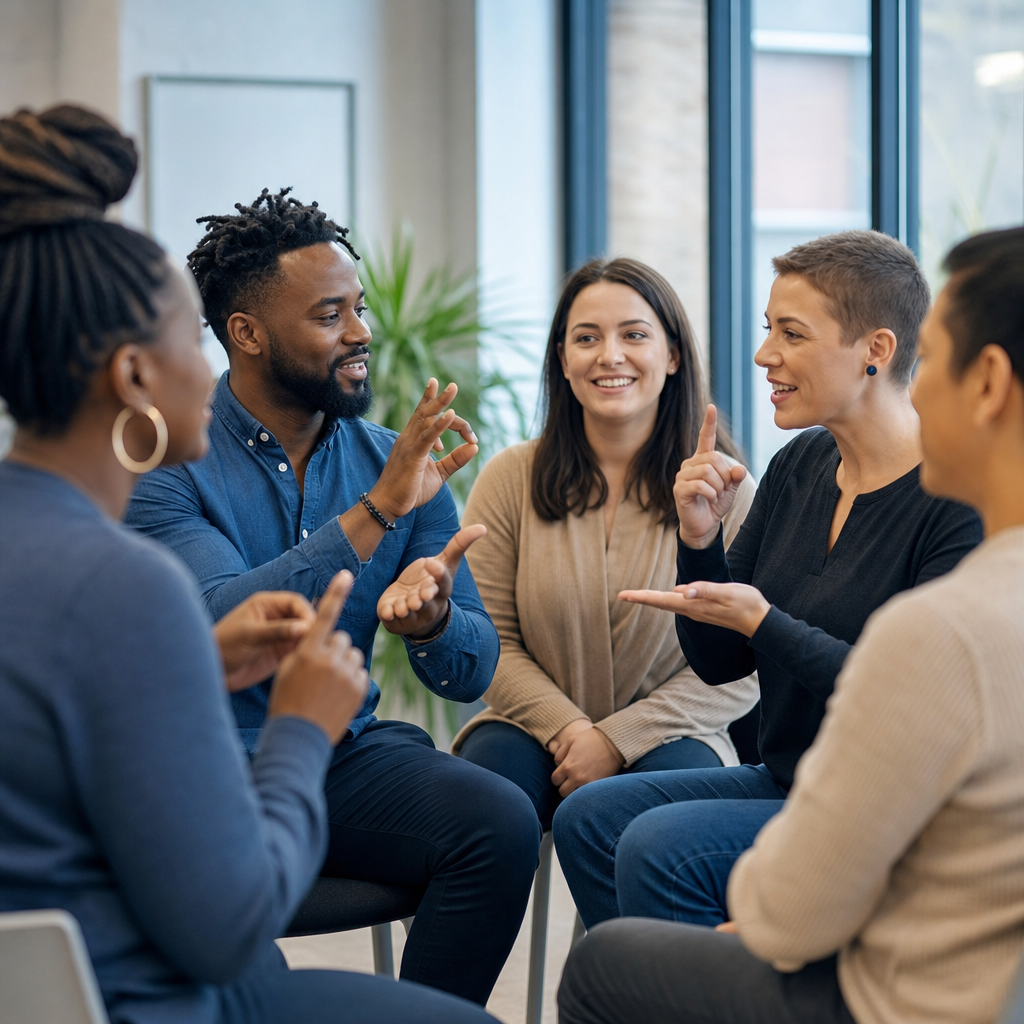
Community engagement is central to Deaf culture because language, identity, access, and mutual support all grow stronger when Deaf people gather, organize, and participate in shared public life. In practical terms, community engagement includes attending Deaf events, joining advocacy groups, supporting Deaf-owned businesses, volunteering, mentoring younger signers, participating in online spaces, and building relationships across generations. Deaf culture refers to the shared values, traditions, history, language practices, and social norms of people who identify with Deaf communities, especially those connected through sign languages such as American Sign Language. The distinction matters. Deafness is not only an audiological condition; for many people, it is also a cultural and linguistic identity shaped by collective experience. I have seen this firsthand in community centers, conference halls, school events, and local meetups where a simple gathering does far more than fill a calendar. It creates belonging, circulates information, strengthens leadership, and protects language transmission. For readers exploring events and community engagement, this hub matters because participation is often the doorway to every other part of Deaf life: education, employment networks, advocacy, arts, family support, and civic visibility. Without strong engagement, isolation grows. With it, Deaf people gain connection, confidence, and influence.
Why community engagement matters in Deaf culture
Community engagement matters because Deaf culture is lived collectively. Language access is the most obvious reason. Sign languages thrive in environments where people can use them naturally, rapidly, and without apology. At a Deaf club night, theater performance, sports tournament, or conference, communication happens with visual ease. That ease changes behavior. People contribute more, joke more, debate more, and build trust faster when they do not have to fight for access every minute. In my experience, even one well-run event can shift a newcomer from feeling peripheral to feeling recognized. That shift has measurable effects: stronger social networks, better mental health, increased civic participation, and more confidence navigating schools, workplaces, and public institutions.
Engagement also preserves cultural knowledge. Stories about residential schools, civil rights campaigns, interpreting access, technology changes, and sign language variation are often passed person to person rather than through textbooks. Community gatherings function as living archives. Elders explain how policies changed after the Rehabilitation Act and the Americans with Disabilities Act. Artists demonstrate how visual storytelling differs from spoken performance traditions. Parents of Deaf children learn practical strategies from adults who have already navigated language deprivation, school placement, and identity questions. These exchanges are not abstract cultural enrichment. They are essential knowledge transfer.
Core forms of engagement: events, organizations, and everyday participation
Events and community engagement take many forms, and a strong hub page should define the full landscape. Large-scale events include Deaf expos, film festivals, academic conferences, theater productions, leadership summits, sports competitions, and advocacy rallies. National Association of the Deaf conferences in the United States, DeafNation expos, and Deaf film festivals are prominent examples because they combine networking, information exchange, and cultural celebration in one space. Regional events matter just as much. Local coffee chats in ASL, church gatherings, alumni reunions, community picnics, and school performances often provide the consistent contact that sustains real relationships.
Organizations are another backbone. Deaf clubs historically served as social and political anchors, and many still do, though their formats have evolved. Today, nonprofit groups, alumni associations, parent networks, campus Deaf organizations, and online communities all play key roles. Everyday participation is equally important. Showing up regularly, volunteering at check-in tables, mentoring students, sharing event information, hiring Deaf presenters, or simply bringing a hearing family member to an accessible gathering all count as engagement. Community health depends less on one-time attendance than on repeated contribution.
| Type of engagement | Primary purpose | Real-world example | Main benefit |
|---|---|---|---|
| Social events | Relationship building | Monthly ASL coffee meetup | Reduces isolation and expands peer networks |
| Cultural events | Language and identity affirmation | Deaf theater performance | Strengthens pride and visibility |
| Professional events | Career development | Deaf job fair or conference | Creates employment and mentorship pathways |
| Advocacy events | Policy and rights awareness | Statehouse rally for interpreter access | Builds collective influence |
| Digital communities | Ongoing information sharing | Moderated Deaf social media group | Connects people across distance |
How engagement strengthens language, identity, and belonging
Language development is one of the clearest benefits of community participation. Deaf children and adults need spaces where fluent signing is available across age groups, backgrounds, and topics. A child who only sees sign language in therapy or formal instruction gets a narrow model. A child who attends community events sees humor, argument, storytelling, slang, code-switching, regional signs, and respectful disagreement. That is how real language competence grows. The same pattern applies to late signers and deaf adults who were mainstreamed with limited peer contact. Community spaces often provide the first environment where they can communicate freely and improve rapidly.
Identity formation follows language access. Many Deaf people spend years being treated as isolated individuals in hearing systems built around accommodation rather than belonging. Community engagement changes the frame. Instead of asking one person to adapt constantly, Deaf-centered spaces normalize visual communication, collective responsibility, and shared norms such as attention-getting strategies, turn-taking in signed conversation, and clear sightlines. Newcomers learn that their experiences are not personal failures; they are often systemic barriers. That realization can be life changing.
Belonging also develops through representation. At community events, people encounter Deaf teachers, entrepreneurs, parents, interpreters, artists, engineers, and activists. That broadens expectations. I have watched teenagers revise their sense of what is possible after meeting Deaf professionals who look like them and sign like them. Engagement is not just social comfort. It is future modeling.
Intergenerational learning, leadership, and mutual support
Healthy Deaf communities depend on intergenerational contact. Elders carry historical memory about oralism, school integration, captioning battles, relay services, cochlear implant debates, and the long push for sign language recognition. Younger members often bring digital fluency, new organizing styles, and energy around intersectional issues such as race, gender identity, and immigrant access. When generations meet regularly, communities avoid two common failures: losing history and resisting necessary change. The best events create structured and informal opportunities for this exchange through panels, mentoring sessions, alumni gatherings, and simple social time.
Leadership grows out of repeated participation. Many Deaf leaders start with small responsibilities: welcoming guests, managing registration, interpreting logistics into clear visual communication, coordinating volunteers, or moderating online discussions. Those roles build organizational skills, confidence, and public trust. Over time, they lead to board service, advocacy work, business ownership, and policy influence. This matters because Deaf communities need leaders who understand access not as a legal checkbox but as a lived requirement. A well-intentioned event planner who has never depended on visual communication may miss lighting, seating, pacing, or sightline problems that a Deaf organizer notices immediately.
Mutual support is another practical outcome. Community networks help people find interpreters, compare schools, locate deaf-friendly employers, navigate disability services, and respond to crises. During emergencies, trusted networks often spread information faster than institutions do. That local, peer-based support is a form of resilience that cannot be replaced by formal services alone.
Digital engagement and the expansion of Deaf community spaces
Community engagement in Deaf culture is no longer limited to physical gatherings. Video-based platforms, social media, livestreamed events, and private community groups have expanded access dramatically, especially for people in rural areas, late-deafened adults, DeafDisabled participants, and families without nearby organizations. Digital spaces allow sign language content to circulate widely in ways that text-only forums never could. A short ASL explainer about voting access, mental health resources, or school rights can reach thousands within hours. Deaf creators and educators have used platforms such as YouTube, Instagram, TikTok, and Zoom to teach, organize, and archive cultural knowledge.
Still, digital engagement works best when it complements rather than replaces in-person contact. Online spaces can be fragmented, lightly moderated, or vulnerable to misinformation. Video fatigue is real, and not every platform supports clear visual communication equally well. Good digital community design requires captioning, pinning featured signers, stable lighting, turn-taking norms, and moderation that protects members from harassment. Hybrid events are often the strongest model because they widen reach without abandoning embodied interaction. A local panel with onsite interpreters, captioning, and livestream access can connect elders, students, parents, and distant attendees in one ecosystem.
Barriers to participation and how communities can remove them
If community engagement is so important, why do some Deaf people remain disconnected? The reasons are usually structural, not personal. Transportation, cost, child care, uneven access to sign language, geographic isolation, and exclusionary attitudes all limit participation. Mainstreamed students may grow up far from other Deaf peers. Late-deafened adults may not identify with established community norms yet. Deaf people from immigrant families may face language barriers beyond English and ASL. Black Deaf, Latino Deaf, Indigenous Deaf, LGBTQ+ Deaf, and DeafDisabled participants may encounter spaces that claim inclusion but fail to practice it consistently.
Removing barriers requires concrete planning. Event organizers should publish access details in advance, including venue lighting, seating format, interpreter arrangements, captioning availability, parking, and cost. Sliding-scale registration, scholarships, transportation coordination, and family-friendly scheduling can increase turnout significantly. Inclusive programming should feature diverse presenters and avoid assuming a single Deaf experience. Schools, libraries, and local governments can support engagement by partnering with Deaf-led organizations rather than designing outreach without community leadership. The guiding principle is simple: if Deaf people are expected to participate, Deaf people must help shape the conditions of participation.
Building a stronger hub for events and community engagement
As a hub topic within community, lifestyle, and real stories, events and community engagement should connect readers to the full range of Deaf life. The most useful approach is practical: highlight event types, explain why each matters, and guide readers toward next steps such as joining local groups, attending beginner-friendly gatherings, supporting Deaf creators, or volunteering with Deaf-led organizations. Coverage should also point readers toward related areas including Deaf arts, family life, education pathways, accessibility rights, and personal stories, because engagement intersects with all of them.
The central takeaway is clear. Community engagement in Deaf culture is not optional enrichment. It is the mechanism through which language is sustained, identity is affirmed, leadership is developed, and collective power is built. Strong communities do not emerge automatically. They are created when people show up consistently, design accessible spaces thoughtfully, and invest in relationships across generations and backgrounds. If you want to understand Deaf culture more deeply, start with the places where Deaf people gather, organize, celebrate, and solve problems together. Then participate with respect, listen closely, and keep coming back. That is how connection becomes community, and how community becomes lasting cultural strength.
Frequently Asked Questions
Why is community engagement so important in Deaf culture?
Community engagement is essential in Deaf culture because it helps sustain the language, values, traditions, and relationships that shape Deaf identity. Deaf culture is not defined only by hearing status; it is built through shared experiences, especially those connected to visual communication, collective history, advocacy, and social connection. When Deaf people gather at events, participate in organizations, support one another, and stay active in community spaces, they strengthen the networks that allow culture to be passed from one generation to the next.
Engagement also supports access and belonging. In many mainstream environments, Deaf individuals still face communication barriers, limited representation, and social isolation. Community spaces can offer a very different experience: direct communication in sign language, shared understanding, and opportunities to connect without constantly needing to explain or adapt. That sense of ease and recognition is deeply important. It reinforces identity, builds confidence, and creates a foundation for personal and collective empowerment.
Just as importantly, active participation helps the community respond to change. Whether the issue is education, interpreter access, employment equity, captioning, or public policy, strong engagement makes advocacy more effective. A connected community can organize, share information quickly, mentor younger members, and preserve cultural knowledge while addressing current needs. In that way, community engagement is not just a social benefit within Deaf culture; it is one of the main ways Deaf culture remains visible, resilient, and alive.
How does community engagement help preserve sign language and Deaf identity?
Community engagement plays a major role in preserving sign language because language thrives through regular, meaningful use between people. Sign languages are living languages that carry nuance, humor, storytelling styles, social norms, and cultural memory. When Deaf people attend gatherings, join clubs, participate in online Deaf spaces, mentor younger signers, or simply spend time together in everyday settings, they create opportunities for sign language to be used naturally across different age groups and social contexts. That ongoing interaction keeps the language vibrant and rooted in community life.
It also strengthens Deaf identity by giving people a place to see themselves reflected in others. Many Deaf individuals grow up in hearing families or attend environments where they may have limited exposure to Deaf role models. Community engagement can change that by offering access to shared history, cultural traditions, and intergenerational relationships. Through those experiences, people often gain a deeper understanding of what it means to be part of Deaf culture, not as an isolated trait, but as a rich and connected identity with its own values and worldview.
Preservation is especially important across generations. Community spaces allow elders to pass down stories, social customs, language variations, and lessons learned through advocacy and lived experience. At the same time, younger members bring new energy, technology, and perspectives that help the culture evolve. This exchange keeps Deaf identity dynamic rather than static. In other words, community engagement does not only protect sign language and Deaf culture from being overlooked; it actively renews them through participation, teaching, and shared belonging.
What are some practical ways to participate in and support the Deaf community?
There are many practical ways to participate in and support the Deaf community, and meaningful involvement often begins with showing up consistently and respectfully. Attending Deaf events is one of the most direct ways to engage. This can include cultural celebrations, performances, workshops, local meetups, conferences, sports events, and social gatherings. These spaces create opportunities to build relationships, use sign language, learn from others, and contribute to a stronger sense of community. If someone is new to Deaf spaces, approaching with humility, openness, and a willingness to learn is important.
Joining advocacy groups or community organizations is another valuable step. These groups often work on issues such as language access, education rights, disability justice, media representation, and employment equity. Volunteering time, sharing resources, helping organize events, or supporting campaigns can make a real impact. Supporting Deaf-owned businesses is also a powerful form of engagement because it helps strengthen economic opportunity within the community while recognizing Deaf leadership, creativity, and entrepreneurship.
Mentorship and relationship-building matter just as much as formal involvement. Experienced signers can support younger Deaf individuals by sharing knowledge and encouragement, while families and allies can create stronger connections by learning sign language and participating in Deaf-centered spaces. Online engagement can also be meaningful when it centers Deaf voices, promotes accessible communication, and helps people stay connected across distance. Overall, supporting the Deaf community is not about one symbolic action; it is about building trust, valuing Deaf perspectives, and contributing to spaces where Deaf people can lead, connect, and thrive.
How does community engagement improve access, advocacy, and quality of life for Deaf people?
Community engagement improves access because it helps people identify common barriers and work together toward solutions. When Deaf individuals and Deaf-led organizations stay connected, they can more effectively raise concerns about interpreter availability, captioning quality, educational support, workplace inclusion, healthcare communication, and public services. Community networks make it easier to share information, recommend resources, report problems, and organize around specific needs. A single individual may struggle to be heard, but a connected community can create visible, sustained pressure for change.
Advocacy becomes stronger when it is grounded in shared experience. Community engagement allows people to compare what is happening in schools, hospitals, government offices, courts, businesses, and media spaces, which helps reveal larger patterns of exclusion. That collective understanding can then inform better strategies, whether through public education, legal advocacy, local organizing, or partnerships with institutions. Deaf culture has a long history of collective action, and community participation remains central to protecting rights and expanding opportunities.
On a personal level, engagement can significantly improve quality of life. Being connected to a community reduces isolation, increases access to social support, and creates opportunities for friendship, leadership, learning, and cultural pride. People are more likely to find mentors, discover useful services, and build confidence when they are part of an active network. Community life also creates joy, not just problem-solving. Celebrations, storytelling, humor, artistic expression, and everyday conversation all matter. Together, these experiences make life more accessible in practical ways and more fulfilling in human ways.
Can hearing family members, friends, and allies contribute to Deaf community engagement?
Yes, hearing family members, friends, and allies can contribute in important ways, but the most effective support begins with respect for Deaf leadership and Deaf perspectives. Community engagement should not center hearing people; it should strengthen spaces where Deaf people can communicate, organize, and define their own cultural priorities. Hearing allies can play a positive role when they listen carefully, learn about Deaf culture, value sign language, and avoid assuming they know what the community needs without consultation.
One of the most meaningful contributions is learning and using sign language whenever possible. For hearing parents, siblings, partners, friends, teachers, or coworkers, this effort can dramatically improve communication and connection. It signals that access is a shared responsibility, not something Deaf people should have to solve alone. Allies can also attend public Deaf events when invited, support Deaf-led initiatives, promote accessible practices, and advocate for captioning, interpreting, and inclusive policies in schools, workplaces, and community institutions.
Financial and social support can matter as well. Hiring Deaf professionals, supporting Deaf-owned businesses, sharing Deaf-created content, and helping expand awareness of Deaf-led programs all contribute to a healthier and more visible community. At the same time, good allyship requires self-awareness. It is important not to speak over Deaf voices or treat involvement as charity. The goal is partnership rooted in respect, access, and accountability. When hearing allies engage in that spirit, they can help strengthen the relationships and structures that allow Deaf culture to flourish.