
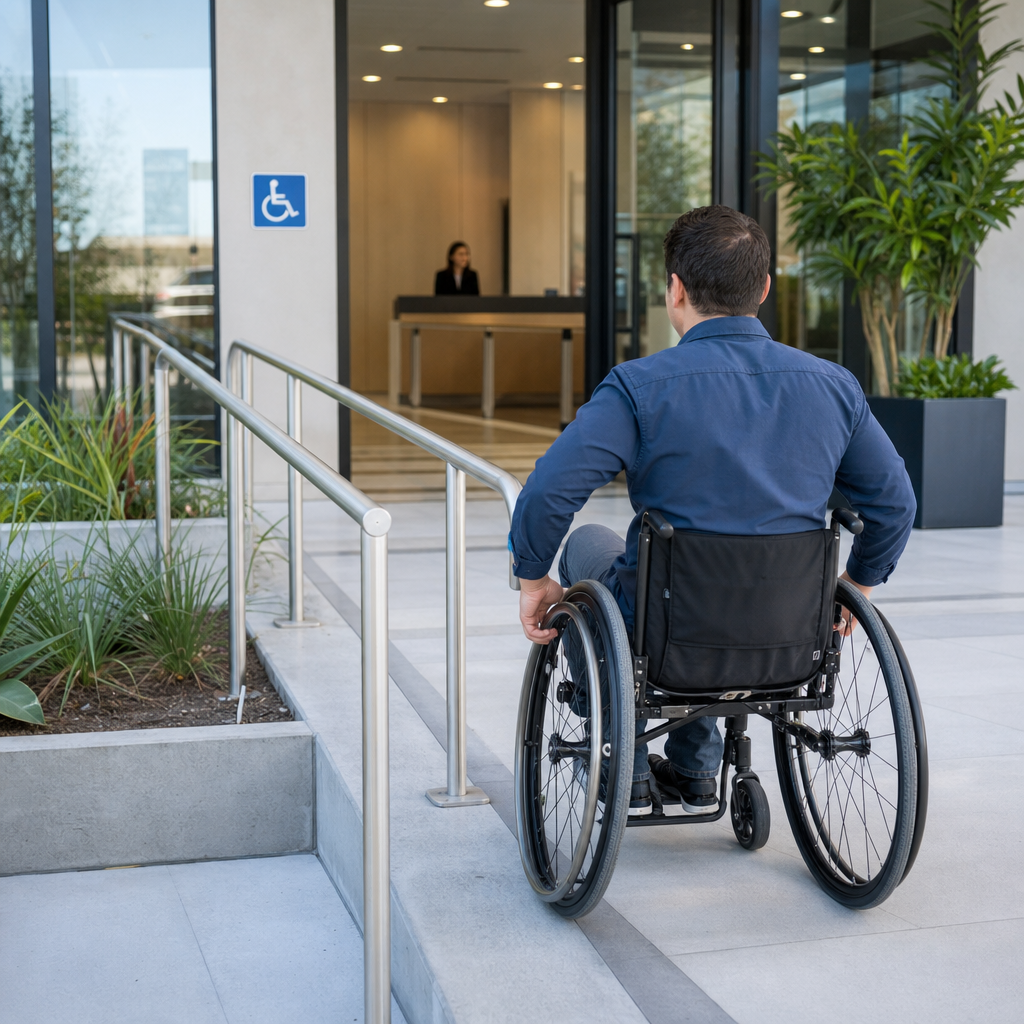
What businesses must do to be ADA compliant starts with understanding that the Americans with Disabilities Act is a civil rights law, not a box-checking exercise. Passed in 1990 and updated through regulations, enforcement guidance, and court interpretation, the ADA prohibits discrimination against people with disabilities in employment, state and local government services, public accommodations, transportation, and telecommunications. For businesses, the practical focus usually falls on three areas: Title I for employment, Title III for customer-facing locations and services, and increasingly, digital accessibility for websites, apps, online booking, and customer support. ADA compliance means removing barriers, modifying policies when reasonable, communicating effectively, and making goods and services available in ways people with disabilities can actually use.
I have worked with organizations that assumed compliance meant adding a wheelchair ramp and posting an equal opportunity statement. In practice, that narrow view creates risk. A business can have an accessible entrance yet still violate the law through inaccessible restrooms, a website that screen readers cannot navigate, a rigid no-service-animal policy, or an application process that blocks qualified job candidates. Compliance matters because more than one in four adults in the United States lives with a disability, according to the Centers for Disease Control and Prevention. It also matters because enforcement is real: the Department of Justice, the Equal Employment Opportunity Commission, state attorneys general, and private plaintiffs regularly bring claims that can lead to legal fees, remediation costs, settlement agreements, and reputational damage.
This hub explains ADA and legal protections in plain terms, with enough depth to guide business owners, operators, HR leaders, and compliance teams. It covers what the ADA requires, which businesses are covered, how to assess physical and digital accessibility, what reasonable accommodations look like, how policies and training affect compliance, and how to build a repeatable process instead of reacting to complaints. The goal is simple: help businesses reduce legal exposure while serving employees and customers fairly, consistently, and lawfully.
Which businesses are covered and what the ADA requires
Most businesses need to think about ADA compliance even when the rules differ by size and function. Under Title I, employers with 15 or more employees cannot discriminate against qualified individuals with disabilities and must provide reasonable accommodations unless doing so causes undue hardship. Under Title III, businesses that are places of public accommodation must provide equal access to customers with disabilities. The statute names categories such as hotels, restaurants, retail stores, theaters, schools, professional offices, healthcare providers, gyms, and service establishments. Coverage is broad. If a business invites the public in, sells online, or delivers services through a customer interface, it should assume accessibility obligations exist.
The core legal concepts are straightforward. A disability is a physical or mental impairment that substantially limits one or more major life activities, with broad interpretation under the ADA Amendments Act of 2008. Equal access means people with disabilities must be able to obtain the same goods, services, privileges, and advantages, not merely an inferior alternative. Reasonable modification means changing a policy or practice when needed to serve a person with a disability, unless the change would fundamentally alter the nature of the business. Effective communication means providing auxiliary aids and services when necessary, such as captioning, interpreters, accessible documents, or staff assistance. Readily achievable barrier removal applies to existing facilities under Title III and means removing architectural barriers when it is easily accomplishable without much difficulty or expense.
Businesses often ask whether grandfathering applies. It rarely works the way owners hope. Older buildings may not need the same level of alteration as new construction, but they are not exempt from accessibility duties. New construction and alterations generally must comply with the 2010 ADA Standards for Accessible Design. Existing facilities must still remove barriers when readily achievable and offer access through alternative methods when immediate removal is not possible. A small shop in a historic building may not be able to reconfigure every structural element at once, but it can still address door hardware, signage, furniture placement, service counters, portable ramps where lawful, and staff procedures that improve access immediately.
Physical accessibility: entrances, routes, restrooms, and service areas
Physical accessibility is where many compliance reviews begin because barriers are visible and measurable. In my audits, the most common problems are not dramatic construction defects but ordinary operational issues: an accessible parking space with faded markings, a ramp blocked by merchandise, a restroom grab bar installed at the wrong height, or a heavy door without accessible hardware. The ADA Standards cover parking, routes, ramps, door widths, turning space, sales counters, dressing rooms, restrooms, signage, and seating. Businesses do not need to memorize every technical specification, but they do need someone competent to compare the facility against the standards and create a corrective action plan.
The customer journey is the right way to evaluate a site. Start where a visitor arrives. Are accessible parking spaces present in the correct number and configuration, with access aisles and compliant signage? Is there a continuous accessible route from parking or public transit to the entrance? Can a person using a wheelchair enter without encountering a step, a narrow vestibule, or a door that requires tight grasping and twisting? Once inside, can that person reach the reception desk, service counter, restroom, seating area, and point of sale? For blind or low-vision customers, are permanent rooms identified with tactile signage where required, and is the path free of protruding hazards? For deaf or hard-of-hearing visitors, are announcements delivered in visual formats when needed?
Restaurants illustrate how details matter. A compliant restaurant is not just one with a ramp. It also needs accessible dining surfaces, routes wide enough for mobility devices, restrooms that can be used independently, and policies allowing service animals in customer areas. Retail stores need reachable merchandise assistance, fitting rooms that meet accessibility requirements when fitting rooms are provided, and point-of-sale devices that can be used by people with limited dexterity or vision. Healthcare offices face higher expectations around communication, transfer assistance, and accessible medical equipment, because equal access to care is impossible if a patient cannot use the exam process safely.
| Compliance area | What to check | Common failure | Practical fix |
|---|---|---|---|
| Parking and arrival | Accessible spaces, access aisles, route to entrance | Missing signage or blocked aisle | Re-stripe, add signs, enforce no-storage rules |
| Entrance and doors | Step-free entry, clear width, hardware, opening force | Round knobs or heavy doors | Install lever hardware or power assist |
| Service areas | Accessible route, counter access, seating, payment devices | Counter too high with no alternative | Add lowered section or portable transaction surface |
| Restrooms | Turning space, grab bars, accessories, clearances | Trash cans blocking transfer area | Reposition fixtures and enforce housekeeping checks |
Employment obligations: hiring, accommodations, and the interactive process
Employment compliance is often mishandled because managers confuse disability law with attendance enforcement or performance management. The ADA does not require hiring unqualified applicants, lowering production standards, or excusing misconduct unrelated to disability. It does require individualized assessment, non-discriminatory hiring, and reasonable accommodation for qualified employees and applicants. A qualified individual is someone who can perform the essential functions of the job, with or without reasonable accommodation. That makes job descriptions important. If they do not accurately identify essential functions, the business weakens its position in any dispute.
The hiring process must be accessible from the start. Online applications need keyboard navigation, form labels, sufficient color contrast, and compatibility with screen readers such as JAWS, NVDA, or VoiceOver. Interview locations must be accessible. Employers generally cannot ask disability-related questions before making a conditional job offer, though they may ask whether the applicant can perform job duties with or without accommodation. Once an accommodation request is raised, the employer should begin the interactive process promptly. That means discussing the limitation, the job task affected, possible accommodations, timelines, and any supporting documentation that is legally appropriate to request.
Reasonable accommodations vary widely. Common examples include modified schedules for medical treatment, ergonomic equipment, speech-to-text software, leave as an accommodation, reassignment to a vacant position, captioned training materials, interpreters, remote work in appropriate roles, and policy adjustments such as allowing food or water for diabetes management. Undue hardship is a real defense, but it is narrower than many employers assume. Cost alone is not enough without considering business size, resources, operational impact, and whether alternative accommodations exist. The Job Accommodation Network is a widely used resource because it provides practical accommodation ideas and cost data showing many adjustments are low-cost or no-cost.
Medical information must be kept confidential and stored separately from general personnel files. Retaliation is prohibited. So is coercion or interference with ADA rights. In real workplaces, liability often comes from poor process rather than bad intent: a supervisor ignores a request, HR delays for months, or a manager disciplines an employee for limitations already disclosed and under review. Written procedures, centralized accommodation tracking, and manager training are therefore legal controls, not administrative extras.
Digital accessibility: websites, apps, documents, and customer communication
Digital accessibility is now central to ADA compliance because many businesses deliver core services online. Customers book hotel rooms, apply for jobs, order food, read invoices, sign contracts, refill prescriptions, and contact support through digital systems. If those systems are inaccessible, the barrier is as real as a step at the front door. The Department of Justice has repeatedly taken the position that the ADA applies to websites and apps of covered entities, and courts have frequently agreed, especially when a website is tied to a physical place of public accommodation. The safest business approach is to treat digital accessibility as a standard operating requirement.
The most recognized technical benchmark is WCAG 2.1 Level AA, published by the World Wide Web Consortium. It is not the text of the ADA, but it is the benchmark most often cited in settlements, consent decrees, and remediation plans. In practical terms, businesses should ensure content is perceivable, operable, understandable, and robust. That means text alternatives for images, captions for video, sufficient contrast, logical headings, keyboard access, visible focus indicators, error identification in forms, predictable navigation, and compatibility with assistive technology. PDFs and other documents need tagged structure, readable order, proper headings, alt text, and accessible tables. Third-party tools such as booking engines, chat widgets, and payment processors must be evaluated too, because outsourcing a barrier does not eliminate liability.
I advise teams to combine automated scanning with manual testing. Automated tools such as axe, WAVE, Lighthouse, and Siteimprove can quickly flag missing labels, contrast issues, or structural errors, but they cannot judge whether link text is meaningful, whether a screen reader user can complete checkout efficiently, or whether a modal traps keyboard focus. Manual testing by accessibility specialists and users with disabilities is what turns compliance from theoretical to usable. Businesses should also publish an accessibility statement, provide multiple contact methods, and maintain a documented remediation roadmap. That record shows seriousness, supports prioritization, and improves outcomes when complaints arise.
Policies, training, and complaint handling that reduce legal risk
Many ADA failures come from policy, not architecture. A business can have an accessible facility and still violate the law if staff deny entry to a service animal, refuse to read a form aloud, insist that all communication happen by phone, or charge extra for assistance. Every customer-facing business should review policies on service animals, companions, effective communication, event access, return-to-work, leave, website content publishing, and procurement. Policies should define what front-line staff can do immediately, when to escalate, and who owns final decisions. Ambiguity creates inconsistent treatment, and inconsistent treatment creates claims.
Training must be role-specific. Reception staff need scripts for accommodation requests and communication access. Managers need to understand the interactive process, confidentiality, and the difference between essential functions and preferred practices. Facilities teams need periodic barrier checks tied to housekeeping and maintenance. Content teams need publishing standards for alt text, headings, captions, and accessible PDFs. Procurement teams should require accessibility conformance documentation from vendors, often in the form of a VPAT based on the Voluntary Product Accessibility Template. A VPAT is not proof of compliance, but it is a useful screening document when paired with testing.
Complaint handling should be prompt, documented, and non-defensive. When someone reports a barrier, the business should confirm receipt, identify an interim workaround where possible, investigate quickly, and communicate timelines. Do not argue about whether the person is really disabled. Focus on access. If the issue involves a website, preserve the report details, browser, device, and path to error. If it involves a facility, photograph the condition and compare it against the applicable standard. If it involves employment, document the request, meetings, options considered, and reasons for any denial. Good records do not replace compliance, but they are often decisive in showing that the business acted reasonably and in good faith.
How to build an ADA compliance program that lasts
Lasting ADA compliance requires a program, not a one-time renovation or lawsuit response. Start with an accessibility policy approved by leadership and tied to legal, HR, facilities, IT, and customer experience. Assign ownership. Conduct baseline audits for facilities, employment practices, and digital properties. Rank issues by legal severity and business impact, then budget remediation in phases. Quick wins usually include signage corrections, furniture layout, policy updates, staff training, website form fixes, captioning workflows, and document templates. Larger capital items may require longer planning, but they should still appear on a dated roadmap.
Measure progress with recurring reviews. For facilities, use inspection checklists and maintenance triggers so accessible features stay usable. For digital platforms, test before release and during redesigns, not after complaints. For HR, review accommodation logs, time-to-response, and patterns in denials or breakdowns. For vendor management, include accessibility in contracts, acceptance criteria, and renewal decisions. The strongest organizations also involve people with disabilities in testing and feedback because lived experience reveals barriers internal teams miss.
Businesses that take ADA compliance seriously do more than avoid lawsuits. They widen the talent pool, improve customer loyalty, reduce friction in service delivery, and align operations with a basic civil rights obligation. The central takeaway is clear: assess barriers, fix what you can, document what you are doing, and train people to respond lawfully. If your business has not completed a current ADA review of facilities, hiring practices, and digital services, start now and turn compliance into a standard part of how you operate every day.
Frequently Asked Questions
What does ADA compliance actually mean for a business?
ADA compliance means a business must operate in a way that does not discriminate against people with disabilities and must provide equal access to its goods, services, facilities, and opportunities. For most businesses, this is not limited to installing a ramp or posting a policy. It typically involves attention to three major areas: employment practices under Title I, customer-facing spaces and services under Title III, and in some cases digital accessibility for websites, online forms, and mobile experiences. The ADA is a civil rights law, so the goal is meaningful access, not superficial technical compliance.
In practice, that means reviewing how customers enter and use your location, how employees and applicants are treated, whether policies unnecessarily exclude people with disabilities, and whether communication is effective for people with vision, hearing, speech, or other impairments. A compliant business often combines physical accessibility, reasonable policy adjustments, staff training, and responsive procedures for handling accommodation requests. Because ADA obligations can vary depending on business size, building age, type of facility, and the nature of the service provided, compliance is best understood as an ongoing operational responsibility rather than a one-time project.
What are the main ADA requirements businesses should focus on first?
Businesses should usually begin with the areas that create the greatest legal and practical impact: accessible premises, non-discriminatory policies, effective communication, and accommodation procedures. For a physical location, that includes accessible parking, entrance routes, door hardware, restroom access, service counters, seating, and paths of travel. Even if a building is older, businesses may still need to remove barriers when doing so is readily achievable, meaning easily accomplishable without much difficulty or expense. This standard is fact-specific, so businesses should assess what improvements are reasonable in light of their resources and operations.
Next, businesses should review policies and procedures. A business can violate the ADA through a rule just as easily as through a staircase. For example, refusing entry to a person with a service animal, failing to assist a customer who cannot access a self-service system, or enforcing inflexible procedures that screen out people with disabilities can all create problems. Effective communication is another key area. Depending on the situation, this may require auxiliary aids or services such as qualified interpreters, captioning, accessible documents, or alternative formats. Finally, employers should establish a clear process for handling reasonable accommodation requests from applicants and employees, document those steps, and train managers to respond appropriately and consistently.
Do businesses have to make their websites ADA compliant too?
In many cases, yes, businesses should treat website accessibility as part of their ADA risk management and customer access strategy. While the ADA was enacted before modern e-commerce became central to daily life, regulators and courts have increasingly viewed websites and digital services as important gateways to public accommodations. If a website allows customers to book appointments, order products, complete forms, access account information, review menus, or obtain critical business information, an inaccessible design can create the same kind of exclusion as an inaccessible entrance.
That usually means businesses should work toward recognized accessibility standards such as the Web Content Accessibility Guidelines, commonly called WCAG. Practical improvements may include keyboard navigation, sufficient color contrast, descriptive alt text, proper form labeling, captions for video content, readable page structure, and compatibility with screen readers and other assistive technology. Accessibility should also be built into website updates, third-party integrations, PDFs, and online checkout flows. Even where legal standards are still developing by jurisdiction, an accessible website is a strong business practice because it expands usability, improves customer experience, and helps reduce the risk of complaints, demand letters, or litigation.
How should a business handle employee and customer accommodation requests under the ADA?
Businesses should respond promptly, respectfully, and consistently to any request for help related to a disability, even when the person does not use legal terminology like “reasonable accommodation.” In the employment context, employers covered by the ADA generally must engage in an interactive process with a qualified applicant or employee to determine whether a reasonable accommodation can be provided without causing undue hardship. That may include modified schedules, assistive technology, changes to workplace policies, ergonomic equipment, reassignment to a vacant position, or other adjustments that enable the person to perform essential job functions.
For customers, the focus is on equal access to the business’s goods and services. That may require reasonable modifications to policies, practices, or procedures, unless doing so would fundamentally alter the nature of the business or create a direct threat that cannot be mitigated. It can also require auxiliary aids and services to ensure effective communication. The best approach is to designate responsible staff, create a documented process, avoid assumptions about what someone needs, and evaluate requests individually. Frontline staff should know when they can resolve an issue immediately and when to escalate it. A thoughtful, interactive approach often prevents both service failures and legal exposure.
What steps should a business take to build and maintain ADA compliance over time?
The most effective approach is to treat ADA compliance as part of routine business operations. Start with an accessibility audit of physical spaces, digital assets, employment practices, and customer service procedures. Identify barriers, prioritize the most significant risks, and create a realistic remediation plan with timelines and accountability. Businesses should also review vendor relationships, lease responsibilities, renovation plans, and procurement standards to make sure accessibility is considered before problems arise. If your business operates in multiple locations or online, consistency matters, so written standards and checklists can be extremely helpful.
Ongoing maintenance is just as important as the initial assessment. Train managers and customer-facing employees on disability etiquette, service animal rules, communication obligations, and accommodation handling. Reassess accessibility whenever you remodel, launch a new website feature, change software platforms, or update policies. Keep records of inspections, repairs, requests, and remediation work. Because ADA requirements are shaped by statutes, regulations, agency guidance, and court decisions, businesses should also stay informed through qualified legal counsel or accessibility professionals. A business that regularly reviews and improves accessibility is in a far stronger position than one that waits until a complaint or lawsuit forces action.