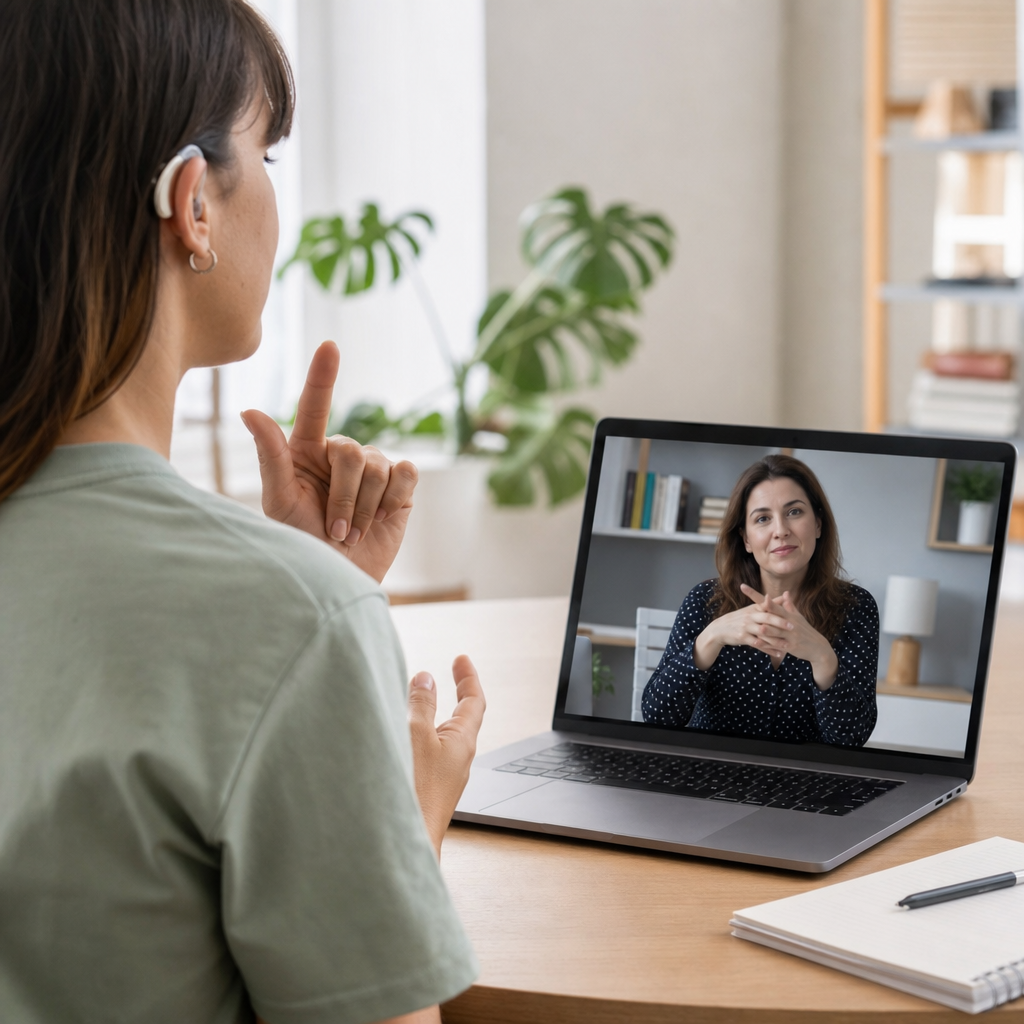

Finding deaf-friendly mental health services starts with understanding that effective care depends on communication access, cultural competence, and providers who treat Deaf people as full participants in their own care. In practice, that means more than offering an interpreter once in a while. It means choosing a therapist, counselor, psychiatrist, clinic, or crisis service that can communicate clearly, protect privacy, and understand how Deaf identity, language access, trauma, and social barriers shape mental health. For many families, the search feels hard because standard directories rarely show whether a provider signs, uses captioned telehealth well, or has experience with Deaf clients. Yet the need is significant. Deaf and hard of hearing people face elevated stress from communication exclusion, delayed diagnosis, educational barriers, discrimination, and reduced access to health information, all of which can affect anxiety, depression, trauma responses, and overall wellbeing.
When I have helped people evaluate mental health options, the biggest mistake I see is assuming that any licensed clinician can automatically provide equal care with an interpreter. Some can, but many have never adapted intake forms, pacing, eye contact, turn-taking, informed consent, or safety planning for Deaf communication. Deaf-friendly mental health services are providers and systems that remove those barriers before treatment begins. They may include clinicians fluent in American Sign Language, programs designed for Deaf patients, teletherapy with accurate live captions, note-based tools when appropriate, and strong interpreter protocols when direct signing is not available. This matters because therapy depends on nuance. Missing tone, timing, or culturally specific meaning can distort assessment and weaken trust. A hub page on mental health in the Deaf community should therefore answer two questions clearly: how to find the right service, and how to judge whether it is truly accessible rather than merely advertised that way.
Why mental health access is different in the Deaf community
Mental health in the Deaf community cannot be reduced to hearing loss alone. Deaf people are not a single group. Some identify culturally as Deaf and use ASL as a primary language. Others are late-deafened adults, oral deaf people, hard of hearing people, cochlear implant users, or people who switch among speech, sign, captions, and writing depending on context. These differences affect which services feel accessible and safe. A Deaf teenager raised in a signing household may need an ASL-fluent therapist who understands Deaf schools and identity development. A hard of hearing older adult may prioritize amplified audio, clear masks, CART captioning, and slower pacing. A one-size-fits-all clinic usually misses these distinctions.
Research and clinical experience show that mental health risk is shaped by communication deprivation as much as by hearing status. Many Deaf people grow up with limited access to family conversations, health education, and incidental learning. Others experience chronic fatigue from lipreading or navigating inaccessible appointments. Deaf patients are also more likely to encounter providers who misread language dysfluency, flat affect, intense eye gaze, or delayed processing as psychiatric symptoms when they may instead reflect language mismatch or interpreting conditions. That is why finding a deaf-friendly provider is not a luxury. It is a diagnostic and therapeutic necessity. Good care protects against misdiagnosis, improves adherence, and allows trauma, mood symptoms, relationships, sleep, and medication concerns to be discussed with full accuracy.
What deaf-friendly mental health services include
A deaf-friendly mental health service has several concrete features. First, communication access is built into operations, not improvised at the appointment desk. Staff know how to book qualified sign language interpreters, video remote interpreting when appropriate, real-time captions, and accessible telehealth platforms. Second, clinicians understand Deaf culture and communication norms. They know that eye contact, turn-taking, visual attention, and directness can differ from hearing settings. Third, paperwork and psychoeducation materials are understandable, plain-language, and available in accessible formats. Fourth, confidentiality is handled carefully, especially when interpreters are involved in small communities where people may know one another.
Direct communication is usually the gold standard. If a therapist is fluent in ASL and clinically trained to work with Deaf clients, therapeutic nuance is stronger, alliance develops faster, and the risk of information loss drops. That said, interpreter-mediated therapy can still be effective when the interpreter is qualified, the clinician is experienced, and the patient agrees to that arrangement. The key is fit. Some clients prefer ASL-fluent providers for trauma work but accept interpreted psychiatry visits for medication management. Others value Deaf peer support groups, case management, and family therapy that includes both signing and nonsigning relatives. A strong service maps those choices instead of forcing one model on everyone.
Where to search for providers and programs
Start locally, but search strategically. State deaf and hard of hearing commissions, vocational rehabilitation agencies, university counseling training clinics, Deaf community centers, and hospitals with disability access offices often know which clinicians have real experience. National organizations can also point you toward directories, advocacy resources, and regional programs. In the United States, the National Association of the Deaf, state protection and advocacy agencies, 211 systems, and large academic medical centers may help identify mental health services for Deaf adults, children, and families. For immediate emotional support, the 988 Suicide & Crisis Lifeline provides options that are more accessible than traditional voice-only hotlines, including text and videophone pathways in many contexts.
Online directories are useful, but they require verification. Psychology Today, therapy practice websites, and hospital finder tools may list ASL under specialties even when the provider knows only basic signs or relies entirely on outside interpreters. Ask direct questions before booking. Confirm whether the clinician signs fluently, how often they treat Deaf clients, whether they can work with trauma, bipolar disorder, psychosis, substance use, or family conflict, and what accommodations they can guarantee in writing. Also ask whether the practice has experience with insurance authorizations for interpreters. Under the Americans with Disabilities Act, many providers must arrange effective communication, but patients still benefit from confirming the process early so treatment is not delayed.
| What to ask | Strong answer | Warning sign |
|---|---|---|
| Do you provide ASL directly or through interpreters? | Clear explanation of clinician fluency level and backup access plan | Vague claim such as “we can figure it out when you arrive” |
| How often do you work with Deaf clients? | Regular caseload, examples of adapting therapy and assessments | No prior experience or defensiveness about the question |
| How do you handle telehealth access? | HIPAA-compliant platform, captions, visual lighting, interpreter integration | Audio-first platform or poor understanding of visual setup |
| Who pays for accommodations? | Office understands legal responsibility and billing process | Pressure on patient to bring or pay for their own interpreter |
| How is confidentiality protected? | Qualified interpreters, consent process, privacy discussion | No policy or casual assumptions about small-community privacy |
How to evaluate whether a provider is truly accessible
The first appointment reveals a lot. Notice whether staff make eye contact, address the Deaf patient directly instead of speaking only to companions, and understand visual communication pacing. Intake should not feel rushed. A competent provider pauses appropriately, checks understanding without sounding patronizing, and explains limits of confidentiality, emergency procedures, and treatment options in accessible language. If an interpreter is used, the clinician should still speak to you, not about you. They should also know that some standardized mental health assessments were normed on hearing populations and may need cautious interpretation when language history differs.
Accessibility also includes the physical and digital environment. In person, visual calling systems, front-desk communication tools, good lighting, transparent masking protocols when possible, and private rooms matter. In telehealth, camera framing, lag, caption quality, and interpreter pinning affect comprehension. I recommend treating the first session like an evaluation in both directions. Ask how the provider handles missed nuances, what they do if interpreting quality drops, and how they coordinate care during psychiatric emergencies. If the answers are specific, calm, and routine, that is a good sign. If the clinic seems surprised that these issues matter, keep looking.
Common mental health concerns and why specialized care helps
Deaf people seek therapy for the same broad reasons as hearing people: depression, anxiety, grief, relationship stress, trauma, parenting, school problems, and severe mental illness. The difference is that symptoms often interact with access barriers. Social isolation may be caused not only by mood disorder but also by exclusion from family conversations or workplaces. Trauma may include bullying, audism, medical mistreatment, or chronic language deprivation. Children may show behavior problems that are partly rooted in frustration from poor communication at home or school. Adults may avoid care because past providers minimized their access needs.
Specialized care helps because treatment plans can address both symptoms and barriers. For example, cognitive behavioral therapy can be effective for Deaf clients when the clinician uses visual teaching, concrete examples, and language-matched homework. Trauma treatment such as EMDR or prolonged exposure may work well when preparation, pacing, and communication are adapted carefully. Family therapy is often crucial, especially when parents do not sign fluently and misunderstand their child’s emotional world. Psychiatric care also benefits from Deaf competence because medication discussions depend on precision. A provider must be able to explain side effects, sleep changes, dosage schedules, and warning signs without leaving room for confusion.
Insurance, legal rights, and practical barriers
Cost and logistics often block access even when a good provider exists. Insurance networks may be narrow, ASL-fluent specialists may have long waits, and rural areas may have few options. Even so, patients should not assume they must accept inaccessible care. In many settings, disability law requires health providers to furnish effective communication, which can include qualified interpreters, video remote interpreting, or other aids unless doing so would fundamentally alter the service or create undue burden under specific legal standards. Large health systems generally have clearer accommodation processes than solo practices, but every clinic should be asked directly about scheduling, interpreter vendors, and complaint pathways.
If insurance is a challenge, ask about out-of-network reimbursement, community mental health centers, federally qualified health centers, university clinics, and state-funded Deaf services. Document all accommodation requests in writing. Save portal messages, emails, and names of staff. If access fails repeatedly, disability rights organizations and hospital patient advocates can help. Practical planning matters too. Build a shortlist of at least three providers, ask to join cancellation lists, and confirm whether teletherapy is allowed across state lines because clinician licensure rules vary. Small operational details often determine whether care starts in weeks or drifts for months.
Building a long-term support system beyond therapy
The best mental health outcome rarely comes from one appointment type alone. Deaf-friendly care often works as a network: individual therapy, medication management when needed, primary care, school supports, peer groups, family education, and crisis planning. Deaf peer connection is especially protective. Many people feel immediate relief when they no longer need to explain basic cultural and communication realities. Community groups, Deaf-led wellness programs, identity-affirming spaces, and online peer networks can reduce isolation and reinforce coping skills between sessions. For children and teens, school counselors, IEP or 504 teams, and language-rich environments are central parts of mental health support, not separate issues.
This hub on mental health in the Deaf community should guide your next steps clearly. Define your communication needs first. Then verify provider skill, accommodations, confidentiality, and experience with Deaf clients before you book. Prioritize direct communication when possible, but do not dismiss interpreted care if the team is competent and respectful. Remember that accessible care is not a favor; it is part of competent treatment. When services are truly deaf-friendly, therapy becomes more accurate, crisis support becomes safer, and people spend less energy managing barriers and more energy healing. Use this page as your starting point, create a shortlist, ask informed questions, and choose care that lets you be fully understood.
Frequently Asked Questions
What makes a mental health service truly deaf-friendly?
A truly deaf-friendly mental health service does much more than say it is “accessible.” It provides consistent, reliable communication access and treats Deaf people as full participants in their own care. That usually starts with asking about the person’s preferred language and communication style, whether that is ASL, another signed language, lipreading, spoken English with captioning, written communication, or a combination. A deaf-friendly provider does not assume that one accommodation works for everyone, and they do not place the burden on the patient to constantly explain basic access needs.
In practical terms, deaf-friendly care often includes qualified interpreters when requested, clear policies for booking them, captioned telehealth platforms, visual alert systems, accessible intake forms, and staff who know how to communicate respectfully with Deaf patients. Just as important, the provider understands that Deafness is not simply a medical issue. Deaf identity, language deprivation, isolation, family communication barriers, discrimination, and past experiences with inaccessible systems can all affect mental health. A provider who is truly deaf-friendly recognizes these realities and incorporates them into assessment and treatment rather than treating them as side issues.
Privacy and autonomy also matter. For example, a clinic should never pressure a patient to use a family member as an interpreter for therapy sessions. Mental health treatment depends on trust, nuance, and confidentiality, so communication access must be professional and dependable. In short, a deaf-friendly service combines access, cultural competence, and respect. If a provider can communicate clearly, understands Deaf experiences, and makes access a routine part of care rather than an exception, that is a strong sign you are looking in the right place.
How can I tell if a therapist or clinic understands Deaf culture and communication needs?
The best way to tell is to ask direct, specific questions before you schedule an appointment. Instead of asking only, “Do you work with Deaf clients?” ask how often they do, what communication methods they support, whether they arrange qualified interpreters, whether they offer direct sign language communication, and how they handle accessibility for telehealth or crisis appointments. A provider with real experience will usually answer clearly and confidently. They may describe past work with Deaf patients, explain how access is arranged, and show familiarity with issues like Deaf identity, communication trauma, educational barriers, and the emotional impact of chronic inaccessibility.
You can also pay attention to how the office responds during your first contact. If staff are confused, dismissive, or repeatedly ask you to solve access problems yourself, that can be a warning sign. On the other hand, if they ask about your preferences, explain the process for accommodations, and communicate in a respectful and organized way, that suggests they take accessibility seriously. Website details can help too. Look for mentions of interpreters, captioning, sign language access, disability accommodations, or experience serving Deaf and hard of hearing communities. While a website alone is not proof of competence, it can show whether the clinic has thought about these issues in advance.
During an initial consultation, notice whether the provider sees communication access as central to care or as an inconvenience. A culturally competent therapist will understand that Deaf experiences vary widely and will avoid stereotypes. They will not assume every Deaf person identifies the same way, has the same language background, or wants the same supports. They should be willing to learn about your individual experience while also demonstrating baseline knowledge. The goal is not perfection, but readiness, respect, and the ability to build treatment around your actual communication and cultural needs.
Should I look for a Deaf therapist, a signing therapist, or a hearing therapist with an interpreter?
The best choice depends on your language preferences, communication comfort, location, and clinical needs. Many Deaf patients prefer a Deaf therapist or a fluent signing therapist because direct communication can reduce misunderstandings, improve trust, and create a more natural therapy experience. Mental health conversations often involve subtle emotions, trauma history, family dynamics, and identity issues, so being able to communicate directly in your primary language can make a major difference. A provider who shares lived experience or has deep familiarity with Deaf culture may also better understand challenges related to isolation, marginalization, or navigating hearing-centered systems.
That said, a hearing therapist can still be a good option if they are clinically strong, culturally competent, and supported by a qualified mental health interpreter. In some areas, especially rural ones, a Deaf therapist or fluent signing therapist may not be available. In that case, what matters is whether the therapist can provide effective treatment in an accessible way. The interpreter should be trained for mental health settings, since therapy requires accuracy, emotional nuance, and strict confidentiality. Using an unqualified interpreter, or relying on a friend or family member, can compromise both care and privacy.
There is no single right answer for everyone. Some people prioritize direct sign communication above all else. Others may choose a hearing specialist with expertise in trauma, addiction, or another condition if communication access can be provided well. A practical approach is to compare options based on comfort, skill, access, and trust. If possible, schedule consultation calls or intake meetings and ask yourself whether you feel understood, respected, and able to express yourself fully. The strongest therapeutic relationship is usually the one where communication feels natural and you do not have to fight to be included in your own care.
What questions should I ask before choosing a deaf-friendly mental health provider?
Before starting care, it helps to ask questions that go beyond basic availability. Ask what communication options the provider offers and whether they can work directly in sign language or arrange a qualified interpreter for every session. Ask who is responsible for scheduling accommodations, whether there is any cost to you, and how far in advance appointments must be booked to guarantee access. If you are considering telehealth, ask whether the video platform supports captioning, allows interpreters to join easily, and provides a clear visual setup for signing. These details can determine whether therapy is genuinely usable, not just technically offered.
You should also ask about the provider’s experience with Deaf or hard of hearing clients. Useful questions include: Have you worked with Deaf patients before? How do you adapt therapy for different language backgrounds? Are you familiar with Deaf culture, language deprivation, or communication-related trauma? How do you protect confidentiality when interpreters are involved? If you need medication management or psychiatric care, ask how communication is handled during evaluations, follow-ups, and emergencies. Mental health treatment often changes over time, so it is important to know whether access will remain consistent and not disappear after the first appointment.
Finally, ask yourself a few questions based on their answers. Did the provider respond respectfully, or did they seem defensive and uninformed? Did they understand that access is a legal and clinical necessity, not a favor? Did they focus on your needs, or did they immediately talk about limitations and inconvenience? Choosing a deaf-friendly provider is not only about checking boxes. It is about finding a service that is prepared to communicate well from the beginning, so you can focus on healing instead of constantly advocating for basic access.
What should I do if I cannot find deaf-friendly mental health services nearby?
If local options are limited, do not assume you are out of choices. Start by expanding your search to telehealth, which can make it easier to connect with Deaf therapists, signing clinicians, or accessible mental health programs in other cities or regions. Many providers now offer remote counseling and psychiatric care, and for Deaf patients, telehealth can actually improve access when the platform is set up correctly for signing, captioning, or interpreter participation. You can also contact Deaf advocacy organizations, local Deaf community centers, disability resource groups, state agencies, or national mental health directories to ask for referrals. These organizations often know which providers have real experience and which ones only claim accessibility.
If you find a strong provider who is not fully prepared yet, it may still be worth asking whether they are willing to build the necessary access supports. Some clinicians can become workable options if they commit to qualified interpreters, accessible technology, and learning about Deaf cultural issues. However, willingness alone is not enough. You should not have to accept poor communication, repeated cancellations due to lack of accommodations, or therapy that feels incomplete because the provider cannot understand you well. Mental health care is too important to settle for services that are technically available but functionally inaccessible.
For urgent or crisis situations, identify accessible resources ahead of time if possible. Ask local crisis lines, hospitals, and emergency mental health services how they communicate with Deaf patients, whether they use video relay, captioning, or interpreters, and how they handle psychiatric emergencies. Planning in advance can reduce stress when help is needed quickly. If nearby care remains limited, a combination of telehealth, advocacy referrals, and careful screening often provides the best path forward. The key is to keep access, privacy, and cultural competence at the center of your search, even when options are few.