
Mental health resources for Deaf individuals must address language access, cultural identity, trauma exposure, and systemic barriers that hearing populations often never encounter. In practice, “Deaf” usually refers to people who identify with Deaf culture and use signed languages such as American Sign Language, while “deaf” can also describe the audiological condition of hearing loss; many people also identify as hard of hearing, late-deafened, or DeafBlind. Those distinctions matter because mental health needs are shaped not only by hearing status, but by communication preferences, family dynamics, education access, and whether a person moves through the world with full language access. After years of working around behavioral health referrals, accessibility planning, and interpreter-supported care, I have seen the same pattern repeatedly: when communication is clear and culturally informed, outcomes improve; when it is delayed, filtered, or inconsistent, care breaks down fast.
Mental Health in the Deaf Community is not a niche issue. Research and clinical reporting have long shown elevated risk factors linked to social isolation, language deprivation, bullying, unemployment, family communication gaps, and high rates of trauma. Deaf children are disproportionately born to hearing parents, and many grow up in homes where fluent signed communication is limited. That early mismatch can affect emotional regulation, attachment, school readiness, and later help-seeking behavior. Adults may then face additional barriers: therapists who do not sign, overreliance on family members to interpret, inaccessible crisis lines, and misdiagnosis caused by providers who misunderstand Deaf communication patterns. A strong resource hub should therefore answer practical questions directly: where can Deaf people find therapy, what rights protect communication access, how do crisis services work, and what makes mental health care actually effective?
This article serves as that hub. It explains the main mental health challenges affecting Deaf individuals, outlines the types of services that work best, and highlights the standards, tools, and referral pathways that families, clinicians, schools, and Deaf adults can use right now. It also clarifies an essential point: Deafness itself is not a mental illness. The risk comes from barriers, exclusion, and preventable communication harm. When care respects language, identity, and autonomy, Deaf people benefit from the same evidence-based approaches used across mental health treatment, including psychotherapy, psychiatric care, peer support, school-based counseling, and crisis intervention. The difference is that these services must be delivered accessibly and competently from the first contact, not patched together after a problem escalates.
Why mental health risks can be higher in the Deaf community
The biggest driver of distress is often not hearing loss alone but chronic inaccessibility. Many Deaf people spend childhood and adulthood navigating environments where information arrives late or incompletely. Missing incidental conversation at home, being excluded from classroom discussion, or struggling through medical appointments without qualified interpretation creates cumulative stress. I have watched clients describe this as “always catching up” or “always guessing,” and that uncertainty can fuel anxiety, hypervigilance, and exhaustion. For children, limited early language exposure can interfere with emotional labeling and conflict resolution. For adults, repeated misunderstanding can look like withdrawal, irritability, or depression.
Trauma exposure is another major concern. Deaf children and adults face elevated vulnerability to abuse, neglect, and interpersonal violence, partly because perpetrators exploit communication barriers and partly because reporting systems are not always accessible. When a child cannot easily explain what happened in a language shared by caregivers, trauma may go unidentified for years. Deaf survivors may also be dismissed by professionals who misread signing intensity, direct eye contact, or atypical speech patterns. That is why trauma-informed care is not optional in this population. Providers must know how to gather history without leading, pace sessions carefully, and distinguish trauma symptoms from communication differences.
Social isolation also has measurable mental health effects. A Deaf person may be surrounded by hearing relatives, coworkers, or classmates yet still feel profoundly alone if meaningful communication is absent. Loneliness in these circumstances is not simply about being by oneself; it is about lacking reciprocal access to conversation, humor, conflict repair, and spontaneous emotional support. Isolation can become more severe for older adults who lose hearing later in life, for rural residents with few Deaf services nearby, and for Deaf people of color who face layered discrimination across systems. Any serious discussion of mental health resources for Deaf individuals must start with these structural realities.
Common mental health conditions and how they may appear
Deaf individuals experience the same broad range of mental health conditions as hearing individuals, including depression, anxiety disorders, post-traumatic stress disorder, bipolar disorder, substance use disorders, obsessive-compulsive disorder, and schizophrenia spectrum disorders. The challenge is accurate assessment. Symptoms may be overlooked when providers focus only on communication mechanics, or overpathologized when culturally normal Deaf behaviors are misread. For example, animated facial expression is a grammatical feature in signed languages and should not be confused with emotional instability. Likewise, delayed spoken responses may reflect interpretation lag, not thought disorder.
Depression may present as sleep disruption, reduced interest in Deaf community events, hopelessness about access barriers, or decreased communication with friends and family. Anxiety often centers on everyday situations that hearing people take for granted, such as making phone calls, attending appointments without guaranteed interpretation, or entering emergency settings where no one signs. Trauma reactions can include avoidance of institutions, exaggerated startle responses to visual cues, nightmares, or intense mistrust after repeated communication failures. In children and teens, emotional distress may show up as behavior problems, school refusal, or apparent inattention when the underlying issue is language access or fatigue from constant effort.
Psychosis assessments require particular care. Hallucinations and delusions can be difficult to evaluate across languages, and inexperienced clinicians may mistake fluent signing to oneself, visual scanning, or atypical language development for psychotic symptoms. Best practice is to use a qualified mental health interpreter when the clinician is not directly fluent, obtain developmental and language history, and compare current functioning to the person’s baseline. Standardized screening tools can help, but they must be interpreted cautiously because many were normed on hearing populations. Good diagnosis in Deaf mental health is never just about symptoms; it depends on language, context, and culturally informed observation.
What effective mental health care looks like for Deaf individuals
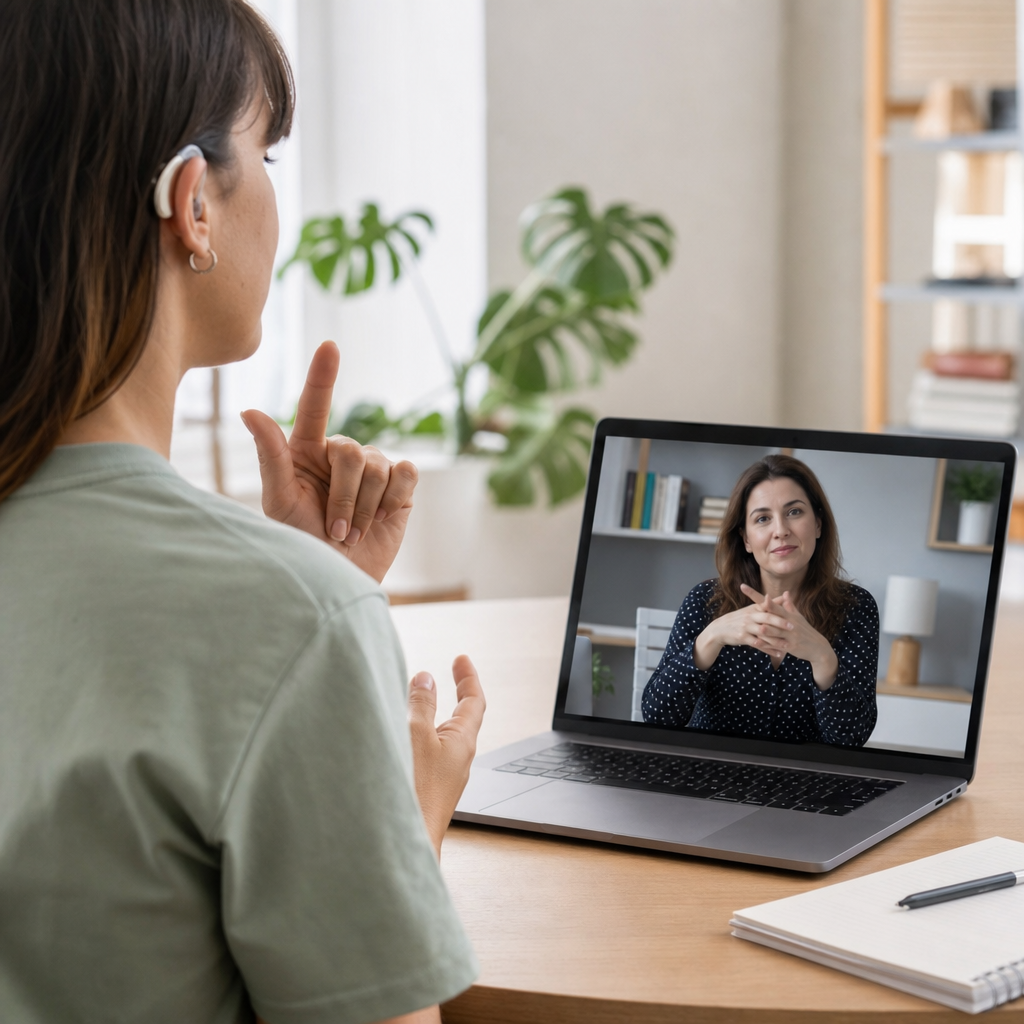
Effective care starts before the first therapy session. Intake forms, scheduling systems, informed consent, telehealth platforms, reminder methods, and crisis instructions all need to be accessible. The best programs ask upfront whether the person prefers ASL, another signed language, captioning, spoken English, text-based communication, or a combination. They do not assume that hearing aids or cochlear implants remove access needs. Once treatment begins, communication should be direct whenever possible. A therapist who is fluent in ASL and knowledgeable about Deaf culture can often build rapport faster, but a hearing clinician can still provide strong care if they work with qualified interpreters, respect turn-taking, and understand the limits of mediated communication.
Treatment itself should be evidence-based and adapted thoughtfully rather than diluted. Cognitive behavioral therapy, dialectical behavior therapy, trauma-focused therapy, motivational interviewing, family therapy, and psychiatric medication management can all work well with Deaf clients when language is accessible. In my experience, visual teaching tools, explicit discussion of emotional vocabulary, and concrete examples improve outcomes significantly. Group therapy can be powerful when everyone shares a common language, because it reduces isolation and models peer coping. Family work is often crucial, especially when parents and children do not communicate fluently. Teaching a family to sign more effectively can be as clinically important as teaching coping skills.
Care coordination matters too. Mental health rarely exists in isolation from school services, vocational rehabilitation, primary care, housing support, or legal advocacy. Deaf clients may need help securing interpreter accommodations, navigating disability paperwork, or finding community spaces where they can communicate freely. That practical support should not be treated as separate from therapy; it often determines whether treatment is sustainable. The strongest mental health programs for Deaf individuals integrate clinical care with case management, peer connection, and accessibility planning from the outset.
How to find accessible services, crisis support, and community resources
Finding the right provider requires asking specific questions. Does the therapist sign fluently, or will a qualified interpreter be arranged? Has the provider worked with Deaf clients before? Can the office support video relay or text-based communication? Are telehealth visits conducted on a platform that allows clear signing, stable lighting, and pinned interpreter view if needed? Generic claims of being “disability friendly” are not enough. Deaf patients should expect concrete answers about communication access, privacy, and experience with Deaf mental health. Hospitals, community mental health centers, university clinics, private practices, and integrated behavioral health programs may all be options, but quality varies widely.
Crisis planning deserves special attention. In the United States, 988 provides suicide and crisis support, and many Deaf users access help through videophone, relay services, or direct text options depending on local availability and updates in service delivery. Some areas also offer mobile crisis teams, psychiatric urgent care, warm lines, and Deaf-specific community organizations that can assist during escalating distress. A useful safety plan should include preferred communication methods, trusted contacts, local emergency resources, medications, triggers, and clear instructions about interpreter needs. For DeafBlind individuals, planning may also involve tactile communication supports, transportation arrangements, and a backup contact who understands access requirements.
| Resource type | What to look for | Why it matters |
|---|---|---|
| Therapist or counselor | ASL fluency or qualified mental health interpreter, experience with Deaf clients, trauma-informed approach | Improves diagnosis, rapport, and treatment accuracy |
| Psychiatric services | Accessible medication education, interpreter access, coordinated follow-up | Reduces errors and supports informed consent |
| Crisis support | Text, videophone, relay-compatible contact methods, mobile crisis availability | Allows faster help during urgent situations |
| School-based services | Counselors who understand Deaf education, IEP or 504 coordination, anti-bullying response | Addresses problems early and supports academic functioning |
| Peer and community groups | Deaf-led spaces, recovery groups, parent networks, advocacy organizations | Reduces isolation and strengthens long-term resilience |
Community resources often make the difference between short-term stabilization and long-term recovery. State deaf and hard of hearing commissions, vocational rehabilitation agencies, independent living centers, Deaf service nonprofits, school transition programs, and peer-led support groups can all support mental wellness. For families, early intervention programs, parent sign language classes, and Deaf mentor programs are especially valuable. For students, campus disability offices and counseling centers should be evaluated not just for captioning but for genuine communication access. Mental health resources for Deaf individuals work best when clinical treatment is connected to community belonging.
Rights, barriers, and practical steps for families and professionals
Communication access in health care is not a courtesy; it is a legal and ethical requirement. In the United States, the Americans with Disabilities Act and Section 504 of the Rehabilitation Act generally require covered providers and institutions to ensure effective communication. In practice, that can mean qualified sign language interpreters, real-time captioning, accessible intake materials, and modified communication procedures. Family members should not be used as default interpreters in mental health treatment except in rare emergencies, because accuracy, confidentiality, and role confusion become immediate concerns. Children should never be placed in that position. Providers who rely on lipreading alone are not delivering an equivalent service.
Families can support mental health by prioritizing direct communication early. If a child is Deaf, learning to sign as a family is one of the most protective steps available. It improves attachment, reduces frustration, and makes it more likely that a child will disclose distress or abuse. Schools should monitor social inclusion, language development, and bullying, not just academic scores. Primary care clinicians should screen for depression, anxiety, sleep problems, trauma history, and substance use, while also checking whether the patient fully understood the conversation. Mental health referrals should include details about communication preferences rather than simply listing “hearing impaired.” Precision prevents bad matches.
Professionals need humility as much as skill. Not every Deaf client wants the same approach, and identity, race, age, immigration history, and additional disabilities all shape care. Some prefer Deaf clinicians; others prioritize specialty expertise and are comfortable with interpreters. Some communicate orally, some sign, some switch across settings, and some have language deprivation that makes standard talk therapy harder. The goal is not a one-size-fits-all model but accessible, individualized care grounded in respect. If you are building a referral list, audit it now. Identify Deaf-competent therapists, interpreter agencies with mental health experience, crisis resources that accept text or video, and community organizations that can reinforce recovery. Better systems start with deliberate choices.
Mental health in the Deaf community becomes easier to understand when one principle stays at the center: distress often grows where communication access fails, and healing becomes more likely where language, culture, and support align. Deaf people are not inherently at greater risk because of deafness itself. They are more often harmed by language deprivation, isolation, trauma exposure, inaccessible systems, and professionals who misread what they see. The good news is that these barriers are identifiable and, in many cases, correctable. When a Deaf child has full language access, when an adult can reach a therapist directly, and when crisis systems are accessible from the start, outcomes improve in practical, measurable ways.
The most effective mental health resources for Deaf individuals combine several elements: accessible communication, culturally informed assessment, evidence-based treatment, family and community support, and clear legal accountability for accommodations. Strong care may include ASL-fluent therapy, qualified interpreters, psychiatric follow-up, school coordination, peer groups, and trauma-informed case management. No single service solves everything, but a connected system prevents people from falling through gaps. This hub is designed to support that broader understanding of Mental Health in the Deaf Community and to help readers recognize what competent care actually looks like.
If you are a Deaf individual, family member, clinician, educator, or advocate, take one concrete next step today: review your local options and verify access before a crisis happens. Build a short list of qualified providers, save crisis contacts that work by text or video, and ask direct questions about interpreters, telehealth, and Deaf experience. Early planning protects mental health, reduces delays, and makes effective care much easier to reach when it matters most.
Frequently Asked Questions
What kinds of mental health resources are most helpful for Deaf individuals?
The most helpful mental health resources for Deaf individuals are those designed with direct language access, cultural competence, and disability equity in mind. In many cases, that means working with therapists, counselors, psychiatrists, support groups, and crisis services that can communicate fluently in American Sign Language or another signed language rather than relying only on spoken English or written communication. Effective resources also recognize that Deaf, hard of hearing, late-deafened, and DeafBlind people do not all have the same needs. A culturally responsive provider understands that mental health concerns may be shaped not only by depression, anxiety, trauma, grief, or relationship stress, but also by chronic communication barriers, educational exclusion, discrimination, audism, family isolation, and reduced access to care.
Helpful resources can include Deaf-accessible outpatient therapy, telehealth platforms with sign-fluent clinicians, peer support networks within Deaf communities, school and workplace advocacy services, trauma-informed care, substance use treatment programs with interpreters or Deaf staff, and psychiatric care that provides full communication access during evaluations and medication follow-up. For some people, the best resource is a therapist who is Deaf themselves or deeply familiar with Deaf culture. For others, it may be a hearing provider with advanced ASL fluency and strong experience serving Deaf clients. The key is that the resource should not treat communication access as an afterthought. It should be built into the service from the beginning so the individual can fully express emotions, ask questions, and participate in treatment decisions.
Why is language access so important in mental health care for Deaf people?
Language access is central to quality mental health care because therapy depends on nuance, trust, and the ability to communicate complex emotions clearly. When a Deaf person is forced to navigate therapy through inadequate lip reading, poor captioning, rushed note writing, or an unqualified interpreter, important meaning can be lost. Mental health conversations often involve subtle topics such as trauma memories, suicidal thoughts, identity conflict, shame, family dynamics, and medication side effects. If communication is incomplete, the risk of misdiagnosis, ineffective treatment, or emotional harm increases significantly.
For many Deaf individuals, especially those who primarily use ASL, written English may be a second language rather than the most natural language for discussing emotional experiences. That does not reflect ability or intelligence; it reflects language history and access. A provider who understands this will avoid assuming that a client can fully communicate mental health symptoms through forms, portals, or written handouts alone. They will also understand that certified mental health interpreters may be necessary in some settings, but even then, direct communication with a sign-fluent clinician is often preferable because it reduces barriers and preserves therapeutic intimacy. In short, language access is not simply an accommodation. It is the foundation of accurate assessment, safety planning, informed consent, and real therapeutic progress.
How do Deaf culture and identity affect mental health treatment?
Deaf culture and identity can strongly influence how a person understands emotional distress, relationships, community support, and the healthcare system itself. Many Deaf people do not see themselves primarily through a medical lens of hearing loss. Instead, they identify with a linguistic and cultural community centered around signed language, shared experiences, and social norms that may differ from those of hearing society. A mental health provider who ignores that cultural framework may unintentionally pathologize normal Deaf experiences or overlook the impact of exclusion from hearing environments.
For example, a Deaf client may have experienced years of being left out of family conversations, receiving incomplete information in school, or constantly adapting to inaccessible systems. Those experiences can contribute to loneliness, anxiety, hypervigilance, low self-esteem, or trauma responses. At the same time, connection to Deaf community spaces can be highly protective and affirming. Good mental health treatment makes room for both realities. It explores how identity, pride, communication history, family hearing status, educational background, and community belonging shape emotional wellbeing. It also recognizes that some people identify as Deaf, some as deaf, some as hard of hearing, some as late-deafened, and some as DeafBlind, and those differences may influence treatment goals, coping strategies, and access needs. Respecting identity is not a side issue in therapy; it is often essential to building trust and delivering effective care.
What systemic barriers make it harder for Deaf individuals to get mental health support?
Deaf individuals often face multiple systemic barriers long before therapy even begins. One of the biggest is the shortage of mental health professionals who are fluent in signed languages or trained in Deaf cultural competence. Even when a person is willing to seek help, there may be few accessible providers nearby, long waitlists, limited insurance coverage, or clinics that do not understand their legal obligation to provide effective communication. Some offices rely on family members to interpret, which is inappropriate and can compromise privacy, safety, and accuracy. Others offer video platforms or phone systems that are poorly designed for Deaf users.
There are also broader structural issues that affect mental health outcomes, including inaccessible education, employment discrimination, medical trauma, reduced access to crisis response, and frequent exclusion from public information. Many Deaf people have had repeated experiences of not being understood by teachers, doctors, employers, or even relatives, which can create mistrust toward institutions. In emergency or inpatient settings, barriers may become even more severe if interpreters are delayed, staff are not trained to communicate visually, or informed consent is not meaningfully accessible. These are not minor inconveniences. They can directly affect diagnosis, treatment compliance, safety, and emotional wellbeing. Addressing mental health for Deaf individuals therefore requires more than encouraging self-care. It requires improving interpreter access, provider training, policy enforcement, telehealth accessibility, and community-based support systems that meet Deaf people where they are.
How can Deaf individuals and their families find the right mental health provider or program?
Finding the right provider starts with asking detailed questions about communication, qualifications, and experience rather than assuming a clinic is accessible because it says it serves everyone. Deaf individuals and families should ask whether the therapist communicates directly in ASL or another signed language, whether certified interpreters are available when needed, whether staff understand Deaf culture, and whether the provider has experience treating concerns such as trauma, anxiety, depression, family conflict, identity stress, or substance use in Deaf populations. It is also important to ask how telehealth sessions are conducted, whether crisis plans are accessible, and how medication discussions or written materials are adapted for language access.
Families can help by supporting the Deaf person’s preferred communication method and respecting their identity instead of making assumptions based only on hearing level. In some cases, family therapy may be especially valuable if communication breakdowns at home are contributing to stress, isolation, or conflict. The best provider is one who creates an environment where the Deaf client does not have to spend the session teaching basic access needs before doing the real emotional work. A strong fit usually feels collaborative, respectful, and clear. The provider listens carefully, adapts the therapeutic process appropriately, and understands that mental health care for Deaf individuals must account for language access, cultural identity, trauma exposure, and systemic barriers. When those elements are in place, treatment is more likely to feel safe, accurate, and genuinely helpful.