Fitness and exercise tips for deaf individuals must go beyond generic workout advice because communication access, environmental awareness, and coaching methods directly affect safety, confidence, and consistency. In practical terms, deaf and hard of hearing people often navigate gyms, classes, sports teams, and wellness programs that were designed around spoken cues. That creates barriers, but it does not reduce athletic potential, health goals, or the value of movement for daily life. A strong fitness plan for deaf individuals includes the same foundations everyone needs—cardiovascular training, strength work, mobility, recovery, nutrition, and routine—while also accounting for visual instruction, tactile feedback, assistive technology, and inclusive environments.
When I have helped shape accessible wellness routines, the biggest difference has rarely been motivation. It has been setup. Once visual cues are clear, instructors know how to communicate, and safety systems are adapted, participation improves quickly. This matters because regular exercise lowers the risk of heart disease, type 2 diabetes, obesity, depression, and poor sleep quality. The U.S. Centers for Disease Control and Prevention recommends at least 150 minutes of moderate aerobic activity each week plus muscle-strengthening activity on two or more days. Those targets apply to deaf adults too, but the path to meeting them should be designed around access rather than assumption.
This wellness and lifestyle hub covers the essential areas deaf individuals and their families often ask about: how to start exercising safely, which workouts fit different goals, how to communicate in gyms and classes, what tools improve independence, and how to build long-term habits that support both physical and mental health. It also addresses the wider picture of wellness, including stress management, sleep, confidence, and community. Fitness is not only about performance or appearance. It is a practical way to improve energy, mobility, mood, and quality of life, and the most effective programs are the ones people can actually follow week after week.
Build an accessible fitness foundation first
The best beginner strategy is to remove barriers before increasing intensity. Start by choosing exercise settings where instructions can be understood clearly. For some people that means working with a trainer who knows sign language. For others, it means using captioned on-demand classes, following written workout plans, or training in a quieter corner of a gym where visual demonstrations are easier to see. Before joining any facility, ask direct questions: Are emergency alerts visual as well as audible? Can trainers provide written exercise cues? Are group classes taught in a way that allows line of sight? These details affect both safety and comfort.
Clarity matters because many standard fitness spaces rely on shouted countdowns, verbal corrections, and music-driven timing. Deaf exercisers do better when movement is structured around visible reps, timers, lights, mirrors, or vibration alerts from a smartwatch or phone. A simple interval workout becomes easier when a vibrating timer signals work and rest periods. Strength sessions improve when each exercise includes a clear written name, target reps, and a demonstration. Small changes like these reduce cognitive load and help people focus on movement quality instead of constantly decoding what happens next.
Accessible planning also supports independence. A notebook, app, or shared note with sets, repetitions, rest times, and progression targets can replace spoken reminders. Many people use Apple Watch, Garmin, or Fitbit vibration features for intervals and heart rate zone alerts. Others prefer visual timer apps such as Seconds or SmartWOD Timer on a phone mounted in view. If hearing devices are removed during sweaty workouts, swimming, or contact sports, backup cues become even more important. The goal is simple: every workout should be understandable without relying on hearing.
Choose exercises that match goals, ability, and lifestyle
There is no single best workout for deaf individuals; the best program is the one that matches goals and can be sustained. For overall health, combine cardio, strength training, and mobility work. Cardio improves heart and lung function, supports endurance, and can include brisk walking, cycling, rowing, swimming, dancing, or circuit training. Strength training protects muscle mass, improves insulin sensitivity, supports bone density, and makes daily tasks easier. Mobility and balance work reduce stiffness and lower injury risk, especially for older adults or people returning after inactivity.
For beginners, I usually recommend three full-body strength sessions per week paired with two or three cardio sessions. A full-body session can include a squat pattern, a hinge such as a deadlift variation, a push exercise, a pull exercise, a core movement, and loaded carries. Cardio can be as simple as a 30-minute brisk walk or stationary bike ride. This format works because it is efficient and easier to remember. It also creates visible progress quickly, which helps adherence. More advanced exercisers can move to upper-lower splits, sport-specific conditioning, or periodized training blocks.
Different life stages need different emphasis. Children benefit from play, coordination drills, and inclusive team sports. Adults with desk jobs often need posture work, posterior-chain strength, and regular movement breaks. Older adults may prioritize balance, fall prevention, resistance training, and joint-friendly cardio such as elliptical sessions or water exercise. Pregnant exercisers should follow medical guidance and maintain hydration, intensity control, and stable balance positions. The principle is consistent across all groups: pick movements that fit the person, not a trend.
| Goal | Best Training Focus | Practical Example |
|---|---|---|
| General health | 150 minutes of moderate cardio plus 2 strength sessions | Walking five days weekly and full-body lifting on Tuesday and Friday |
| Weight management | Strength training, step count, and calorie awareness | Three gym sessions, 8,000 to 10,000 daily steps, meal planning |
| Muscle gain | Progressive overload and higher protein intake | Four lifting days with tracked sets, reps, and weekly load increases |
| Stress relief | Moderate cardio, yoga, and routine consistency | Morning cycling, evening stretching, one weekend hike |
| Balance and mobility | Single-leg work, core stability, and flexibility | Step-ups, carries, bird dogs, and short daily mobility sessions |
Use visual communication and inclusive coaching methods
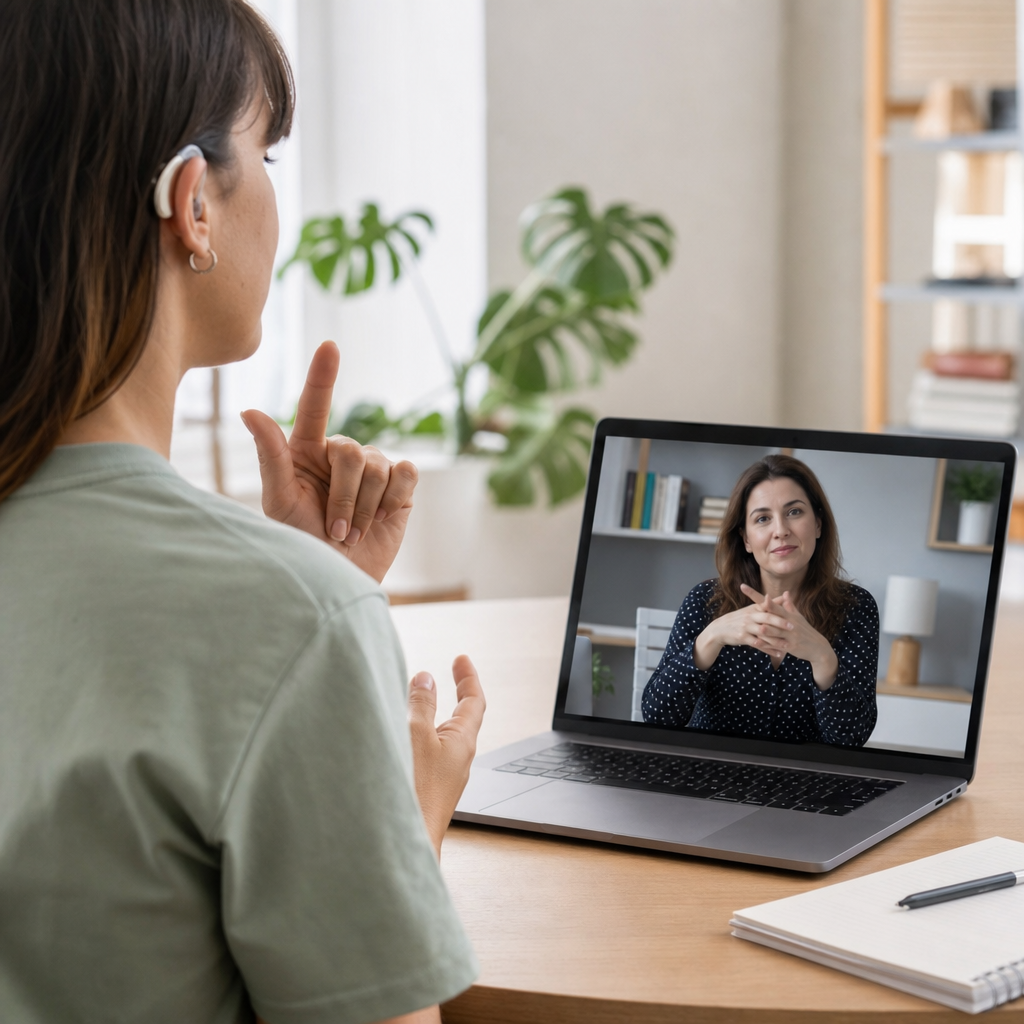
Effective fitness instruction for deaf people is visual, direct, and predictable. Coaches should face the athlete, maintain line of sight, demonstrate first, and confirm understanding before a set begins. If an interpreter is present, the trainer still needs to speak to the athlete, not to the interpreter. In group settings, the instructor should provide a short visual overview of the class sequence at the start, including exercise order, timing, and transitions. This prevents missed information when participants are moving or looking away.
Plain communication works better than overexplaining. Instead of yelling, “Three more, keep your chest up, switch in ten seconds,” a coach can use a written whiteboard cue, a countdown with fingers, or a quick demonstration of the next station. Mirrors help with form checks, but they do not replace good teaching. Tactile cueing can be useful when welcomed and explained in advance, especially for posture or joint alignment, but consent always comes first. Many deaf athletes strongly prefer pre-session planning over constant mid-workout correction because it reduces interruptions and keeps attention on execution.
For classes such as yoga, Pilates, CrossFit, spin, dance fitness, or boot camps, visibility should be treated as part of instruction quality. Lighting matters. So does room layout. If the teacher moves while giving directions, participants can lose the message instantly. A better setup places the instructor where everyone can see them, with visual timers, slide screens, or boards listing each round. Studios that caption recorded classes or provide app-based lesson summaries make home training easier too. Good coaching is not merely inclusive; it is more precise for everyone.
Prioritize safety in gyms, sports, and outdoor exercise
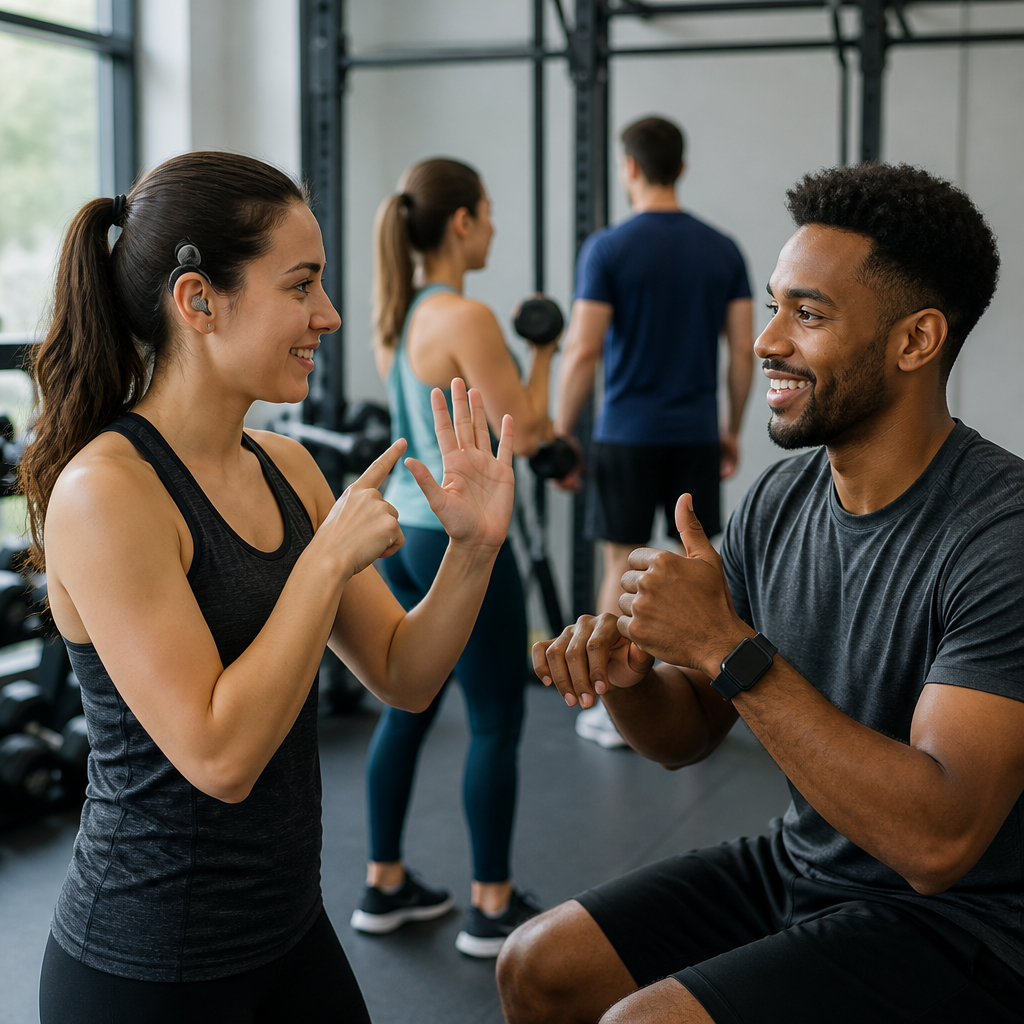
Safety for deaf exercisers depends on anticipation, not fear. In gyms, know where emergency exits, staff stations, and visual alarm systems are located. If a facility uses only audible announcements, raise the issue with management immediately; emergency communication should never depend on hearing alone. During free-weight sessions, position yourself where you can see foot traffic and avoid blind crossings near racks. In team sports or busy recreation centers, establish hand signals for stop, switch, help, foul, and hazard before activity begins. Simple systems prevent confusion under pressure.
Outdoor workouts require extra planning because traffic, cyclists, dogs, and changing weather may not be heard. Runners and walkers should choose well-lit routes with clear sight lines, avoid excessive phone distraction, and consider rear-view mirrors designed for cyclists or runners in specific settings. Reflective gear and visible clothing increase safety at dawn or dusk. If exercising alone, share the route and estimated return time with someone you trust. For hiking, use offline maps and weather checks. For swimming, tell staff and lane partners how you prefer to receive attention, such as a visual signal or poolside tap.
Sport-specific environments bring additional considerations. In martial arts or contact sports, hearing devices may need secure retention options or safe removal. In cycling classes, visual cadence targets on a screen are better than verbal prompts alone. In strength training, spotters should agree on nonverbal signals before heavy lifts. None of these adaptations are complicated, but they must be intentional. Safety improves most when communication expectations are established before the workout starts, not during a problem.
Support recovery, nutrition, sleep, and mental wellness
Wellness and lifestyle extend far beyond the workout itself. Recovery determines whether training leads to progress or burnout. Most adults need seven to nine hours of sleep, and inadequate sleep reduces reaction time, mood stability, training output, and appetite regulation. Deaf individuals who use hearing devices or rely heavily on visual attention often describe sensory fatigue after a full day of communication and work. That makes deliberate recovery especially useful: sleep routines, low-light evenings, hydration, planned rest days, and short mobility sessions can improve energy more than adding another hard workout.
Nutrition does not need to be extreme. A practical approach centers on consistent meals with protein, fruits, vegetables, whole grains, and fluids. Protein supports muscle repair; carbohydrate intake supports performance and recovery; healthy fats support hormones and satiety. People trying to gain strength usually benefit from roughly 1.6 to 2.2 grams of protein per kilogram of body weight daily, a range supported by sports nutrition research. For weight loss, a moderate calorie deficit paired with resistance training helps preserve lean mass. For endurance training, underfueling is a common mistake that reduces performance and raises injury risk.
Mental health is part of fitness, not a side topic. Exercise can reduce anxiety and depressive symptoms, improve self-efficacy, and create routine, but inaccessible environments can also increase stress. That is why community matters. Deaf-friendly classes, supportive coaches, and workout partners who understand communication preferences can make the difference between quitting and staying active. If body image concerns, social isolation, or low mood interfere with exercise, counseling and peer support are appropriate wellness tools, not signs of weakness.
Create habits that last and connect fitness to daily life
Long-term success comes from systems, not bursts of motivation. Schedule workouts at predictable times, prepare gear in advance, and track a few useful metrics such as completed sessions, step count, sleep, or weights used. Start small enough to win consistently. Two well-planned sessions every week beat an ambitious plan that collapses after ten days. If the goal is a healthier lifestyle, connect exercise to everyday function: climbing stairs without fatigue, carrying groceries easily, improving posture at work, sleeping better, and handling stress without feeling drained.
This page serves as the central guide for wellness and lifestyle within the broader health, wellness, and mental health topic because fitness touches nearly every part of daily living. Deaf individuals benefit most from exercise plans built around visual access, clear instruction, safe environments, and sustainable routines. Cardio strengthens the heart, resistance training protects muscle and bone, mobility supports comfort, and recovery habits keep progress moving. Inclusive coaching and practical tools turn exercise from an occasional effort into a realistic part of life.
The key takeaway is straightforward: fitness is fully achievable for deaf individuals when access is built into the program from the start. Choose environments that respect communication needs, use visual and vibration-based tools, train for your real goals, and protect recovery as seriously as workouts. If you are building your next routine, begin with one accessible strength session and one cardio session this week, then expand from there with confidence.
Frequently Asked Questions
What are the most important fitness and exercise safety tips for deaf individuals?
Safety starts with access, visibility, and preparation. For deaf and hard of hearing individuals, the biggest exercise risks are often not the movements themselves, but missed verbal cues, poor visual communication, and environments that rely too heavily on sound. A good first step is choosing workout spaces where lighting is strong, sightlines are clear, and instructors or training partners can easily get your attention visually. Positioning matters too. In a group class, standing where you can clearly see the instructor, demonstration area, mirrors, and any visual display screens can make it much easier to follow transitions and form corrections without relying on spoken instructions alone.
It also helps to communicate your needs before a session begins. Let a coach, personal trainer, or class instructor know the best way to get your attention, whether that means a hand signal, light tap on the shoulder, wave, or direct eye contact. This is especially important in settings like strength training, cycling classes, boot camps, swimming sessions, or team sports, where instructions may change quickly. If you use hearing aids or cochlear implants, consider whether they will stay secure during movement and sweat. Some people prefer to wear retention clips, sweat covers, or sport bands, while others may remove devices during certain activities and rely more heavily on visual cues instead.
Environmental awareness is another major factor. In a gym, be cautious around moving equipment, barbells, sleds, and crowded pathways where verbal warnings may not be enough. If you are outdoors, stay alert to traffic, cyclists, weather changes, and route conditions. Many deaf exercisers prefer running or cycling routes with lower traffic, wider visibility, and predictable patterns. At home or in a studio, visual timers, smartwatch alerts, vibrating alarms, and fitness apps with captioned instructions can add another layer of support. Overall, the best safety strategy combines clear communication, visual access, technology when useful, and a workout setup that allows you to stay informed and confident from start to finish.
How can deaf individuals communicate effectively with personal trainers, gym staff, or group fitness instructors?
Effective communication begins with being direct, practical, and specific. Many trainers and instructors want to help, but they may not know what works best unless you tell them. Before a workout, explain whether you are deaf or hard of hearing, how you prefer to communicate, and what support makes instruction easier for you. That might include facing you when speaking, using simple gestures, demonstrating movements clearly, typing notes on a phone, writing down workout plans, or using captioned video content. If you know sign language and the trainer does not, communication can still work well when both sides focus on visual teaching, body language, and step-by-step demonstration.
During one-on-one training, ask for coaching methods that are easy to follow in real time. Many deaf athletes do best when trainers use visual demonstrations before the set begins, then give feedback between sets rather than shouting corrections from across the room. Hand signals for “stop,” “one more rep,” “slow down,” “good form,” or “change exercise” can be established quickly and make training sessions smoother. Written workout summaries are also helpful because they reduce confusion, support independence, and allow you to review the plan later. If your trainer uses an app, check whether it includes video demonstrations, on-screen instructions, and progress tracking you can access visually.
In group classes, it is useful to arrive a few minutes early and introduce yourself to the instructor. Ask where to stand for the clearest view and let them know the best way to cue you if the class changes pace or direction. Instructors who use consistent demonstrations, visual countdowns, whiteboards, projected routines, or mirrored movement patterns are often easier to follow. If a class format is heavily audio-based and offers little visual structure, it may simply not be the best fit, and that is an access issue, not a reflection of your ability. Clear communication should support your performance, not be treated as an inconvenience.
What types of workouts are especially effective and accessible for deaf and hard of hearing individuals?
There is no single best workout for deaf individuals, because fitness goals, ability levels, preferences, and communication styles vary widely. That said, many people find that exercise formats with strong visual structure are especially effective. Strength training is a great example because it is highly demonstration-based, easy to adapt, and can be done independently once the technique is understood. Written programs, rep counts, timers, mirrors, and visual form cues make resistance training very accessible. It can also improve confidence in gyms because progress is measurable and routines can become familiar over time.
Other strong options include yoga, Pilates, circuit training, swimming, walking, running, cycling, dance, martial arts, and home-based video workouts, especially when instruction is visual or captioned. Some deaf exercisers enjoy workouts that allow them to set their own pace rather than constantly reacting to spoken cues. For example, interval training with a vibrating timer or smartwatch can be easier to follow than a fast-moving class that depends on verbal commands. Likewise, following a structured strength circuit posted on a whiteboard or app can create more independence than trying to catch every spoken transition in a crowded room.
The best workout is often the one that feels sustainable, understandable, and motivating. Accessibility is not only about communication support; it also affects consistency. If you can easily follow the format, know what comes next, and feel included rather than stressed, you are much more likely to keep going. It can be helpful to test different environments and formats until you find the right combination of challenge and comfort. Whether your goal is weight management, athletic performance, mobility, stress relief, or general health, the ideal program is one that respects your communication needs while still pushing you toward meaningful progress.
How can deaf individuals stay aware of their surroundings while exercising in gyms, outdoors, or at home?
Staying aware of your surroundings is a key part of exercising safely and confidently, especially in spaces where important information is often communicated by sound. In a gym, situational awareness begins with layout and positioning. Choose workout areas where you can clearly see entrances, instructors, training partners, and nearby equipment users. Avoid setting up in blind corners or directly behind heavy traffic zones if possible. Mirrors can be especially helpful because they expand your field of view and let you monitor movement around you without constantly turning your head. If you are lifting with a partner, agree on simple visual signals ahead of time so you can communicate about spotting, rest, and form adjustments efficiently.
For outdoor exercise, route selection matters a lot. Well-lit paths, lower-traffic areas, predictable intersections, and open sightlines all support better visual awareness. Some deaf runners, walkers, and cyclists prefer to avoid routes where fast-moving vehicles, narrow shoulders, or frequent blind turns increase risk. Bright clothing, reflective gear, and daylight exercise can improve visibility to others. Many people also use smartwatches or fitness devices with vibration-based alerts for pace, intervals, navigation, or emergency notifications. If you are exercising alone, letting someone know your route and expected return time is a smart habit regardless of hearing level.
At home, awareness may be easier to manage because you control the environment. You can use captioned workout videos, visual timers, vibration alarms, and uncluttered spaces that reduce distraction and injury risk. If you live with others, let them know when you are exercising so they can approach you in a way that does not startle you, especially if you are using equipment or lifting weights. Overall, awareness is less about constantly compensating and more about designing an exercise environment that gives you the visual information you need. Small changes in setup can greatly improve both safety and peace of mind.
What should gyms, coaches, and fitness programs do to make exercise more inclusive for deaf individuals?
Inclusive fitness starts with recognizing that communication access is part of quality coaching, not an optional extra. Gyms, trainers, and program leaders should create environments where deaf and hard of hearing individuals can understand instructions, participate fully, and exercise safely without having to overcome preventable barriers. That begins with basic staff awareness. Employees should know how to get someone’s attention respectfully, maintain eye contact, avoid speaking while looking away, and use visual communication methods when needed. Even simple habits such as facing members directly, demonstrating exercises clearly, and sharing written instructions can make a major difference.
Programs should also build in visual supports from the start. This may include captioned video content, posted class plans, whiteboards with exercise sequences, visual timers, demonstration-first teaching, and app-based workout summaries. Instructors can improve accessibility by using consistent hand signals, standing where participants can see them easily, and avoiding overreliance on shouted cues during transitions. For one-on-one coaching, trainers should ask each client what communication methods work best rather than making assumptions. Some people may prefer lip reading, some may use sign language, and others may want text-based notes or a combination of strategies.
Most importantly, inclusion should be proactive rather than reactive. Deaf individuals should not have to repeatedly explain why an audio-only class format, uncaptioned instructional content, or constantly turned-away coaching style creates barriers. Accessible fitness is better fitness because it improves clarity, engagement, and safety for everyone. When gyms and coaches prioritize visual teaching, predictable communication, and respectful flexibility, they create spaces where deaf athletes and exercisers can focus