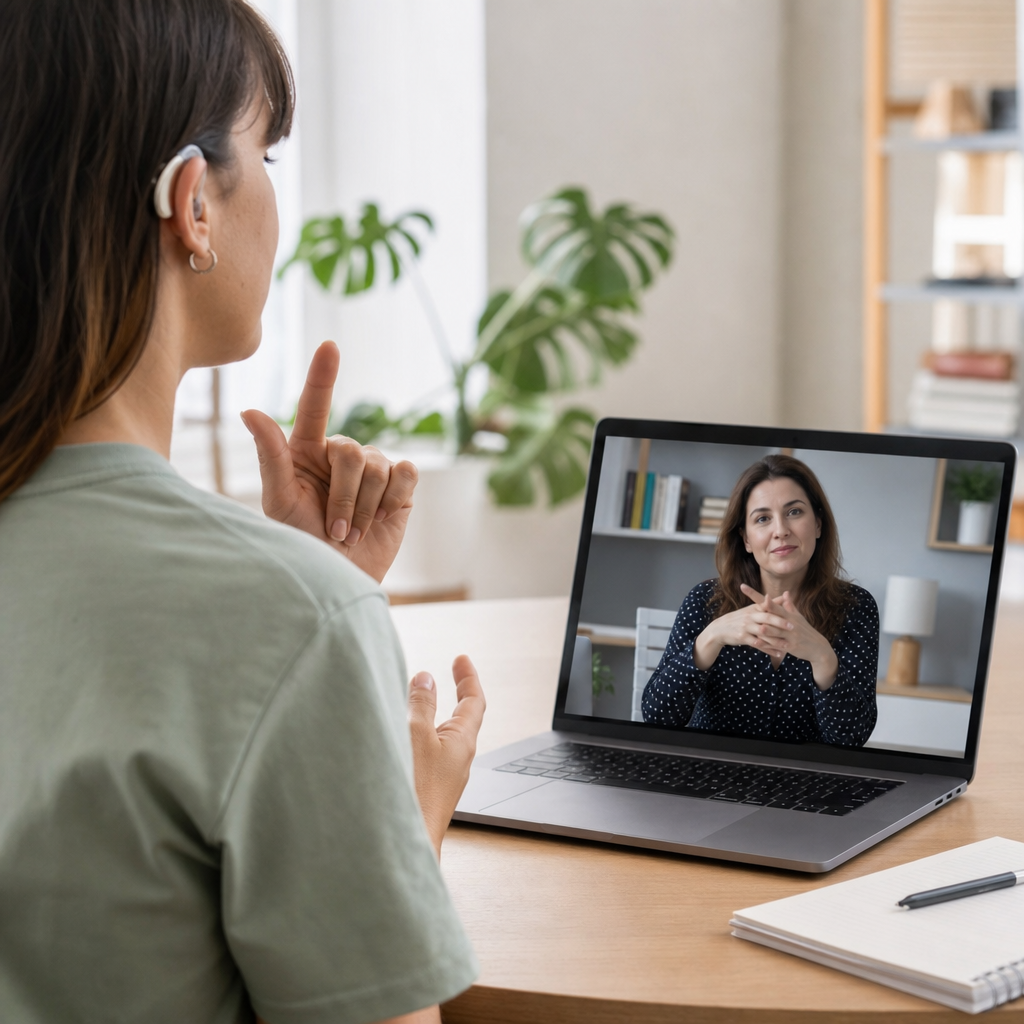

Accessing mental health support services can be difficult for anyone, but for Deaf and hard of hearing people, the process often includes extra barriers that hearing clients never face. Deaf-friendly therapy and support means mental health care that is linguistically accessible, culturally informed, and practically usable for people who communicate through sign language, lip reading, captions, text, relay services, or a mix of methods. This includes one-to-one therapy, crisis support, psychiatric care, peer groups, family counseling, school services, and community-based programs designed to respect Deaf identity rather than treat deafness as a problem to be fixed.
I have worked with accessibility planning around healthcare services, and the same pattern appears repeatedly: people are told support exists, yet they are left to navigate booking systems that do not accept relay calls, therapists who have never worked with Deaf clients, and clinics that assume an interpreter alone solves every issue. It does not. Effective care depends on communication access, confidentiality, clinician competence, and continuity of support. When any one of those pieces fails, treatment quality drops quickly.
This matters because Deaf people experience many of the same mental health concerns as hearing people, including anxiety, depression, trauma, burnout, grief, and relationship stress, while also facing higher rates of social isolation, language deprivation in some early childhood settings, discrimination, and service exclusion. Research from the World Health Organization and national public health agencies consistently shows that barriers to care worsen outcomes by delaying assessment and treatment. A Deaf-friendly mental health support service removes avoidable obstacles before a client reaches crisis point.
This hub explains how to access Deaf-friendly therapy and support, what to ask providers, which accommodations actually help, and how families, schools, employers, and healthcare systems can support better care pathways.
What Deaf-Friendly Mental Health Support Services Include
Deaf-friendly mental health support services are not limited to providing an interpreter at the last minute. They include clinicians who understand Deaf culture, intake systems that allow text-based contact, informed consent materials in plain language, video platforms that work well for signed communication, and office environments where visual communication is easy. In practice, that can mean a therapist who signs fluently, a counselor working with a qualified mental health interpreter, a psychiatric clinic offering captioned telehealth, or a support group led by Deaf facilitators.
The best services start by asking how the client communicates and what access method is preferred. Some people use American Sign Language or British Sign Language. Others use Signed Exact English, cued speech, spoken language with hearing aids or cochlear implants, or a combination that changes by setting. A provider should never assume one communication approach fits all Deaf clients. The correct question is simple: what communication support helps you participate fully and privately in care?
Deaf-friendly care also recognizes that culture affects therapy. Many Deaf adults have spent years translating for themselves, correcting misunderstandings, or being excluded from fast-paced spoken conversations. That history shapes trust. A clinician who understands Deaf experience is more likely to identify whether a client is presenting with clinical depression, communication fatigue, trauma linked to exclusion, or stress caused by inaccessible systems. Good therapy separates mental health symptoms from the burden of constant accommodation.
Common services in this area include individual counseling, child and adolescent therapy, couples counseling, family therapy, trauma treatment, psychiatric medication management, substance use support, inpatient assessment with access planning, peer-led groups, and crisis intervention. This hub topic connects naturally with related content on accessible telehealth, finding inclusive therapists, workplace accommodations, school mental health support, and crisis planning for Deaf and hard of hearing communities.
How to Find the Right Therapist, Program, or Support Pathway
The fastest way to access appropriate support is to narrow the search before making contact. Start with four filters: communication method, clinical need, service format, and payment route. Communication method means whether you need a signing therapist, an interpreter, live captions, secure messaging, or a provider comfortable with deafblind communication support. Clinical need means anxiety, trauma, family conflict, eating disorders, psychosis, neurodivergence, or another concern requiring specific expertise. Service format means in-person, video, group, community clinic, hospital outpatient, or private practice. Payment route means public insurance, private insurance, employer assistance programs, school-based care, nonprofit services, or self-pay.
Use therapist directories, Deaf service organizations, hospital accessibility offices, national registries of licensed counselors, and disability resource centers. When I review provider listings, I ignore vague claims such as accessible for all and look for evidence: does the profile mention sign language fluency, experience with Deaf clients, interpreter coordination, captioned telehealth, or collaboration with Deaf advocacy groups? Specificity is a strong signal that the provider has done this work before.
If you contact a clinic, ask direct questions. Do you work with Deaf or hard of hearing clients regularly? Can I book by text or email? Do you provide and pay for qualified interpreters where required by law? Is your telehealth platform suitable for visual communication? Have your clinicians received training in Deaf culture? Can intake forms be provided in plain language or video format? Clear answers save time and reduce the risk of starting with the wrong service.
For some people, the right pathway is not private therapy first. It may be a primary care referral, a school counselor, a university disability office, a community mental health team, or a Deaf-led nonprofit. If distress is urgent, contact a crisis service that offers text, chat, video relay, or local emergency options with communication access noted in advance.
Communication Access, Interpreters, and Technology That Actually Work
Communication access is the foundation of effective Deaf-friendly therapy. Without it, rapport suffers, clinical nuance is lost, and informed consent becomes shaky. Qualified mental health interpreters are different from general interpreters. They need training in counseling settings, confidentiality, turn-taking, emotional content, and the risk of unintentionally shaping meaning. In family therapy or trauma work, those differences matter. Using a friend or relative as an interpreter is rarely appropriate because it undermines privacy and can distort sensitive discussion.
Captioning can be useful, especially for hard of hearing clients who prefer spoken communication, but it is not automatically equal access. Auto-captions on common video platforms still make mistakes with clinical language, names, medication terms, and emotional speech. CART, also called Communication Access Realtime Translation, is more accurate because it uses a trained professional. For some clients, the best setup combines live captions with strong lighting, stable internet, and a camera frame wide enough for signing.
Technology choices directly affect therapeutic quality. A provider using telehealth should know how to pin an interpreter feed, avoid backlighting, maintain eye contact through the camera, and pause when lag disrupts sign flow. Small details matter. I have seen sessions fail because a clinic used a low-bandwidth platform that blurred handshape and facial grammar, making meaningful conversation almost impossible. By contrast, a well-run video session with proper visual framing can work extremely well for ongoing therapy.
| Access need | Best-fit support option | Key advantage | Common limitation |
|---|---|---|---|
| Fluent sign language user | Signing therapist or qualified mental health interpreter | Full visual-linguistic access | Limited local availability |
| Hard of hearing spoken-language user | Captioned telehealth or CART | Supports detailed conversation | Auto-captions may be inaccurate |
| Mixed communication methods | Customized combination of speech, sign, captions, and chat | Flexible and client-centered | Requires planning before sessions |
| Crisis contact outside office hours | Text, chat, relay, or video-accessible hotline | Faster access in urgent situations | Availability varies by region |
Assistive technology may also include hearing loops, amplified devices, speech-to-text apps, note sharing, visual alerts, and secure messaging portals. None of these should be selected by assumption. The right tool is the one that lets the client understand, respond, and participate without exhaustion.
What to Ask Before Your First Appointment
A first appointment is easier when expectations are clear. Ask who arranges accommodations, whether there is any cost to you, how confidentiality works with interpreters or captioners, and whether the clinician has relevant experience. If medication might be discussed, ask how information will be explained and whether written follow-up will be provided. If you are considering trauma therapy, ask what methods the therapist uses, such as cognitive behavioral therapy, EMDR, dialectical behavior therapy, or family systems work, and how those methods are adapted for Deaf clients.
It is also reasonable to ask practical questions that hearing clients often never need to think about. Can reception communicate by text? Will staff call your name in the waiting room, or is there a visual alert? Are group sessions facilitated so one speaker talks at a time? If an interpreter is used, will the same interpreter attend regularly to support continuity? Can telehealth backup plans be used if video quality drops? These details affect whether treatment is sustainable.
Parents seeking child therapy should ask whether the clinician understands language development, school access, and the difference between behavioral distress and frustration caused by communication gaps. Adult clients may want to know whether the therapist can address identity, work stress, relationship strain, or experiences of audism alongside standard clinical treatment. The strongest providers welcome these questions because they know access planning is part of care, not an administrative extra.
Paying for Care, Understanding Rights, and Using Community Support
Cost is a major barrier, so it helps to map funding options early. Depending on location, Deaf-friendly mental health support may be covered through national health systems, Medicaid or Medicare pathways, private insurance, veterans services, school programs, employer assistance plans, workers compensation, or nonprofit grants. Some clinics include interpreter costs within service delivery because accessibility is a legal obligation, not an optional add-on. In many jurisdictions, disability discrimination law requires effective communication in healthcare settings, although the exact rules vary.
When coverage is unclear, ask for the policy in writing. Confirm whether therapy sessions, psychiatric appointments, group programs, and interpreter services are billed separately. If a provider says you must bring and pay for your own interpreter, that can be a warning sign to check legal guidance or speak with a patient advocate. Hospitals, university clinics, and public behavioral health systems often have accessibility coordinators who can clarify obligations and help escalate problems.
Community support matters as much as formal treatment. Deaf clubs, peer networks, online support spaces, and advocacy organizations often know which local therapists are effective and which clinics create repeated access problems. Peer recommendations are especially valuable because they reflect real service use, not marketing language. Families can also benefit from Deaf-aware counseling and parent education, particularly when communication at home has been strained for years.
For ongoing wellbeing, many people do best with layered support: therapy for clinical treatment, peer connection for belonging, workplace or school accommodations for daily functioning, and a crisis plan for rough periods. That combination is usually more durable than relying on a single appointment every two weeks.
Building a Sustainable Long-Term Support Plan
Good access is not only about getting one appointment; it is about building a support plan that continues to work as needs change. Review whether the provider remains the right fit after the first three to five sessions. You should be able to understand the therapist clearly, feel respected, and see a treatment direction forming. If sessions leave you more confused because of communication barriers than because of difficult emotions, the access method needs to change.
Create a simple plan with three layers: routine support, intensified support, and crisis support. Routine support might include regular therapy, medication review, exercise, sleep structure, and one trusted friend or peer contact. Intensified support might include increased session frequency, family involvement, temporary workplace adjustments, or a support group. Crisis support should list accessible hotlines, emergency contacts, preferred hospital, interpreter needs, medications, and any communication instructions for emergency staff. Written plans reduce panic when concentration is low.
Progress should also be measured in accessible ways. Standard questionnaires can help, but they are not enough on their own, especially if wording is complex or translation quality is poor. A better approach combines symptom tracking with practical indicators: Is communication at home improving? Are panic episodes less frequent? Is work attendance stabilizing? Can the client use coping skills independently? Functional change is often the clearest sign that treatment is working.
Deaf-friendly therapy and support are achievable when access is planned deliberately. Start with your communication needs, verify provider competence, confirm funding and accommodations, and use community knowledge to avoid dead ends. The main benefit is simple: better communication leads to better mental health care. If you are searching now, make a short list of providers, send direct access questions today, and build care around what lets you participate fully.
Frequently Asked Questions
What does Deaf-friendly mental health support actually mean?
Deaf-friendly mental health support goes beyond simply offering an interpreter or writing notes back and forth. It means the service is designed to be fully accessible for Deaf and hard of hearing people from the first point of contact through ongoing care. That includes communication access, such as qualified sign language interpreters, real-time captioning, text-based options, video relay access, and appointment systems that do not depend only on phone calls. It also means the provider understands Deaf culture, communication preferences, and the emotional impact that communication barriers can have on trust, diagnosis, treatment, and long-term outcomes.
In practice, Deaf-friendly care should feel usable, respectful, and clear. A therapist or mental health team should ask how you prefer to communicate, confirm what accommodations you need, and make sure those arrangements are in place before the session starts. They should not expect you to bring your own interpreter, rely on family members to translate sensitive information, or settle for a method of communication that feels incomplete. Deaf-friendly support can include one-to-one therapy, psychiatric appointments, support groups, crisis intervention, and community services, but the key standard is the same: you should be able to participate fully and safely without having to fight for basic access.
How can I find a mental health provider who is accessible for Deaf or hard of hearing clients?
Start by looking for providers or organizations that explicitly mention accessibility for Deaf and hard of hearing clients in their service descriptions. This may include therapists who sign directly, clinics that routinely provide interpreters or captioning, community mental health centers with disability access policies, or telehealth platforms that support live captions and video-based communication. You can also ask Deaf advocacy groups, local disability organizations, schools for the Deaf, hearing loss associations, or primary care providers for referrals. These networks often know which professionals are genuinely accessible and which ones only claim to be.
When contacting a provider, ask direct questions before booking. Find out whether they offer sign language interpretation, captioning, text-based scheduling, secure messaging, visual alert systems, and telehealth options that match your communication style. Ask whether they have worked with Deaf or hard of hearing clients before and how they handle crisis communication, intake paperwork, and medication discussions. A good provider will answer clearly, explain their process, and treat accessibility as a standard part of care rather than a special inconvenience. If the office is vague, dismissive, or expects you to manage access arrangements yourself, that is a sign to keep looking.
What should I ask before scheduling my first appointment?
Before your first appointment, it is important to confirm both clinical fit and communication access. Ask what communication methods are available, whether the clinician signs directly, whether the practice provides a qualified interpreter, and whether live captioning is available for in-person or virtual sessions. You should also ask how intake forms can be completed, whether reminders can be sent by text or email, and how urgent concerns are handled if calling by voice is not practical. These questions help prevent avoidable stress and make sure the provider can meet your needs from the beginning.
It is also helpful to ask about experience, privacy, and logistics. You may want to know whether the clinician has worked with Deaf, late-deafened, or hard of hearing clients; how they approach cultural and communication differences; and whether they understand issues such as isolation, listening fatigue, language deprivation, or trauma related to inaccessible systems. If an interpreter will be involved, ask who arranges it, whether the interpreter is qualified for mental health settings, and how confidentiality is protected. The goal is not to make the process complicated, but to make it safer and more effective. A provider who welcomes these questions is often better prepared to offer meaningful support.
What can I do if a mental health service is not accessible?
If a mental health service is not accessible, you have the right to request reasonable accommodations that allow you to use the service effectively. This may include asking for a qualified sign language interpreter, real-time captioning, video-based appointments, written follow-up instructions, text or email communication, or alternative ways to contact the office and receive crisis information. Make the request as early as possible and be specific about what works best for you. Clear communication often helps staff understand that accessibility is not optional for effective care.
If the provider refuses, delays, or repeatedly fails to arrange access, document what happened. Keep copies of emails, appointment messages, and any responses about accommodations. You can ask to speak with a practice manager, patient advocate, disability coordinator, or clinic director. In some cases, it may be appropriate to file a formal complaint with the healthcare organization, insurer, licensing body, or relevant civil rights office, depending on your location. You may also choose to move to a different provider if the situation makes care unsafe or ineffective. Mental health treatment depends on trust and understanding, and you should not have to accept substandard care because a service is unwilling to communicate accessibly.
Are online and crisis mental health services good options for Deaf and hard of hearing people?
They can be, but only when accessibility is built into the service. Online therapy can be especially helpful for Deaf and hard of hearing people because it may offer video communication, chat-based sessions, captioning, and access to specialists outside your immediate area. For some people, virtual care reduces travel barriers and makes it easier to connect with a therapist who signs directly or has relevant experience. However, not every telehealth platform is equally accessible. Before relying on online care, check whether the system supports captions, visual clarity, interpreter integration, secure messaging, and stable video quality that works well for sign language or lip reading.
Crisis services are equally important, but they often create the most serious barriers when they depend mainly on phone communication. Look for crisis lines that offer text, chat, relay-compatible services, or videophone access where available. If you are helping someone prepare a mental health safety plan, include accessible crisis contacts, preferred communication methods, medication information, trusted support people, and instructions about needed accommodations. The best crisis service is one you can actually use when stress is high. Whether support is online or urgent, accessibility should be confirmed in advance whenever possible so that communication does not break down at the moment help is needed most.