
Mindfulness and mental wellness for Deaf individuals requires more than adapting generic self-care advice; it demands practices, language access, and community-centered approaches that fit Deaf lived experience. In this context, Deaf refers broadly to people who are culturally Deaf, hard of hearing, late-deafened, or deafblind, while recognizing that identity, communication preferences, and access needs vary widely. Mindfulness is the skill of paying attention to the present moment with curiosity rather than judgment, and mental wellness is the broader state of emotional balance, resilience, connection, purpose, and functioning in daily life. I have seen in wellness planning and accessible program design that Deaf participants often benefit most when mindfulness is taught visually, paced deliberately, and grounded in communication equity. That matters because mental health outcomes are shaped not only by individual coping skills, but also by language deprivation, isolation, interpreter availability, family communication patterns, school environments, employment barriers, and the fatigue of navigating inaccessible systems. A useful hub article must therefore connect personal wellness habits with structural realities. When mindfulness is designed for Deaf people instead of merely translated after the fact, it can improve stress regulation, sleep, relationships, self-advocacy, and the confidence to seek support before a crisis develops.
Why Deaf mental wellness needs a distinct approach
Deaf people experience the same range of mental health concerns as hearing people, yet the risk landscape is different because communication access affects nearly every protective factor. Research and clinical practice have long shown that limited access to early language, inconsistent family communication, and exclusion from informal social information can increase stress across the lifespan. A Deaf child in a hearing family may miss dinner-table conversation, emotional coaching, and incidental learning about relationships or conflict. That gap can later appear as anxiety, mistrust, poor emotional labeling, or difficulty finding appropriate care. In adulthood, everyday barriers continue: inaccessible telehealth platforms, therapists who do not sign, workplaces without communication accommodations, and wellness classes built around spoken cues. These are not minor inconveniences. They directly shape stress response, self-esteem, and treatment engagement.
Mental wellness for Deaf individuals is therefore not just about symptom reduction. It includes language-rich connection, identity affirmation, sensory comfort, informed consent, accessible information, and the ability to participate fully in community life. In practice, I have found that wellness plans work best when they ask concrete questions: How does this person communicate under stress? What happens when visual attention is divided? Is there signing access in emergencies? Does the individual feel culturally safe with providers? Answering those questions early prevents well-intended interventions from failing. For example, a standard guided meditation that depends on closed eyes and spoken instruction may increase anxiety for someone who relies on visual monitoring for safety. A visually led grounding exercise, by contrast, can create calm without removing access to the environment.
How mindfulness works for Deaf individuals
Mindfulness is often misunderstood as silence, stillness, or clearing the mind. In clinical and wellness settings, it is more accurate to define mindfulness as present-moment awareness combined with acceptance and deliberate attention regulation. For Deaf individuals, the mechanics may look different, but the underlying function is the same: notice bodily sensations, thoughts, emotions, and surroundings without reacting automatically. The difference lies in delivery. Visual, tactile, and movement-based methods usually work better than audio-centered formats. Signed instruction can be highly effective because it naturally emphasizes facial expression, pacing, embodied meaning, and intentional pauses. Deafblind individuals may prefer tactile signing, hand-under-hand support, vibration cues, or object-based routines.
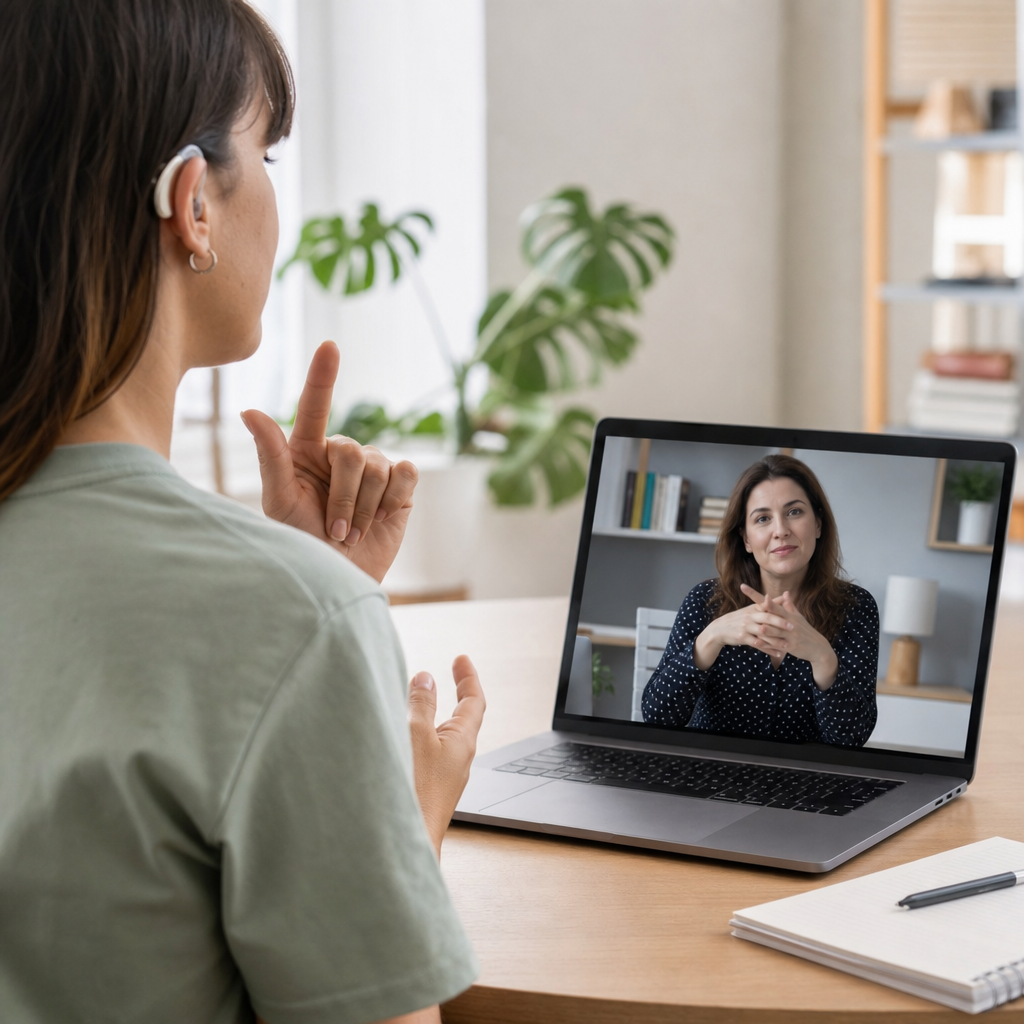
A practical Deaf-centered mindfulness session might begin with orienting to the room: noticing light, movement, distance, exits, and where communication partners are positioned. Next comes breath awareness or body scanning, but with flexible choices. Some people track their breathing through chest movement, hand placement, or visual counting. Others regulate through repetitive movement, stretching, swimming, drumming with vibration, or watching a candle flame. None of these are lesser versions of mindfulness. They are functionally equivalent pathways to attentional stability. The best practice is to match the exercise to the person’s sensory profile, trauma history, communication mode, and environment. When taught this way, mindfulness becomes practical, not abstract.
Many Deaf adults also respond well to what I call “visual reset rituals.” These are short routines inserted into daily transitions: pausing before entering a meeting, stepping into better lighting before a hard conversation, checking shoulder tension after interpreter-mediated appointments, or taking sixty seconds to soften the face and hands after intense signing. Such rituals reduce cumulative stress. They also fit real life better than long meditation sessions, which many people abandon because they feel unrealistic or culturally mismatched.
Daily wellness habits that build resilience
Wellness and lifestyle habits are the foundation of mental health, and they matter even more when access barriers create chronic stress. The strongest routines are simple, repeatable, and measurable. Sleep is often the first priority. Deaf individuals may sleep lightly if they rely on visual alert systems, vibration alarms, service animals, or concern about missing important information at night. Good sleep hygiene includes consistent sleep and wake times, reduced evening screen glare, vibration or light-based alarm systems tested in advance, and bedrooms organized for a sense of visual safety. Nutrition also matters, but not as moral perfection. Regular meals help stabilize energy and mood, especially for people juggling demanding communication environments.
Movement is one of the most reliable tools for mental wellness because it lowers physiological stress and improves mood regulation. The best form of exercise is the one that remains accessible and enjoyable. That might be walking with a Deaf friend, yoga taught in sign language, resistance training with visual cues, dance with strong vibration, or team sports in Deaf community settings. Social connection is equally protective. Loneliness can intensify anxiety and depression, while meaningful contact reduces them. For Deaf people, quality of connection matters more than quantity. A short conversation in a fully accessible space may be more restorative than a long event where communication is fragmented.
| Wellness area | Common barrier | Accessible strategy | Expected benefit |
|---|---|---|---|
| Sleep | Fear of missing alerts overnight | Use tested vibration, light-based, or smart alert systems | Better sleep continuity and less nighttime anxiety |
| Mindfulness | Audio-based meditation excludes visual communicators | Choose signed, captioned, tactile, or movement-based practices | Improved focus and emotional regulation |
| Exercise | Instructors rely on verbal cues | Select classes with visual demonstration and clear sightlines | Lower stress and stronger routine adherence |
| Social connection | Group settings create communication fatigue | Prioritize Deaf-friendly spaces and small gatherings | Reduced isolation and stronger belonging |
| Healthcare | Providers lack communication access | Request interpreters, captions, or direct-signing clinicians early | Higher trust and better treatment follow-through |
Another overlooked habit is information pacing. Because many Deaf people process high volumes of visual input all day, visual fatigue is real. Scheduling intentional breaks from screens, notifications, and constant attentional scanning protects concentration. Journaling can also help, whether in written language, recorded sign video, or visual mood tracking. The goal is not polished reflection. It is noticing patterns: what environments increase calm, which interactions drain energy, and how the body signals overload before it becomes a shutdown or meltdown.
Community, identity, and emotional health
Belonging is one of the most powerful determinants of mental wellness. For many Deaf individuals, connection to Deaf culture, sign language, and community spaces creates a profound sense of relief because communication becomes effortless. That ease is therapeutic. It reduces vigilance, decreases misunderstandings, and supports authentic emotional expression. Deaf clubs, online signing spaces, advocacy groups, faith communities, sports teams, and mentorship networks often function as protective mental health infrastructure even when they are not labeled that way. They offer role models, humor, shared problem solving, and validation that hearing-centered environments may not provide.
Identity development also affects mental wellness. Some people are born into Deaf families and grow up with fluent language and community access. Others discover Deaf identity later after years of feeling different, isolated, or mislabeled. That journey can bring grief as well as empowerment. It is common to process lost time, missed language access, family conflict, or educational harm while also feeling pride and connection for the first time. Mindfulness can support this process by helping people notice strong emotions without becoming overwhelmed by them. But identity work should not be reduced to an individual coping exercise. Community contact, culturally informed counseling, and access to Deaf mentors are often what make deeper healing possible.
Families play a major role here. When hearing relatives learn sign language, maintain eye contact norms, create turn-taking that includes everyone, and understand Deaf culture, mental wellness improves. When they dismiss access needs or frame deafness only as a deficit, stress rises. The difference is visible in daily life: who gets included in jokes, who understands medical decisions, who can join spontaneous conversation, and who feels emotionally safe at home.
Accessing mental health care and wellness support
Professional support is essential when stress, anxiety, depression, trauma, substance misuse, sleep disruption, or relationship problems start impairing life. The best mental health care for Deaf individuals is accessible from the first contact, not patched together after misunderstandings occur. Ideally, that means direct communication with a signing clinician or, when that is not available, qualified interpreters familiar with mental health settings. Family members should not interpret therapy. Neither should untrained staff. Privacy, accuracy, and emotional nuance depend on professional communication access.
When evaluating a therapist or wellness provider, ask direct questions. Do they work with Deaf clients regularly? What communication methods do they support? How do they handle telehealth captions, interpreters, and crisis plans? Do they understand Deaf culture, language deprivation, and trauma related to exclusion? A competent provider will answer clearly and welcome these questions. Evidence-based approaches such as cognitive behavioral therapy, dialectical behavior therapy, acceptance and commitment therapy, trauma-focused therapies, and psychoeducation can all be effective when adapted appropriately. The method matters, but accessibility determines whether the method can work.
Wellness support also extends beyond therapy. Peer groups, Deaf-friendly yoga studios, community health workers, vocational counselors, school psychologists, and primary care clinicians all influence mental wellness outcomes. The hub approach is important here because people rarely need just one service. They need a connected system: articles about sleep, stress, relationships, trauma, exercise, burnout, self-advocacy, and accessible care should all reinforce each other. That is how a wellness and lifestyle section becomes genuinely useful rather than a loose collection of tips.
Building a sustainable personal wellness plan
A strong wellness plan for a Deaf individual should be written, visual, or signed in a format that is easy to revisit. Start with triggers, supports, and early warning signs. Triggers might include inaccessible meetings, family conflict, constant caption errors, financial pressure, sensory overload, or the exhaustion of repeated self-advocacy. Supports might include one trusted friend, a therapist, regular exercise, a Deaf community event, or a five-minute grounding routine before bed. Early warning signs may show up physically before they become emotional: jaw tension, rapid signing, headaches, irritability, skipped meals, or social withdrawal.
Next, define routines for ordinary days and difficult days. On ordinary days, the plan may include hydration, movement, structured meals, a short mindfulness practice, and one meaningful social contact. On difficult days, the plan should become simpler, not more ambitious: reduce decisions, use prepared meals, lower visual clutter, communicate needs directly, and choose one regulation tool that has worked before. If there is risk of self-harm, panic episodes, or trauma flashbacks, the plan should include emergency contacts, local crisis resources, preferred communication methods, and instructions for interpreters or responders when needed.
The most sustainable plans respect reality. Not everyone has equal access to signing clinicians, safe housing, or supportive families. Some interventions cost money. Some require transportation. Some are limited by region. A realistic plan identifies the highest-impact actions within current constraints and expands over time. That is where mindfulness helps most: it strengthens awareness, reduces automatic stress spirals, and makes it easier to choose the next helpful action instead of reacting from overload.
Mindfulness and mental wellness for Deaf individuals works best when it is built on access, identity, and practical daily habits rather than generic advice. The core lesson is simple: emotional health improves when people can communicate fully, regulate stress in sensory-appropriate ways, and stay connected to supportive community. Mindfulness contributes by creating pause, awareness, and flexibility, but it is only effective when delivered in forms that fit Deaf experience, including visual, tactile, movement-based, and signed practices. Wellness then grows through sleep, exercise, nutrition, social belonging, information pacing, and timely professional care.
This hub for wellness and lifestyle should guide readers toward a complete picture of mental health, not isolated tips. Stress, sleep, relationships, trauma, fitness, self-advocacy, and healthcare access are interconnected. Addressing one area often improves the others. If you are building your own routine, start small: choose one accessible mindfulness practice, one daily health habit, and one relationship that strengthens belonging. If you support Deaf clients, students, patients, or family members, review whether your environment is truly accessible before recommending any wellness strategy. Better access is not an extra feature. It is the foundation of mental wellness. Use this page as a starting point, then continue into the related topics that shape a healthy, sustainable Deaf life.
Frequently Asked Questions
What does mindfulness look like for Deaf individuals, and how is it different from standard advice?
For Deaf individuals, mindfulness is most effective when it is built around real communication access, sensory preferences, and Deaf lived experience rather than simply translating generic wellness tips. In many mainstream settings, mindfulness is taught through spoken instructions, audio recordings, quiet verbal guidance, or assumptions about how people notice and regulate stress. That approach can exclude culturally Deaf people, hard of hearing people, late-deafened adults, and deafblind individuals whose relationship to sound, language, space, and sensory awareness may differ significantly. A more useful definition of mindfulness in this context is the practice of noticing the present moment in ways that are accessible, affirming, and grounded in one’s own communication style and body.
Mindfulness for Deaf people may center visual attention, movement, touch, breath awareness, signing, environmental observation, or body-based grounding rather than voice-led meditation. For example, someone may focus on the rhythm of their breathing by watching their chest rise and fall, noticing muscle tension in the hands and shoulders, or using tactile prompts. Others may practice mindful walking by paying attention to vibration, light changes, visual patterns, or physical sensations in the feet and legs. For deafblind individuals, mindfulness may involve touch-based orientation, steady breathing, textured objects, hand-under-hand guidance, or tactile sign support.
Another major difference is that mental wellness for Deaf individuals cannot be separated from barriers such as language deprivation, social isolation, interpreter access issues, medical misunderstanding, discrimination, or the exhaustion of constantly adapting to hearing-centered spaces. In other words, stress is not always internal; it is often environmental. Mindfulness should therefore never be framed as “just calm down” or “adjust your attitude.” Instead, it should help people notice what they feel, identify what is causing distress, and respond with tools that respect Deaf identity, autonomy, and access needs. When mindfulness is made culturally responsive and accessible, it becomes far more than a relaxation technique; it becomes a practical way to build emotional regulation, self-awareness, resilience, and connection.
Why is language access so important for mental wellness and mindfulness in Deaf communities?
Language access is foundational because mental wellness depends on being able to fully understand, express, process, and share emotional experience. If a Deaf person does not have reliable access to communication in their preferred language or mode, whether that is ASL, another signed language, spoken language with supports, cued communication, tactile signing, captioning, or other accommodations, it becomes much harder to benefit from mental health services or mindfulness instruction. Emotional regulation is closely tied to language. People need accessible ways to describe stress, identify triggers, ask for help, and make meaning of what they are experiencing.
When language access is limited, the effects can be serious. A person may miss important mental health information, struggle to understand therapy concepts, feel shut out of support groups, or internalize the belief that their emotions are “too much” or “too confusing” to explain. In mindfulness spaces, inaccessible instruction can lead to frustration rather than calm. Audio-only meditations, facilitators who speak while looking away, poor-quality captions, lack of interpreters, or providers unfamiliar with Deaf culture all create unnecessary barriers. These barriers can increase anxiety, reduce trust, and reinforce the feeling that wellness spaces were not designed with Deaf people in mind.
Accessible mindfulness and mental health support should include more than basic accommodation. It should involve direct communication whenever possible, qualified interpreters when needed, caption accuracy, visual clarity, pacing that allows full understanding, and awareness that communication preferences vary widely. It should also include cultural humility from providers who understand that Deaf people are not a monolith. Some individuals identify strongly with Deaf culture, while others may identify as hard of hearing, late-deafened, or deafblind and have different support needs. Mental wellness improves when people can access information without having to fight for it, explain themselves repeatedly, or accept partial understanding. In that sense, language access is not an extra feature; it is a core condition for effective mindfulness and emotional well-being.
What are some practical mindfulness strategies that work well for Deaf, hard of hearing, late-deafened, or deafblind individuals?
Practical mindfulness strategies are the ones that match a person’s sensory strengths, communication preferences, and daily reality. For many Deaf and hard of hearing individuals, visually guided practices work especially well. This might include watching a candle flame, observing the movement of tree branches, noticing colors and shapes in a room, or using visual timers and guided mindfulness videos in sign language. People who sign may also find it helpful to “name” feelings or sensations through sign as a way to slow down and become more aware of their internal state. That process can make emotions feel more concrete and manageable.
Body-based grounding is another strong option. This can include placing both feet firmly on the floor, pressing hands together, stretching the shoulders and neck, noticing points of contact with a chair, or tracking physical sensations from head to toe. These techniques are especially useful when stress shows up physically, such as jaw tension, tight shoulders, shallow breathing, or restlessness. Mindful movement, including yoga adaptations, walking, dancing, or simple hand and arm exercises, can be more effective than stillness for people who regulate better through motion. Some late-deafened individuals may also benefit from combining visual and residual auditory cues if that feels natural and supportive for them.
For deafblind individuals, tactile and touch-based mindfulness strategies can be especially valuable. Examples include holding a textured object, focusing on temperature or pressure sensations, using tactile breathing cues, practicing hand awareness, or engaging with a trusted support person through agreed tactile communication. The goal is not to force one ideal version of mindfulness, but to create a dependable way to return attention to the present moment.
It is also helpful to build mindfulness into ordinary routines. A person might pause before entering a stressful meeting, take three slow breaths before responding to a difficult message, notice body tension during interpreter fatigue, or spend two minutes decompressing after navigating inaccessible environments. Journaling in written language, video journaling in sign language, or recording emotional check-ins can also strengthen self-awareness over time. The best strategy is the one that feels accessible, repeatable, and respectful of how the individual naturally experiences the world.
How can community and Deaf-affirming support improve mental wellness outcomes?
Community is a major protective factor for mental wellness, especially for people who have spent years navigating misunderstanding, exclusion, or communication fatigue. Deaf-affirming support improves outcomes because it reduces the constant effort of having to explain one’s needs, identity, or communication preferences in every space. In environments where people share language access, cultural understanding, and mutual respect, stress often decreases and emotional safety increases. That matters because healing is easier when a person does not have to stay on alert.
Deaf-affirming support can come from many places: Deaf community networks, peer groups, accessible online spaces, culturally informed therapists, support groups in sign language, deafblind community organizations, and wellness educators who understand access beyond compliance. These spaces can normalize experiences that are often dismissed in hearing-centered settings, such as interpreter exhaustion, social isolation from inaccessible events, fear of missing critical information, or the emotional impact of being underestimated. Community support also helps people move away from self-blame. Instead of asking, “Why am I struggling so much?” they may begin asking, “What barriers am I dealing with, and what support do I deserve?”
Mindfulness itself can become more meaningful in community. Group practices in sign language, visual meditations, shared grounding routines, and peer-led discussions about stress can create a sense of belonging that deepens emotional resilience. Community also offers modeling: seeing other Deaf, hard of hearing, late-deafened, or deafblind individuals prioritize boundaries, rest, therapy, or mindful coping can make those practices feel more possible and legitimate. While private self-care matters, mental wellness is not only an individual project. It is also shaped by whether people have access to community, language, validation, and environments where they can exist without constant adaptation.
When should a Deaf individual seek professional mental health support instead of relying only on mindfulness?
Mindfulness can be a valuable tool, but it is not a substitute for professional mental health care when someone is experiencing persistent, severe, or escalating distress. A Deaf individual should consider professional support if feelings such as anxiety, depression, anger, numbness, grief, panic, or hopelessness are interfering with sleep, work, school, relationships, daily functioning, or physical health. Other signs include withdrawing from others, losing interest in usual activities, feeling overwhelmed most of the time, struggling with trauma reactions, using substances to cope, or feeling unable to regulate emotions safely. Mindfulness may help reduce stress in the moment, but deeper support is often needed when emotional pain is ongoing or complex.
It is especially important to seek professional help when the distress is connected to trauma, abuse, chronic discrimination, language deprivation, family conflict, medical trauma, or major life changes such as hearing loss progression, identity shifts, or social disconnection. In these situations, a qualified mental health professional can help a person process experiences in ways that mindfulness alone cannot. The ideal provider is one who is Deaf-affirming, culturally informed, and able to communicate directly or through appropriate, qualified access services. Effective care should never require