Media coverage shapes how the public understands deaf people, deaf culture, and the policy debates that affect daily life. When newspapers, broadcasters, digital publishers, and social platforms report on deaf issues well, they can expand access, correct misinformation, and make structural barriers visible. When they report poorly, they reduce deaf lives to medical tragedy, inspiration porn, or legal conflict without context. For readers following news and current events, that difference matters because media framing influences public opinion, legislation, school policy, workplace practices, and funding decisions.
In this context, deaf issues include far more than hearing loss as a health topic. They include sign language access, captioning standards, emergency communication, education, employment, civil rights enforcement, technology design, entertainment casting, and the intersection of deaf identity with race, class, gender, and disability. It is also important to distinguish between Deaf, often used to describe people connected to Deaf culture and sign language communities, and deaf, which may refer more broadly to audiological status. Good journalism knows when that distinction matters and asks sources how they identify.
I have worked with accessibility editors, interpreters, and disability advocates on news projects, and the same pattern appears again and again: the strongest reporting treats deaf people as primary sources on their own lives and situates individual stories inside larger systems. The weakest reporting depends on family members, doctors, police statements, or charity narratives while excluding deaf voices themselves. This article serves as a hub for news and current events coverage within media, representation, and awareness by explaining how deaf issues are typically covered, where gaps persist, and what standards distinguish responsible reporting from superficial attention.
Understanding those standards matters now because the news environment moves faster than verification. A breaking story about an interpreter at a press conference, a lawsuit over captioning, a cochlear implant trend, or a viral clip of a deaf child reacting to sound can spread globally in hours. Once a frame takes hold, later corrections rarely catch up. For journalists, editors, advocacy groups, and readers, the central question is simple: does coverage increase understanding of accessibility and autonomy, or does it reinforce old myths about deafness?
How newsrooms usually frame deaf issues
Most deaf-related news falls into a few recurring frames. The first is the medical frame, where coverage centers on diagnosis, treatment, devices, or research. This reporting can be useful when it explains hearing screening, cochlear implants, hearing aids, or public health policy accurately. It falls short when it suggests that technology solves every barrier or implies that deaf people who use sign language are refusing progress. The second common frame is the legal and rights frame, covering Americans with Disabilities Act enforcement, captioning lawsuits, interpreter access in hospitals, schools, courts, and workplaces, or failures in emergency alerts. This frame often produces strong accountability journalism because it ties lived experience to enforceable obligations.
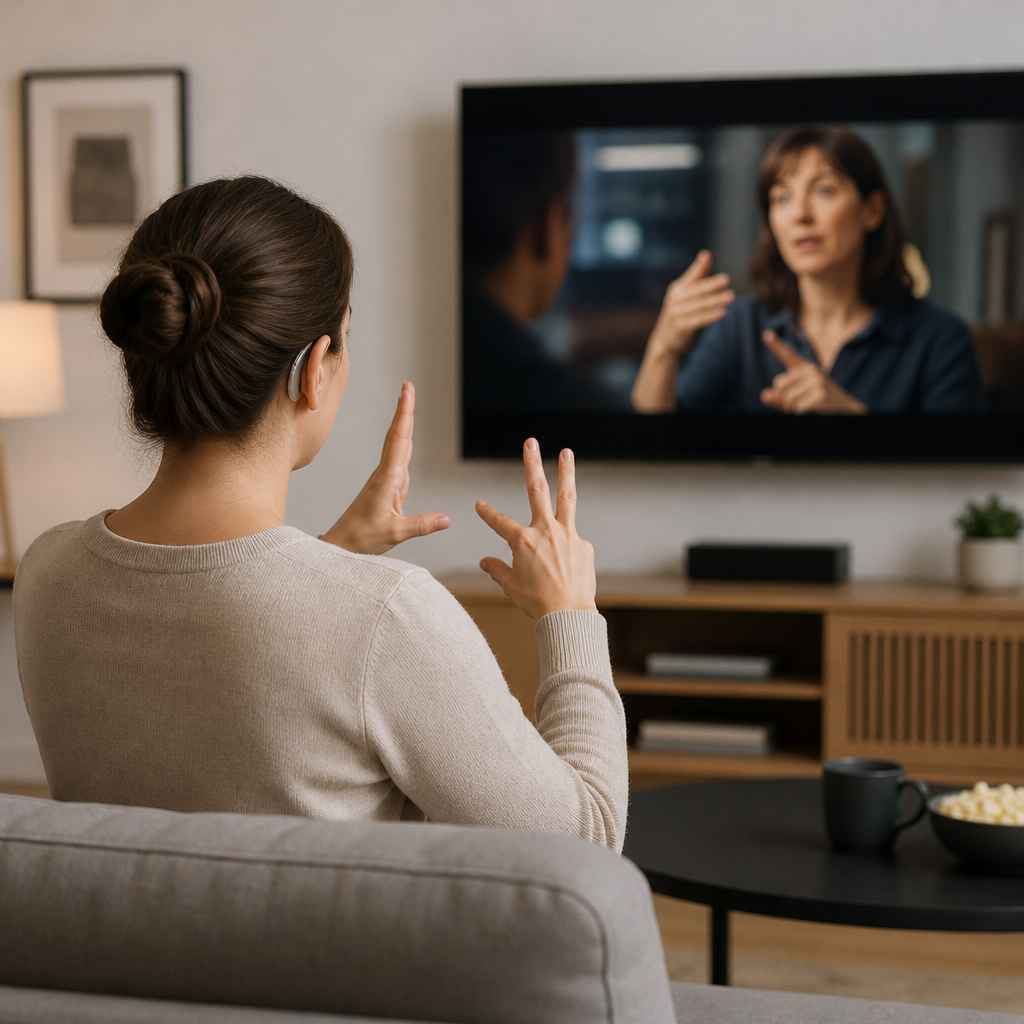
A third frame is the human-interest story, which is where many problems begin. News organizations often highlight a deaf child “hearing for the first time,” a surprise interpreter at a wedding, or a classroom act of kindness. These stories can be emotionally compelling, but they are routinely edited for hearing audiences rather than for accuracy or complexity. They rarely explain that many deaf people do not view themselves as broken, that sign language is a complete language, or that access barriers are often social and institutional rather than personal. As a result, audiences absorb sentiment without learning anything useful about deaf life.
The fourth frame is crisis coverage. Deaf issues enter major headlines after disasters, shootings, severe weather, pandemics, or public briefings where interpreters are absent or pushed off screen. During COVID-19, for example, access advocates repeatedly documented that televised briefings lacked visible interpreters or reliable real-time captions, even though emergency communication standards require meaningful access. In the United States, the National Association of the Deaf brought high-profile legal challenges related to inaccessible public communication, and those cases helped move the story from inconvenience to civil rights. Crisis reporting is often where mainstream audiences first notice deaf access, but too many outlets stop there instead of following the long policy tail.
What strong coverage looks like in practice
Good reporting on deaf issues is specific, sourced, and structurally aware. It names the exact access barrier, identifies the relevant law or standard, and quotes deaf people directly. If a hospital failed to provide an interpreter, the story should explain whether the issue involved on-site interpretation, video remote interpreting, informed consent, or after-hours procedures. If a streaming platform faced criticism over captions, the story should clarify whether the problem was missing captions, inaccurate captions, delayed captions, or weak standards for live events. Precision matters because “access problem” is too vague to hold institutions accountable.
Strong coverage also avoids presenting one deaf person as representative of all deaf people. In my experience, this is one of the easiest newsroom mistakes to make. A late-deafened adult, a lifelong ASL user, an oral deaf professional, and a hard-of-hearing student may have overlapping interests but very different views on technology, education, and identity. Responsible journalists reflect that diversity. They also understand that interpreters are not substitutes for deaf sources. Interpreters can explain process and logistics, but they should not be treated as the main authority on deaf perspectives.
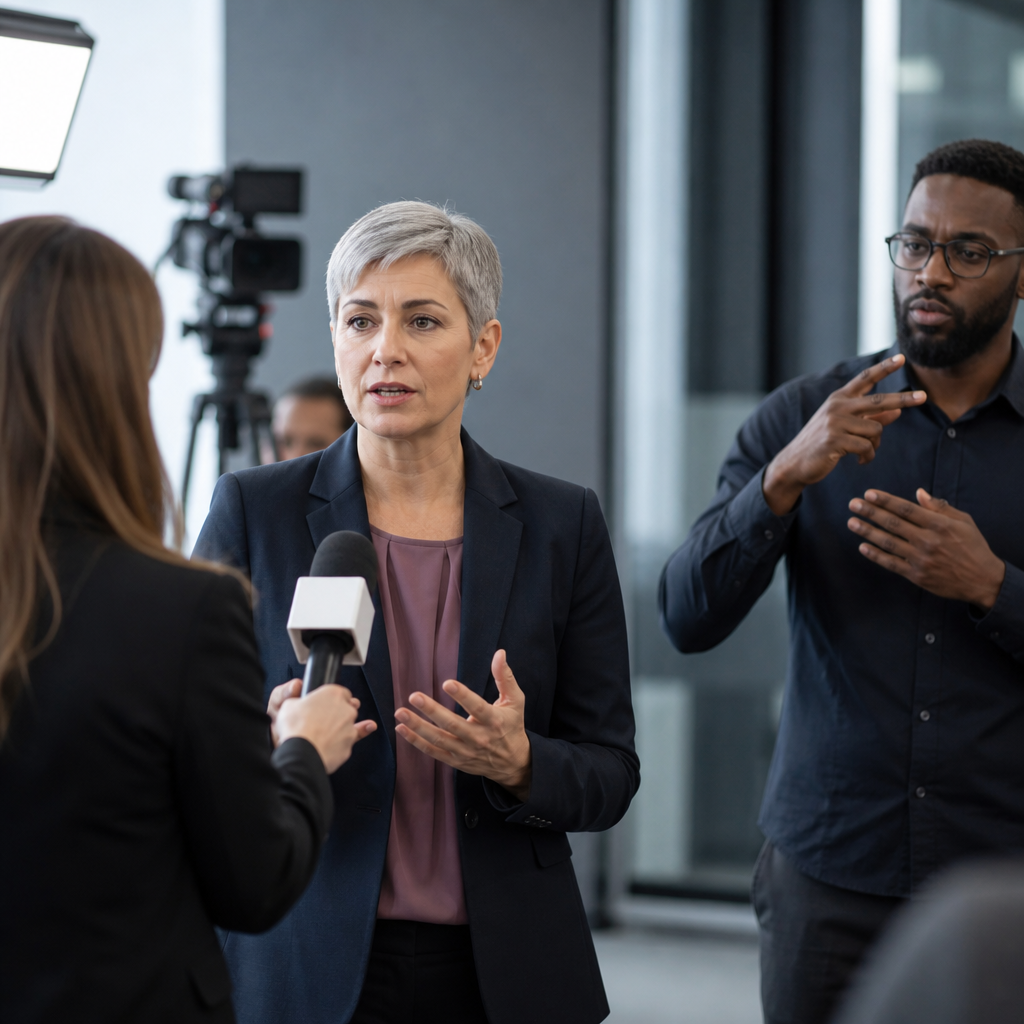
Editors improve coverage when they build accessibility into reporting workflow rather than treating it as a final production step. That means arranging interpreters before interviews, budgeting for CART or captioning when needed, confirming preferred communication modes, and allowing enough time for direct conversation instead of relying on rushed intermediaries. It also means checking visual storytelling. If a video package includes a signer, the frame must keep that person visible. If captions cover key facial expressions or signs, the edit undermines meaning. In broadcast work, these choices are not cosmetic; they determine whether the story is intelligible.
Recurring failures in coverage and why they persist
The most persistent failure is the deficit narrative. Many stories still define deafness primarily as loss, absence, or burden. That framing narrows source selection and invites ableist assumptions. A journalist who begins from deficit is more likely to ask parents how hard deafness has been than to ask deaf adults what educational or civic access actually works. The result is a story organized around pity rather than agency. This is not a minor tone problem. It changes what readers think the solution is. If the issue is framed as personal tragedy, the implied answer is charity or cure. If it is framed as an access barrier, the answer is rights, design, and institutional responsibility.
A second recurring failure is overreliance on conflict headlines without explanatory reporting. Cochlear implants, mainstream education, residential Deaf schools, signing versus oral communication, and disability benefits are all contentious subjects in public discourse. But many articles flatten those debates into binary oppositions. In reality, outcomes depend on timing, family support, language exposure, qualified teachers of the deaf, interpreter availability, device maintenance, and socioeconomic resources. A child implanted early may still experience language deprivation if adults assume speech therapy can replace accessible language from infancy. A story that ignores that evidence misleads readers.
Another problem is episodic attention. Coverage spikes around International Week of Deaf People, a viral social clip, a Supreme Court case, or a celebrity casting decision, then disappears. Newsrooms often fail to connect these moments to beat reporting on education, labor, health, and technology. That disconnect leaves audiences unaware that deaf access is not a niche concern but a recurring issue across public life. It also means reporters miss obvious follow-up questions: Were promised captioning fixes implemented? Did an emergency management office change protocol? Did a school district improve interpreter staffing after complaints? Too often, no one checks.
The key news beats that shape public understanding
For a hub article on news and current events, it helps to map the main beats where deaf issues regularly arise. These beats are where deeper reporting should branch into dedicated articles and explainers.
| News beat | Typical story angle | What quality coverage adds |
|---|---|---|
| Public policy | Captioning rules, disability enforcement, interpreter mandates | Relevant statutes, agency duties, budget impact, affected communities |
| Education | School placement, ASL access, interpreter shortages | Language acquisition research, IDEA obligations, long-term outcomes |
| Health care | Hospital access failures, hearing screening, device access | Informed consent standards, communication rights, rural disparities |
| Technology | Auto-captions, apps, AI tools, hearing devices | Accuracy limits, privacy concerns, usability testing with deaf users |
| Courts and policing | Miscommunication during stops, arrests, testimony | Due process, interpreter standards, wrongful outcomes from access failures |
| Entertainment and sports | Casting, on-screen signing, anthem interpreters, live event access | Representation quality, backstage accessibility, labor standards |
| Emergency news | Briefings, alerts, disaster communication | Redundancy planning, caption reliability, visual alert systems |
Each beat requires domain knowledge. Education reporting should know the difference between inclusion in theory and language access in practice. Health reporting should understand that a patient nodding through an appointment does not prove comprehension. Technology reporting should test features with deaf users rather than marketing copy. Court reporting should ask whether interpretation met legal standards and whether delays affected rights. The strongest hub coverage ties these beats together so readers can see patterns rather than isolated mishaps.
Language, sourcing, and representation choices that matter
Word choice influences credibility. Terms such as “suffers from deafness” or “confined to silence” are outdated and inaccurate. Better reporting uses neutral, specific language: deaf person, hard-of-hearing person, Deaf community, sign language user, captioning access, interpreter access. It also names the actual language involved. American Sign Language is not universal, and British Sign Language is distinct from ASL. That may sound basic, but I still see international reports blur these differences, which confuses readers and erases linguistic reality.
Sourcing standards are equally important. A reliable story on deaf issues usually includes deaf people directly affected, subject-matter experts, and the institution responsible for the decision. Depending on the topic, that may also include linguists, accessibility lawyers, audiologists, educators of the deaf, disability policy researchers, or captioning vendors. What matters is balance with relevance. False balance is a risk when rights are debated as opinions. For example, whether emergency communication should be accessible is not an open philosophical question; it is a legal and operational requirement. The debate is about implementation, not entitlement.
Representation in visuals and framing also matters. Too many outlets still illustrate deaf stories with generic hearing aids, even when the article is about sign language interpretation or Deaf culture. Stock photos of ears communicate a medical frame before a reader reaches the first paragraph. Better choices include actual reporting photography of schools, interpreters, community events, public meetings, court access setups, or caption interfaces relevant to the story. These signals tell readers whether the outlet understands deaf issues as a social and civic topic rather than only a clinical one.
Where coverage is improving and what still needs work
There has been real progress. More newsrooms now treat captioning and accessibility as product requirements, not optional add-ons. Major public briefings are more likely to include visible interpreters than they were a decade ago, and journalists are more aware of disability reporting guides from organizations such as the National Center on Disability and Journalism. Investigative outlets have produced stronger accountability work on inaccessible prisons, schools, transportation, and hospitals. Coverage of Deaf performers and sign language interpreters in politics and entertainment has also become more sophisticated, especially when reporters speak with deaf audiences about impact rather than only measuring virality.
Still, major gaps remain. Local news, where many access failures first appear, is often under-resourced. Reporters on tight deadlines may not know how to book interpreters, conduct accessible interviews, or evaluate institutional excuses. Automated captions have improved, but they remain error-prone, especially with names, accents, technical terms, and fast-breaking events. AI translation into sign language is advancing, yet most systems still struggle with grammar, natural expression, regional variation, and community trust. Journalists should report these tools as developing aids, not finished solutions.
The clearest way forward is consistent beat integration. Deaf issues should not appear only when a story is explicitly labeled disability news. They belong in city hall coverage, school board reporting, health policy analysis, technology reviews, labor stories, election explainers, and disaster preparedness journalism. Readers benefit when outlets link related reporting, build source networks inside deaf communities, and revisit promises institutions make after public criticism. If you publish, commission, or share news in this space, demand that standard: center deaf voices, explain the system, and follow the outcome.
That approach produces better journalism and a better public record. It helps readers understand why access failures are predictable, not accidental, and why representation is more than visibility. The best coverage makes deaf people legible to the public without flattening them into symbols. The next step is simple: audit the deaf issues coverage you read or produce, notice the frame, and push for reporting that is accurate, specific, and accountable.
Frequently Asked Questions
Why does media coverage of deaf issues matter so much?
Media coverage matters because it strongly influences how hearing audiences understand deaf people, deaf culture, accessibility, and public policy. For many readers and viewers, news stories may be their first or only regular exposure to deaf perspectives, which means the framing of those stories carries real weight. If reporting presents deafness only as a hardship, a medical condition to be fixed, or an individual obstacle to overcome, the public may miss the larger reality: many challenges deaf people face are not caused by deafness itself, but by inaccessible systems, poor communication practices, and policy choices that exclude them. On the other hand, when journalists include deaf voices, explain cultural and linguistic identity, and connect personal experiences to structural barriers, coverage becomes more accurate and more useful. It helps audiences understand issues such as sign language access, captioning, education, employment discrimination, healthcare communication, and emergency information access as public concerns rather than niche topics. In that sense, media does not just reflect public opinion on deaf issues; it actively helps shape it.
What are the most common ways media gets deaf issues wrong?
One of the most common problems is reducing deaf people to simplistic narratives. News stories often fall into familiar patterns: the “tragedy” frame, where deafness is treated mainly as loss; the “inspirational” frame, where ordinary deaf achievements are turned into emotional lessons for hearing audiences; or the “conflict” frame, where legal disputes over interpreters, captioning, or accommodations are covered without enough context about rights and access. These approaches can distort reality by focusing more on how hearing people feel about deafness than on what deaf people actually experience. Another frequent issue is the overreliance on medical sources while excluding deaf community members, educators, interpreters, advocates, or deaf professionals who can speak to lived experience and cultural context. Reporting can also go wrong through inaccurate language, such as implying that all deaf people want to be “cured,” or failing to distinguish between Deaf culture, hearing loss, and the broad range of identities within the deaf and hard of hearing community. Even seemingly small omissions matter. If a story does not explain why captions, interpreters, or direct communication access are essential, audiences may wrongly see them as optional conveniences rather than basic tools for equal participation.
How can journalists cover deaf issues more accurately and respectfully?
Better coverage begins with better sourcing and framing. Journalists should include deaf people directly in stories that affect them, not just quote hearing experts speaking about them. That means seeking out deaf advocates, scholars, artists, workers, students, parents, and community leaders, and making sure interviews are conducted in accessible ways, including through interpreters or written communication when needed. Reporters should also understand that deaf communities are not monolithic. Some people identify culturally as Deaf and use sign language as a primary language; others are hard of hearing, late-deafened, oral, multilingual, cochlear implant users, or part of multiple disability and cultural communities at once. Good reporting reflects that range instead of treating one perspective as universal. It also places individual stories within a structural context. For example, a story about a deaf patient struggling in a hospital should not stop at the personal experience; it should ask what legal obligations existed, what accessibility systems failed, and how common that problem is. Respectful coverage uses precise language, avoids sensationalizing communication differences, and treats access barriers as serious public-interest issues. Just as important, strong journalism recognizes deaf people as full participants in civic life, not merely subjects of sympathy or controversy.
What does strong media coverage of deaf issues look like in practice?
Strong coverage is informed, specific, and accessible. It explains not only what happened, but why it matters in the broader landscape of rights, communication, culture, and policy. For example, if a news outlet reports on a school debate involving sign language instruction, strong reporting would include the perspectives of deaf students and adults, explain the educational significance of language access, and clarify how early communication affects learning and development. If the issue involves captioning failures during emergencies or public broadcasts, strong reporting would frame the problem as a question of equal access to essential information, not a minor technical inconvenience. Good coverage also avoids using deaf people as symbolic props in stories that are really about hearing institutions. Instead, it centers agency, expertise, and accountability. In practice, that often means careful terminology, thoughtful interviews, and background research on disability law, language rights, and deaf culture. It may also mean making the journalism itself more accessible through accurate captions, transcripts, visual clarity, and inclusive production choices. The best coverage leaves audiences with a fuller understanding of both lived experience and systemic responsibility.
Where does media still fall short, even when coverage seems well intentioned?
Even well-meaning coverage can fall short when it assumes good intentions are enough. A story may appear sympathetic yet still reinforce limiting ideas if it centers hearing reactions, frames deaf success as surprising, or overlooks the everyday competence of deaf people navigating inaccessible systems. Media also falls short when it treats accessibility as a special-interest issue rather than a core element of public life. For instance, outlets may cover a viral story about a deaf person being denied an interpreter but fail to follow up on the policy failures, enforcement gaps, or broader patterns behind the incident. Another persistent weakness is inconsistency. Deaf issues may receive attention during a lawsuit, a human-interest moment, or a major disability rights controversy, but then disappear from coverage until the next dramatic event. That episodic approach can make it harder for audiences to understand long-term concerns such as education inequities, employment barriers, underrepresentation in media, and access to civic information. Representation inside newsrooms is another major gap. When deaf journalists, editors, producers, and contributors are absent, coverage is more likely to miss nuance and repeat old assumptions. In short, media often falls short not only because of overt errors, but because it lacks continuity, depth, and direct engagement with deaf expertise.