The Americans with Disabilities Act shapes how schools and universities admit students, design programs, communicate policies, and remove barriers that prevent equal participation. In education, ADA laws apply to public school districts, charter schools, community colleges, private colleges, graduate programs, online courses, housing, athletics, events, and many third-party services operating on campus. I have worked with institutions reviewing accommodation requests, auditing websites, and training faculty, and the same question appears repeatedly: what exactly must a school do under the ADA, and where do other disability laws fit? The answer matters because legal compliance is only the floor. Done well, disability access reduces disputes, supports retention, improves learning outcomes, and protects institutions from avoidable complaints, investigations, and lawsuits.
At the most basic level, the ADA is a federal civil rights law that prohibits discrimination against qualified individuals with disabilities. In schools and universities, two parts matter most. Title II covers public entities, including public K–12 districts, public universities, and community colleges. Title III covers private colleges and universities as places of public accommodation. Section 504 of the Rehabilitation Act also plays a central role because any institution receiving federal financial assistance must provide equal access and reasonable accommodations. The Individuals with Disabilities Education Act, or IDEA, overlaps in K–12 settings by guaranteeing special education services for eligible students, but it does not govern colleges. Understanding these distinctions is essential because families often assume an IEP simply follows a student into higher education. It does not. Colleges evaluate accommodation eligibility under the ADA and Section 504, not under IDEA.
Key terms are often misunderstood. A disability under the ADA is a physical or mental impairment that substantially limits one or more major life activities, a record of such an impairment, or being regarded as having such an impairment. A qualified student is someone who meets academic and technical standards, with or without reasonable modifications. Reasonable accommodation means an adjustment that provides equal opportunity without fundamentally altering a program or creating an undue burden. Auxiliary aids and services include captioning, sign language interpreters, screen-reader compatible documents, and accessible electronic platforms. Accessibility refers to removing barriers in physical and digital environments. These definitions drive nearly every campus decision, from classroom testing arrangements to whether a learning management system works with assistive technology.
Which laws govern disability rights in education
Schools and universities rarely operate under one disability law alone. Public K–12 schools must navigate the ADA, Section 504, and IDEA together. Public colleges and universities must comply with the ADA and Section 504. Private colleges generally fall under Title III of the ADA and often Section 504 if they receive federal funds, including student aid. Religious institutions are treated differently: many are exempt from Title III, although Section 504 may still apply if federal funding is involved. State laws can add stronger protections, but they cannot reduce federal rights. In practice, the correct legal analysis starts by identifying the institution type, funding source, and program at issue.
The Office for Civil Rights within the U.S. Department of Education enforces Section 504 in federally funded schools, while the U.S. Department of Justice enforces the ADA more broadly. Complaints can trigger document requests, interviews, resolution agreements, and monitoring. I have seen schools underestimate this process, assuming an informal accommodation denial will stay internal. It often does not. Families and students increasingly file OCR complaints over inaccessible websites, delayed testing accommodations, ineffective communication, and exclusion from field trips, labs, or housing. Institutions that maintain clear procedures, train staff, and document individualized decisions consistently fare better than those relying on ad hoc judgment from individual instructors or department heads.
One practical rule is worth stating directly: a school cannot use disability-related stereotypes to deny admission, participation, housing, or services. It must assess the actual student, the actual barrier, and the actual program requirements. That sounds straightforward, yet problems arise when faculty assume attendance cannot be flexible, clinical placements cannot be adjusted, or captioning can wait until a deaf student complains. The law requires proactive accessibility in many areas and responsive accommodations in others. Knowing which is which is the foundation of ADA compliance in education.
How ADA requirements differ between K–12 schools and higher education
The biggest difference is responsibility. In K–12 education, schools have an affirmative duty to identify students who may need support, evaluate them, and provide appropriate services. Parents are central participants, and the system is designed around entitlement to a free appropriate public education. In college and university settings, the student usually must self-identify, provide documentation when needed, and request accommodations through the disability services office. Faculty are not expected to diagnose disability, but they are expected to implement approved accommodations promptly and consistently. This shift catches many first-year students by surprise, especially those who had extensive IEP support in high school.
Documentation standards also differ. K–12 schools often rely on school evaluations, IEP records, and 504 plans. Colleges may accept those records, but they usually conduct an individualized review focused on current functional limitations and the connection between those limitations and the requested accommodation. The purpose is not to demand burdensome proof; the purpose is to determine effective access. Best practice is a flexible, interactive process. A rigid policy requiring recent expensive neuropsychological testing for every request can create legal risk if it screens out students unnecessarily. Recent guidance and enforcement trends favor common-sense review of existing records, clinician letters, and the student’s own narrative.
Academic standards remain enforceable at every level. The ADA does not require schools to lower essential requirements, waive core competencies, or pass a student who has not met program expectations. What it does require is equal opportunity to meet those expectations. That may mean extended testing time, accessible lab software, note-taking technology, modified attendance policies when attendance is not essential, or housing adjustments for disability-related needs. In higher education especially, disputes often center on what counts as an essential requirement. Institutions need documented, reasoned analysis tied to learning outcomes or professional standards, not after-the-fact statements created to defend a denial.
Admissions, academics, housing, and campus life
ADA obligations apply far beyond the classroom. Admissions processes must be accessible, from application portals to interviews to entrance exams administered by or for the institution. Once enrolled, students must have equal access to academics, advising, libraries, dining, transportation, counseling, recreation, internships, and student organizations. Housing is a frequent flashpoint. Universities must consider disability-related modifications such as single rooms, emotional support animal requests under applicable housing rules, accessible bathrooms, visual alarms, and furniture adjustments. A student does not have to choose between living on campus and accessing disability rights.
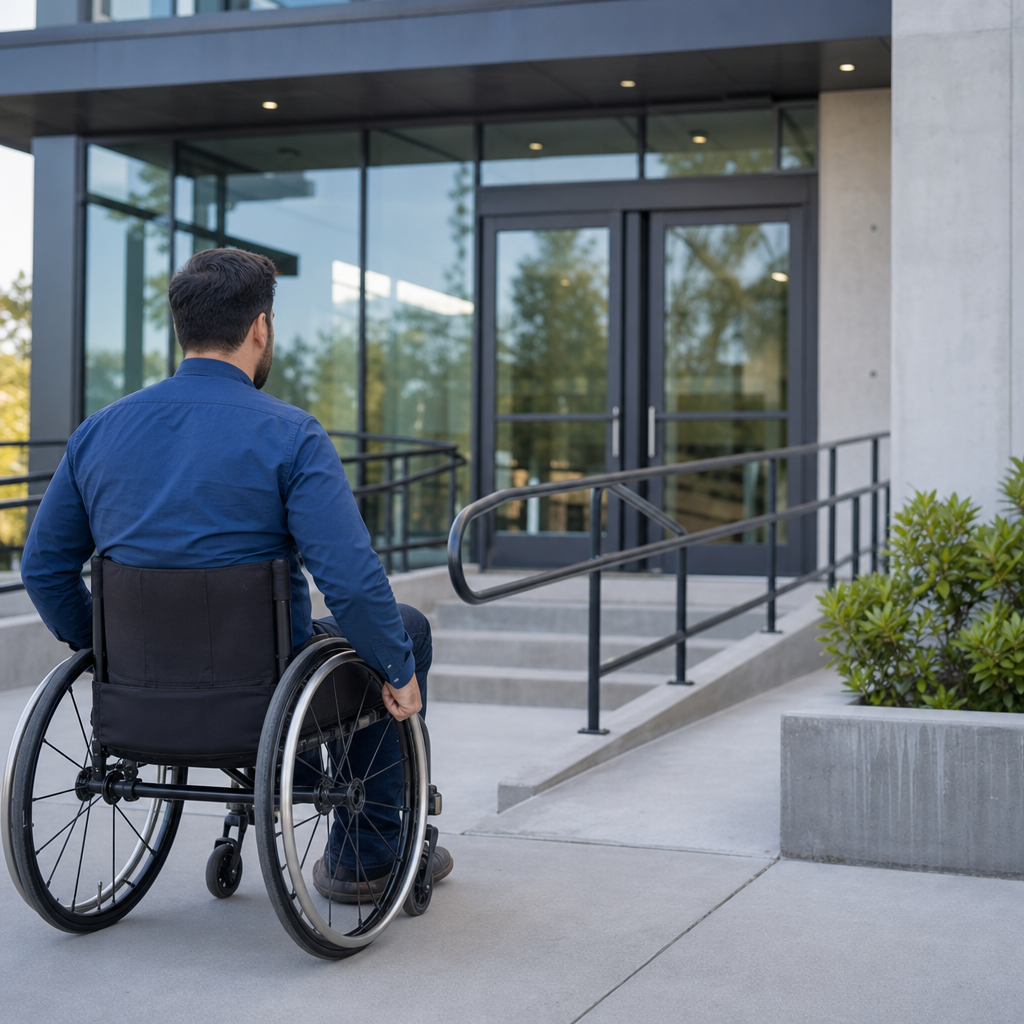
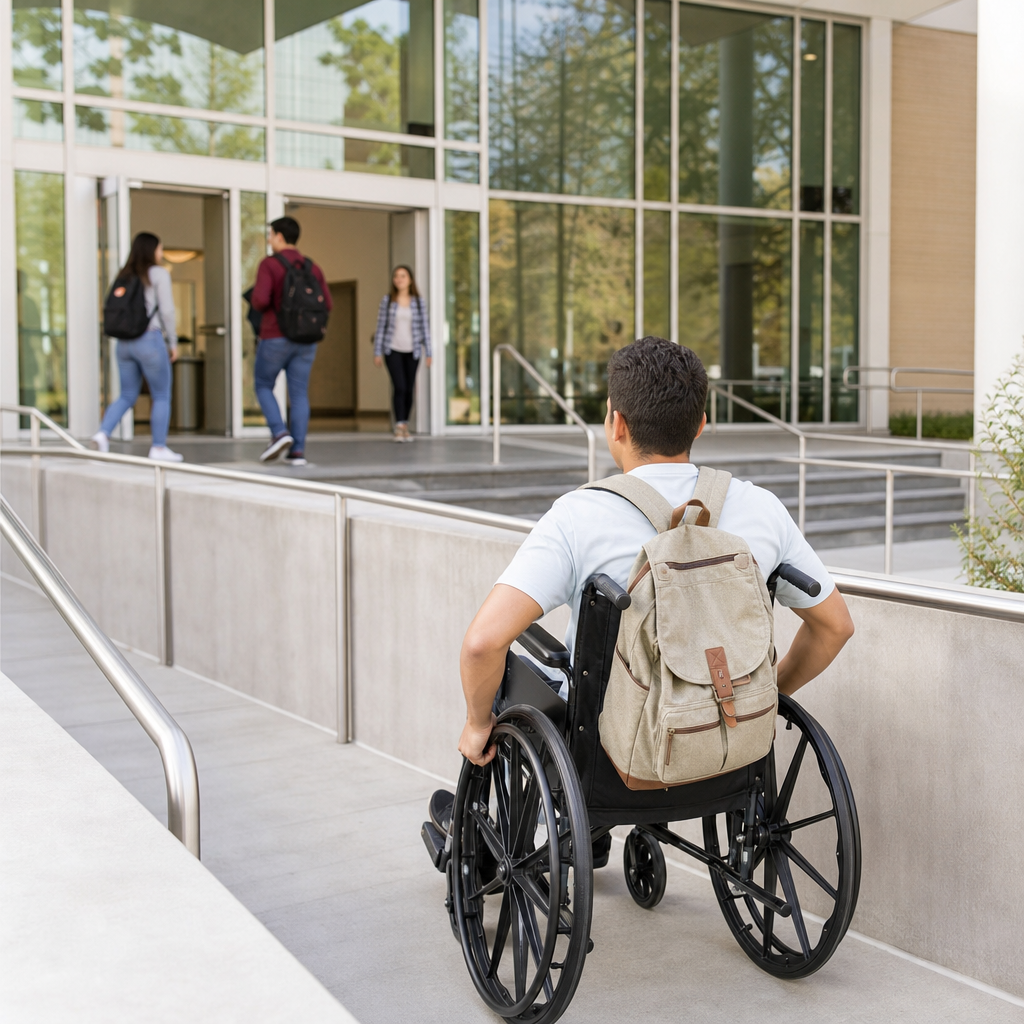
Campus life issues often reveal whether an institution understands disability access as a system rather than a one-time accommodation letter. For example, a university may approve classroom captioning but forget that orientation videos, emergency alerts, theater productions, and student conduct hearings also require effective communication. A school may have ramps into older buildings but fail to provide accessible routes during construction detours. I have audited campuses where accessible entrances were technically available yet remained locked after business hours, forcing students to call security every day. That is not equal access in any meaningful sense.
Athletics and extracurriculars require the same individualized approach. Students with disabilities must have equal opportunity to try out, participate, and receive necessary modifications unless doing so would fundamentally alter the activity or create a direct threat that cannot be mitigated. The analysis must be based on objective evidence, not assumptions. A student with diabetes may need breaks and secure storage for medical supplies. A blind student may need accessible play diagrams or orientation support. A student with a psychiatric disability may need modified deadlines for club leadership training. Rights do not end at the classroom door.
Reasonable accommodations and the interactive process
A reasonable accommodation in education is a modification or support that gives a student an equal chance to participate and succeed. Common examples include extended exam time, reduced-distraction testing rooms, accessible course materials, priority registration, ergonomic furniture, interpreters, CART captioning, assistive listening systems, flexibility with attendance, and alternative formats for assignments. The key legal question is whether the accommodation is necessary because of disability and whether it is reasonable in the specific context. There is no universal checklist that resolves every case.
Schools should use an interactive process that is timely, individualized, and well documented. In practice, that means reviewing the request, discussing barriers with the student, obtaining only information needed to evaluate the request, considering effective alternatives, and providing a written decision. Delays can be violations when they effectively deny access. A deaf student cannot wait half a semester for captions. A student with mobility limitations cannot be told to miss chemistry lab until a building transfer is convenient. When institutions move quickly, many conflicts are resolved before they become formal grievances.
| Area | Common accommodation | Frequent compliance mistake | Better practice |
|---|---|---|---|
| Testing | Extended time or reduced-distraction room | Faculty ignore accommodation letters | Central scheduling and tracking through disability services |
| Course materials | Screen-reader compatible PDFs or Braille | Posting image-only scans | Accessibility review before materials are assigned |
| Communication | Interpreters or live captioning | Using untrained staff to interpret | Qualified providers arranged in advance |
| Housing | Accessible room or policy modification | Waiting-list treatment without interim solution | Prompt individualized review and temporary measures |
Institutions may deny a specific request if it would fundamentally alter an essential program element or impose an undue burden, but they must be prepared to explain that conclusion with evidence. They should also explore alternatives. For instance, a nursing program may not need to waive a core clinical competency, but it may need to provide adaptive equipment, schedule adjustments, or accessible simulation tools. The legal standard rewards careful problem-solving, not reflexive rejection.
Digital accessibility, websites, and online learning
Digital access is now one of the most active areas of ADA enforcement in education. School websites, registration systems, library databases, course platforms, PDFs, videos, mobile apps, and third-party tools must be usable by students with disabilities. The practical benchmark most institutions use is WCAG 2.1 AA, and that standard appears repeatedly in settlement agreements and procurement policies. If a student cannot register for classes with a screen reader, cannot understand lecture videos because captions are missing, or cannot complete homework because quiz software is inaccessible by keyboard, the school is not providing equal access.
Online learning has made these obligations impossible to treat as optional. During remote instruction, many institutions discovered that inaccessible course design blocks participation just as effectively as a locked building entrance. Common failures include auto-captioning without review, scanned readings with no text layer, discussion tools that do not work with assistive technology, timed quizzes with no accommodation mechanism, and proctoring software that flags disability-related behavior. I have seen schools solve these issues fastest when accessibility is built into procurement, faculty training, and instructional design rather than handled as an emergency accommodation after launch.
Accessibility must also extend to public-facing information. Admissions pages, financial aid forms, campus maps, event registration pages, and emergency notices all need accessible structure, contrast, labeling, and keyboard navigation. Procurement contracts should require vendors to provide accessibility conformance reports, often using the VPAT format, but institutions should not treat vendor promises as proof. Testing matters. The strongest programs combine automated scans with manual review by specialists and feedback from disabled users. That approach is cheaper than retrofitting an entire digital ecosystem after a complaint.
Enforcement, disputes, and building a compliant culture
When a school mishandles disability rights, the issue may surface through internal grievance procedures, OCR complaints, Department of Justice investigations, accreditation concerns, or private litigation. Typical allegations include failure to accommodate, inaccessible technology, discriminatory leave policies, retaliation, and ineffective communication. Retaliation deserves special attention: a school cannot punish a student for requesting accommodations, filing a complaint, or advocating for access. Seemingly small actions, such as excluding a student from an opportunity after they raise concerns, can create serious exposure.
The strongest institutions treat ADA compliance as governance, not paperwork. They designate responsible offices, maintain clear grievance procedures, train faculty and staff annually, audit physical and digital barriers, and coordinate among disability services, IT, procurement, housing, athletics, and legal counsel. Data helps. Track accommodation response times, captioning turnaround, inaccessible classroom reports, and vendor remediation status. Publish accessible policies. Review emergency procedures for students who use wheelchairs, service animals, interpreters, or medical devices. These are not extras; they are indicators of whether access works under real conditions.
The central takeaway is simple: ADA laws apply to every stage of the educational experience, and compliance requires both responsive accommodations and proactive accessibility. Public and private institutions have different statutory pathways, but the operational question is the same: can a qualified student with a disability access the program on equal terms? Schools that answer that question early, document decisions carefully, and build accessibility into technology, facilities, and policy avoid preventable conflict and serve students better. If you manage, advise, or attend a school or university, review your accommodation process, digital platforms, housing policies, and grievance procedures now. Small fixes made early prevent larger legal and educational failures later.
Frequently Asked Questions
1. How do ADA laws apply differently to K-12 schools, colleges, and universities?
The ADA applies across education, but the legal framework can look different depending on the type of institution and the student’s age. Public school districts, public charter schools, community colleges, and state universities are generally covered by Title II of the ADA, which applies to public entities. Private colleges, private universities, private graduate programs, and many private career schools are generally covered by Title III, which applies to places of public accommodation. In many cases, Section 504 of the Rehabilitation Act also applies when a school receives federal funding, which is true for most educational institutions. That means schools often have overlapping obligations, not just one source of law to consider.
In K-12 settings, disability rights are often discussed alongside the Individuals with Disabilities Education Act, or IDEA, which focuses on special education and related services for eligible students. The ADA is broader. It is not limited to students who qualify for special education. It also addresses equal access, effective communication, policies, practices, transportation, extracurricular activities, and physical and digital barriers. In higher education, the conversation shifts more toward equal opportunity and reasonable modifications rather than the school creating a specialized educational program. Colleges and universities are expected to provide qualified students with disabilities an equal chance to participate in academic programs, housing, athletics, student life, internships, and campus services.
One practical difference is how accommodations are handled. In K-12 education, schools are usually more proactive in identifying and supporting students. In colleges and universities, students typically must self-identify, provide documentation when appropriate, and engage with the disability services office. Even so, the institution remains responsible for responding appropriately, avoiding unnecessary delays, and ensuring that barriers do not shut students out of classes, online platforms, events, or campus life. Whether the setting is a public elementary school or a private university, the core ADA principle is the same: students with disabilities must have an equal opportunity to access the institution’s programs, services, and activities.
2. What kinds of accommodations and modifications are schools required to provide under the ADA?
The ADA requires schools and universities to make reasonable modifications when necessary to avoid disability-based discrimination, unless doing so would fundamentally alter the nature of the program or create an undue burden. In practice, that can include a wide range of academic, communication, housing, and policy-related accommodations. Common examples include extended exam time, note-taking support, accessible classroom furniture, permission to record lectures, captioning for video content, sign language interpreters, accessible course materials, modified attendance policies in appropriate cases, priority registration, housing adjustments, and flexibility around certain procedures when disability-related needs are involved.
What matters most is whether the accommodation gives the student an equal opportunity to participate. Schools do not have to provide every accommodation exactly as requested if an effective alternative exists, but they do need to engage in an individualized, good-faith review. Blanket denials can create legal risk, especially when a school relies on rigid policies instead of evaluating the actual barrier. For example, if a student with a chronic medical condition requests attendance flexibility, the right question is not simply whether the syllabus has an attendance rule. The right question is whether modifying that rule would be reasonable in that specific course and whether the essential requirements of the class can still be met.
Schools also need to think beyond the classroom. ADA compliance can extend to meal plans, dorm access, campus shuttles, counseling services, clinical placements, study-abroad programs, athletics, commencement ceremonies, and student organization events. If a university offers online courses, learning management systems, admissions portals, or mobile apps, those tools must be usable by students with disabilities as well. In my experience reviewing accommodation requests and institutional practices, the strongest programs are the ones that treat accessibility as a campus-wide responsibility rather than something handled only by a disability services office.
3. Do ADA laws require school websites, online courses, and digital tools to be accessible?
Yes. The ADA’s promise of equal access applies to digital environments just as much as physical ones. If a school or university uses websites, admissions portals, registration systems, learning management platforms, video lectures, library databases, event pages, or mobile apps to deliver programs and services, students with disabilities must be able to use those tools effectively. That includes students who are blind or have low vision, deaf or hard of hearing students, students with mobility impairments, and students with cognitive, neurological, or speech-related disabilities. Accessibility is not limited to the main homepage. It extends to the full student experience online.
In practical terms, accessible digital content may require screen-reader compatibility, keyboard navigation, captions for video, transcripts for audio, readable heading structures, sufficient color contrast, accessible PDFs, properly labeled form fields, error messages that can be understood by assistive technology, and course content that does not depend on one sensory mode. Schools can run into trouble when they adopt third-party software without evaluating accessibility first. A university may not build the platform itself, but if it requires students to use that vendor’s tool for admissions, coursework, testing, housing, or financial aid, the school still has ADA responsibilities. Third-party involvement does not erase the institution’s duty to provide equal access.
This is one of the most common compliance gaps institutions face. Many schools have strong intentions but inconsistent processes. A disability services office may be responsive, while the marketing team, procurement office, faculty, and IT department all operate under different standards. That fragmented approach creates avoidable barriers. Regular website audits, accessibility review during software procurement, faculty training on accessible course design, and clear remediation procedures are all important parts of a defensible compliance strategy. For schools that offer online or hybrid education, digital accessibility is not a side issue. It is central to ADA compliance.
4. How do ADA laws affect campus housing, athletics, events, and other nonacademic parts of student life?
The ADA applies to much more than admissions and classroom instruction. If a school offers housing, dining, transportation, recreation, student organizations, performances, ceremonies, health services, internships, career counseling, or athletic opportunities, those parts of campus life must also be accessible. Equal participation means students with disabilities should be able to live on campus, attend events, use common spaces, join clubs, access fitness facilities, and participate in traditions and activities without being excluded by physical barriers, communication failures, or unnecessary policy restrictions.
In campus housing, that can mean accessible dorm rooms, bathroom modifications, visual alarms, permission for disability-related equipment, or policy changes involving service animals and emotional support animals where the law requires. In athletics and recreation, schools should consider accessible routes, seating, locker rooms, communication access, and whether policies inadvertently screen out students with disabilities. For ceremonies, performances, and public events, institutions may need captioning, interpreters, wheelchair-accessible seating, accessible ticketing, and staff procedures that actually work on the day of the event. It is not enough to have a policy on paper if students still encounter barriers in practice.
Nonacademic access is often where institutions underestimate their legal exposure. A university may have a formal accommodation process for exams but still create ADA problems when a student cannot access a dorm entrance, reserve accessible event seating, navigate a campus shuttle, or participate in an off-campus program run through a partner organization. Schools are generally responsible for the accessibility of the programs and services they offer, even when vendors, landlords, conference venues, or other third parties are involved. A strong institutional approach looks across the full student experience and asks a simple question: can students with disabilities participate in campus life in a way that is genuinely equal, not merely theoretical?
5. What should a school or university do to stay compliant with the ADA and respond effectively to accommodation requests?
Schools and universities should treat ADA compliance as an ongoing operational responsibility, not a one-time legal checklist. A strong compliance program usually starts with clear policies, trained staff, and a centralized process for reviewing accommodation requests promptly and consistently. Institutions should identify who handles disability-related inquiries, how documentation is assessed, how decisions are communicated, how appeals are managed, and how faculty and administrators are expected to implement approved accommodations. Delays, informal decision-making, and inconsistent treatment across departments are common sources of complaints and enforcement risk.
Training is critical. Faculty, residence life staff, admissions teams, athletics personnel, event planners, IT teams, procurement staff, and student conduct offices all make decisions that can affect disability access. If only one office understands the ADA, the institution is vulnerable. Schools should also review their physical spaces, websites, online learning tools, policies, and third-party contracts for accessibility issues before complaints arise. That includes checking whether forms are accessible, videos are captioned, classroom technology works with assistive devices, and emergency procedures account for students with disabilities. A school that waits for an individual student to point out every barrier is usually operating too reactively.
When accommodation requests come in, institutions should use an interactive, individualized process. That means listening carefully, evaluating essential requirements, considering effective alternatives, documenting the analysis, and avoiding assumptions about what a student can or cannot do. In my work auditing websites, reviewing accommodation practices, and training institutions, the schools that do this well tend to be the ones that integrate accessibility into governance, budgeting, purchasing, and program design. ADA compliance is not only about reducing legal risk. It is also about building an educational environment where qualified students with disabilities can