
The distinction between Deaf and deaf has shaped identity, community, and public understanding for decades. At first glance, the difference appears to be a matter of capitalization, but in practice it signals far more: language preferences, cultural belonging, political history, and personal self-definition. When people ask what Deaf vs deaf means, they are usually trying to understand whether the term refers to hearing status, cultural identity, or both. The answer is that it can refer to all of these, depending on context, speaker, and lived experience.
In the most widely used modern framework, little d deaf refers to the audiological condition of not hearing, or hearing significantly less than hearing people. Big D Deaf refers to people who identify with Deaf culture, often use a signed language such as American Sign Language, British Sign Language, or another national sign language, and participate in a shared community with its own norms, institutions, and history. That basic definition is helpful, but it is incomplete unless it is paired with an important reality: many people move between these categories, reject them, combine them, or use them strategically in different spaces.
I have seen this distinction cause both clarity and confusion. In educational settings, it can help explain why two people with similar hearing levels may have very different cultural identities. In medical settings, it can be flattened into an overly simple label that ignores language access and community ties. In online discussions, the shorthand “Big D/little d” often works as an introduction, but the actual evolution of Deaf vs deaf terminology is much richer than a binary summary suggests. Understanding that evolution matters because terminology influences policy, schooling, disability rights, interpreting access, media representation, and how deaf children come to see themselves.
Historically, many institutions treated deafness only as a deficit to be corrected. That medical view emphasized diagnosis, speech training, amplification, and assimilation into hearing norms. At the same time, Deaf communities built schools, clubs, churches, sports leagues, theaters, and advocacy organizations that centered signed languages and collective identity. The capital D emerged as a way to name that cultural and linguistic reality. It gave people language to distinguish between being unable to hear and belonging to a minority language community. This distinction became especially important in the late twentieth century as disability studies, bilingual education, and Deaf studies grew in universities and public discourse.
Today, the terminology sits at the intersection of linguistics, sociology, and civil rights. It affects how journalists write headlines, how teachers frame classroom inclusion, how health providers discuss cochlear implants, and how families interpret a diagnosis. As a hub topic within Deaf Culture and Identity, Deaf vs deaf is foundational because it connects to nearly every related question: Is deafness a disability, a culture, or both? Does every person with hearing loss identify as Deaf? How do hard of hearing, late-deafened, and signing communities fit into the picture? To answer those questions well, it helps to trace how the terminology developed, why it endures, and where its limits have become visible.
What Deaf vs deaf means in practical terms
The clearest starting point is this: deaf usually describes hearing level, while Deaf usually describes cultural identity. A little d deaf person may have mild, moderate, severe, or profound hearing loss and may communicate through speech, lipreading, hearing aids, cochlear implants, sign language, or a mix of methods. A Big D Deaf person typically identifies with a Deaf community and uses signed language as a central part of daily life. In many countries, that identity also includes shared values around visual communication, collective advocacy, and intergenerational cultural transmission.
Still, practical use varies. Some people write deaf in all contexts because they see capitalization as unnecessary or politically loaded. Others insist on Deaf when discussing community membership because lowercase wording can erase culture. Some use deaf and Deaf together, as in deaf and Deaf communities, to acknowledge overlap and diversity. In professional writing, I have found that the most accurate approach is to follow the preference of the person or group being described and define terms early, especially in education, health, and policy contexts where misunderstanding has real consequences.
A simple example shows why this matters. A child born with profound hearing loss to hearing parents may initially be labeled deaf by an audiologist. If that child later attends a residential school for the Deaf, learns ASL, joins Deaf sports tournaments, and builds friendships through signing, they may identify as Deaf as a teenager or adult. Another person with the same audiogram may use spoken language exclusively, work in hearing environments, and identify as deaf or hard of hearing instead. The difference is not the audiogram alone. It is shaped by language access, family choices, schooling, community exposure, and personal agency.
How the terminology evolved historically
The modern distinction did not appear overnight. In the nineteenth century, deaf people gathered in schools and associations long before scholars formalized the language of cultural identity. Residential schools became key sites of community formation because they brought signing children together, often for the first time. In the United States, the American School for the Deaf, founded in 1817, and later Gallaudet institutions played central roles. Similar patterns emerged elsewhere, with Deaf clubs and schools serving as anchors for language development, marriage networks, leadership, and activism.
For much of the twentieth century, however, mainstream education and medicine were dominated by oralism, the approach that emphasized speech and lipreading over sign language. The 1880 Milan Conference, where educators endorsed oral methods and marginalized sign language in many schools, had a lasting effect worldwide. Deaf communities did not disappear; they adapted and preserved signed languages through peer networks and community institutions. Over time, scholars in linguistics, especially after William Stokoe’s work in the 1960s demonstrating that ASL is a fully developed language, gave academic support to what Deaf people had long known from experience.
As signed languages gained recognition, cultural terminology gained traction. Capitalizing Deaf became a concise way to distinguish a language-sharing cultural minority from a purely medical category. By the 1970s and 1980s, the distinction appeared more frequently in Deaf studies, sociology, and advocacy writing. It also aligned with broader identity-based movements that emphasized self-definition over labels imposed by outsiders. The 1988 Deaf President Now protest at Gallaudet University further popularized the idea that Deaf people were not simply patients or service recipients; they were a community with legitimate claims to leadership, representation, and institutional control.
Why culture, not hearing level, defines Big D Deaf
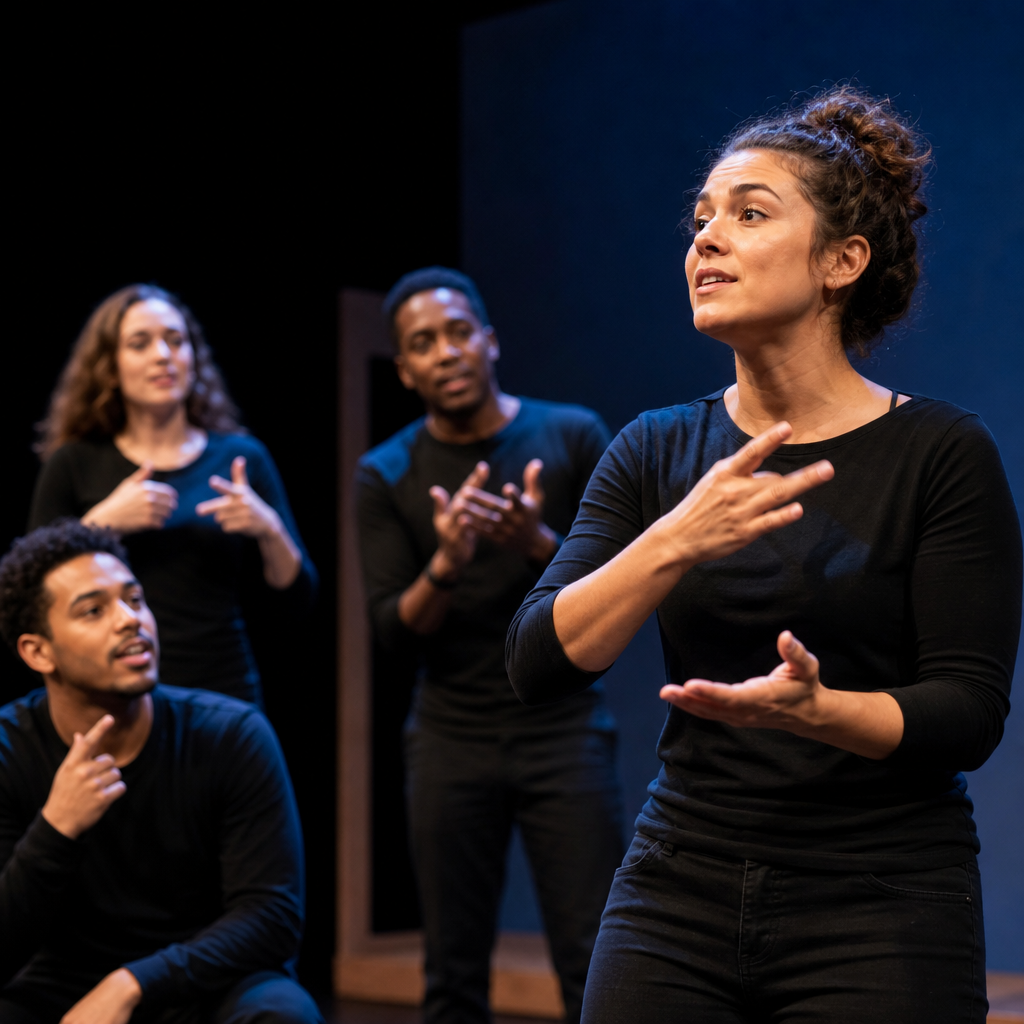
Big D Deaf identity is not awarded by a hearing test. It is rooted in participation in a cultural and linguistic community. In practice, that often includes fluency or familiarity with a signed language, visual norms of communication, and connection to Deaf social institutions. Those norms can be concrete. In a Deaf space, it is common to get attention by waving, tapping a shoulder, or flicking lights, rather than calling out from another room. Seating arrangements may prioritize sight lines. Storytelling may rely on facial grammar, spatial mapping, and visual timing that do not translate neatly into spoken language.
Culture also includes values. Many Deaf people view signed languages not as accommodations, but as natural first languages. They may see deaf children as children with a different access pathway, not as broken hearing children. This does not mean all Deaf people reject technology, speech, or interaction with hearing society. It means the center of identity is not correction toward hearing norms. I have repeatedly found that misunderstanding begins when institutions assume culture is secondary and hearing status is primary. In Deaf communities, the order is often reversed.
| Term | Primary focus | Typical features | Important caution |
|---|---|---|---|
| deaf | Audiological condition | Hearing loss, varied communication methods, medical or functional framing | Does not automatically indicate cultural identity |
| Deaf | Cultural and linguistic identity | Signed language, community affiliation, shared norms and history | Not all culturally Deaf people have identical hearing levels or experiences |
| deaf and Deaf | Broad inclusive reference | Used in community outreach, policy, or mixed populations | Can still miss hard of hearing or late-deafened perspectives if used loosely |
Where the binary helps and where it falls short
The Big D/little d framework remains useful because it answers a common question quickly. It tells parents, teachers, journalists, and employers that hearing level and cultural identity are not the same thing. It also helps explain why access needs differ. A culturally Deaf signer may prioritize qualified interpreters, captions, and direct sign communication. A deaf person who relies on residual hearing may prioritize hearing loop systems, strong acoustics, and real-time transcription. The distinction prevents lazy assumptions.
But the binary has limits. Many people do not fit cleanly into either category. Late-deafened adults may lose hearing after decades in spoken-language environments and feel disconnected from both hearing and Deaf worlds. Hard of hearing people may sign, speak, or do both. DeafBlind people may use tactile sign languages or protactile practices that are not captured well by the old binary. Children with cochlear implants may grow up bilingual and bicultural, identifying as Deaf in some settings and deaf, hard of hearing, or disabled in others. Identity can be layered, situational, and time-dependent.
The terminology can also become gatekeeping when used carelessly. If Deaf is defined too narrowly, newcomers, people from oral backgrounds, or late signers can be treated as less authentic. If deaf is used only medically, people may be denied access to cultural belonging just because they were not raised in it. Strong communities need terms, but they also need flexibility. The best current practice is to treat Deaf vs deaf as a starting framework, then ask how the individual identifies and what communication access they use.
How terminology shapes education, healthcare, and media
Words influence systems. In education, calling a student deaf rather than Deaf can subtly push planning toward remediation instead of bilingual language access. Research on early language deprivation has made this especially important. When deaf children do not receive accessible language early, whether signed or fully accessible spoken input, cognitive and academic delays can follow. Schools that understand Deaf identity are more likely to treat sign language exposure as essential, not optional. They are also more likely to involve Deaf adults as role models, which improves belonging and future identity development.
In healthcare, terminology affects informed consent and counseling. Audiologists and surgeons may focus appropriately on hearing technology, but if they frame deafness only as loss, families may never learn about Deaf schools, sign language classes, or community mentors. Balanced counseling should cover medical options, communication outcomes, and cultural pathways. The National Association of the Deaf and similar organizations have long argued that families deserve that full picture. From experience, families make better decisions when they hear from both clinicians and Deaf adults, not only from device manufacturers or therapy providers.
Media representation has improved, but terminology mistakes remain common. Reporters still write about a “deaf mute” despite the term being outdated and inaccurate for most people. Films sometimes present cochlear implants as cures or show all deaf people as silent and isolated until hearing intervention arrives. Better reporting names the person’s identity accurately, states the communication mode, and avoids treating hearing norms as the automatic endpoint. That level of precision builds trust and reflects reality more faithfully.
Current best practices for using Deaf and deaf respectfully
The most reliable rule is to ask and follow self-identification. If a person says they are Deaf, capitalize it. If they say they are deaf, use lowercase. If an organization uses Deaf community, match that wording. If you are writing broadly about hearing status rather than culture, deaf may be the correct term. Define terms in introductions, particularly in training materials, healthcare resources, and public-facing guides. Precision helps readers, and it prevents the article from sounding as if one label is universally preferred.
Avoid assumptions based on devices, speech ability, or family background. A cochlear implant user can be Deaf. A fluent signer can identify as hard of hearing. A deaf person with strong speech skills may still need interpreters in complex group settings. Respect also means avoiding outdated terms such as deaf and dumb, hearing impaired when not preferred, or normal hearing as the contrast term. Better alternatives include hearing, non-deaf, or people without hearing loss, depending on context. Language should describe, not rank.
The wider lesson is that terminology evolves because communities evolve. Deaf vs deaf remains a valuable guide, especially for people new to Deaf Culture and Identity, but it works best when used with humility and specificity. If you create educational content, train staff, or write policy, build in room for self-definition, language access, and cultural context. That approach leads to better services, better representation, and more accurate understanding. To go deeper, review your current materials, update outdated labels, and center the words Deaf and deaf people choose for themselves.
Frequently Asked Questions
What is the difference between “Deaf” and “deaf”?
The difference between “Deaf” and “deaf” goes beyond capitalization. In many contexts, lowercase “deaf” refers primarily to the audiological condition of having little or no hearing. It describes hearing status in a broad, medical, or descriptive sense. Uppercase “Deaf,” by contrast, often refers to a cultural and linguistic identity tied to the Deaf community, especially people who share experiences, traditions, values, and often the use of a signed language such as American Sign Language. In other words, “deaf” can describe how someone hears, while “Deaf” can describe how someone identifies, communicates, and belongs within a community.
That said, the distinction is not always rigid. Some people are medically deaf but do not identify as culturally Deaf. Others may become deaf later in life and gradually connect with Deaf culture. Some use both terms depending on context, and some reject the distinction entirely. Because of that, the most accurate approach is to understand the historical meaning of the terms while recognizing that personal identity matters most. The terminology has evolved precisely because people’s experiences are diverse, and no single label perfectly captures every deaf or Deaf person’s life.
Why did the capitalization of “Deaf” become so important?
Capitalization became important because it gave people a way to distinguish between hearing loss as a physical condition and Deafness as a cultural identity. For many years, deafness was discussed mainly through medical frameworks that emphasized diagnosis, limitation, treatment, or rehabilitation. That approach often overlooked the fact that many Deaf people did not see themselves as broken or incomplete. Instead, they saw themselves as members of a language community with their own social norms, history, art, education traditions, and political advocacy. The capital “D” emerged as a way to name and affirm that reality.
This shift had powerful social and political implications. It helped move public understanding away from the idea that deaf people should only be defined by what they cannot hear. It also supported the recognition of signed languages as full languages rather than substitutes for spoken ones. In academic, activist, and community settings, “Deaf” became a marker of pride, shared experience, and resistance to deficit-based views. So while the change may look minor on the page, it has carried major meaning in discussions about identity, rights, education, accessibility, and representation.
Does every person with hearing loss identify as Deaf or deaf in the same way?
No, and that is one of the most important things to understand. Identity within deaf and Deaf communities is highly personal and can be shaped by many factors, including age of hearing loss, family background, communication style, education, geography, use of hearing technology, and connection to Deaf culture. A person born into a Deaf signing family may strongly identify as Deaf from an early age. Another person who loses hearing later in life may identify as deaf, hard of hearing, late-deafened, or by another term that feels more accurate to their experience. Still others may move between labels over time.
There is also important variation across regions and cultures. The meanings attached to Deaf and deaf can differ depending on the country, the local signed language, and community norms. Some people prioritize cultural affiliation, while others prioritize functional hearing status. Some prefer identity-first language, while others prefer different terminology entirely. For that reason, it is best not to assume that a label automatically tells you everything about a person’s communication preferences, beliefs, or community ties. Asking respectfully and listening to how someone describes themselves is usually the clearest and most inclusive approach.
How has the meaning of Deaf vs deaf changed over time?
The meaning has evolved alongside broader changes in disability studies, Deaf studies, education, civil rights, and public awareness. Earlier discussions often treated deafness mainly as a medical issue, focusing on hearing levels, speech training, and integration into hearing society. Over time, especially through Deaf scholarship and activism, there was growing recognition that Deaf people have a distinct cultural and linguistic identity that could not be reduced to an audiogram. This helped establish the now-familiar distinction between lowercase “deaf” and uppercase “Deaf.”
More recently, the conversation has become even more nuanced. People increasingly recognize that identity is not binary and that the old distinction, while useful, does not capture every lived experience. Some individuals embrace hybrid identities. Others highlight intersections with race, class, gender, disability, and nationality. Advances in technology, changing educational models, and wider visibility of signed languages have also influenced how people understand the terms. As a result, today’s discussion is less about enforcing a strict rule and more about understanding the historical roots of the terminology while making space for self-definition and complexity.
What is the best way to use Deaf and deaf respectfully in writing or conversation?
The best practice is to be informed, attentive, and person-centered. If you are speaking generally, lowercase “deaf” is often appropriate when referring to hearing status, while uppercase “Deaf” is typically used when referring to cultural identity, the Deaf community, or a specific linguistic and social tradition. For example, someone might be described as “deaf” in a clinical context but “Deaf” when discussing community membership or cultural belonging. In writing, consistency and clarity matter, especially if your audience may not already know the distinction.
When referring to a specific person, the most respectful choice is the term they use for themselves. If you are unsure, ask politely rather than assume. It is also helpful to avoid treating one identity as more valid than another. Not every deaf person is culturally Deaf, and not every Deaf person experiences identity in exactly the same way. Respectful language comes from understanding that these terms carry history, politics, and emotion as well as grammar. Used thoughtfully, they can acknowledge both the diversity of hearing experiences and the richness of Deaf cultural identity.