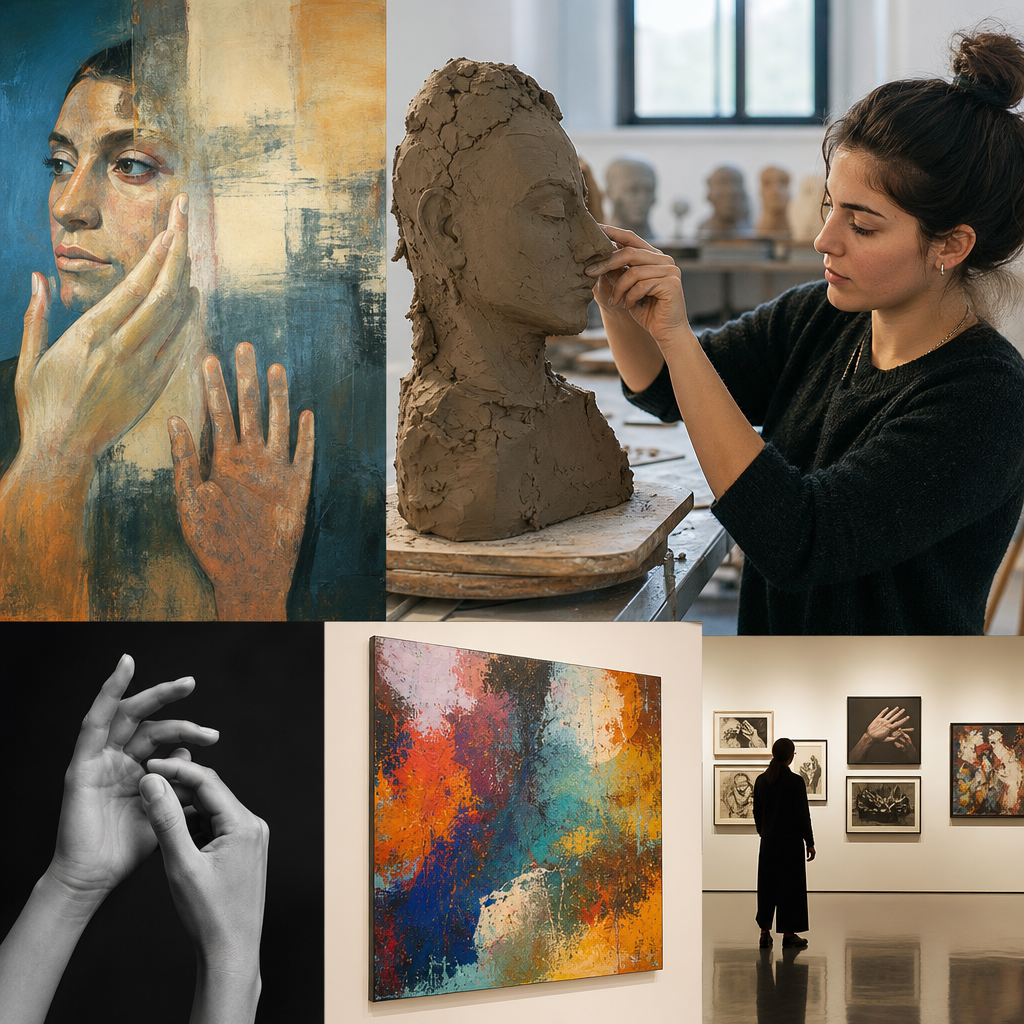

Deaf art is a powerful form of expression because it transforms language, identity, memory, and resistance into visual, tactile, and performance-based work that can be understood across communities. In the broadest sense, Deaf art refers to creative work shaped by Deaf experience, Deaf ways of seeing, and the cultural values that grow from signed languages and shared history. It includes painting, sculpture, photography, film, theatre, poetry in sign, digital media, mural work, and mixed forms that combine movement, text, image, and silence. As someone who has worked with Deaf-centered cultural content and studied how artists frame access, representation, and authorship, I have seen one point come up repeatedly: Deaf art is not simply art made by a Deaf person. It often carries specific cultural meaning, uses visual rhythm and spatial composition influenced by sign language, and responds directly to issues such as audism, language deprivation, education policy, and belonging.
Understanding Deaf art matters because art is one of the clearest ways a community tells its own story rather than being interpreted by outsiders. For many audiences, mainstream depictions of deafness have focused on limitation, medical treatment, or inspiration narratives. Deaf artists shift that frame. They present deafness as culture, not defect; as a lived identity with its own aesthetics, humor, politics, and history. This hub page on art, storytelling, and expression within Deaf culture brings those threads together. It explains the major forms Deaf art takes, the ideas that shape it, the artists and movements that have defined it, and the questions readers often ask about authenticity, accessibility, and interpretation. If you want a reliable overview of Deaf art, Deaf storytelling, sign language performance, Deaf film, and visual expression as parts of Deaf culture and identity, this guide provides the foundation.
What Deaf Art Means Within Deaf Culture
Deaf art is rooted in the idea that culture shapes creative form. Signed languages such as American Sign Language, British Sign Language, Langue des Signes Française, and many others are not spoken languages translated into the hands. They are complete natural languages with their own grammar, spatial logic, rhythm, and rhetorical devices. That matters for art. Artists influenced by sign language often think in movement, contrast, framing, facial expression, and the use of physical space. A painter may emphasize hands, eyes, line of sight, or interrupted communication. A filmmaker may build tension through visual perspective instead of soundtrack. A performer may use body placement and timing in ways that hearing audiences do not immediately recognize but Deaf audiences read with precision.
Within Deaf culture, expression is also tied to collective memory. Residential schools for the deaf, Deaf clubs, sporting events, church communities, and language activism created spaces where art circulated long before institutions paid attention. Posters, cartoons, signed stories, hand-crafted objects, and stage performances all carried cultural meaning. In practice, Deaf art often asks direct questions: Who gets to define normal communication? What does exclusion feel like in a hearing-designed world? How does visual language create beauty? Why does language access change identity outcomes? Those questions make Deaf art both personal and political. It records emotion, but it also documents systems that have shaped Deaf lives for generations.
Key Themes: Identity, Resistance, Language, and Pride
Several themes appear again and again across Deaf creative work. Identity is central. Many Deaf artists explore the difference between being medically labeled and culturally self-defined. In portraits, self-portraits, and autobiographical performance, the subject is often not hearing loss but the experience of moving between Deaf and hearing spaces. Resistance is another recurring theme. Artists confront oralism, the historic suppression of signed languages, inaccessible education, unequal employment, and patronizing attitudes. Rather than presenting these topics abstractly, they turn them into concrete images: taped mouths, fractured text, isolated figures in crowded rooms, or hands illuminated as symbols of knowledge and freedom.
Language itself is also a major subject. In Deaf art, hands are not decorative motifs. They often function as carriers of grammar, memory, and ancestry. Sign language poetry and visual vernacular show this most clearly. Facial expression, movement path, role shift, and spatial mapping work together to create metaphor in a three-dimensional way. Pride balances struggle. Many works celebrate Deaf gain, a concept popularized by scholars such as H-Dirksen L. Bauman and Joseph J. Murray, who argue that deaf ways of being contribute valuable visual, social, and cognitive perspectives. That framework helps explain why Deaf art is not only protest art. It also includes joy, satire, romance, family storytelling, and the beauty of everyday signed interaction.
Major Forms of Deaf Art and Storytelling
Deaf art is not one medium; it is a network of forms linked by visual thinking and cultural perspective. Visual art includes painting, printmaking, illustration, ceramics, fiber art, and public murals. Performance includes Deaf theatre, signed song interpretation, sign language poetry, visual vernacular, and dance created with vibration, counting systems, or visual cues. Storytelling is especially important. In Deaf communities, signed stories have long preserved humor, folklore, local history, and values. These stories may be performed live, recorded on video, or adapted into educational content for younger generations.
Film and digital media have expanded the reach of Deaf expression. Deaf filmmakers use close framing, visual silence, caption strategy, and point-of-view editing to shape audience experience. Documentaries about Deaf schools, cochlear implant debates, language policy, and Deaf activism have become key educational resources. Photography captures eye contact, gesture, and social space in ways that written description often misses. Comics and graphic storytelling can depict simultaneous communication barriers and visual strengths with clarity. The range matters because no single format can contain Deaf experience. A hub page on Deaf art should therefore connect readers to multiple pathways: studio art, literature in translation, signed literature, theatre, film, oral history, and emerging digital practice.
| Form | How it expresses Deaf experience | Common examples |
|---|---|---|
| Visual art | Uses imagery, hands, gaze, text, and spatial contrast to show identity and access | Paintings, murals, sculpture, photography |
| Signed performance | Builds meaning through movement, facial expression, rhythm, and location in space | ASL poetry, visual vernacular, theatre |
| Film and video | Controls viewpoint, silence, captions, and visual pacing to center Deaf perception | Short films, documentaries, web series |
| Storytelling | Preserves humor, history, and cultural knowledge through live or recorded narrative | Folktales, personal narratives, community histories |
De’VIA and the Rise of a Recognized Deaf Aesthetic
No discussion of Deaf art is complete without De’VIA, short for Deaf View/Image Art. In 1989, a group of Deaf artists, including Betty G. Miller, Paul Johnston, Chuck Baird, Guy Wonder, and others, gathered at Gallaudet University and articulated a framework for work that intentionally represents Deaf experience. Their De’VIA manifesto distinguished between art by Deaf people in general and art that specifically expresses Deaf perspectives. That distinction gave critics, curators, students, and the public a language for discussing the field with more accuracy.
De’VIA is often recognized by repeated motifs and themes: hands, eyes, ears, mouths, barriers, oppression, liberation, and affirmation. Betty G. Miller, frequently called the mother of De’VIA, created influential works such as Ameslan Prohibited, which addresses language suppression in education. Chuck Baird used bold color and playful symbolism to celebrate sign language and Deaf identity. These artists did not create a strict style guide; they created a conceptual lens. Since then, De’VIA has helped museums, Deaf studies programs, and arts educators explain why Deaf visual art deserves to be discussed on its own terms. It remains one of the most useful entry points for readers exploring Deaf art history, though it should not be treated as the only valid framework for contemporary Deaf creativity.
Deaf Theatre, Signed Poetry, and Performance Traditions
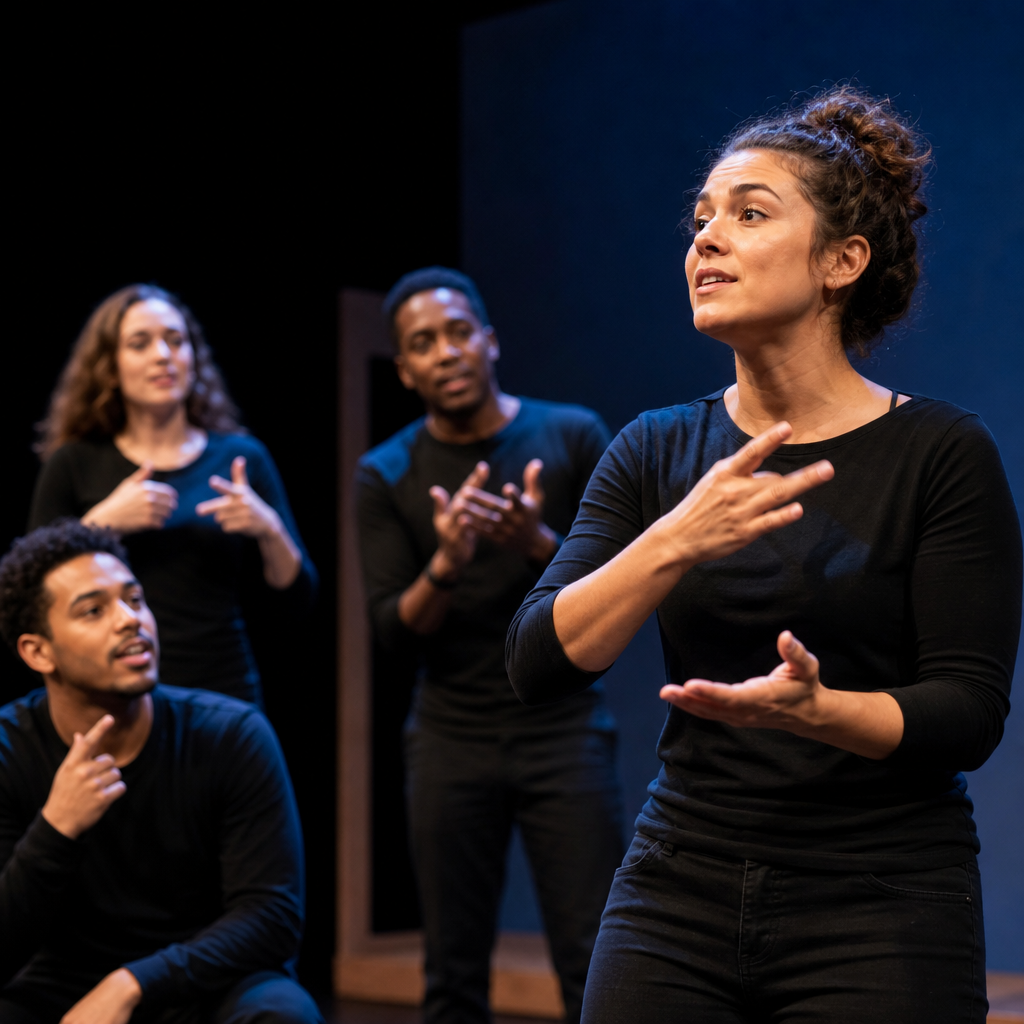
Performance is one of the most immediate ways to understand Deaf expression because it shows language as art in real time. Deaf theatre companies have demonstrated for decades that staging, lighting, movement, and translation choices can fundamentally reshape audience experience. The U.S. National Theatre of the Deaf, founded in 1967, brought signed performance to broad audiences and influenced generations of actors and directors. Deaf West Theatre later gained major attention for integrating Deaf and hearing performers in productions that made sign language central rather than supplementary. Their approach showed that accessibility can be aesthetic, not merely functional.
Signed poetry and visual vernacular deserve equal attention. ASL poetry uses repetition, handshape pattern, movement quality, pacing, and facial grammar much the way spoken poetry uses rhyme, meter, stress, and sound pattern. Visual vernacular combines cinematic imagery, mime, role shift, and rapid visual transformation. Strong performers can shift from close-up to wide shot, from person to object, or from memory to action using only the body. When audiences ask whether signed poetry can be translated fully into written English, the honest answer is no. Translation can convey theme and plot, but it cannot reproduce the original visual structure completely. That is precisely why signed literature should be understood as literature in its own right, not as a derivative version of spoken-language poetry.
Film, Media, and New Platforms for Deaf Creators
Digital tools have changed who gets to create, publish, and distribute Deaf stories. A generation ago, many Deaf artists depended on institutions, festivals, or educational programs to gain visibility. Today, creators use YouTube, Vimeo, Instagram, TikTok, and subscription platforms to share signed monologues, short films, comedy sketches, visual essays, and behind-the-scenes process videos. This shift has increased reach, but it has also sharpened questions about attribution, caption quality, translation ethics, and algorithmic visibility.
Film remains especially influential because it can center Deaf perception with precision. Sound design may be reduced, distorted, or strategically absent. Captions can be integrated as narrative rather than added as an afterthought. Camera framing can privilege hands and facial expression without exoticizing them. Works connected to directors and performers such as CJ Jones, Jade Bryan, and others have shown how Deaf-led production changes not only representation but the grammar of the screen itself. Festivals, university archives, and Deaf cultural organizations now preserve these works more systematically, which matters for future scholarship. For readers building a deeper path from this hub, Deaf cinema, web storytelling, and creator-led digital archives are essential next topics.
How to Support Deaf Art Respectfully and Effectively
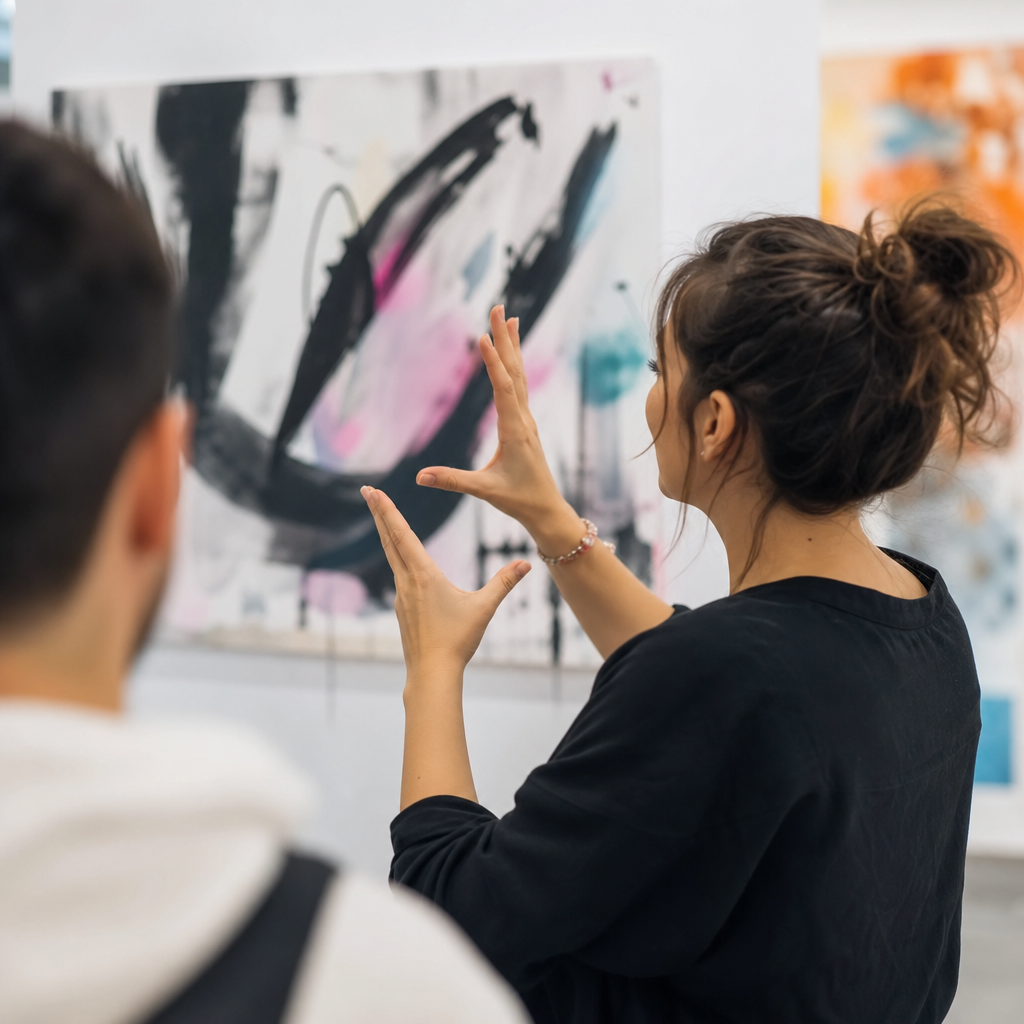
Supporting Deaf art begins with a simple principle: center Deaf creators, not hearing interpretation of Deaf lives. Buy work directly from Deaf artists when possible. Attend exhibitions, theatre performances, film screenings, and online events produced by Deaf-led organizations. If you are an educator, license materials legally, credit artists fully, and avoid using anonymous images of signing hands stripped from context. If you manage a museum, school, nonprofit, or brand, budget for interpreters, captioning, accessible marketing, and Deaf consultants from the start rather than retrofitting access later.
Respect also means understanding limits. Not every Deaf artwork is meant to educate hearing audiences, and not every piece should be translated into a simplified lesson about disability. Some works are intra-community conversations. Others challenge hearing viewers directly. Curators and readers should resist flattening Deaf art into one emotional tone. It is not always inspirational, and it is not always activist. The strongest support combines practical access, fair pay, accurate credit, and a willingness to learn the cultural context behind the work. That approach benefits artists and gives audiences a far more truthful understanding of Deaf culture and identity.
Why Deaf Art Belongs at the Center of Cultural Conversation
Deaf art reveals how culture is built through language, visual knowledge, and shared experience. It gives form to stories that are too often marginalized, and it expands the public understanding of what art can do when it is shaped by signed languages and Deaf ways of seeing. From De’VIA and Deaf theatre to signed poetry, film, and digital storytelling, the field is broad, sophisticated, and historically grounded. The main takeaway is clear: Deaf art is not a niche sidebar to Deaf culture. It is one of the strongest ways Deaf people define themselves, preserve memory, debate change, and celebrate community.
As the hub for art, storytelling, and expression within Deaf culture and identity, this page should lead you to explore individual artists, signed literature, Deaf film, performance traditions, and the history behind them. Start with one area that interests you most, then follow the connections outward. Watch a Deaf-produced film, study a De’VIA work, attend a signed performance, or purchase art from a Deaf creator. The more directly you engage with Deaf art, the more clearly you will see its depth, authority, and lasting cultural power.
Frequently Asked Questions
What is Deaf art, and how is it different from art made by deaf individuals?
Deaf art is more than artwork created by a person who is deaf. In its fullest meaning, Deaf art grows from Deaf culture, signed languages, shared history, and the lived experience of navigating a world that is often designed around sound. That means the work is not defined only by the artist’s hearing status, but by the ideas, values, and visual or performative language that shape the piece. A painting, film, performance, sculpture, or signed poem may be considered Deaf art when it reflects Deaf ways of seeing, expresses cultural identity, explores communication, or responds to themes such as access, memory, resistance, pride, and belonging.
This distinction matters because not every deaf artist necessarily creates work about Deaf culture, and not every piece made by a deaf person automatically functions as Deaf art. Deaf art often carries an intentional relationship to community and experience. It may highlight the beauty of sign language, the emotional weight of exclusion, the strength of collective identity, or the creative power of visual and tactile expression. In that sense, Deaf art is both personal and cultural. It speaks from individual experience while also participating in a broader artistic tradition rooted in Deaf life.
Why is Deaf art considered such a powerful form of expression?
Deaf art is powerful because it turns lived experience into forms that can be felt, seen, and understood across different communities. It transforms language, identity, memory, and resistance into creative work that does not rely solely on spoken words. Through gesture, space, rhythm, imagery, texture, silence, and movement, Deaf artists communicate emotions and ideas that are often difficult to capture through conventional language alone. This gives Deaf art a unique ability to express both the richness of Deaf culture and the realities of marginalization, adaptation, and resilience.
Its power also comes from the way it challenges mainstream assumptions about communication and artistic form. In Deaf theatre, sign poetry, film, mural work, or digital media, the body itself can become language. Visual timing, facial expression, and spatial composition can carry meaning just as strongly as dialogue or text. For audiences, this can be transformative. Deaf art invites people to reconsider what art sounds like, what language looks like, and how stories can be shared without centering speech. It is a forceful reminder that expression is not limited by hearing and that creativity often becomes even more innovative when shaped by difference, history, and cultural pride.
What forms can Deaf art take?
Deaf art includes a wide range of mediums, and that breadth is part of what makes it so significant. It can appear in painting, sculpture, photography, installation art, filmmaking, theatre, dance, mural work, graphic design, digital storytelling, and mixed-media practice. It also includes forms that are especially tied to signed languages and Deaf cultural performance, such as sign poetry, visual vernacular, and stage work built around movement, facial expression, and spatial storytelling. Rather than fitting into one narrow category, Deaf art often crosses boundaries between visual, tactile, and performance-based creation.
Many Deaf artists choose forms that emphasize visibility, embodiment, and direct communication. For example, a photographer may explore the emotional force of hands, gaze, and silence; a filmmaker may use framing and visual rhythm to reflect Deaf perception; a theatre artist may build scenes around signed dialogue and physical presence rather than spoken narration. Some artists also combine multiple forms to create immersive work that reflects the layered nature of Deaf experience. Because Deaf art is rooted in perspective as much as medium, it can take traditional or experimental shapes while still carrying the cultural values and expressive strategies that define it.
How does sign language influence Deaf art?
Sign language influences Deaf art at the deepest structural level. It is not simply a topic represented in the work; it often shapes how the work is imagined, organized, and experienced. Signed languages are visual, spatial, embodied, and expressive. They use movement, handshape, direction, facial expression, and timing to create meaning. When these qualities enter artistic practice, they can transform composition, rhythm, symbolism, and narrative form. In visual art, this may appear through recurring images of hands, gesture, eye contact, and spatial relationships. In performance, it may shape the pacing, emotional intensity, and physical architecture of the piece.
Sign language also contributes cultural depth. It carries memory, identity, humor, resistance, and community knowledge. Artists who work from signed language traditions often create pieces that preserve stories, celebrate fluency, or respond to efforts to suppress Deaf communication. In sign poetry and visual vernacular, language becomes art directly, using the body as a creative instrument. Even in non-performance mediums, the influence of sign can be seen in the emphasis on visual clarity, motion, and layered meaning. This is one reason Deaf art feels so distinctive: it is often built from a language that lives in space and in the body, making expression intensely immediate and deeply human.
Why is Deaf art important for culture, education, and representation?
Deaf art is important because it preserves and shares Deaf culture in ways that are emotionally resonant, historically grounded, and publicly visible. It records experiences that have often been overlooked or misunderstood, and it gives Deaf communities a way to define themselves on their own terms. Through art, stories of language, exclusion, celebration, family, activism, and survival can be passed from one generation to the next. This cultural role is essential. It helps protect collective memory while also creating space for new interpretations of identity and belonging.
Its educational value is equally significant. Deaf art can help hearing audiences better understand Deaf perspectives, not through abstract explanation alone, but through direct encounter with image, performance, and feeling. It opens conversations about access, communication, disability, language rights, and inclusion in a way that is engaging and memorable. At the same time, representation within the arts matters deeply for Deaf people themselves, especially young people seeking mirrors of their own experience. Seeing Deaf identity treated as creative, complex, and culturally rich can be empowering. In that way, Deaf art is not only aesthetically important; it is socially important. It expands who is seen, whose stories are valued, and how art can connect communities across difference.