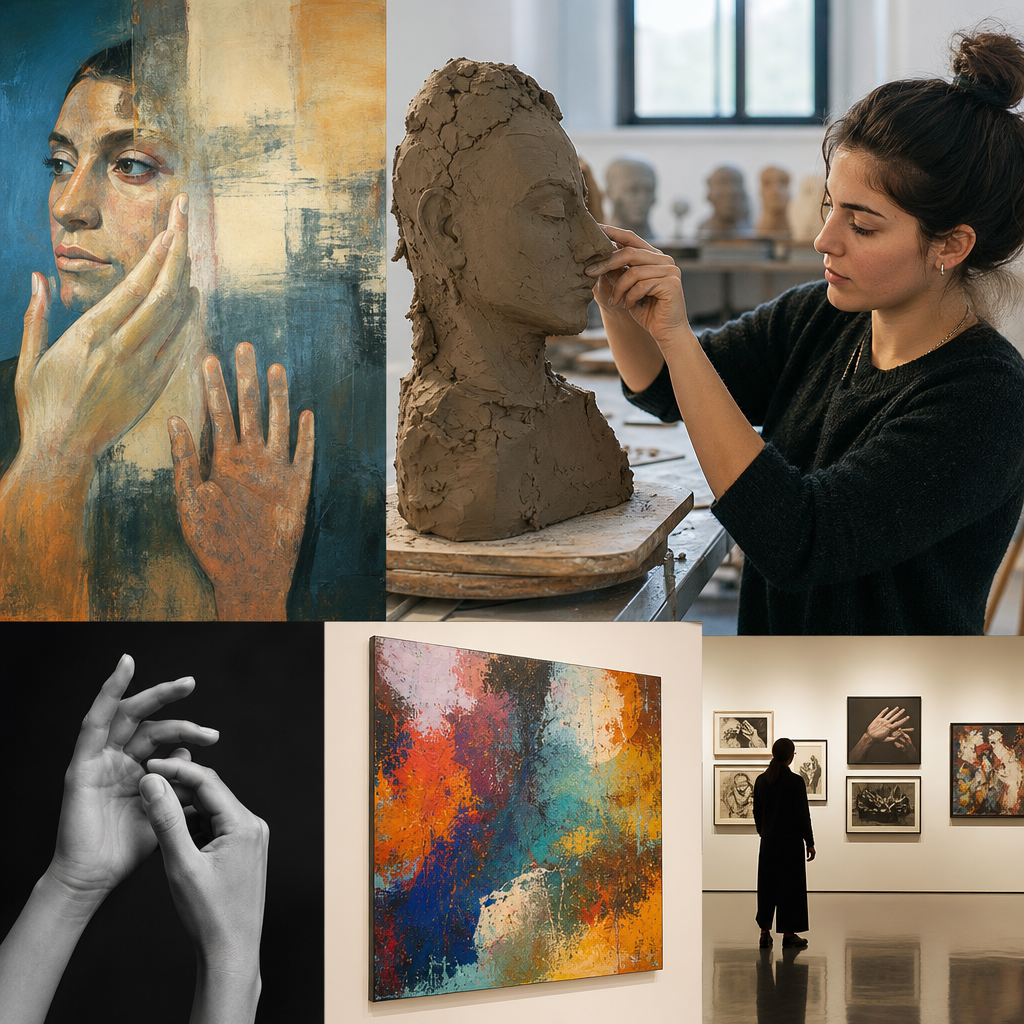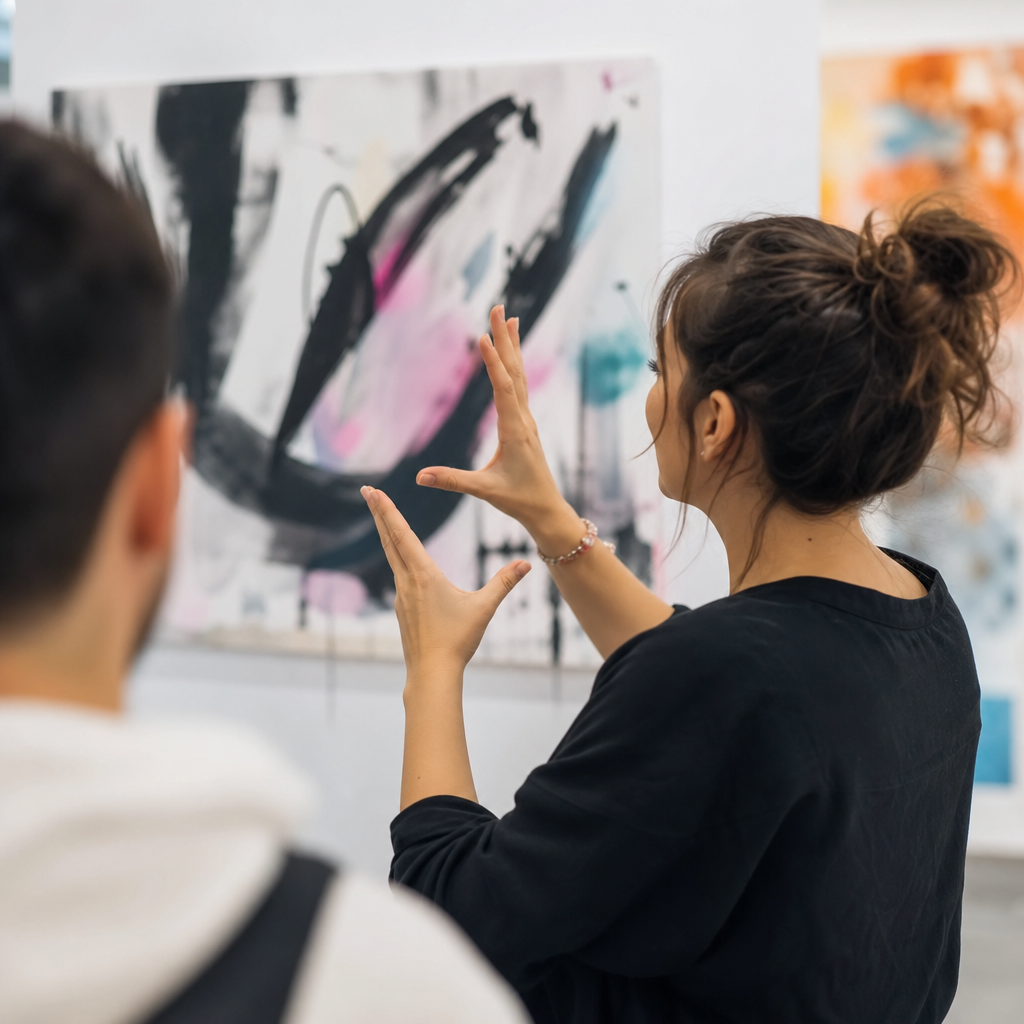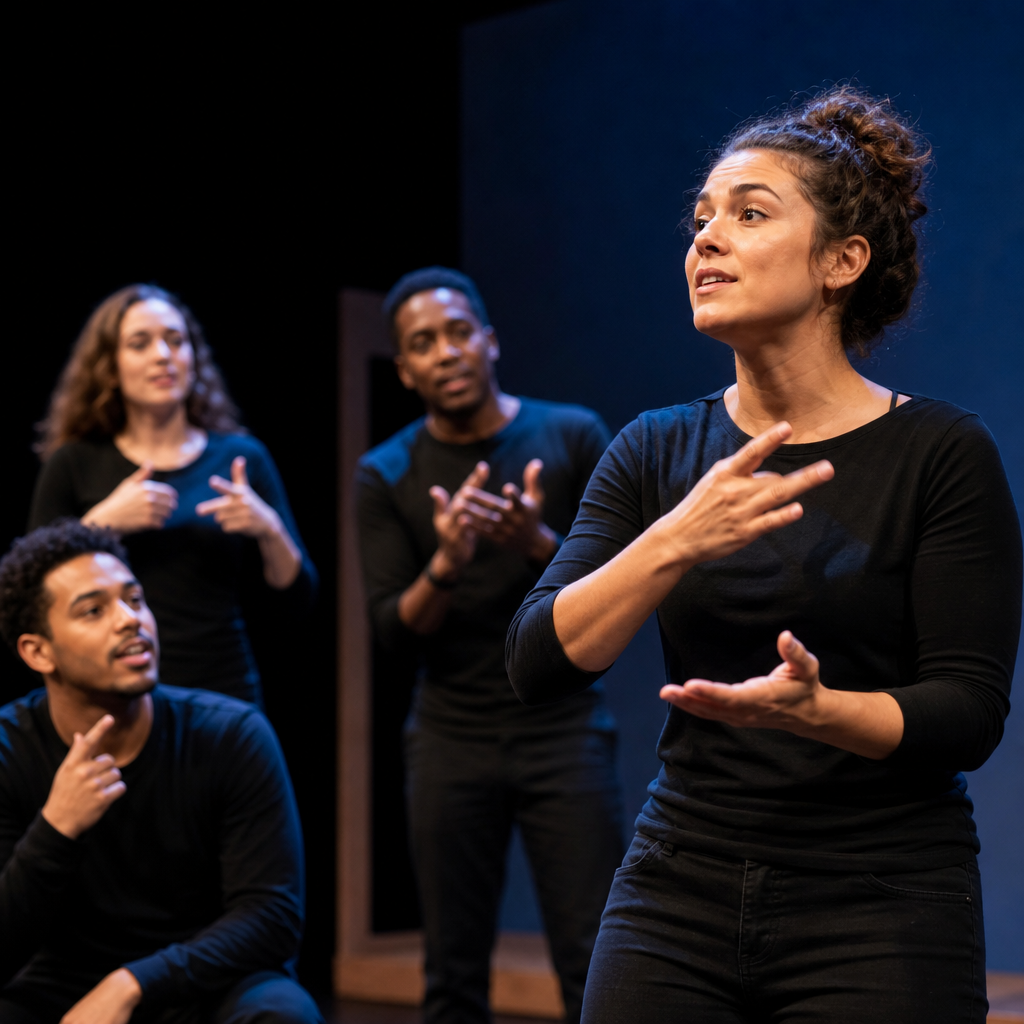

Deaf culture is the shared language, history, values, social norms, and creative life of people who identify as Deaf, not simply a medical condition defined by hearing loss. The distinction matters because many deaf and hard of hearing people do not see themselves as broken or incomplete; they see themselves as members of a linguistic and cultural minority with its own traditions, institutions, and worldview. In practice, that means the word Deaf, capitalized, often refers to cultural identity, while deaf, lowercase, may refer only to audiological status. That difference is foundational when explaining what Deaf culture is, why it exists, and why respectful communication depends on understanding it accurately.
I have seen this distinction change conversations immediately in schools, workplaces, clinics, and community programs. When Deaf people are approached only through a deficit model, decisions tend to center on fixing hearing. When they are approached through a cultural lens, decisions expand to include language access, visual communication, community belonging, and self-determination. That shift affects everything from interpreter use and captioning to education policy and family support. It also explains why Deaf culture remains a vital topic for parents, teachers, employers, healthcare providers, and anyone trying to communicate inclusively.
At its core, Deaf culture grows from shared experiences in a world designed for hearing people. Those experiences include using signed languages, navigating barriers to information, building social networks through schools and Deaf clubs, and passing down norms across generations. Like any culture, it includes humor, storytelling, art, etiquette, values, and internal diversity. There is no single Deaf experience. Some people are born deaf, some lose hearing later, some use cochlear implants, some speak, some sign, some do all of the above. Deaf culture makes room for complexity while still recognizing common ground.
This guide explains the key ideas that define Deaf culture, how Deaf identity develops, what communication norms matter most, how education and technology shape the community, and what respectful allyship looks like in daily life. If you want a complete guide to Deaf culture, start with one principle: Deaf people are experts in their own lives, and the culture formed around that expertise deserves to be understood on its own terms.
Defining Deaf culture and the role of signed languages
Deaf culture is best understood as a community formed around language and lived experience rather than hearing level alone. The strongest unifying factor in many Deaf communities is the use of a natural signed language, such as American Sign Language, British Sign Language, or Langue des Signes Française. These are full languages with their own grammar, syntax, and idioms. They are not simplified versions of spoken languages, and they are not universal. ASL, for example, is historically related to French Sign Language, not spoken English, which is why English word order does not define fluent ASL.
Language shapes culture. In Deaf communities, visual communication influences how people gather, share stories, teach children, and organize public space. Good lighting, clear sightlines, circular seating, attention-getting strategies like waving or lightly tapping a shoulder, and direct visual engagement are practical norms that also carry cultural meaning. When I have worked with event planners on accessible meetings, the most successful events did not stop at hiring an interpreter. They adjusted room layout, pacing, turn-taking, and visual access for everyone. That is Deaf culture in action, not just accessibility compliance.
Signed languages also carry collective memory. Folktales, personal narratives, jokes, and performance traditions are often passed through face-to-face interaction and now through video. Name signs, visual puns, and storytelling techniques using role shift and spatial mapping are examples of culture embedded in language itself. For many Deaf people, protecting signed language is inseparable from protecting identity.
History, community institutions, and identity formation
Deaf culture did not emerge overnight. It developed through generations of community building, especially in schools for Deaf students, social clubs, sports organizations, churches, advocacy groups, and arts spaces. In the United States, the founding of the American School for the Deaf in 1817 and Gallaudet University in 1864 created major centers of Deaf education and leadership. Deaf clubs in the twentieth century served as hubs for news, friendship, political organizing, and cultural transmission long before video calling and social media made remote connection easier.
A major turning point in modern Deaf history came with the 1988 Deaf President Now movement at Gallaudet University. Students protested the appointment of a hearing president and demanded Deaf leadership at the world’s leading Deaf university. The movement succeeded and became a landmark civil rights event, demonstrating that Deaf people were not asking merely for services but for representation, authority, and respect. That moment still matters because it clarified a central principle of Deaf culture: decisions affecting Deaf people should include Deaf leadership.
Identity formation often begins with exposure. Deaf children born to Deaf parents may grow up immersed in signed language and community from infancy. By contrast, many deaf children are born to hearing parents with little prior knowledge of deafness or sign language. Research has repeatedly shown that early language access is critical for cognitive, academic, and social development. The National Association of the Deaf and pediatric language access advocates emphasize that children need fully accessible language as early as possible. For many families, discovering Deaf culture reframes a child’s future from limitation to possibility.
Core values, communication norms, and everyday etiquette
Every culture has social rules that feel normal inside the community and unfamiliar outside it. Deaf culture values direct communication, visual clarity, shared information, and collective responsibility for access. In many Deaf spaces, it is common to be more explicit than hearing people expect. If an interpreter is missing, captions fail, or someone blocks the line of sight, the issue is usually addressed immediately because communication access is not a side concern. It is the basis of participation.
Introductions can be more detailed than in many hearing settings. People may ask where you learned to sign, whether you have Deaf family members, or what school you attended. These questions are not necessarily intrusive; they often help place someone within community networks. Maintaining eye contact is also important because looking away can interrupt communication. Visual attention-getting methods include waving, flicking lights in a room, stomping lightly so vibrations carry, or tapping a table. Grabbing someone suddenly or speaking while turning away creates barriers quickly.
Humor and storytelling are especially important. Deaf humor often plays with visual misunderstandings, interpreter errors, hearing-world assumptions, and the creativity of signed expression. Storytelling may be expansive, physically expressive, and highly visual. To outsiders, this can seem theatrical, but it reflects the strengths of a language designed for space, movement, and facial grammar.
| Aspect | Common Deaf cultural norm | Why it matters |
|---|---|---|
| Gaining attention | Wave, light tap, flick lights | Starts communication respectfully without relying on sound |
| Room setup | Good lighting and clear sightlines | Supports full visual access for signing and interpreting |
| Conversation style | Direct and explicit | Reduces ambiguity when access barriers already exist |
| Introductions | Share school, community, or signing background | Builds social context and trust quickly |
| Group communication | One speaker at a time with visual turn-taking | Makes signed conversation easier to follow |
Education, oralism, and the ongoing language access debate
No discussion of Deaf culture is complete without education. For more than a century, Deaf education has been shaped by conflict over how deaf children should learn. After the 1880 Milan Conference, oralist approaches that prioritized speech and lipreading over sign spread widely, often pushing signed languages out of classrooms. Many Deaf adults describe this history as a profound cultural loss because children were denied access to the language most naturally available to them. Lipreading alone is limited; even skilled speechreaders cannot reliably access all spoken language because many sounds look similar on the lips.
Today, bilingual-bicultural models that include a signed language and a written or spoken majority language are widely supported by many Deaf educators and researchers. These models recognize that strong first-language development supports literacy and learning. They also fit what families often observe: children thrive when communication is complete, not partial. This does not mean every Deaf person must reject speech therapy, hearing technology, or mainstream schooling. It means those tools should never replace accessible language.
Mainstream education can work well when support is robust, including qualified interpreters, captioning, Deaf mentors, teachers trained in deaf education, and opportunities for peer connection. Without those supports, students may experience isolation even when they perform academically. I have seen schools celebrate inclusion while a Deaf student spends lunch alone because no one else signs. Real inclusion requires both access and belonging.
Technology, accessibility, and misconceptions about hearing devices
Technology has transformed Deaf life, but it has not erased Deaf culture. Video relay services, smartphones, text messaging, video platforms, real-time captioning, and alert systems using light or vibration have expanded communication and independence. These tools align naturally with visual communication. In many cases, they have strengthened community ties by making signed interaction easier across distance.
Hearing aids and cochlear implants are more complex. They can provide useful access to sound for some people, but they do not restore typical hearing, and outcomes vary based on age, anatomy, programming, therapy, and environment. A noisy classroom, for example, can still be difficult even with advanced devices. The common misconception is that technology solves deafness and therefore makes signed language unnecessary. In practice, many implant users and hearing aid users still sign, use interpreters, need captions, and identify strongly with Deaf culture.
Accessibility should never depend on assumptions about a person’s device use. The right standard is functional access: can the person fully receive information, participate, and respond in real time? In hospitals, public events, courtrooms, and workplaces, that usually means offering qualified interpreters, captioning, assistive listening when useful, visual alerts, and written follow-up where appropriate. The Americans with Disabilities Act in the United States and similar laws elsewhere establish this principle clearly, but legal compliance is only the floor, not the goal.
Diversity within Deaf culture and how to be a respectful ally
Deaf culture is not monolithic. Race, ethnicity, nationality, age, education, religion, sexuality, disability, and class all shape how people experience Deaf identity. Black Deaf communities, Indigenous Deaf signers, DeafBlind people, late-deafened adults, and hard of hearing people may share some cultural ground while also facing distinct barriers. There are also important differences among national sign languages and local norms. Assuming one Deaf perspective represents all Deaf people is inaccurate and often harmful.
Respectful allyship starts with language and access. Ask people how they prefer to communicate. Do not assume lipreading is enough. Face the person, keep your mouth visible if you are speaking, and do not talk over interpreters or captions. Learn basic signs if you interact regularly, but do not treat a few signs as a substitute for professional access in high-stakes settings. If you manage a workplace or service, budget for accessibility in advance rather than waiting for a complaint.
Representation matters too. Hire Deaf professionals, consult Deaf trainers, include Deaf presenters, and support Deaf-led organizations. If a school is building a program for Deaf students, Deaf adults should be involved from the beginning. If a company is designing a video product, captioning and signed content should be part of the plan, not an afterthought. The most effective allyship I have witnessed is consistent, practical, and humble. It replaces assumptions with listening and replaces symbolic support with structural access.
Understanding what Deaf culture is leads to better communication, better policy, and more respectful relationships. Deaf culture is a living community grounded in signed languages, shared history, visual ways of being, and the conviction that deafness is not merely something to treat but also something around which people build identity and belonging. Its values show up in everyday etiquette, in educational debates, in technology choices, and in the demand for full participation rather than partial accommodation.
The most important takeaway is simple: if you want to support Deaf people well, start with language access and cultural respect. Learn the difference between hearing status and cultural identity. Recognize that signed languages are complete languages. Understand that devices and speech do not eliminate the need for access. Expect diversity within the community, and make room for Deaf leadership whenever decisions affect Deaf lives.
This guide is a starting point for the broader Deaf Culture and Identity conversation. From here, explore topics like Deaf history, Deaf education, ASL and other signed languages, Deaf art, DeafBlind communication, and workplace accessibility in more detail. The more accurately you understand Deaf culture, the better equipped you are to communicate clearly, design inclusively, and build trust. Take the next step by learning from Deaf creators, supporting Deaf-led organizations, and making access a standard part of how you work.
Frequently Asked Questions
1. What is Deaf culture, and how is it different from simply being deaf?
Deaf culture is the shared language, history, values, traditions, social norms, and artistic life of people who identify as Deaf as a cultural and linguistic community. That is very different from defining deafness only as a medical condition related to hearing loss. In a medical model, the focus is usually on what a person cannot hear and how that hearing difference might be treated, corrected, or managed. In Deaf culture, the focus shifts to identity, community, communication, and lived experience.
This distinction matters because many Deaf people do not view themselves as broken, deficient, or in need of fixing. Instead, they see themselves as part of a minority community with its own languages, institutions, traditions, and ways of understanding the world. For example, sign languages are not simplified versions of spoken language. They are complete, fully developed languages with their own grammar, syntax, and expressive richness. Community events, schools for the Deaf, advocacy organizations, storytelling traditions, and visual forms of art all play important roles in Deaf cultural life.
In everyday usage, the lowercase word deaf often refers to the audiological condition of not hearing or having reduced hearing, while the capitalized word Deaf typically refers to cultural identity and community belonging. Not every deaf or hard of hearing person identifies as Deaf culturally, and not every person’s relationship to that identity is the same. Still, the central idea is that Deaf culture is about much more than hearing levels. It is about a shared social and cultural world.
2. Why is the word “Deaf” sometimes capitalized?
The capitalization of “Deaf” is important because it often signals cultural identity rather than simply a hearing status. When people use lowercase “deaf,” they are usually referring to the physical or audiological condition of having little or no hearing. When they use uppercase “Deaf,” they are often referring to someone who identifies with Deaf culture, participates in the Deaf community, and may use a sign language as a primary language.
This difference reflects a larger understanding of identity. A person can be medically deaf without identifying as culturally Deaf. For instance, some people who lose hearing later in life may primarily see themselves through a medical or functional lens and may not have strong ties to Deaf community life. Others are born into Deaf families or become deeply connected to Deaf spaces, sign language, and shared traditions, and they may strongly identify as Deaf with a capital D.
That said, identity is personal and can be complex. Some people identify as deaf, Deaf, hard of hearing, late-deafened, DeafBlind, or use multiple terms depending on context. The key point is that capitalization is not just a stylistic choice. It can communicate belonging, pride, heritage, and a recognition that Deaf people are part of a linguistic and cultural minority, not merely a group defined by disability or medical diagnosis.
3. Is sign language the foundation of Deaf culture?
Sign language is one of the most important foundations of Deaf culture because it enables communication, community building, storytelling, education, humor, art, and the transmission of shared values across generations. In many Deaf communities, sign language is far more than a tool for communication. It is a central expression of identity and a key way cultural knowledge is preserved and passed on.
It is also important to understand that there is no single universal sign language. Different countries and regions have their own sign languages, such as American Sign Language (ASL), British Sign Language (BSL), and many others. These languages have distinct grammar, vocabulary, and cultural associations. They are complete natural languages, not just hand-based versions of spoken languages. That linguistic independence is one reason sign language holds such deep cultural meaning within Deaf communities.
At the same time, Deaf culture is not limited only to sign language. Some Deaf and hard of hearing people communicate using spoken language, cued speech, lip-reading, cochlear implants, hearing aids, or a combination of methods. Communication choices can vary widely. Even so, sign language remains central to Deaf cultural life because it supports a visual way of interacting with the world that shapes social norms, relationships, and creative expression. In short, sign language is not the only part of Deaf culture, but it is often one of its strongest and most defining pillars.
4. What values and social norms are common in Deaf culture?
Deaf culture often emphasizes direct communication, visual accessibility, collective support, and a strong sense of shared identity. Because Deaf communities are shaped by visual language and visual experience, communication norms may differ from those in predominantly hearing spaces. For example, maintaining eye contact, making sure someone can see you before speaking or signing, using clear visual signals to get attention, and ensuring that conversations happen in accessible lighting and sightlines are all common and practical expectations.
Many Deaf communities also value openness and clarity in communication. What hearing people might sometimes interpret as unusually direct can simply reflect a cultural preference for being straightforward and visually explicit. Introductions and social interactions may also be more detailed, especially in close-knit Deaf networks where community ties, schools, families, and shared acquaintances are meaningful. Storytelling, humor, and expressive facial and body language are often highly valued as well.
Another common value is advocacy for equal access. This includes support for interpreters, captioning, bilingual education, legal protections, and public understanding of Deaf perspectives. Many Deaf people place high importance on preserving sign languages and Deaf institutions because these are essential to cultural continuity. Of course, Deaf culture is not monolithic. People differ by age, race, nationality, education, and personal experience. Still, a commitment to accessible communication, mutual respect, and community connection is widely recognized as a core feature of Deaf cultural life.
5. How can hearing people respectfully engage with Deaf culture?
Hearing people can respectfully engage with Deaf culture by approaching it as a real culture with its own language, norms, and history, rather than as a problem to be solved. A good starting point is to listen, learn, and avoid assumptions. Not every deaf or hard of hearing person has the same preferences, communication style, or identity. Some identify strongly as Deaf, some do not, and respectful engagement begins with understanding that Deaf experiences are diverse.
Learning a sign language, when appropriate to your region and community, is one of the most meaningful ways to show respect and build connection. Even basic effort can demonstrate openness, though it is important to learn from qualified teachers and understand that fluency takes time. Hearing people should also follow accessible communication practices, such as facing the person when speaking, not covering the mouth, ensuring good lighting, using captions when available, and asking what communication method works best rather than guessing.
Respect also means avoiding harmful attitudes. It is best not to frame Deafness as tragic, assume that technology automatically “fixes” deaf people, or treat Deaf individuals as inspirational simply for living their lives. Instead, recognize Deaf people as members of a vibrant community with a rich cultural tradition. Support policies and environments that improve accessibility, amplify Deaf voices in education and media, and remain open to learning from Deaf perspectives. When hearing people engage with humility and genuine curiosity, they help create more inclusive relationships and a better understanding of Deaf culture as a whole.