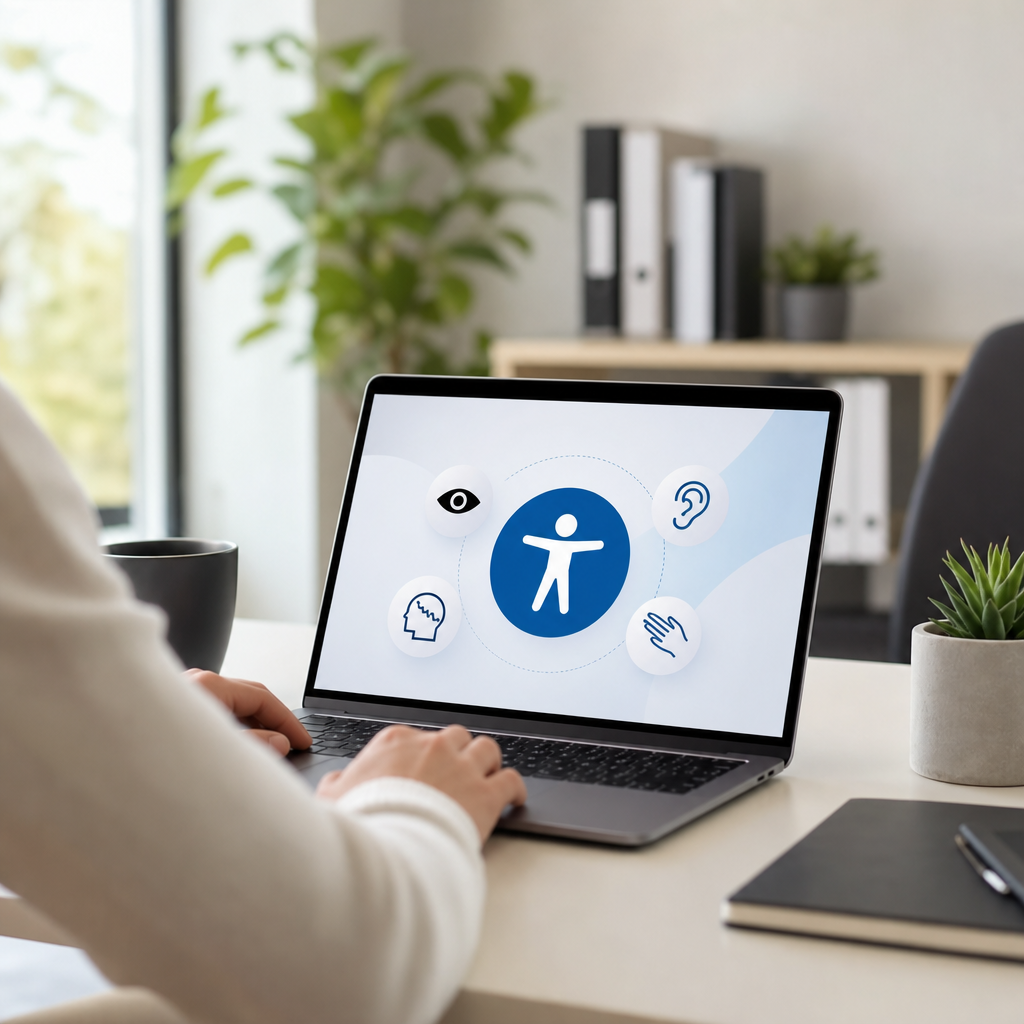

Accessibility matters in UX design because every digital product makes a choice: include people with different abilities, devices, and contexts, or exclude them by default. In practice, digital accessibility means designing and building websites, apps, software, and documents so people with disabilities can perceive, understand, navigate, and operate them. UX design shapes those outcomes at every stage, from research and information architecture to visual design, content, interaction patterns, and testing. When teams treat accessibility as a core design requirement instead of a compliance checkbox, products become easier to use for everyone, including people using screen readers, keyboard navigation, voice control, captions, zoom, high contrast settings, or temporary workarounds after injury or fatigue.
I have seen this first hand on redesign projects where a beautiful interface failed in ordinary use because modal dialogs trapped keyboard focus, forms lacked clear labels, and color alone communicated status. Those issues were not edge cases. They blocked task completion, increased support tickets, and damaged trust. Accessibility in UX design matters because disability is common, situational limitations affect almost everyone, and digital services now mediate essential activities like banking, healthcare, education, government access, shopping, and work. According to the World Health Organization, roughly 16 percent of the global population lives with significant disability. That figure alone makes accessibility a mainstream design concern, not a niche specialty.
Good digital accessibility also has a practical business dimension. Accessible design improves discoverability, readability, task success, and resilience across devices and environments. Clear headings help screen reader users and improve content structure for search engines. Larger tap targets help users with motor impairments and reduce mis-taps on mobile phones. Captions support deaf and hard of hearing users while also helping people in noisy offices or quiet public spaces. Plain language helps users with cognitive disabilities, new users, and anyone under stress. Accessibility is not separate from usability. It is a measurable part of UX quality.
The standards behind this work are mature. The Web Content Accessibility Guidelines, usually called WCAG, provide testable success criteria covering perceivable, operable, understandable, and robust experiences. Regional laws and policies, including the Americans with Disabilities Act, Section 508 in the United States, the European Accessibility Act, and EN 301 549, increasingly expect organizations to meet recognized accessibility requirements. Yet compliance alone is not the goal. A technically conforming interface can still feel confusing, slow, or exhausting. This hub article explains why accessibility matters in UX design, what digital accessibility includes, how teams should approach it, and where the biggest gains usually appear.
Accessibility expands who can successfully use a product
The simplest reason accessibility matters is reach. If a checkout flow cannot be completed with a keyboard, many users with motor disabilities will fail. If a chart uses color differences without text labels or patterns, users with low vision or color vision deficiency may miss the meaning. If a training video has no captions or transcript, deaf users lose access to the content. In my experience, these breakdowns rarely happen because teams intend exclusion. They happen because requirements were incomplete, design reviews ignored assistive technology, and testing focused only on average conditions.
Digital accessibility addresses a wide range of needs. Visual accessibility includes text alternatives for images, sufficient color contrast, scalable text, and compatibility with screen readers. Auditory accessibility includes captions, transcripts, and visual alternatives for sound cues. Motor accessibility includes keyboard access, visible focus states, generous hit areas, and interactions that do not require precise timing or complex gestures. Cognitive accessibility includes predictable layouts, plain language, clear instructions, consistent navigation, and error prevention. Seizure safety includes avoiding flashing content that can trigger photosensitive epilepsy. Each area changes design decisions in concrete ways.
It is also important to recognize permanent, temporary, and situational barriers. A user may have a permanent visual disability, a temporary wrist injury, or a situational limitation such as one-handed mobile use while carrying a child. Someone in bright sunlight benefits from higher contrast. Someone with a slow connection benefits from semantic structure and efficient content loading. Someone using a voice assistant benefits from clear labels and concise content. Inclusive UX design accounts for this spectrum instead of optimizing only for ideal conditions.
Accessible UX improves usability, conversion, and retention
Teams often ask whether accessibility slows innovation or adds friction to product goals. In reality, accessible UX usually removes friction. Users convert when they can find information quickly, understand what to do next, and recover from mistakes without confusion. Accessibility patterns directly support those outcomes. Well-labeled form fields reduce abandonment. Error messages placed near the relevant field, written in plain language, and announced to assistive technology help users fix problems faster. Logical heading structures make long pages easier to scan. Skip links help keyboard users bypass repetitive navigation, but they also reflect disciplined information architecture.
I have worked on form redesigns where accessibility improvements reduced completion time even for users without disclosed disabilities. Replacing placeholder-only labels with persistent labels cut errors. Grouping related fields with proper fieldsets improved comprehension. Increasing contrast on button text improved recognition on older monitors. Adding inline validation with clear instructions reduced support calls. These are ordinary UX wins, yet they are grounded in accessibility principles. The same pattern shows up in e-commerce, SaaS onboarding, and public sector services: when the interface becomes more understandable and operable, more people finish tasks.
Accessibility can also influence search visibility and content performance. Structured headings, descriptive link text, image alt text used appropriately, transcripts, and readable copy create cleaner semantic signals. That does not mean accessibility guarantees rankings, but it strengthens content quality in ways that improve machine interpretation and human comprehension at the same time. For a hub page under Accessibility and Inclusion, that matters because the page should clearly answer foundational questions while signaling where deeper related articles belong, such as keyboard navigation, color contrast, accessible forms, assistive technology testing, and inclusive content design.
| Accessibility practice | UX benefit | Example |
|---|---|---|
| Clear form labels and instructions | Lower error rates and faster completion | Checkout address forms with explicit required fields |
| Sufficient color contrast | Better readability in low vision and bright light | Primary buttons readable outdoors on mobile |
| Keyboard support and visible focus | Reliable navigation without a mouse | Menus, dialogs, and filters operable by Tab and Enter |
| Captions and transcripts | Improved comprehension across environments | Product demos usable in quiet offices and noisy trains |
| Consistent layouts and headings | Faster scanning and orientation | Help centers with predictable article structure |
Standards, laws, and design systems make accessibility operational
Accessibility becomes sustainable when teams move from one-off fixes to repeatable systems. WCAG 2.1 and WCAG 2.2 are the most widely used references for digital accessibility work today. Their success criteria give teams a shared language for issues like non-text content, contrast minimums, focus order, reflow, target size, labels in name, and accessible authentication. For product teams, the key point is not memorizing every criterion. It is translating them into design requirements, acceptance criteria, and reusable components so accessibility is built into normal delivery.
Design systems are especially powerful here. A button component with tested contrast, visible focus, keyboard support, and proper states prevents repeated mistakes. So does a form field component that pairs labels, help text, error messaging, and semantic markup correctly. In mature teams, designers define behavior notes, engineers map them to accessible code patterns, QA validates them with manual and automated checks, and content designers ensure instructions are concise and unambiguous. Accessibility annotations in Figma, Storybook documentation, and issue tracking templates help keep that work visible.
Legal expectations raise the stakes. In the United States, ADA-related digital accessibility litigation has grown steadily, especially around consumer websites and apps. Public sector organizations often work against Section 508 requirements. In Europe, the European Accessibility Act extends accessibility expectations across products and services, while EN 301 549 provides technical procurement guidance. Organizations should consult legal counsel for jurisdiction-specific obligations, but the design implication is straightforward: accessibility cannot be deferred until launch. Retrofitting a large product after complaints or legal pressure is usually more expensive than integrating accessibility from discovery onward.
Research, content, and interaction design determine whether accessibility succeeds
Many accessibility failures start before visual design. If discovery research excludes disabled participants, core requirements will be wrong. UX teams need inclusive recruitment, accessible research materials, moderated sessions that work with assistive technology, and analysis that captures barriers rather than smoothing them away as outliers. In usability studies I have run, keyboard-only testing often surfaced navigation flaws that standard click testing missed entirely. Screen reader sessions revealed duplicate link names, unlabeled controls, and buried page landmarks. Those findings changed information architecture decisions, not just front-end code.
Content design is equally central to digital accessibility. Headings should reflect document structure, not just visual styling. Link text should describe destination or action instead of using vague phrases like click here. Instructions should not rely on sensory characteristics such as “use the green button on the right.” Error messages should say what went wrong and how to fix it. Long pages benefit from summaries, lists, and descriptive subheadings because they reduce cognitive load. Accessible writing is direct, specific, and supportive, especially in high-stakes journeys like healthcare enrollment, benefits applications, and password recovery.
Interaction design must respect assistive technology and user control. Focus should move predictably and never get trapped. Time limits should be adjustable when possible. Motion should be reduced when users request less animation. Drag-and-drop tasks should offer a simple alternative. Authentication should not require impossible memory tasks or puzzle solving. Mobile experiences need enough spacing between controls and support for platform accessibility settings like text scaling, screen readers, and switch access. These choices often look minor in a mockup, but they determine whether the product is merely attractive or genuinely usable.
Testing accessibility requires more than automated scans
Automated tools are useful, but they are not enough. Axe, WAVE, Lighthouse, and browser accessibility inspectors can quickly flag missing alt attributes, low contrast, empty buttons, form labeling problems, and some ARIA misuse. I rely on them early because they catch preventable defects before review. However, automated checks usually find only a portion of accessibility issues. They cannot reliably judge whether alt text is meaningful, whether a heading hierarchy reflects content logic, whether focus order matches the visual flow, or whether instructions make sense to a first-time user under pressure.
Manual testing fills those gaps. Every serious accessibility review should include keyboard-only navigation, screen reader checks with tools such as NVDA, JAWS, or VoiceOver, zoom and reflow testing, contrast verification, reduced motion checks, and mobile testing on real devices. For forms, test error handling, announcements, and recovery. For modals, test focus management and escape behavior. For media, verify captions, transcripts, and player controls. For dynamic interfaces, verify that changes are conveyed without disorienting users. The most valuable step, when possible, is usability testing with people who actually use assistive technology in daily life.
Testing should happen throughout the lifecycle, not as a final gate. During discovery, evaluate competitors and existing pain points. During design, review prototypes for reading order, labels, and keyboard logic. During development, add component-level checks in Storybook or similar environments, include accessibility assertions in QA plans, and treat severe issues as release blockers. After launch, monitor support channels, feedback forms, and analytics for signs of accessibility breakdowns, such as unusual drop-off on key tasks. Accessibility is continuous product quality work, not a one-time audit.
How to build an accessible UX practice that lasts
The most effective accessibility programs are cross-functional. Leadership sets expectations, product managers prioritize work, researchers include disabled participants, designers specify accessible behavior, engineers implement semantic patterns, QA validates outcomes, and content teams write for clarity. Start with a baseline audit and a prioritized remediation roadmap focused on high-impact user journeys. Then embed accessibility into ways of working: design reviews, definition of done, procurement, third-party evaluations, analytics, and training. A small set of shared checklists tied to your component library usually outperforms a thick policy document nobody uses.
Training matters, but it should be practical. Teach designers how focus order, heading structure, contrast, and target size affect real tasks. Teach engineers semantic HTML first, then ARIA as a reinforcement, not a substitute. Teach content teams how to write alt text, labels, and error copy. Teach QA how to run keyboard and screen reader smoke tests. When people understand the user impact, accessibility stops feeling abstract. It becomes part of craft. Over time, teams ship faster because they are not rediscovering the same failures in every sprint.
This hub page should anchor your broader digital accessibility content strategy. From here, link to deeper guidance on WCAG basics, accessible forms, color contrast, keyboard accessibility, screen reader testing, captioning, accessible PDFs, mobile accessibility, design systems, legal requirements, and inclusive research methods. That structure helps readers move from principles to implementation. Accessibility matters in UX design because it turns digital products into services people can actually use with dignity, independence, and confidence. Make accessibility a default requirement in your next project, and your users, metrics, and product quality will all improve.
Frequently Asked Questions
Why does accessibility matter so much in UX design?
Accessibility matters in UX design because UX determines whether people can actually use a digital product, not just whether it looks polished. Every design decision influences access: page structure affects navigation, color choices affect readability, button labels affect comprehension, and interaction patterns affect whether someone can complete a task independently. When accessibility is treated as a core UX principle, websites, apps, software, and documents become usable by people with disabilities, including those who are blind or low vision, Deaf or hard of hearing, have motor impairments, cognitive differences, or temporary limitations such as injuries or fatigue.
It also matters because accessibility improves inclusion beyond disability alone. People use products in many real-world contexts: on small screens, in bright sunlight, in noisy spaces, with slow internet, while multitasking, or with aging-related changes in vision, hearing, and dexterity. Accessible UX supports those situations too. In other words, accessibility is not a narrow edge case; it is a practical design approach that makes products clearer, more flexible, and easier to use for a wider audience. Good UX and accessibility are deeply connected because both are fundamentally about reducing friction, supporting user goals, and ensuring no one is excluded by avoidable design barriers.
How does accessible UX benefit businesses and organizations?
Accessible UX delivers business value in several measurable ways. First, it expands audience reach. When a product is accessible, more people can use it successfully, including millions of users with permanent, temporary, or situational limitations. That can lead to stronger engagement, higher conversion rates, improved customer satisfaction, and greater retention. If people can navigate content, understand instructions, fill out forms, and complete purchases without frustration, the product performs better for both users and the organization behind it.
Second, accessibility reduces costly usability problems. Teams that address accessibility early in research, design, content strategy, and development often avoid expensive redesigns later. Clear headings, keyboard-friendly interactions, consistent navigation, readable content, and properly labeled controls improve support outcomes and lower friction across the board. Accessibility also strengthens brand trust by signaling that an organization takes inclusion seriously and designs responsibly.
There is also an important legal and compliance dimension. Many organizations are expected to meet accessibility standards and anti-discrimination requirements, and failing to do so can create legal, financial, and reputational risk. But the strongest reason to prioritize accessible UX is not fear of regulation; it is that inclusive design creates better digital experiences. Products that are easier to perceive, understand, navigate, and operate tend to perform better in search, content discovery, and overall user satisfaction. Accessibility is not just good ethics. It is good product strategy.
What are the most common accessibility issues UX designers should watch for?
Some of the most common accessibility problems begin with visual design and content clarity. Low color contrast can make text unreadable for many users. Tiny font sizes, dense layouts, and long unstructured blocks of content create cognitive load and reduce comprehension. Relying on color alone to communicate meaning, such as showing errors only in red, excludes users who may not perceive those distinctions. Ambiguous link text like “click here” or unlabeled icons can also make navigation confusing, especially for screen reader users and people scanning quickly.
Interaction design introduces another major set of issues. Menus, dialogs, sliders, and forms often create barriers when they are difficult to use with a keyboard, have inconsistent focus behavior, or depend on precise mouse movements. Forms are especially common trouble spots when inputs lack clear labels, instructions are vague, required fields are not identified properly, and error messages do not explain how to fix a problem. UX designers should also watch for time limits, motion effects, and complex multi-step flows that can overwhelm users or make tasks impossible without extra support.
Information architecture and content strategy matter just as much. Poor heading hierarchy, confusing navigation, inconsistent page layouts, and jargon-heavy copy make products harder to understand and operate. Accessible UX is not only about assistive technology support; it is about creating structure, predictability, and clarity throughout the experience. Designers who think in terms of perception, comprehension, navigation, and control are far more likely to catch issues before they become embedded in the product.
At what stage of the UX process should accessibility be considered?
Accessibility should be considered from the very beginning of the UX process and carried through every stage of product development. It is most effective when it starts in discovery and research, where teams identify the needs, goals, constraints, and pain points of diverse users, including people with disabilities. If accessibility is postponed until visual polish or QA, teams usually end up fixing symptoms rather than designing inclusive experiences from the start. Early attention helps shape better requirements, more realistic user journeys, and more thoughtful product decisions.
During information architecture and wireframing, accessibility influences structure, navigation, content hierarchy, and task flow. During visual design, it affects contrast, typography, spacing, states, and component behavior. During content design, it shapes readability, plain language, headings, instructions, and error messaging. During prototyping and testing, teams can evaluate whether users can complete tasks with a keyboard, screen reader, zoom, or other assistive tools. And during development handoff, accessibility needs to be documented clearly so that the intended experience is implemented correctly.
Most importantly, accessibility should not be treated as a one-time checklist. It requires ongoing collaboration among researchers, UX designers, UI designers, content strategists, developers, QA specialists, and product owners. As products evolve, accessibility needs to remain part of design systems, component libraries, review processes, and usability testing. The most mature teams treat accessibility as a continuous quality standard, not a final inspection item.
How can teams make accessibility a practical part of everyday UX work?
Teams can make accessibility practical by building it into routine decisions instead of treating it as a separate initiative. A strong starting point is to define accessibility goals clearly, align on relevant standards such as WCAG, and include inclusive design expectations in project briefs, design reviews, and acceptance criteria. Designers should use accessible patterns and components by default, not reinvent core interactions without a strong reason. Design systems can help by providing tested buttons, form fields, modals, navigation elements, and content guidelines that already account for accessibility needs.
Research and testing are equally important. Teams should include participants with disabilities in user research whenever possible and test real tasks, not just isolated screens. Practical checks can include keyboard-only navigation, screen reader behavior, zoom and reflow testing, contrast checks, focus visibility, and validation of labels, instructions, and error states. These activities do not need to be complicated to be valuable; what matters is making them regular and actionable.
It also helps to create a culture of shared responsibility. Accessibility is not owned by one specialist alone. UX designers shape flows and patterns, content teams shape clarity, developers shape semantic structure and behavior, and QA validates whether experiences work as intended. Training, documentation, and recurring review habits make a major difference. When accessibility becomes part of how a team defines quality, decisions improve faster, rework decreases, and the final user experience becomes more inclusive, resilient, and effective for everyone.