Challenges deaf students face in education begin long before a lesson starts, and they extend far beyond hearing loss alone. In schools, colleges, and training programs, deaf and hard of hearing learners often navigate systems designed around spoken instruction, fast classroom discussion, and audio-based information. Education accessibility refers to the practical conditions that let every student access teaching, communication, assessment, campus life, and support services on equal terms. For deaf students, that includes sign language access, accurate captioning, visual teaching methods, assistive listening technology, trained staff, and inclusive policies that work in daily practice. This matters because inaccessible education does not simply create inconvenience; it limits academic performance, social belonging, progression to higher education, and later employment opportunities. I have seen programs improve dramatically when accessibility is planned from the start rather than added after complaints. When schools understand the full range of barriers, they make better decisions about classroom design, digital learning, student services, and family communication. This hub article explains the main education accessibility issues affecting deaf students and outlines the standards, supports, and habits that make learning environments genuinely inclusive for everyone.
Communication barriers in classrooms and lectures
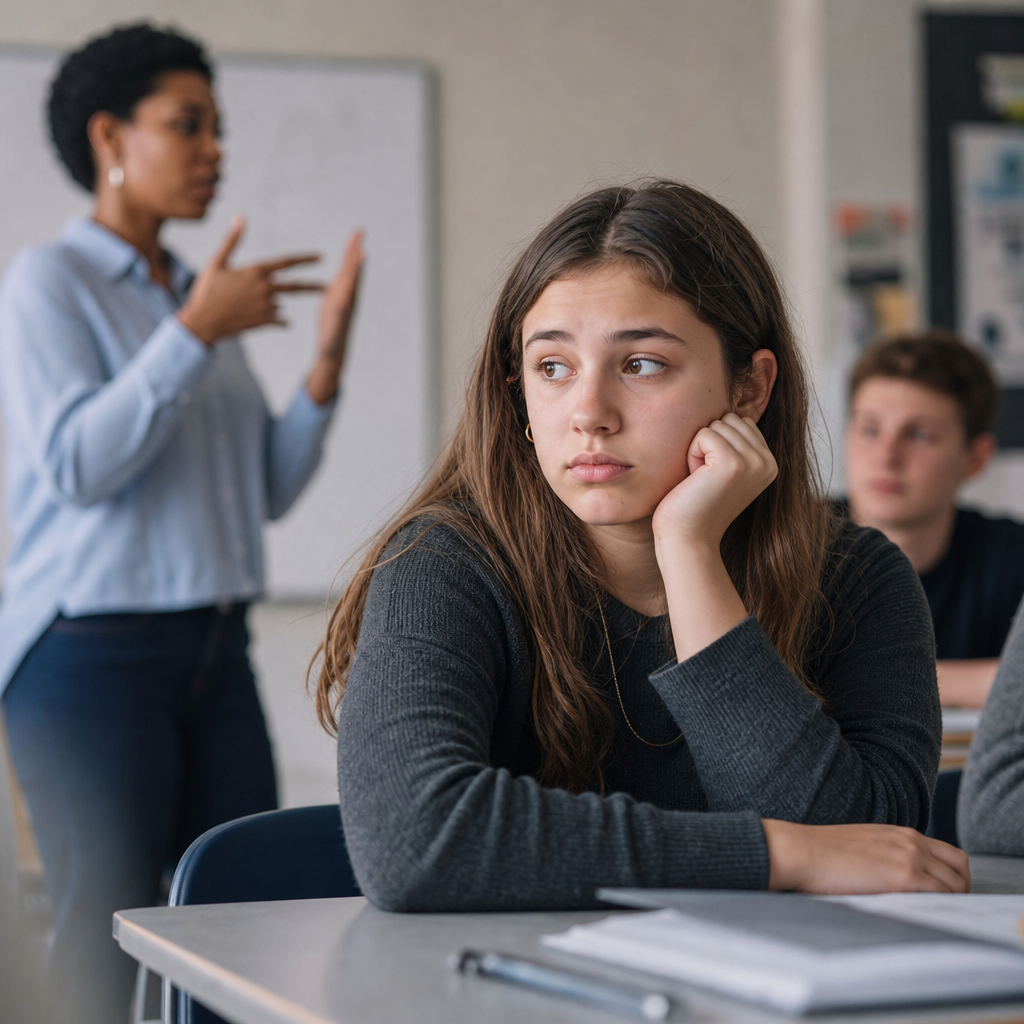
The most immediate challenge for many deaf students is communication access during instruction. In a typical classroom, teachers speak while turning toward a whiteboard, classmates answer from the back of the room, videos play without captions, and discussion moves quickly from one speaker to another. Even students with strong residual hearing, cochlear implants, or hearing aids can miss essential information when acoustics are poor or speakers are not visible. Deaf students who use sign language face a separate but equally serious barrier when no qualified interpreter is available, or when an interpreter is present but the lesson includes specialized vocabulary the interpreter has not been prepared to handle. In science, law, medicine, and technical courses, a missing term can alter the meaning of an entire concept.
Classroom communication is also affected by teaching style. Many instructors still rely on simultaneous talking and writing, dimmed rooms for projected slides, or spontaneous group work with no turn-taking structure. Those choices reduce visual access. Effective education accessibility for deaf students requires clear sightlines, one speaker at a time, captioned media, advance access to slides and vocabulary lists, and teaching routines that support visual attention. In higher education, lecture capture platforms such as Panopto, Kaltura, and Echo360 can help only if captions are edited for accuracy. Auto-generated captions often struggle with names, formulas, accents, and domain-specific language, so unreviewed captions are not a complete solution.
Peer interaction matters as much as teacher talk. Deaf students are often excluded from informal learning that happens before class, during laboratory setup, or in group projects. Hearing students may divide tasks verbally before a deaf classmate can follow the exchange. Over time, that reduces participation and can create the false impression that the student is disengaged. Schools that train staff and students in accessible communication practices see better outcomes because access becomes a shared responsibility rather than an individual accommodation problem.
Literacy, language development, and early educational gaps
Another major challenge stems from early language access. Deaf students are not a uniform group. Some are born to deaf signing families and arrive at school with a strong first language foundation in a signed language. Others are born to hearing families who receive delayed diagnosis, inconsistent support, or advice focused narrowly on speech outcomes. When children do not get full access to language early, whether signed or spoken, the effects can appear later in vocabulary, reading comprehension, written expression, and confidence in academic settings. This is not a question of intelligence. It is a consequence of language deprivation and unequal access to input during critical developmental years.
In schools, educators sometimes mistake language difference for low ability. A deaf student may understand a concept perfectly in sign language yet struggle to express it in written English because the grammar and structure differ. Teachers who assess only written output can miss actual understanding. I have worked with teams that improved outcomes simply by separating content mastery from language production during assessment and by giving students multiple ways to demonstrate knowledge. Bilingual approaches, where students build strong sign language skills while developing literacy in the written majority language, are associated with stronger academic identity and more reliable access to complex ideas.
Reading instruction deserves special attention in any discussion of education accessibility. Deaf learners often need explicit teaching in morphology, syntax, and background knowledge because they may not acquire those incidentally from overheard conversation, radio, or everyday audio exposure. Visual phonics, signed reading strategies, shared book work, and direct vocabulary instruction can all help, but they must be applied by professionals who understand deaf education rather than generic remediation models.
Technology, accommodations, and the gap between policy and practice
Most education systems recognize a duty to provide accommodations, yet implementation remains uneven. On paper, a student may have interpreters, note-taking support, speech-to-text reporting, FM or DM systems, captioned content, and extended time. In practice, these supports can arrive late, be poorly coordinated, or fail in the settings where they matter most. A hearing loop installed in one lecture hall does not help in seminars, internships, field trips, clinical placements, or online breakout rooms. Accessibility is only effective when it follows the student across the full educational journey.
Technology can improve access substantially, but schools often overestimate what devices can do. Hearing aids and cochlear implants do not restore typical hearing; they provide access to sound under specific conditions, with outcomes shaped by environment, training, and fatigue. Remote microphone systems can make a teacher’s voice clearer, yet they do not solve multi-speaker discussion unless the classroom uses disciplined turn-taking. Real-time captioning can be transformative, but quality depends on the skill of the captioner, the platform, internet stability, and access to preparation materials. I have seen excellent accommodations fail because no one tested the setup before class started.
The table below shows common supports and the limitations schools must plan for:
| Support | Primary benefit | Common limitation | Best practice |
|---|---|---|---|
| Qualified sign language interpreter | Direct access to spoken instruction and discussion | Shortages, fatigue, and lack of subject preparation | Book early, share materials in advance, use team interpreting for long sessions |
| Live captioning | Text access for lectures, meetings, and online classes | Errors with jargon, names, and weak audio | Use trained providers and review technical setup before sessions |
| Recorded captions | Accessible review of course video content | Auto-captions may be inaccurate | Edit captions and include speaker labels and sound cues when needed |
| Remote microphone system | Improves signal-to-noise ratio for spoken teaching | Limited value in chaotic discussions | Pair with structured classroom communication rules |
| Note-taking support | Reduces split attention between watching and writing | Quality varies and notes may miss context | Provide slides, outlines, and shared notes together |
Strong policy should define response times, quality standards, backup plans, and accountability. In the United States, obligations often arise under the ADA, Section 504, and IDEA; in the United Kingdom, duties are shaped by the Equality Act 2010 and SEND frameworks. The exact legal route differs, but the principle is consistent: access must be timely, effective, and comparable, not merely symbolic.
Social inclusion, mental load, and participation beyond academics
Education accessibility is not limited to grades and lectures. Deaf students frequently describe the constant mental load of monitoring who is speaking, positioning themselves for visibility, requesting repetition, managing technology, and deciding when it is worth correcting access failures. That effort can produce fatigue well before the academic day ends. Listening fatigue is widely discussed for hearing aid and cochlear implant users, but visual fatigue also affects students who rely on sustained sign language access, caption reading, and careful observation of facial and contextual cues.
Social participation is another area where barriers accumulate. Lunchtime conversation, student societies, sports briefings, residence meetings, and networking events are often less accessible than formal classes because they are loosely structured. Deaf students may be physically present yet excluded from the information flow that builds friendships and belonging. This can affect retention. Research across postsecondary settings has linked belonging and peer connection to persistence, especially for students navigating minority language or disability barriers. When institutions focus only on classroom accommodations, they miss a major part of the educational experience.
There are practical fixes. Orientation should include accessible campus tours, interpreter booking for extracurricular activities, captioned announcements, and training for student leaders. Group work should assign communication norms such as facing the group, avoiding overlap, and documenting decisions in shared text. Counseling services should also be accessible. Too often, mental health support is technically available but functionally hard to use because providers lack sign language skills or the booking system depends on phone calls.
What schools, colleges, and universities can do better
The strongest institutions treat accessibility as infrastructure, not exception handling. That means designing education accessibility into procurement, curriculum planning, staff development, digital platforms, and quality assurance. Learning management systems should support captions, transcripts, accessible documents, and visual navigation. Teachers should know how to make slides readable, describe audiovisual content clearly, pace discussion, and release materials early. Disability or accessibility teams should coordinate with academic departments rather than operating as isolated service units.
Training is essential because goodwill does not equal competence. In my experience, staff become far more effective when they learn a few specific practices: never speak while facing away, repeat peer comments before answering, caption every assigned video, avoid testing listening rather than knowledge unless listening is itself the learning objective, and consult the student without making the student responsible for designing the entire access plan. Institutions should also collect data on accommodation delays, caption accuracy, complaint patterns, progression rates, and student satisfaction. What gets measured gets fixed.
Family and community partnerships matter in school settings. Parents need accessible communication from the institution, especially when meetings, emergency notices, or progress reports are delivered through audio-heavy channels. Collaboration with deaf professionals, interpreters, speech and language specialists, educational audiologists, and deaf mentors improves planning because it brings lived and technical expertise together. Universal Design for Learning offers a useful planning lens: provide multiple means of representation, engagement, and expression from the outset. While no framework solves every issue, proactive design reduces the need for crisis accommodations and makes learning better for many hearing students as well.
Accessible education for deaf students is achievable, but only when institutions move from reactive compliance to consistent inclusive practice. The central lesson is simple: deaf students do not struggle because they lack ability; they struggle when communication, teaching, technology, and campus systems are built without them in mind. When schools provide reliable language access, accurate captions, trained staff, inclusive group work, and assessment methods that measure knowledge fairly, outcomes improve across academic achievement, confidence, and retention. This sub-pillar hub on education accessibility should guide every related discussion, from classroom design and digital learning to policy, family engagement, and student wellbeing. If you are reviewing your own school, college, or university, start with one question: can a deaf student access every essential part of learning without having to fight for it? Use that question to audit lessons, platforms, events, and support services, then fix the gaps systematically. Better access is not a specialist add-on. It is the foundation of equitable education, and it benefits the entire learning community.
Frequently Asked Questions
What are the biggest educational challenges deaf students face in the classroom?
Deaf students often face barriers that go well beyond the inability to hear spoken words. One of the biggest challenges is access to instruction in real time. Many classrooms still rely heavily on lectures, verbal explanations, side comments from teachers, and rapid class discussion. When information is delivered mainly through speech, deaf and hard of hearing students can miss essential details, transitions between topics, and spontaneous explanations that are never written down. Even when a student uses hearing aids, cochlear implants, or assistive listening technology, that does not guarantee complete access to everything being said.
Another major challenge is communication pace. Classroom discussions frequently move quickly, with multiple students speaking from different parts of the room, interrupting one another, or talking without raising their hands. This can make it difficult for a deaf student to identify who is speaking and follow the full conversation, especially if they are relying on lip reading, sign language interpretation, or captioning. Lip reading itself is limited and does not provide full access to language, since many sounds look identical on the lips and not every speaker is easy to understand visually.
Deaf students may also encounter barriers in note-taking, group work, videos without captions, oral instructions, and audio-based assignments. If they are focused on watching an interpreter, reading captions, or tracking a speaker visually, they cannot easily look down and take full notes at the same time. Over the course of a school day, this creates additional mental effort and fatigue. In practice, the biggest educational challenges usually come from inaccessible teaching methods and environments, not from deafness itself.
How does limited communication access affect academic performance for deaf and hard of hearing students?
Limited communication access can affect academic performance in direct and indirect ways. Directly, students may miss instructions, examples, deadlines, feedback, or content needed to understand a lesson fully. A teacher may assume the class has understood a verbal explanation, but a deaf student may only receive part of that information if it was not captioned, signed, repeated clearly, or provided in writing. Over time, these gaps can affect test performance, assignment quality, class participation, and confidence in the subject.
Indirectly, limited access increases cognitive load. Deaf students often have to work harder than hearing peers just to gather the same information. They may need to divide attention between the teacher, an interpreter, slides, classmates, and written materials all at once. This constant effort can lead to fatigue, slower processing in fast-paced settings, and reduced opportunity to engage deeply with the content. The issue is not lower ability. It is that more energy is spent accessing information before learning can even begin.
Communication barriers can also affect relationships with teachers and classmates. If a student cannot easily join discussion, ask follow-up questions, or clarify misunderstandings in the moment, they may appear quiet or disengaged when they are actually excluded by the format of communication. This can influence participation grades, teacher expectations, and access to collaborative learning. Strong academic performance becomes much more achievable when schools provide captioning, interpreters, accessible materials, visual supports, and inclusive teaching practices from the start rather than after problems appear.
Why are captioning, interpreters, and other accessibility services so important in education?
Captioning, sign language interpreters, note-taking support, assistive listening systems, and accessible digital materials are essential because they provide equal access to learning. Education is not only about being physically present in a classroom. It is about being able to receive information accurately, participate in discussions, understand instructions, and demonstrate knowledge fairly. Without accessibility services, deaf students may technically attend class while still missing large parts of the educational experience.
Captioning is especially important because it supports access to lectures, videos, presentations, online meetings, and multimedia resources. Accurate captions help students follow terminology, names, new vocabulary, and fast speech. Interpreters are equally critical for students who use sign language as their primary or preferred language. A qualified interpreter does far more than repeat words; they provide real-time access to meaning so the student can engage with the lesson, ask questions, and take part in the academic environment.
Other services matter too. Written instructions reduce ambiguity. Transcripts make review easier. Visual aids improve comprehension. Quiet classrooms and good lighting support communication. Flexible participation options make group learning more inclusive. These supports should not be treated as special favors. They are part of educational accessibility and legal compliance in many settings. More importantly, they are practical tools that allow deaf and hard of hearing learners to participate on equal terms and show what they actually know.
Do deaf students face social and emotional challenges in school as well as academic ones?
Yes, and these challenges can be significant. Social inclusion is a major part of education, and deaf students are often at risk of isolation when communication access is inconsistent. Informal conversations happen quickly in hallways, cafeterias, group projects, and before or after class. These moments may seem minor, but they are where friendships form, information gets shared, and students build a sense of belonging. If those interactions are not accessible, a deaf student can feel left out even in otherwise supportive schools.
There can also be emotional strain from constantly having to request accommodations, explain communication needs, or correct misunderstandings. Some students feel pressure to adapt to environments that were not designed with them in mind. Others may hesitate to speak up because they do not want to be seen as difficult or different. Repeated exclusion, low expectations, or lack of awareness from peers and staff can affect self-esteem, mental well-being, and motivation.
At the same time, it is important not to assume that deafness automatically leads to poor social outcomes. Many deaf students thrive when they have access to inclusive communities, deaf role models, respectful communication, and educators who understand deaf culture and accessibility. The key issue is whether the environment supports connection. Schools that create accessible communication in both academic and social spaces help reduce isolation and give deaf students a stronger foundation for confidence, participation, and long-term success.
What can schools, colleges, and training programs do to better support deaf students?
Schools and colleges can better support deaf students by designing accessibility into the learning environment from the beginning rather than waiting for problems to arise. One of the most effective steps is to ensure all core communication is accessible: lectures should be captioned, videos should include accurate captions, interpreters should be available when needed, and important instructions should be provided in writing. Teachers should face the class when speaking, avoid talking while turning away, and make sure only one person speaks at a time during discussions whenever possible.
Training for educators and staff is also essential. Many barriers come from lack of awareness rather than bad intent. Faculty need to understand that hearing technology does not restore full hearing, that lip reading is incomplete, and that access needs vary widely among deaf and hard of hearing students. Some students use sign language, some prefer spoken communication with technology, and others use a combination of methods. Support should be individualized, consistent, and responsive.
Institutions should also review assessments, online platforms, campus events, advising services, and emergency communication systems for accessibility. Equal access includes classroom learning, but it also includes tutoring, internships, labs, orientation, extracurricular activities, and student services. When schools take accessibility seriously at every level, deaf students are better able to participate fully, meet academic expectations, and pursue education without carrying the entire burden of adaptation on their own.