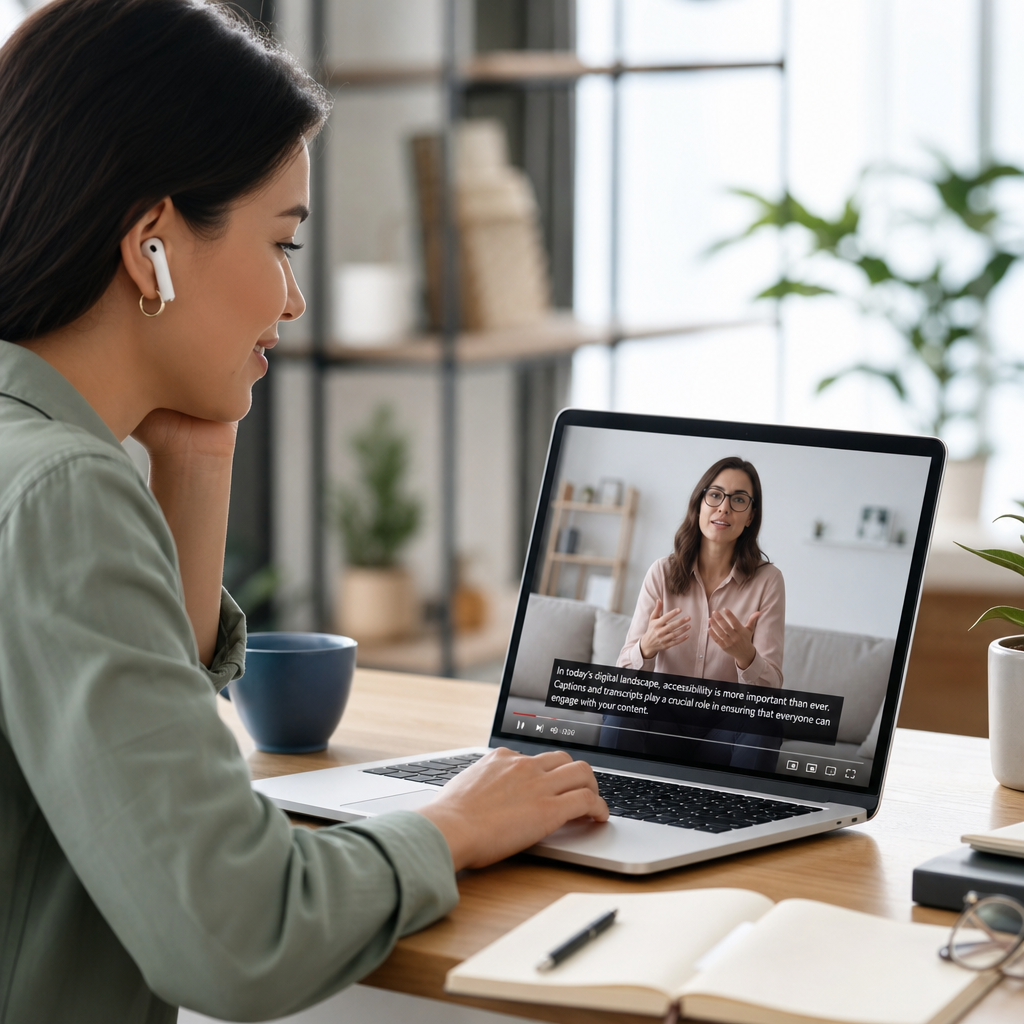

Cities that want to serve every resident well must treat accessibility for deaf residents as a core public infrastructure issue, not as a niche accommodation. In practical terms, accessibility for deaf people means designing public spaces, events, services, and communication systems so that information is available visually, clearly, and in real time. Deaf residents include people who use sign language as a first language, people who are hard of hearing, late-deafened adults, cochlear implant users, and residents who rely on captions, text, visual alerts, or assistive listening technology. When city leaders plan only for spoken communication, they exclude people from civic life. When they plan for multiple communication modes from the start, participation rises across the board.
I have worked on accessibility reviews for municipal facilities and event programs, and the same pattern appears again and again: cities often invest in ramps, elevators, and wayfinding, yet overlook whether a resident can follow a council meeting, understand a transit disruption, or participate in a festival announcement. For deaf residents, barriers often show up in everyday moments. A police officer gives verbal instructions in a noisy plaza. A museum guide speaks while facing away from the group. A weather emergency alert is broadcast over loudspeakers without text. A recreation class changes rooms, but the notice is made only by microphone. None of those failures are inevitable. They are design decisions, and cities can correct them.
This matters for legal, social, and economic reasons. In the United States, the Americans with Disabilities Act sets clear expectations for effective communication in public services and public accommodations. Similar duties exist in many countries through equality and human rights law. Beyond compliance, accessible public spaces and events increase attendance, strengthen trust in local government, and reduce service friction. They also improve communication for many other people, including older adults, non-native speakers, and residents in loud or visually complex environments. A city that builds visual communication into streets, venues, public programs, and emergency systems creates a more usable city for everyone. This hub explains how cities can improve accessibility for deaf residents across public spaces and events, where to focus first, and which standards, tools, and operating practices produce measurable results.
Design public spaces around visual communication
The first priority is to make public spaces readable without depending on sound. Deaf accessibility in public spaces starts with visual communication: sightlines, signage, displays, lighting, and visual alerts. If a resident cannot easily see where to go, what is happening, or how to respond to a change, the environment is not fully accessible. Cities should review plazas, parks, libraries, service counters, transport hubs, sports facilities, museums, and community centers using a simple question: can a person who does not hear spoken information still navigate, understand, and participate independently?
Clear sightlines are foundational. In community rooms and service areas, circular or semicircular seating supports sign language communication because participants can see one another’s faces and hands. Glare control matters because backlighting makes signing and lip-reading harder. Even lighting across counters, stages, ticket points, and classrooms improves comprehension. I have seen small room changes make a major difference: moving a lectern away from a bright window, lowering decorative plants that block views, and positioning screens so interpreters remain visible. These are low-cost adjustments with high impact.
Signage should do more than label doors. Effective public signage uses plain language, strong contrast, consistent iconography, and location-specific information. Digital signs in transit stations, civic buildings, and event venues are particularly valuable because they can display updates instantly. If a meeting room changes, if a queue is redirected, or if an elevator is out of service, the information must appear visually where people need it. Public address systems alone are inadequate. The same principle applies outdoors. Parks and festival grounds need visual maps, schedules, emergency procedures, and contact methods that do not require a phone call.
Visual alerting systems are another core layer. Fire alarms in public buildings should include strobes, but cities should go further by integrating visual alerts for service announcements, queue calls, and emergency instructions. In customer service settings, replacing shouted names with ticket numbers on displays reduces confusion for everyone. Museums can use handheld devices or exhibit screens for text-based interpretation. Recreation centers can provide scoreboards, class status screens, and text check-in systems. Accessibility improves most when cities stop treating text and visuals as backup channels and start treating them as primary infrastructure.
Make public events accessible before promotion begins
Accessible events are built in the planning phase, not added after complaints arrive. For deaf residents, the biggest event barriers are usually preventable: no captioning, no sign language interpretation, poor stage lighting, inaccessible announcements, and staff who do not know how to communicate when something changes. Cities host and permit a huge range of events, from neighborhood meetings and outdoor concerts to holiday markets, marathons, film nights, and emergency town halls. Each event type needs a communication access plan.
The most reliable approach is to require accessibility details in event planning templates, procurement documents, permit applications, and run-of-show schedules. Organizers should identify whether the event will provide live captioning, sign language interpretation, assistive listening systems, accessible ticketing, and visual announcements. They should also specify where interpreters will stand, how screens will display captions, and how attendees can request accommodations. Publishing those details in advance matters. Deaf residents should not have to guess whether an event is usable or make repeated calls to find out.
Live captioning is essential for speeches, panels, civic meetings, and performances with spoken content. Communication Access Realtime Translation, commonly called CART, converts speech into text in near real time and is especially useful for public meetings and complex discussions. Sign language interpretation is equally important, especially when the local deaf community includes residents who prefer American Sign Language or another national sign language. These are not interchangeable services. Cities should ask communities what they need, budget for both where appropriate, and avoid assuming that one solution fits all.
Stage design affects whether access features actually work. Interpreters need dedicated lighting, an uncluttered background, and placement within the audience’s natural field of view. Captions must be large enough to read from expected distances and positioned where viewers can watch both speaker and text without constant head-turning. I have seen events technically provide interpretation but place the interpreter off to the side behind a speaker tower. On paper the requirement was met; in practice it failed. Operational details decide whether access is real.
| Event element | Common failure | Better city standard |
|---|---|---|
| Public announcements | Audio-only updates over loudspeakers | Simultaneous text on screens, apps, and signage boards |
| Stage programming | Interpreter poorly lit or obstructed | Reserved lit position near speaker and caption display |
| Registration and ticketing | Phone-only customer support | Text, email, web chat, and accommodation request form |
| Emergency changes | Verbal evacuation instructions only | Visual alarms, staff paddles, text alerts, and screen messages |
| Community meetings | No captions for hybrid or recorded sessions | Live CART, edited captions, and archived transcripts |
Events should also include accessible feedback loops. After major city events, ask deaf attendees whether communication access worked, whether sightlines were adequate, and whether staff responded effectively. Attendance numbers alone do not measure inclusion. Post-event audits reveal recurring gaps, such as screens that washed out in daylight or volunteers who blocked the interpreter zone. Over time, these reviews help cities create repeatable standards that apply across departments and partner organizations.
Strengthen staff training, technology, and emergency readiness
Physical upgrades and event services are only part of the solution. Deaf accessibility breaks down quickly when frontline staff are unprepared. Every city department that interacts with the public should train employees on effective communication basics: face the person when speaking, do not cover the mouth, use plain written language when needed, know how to access an interpreter, and never assume a companion should interpret. Staff should also understand that hearing aids and cochlear implants do not restore typical hearing in every environment. Noise, reverberation, distance, and poor lighting still create barriers.
Frontline protocols matter most in high-volume, high-stress settings. Transit staff need a process for displaying disruption notices visually and responding to text-based questions. Police, fire, and emergency management teams need procedures for communicating instructions without relying solely on shouting. Hospital-adjacent city services, shelters, and cooling centers need check-in methods that are visible and calm. Recreation staff need to know how to adapt classes and relay game information. Training should be practical, scenario-based, and refreshed regularly, not treated as a one-time presentation.
Technology expands what cities can do, but it must be deployed carefully. Induction loop systems and other assistive listening technologies improve access for many hard-of-hearing residents in meeting rooms, theaters, and service counters. Captioning platforms can support hybrid public meetings, while digital signage software can synchronize announcements across buildings and event grounds. Video relay and video remote interpreting can help in some service environments, especially for short interactions, but they depend on strong bandwidth, device placement, and privacy safeguards. Cities should test these systems under real operating conditions rather than assuming a procurement checklist guarantees usability.
Emergency communication deserves special attention because failures carry immediate risk. Deaf residents must be able to receive urgent information through wireless emergency alerts, SMS, app notifications, digital signs, captioned broadcasts, and in-building visual alarm systems. Redundancy is essential. During severe weather, transit shutdowns, wildfires, or public safety incidents, a single channel will fail for someone. The best emergency plans combine multiple channels and use short, action-oriented language: what happened, where, what to do now, and where to get updates. Cities should run drills that specifically test whether deaf residents receive, understand, and can act on instructions.
Procurement and policy turn good intentions into durable practice. When a city buys audiovisual systems, licenses event software, renovates a venue, or contracts with event producers, accessibility requirements should be written into scopes of work and acceptance criteria. Ask vendors whether platforms support live captions, transcript export, visual messaging, and interpreter-friendly layouts. Require performance, not just promises. The cities that make the fastest progress are the ones that standardize these requirements so each department does not have to reinvent them.
Build accountability through community partnership and measurement
The most effective cities work with deaf residents continuously, not just during public comment periods. Community partnership improves design because lived experience reveals barriers that technical teams miss. A plaza may look open on a plan set but become unusable for signing if nighttime lighting is poor. A beautiful cultural event may fail because caption screens are too far from seating. A public meeting may offer interpretation yet provide no visible way to ask questions. Deaf advisory groups, local advocacy organizations, schools for the deaf, interpreter networks, and disability commissions can all help identify these issues early.
Compensation matters. Cities should pay community advisors for audits, pilot reviews, and user testing, especially when they are contributing specialized expertise. Co-design sessions work best when residents review actual floor plans, event layouts, websites, and emergency messages rather than discussing accessibility in broad terms. In my experience, a one-hour walkthrough with deaf participants produces more actionable insights than weeks of internal debate. People point directly to blocked views, unreadable signs, confusing check-in points, and inaccessible communication flows.
Measurement should be concrete. Useful indicators include the share of civic events with live captions, the percentage of major venues with visual announcement systems, interpreter response times for public meetings, the number of staff trained in effective communication, and satisfaction scores from deaf attendees. Cities can also audit whether archived meeting videos include accurate edited captions and transcripts, whether permit-funded festivals publish accessibility details, and whether emergency messages are issued in text simultaneously with audio alerts. Data helps leaders move beyond symbolic inclusion toward operational accountability.
This page functions as a hub because public spaces and events touch many related city systems. Wayfinding links to transportation accessibility. Captioning policy links to digital inclusion and civic participation. Emergency communication links to public safety planning. Venue design links to procurement and capital projects. As cities develop deeper guidance, they should create connected resources on accessible meetings, deaf-inclusive emergency alerts, museum and cultural venue standards, transit communication, sports and recreation programming, and event permitting requirements. That internal structure helps teams find what they need quickly and encourages consistent implementation across departments.
Cities can improve accessibility for deaf residents by making visual communication standard in public spaces, embedding access into event planning, training staff for real-world interactions, and measuring results with the community. The main benefit is straightforward: deaf residents can navigate, participate, and stay safe without depending on ad hoc help. Start with a citywide audit of venues, announcements, and event workflows, then prioritize captions, interpretation, digital signage, visual alerts, and staff protocols. When communication access is designed in from the beginning, public life becomes more equal, more efficient, and more welcoming for everyone.
Frequently Asked Questions
What does accessibility for deaf residents actually mean in a city setting?
Accessibility for deaf residents means making sure essential information is available visually, clearly, and in real time across all parts of city life. In practice, that includes public announcements displayed on screens, emergency alerts sent in text and app-based formats, captioning at public meetings and events, and service staff trained to communicate effectively with people who are deaf or hard of hearing. It also means recognizing that deaf residents are not one uniform group. Some people use sign language as their primary language, some rely on captions or written communication, some use hearing aids or cochlear implants, and some are late-deafened adults who need different forms of access depending on the situation.
For cities, the most important shift is treating deaf accessibility as public infrastructure rather than a special add-on. Just as ramps, sidewalks, and streetlights are built into urban planning, visual communication systems should be built into transit, government services, emergency management, recreation, and community engagement. When cities plan with deaf residents in mind from the beginning, they reduce confusion, improve safety, and create a more responsive public environment for everyone.
Why should cities treat deaf accessibility as a core infrastructure issue instead of a niche accommodation?
Cities work best when residents can receive information quickly, participate in civic life, and use public services independently. If a transit delay is announced only over a loudspeaker, if an emergency warning depends on sound alone, or if a public meeting has no captioning or sign language interpretation, deaf residents are effectively excluded from basic city functions. That is why deaf accessibility should be understood as a core infrastructure issue: it affects safety, mobility, public trust, and equal participation.
Designing for deaf access also improves communication for many other people. Clear digital signage helps tourists, non-native speakers, older adults, and anyone in a noisy environment. Captions benefit people watching in public spaces, on muted devices, or in crowded rooms. Visual alerts and better wayfinding improve overall usability. In other words, investments in deaf accessibility often produce broader universal design benefits. Cities that take this seriously are not just meeting legal or ethical obligations; they are building systems that are clearer, more resilient, and more effective for the full population.
What are the most important steps a city can take to improve accessibility for deaf residents right away?
A strong starting point is to audit every major point where the city communicates with the public. That includes transit stations, buses and trains, city hall counters, public safety systems, emergency alerts, websites, mobile apps, libraries, parks, recreation centers, and community events. Cities should identify where information is delivered primarily through sound and then add reliable visual alternatives such as captioned screens, text alerts, digital signage, live transcription, and posted instructions. Public meetings should routinely include high-quality captioning, and sign language interpreters should be available when needed through clear, well-publicized request systems.
Training is also critical. Frontline employees should know basic communication strategies, such as facing the person directly, writing down key information when needed, using plain language, and understanding how to work with interpreters or captioning providers. Websites and online services should be reviewed so essential information is easy to read, video content is captioned accurately, and contact methods include text-based options instead of phone-only systems. Perhaps most importantly, cities should involve deaf residents directly in planning, testing, and evaluation. The fastest improvements usually happen when local government stops guessing and starts listening to the people who use these systems every day.
How can cities make public meetings, events, and services more inclusive for deaf and hard of hearing residents?
Inclusion starts before the event or service begins. Cities should announce accessibility options clearly in advance, including captioning, sign language interpretation, assistive listening systems where appropriate, and text-based ways to ask questions or request support. Registration forms and event pages should make it easy for residents to indicate communication needs without extra barriers. At public meetings, speakers should use microphones consistently, visual presentations should contain the key information being discussed, and live captions should be accurate, visible, and easy to follow. If interpreters are present, sightlines and lighting matter so attendees can see them clearly.
For in-person services, the same principle applies: make communication visible and flexible. Service desks should have written materials in plain language, staff should be prepared to communicate by text or screen when necessary, and digital kiosks should not rely on audio instructions alone. At community events, organizers can use large display screens for announcements, provide captioned video content, and ensure emergency instructions are shown visually as well as spoken. The goal is not simply to add one accommodation, but to create a service environment where deaf residents can participate fully, ask questions confidently, and receive information at the same time as everyone else.
How can cities improve emergency communication and public safety for deaf residents?
Emergency communication is one of the most important areas for improvement because delays or missed information can have serious consequences. Cities should never rely on sirens, loudspeakers, or spoken announcements as the only method of warning the public. Effective systems use multiple channels at once, including SMS alerts, app notifications, visual message boards, social media updates, captioned video briefings, and website banners with plain-language instructions. In public buildings and transit environments, alarms should include visual strobes and screens that explain what is happening and what people should do next.
Planning should also include direct consultation with deaf residents, disability organizations, emergency managers, and first responders. Cities can strengthen safety by training police, firefighters, EMTs, and shelter staff on how to communicate during high-stress situations, including the use of gesture, written communication, translation apps where appropriate, and interpreter access procedures. Emergency shelters and evacuation sites should be prepared to provide visual information updates and accessible check-in processes. When cities build redundant, visual-first communication systems for emergencies, they make public safety more dependable for deaf residents and more effective overall.