
Hearing aids are small medical devices that make speech and environmental sounds easier to hear, but the way they work is more sophisticated than simply making everything louder. For beginners exploring assistive technologies, understanding how hearing aids work is the best starting point because these devices sit at the intersection of acoustics, audiology, signal processing, and everyday accessibility. In practice, I have seen many first-time users assume hearing aids function like basic speakers in the ear; they do not. Modern models analyze incoming sound, separate speech from background noise, shape amplification by frequency, and deliver customized output based on a person’s hearing test.
A hearing aid is typically defined as a wearable electronic device designed to improve audibility and communication for people with hearing loss. Most systems include a microphone, a digital processor, an amplifier, a receiver or speaker, a battery, and software that allows fine tuning by an audiologist or hearing instrument specialist. Hearing loss itself is not one condition. Sensorineural hearing loss, often caused by damage to the inner ear or auditory nerve pathways, is the most common type. Conductive hearing loss involves problems in the outer or middle ear that reduce sound transmission. Mixed hearing loss combines both. The type, degree, and pattern of hearing loss determine whether hearing aids are appropriate and how they should be programmed.
This topic matters because untreated hearing loss affects far more than volume. It can reduce speech understanding, increase listening fatigue, limit workplace participation, strain family communication, and contribute to social withdrawal. The World Health Organization has repeatedly emphasized the global impact of hearing loss on education, employment, and quality of life. For the Deaf and hard of hearing community, hearing aids are one assistive technology among many, alongside cochlear implants, alerting systems, remote microphones, captioned telephones, real-time transcription apps, telecoils, hearing loops, and Bluetooth streaming tools. Not every deaf person uses or wants hearing aids, and not every hearing aid user identifies as Deaf. Still, hearing aids remain a core technology because they are often the first intervention people encounter after a hearing evaluation.
As a hub topic within assistive technologies, hearing aids deserve a broad beginner-friendly explanation that answers the questions people usually ask first: What exactly do these devices do? Who can benefit? Why do some people still struggle in restaurants or meetings even with premium devices? How do hearing aids connect with phones, televisions, and classroom systems? The short answer is that hearing aids help by making sound more audible and more usable, but they do not restore natural hearing. Their success depends on hearing profile, fitting quality, expectations, consistent use, and access to complementary tools. Once you understand that foundation, the rest of the assistive technology landscape becomes much easier to navigate.
The core mechanics of how hearing aids process sound
At the most basic level, a hearing aid follows a signal chain. First, microphones capture acoustic sound waves from the environment. Next, the device converts those sound waves into electrical signals, then into digital data. A digital signal processor analyzes the data in real time and applies programmed adjustments. After processing, the amplifier boosts selected frequencies, and the receiver delivers the shaped sound into the ear canal. This all happens in milliseconds.
The important detail is selective amplification. Hearing loss rarely affects every pitch equally. Many adults hear low-frequency sounds fairly well but struggle with high-frequency consonants such as s, f, th, and sh. Those consonants carry a large share of speech clarity. During a fitting, the clinician uses an audiogram, which charts hearing thresholds by frequency in decibels hearing level, to decide how much gain is needed at each pitch. Prescriptive formulas such as NAL-NL2 or DSL are commonly used to estimate target amplification. In well-fitted devices, a user is not simply getting “more sound”; they are getting frequency-specific amplification intended to maximize speech intelligibility while keeping loudness comfortable.
Compression is another essential concept. In healthy hearing, the ear handles a very wide dynamic range, from soft whispers to loud traffic. With hearing loss, that comfortable range often narrows. Compression systems make soft sounds more audible without making loud sounds painfully intense. In plain terms, the hearing aid adds more help when incoming sounds are quiet and less help when sounds are already loud. That is why a properly programmed device can make a child’s voice easier to catch without turning clattering dishes into unbearable noise.
Feedback management also matters. If amplified sound escapes the ear and re-enters the microphone, it can create the familiar whistle many people associate with older devices. Modern hearing aids use feedback cancellation algorithms that detect and suppress this loop. Directional microphones further improve performance by emphasizing sound from in front of the wearer and reducing competing noise from other directions. These systems are helpful in face-to-face conversation, though they cannot completely eliminate background noise in highly reverberant places.
Main hearing aid styles and who they suit best
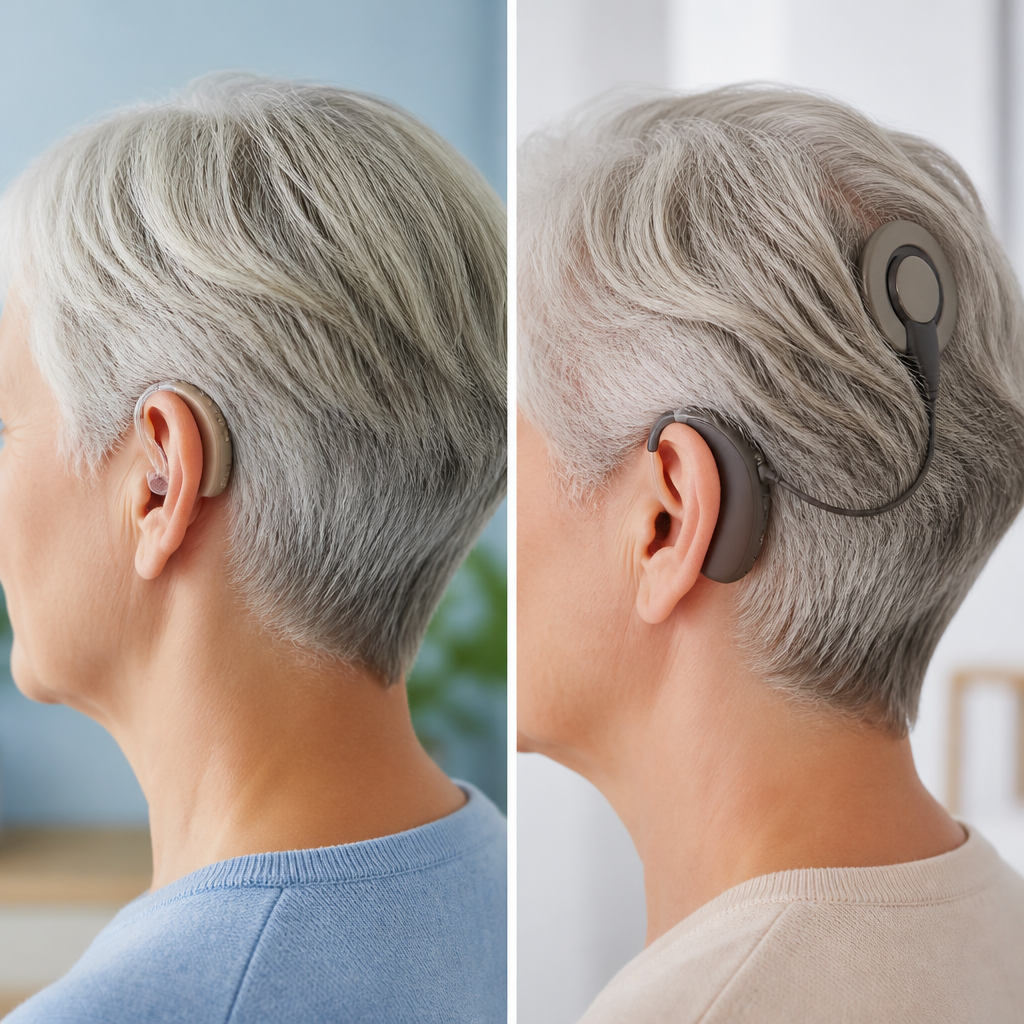
Hearing aids come in several physical styles, and the right choice depends on hearing loss severity, ear anatomy, dexterity, cosmetic preference, and feature needs. Behind-the-ear models place the main electronics behind the ear and send sound through tubing or a thin wire. Receiver-in-canal devices, often called RIC or RITE, place the receiver in the ear canal while the processor stays behind the ear. These are widely used because they combine a discreet profile with strong digital features and flexible fittings for mild to severe losses.
Custom in-the-ear styles are built from ear impressions or digital scans. They can be easier for some users to insert because the shell fills part of the outer ear, but they may offer less room for large batteries or advanced microphone arrays. Completely-in-canal and invisible-in-canal options sit deeper in the ear and are popular with users who prioritize appearance, though they are not ideal for everyone. People with significant dexterity challenges, heavy earwax production, or severe hearing loss often do better with larger styles.
In pediatric fittings and many cases of profound loss, behind-the-ear designs are often preferred because they are durable, adaptable, and compatible with ear molds that can be replaced as a child grows. Adults with single-sided deafness may use CROS or BiCROS systems, which transmit sound from the poorer ear side to the better ear. This does not restore binaural hearing, but it improves awareness of sounds coming from the side with little or no usable hearing.
| Style | Best for | Main advantages | Common limitations |
|---|---|---|---|
| Behind-the-ear | Mild to profound loss, children, users needing durability | Strong power, larger batteries, easy handling, accessory support | More visible, may interfere with glasses or masks |
| Receiver-in-canal | Mild to severe loss, adults wanting flexibility | Natural sound, discreet design, strong wireless features | Receiver needs maintenance, small parts can be fiddly |
| In-the-ear | Mild to severe loss, users wanting one-piece custom fit | Easier insertion for some, custom comfort | Less discreet, smaller battery options than larger BTEs |
| Completely-in-canal | Mild to moderate loss, cosmetic priority | Very discreet, reduced wind exposure | Limited features, harder handling, more moisture and wax exposure |
| CROS/BiCROS | Single-sided deafness or asymmetric loss | Better access to sounds from poorer side | Does not restore true directional hearing |
Features that improve speech, comfort, and connectivity
When people compare hearing aids, they usually focus on price first, but features often explain the real differences in day-to-day performance. Noise reduction systems analyze steady background sounds such as fans, road noise, or HVAC hum and reduce their prominence. They do not create silence, and they cannot fully separate one talker from a crowd in every setting, but they lower listening effort. Directional microphone arrays, especially adaptive systems, shift their focus based on where speech appears to come from. This is one reason newer devices often perform better in meetings than older analog models.
Many hearing aids include multiple listening programs. A user might have one program for quiet conversation, another for restaurants, another for music, and another for outdoor wind management. Some devices switch automatically using onboard classifiers trained to detect common listening environments. In my experience, automatic programs are useful, but they work best when expectations are realistic. A difficult acoustic space remains difficult; the technology helps, yet room layout, reverberation, and speaker distance still matter.
Wireless connectivity has become central to assistive listening. Most major brands now offer Bluetooth streaming for phone calls, music, video, and navigation prompts. Some support hands-free calling on newer smartphones. Telecoil functionality remains important because it allows compatible hearing aids to connect to hearing loop systems installed in theaters, worship spaces, ticket counters, and lecture halls. In a looped room, the signal goes directly to the hearing aid, reducing the impact of distance and background noise. Remote microphones are another high-value tool. A teacher, meeting leader, or dinner companion wears the microphone, and their voice streams directly to the user’s hearing aids. For many people, especially students and workers, a remote mic provides a bigger communication improvement than upgrading to a more expensive hearing aid tier.
Rechargeability is also reshaping the category. Lithium-ion models simplify daily use and help people with arthritis or low vision avoid tiny disposable batteries. Water and dust resistance ratings, app-based controls, geotagged settings, tinnitus masking features, and fall detection on select models add further value depending on the user’s goals. The key is matching features to actual communication problems rather than assuming every premium option delivers equal benefit.
Fitting, verification, and the learning curve for new users
A hearing aid is only as good as its fitting. The process should start with a comprehensive hearing evaluation that includes pure-tone thresholds, speech testing, case history, and, when appropriate, medical referral to rule out red flags such as sudden hearing loss, asymmetry, drainage, pain, or unexplained unilateral tinnitus. Once candidacy is established, the clinician selects a device style and programs it to match prescribed targets. Best practice does not stop there. Real-ear measurement, sometimes called probe-mic verification, is the gold standard for confirming that the hearing aid is delivering the intended sound levels in the actual ear canal. Without verification, programming is closer to an educated guess.
New users should also expect an adaptation period. If someone has spent years missing high-frequency sounds, the restored audibility can initially seem sharp, tinny, or overwhelming. Everyday sounds such as turn signals, footsteps, rustling paper, and refrigerator hum may stand out in surprising ways. That does not mean the fitting is wrong. The brain needs time and consistent exposure to relearn how to sort meaningful sounds from unimportant ones. Follow-up appointments are essential for adjusting gain, dome size, physical comfort, streaming balance, and program settings based on real use.
Maintenance is straightforward but important. Users need to clean microphone ports, replace wax guards when applicable, keep charging contacts clear, and store devices in dry conditions. Moisture, cerumen, and poor insertion are among the most common reasons people think their hearing aids have failed when the issue is actually maintenance or fit. Counseling should also cover realistic outcomes: hearing aids improve access to sound, but they do not cure auditory processing difficulties, remove all noise, or make distant speech perfectly clear.
How hearing aids fit into the wider world of assistive technologies
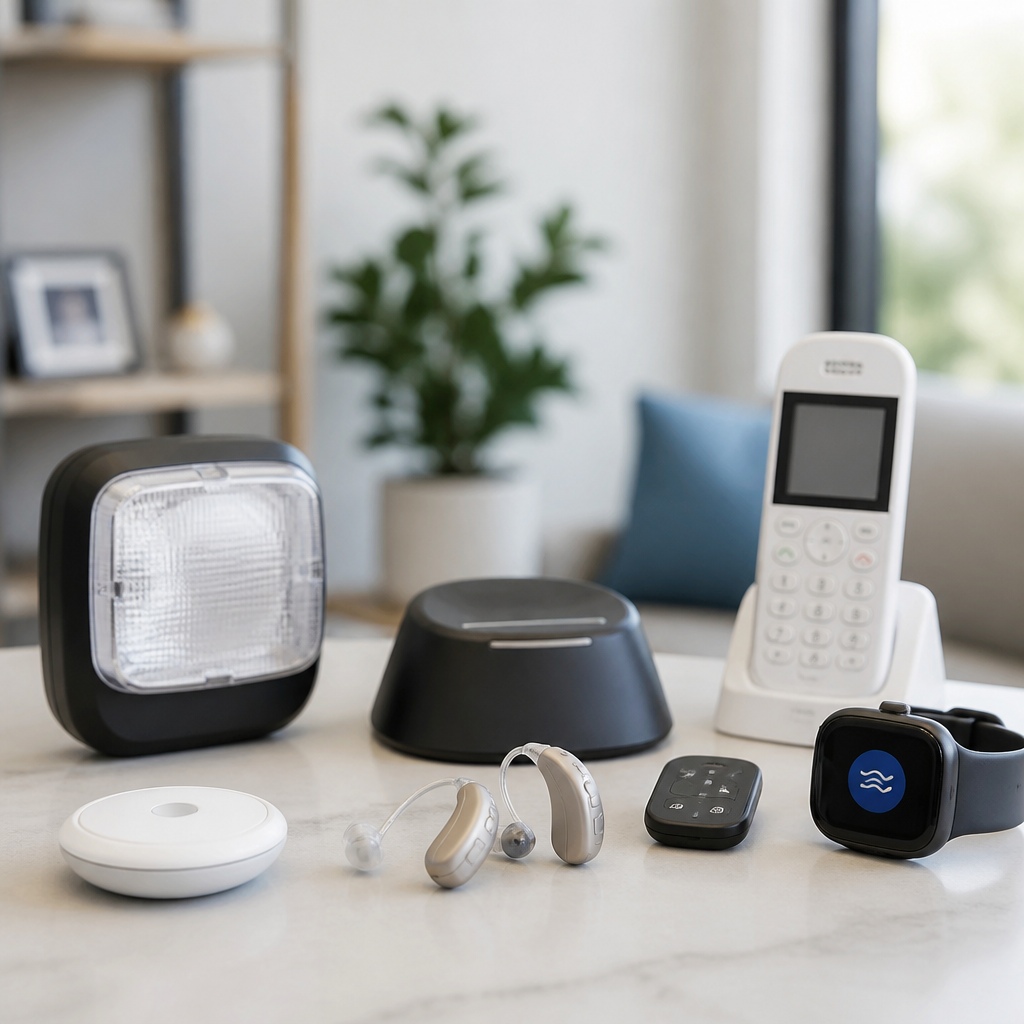
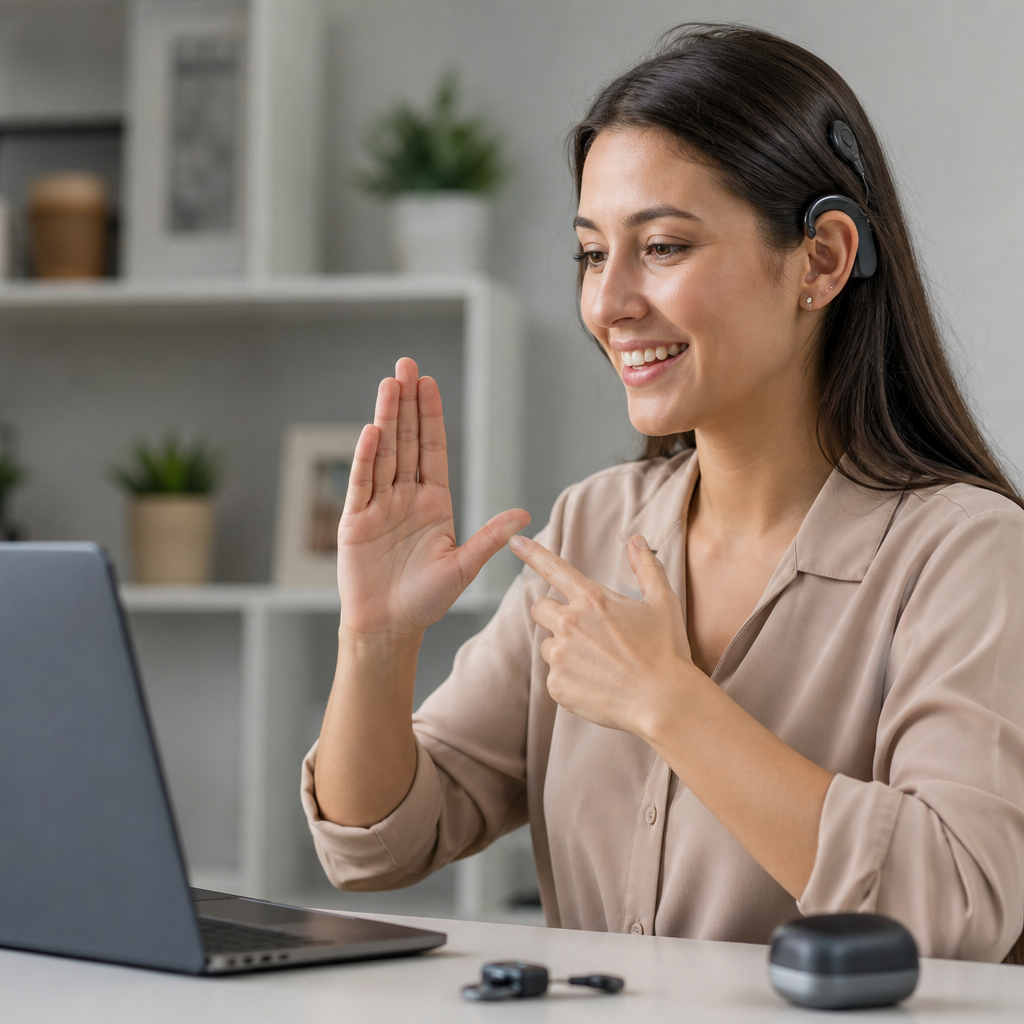
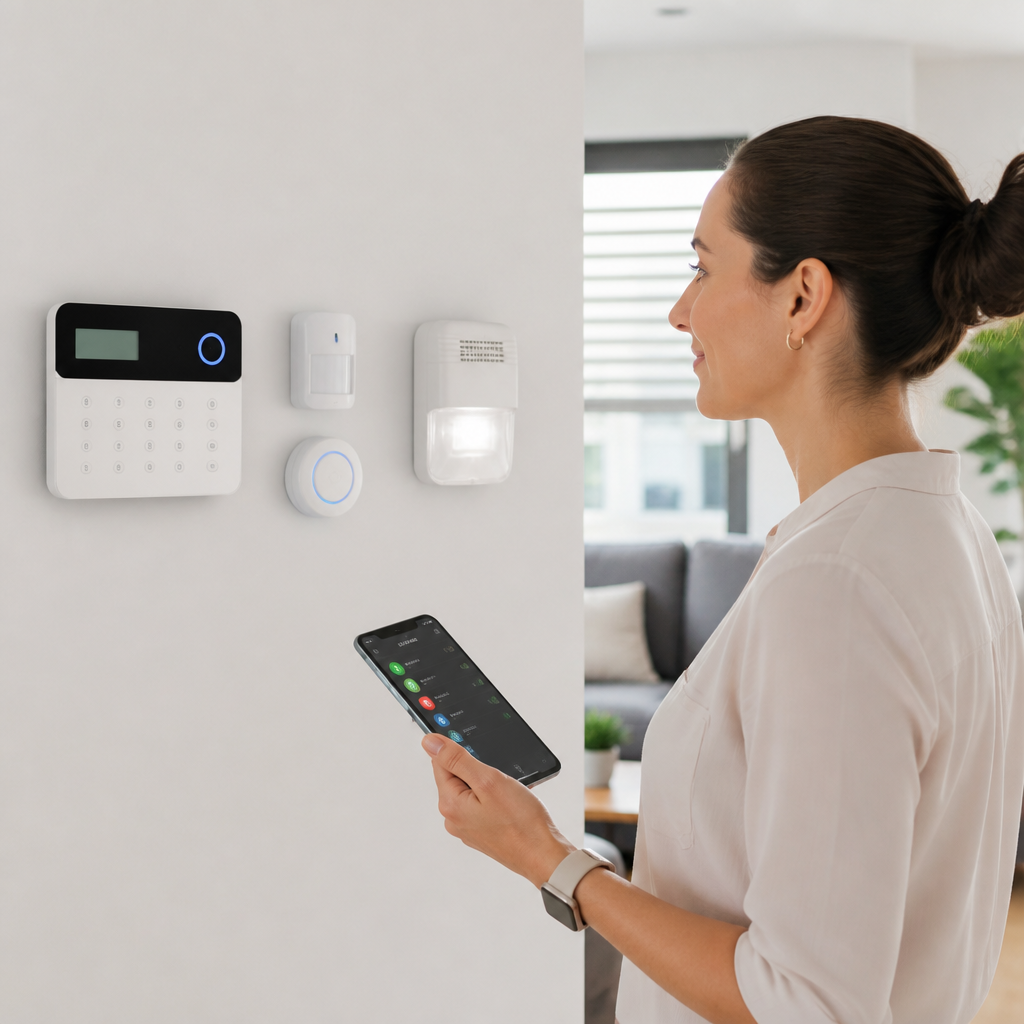
For the Deaf and hard of hearing community, hearing aids are most effective when viewed as one part of a broader communication toolkit. In homes, visual doorbells, vibrating alarm clocks, baby-cry alert systems, and captioned phones address needs that amplification alone cannot solve. At work, remote microphones, live captioning, video relay services, and platform-level caption tools on Zoom, Microsoft Teams, and Google Meet often determine whether meetings are accessible. In classrooms, frequency modulation and digital remote microphone systems can dramatically improve the signal-to-noise ratio for students who use hearing aids.
Some users benefit more from cochlear implants than hearing aids, particularly when speech understanding remains poor even after optimized amplification. Others combine hearing aids with speechreading, sign language, CART captioning, or communication access real-time supports depending on context. The central lesson is practical: successful hearing access is rarely device-only. It comes from combining the right personal technology with environmental accommodations and communication strategies.
If you are beginning your research into assistive technologies, start with a hearing evaluation, ask whether hearing aids match your hearing profile, and then assess the full ecosystem of tools you may need. Learn the basics of device styles, insist on proper verification, test connectivity options that matter in your real life, and explore complementary supports such as loops, remote microphones, and captioning. Hearing aids work best when chosen carefully, fitted precisely, and used as part of a broader accessibility plan. That approach leads to clearer conversations, lower listening fatigue, and better participation at home, school, and work.
Frequently Asked Questions
1. How do hearing aids actually work?
Hearing aids work by capturing sound from the world around you, processing that sound, and then delivering a clearer, more useful version of it into your ear. Most modern hearing aids use a microphone to pick up incoming sounds such as speech, traffic, music, or background noise. That sound is then converted into a digital signal and analyzed by a tiny computer chip inside the device. The processor adjusts the signal based on the wearer’s hearing needs, often boosting some frequencies more than others, reducing certain types of noise, and making speech easier to distinguish. Finally, the processed sound is sent through a speaker, often called a receiver, into the ear canal.
What makes this process sophisticated is that hearing aids do not simply turn up all sounds equally. A person with hearing loss may struggle most with high-frequency sounds such as consonants like “s,” “f,” or “th,” while lower-frequency sounds may be easier to hear. Hearing aids are programmed to address those patterns, which is why they are much more advanced than a basic amplifier. Many models also make automatic adjustments in real time depending on the environment, helping users hear differently in a quiet living room than in a crowded restaurant. In short, hearing aids are smart listening devices designed to improve access to meaningful sound, especially speech.
2. Do hearing aids just make everything louder?
No, and this is one of the most important misconceptions for beginners to understand. If hearing aids simply made everything louder, they would often be uncomfortable and far less helpful. Everyday listening environments contain many sounds at once, and people with hearing loss usually do not need every sound increased in the same way. Instead, modern hearing aids are designed to improve audibility and clarity by selectively processing sound. They can amplify the frequencies a person has trouble hearing, soften overly sharp or sudden sounds, and reduce steady background noise that might otherwise interfere with conversation.
This is why properly fitted hearing aids can make speech sound clearer rather than just louder. They may emphasize the sound details that help you tell words apart while keeping loud sounds from becoming overwhelming. Many devices also use features such as directional microphones, which focus more on sound coming from in front of the user, and noise management systems, which help separate speech from competing environmental noise. The goal is not volume for its own sake, but better communication, improved listening comfort, and greater awareness of important sounds in daily life.
3. What parts are inside a hearing aid, and what does each part do?
Although hearing aids are small, they contain several essential components working together. The microphone is the part that collects sound from the environment. Once sound is captured, the amplifier and digital signal processor analyze and modify it according to the user’s hearing profile. This is where much of the device’s intelligence comes from. The processor can shape sound differently across pitches, manage feedback, reduce wind or background noise, and support speech understanding in changing environments. After processing, the receiver, which is the tiny speaker inside the hearing aid, sends the adjusted sound into the ear.
In addition to those main sound-handling parts, hearing aids also include a power source, usually either a disposable battery or a rechargeable battery system. They may have control features such as push buttons, tap controls, or smartphone connectivity for volume and program changes. Some include telecoils, Bluetooth streaming, motion sensors, or learning algorithms that adapt over time. Earmolds or domes help deliver sound comfortably into the ear and can affect both fit and sound quality. Even though the device appears simple from the outside, it is actually a compact medical instrument built to tailor listening support to an individual’s specific hearing needs.
4. How are hearing aids adjusted to match someone’s hearing loss?
Hearing aids are typically programmed based on the results of a hearing evaluation, often called an audiogram. This test shows how well a person hears different frequencies and sound levels, allowing an audiologist or hearing care professional to understand which sounds are hardest to detect. Using that information, the hearing aid software is configured so the device provides the right amount of support across different pitches. For example, a person who has more difficulty hearing high-frequency speech sounds may receive more amplification in that range than in lower frequencies. This customized fitting is what helps make hearing aids useful rather than generic.
Adjustment is also an ongoing process, not a one-time setup. First-time users often need follow-up appointments because the brain is re-learning how to notice sounds that may have been missing for a long time. Everyday noises such as footsteps, paper rustling, or running water may seem unusually noticeable at first. A hearing care professional can fine-tune settings for comfort, clarity, and listening goals based on real-world feedback. This may include changing volume targets, modifying noise reduction, adjusting speech emphasis, or creating special programs for environments like meetings or outdoor use. Proper fitting and follow-up care are a major reason why hearing aids tend to work best when professionally selected and personalized.
5. Can hearing aids restore normal hearing?
Hearing aids can make a major difference, but they do not restore hearing to its original, natural state. Instead, they improve access to sound by making important sounds more audible and easier to interpret. For many people, this leads to better conversations, greater confidence in social settings, improved awareness of environmental cues, and less listening fatigue. However, hearing aids cannot fully replicate the way a healthy ear and auditory system process sound. Factors such as the degree and type of hearing loss, speech clarity, background noise, and brain processing all influence what a user will experience.
That said, realistic expectations are key to success. Many users report significant benefits once they become accustomed to the devices and use them consistently. Hearing aids are tools that support communication, not instant cures. In quiet environments, they may provide excellent clarity, while in very noisy spaces listening may still require effort. The best results usually come from a combination of well-fitted devices, time to adapt, and ongoing support from a hearing professional. When approached with accurate expectations, hearing aids can be life-improving technology that helps people reconnect with conversations and everyday sounds in a meaningful way.