Technology helps reduce isolation in the Deaf community by removing communication barriers, widening access to relationships, and creating spaces where Deaf people can participate on equal terms. In this context, Deaf refers broadly to people who are culturally Deaf, hard of hearing, late-deafened, or who communicate through sign language, speech, captions, or a mix of methods. Social isolation means more than being alone. It includes exclusion from conversation, difficulty accessing information, and the exhausting experience of having to constantly adapt in hearing-centered environments. As someone who has worked on accessible communication projects and evaluated assistive platforms in workplaces, schools, and clinics, I have seen the same pattern repeatedly: when communication access improves, connection improves. That matters because isolation is linked to poorer mental health, lower employment stability, reduced healthcare access, and weaker community participation. Technology is not a complete answer, and it does not erase inequality, but it can dramatically change the daily experience of connection. Video calling, captions, hearing devices, messaging platforms, interpreting services, and community-centered apps each solve a different part of the problem. For a hub article on social isolation and connection, the central point is simple: the most effective technologies are the ones that reduce friction, respect language preferences, and work consistently across home, school, work, healthcare, and public life.
Why isolation happens and why communication access is the turning point
Isolation in the Deaf community is usually caused by communication mismatch, not lack of interest in social connection. A Deaf person may be surrounded by family, classmates, or coworkers and still be excluded if discussion moves too fast, no one signs, captions are inaccurate, or alerts rely on sound alone. That distinction is important. The problem is not Deafness itself; the problem is inaccessible communication systems. Research across disability and public health consistently shows that barriers to communication increase loneliness, stress, and disengagement from services. In practical terms, I have seen Deaf employees skip informal team conversations because the meeting room had no captions, and Deaf patients leave appointments without full understanding because interpreters were unavailable. These are not minor inconveniences. They cut people off from belonging, decision-making, and trust.
Technology matters because it changes the conditions of participation. Text-based tools such as SMS, WhatsApp, Signal, and Slack let people communicate without depending on voice. Video platforms such as Zoom, FaceTime, and Google Meet support signing when video quality is stable and framing is wide enough to capture hands and facial expressions. Live captioning can make mixed hearing and Deaf conversations more usable, especially when speakers take turns and use good microphones. Visual notification systems, from smart doorbells to vibrating alarms, reduce dependence on hearing for safety and awareness at home. Each tool removes one barrier, and when several are combined, social access becomes far more reliable.
How video communication and remote interpreting expand everyday connection
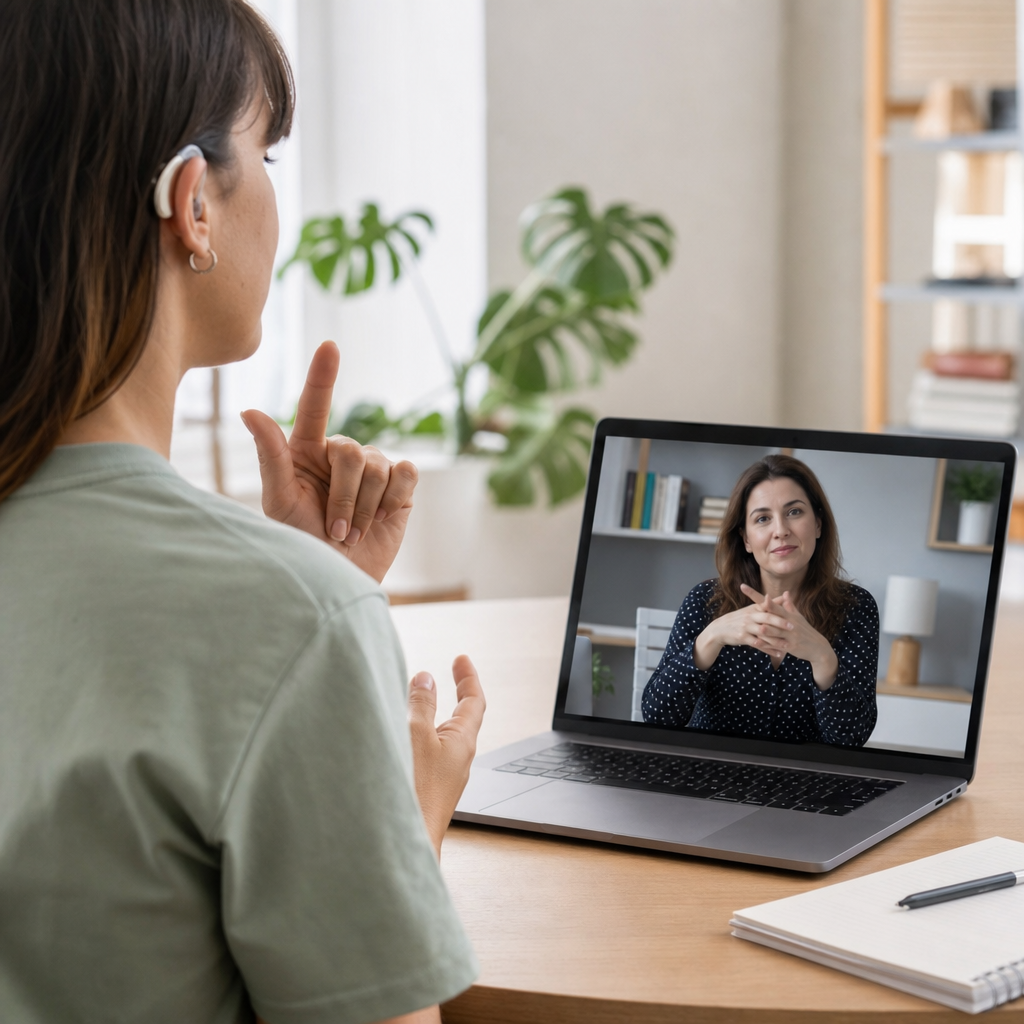
For many Deaf people, video communication has been one of the biggest social breakthroughs of the last two decades because sign language is visual and relational. Before widespread broadband and smartphones, long-distance communication often depended on text telephones or relay systems that were slower and less natural. Today, video calls support direct signed conversation with family, friends, counselors, teachers, and peer groups. That directness matters. Sign languages rely on movement, pacing, facial grammar, and spatial reference, so high-resolution video and low latency are not luxury features. They are the difference between a fluid conversation and an exhausting one.
Remote interpreting services build on that foundation. Video relay service allows a Deaf signer to communicate with a hearing person through a remotely located interpreter. Video remote interpreting can also be used in hospitals, schools, customer service settings, and workplaces when on-site interpreters are not available. In my experience, these services work best when organizations treat them as part of routine access planning rather than an emergency fix. A clinic that has tested its tablet stands, lighting, camera placement, and privacy process will deliver a much better interaction than one that wheels in a device at the last minute. Used correctly, remote interpreting reduces delays, expands choice, and helps Deaf people maintain independent communication in situations that once created immediate isolation.
The role of captions, transcription, and media access in reducing exclusion
Captions reduce isolation because social connection depends on shared information. If a Deaf person cannot follow a lecture, group chat, webinar, family video, or streaming event, they are excluded from the conversation before it begins. Closed captions on television and streaming services have been transformative, but accuracy and timing still matter. Auto-generated captions are useful for convenience, yet they often mis-handle names, jargon, accents, and overlapping speech. In healthcare, education, or legal settings, those mistakes can carry real consequences. That is why Communication Access Realtime Translation, often called CART, remains important for high-stakes live events where near-verbatim accuracy is needed.
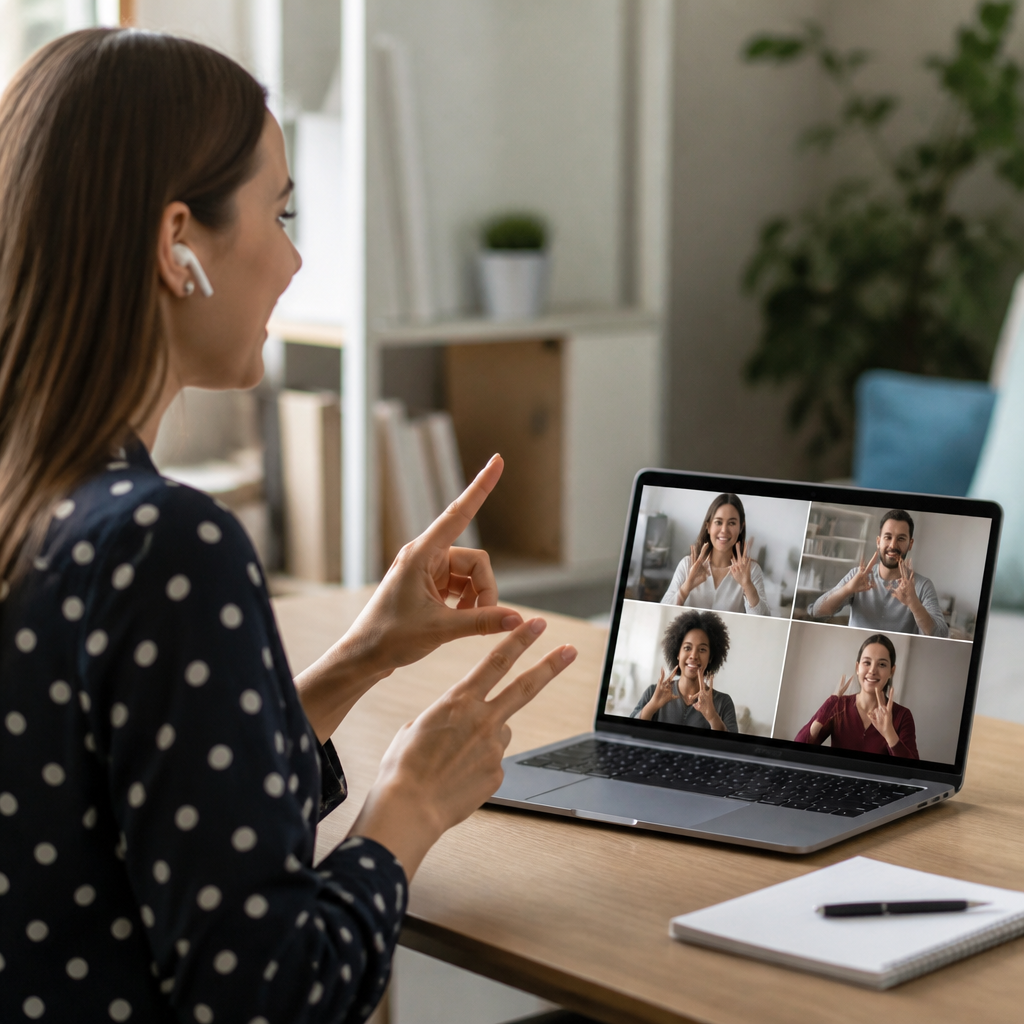
Captioning also affects social participation beyond formal settings. Group video calls with reliable live captions can make birthdays, support groups, online classes, and community meetings more inclusive. Social video clips with burned-in captions increase discoverability and engagement for Deaf users and for hearing users in sound-off environments. Podcasts that publish full transcripts widen access further by making audio content searchable and quoteable. This is one of the clearest examples of accessible design helping everyone. Captions support Deaf users directly, but they also help multilingual audiences, people in noisy environments, and anyone processing complex information.
| Technology | Primary social benefit | Best use case | Main limitation |
|---|---|---|---|
| Live captions | Improves participation in mixed hearing groups | Meetings, classes, online events | Accuracy drops with noise or poor microphones |
| Video calls | Supports natural signed conversation | Family contact, peer support, telehealth | Requires strong lighting, framing, and bandwidth |
| Video relay or remote interpreting | Connects Deaf and hearing users directly | Appointments, work calls, customer service | Quality depends on setup and interpreter availability |
| Messaging apps | Enables fast, low-pressure communication | Daily social contact, group coordination | Can miss nuance compared with signing |
| Visual and haptic alerts | Increases independence and environmental awareness | Home safety, notifications, doorbells | May require multiple devices to cover all situations |
Messaging, social platforms, and online communities as anti-isolation tools
Text and visual messaging are often underestimated in discussions about Deaf connection, yet they are central to everyday social life. Messaging apps lower the threshold for staying in touch because they remove the pressure of phone calls and allow asynchronous communication. A quick text, signed video message, GIF, or photo can sustain relationships throughout the day. Group chats help families include Deaf relatives in planning and casual humor. Workplace channels on Microsoft Teams or Slack can reduce the exclusion that happens when decisions are made in hallway conversations. For many users, the real value is consistency: communication becomes available on demand instead of depending on whether a hearing person knows sign language or remembers to accommodate.
Online communities add another layer of connection by bringing together Deaf people across geography, age, and identity. Deaf creators on YouTube, TikTok, Instagram, and community forums share language, culture, advocacy, and lived strategies for navigating hearing spaces. That visibility matters for Deaf children, late-deafened adults, and parents who may not know any Deaf people locally. I have seen peer groups built through social media turn into mentoring relationships, job referrals, and mental health support networks. Still, platform design matters. If moderation is weak, harassment, misinformation, and inaccessible features can recreate exclusion online. Technology reduces isolation best when users have control, privacy, and community norms that protect participation.
Assistive devices, smart home tools, and environmental awareness
Not all anti-isolation technology looks social on the surface. Hearing aids, cochlear implants, remote microphones, Bluetooth streamers, and loop systems can make communication easier in certain contexts, and that can indirectly increase confidence and participation. The key is to avoid treating any device as a universal fix. Outcomes vary by hearing profile, age of onset, listening environment, language background, and personal preference. In noisy spaces, even advanced devices can leave users fatigued. That is why environmental supports still matter. In classrooms and conference rooms, remote microphones and hearing loops often make more difference than simply raising volume, because they improve the signal-to-noise ratio.
Smart home technology also reduces isolation by improving independence and awareness. Visual fire alarms, vibrating alarm clocks, smartwatches with haptic alerts, video doorbells, baby monitors with visual signals, and app-based appliance notifications help Deaf users monitor their environment without relying on another person. Independence is deeply connected to mental well-being. When someone can answer the door, wake safely, monitor a child, or receive package alerts on their own, daily stress drops and confidence rises. These systems are especially useful for Deaf people living alone, older adults with hearing loss, and households where family members use different communication methods.
Telehealth, mental health support, and access to care
Access to mental healthcare is a major part of reducing isolation, and technology can either improve or undermine that access. Telehealth platforms make counseling and psychiatric care reachable for Deaf patients who previously had to travel long distances for a signing clinician or interpreter-supported session. This can be particularly important in rural areas, where local services are limited. When platforms support high-quality video, integrated captions, and secure interpreting workflows, therapy becomes more consistent and less burdensome. Continuity matters because isolation often overlaps with anxiety, depression, trauma, and stress related to communication barriers.
However, not every telehealth system is accessible by default. I have reviewed platforms where the interpreter video pinned incorrectly, where captions could not be saved to records, or where clinicians spoke over each other, making interpretation difficult. Good access requires operational standards, not just software features. Providers should ask patients about language preference, book qualified interpreters when needed, test connections in advance, and train staff on turn-taking and camera positioning. For Deaf people seeking connection and support, the best technology is the technology that respects communication as a clinical need rather than a convenience.
Limits, tradeoffs, and what organizations should do next
Technology reduces isolation, but it does not eliminate structural barriers. Cost remains a major issue, especially for specialized devices, premium captioning, broadband access, and newer smartphones. Digital literacy also varies. An older adult with acquired hearing loss may need coaching to use captioned calling or smartwatch alerts effectively. Privacy is another serious concern. Always-on cameras, cloud transcription, and health communication apps can expose sensitive information if procurement and consent are handled poorly. There is also a cultural tradeoff in solutions designed only for hearing assimilation. A tool that focuses narrowly on speech-to-text may help in one setting while ignoring the value of sign language and Deaf community spaces.
Organizations that want to reduce isolation should take a layered approach. First, provide multiple communication options instead of assuming one tool fits everyone. Second, test access in real conditions, including lighting, noise, camera angle, and bandwidth. Third, budget for human support such as interpreters, captioners, and onboarding help. Fourth, include Deaf users in procurement and design decisions. The most effective systems I have seen were shaped by Deaf staff, students, patients, or customers from the beginning. If you are building a broader health, wellness, and mental health strategy around social isolation and connection, start by auditing communication access across your website, events, support services, and daily workflows. Better technology will not create community by itself, but used thoughtfully, it makes community far easier to reach, trust, and sustain.
Frequently Asked Questions
1. How does technology help reduce isolation in the Deaf community?
Technology helps reduce isolation in the Deaf community by making communication more direct, more accessible, and more consistent across everyday situations. Isolation is not only about being physically alone. It often happens when a person is left out of conversations, cannot easily access important information, or has to work much harder than others to participate in school, work, healthcare, family events, or social life. Technology addresses many of these barriers by giving Deaf and hard of hearing people more ways to connect in the communication style that works best for them.
Video calling, messaging apps, captioned media, relay services, speech-to-text tools, and social platforms all play a role. For sign language users, video technology creates face-to-face communication opportunities that were not possible through voice-only tools. For people who rely on text, captions, or a mix of methods, digital tools support more equal participation in group chats, meetings, online communities, and public events. Even simple features such as live captions during a video call or transcripts after a meeting can make the difference between full inclusion and partial access.
Just as importantly, technology can reduce the emotional strain that comes from repeatedly missing information or depending on others to interpret what is happening. When communication becomes more accessible, relationships are easier to maintain, independence increases, and participation becomes more natural. In that sense, technology does not just connect devices. It helps connect people, communities, and opportunities in ways that directly reduce social isolation.
2. What kinds of technology are most useful for Deaf people in daily life?
The most useful technology depends on the individual, because Deaf people are not a single communication group. Some are culturally Deaf and primarily use sign language. Others are hard of hearing, late-deafened, or use speech, hearing devices, captions, text, or a combination of methods. The best technology is usually the one that supports the person’s preferred communication style while also making everyday interactions smoother and more inclusive.
Some of the most widely useful tools include real-time captioning, speech-to-text apps, video relay services, video calling platforms, messaging apps, hearing device connectivity, alerting systems, and accessible media platforms. Real-time captioning can help during meetings, classes, medical visits, and casual conversations by converting spoken words into text as they happen. Video relay services allow sign language users to communicate with hearing people through interpreters in real time. Video calling is especially valuable because it supports visual communication, including sign language, facial expressions, and body language, which are essential parts of many Deaf people’s conversations.
Text-based communication tools are also highly effective. Messaging, email, live chat, and collaboration platforms often remove pressure from voice-based communication and allow Deaf users to respond clearly and independently. At home, visual alert systems for doorbells, alarms, baby monitors, and phone notifications can increase safety and reduce the feeling of being disconnected from the environment. In entertainment and education, captions and transcripts improve access to news, streaming content, online courses, and public information. Together, these tools support not only convenience, but fuller participation in daily life.
3. Can social media and online communities really make a difference for Deaf social connection?
Yes, social media and online communities can make a major difference because they create spaces where Deaf people can communicate, share experiences, and build relationships without many of the barriers found in offline settings. In traditional environments, communication may depend heavily on whether other people know sign language, whether captions are available, or whether a Deaf person has to constantly advocate for access. Online platforms often shift that balance by making visual, text-based, and community-centered communication easier from the start.
Through social media, Deaf people can find others with shared language, identity, interests, and lived experience regardless of location. This is especially important for people who may live in areas with a small Deaf population or limited local resources. Online spaces can provide friendship, mentorship, cultural connection, emotional support, professional networking, and access to information about events, rights, education, and technology itself. Deaf creators, advocates, educators, and organizations also use these platforms to amplify perspectives that may otherwise be overlooked in mainstream conversations.
Online communities can also reduce the fatigue that comes from constantly adapting to hearing norms. In Deaf-friendly digital spaces, communication may be more naturally accessible through sign language videos, captions, written discussion, and visual storytelling. That sense of ease matters. It allows people to focus on connection rather than on overcoming barriers. While online interaction is not a complete substitute for in-person community, it can absolutely strengthen belonging, reduce loneliness, and expand opportunities for meaningful social participation.
4. How do captions and speech-to-text tools improve inclusion beyond convenience?
Captions and speech-to-text tools do much more than add convenience. They improve access to information, support equal participation, and reduce the invisible exclusion that often happens when spoken communication is not fully accessible. Without captions or text support, a Deaf or hard of hearing person may miss key details in a conversation, meeting, class, presentation, or public announcement. Missing just a few parts of an exchange can lead to confusion, embarrassment, disengagement, or being left out entirely. Over time, that repeated experience can contribute significantly to social isolation.
Captions help make spoken content visible. This includes live captions during meetings and events, as well as closed captions on videos, television, webinars, and social content. Speech-to-text tools serve a similar purpose in live interactions by converting spoken language into readable text in real time. These tools can improve comprehension, increase confidence, and allow Deaf people to participate more independently instead of relying on secondhand summaries or partial access.
The impact extends into education, employment, healthcare, and civic life. In schools, captions can support fuller understanding of lessons and discussions. In workplaces, they can improve collaboration and reduce communication breakdowns in meetings. In healthcare, they can make sensitive or important information more accessible during appointments. In public life, they help ensure that announcements, news, and emergency information are not missed. In all of these settings, accessibility is not just about making things easier. It is about making participation fairer and more equal.
5. Are there limits to how much technology can reduce isolation in the Deaf community?
Yes, technology is powerful, but it is not a complete solution by itself. It can remove many communication barriers, expand access, and create valuable opportunities for connection, but real inclusion also depends on attitudes, policies, design choices, and human behavior. A tool may exist, but if it is inaccurate, unavailable, unaffordable, poorly designed, or not used properly, its benefits may be limited. For example, automatic captions can help, but they may still produce errors, especially with specialized vocabulary, multiple speakers, or poor audio conditions. Likewise, a video platform may support sign language communication, but it is only effective if people are willing to use it accessibly.
Another important limit is that technology does not automatically create belonging. A Deaf person may have access to messaging apps, video calls, and captions, yet still feel excluded if family members avoid adapting, workplaces ignore accessibility needs, or public services fail to provide meaningful communication access. Technology works best when it is part of a broader commitment to inclusion. That includes using qualified interpreters when needed, designing accessible content from the beginning, offering captions consistently, and recognizing that Deaf people have diverse preferences and identities.
Even with these limits, technology remains one of the most effective tools for reducing isolation because it gives Deaf people more control over how they connect, communicate, and participate. The key is to view technology as an enabler rather than a cure-all. When paired with accessibility awareness, community support, and inclusive practices, it can significantly improve quality of life and help create environments where Deaf people are not simply accommodated, but fully included.