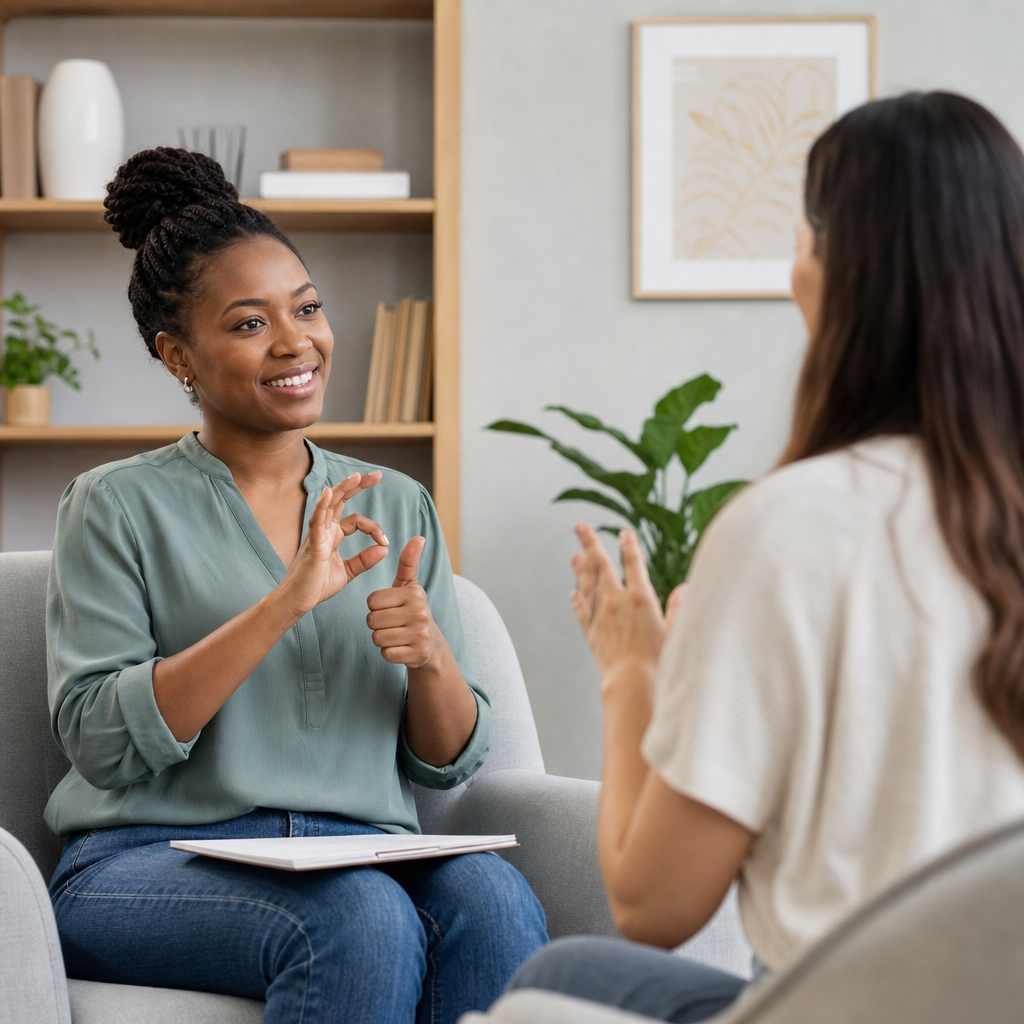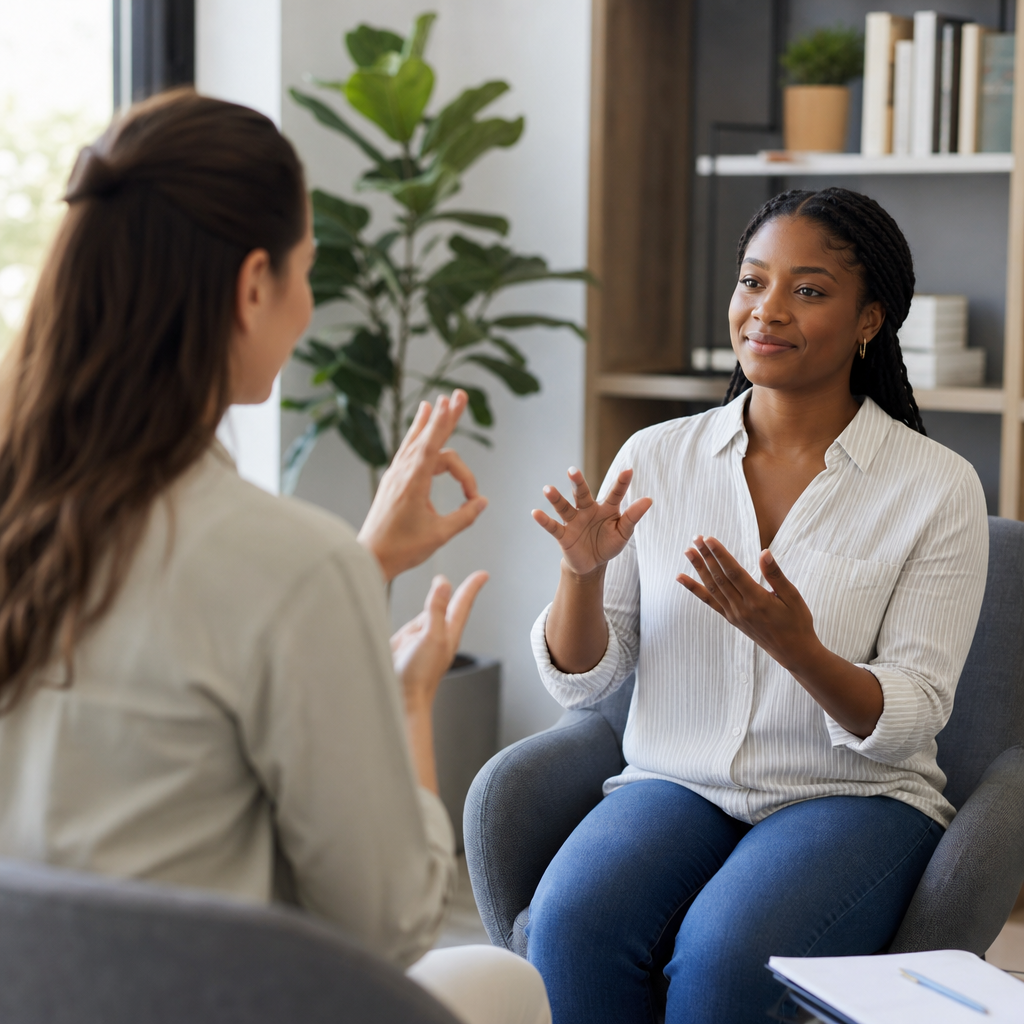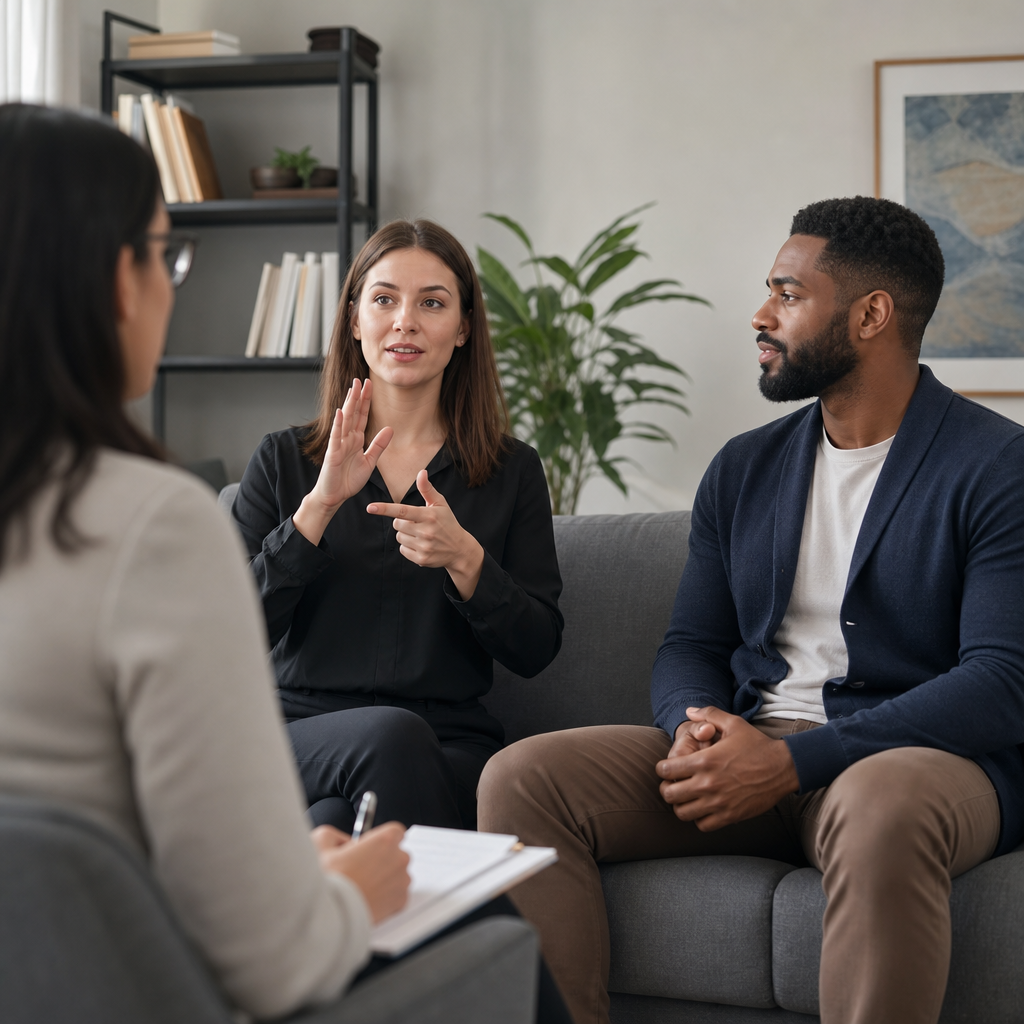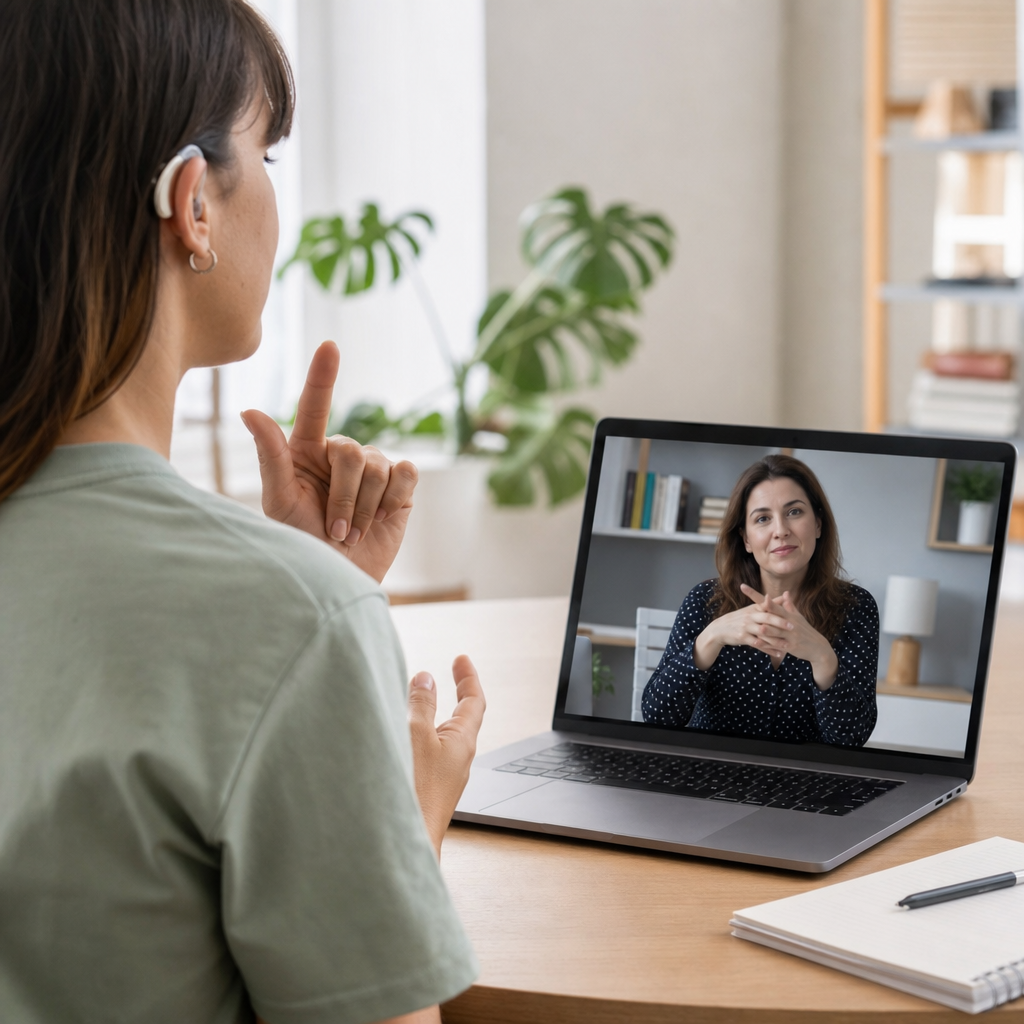
Building community as a Deaf individual is not a soft extra in life; it is a health, identity, and access issue that shapes emotional resilience, daily participation, and long-term wellbeing. In practical terms, community means the network of people, places, and communication systems that allow someone to belong, contribute, and be understood without constant friction. For Deaf people, that network may include Deaf peers, hearing family members, interpreters, captioned events, online groups, faith spaces, schools, workplaces, advocacy organizations, and local gathering spots where signed communication is welcomed rather than treated as an accommodation burden. Social isolation, by contrast, is not simply being alone. It is the repeated experience of missing information, being excluded from conversation, or feeling unsafe asking for access.
This matters because connection directly affects mental health. Research across disability and public health consistently links social isolation with higher rates of stress, depression, anxiety, sleep disruption, and reduced quality of life. For Deaf people, the problem often begins early. Many are born into hearing families with limited sign language exposure, and delayed language access can affect attachment, learning, self-esteem, and social confidence. Later, inaccessible classrooms, workplaces, healthcare settings, and community events can reinforce the same message: participation requires extra effort from the Deaf person, not shared responsibility from the group. I have seen this pattern in community programs and accessibility planning meetings again and again. People do not withdraw because they lack interest. They withdraw because every interaction has become labor.
Any useful discussion of social isolation and connection in Deaf life has to define terms clearly. Deaf with a capital D usually refers to people who identify with Deaf culture, often centered on signed languages, shared history, and community values. Lowercase deaf may refer more broadly to hearing status. Hard of hearing, late-deafened, deafblind, and oral Deaf experiences overlap with but are not identical to culturally Deaf experience. Community building therefore cannot rely on a single script. A fluent ASL user in a large city, a cochlear implant user in a rural town, and a deaf immigrant using another signed language may all need connection, but they will access it through different pathways. Good support starts by respecting those differences rather than flattening them.
As a hub topic within health, wellness, and mental health, social isolation and connection includes more than friendship. It covers communication access, identity development, family relationships, school belonging, workplace inclusion, peer support, dating, aging, crisis response, and digital participation. The central principle is simple: belonging grows where communication is direct, predictable, and mutual. When that foundation is missing, even well-meaning communities can leave Deaf people feeling peripheral. When it is present, connection becomes protective. It supports confidence, healthier coping, stronger self-advocacy, and a realistic sense that one’s needs can be met without apology.
Why Deaf people face unique risks for social isolation
Deaf people experience many of the same barriers that affect other marginalized groups, but communication access adds a distinct layer that changes nearly every setting. In hearing-centered spaces, information often moves too fast and too casually to be captured through lipreading alone. Group conversations overlap. Announcements happen off to the side. Humor depends on timing. Meetings shift topics without visual cues. Even one missed detail can make a person appear disengaged when the real issue is access. Lipreading is also widely misunderstood. Under ideal conditions, only a portion of spoken English is visually distinguishable on the lips, and accents, facial hair, lighting, masks, and distance can reduce accuracy even more.
Family dynamics are another major factor. About 90 percent of Deaf children are born to hearing parents. When families do not learn a signed language early, communication may remain limited for years. That gap can produce practical and emotional consequences: weaker access to family stories, less nuanced discipline and comfort, fewer chances to discuss feelings, and a sense of being physically present but socially absent. In my experience, adults often describe this not as one dramatic trauma, but as thousands of small exclusions at dinner tables, in cars, at holidays, and during medical decisions. Those accumulated moments matter.
Systems can deepen isolation when they treat access as optional. Schools may rely on underqualified interpreters or expect Deaf students to absorb information from spoken discussion. Workplaces may provide captions for formal trainings but not informal team culture, where relationships actually develop. Healthcare environments often default to note writing, even though complex mental health conversations require language depth, privacy, and nuance. The result is not only inconvenience. It is reduced trust, increased fatigue, and reluctance to seek help. Connection becomes harder when every setting requires negotiation first.
What healthy community looks like for Deaf individuals
A healthy Deaf community is not defined by a single location or communication method. It is defined by reciprocity, access, and identity safety. Reciprocity means Deaf people are not merely invited into hearing spaces; they shape the norms, timing, and communication practices of the group. Access means conversations, announcements, and spontaneous interactions are understandable in real time through sign language, captions, visual alerts, or clear turn-taking. Identity safety means a person does not have to defend their hearing status, device choices, speech patterns, signing fluency, or cultural belonging in order to participate.
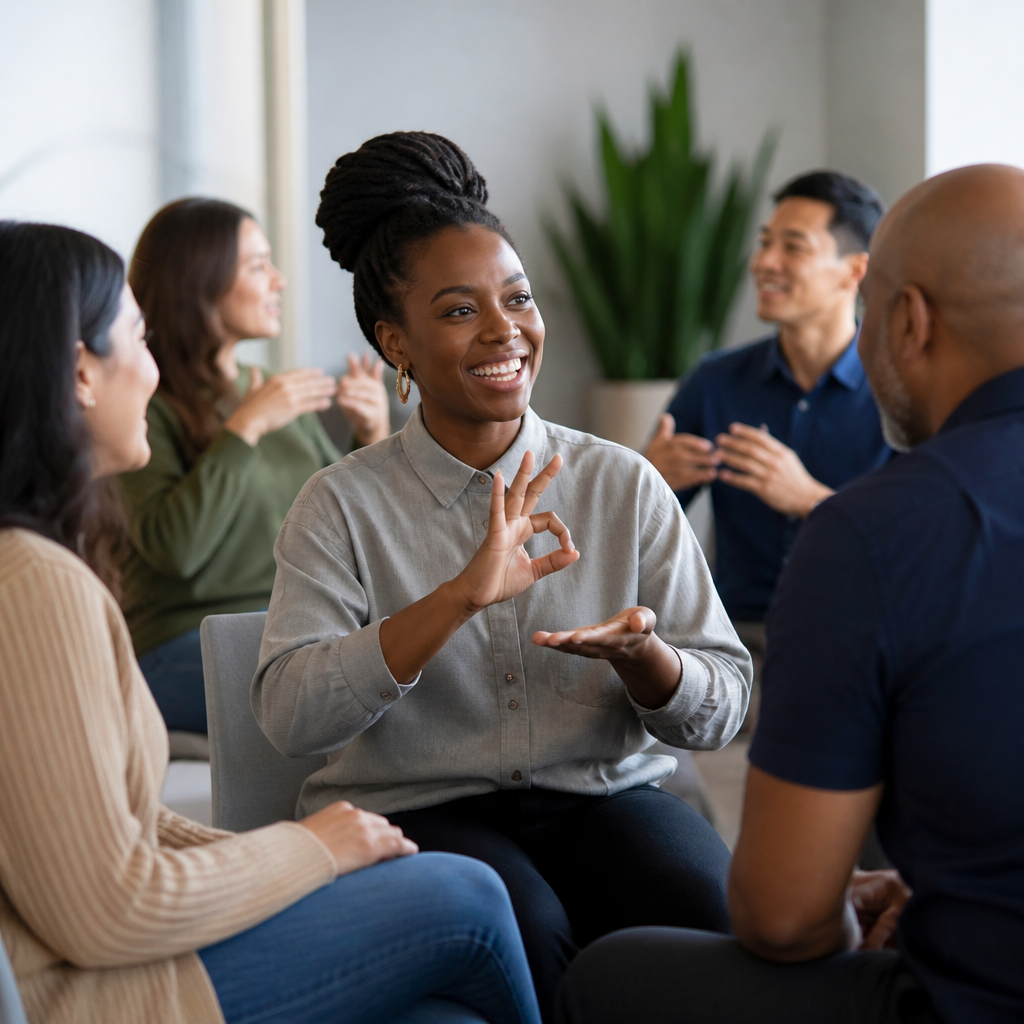
In practice, strong community usually blends bonding ties and bridging ties. Bonding ties connect people with similar lived experience, such as Deaf clubs, campus Deaf organizations, peer-led support groups, or online signing communities. These spaces reduce the effort of constant explanation and often become the first place where someone feels fully seen. Bridging ties connect Deaf people with wider networks such as employers, neighbors, faith communities, hobby groups, and health services that have built reliable access practices. Both matter. Bonding protects identity and emotional recovery. Bridging expands opportunity, civic participation, and practical support.
Healthy community also makes room for diversity within Deaf experience. Some people use ASL or another signed language as their primary language. Others prefer spoken language with hearing technology, captions, or cued speech. Some move fluidly across these modes depending on context. The strongest communities do not force a purity test. They build norms that value communication clarity over ideology. That may mean interpreters at one event, CART captioning at another, visual agendas at every meeting, and patient introductions so new members understand how to interact respectfully.
Practical ways to build connection without waiting for perfect conditions
Community rarely appears fully formed. Most Deaf adults I have worked with built it in layers, starting with one reliable contact, one accessible gathering, or one online space where communication felt natural. The first step is to map current access rather than current loneliness. Ask: where do I already communicate most easily, who responds consistently, and which settings leave me energized instead of depleted? That simple inventory often reveals overlooked starting points, such as a former classmate, a local interpreter network event, a Deaf church service, a library program with captions, or a regional Facebook or Discord group.
It also helps to approach community building as a repeatable practice rather than a one-time fix. Consistency matters more than intensity. Monthly Deaf meetups, recurring sports leagues, volunteer roles, alumni groups, and hobby circles create predictable contact, which is one of the strongest drivers of social trust. I have seen people find more lasting connection through a small weekly board game night with good lighting and turn-taking than through large inaccessible conferences. The goal is not maximum activity. The goal is sustainable belonging.
| Connection strategy | How it helps | Real-world example |
|---|---|---|
| Join Deaf-led groups | Reduces communication strain and supports identity | A local Deaf coffee meetup where signing is the default |
| Use accessible digital spaces | Expands options beyond geography | ASL-friendly Discord servers, captioned support groups, Deaf creators on Instagram |
| Build one-to-one relationships first | Creates trust before larger group involvement | Meeting a Deaf mentor monthly for career and life support |
| Ask for specific access features | Makes participation practical, not symbolic | Requesting CART, interpreters, visual agendas, and circle seating at community events |
| Volunteer in values-aligned spaces | Combines purpose with repeated contact | Helping at a Deaf youth camp, cultural festival, or advocacy nonprofit |
Online community deserves special attention because it often becomes the bridge between isolation and in-person belonging. Video-based platforms allow signed communication across distance, and captioned spaces can support late-deafened or hard of hearing users who do not sign fluently. The best digital communities have clear moderation, introductions for new members, and norms against audism, gatekeeping, and misinformation. They can also support mental health by giving people a place to ask urgent questions: How do I find a Deaf-friendly therapist? What should I request before a surgery? Which colleges have strong interpreting services? Those practical exchanges are community in action.
Family, friendship, and relationship patterns that strengthen belonging
For many Deaf people, community starts at home, even if home has not yet become fully accessible. Families can dramatically reduce isolation by learning a signed language early and using it consistently in everyday life, not only for directives. Shared mealtime conversation, humor, conflict repair, and storytelling are all part of mental health protection. If fluent signing is not yet realistic, families can still improve connection through visual routines: facing the person before speaking, keeping rooms well lit, turning on captions by default, using group text for logistics, and summarizing missed side conversations. Small habits communicate respect.
Friendship quality matters more than friendship count. A Deaf person with three relationships built on clear communication and mutual effort is usually less isolated than someone with many superficial contacts in inaccessible environments. Good friends do not make Deaf people manage every barrier alone. They choose restaurants with lighting, include captions in shared media, repeat information without irritation, and understand that “never mind” is exclusionary. In romantic relationships, communication planning is even more important. Couples who discuss conflict style, access needs in public spaces, family language expectations, and emergency communication early tend to function better under stress.
Mentorship is another underused tool. Deaf youth and adults benefit from seeing multiple models of successful adulthood, not one idealized path. A mentor may help with identity questions, workplace strategy, parenting, travel, technology choices, or navigating mixed Deaf-hearing families. Programs through state associations, alumni networks, schools for the Deaf, and vocational services can create these matches formally, but informal mentoring also matters. One experienced community member who consistently checks in can change a person’s sense of possibility.
Access, advocacy, and mental health support as foundations for connection
Connection is easier to build when access does not depend on luck. Under the Americans with Disabilities Act and related policies, many public entities, employers, healthcare systems, and educational institutions must provide effective communication, which may include qualified interpreters, CART, assistive listening systems, or accessible digital content. Knowing these standards helps Deaf individuals ask for support clearly and helps organizations move beyond improvised fixes. Effective communication is the legal and practical baseline. Without it, inclusion claims are weak.
Mental health care deserves direct attention because isolation and communication trauma can compound each other. A therapist who lacks Deaf cultural competence may misread eye contact, facial grammar, pauses, or language history. Whenever possible, Deaf clients should seek clinicians fluent in signed language or providers experienced in working with qualified interpreters in behavioral health settings. Specialized directories, state Deaf service agencies, and national organizations can help identify options. Peer support groups, crisis text services, and warm lines may also be useful, but they should be evaluated for accessibility before a crisis occurs.
Advocacy is not separate from wellness. It is one way people protect energy, dignity, and participation. That does not mean every Deaf person must become a public educator at all times. It means developing a few repeatable tools: a concise accommodation request, a preferred communication statement, a list of accessible venues, and a habit of following up in writing after verbal plans. Communities improve when these practices become normal. They also improve when hearing allies stop waiting to be asked and start building visual, captioned, and interpreter-ready environments by default.
Building community as a Deaf individual is ultimately about creating conditions where connection does not require constant self-erasure. The strongest communities combine accessible communication, shared identity, mutual effort, and practical support across family life, friendship, work, education, healthcare, and digital spaces. Social isolation is not inevitable, and it is not a personal failure. It is often the predictable outcome of inaccessible systems and limited language access. That distinction matters because it points toward solutions that are concrete, not abstract.
The main benefit of community is not simply having more people around. It is having relationships and environments that reduce stress, strengthen identity, improve mental health, and make everyday participation possible. Start small and build steadily: find one Deaf-led space, improve one family communication habit, request one access feature, reconnect with one trusted person, or join one moderated online group. Those steps may look modest, but repeated over time they create a network of belonging. If you support a Deaf person, make access visible before they have to ask. If you are Deaf and feeling isolated, choose one connection point this week and follow it forward.
Frequently Asked Questions
Why is building community so important for Deaf individuals?
Building community as a Deaf individual is essential because it affects far more than social life. It directly influences mental health, identity development, access to information, safety, and the ability to participate fully in daily life. When a Deaf person has a strong community, they are more likely to experience communication without constant barriers, misunderstandings, or the exhaustion that comes from having to adapt in every setting. That sense of being understood can reduce isolation, strengthen confidence, and improve emotional resilience over time.
Community also helps create a foundation for belonging. For many Deaf people, especially those who grow up in hearing families or environments where sign language and Deaf culture are not well understood, finding other Deaf people can be life-changing. It offers a space where communication is natural, shared experiences are recognized, and identity does not need to be explained or defended. At the same time, community is not limited to Deaf-only spaces. It can also include hearing relatives, friends, coworkers, interpreters, educators, and organizations that actively support access and respect Deaf ways of communicating.
In practical terms, strong community ties often lead to better access to resources, advocacy, and opportunities. Whether that means learning about captioned events, finding Deaf-friendly services, joining local or online groups, or meeting mentors who understand similar challenges, community functions as a support system that can make everyday life more navigable and affirming.
What does community look like for a Deaf person in everyday life?
Community for a Deaf person can take many forms, and it is rarely limited to one group or one place. In everyday life, it may include Deaf friends, local Deaf clubs, sign language classes, advocacy organizations, online spaces, workplaces with accessible communication, faith communities, sports groups, and family members who make a genuine effort to communicate well. The most important factor is not the label of the group but whether it creates real belonging, mutual understanding, and reliable access.
For some Deaf individuals, community is centered around in-person interaction, such as attending Deaf events, cultural gatherings, workshops, or meetups where sign language is used naturally. For others, especially those in rural areas or places with fewer accessible opportunities, online communities may be a major source of connection. Social platforms, group chats, video-based communities, and advocacy networks can provide friendship, information, and solidarity across distance.
Everyday community also includes communication systems. Captioning, interpreters, visual alerts, Deaf-aware policies, and people who know how to communicate clearly all contribute to whether a space feels inclusive or alienating. In that sense, community is not just about who is present; it is about whether a Deaf person can participate fully, contribute meaningfully, and exist without constant communication friction. A healthy community is one where access is built in, not treated as an afterthought.
How can a Deaf individual start building community if they feel isolated?
Starting to build community when feeling isolated can be challenging, but it becomes more manageable when approached step by step. One of the most effective first moves is to identify spaces where communication access already exists or is valued. That might include local Deaf organizations, community centers, advocacy groups, alumni networks, sign language meetups, cultural events, or online Deaf communities. Even one consistent point of connection can begin to reduce isolation and open the door to broader relationships.
It is also helpful to think beyond large social circles. Community does not have to begin with a big network. It can start with one trusted friend, one mentor, one support group, or one regular event. Repeated contact matters. Attending the same gathering more than once, participating in discussions, or volunteering in accessible spaces can gradually turn familiar faces into meaningful connections. Online spaces can be especially valuable for people who are not yet comfortable joining in-person events or who live in areas with limited local resources.
Another important step is to seek out environments where Deaf identity is respected rather than merely accommodated. There is a major difference between being allowed into a space and actually feeling welcomed there. Spaces that center visual communication, provide interpreters or captions, and understand Deaf culture can make connection more natural and less draining. If isolation has lasted a long time, it may also help to work with a counselor, peer support program, or mentor who understands the emotional impact of communication barriers. Building community is not about forcing instant belonging; it is about finding or creating spaces where connection can grow in a sustainable way.
Can hearing family members and friends be part of a Deaf person’s community?
Yes, hearing family members and friends can absolutely be a meaningful part of a Deaf person’s community, but their role depends on whether they actively support accessible, respectful communication. Simply being related to or close to a Deaf person does not automatically create community. True community is built when hearing people make an effort to listen, learn, adapt, and participate in communication in ways that reduce barriers rather than increase them.
This often means learning sign language if that is the Deaf person’s preferred language, using captions and visual supports, facing the person when speaking, including them fully in conversations, and understanding that access should not depend on constant self-advocacy. It also means respecting Deaf culture and not treating deafness solely as a problem to be fixed. Hearing loved ones who are willing to adjust communication habits, ask thoughtful questions, and remain open to learning can become strong allies and valuable members of a Deaf person’s support network.
At the same time, many Deaf individuals need connection with other Deaf people in addition to hearing relationships. Deaf peers often provide a level of shared experience and cultural understanding that hearing people may not fully replicate, even with the best intentions. The healthiest communities are often layered. They include Deaf-centered relationships for identity, ease, and mutual understanding, along with hearing allies who are committed to access, inclusion, and genuine belonging. Both can matter, but the quality of communication and respect is what determines whether those relationships truly function as community.
What are the biggest barriers to building community as a Deaf individual, and how can they be addressed?
Some of the biggest barriers include communication inaccessibility, geographic isolation, lack of exposure to Deaf culture, limited transportation or event access, and the emotional fatigue that comes from repeated exclusion. Many Deaf people spend years in environments where they are physically present but socially sidelined because conversations move too fast, captioning is missing, interpreters are unavailable, or others are unwilling to adapt. Over time, those experiences can make social participation feel risky, frustrating, or simply not worth the effort.
Another major barrier is the assumption that inclusion happens automatically. In reality, community requires intentional design. If events are not captioned, if interpreters are not provided when needed, if communication norms favor only spoken interaction, or if Deaf perspectives are excluded from planning, then access is incomplete. Addressing these barriers means advocating for structural inclusion rather than relying on individual persistence alone. Organizations, schools, workplaces, and community groups need to build in visual communication practices, accessible technology, and Deaf-informed planning from the start.
There are also personal and social barriers, such as internalized isolation, past negative experiences, or uncertainty about where to begin. These challenges can be addressed by starting with smaller, safer points of contact, connecting with peer mentors, using online networks to bridge distance, and prioritizing spaces where Deaf identity is affirmed. Building community is not only the responsibility of the Deaf individual. It is also the responsibility of families, institutions, and communities to create environments where Deaf people can belong without having to fight for every interaction. When access, respect, and shared participation are treated as basic expectations, community becomes much easier to build and sustain.