
Strong relationships do not happen by accident, and for a deaf individual they rarely thrive on goodwill alone. They are built through clear communication, shared expectations, emotional safety, and practical access. In work with deaf adults, hearing partners, families, and community groups, I have seen the same pattern repeatedly: when communication barriers are treated as a relationship issue instead of a personal flaw, connection improves quickly. That shift matters because social isolation is not a minor inconvenience. It is linked to higher rates of stress, loneliness, anxiety, depression, reduced healthcare access, and lower overall wellbeing. For many deaf people, isolation grows not from lack of interest in others, but from environments that make communication effortful, exclusionary, or exhausting.
The term deaf individual includes people who are culturally Deaf, late-deafened, hard of hearing, oral, signing, bilingual, and people who move between several communication modes depending on context. Relationship strengthening therefore is not one method. It means identifying the communication tools, social habits, and support systems that let a person feel understood and included. Social connection refers to the quality and reliability of bonds with family, friends, partners, coworkers, neighbors, and community networks. Social isolation is the absence of meaningful, reciprocal contact, even when people are physically nearby. Connection and isolation can coexist: someone may attend events constantly yet still leave unseen and unheard.
This matters across the full health and wellness spectrum. Supportive relationships improve resilience, reduce chronic stress, and help people navigate healthcare, employment, parenting, and aging. They also protect identity. Deaf people often spend years adapting to hearing norms, filling in missed information, and deciding when to ask for repetition, captions, or an interpreter. That invisible labor can strain even loving relationships. The good news is that relationship skills can be learned and rebuilt. Whether the goal is stronger friendships, healthier family dynamics, better dating experiences, or deeper community belonging, the foundations are consistent: accessible communication, mutual effort, respect for deaf identity, and regular chances for shared meaning.
Start with accessible communication, not assumptions
The fastest way to strengthen relationships as a deaf individual is to make communication access explicit early. Many conflicts that look emotional are actually logistical. A friend seems disinterested because they keep turning away while talking. A partner seems impatient because dinner conversations happen in dim light. A family member thinks they explained the plan, but key details were missed when everyone spoke at once. I have watched relationships improve simply by naming these barriers plainly and replacing guesswork with routines.
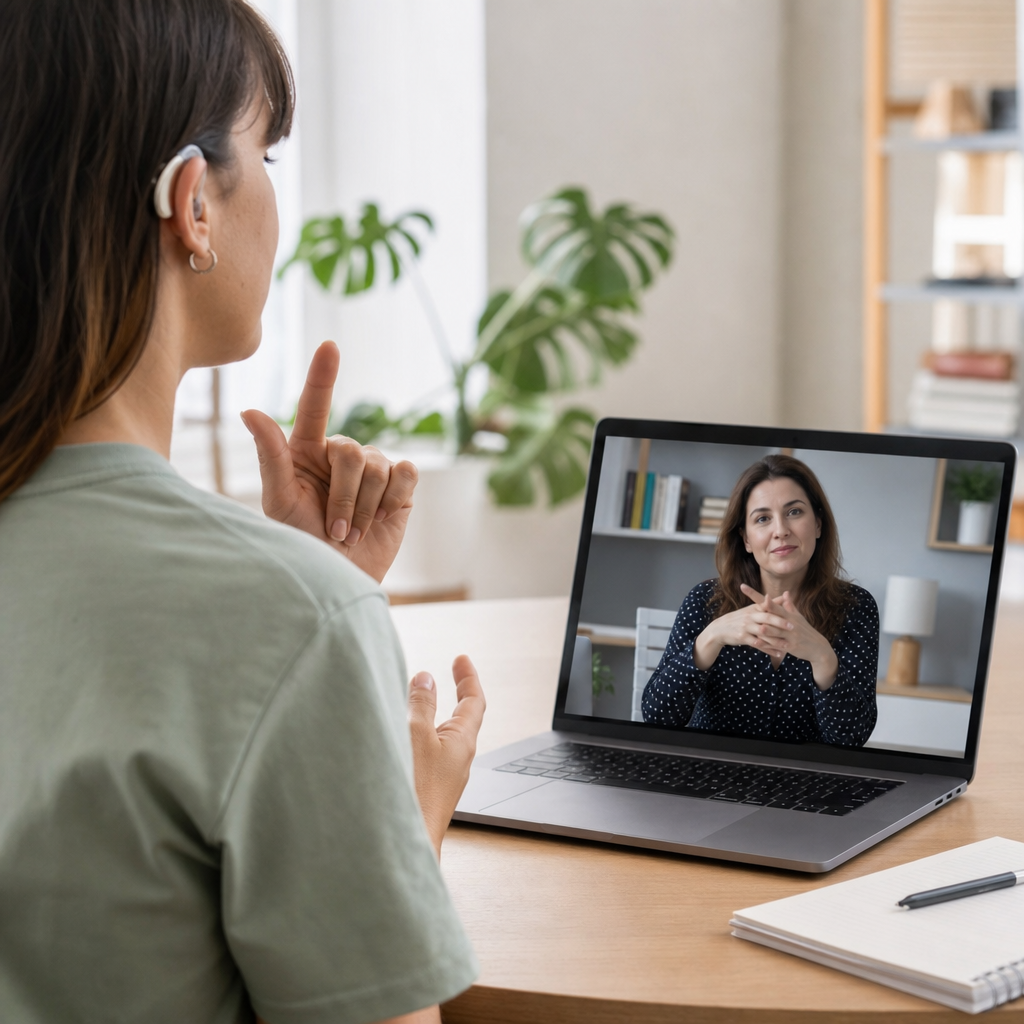
Accessible communication begins with stating preferences without apology. That might mean asking people to face you, keep hands away from their mouth, turn on captions, reduce background noise, text instead of calling, or use sign language when possible. In mixed hearing and deaf relationships, it helps to agree on default practices: one speaker at a time, good lighting, summaries after group discussions, and written follow-up for plans. These are not special favors. They are the social equivalent of ramps and doorways.
Technology can support connection when used deliberately. Live captioning on smartphones, video relay services, hearing assistive technology, cochlear implant accessories, Bluetooth microphones, and captioned video platforms reduce friction. Tools such as Google Meet captions, Zoom live transcription, Otter, Ava, and built-in smartphone transcription can help in social and family settings, not just at work. Still, no tool solves everything. Auto-captions miss names, slang, and overlapping speech, and they often underperform with accents or noisy rooms. The relationship lesson is simple: use tools, but do not let others assume the tool replaces their effort.
Build emotional closeness through direct, low-friction habits
Relationship strength depends on frequency and quality of contact. Deaf people are often left out of spontaneous communication, the small exchanges that build closeness over time. Hearing relatives may chat in another room, coworkers may debrief while walking away, or friends may share jokes in fast side conversations. Because these moments seem minor, hearing people may not recognize the cumulative exclusion they create. Yet that drip effect is exactly how isolation grows.
Countering it requires intentional habits. Ask close people to use text check-ins, shared calendars, visual alerts, and recap messages after group plans change. In romantic relationships, establish rituals that prioritize access: a nightly conversation in a well-lit room, no talking from behind, and a simple repair phrase such as “pause and repeat.” In families, dinner rules matter. One person talks at a time, everyone faces the table, and side conversations stop when the deaf person is catching up. These adjustments sound basic because they are. Basic habits create reliable belonging.
Emotional closeness also improves when deaf individuals can express frustration without being framed as difficult. Communication fatigue is real. Lipreading, listening effort, and constant monitoring drain cognitive energy. Research on listening effort consistently shows that understanding degraded speech requires added mental load, which leaves less capacity for emotional regulation and enjoyment. Naming that fatigue helps others interpret withdrawal accurately. Sometimes a deaf person is not angry or detached; they are simply exhausted from decoding the room.
Strengthen family relationships by teaching, not performing
Families often love deeply and communicate poorly. Parents, siblings, adult children, and extended relatives may underestimate how much information is missed during holidays, car rides, medical conversations, or multi-generational gatherings. Many deaf individuals respond by performing comprehension to keep the peace. They smile, nod, guess, and fill gaps later. In the short term that avoids awkwardness. Over time it weakens trust, because the relationship starts resting on appearances instead of shared understanding.
The stronger approach is educational and specific. Instead of saying “You never include me,” try “I miss what is said when people talk while clearing dishes. Can we move important conversations back to the table?” Instead of “Family events are exhausting,” say “I need seating in a circle, better lighting, and one speaker at a time if I’m going to stay engaged.” Concrete requests give relatives a chance to succeed.
Families also benefit from learning at least some sign language, even when the deaf person uses speech. Signing changes the communication environment because it reduces dependence on perfect acoustics and eye contact with a single speaker. I have seen grandparents become more emotionally available once they learned everyday signs for feelings, routines, and jokes. Fluency is ideal, but effort itself has relationship value. It signals that connection is worth adapting for.
| Relationship area | Common barrier | Practical fix | Why it works |
|---|---|---|---|
| Family gatherings | Overlapping speech and poor lighting | Seat people in a circle and assign one speaker at a time | Improves visual access and reduces missed context |
| Friendships | Last-minute verbal plan changes | Use group text for updates | Creates equal access to information |
| Romantic relationships | Misread frustration during fatigue | Agree on a pause signal and recap important points in writing | Prevents conflict escalation and confirms understanding |
| Work relationships | Informal talk carries key decisions | Request written summaries and captioned meetings | Protects inclusion and reduces dependence on memory |
Create healthier friendships through reciprocity and shared context
Strong friendships are rarely built only on accessibility. They are built on reciprocity, reliability, humor, and shared experience. Deaf individuals sometimes fall into uneven social roles because communication takes extra setup. They become the planner, the educator, or the quiet observer. Good friends redistribute that labor. They choose accessible venues, repeat missed comments without making it awkward, and include the deaf person in side conversations rather than summarizing after the joke has passed.
One useful test is whether a friendship survives inconvenience. If a friend only connects when the setting already favors them, the bond may be weak. Healthy friends adapt. They move to quieter restaurants, sit where sightlines are clear, send the meme and the context, and learn how you prefer to communicate when emotions run high. In my experience, friendships deepen when both sides discuss access before problems build resentment. That conversation can be simple: “Here’s what helps me stay present when we go out.”
Shared context matters too. Joining deaf clubs, advocacy groups, sports teams, hobby communities, faith groups, or online spaces with strong access norms reduces the burden of constant explanation. Deaf community connection is not only culturally important; it is protective for mental health. It offers direct communication, role models, practical advice, and a place where no one has to justify access needs. For many people, relationships strengthen overall when at least some friendships require no translation of identity.
Approach dating and partnership with clarity from the beginning
Dating can intensify every communication pattern, good and bad. Early attraction sometimes masks access problems because both people are highly motivated. Later, the strain appears in conflict, socializing, or family integration. The healthiest approach is early clarity. Explain how you communicate best, what settings are difficult, how you handle misunderstandings, and what support feels respectful rather than patronizing.
In hearing-deaf partnerships, the best outcomes usually come from shared responsibility. The deaf partner should not be the only one managing captions, interpreter logistics, restaurant choices, or introductions to others. A hearing partner who learns sign language, understands device fatigue, and advocates for inclusion in social settings becomes easier to trust. Trust is built when support is consistent in public as well as private. If someone communicates well one-on-one but leaves you behind in groups, the relationship has a structural weakness.
Conflict repair deserves special attention. Misunderstandings escalate faster when either person relies on partial information. Couples benefit from slowing down, confirming what was actually said, and choosing the right medium. Some conversations are better face-to-face with visual access; others are calmer by text first, followed by discussion. The point is not to avoid difficult topics. It is to choose a communication channel that protects accuracy and dignity.
Reduce workplace and community isolation to support personal relationships
Social isolation is rarely confined to home life. If a deaf person is excluded all day at work, school, healthcare visits, or community events, they often arrive home depleted. That depletion affects patience, intimacy, and willingness to socialize. Strengthening relationships therefore includes improving inclusion beyond the inner circle.
At work, practical measures matter: captioned meetings, interpreters when needed, accessible training, visual alerts, written agendas, and documented action points. Under laws such as the Americans with Disabilities Act in the United States, many employers must provide reasonable accommodations. Similar legal frameworks exist in other countries. Knowing these rights can reduce chronic self-advocacy stress. In community settings, access may include captioned public events, induction loops, communication cards, and staff trained to face the person and speak clearly.
Healthcare deserves separate mention because poor access there can damage trust broadly. When medical appointments are inaccessible, deaf patients may leave with incomplete information, then depend on family or friends to fill dangerous gaps. That dependence can strain relationships and undermine autonomy. Requesting qualified interpreters, captions, written instructions, and teach-back confirmation protects both health and relational confidence.
Protect mental health by addressing loneliness before it hardens
Loneliness is not solved by telling someone to be more social. For deaf individuals, it often reflects repeated communication failure, not lack of effort. The emotional impact can include hypervigilance, shame, anticipatory dread before gatherings, and grief over missed connection. These reactions are understandable. They also become self-reinforcing if left unaddressed.
Practical steps help. Audit your social energy: which people, settings, and tools leave you connected rather than depleted? Invest more there. Limit environments that force constant guessing. Seek therapy with a clinician experienced in deaf culture or disability-informed practice, ideally with direct communication access. Peer support groups can also reduce isolation by normalizing experiences such as caption fatigue, family misunderstanding, or identity shifts after hearing loss.
The core principle is this: strong relationships grow where access, respect, and emotional honesty meet. If you are deaf, you do not need to earn inclusion by overperforming comprehension or minimizing your needs. Ask for the conditions that let you participate fully, and notice who responds with consistency. Start with one relationship, one routine, and one clear request this week. Small access changes often produce the biggest gains in trust, closeness, and lasting connection.
Frequently Asked Questions
How can a deaf individual improve communication in relationships without feeling like all the responsibility is on them?
The most important shift is to stop treating communication barriers as a personal failure. Healthy relationships improve when everyone involved accepts that communication is a shared responsibility. A deaf individual can absolutely take initiative by explaining preferred communication methods, such as sign language, texting, captions, visual cues, face-to-face positioning, or written follow-up, but that does not mean they should carry the entire burden. Strong relationships are built when partners, relatives, friends, and coworkers actively adapt too.
In practical terms, that means setting clear expectations early. Let people know what helps most in everyday situations: getting your attention before speaking, not talking from another room, keeping hands away from the mouth, ensuring good lighting, using interpreters when needed, or slowing down during important discussions. These are not special favors. They are access needs, and access is foundational to trust. When people understand that better communication benefits the relationship as a whole, not just one person, resentment tends to decrease and connection becomes easier.
It also helps to talk openly about what happens when communication breaks down. Misunderstandings can create frustration, embarrassment, or emotional distance if they are ignored. Naming the issue calmly and directly can prevent that pattern. For example, saying, “I want us to stay connected, and I need us to find a better way to handle group conversations,” is often more effective than focusing only on what went wrong. This keeps the conversation centered on solutions. Over time, relationships get stronger when accessibility becomes routine rather than something discussed only after conflict.
What are the biggest challenges deaf individuals face in personal relationships, and how can they be addressed?
One of the biggest challenges is not deafness itself, but the accumulation of small communication gaps that lead to disconnection. Missed jokes, incomplete conversations, side comments in group settings, emotional nuance lost during rushed exchanges, and the exhaustion of constantly filling in the blanks can all make a person feel excluded. In close relationships, those repeated experiences may be misread as withdrawal, lack of interest, or moodiness, when the real issue is reduced access.
Another major challenge is unequal effort. Many deaf individuals spend years adapting to hearing environments, while the hearing people around them may not realize how much constant adjustment is required. That imbalance can create fatigue and resentment. Addressing it starts with honesty. Relationships improve when both people are willing to ask, “What is making connection harder right now?” and “What changes would make communication feel more equal?” Sometimes the answer is learning basic sign language. Sometimes it is using captioned calls, choosing quieter meeting places, or agreeing to pause difficult conversations until communication support is available.
Emotional safety is also critical. If a deaf individual is repeatedly blamed for misunderstandings or made to feel “too difficult” for requesting access, the relationship may become strained very quickly. Supportive people respond differently. They stay curious, apologize when needed, and treat access needs as normal. The healthiest relationships are the ones where communication tools are not seen as obstacles to intimacy but as the pathway to it. When access, empathy, and consistency are present, many of the most common challenges become manageable.
How can hearing partners, friends, and family members better support a deaf loved one?
The best support begins with effort that is visible, consistent, and informed. Hearing loved ones should not wait to be corrected every time communication fails. Instead, they can proactively learn what works best for the deaf person in their life. That may include learning sign language, using clear visual communication, maintaining eye contact, reducing background noise, choosing accessible environments, and making sure important conversations happen in ways that are fully understandable. The goal is not perfection. It is reliability and respect.
Support also means understanding that access is emotional, not just technical. If a deaf person is left out of dinner-table conversations, family jokes, fast-moving group discussions, or spontaneous plans, the result is often loneliness even when other people are physically present. Hearing relatives and partners can strengthen the relationship by slowing the pace, repeating key points, summarizing group conversation, and making inclusion a habit rather than an afterthought. These actions send a clear message: you matter enough for us to make this work.
It is equally important for hearing loved ones to educate themselves instead of relying entirely on the deaf person to explain everything. Learning about Deaf culture, communication access, interpreter etiquette, captioning tools, and the social impact of exclusion can prevent many avoidable problems. Supportive people also avoid defensiveness. If a deaf loved one says a situation was inaccessible or hurtful, the most helpful response is to listen and adjust, not argue intent. Relationships become stronger when hearing people understand that accessibility is a daily act of care.
Can relationships thrive if one person is deaf and the other is hearing?
Yes, absolutely. Deaf-hearing relationships can be deeply connected, stable, and fulfilling, but they tend to do best when both people accept that communication must be intentional. Love alone is rarely enough if everyday interaction is confusing, inconsistent, or one-sided. Thriving relationships in this context usually have a few things in common: agreed communication methods, patience during misunderstandings, willingness to learn, and a strong commitment to emotional clarity.
Successful deaf-hearing couples often create systems that reduce stress before problems arise. They may use sign language at home, text during logistics-heavy conversations, rely on captions for shared media, choose restaurants with better lighting and less noise, or schedule serious discussions for times when both people can give full attention. These habits may seem small, but together they create trust. They show that both partners value understanding each other, not just speaking to each other.
What matters most is attitude. If the hearing partner sees accessibility as inconvenient, the relationship may become unequal very quickly. If they see accessibility as part of loving well, the relationship has much stronger footing. The deaf partner should also feel free to express needs without shame or apology. Mutual adaptation is the standard, not a bonus. When both people are committed to communication, accountability, and inclusion, a deaf-hearing relationship can be every bit as strong as any other.
What practical habits help deaf individuals build stronger, less isolating relationships over time?
Consistent habits make a major difference. One of the most effective is establishing clear communication norms in every important relationship. Instead of hoping people will “figure it out,” be direct about what helps you stay connected. That might include texting before arriving, facing you when speaking, using visual alerts, clarifying plans in writing, or avoiding complex conversations in inaccessible settings. Clear norms reduce confusion and help other people succeed in relating to you.
Another valuable habit is addressing problems early. Social isolation often grows quietly through repeated moments of being left out, misunderstood, or emotionally exhausted. If those experiences are never discussed, distance tends to increase. Bringing up concerns while they are still small gives the relationship a better chance to improve. It also helps to notice which people respond with effort and which consistently avoid adapting. Strong relationships are reciprocal. They are not built on one person endlessly compensating for everyone else.
Finally, invest in environments and communities where communication access is normal. This can include Deaf community spaces, inclusive social groups, accessible workplaces, therapy with communication awareness, or friendships with people who are already committed to learning. Relationships are easier to strengthen when you are not constantly defending your needs. Over time, the most protective habit is choosing connection that includes dignity, not just contact. The right relationships make you feel understood, considered, and fully present rather than tolerated at the edges.