
Businesses that want to serve deaf customers better must treat accessibility in public spaces and events as a core service standard, not a side accommodation. In this context, deaf customers include people who are culturally Deaf and use sign language, hard of hearing customers who rely on amplification or captions, and late-deafened people whose needs may differ by setting. Public spaces and events include retail stores, restaurants, hotels, clinics, museums, stadiums, conferences, festivals, and municipal venues where communication, safety, and wayfinding affect the customer experience. I have worked with venue teams that assumed a hearing loop at reception solved everything; in practice, success depends on how staff communicate, how information is displayed, how emergencies are announced, and whether booking systems let customers request support before arrival.
This matters because deaf customers encounter barriers at every stage of a visit. They may miss a spoken check-in instruction, a last-minute room change, a boarding announcement, or a safety warning delivered only over a loudspeaker. They may abandon a purchase if staff insist on phone calls, or leave an event early if captions are poor. The scale is significant. According to the World Health Organization, more than 1.5 billion people live with some degree of hearing loss, and hundreds of millions have disabling hearing loss. In many markets, disability law requires equal access, but the business case is equally strong: clearer communication reduces complaints, improves dwell time, raises conversion, and builds loyalty across families, colleagues, and communities who choose venues together.
For a sub-pillar hub on accessibility and inclusion, public spaces and events deserve special focus because they combine physical design, digital communication, staffing, and risk management. A single venue visit can involve ticketing, transport, entry screening, announcements, transactions, customer support, and emergency evacuation. If one link fails, the whole experience breaks. The good news is that most improvements are practical. Visual information systems, trained staff, assistive listening technologies, captioned content, and inclusive event planning all work when they are designed as a connected service journey. Businesses that understand this can serve deaf customers better consistently, whether they run one storefront or a portfolio of public-facing locations.
Start with communication access across the full customer journey
The most effective way to improve service for deaf customers is to map every point where spoken information appears and provide an equivalent visual or text-based channel. That starts before the visit. Websites should explain available accommodations plainly: captioning, sign language interpreting, hearing loops, assistive listening devices, text-based customer support, quiet help desks, and accessible emergency procedures. Booking forms should include a field for accommodation requests, with enough detail to capture timing, location, seating, interpreter preference, and device compatibility. Confirmation emails should restate what was arranged. I have seen many failures caused not by unwillingness, but by fragmented handoffs between marketing, operations, and front-of-house teams.
On arrival, deaf customers need immediate orientation without relying on overheard speech. Clear entry signage, digital check-in screens, visible queue systems, and staff trained to gain attention respectfully make an immediate difference. Staff should face the customer, keep hands away from their mouth, speak at a natural pace, and switch to writing, typing, or a tablet when needed. They should never say “it doesn’t matter” when asked to repeat information, because details such as gate numbers, pricing changes, medication instructions, or evacuation routes do matter. In public events, all spoken announcements that affect the audience must also appear visually on screens, apps, or staffed notice points.
Service consistency is critical. A venue may advertise accessibility well and still fail if one cashier refuses to write down options or one usher does not know where captioning screens are located. Standard operating procedures solve this. Build communication access into opening checklists, pre-event run sheets, and incident logs. Assign named owners for equipment testing, interpreter coordination, and signage updates. If your teams use customer relationship management systems, flag accommodation preferences so repeat visitors do not have to explain themselves every time. Good accessibility feels ordinary because it is operationalized. That is the standard deaf customers notice most: whether a business has made access dependable rather than exceptional.
Design public spaces that support visibility, wayfinding, and safer interaction
Physical environments influence communication more than many operators realize. Deaf customers often depend on sightlines to read lips, see gestures, follow interpreters, or monitor screens. Layout choices therefore matter. Reception counters should have unobstructed views and lower sections for comfortable face-to-face communication. Seating in waiting areas should allow customers to see display boards and entrances simultaneously. In restaurants and cafés, hosts should not call names into a crowd without a visual paging option. In museums, exhibitions should not rely on audio guides alone; transcripts, captions, and visual storytelling support both access and comprehension.
Lighting is equally important. Backlighting that places a bright window behind a staff member can make lipreading difficult. Dim corridors, colored stage washes, and flashing decorative effects can reduce visibility of interpreters and on-screen text. In event spaces, reserve sightlines for caption displays and interpreters just as deliberately as you reserve camera positions or sponsor signage. Wayfinding should be text-first, high contrast, and placed at decision points: entrances, elevators, ticket desks, toilets, exits, and service counters. Symbols help, but symbols without plain language create ambiguity. Temporary changes, such as moved entrances or delayed start times, must be posted visually wherever verbal updates are given.
Safety planning also needs redesign. Emergency communication in public spaces often still relies on sirens and shouted directions. Deaf customers need visual alarm strobes, staffed notification procedures, and evacuation instructions that can be understood without hearing. Hotels should make vibrating or flashing alert devices available on request, and event venues should brief floor staff on how to approach deaf guests during incidents. A robust plan covers redundancy: alarm systems, screen messages, handheld signage, and trained personnel. The goal is not a special process for one group; it is resilient communication that works under pressure for everyone, including older visitors, non-native speakers, and people in noisy environments.
Use the right tools: captions, loops, devices, and live support
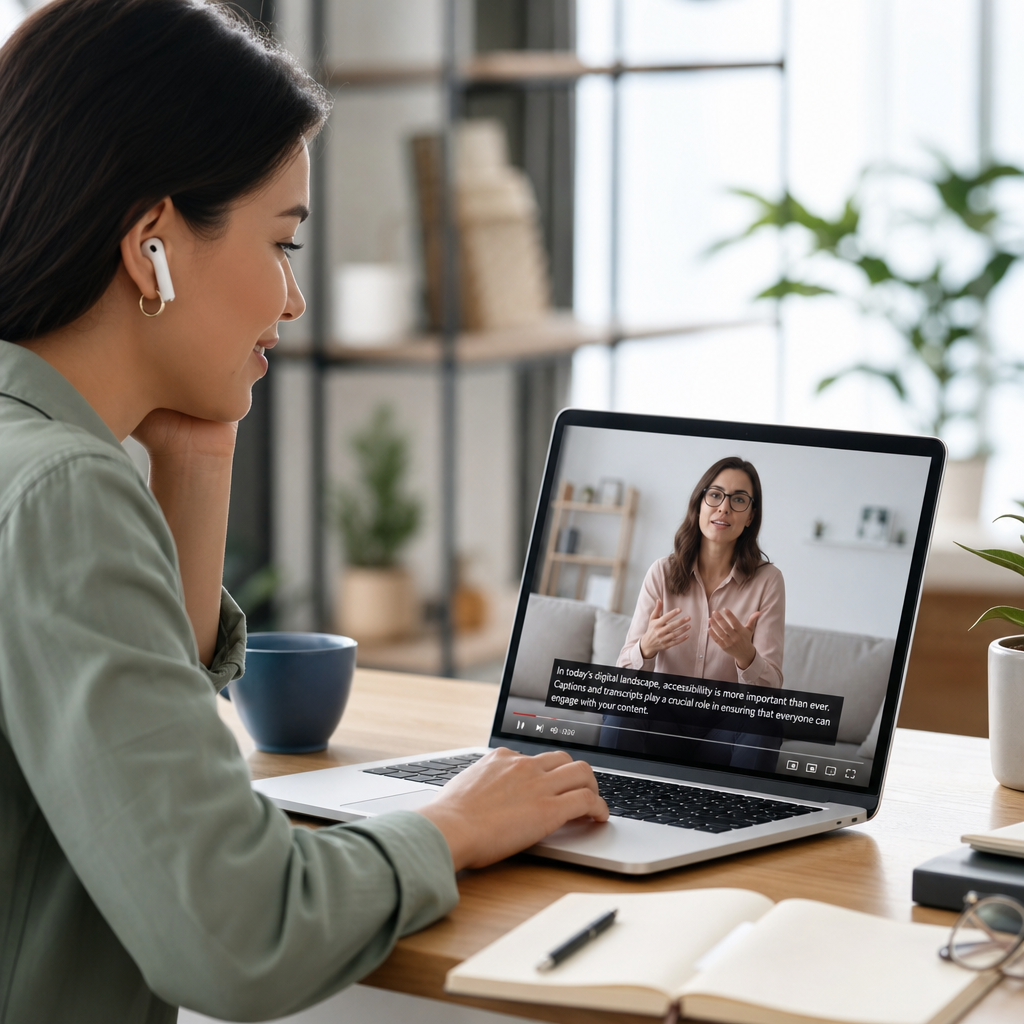
Accessible technology works best when businesses match the tool to the setting. Captions are essential wherever speech is presented publicly, including videos, presentations, self-service kiosks, virtual event streams, and in-venue broadcasts. Open captions, visible to everyone, are often more reliable in public contexts than closed captions that depend on device settings. For meetings and performances, real-time captioning provided by trained captioners can deliver high accuracy, especially for technical vocabulary. Auto-generated captions have improved, but they still struggle with accents, crosstalk, proper nouns, and noisy rooms; they should not be the only option for high-stakes content such as legal briefings, medical information, or keynote sessions.
Assistive listening technologies are important for many hard of hearing customers, though not all deaf customers use them. Hearing loops, also called induction loops, transmit sound directly to hearing aids and cochlear implants with telecoils. Infrared and FM systems can serve theaters, classrooms, and guided tours. The common mistake is installing a loop and never testing it. Businesses should verify coverage, eliminate electrical interference, label looped areas with the international symbol, and train staff to explain how the system works. Portable receivers must be charged, cleaned, tracked, and available without friction. A device locked in a manager’s office is not an accessible service.
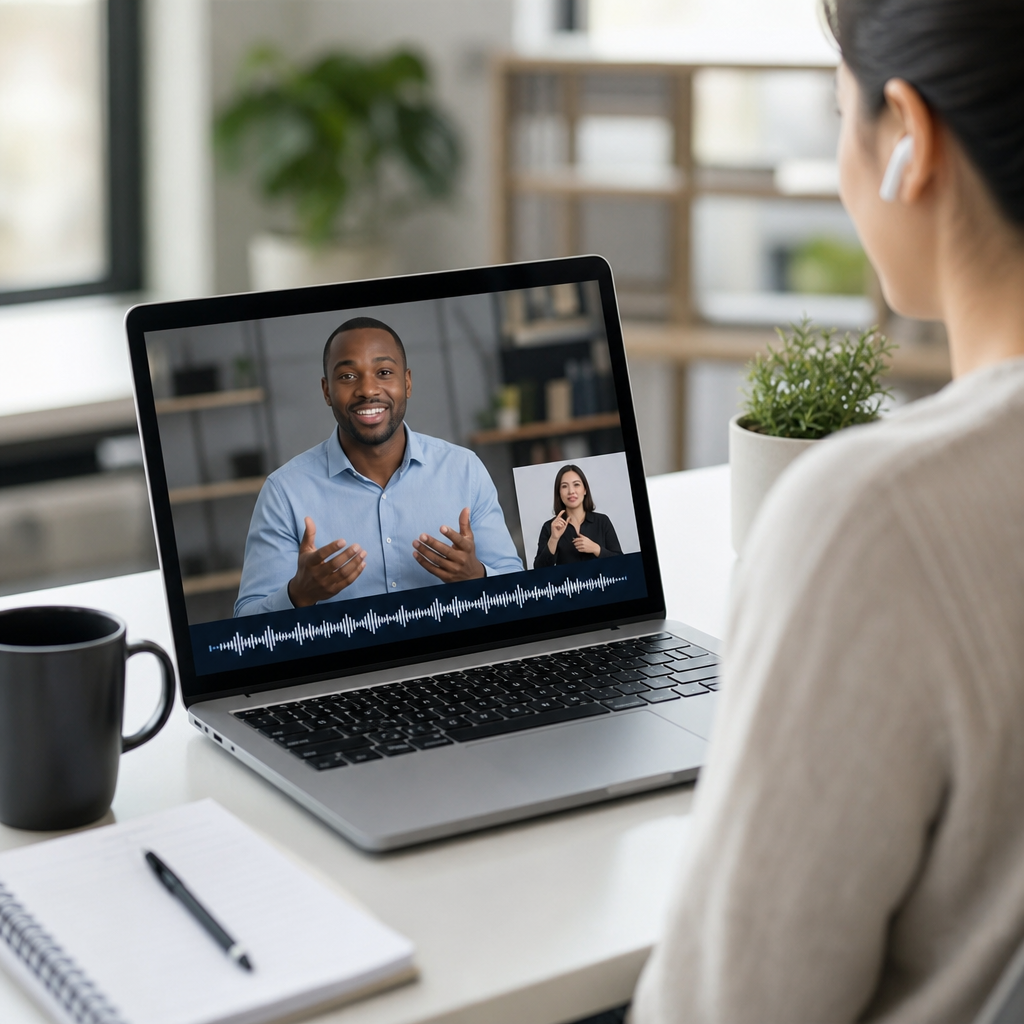
Human support remains indispensable. Qualified sign language interpreters are necessary for many events, consultations, ceremonies, and customer interactions that involve complexity or personal importance. Video remote interpreting can help when in-person interpreters are unavailable, but it requires strong bandwidth, a stable camera angle, suitable screen size, and a quiet visual background. For public programs, businesses should publish how to request interpreting and by when. The service standard should be based on communication effectiveness, not minimum compliance.
| Setting | Best primary support | Common failure point | Better practice |
|---|---|---|---|
| Retail checkout | Visible staff communication plus typed backup | Cashier speaks while looking away | Face customer, confirm totals on screen, offer writing tablet |
| Conference keynote | Real-time captions and reserved sightlines | Captions placed too small or too far away | Use large high-contrast screens near stage action |
| Theater or cinema | Open captions or caption devices | Devices unavailable or uncharged | Inventory checks before doors open, simple collection process |
| Hotel stay | Text-based guest messaging and alert devices | Emergency instructions given only orally | Provide written procedures and visual/vibrating alerts |
| Museum tour | Interpreted sessions or transcript-supported guides | Guide walks while talking and facing away | Stop at points, face group, provide text summaries |
Train staff to communicate confidently and respectfully
Training is where accessibility becomes real. Staff do not need to become interpreters, but they do need practical communication habits. Teach them how to get attention appropriately by waving within sight, lightly tapping a shoulder when culturally appropriate, or using venue signals such as counter lights. They should ask, not assume, what support a customer prefers: writing, typing, speech-to-text, interpreter, loop, or another method. They should understand that lipreading is difficult and incomplete even under ideal conditions. Simply telling staff to “speak clearly” is insufficient; they need scenarios, scripts, and rehearsal in the actual environment where noise, glare, masks, and queues affect communication.
Customer service tone matters as much as mechanics. Deaf customers should not be treated as a problem to route elsewhere. Front-line staff must avoid talking only to companions, which is one of the most common and most disliked behaviors. Speak directly to the customer, even when an interpreter is present. Preserve privacy during sensitive interactions by offering a seat, a screen for typed exchange, or a quieter service point. In healthcare, finance, legal services, and hospitality, confidentiality concerns are especially important because ad hoc workarounds such as shouting or relying on family members can expose private information and create risk.
Managers should measure training outcomes, not just completion rates. Mystery shopping, accessibility walk-throughs, complaint analysis, and post-event surveys reveal whether staff can actually deliver the promised service. Include deaf trainers or community advisors when possible; teams learn faster when they hear directly what helps and what frustrates. I have seen short, practical sessions outperform long policy briefings because staff remember concrete actions: face me, write it down, show me the screen, tell me where captions are, and explain emergency steps visually. That kind of training reduces anxiety on both sides of the counter and turns inclusion into a visible quality standard.
Plan inclusive events from ticketing to post-event follow-up
Public events are where accessibility gaps become highly visible because timing is fixed and audience attention is split. Inclusive planning starts at promotion. Event pages should state available access services, how to request additional support, deadlines, venue maps, parking details, and whether sessions will be captioned, interpreted, streamed, or recorded. Ticketing platforms should not bury accessibility information behind generic contact forms. If seats have better views of interpreters or caption screens, mark them clearly. For festivals and large venues, publish an access guide with entrances, toilets, help points, lighting conditions, and emergency procedures in plain language.
Production teams should treat communication access as part of show calling. Interpreters need schedules, scripts, speaker notes, glossaries, and cue changes in advance. Captioners need audio feeds, terminology, and technical checks. Screen content should use readable font sizes, strong contrast, and enough dwell time for audiences to read. Panel moderators should repeat audience questions into microphones and identify speakers before they talk. Hybrid and streamed events need captions on both the in-room display and the online player. If networking follows the main program, provide quieter zones and text-friendly contact methods such as QR-based lead capture instead of forcing spoken exchanges in loud spaces.
After the event, ask specific questions about access rather than a generic satisfaction score. Did captions stay synchronized? Could attendees see the interpreter from their seat? Were alerts and schedule changes communicated visually? Were staff able to answer access questions quickly? Use these responses to improve supplier briefs and future budgets. Accessibility should be line-itemed, not treated as a last-minute add-on vulnerable to cuts. When businesses build repeatable event standards, they protect reputation, widen audience reach, and create experiences that deaf customers recommend rather than warn others about.
Build accountability, measure performance, and connect this hub to broader inclusion work
To serve deaf customers better at scale, businesses need governance as well as goodwill. Start with an accessibility policy that covers communication access in public spaces and events, then translate it into procurement standards, design briefs, maintenance schedules, and staff competencies. Require vendors to support captions, accessible screens, hearing assistance, and interpreter coordination where relevant. Audit websites, signage, AV systems, and incident procedures regularly. Recognized guidance from the ADA, the Equality Act, WCAG for digital touchpoints, and ISO-aligned service management practices can help structure this work, but policies only matter when local teams know exactly what to do during a busy shift or a live event.
Metrics should combine operational and customer indicators. Track accommodation request fulfillment, device uptime, caption accuracy issues, response times, complaint themes, and repeat attendance by customers using access services. Review missed opportunities as seriously as safety incidents. If a deaf guest leaves because they cannot follow boarding calls or a conference attendee misses a session because captions failed, that is a preventable service breakdown. This hub page should connect readers to deeper guidance on venue signage, inclusive emergency planning, accessible ticketing, hearing loop maintenance, interpreter booking, captioning workflows, and staff training modules. Public spaces and events are only one part of accessibility and inclusion, but they are often the most public proof of whether a business means what it says.
The main lesson is simple: deaf access is communication access made visible, reliable, and routine. Businesses do not need perfection on day one, but they do need a plan that covers the full customer journey, from discovery and booking to arrival, participation, safety, and follow-up. When public spaces are easier to navigate, events are easier to understand, and staff know how to communicate without awkwardness, deaf customers gain independence and confidence. So do many other visitors. Review your next location or event through that lens, fix the points where information exists only in sound, and make this hub the starting point for stronger accessibility across every public-facing experience.
Frequently Asked Questions
1. What does it really mean for a business to serve deaf customers better?
Serving deaf customers better means building accessibility into everyday operations instead of treating it like a special exception. Deaf customers are not one identical group. Some are culturally Deaf and primarily use sign language, some are hard of hearing and depend on hearing aids, cochlear implants, assistive listening systems, or clear speech, and some are late-deafened and may prefer written communication or real-time captions. A business that understands this plans for communication access in multiple ways rather than assuming one solution works for everyone.
In practice, that means making customer service, spaces, events, and information channels easier to use from the start. Staff should know how to get a customer’s attention respectfully, face the person when speaking, avoid covering their mouth, reduce unnecessary background noise when possible, and offer alternatives such as writing, texting, visual displays, captions, or qualified interpreters. Public announcements should not rely on sound alone. Important information such as wait times, boarding calls, safety alerts, schedule changes, and event instructions should also be available visually.
It also means seeing accessibility as part of service quality, reputation, and risk management. When a deaf customer cannot understand a cashier, check-in agent, clinician, server, guide, or presenter, the issue is not merely inconvenience. It can affect safety, privacy, medical accuracy, customer trust, and whether that person returns. Businesses that serve deaf customers well are usually more effective for everyone because they communicate clearly, use visual information thoughtfully, and train teams to adapt without making the customer do all the work.
2. What are the most important accessibility features businesses should put in place in public spaces and events?
The most important features are the ones that remove predictable communication barriers before a customer arrives. Clear visual communication should be a priority. That includes digital screens or signage for announcements, check-in steps, queue numbers, room changes, emergency instructions, and event schedules. If a space uses audio for essential information, there should be a visual equivalent. Captions should be standard for video content shown in waiting rooms, lobbies, exhibits, training spaces, or presentations. For live events, real-time captioning can make talks, panels, performances, and ceremonies far more accessible to deaf and hard of hearing attendees.
Businesses should also evaluate assistive technology and communication supports based on the setting. In larger venues such as theaters, conference centers, houses of worship, museums, and stadiums, assistive listening systems and captioning options can make a major difference for people who use amplification or residual hearing. In service-based settings like clinics, hotels, retail counters, and restaurants, communication access may involve staff using tablets or phones for typed communication, making reservation and check-in processes text-friendly, and having a reliable process for arranging qualified sign language interpreters when needed. Lighting matters too. Poor lighting makes lip reading and sign language harder, while excessively noisy environments create barriers for people using hearing devices.
Emergency access is another essential area. Alarm systems, evacuation procedures, room alerts, and public safety communications must include visual and tactile options where appropriate. Hotels may need visual alert devices for guest rooms. Event organizers should have written contingency plans for communicating urgent updates to deaf attendees. The strongest approach is to review the full customer journey, from website and booking through arrival, service, participation, and departure, and identify where communication depends too heavily on sound.
3. How should staff communicate with deaf and hard of hearing customers respectfully and effectively?
Good communication begins with respect, patience, and flexibility. Staff should never assume that every deaf person uses sign language or that every hard of hearing person can follow spoken conversation if they just speak louder. A better approach is to ask a simple, direct question such as, “What is the best way for us to communicate with you?” That gives the customer control and avoids guesswork. Depending on the answer, staff may speak clearly while facing the customer, use plain written notes, type on a device, provide captions, or bring in an interpreter.
There are also a few practical habits that matter a great deal. Staff should face the customer directly, keep their mouth visible, avoid turning away while speaking, and not talk from behind a screen or while walking off. They should use normal facial expressions and a natural pace rather than exaggerated mouthing. If the environment is noisy, moving to a quieter and better-lit location can help immediately. When communicating in writing, the goal should be clarity and professionalism, not shorthand that creates confusion. If the conversation involves complex instructions, legal terms, billing details, or medical information, staff should confirm understanding rather than assuming the message was clear.
Just as important is knowing what not to do. Staff should not speak only to a companion, interpreter, or family member when the deaf customer is present. They should not refuse to repeat or rephrase information, and they should not treat accessibility requests as burdensome interruptions. Training should include etiquette around interpreters, captioning, turn-taking in group conversations, and how to escalate to better communication support when the interaction becomes more detailed or sensitive. A well-trained team communicates with confidence and respect without making the customer feel singled out.
4. When should a business provide a sign language interpreter, captioning, or other communication support?
The right support depends on the customer’s communication preference and the importance of the interaction. If a customer uses sign language and the interaction is long, complex, high-stakes, or private, a qualified interpreter may be the most effective option. This often applies in settings such as healthcare visits, legal or financial meetings, interviews, trainings, public presentations, guided tours, academic sessions, and customer service situations involving detailed explanations or disputes. For some customers, real-time captioning may be equally or more useful, especially if they do not use sign language or prefer reading English text on a screen.
Businesses should avoid relying on improvised solutions when the communication is substantive. Passing notes may work for a quick purchase or a simple direction, but it is usually not enough for medical consent, contract discussions, event programming, safety briefings, or complaint resolution. Likewise, asking relatives, friends, or children to interpret can create serious problems with accuracy, privacy, and professionalism. Qualified communication support protects both the customer and the business by improving understanding and reducing preventable mistakes.
A strong policy includes a clear process for identifying needs in advance, especially for appointments, reservations, ticketed events, and scheduled services. Websites, booking forms, and confirmation emails should tell customers how to request accommodations. Staff should know who is responsible for arranging services and how quickly to respond. Even when advance notice is ideal, businesses should still be prepared to solve access issues on short notice whenever possible. The key principle is not to make the customer fight for access to information that hearing customers receive automatically.
5. How can businesses improve accessibility over time instead of making one-time changes?
The most effective businesses treat deaf accessibility as an ongoing service standard backed by systems, training, and accountability. A good starting point is an accessibility review of the customer experience: website, phone alternatives, online booking, front desk interactions, ordering, announcements, events, emergency procedures, and follow-up communication. This helps identify where access depends too heavily on voice calls, auditory cues, or untrained staff. Once gaps are identified, businesses can prioritize changes that have the widest impact, such as captions on all public video content, visual announcement systems, text-based customer support channels, and staff training.
Training should not be a single presentation that employees forget. It should be built into onboarding, refreshed regularly, and tailored to real scenarios in the business. A restaurant may focus on ordering and table service, a hotel on check-in and room alerts, a clinic on patient communication and consent, and an event venue on ticketing, seating, announcements, and emergency messaging. It also helps to designate someone internally who owns accessibility planning and can respond quickly when customers request accommodations.
Businesses improve fastest when they listen directly to deaf and hard of hearing customers. Feedback forms should be accessible, and customer input should be taken seriously when it points out communication barriers. Partnering with local Deaf organizations, captioning providers, interpreter agencies, or accessibility consultants can also make planning more practical and accurate. The goal is continuous improvement, not perfection overnight. When businesses measure accessibility, budget for it, and include it in service design, they create spaces and events where deaf customers can participate fully, confidently, and independently.