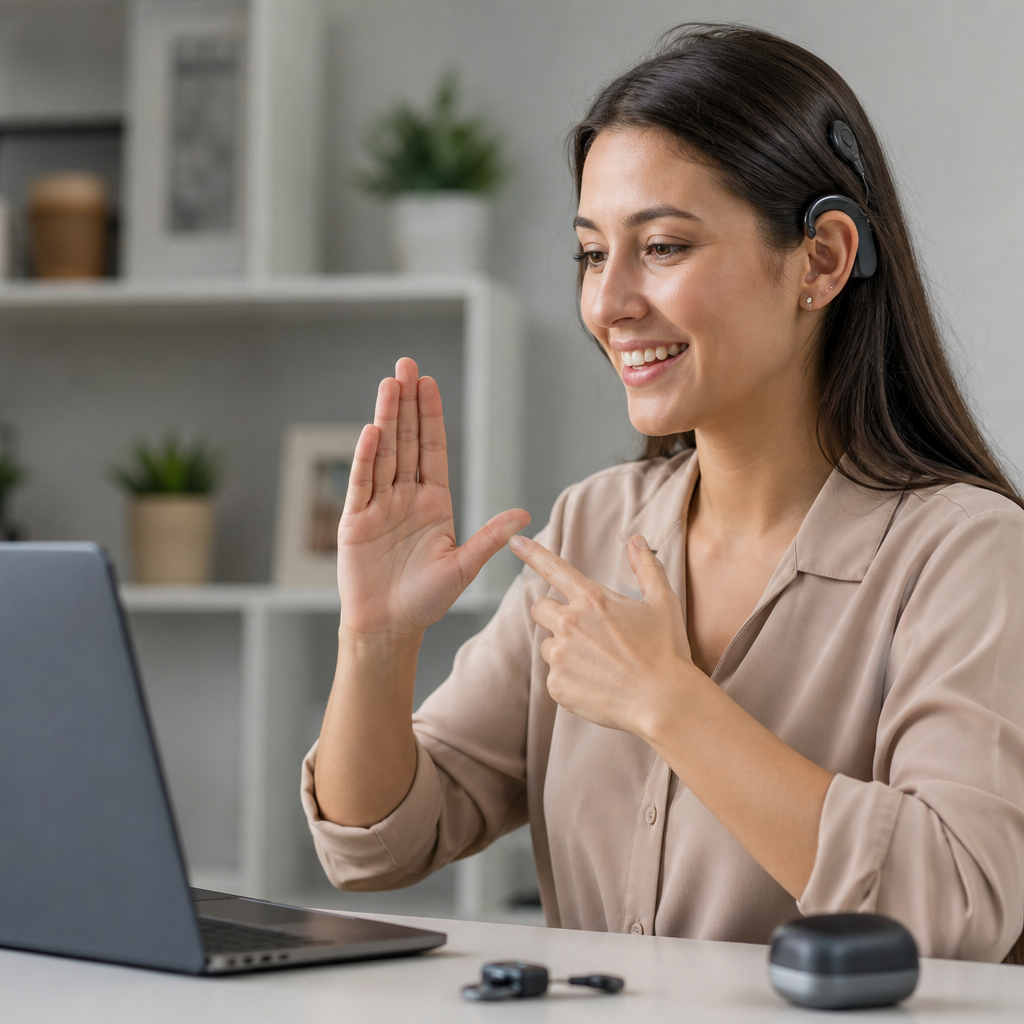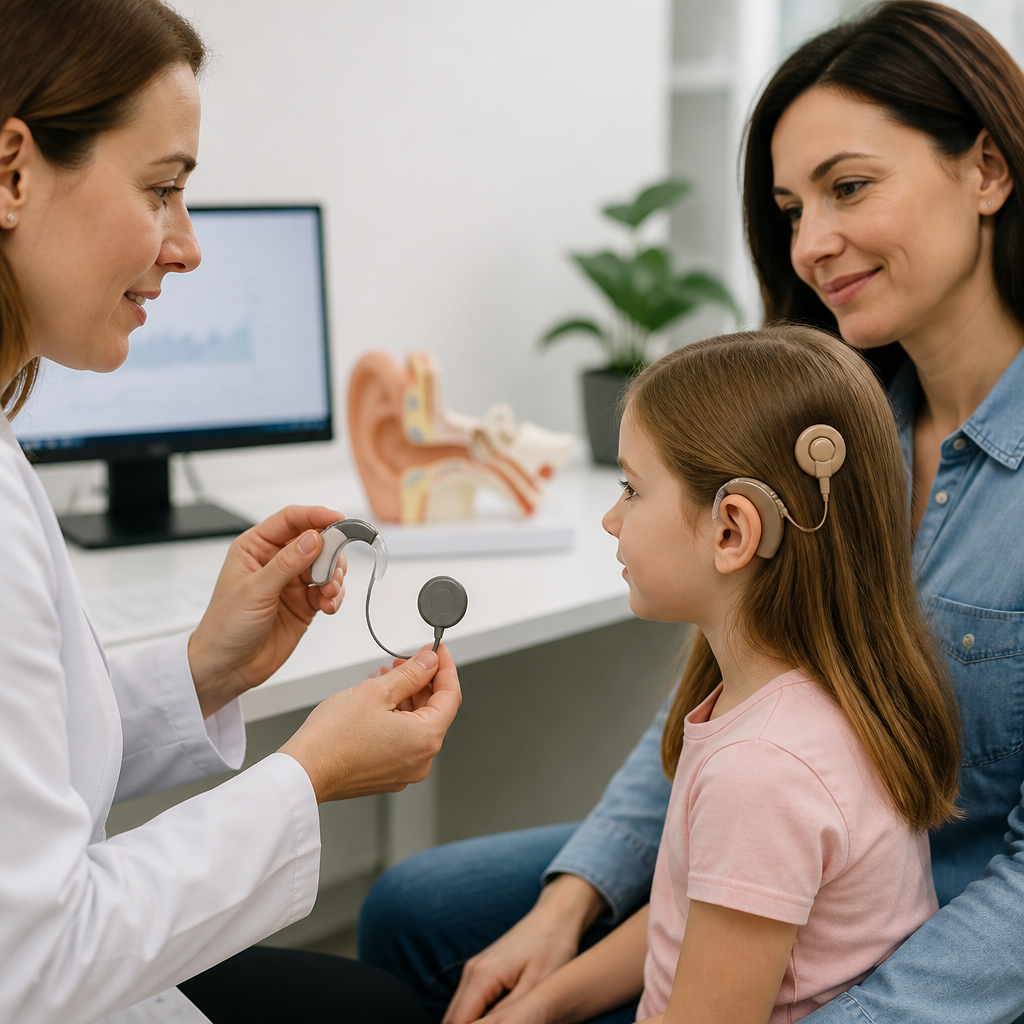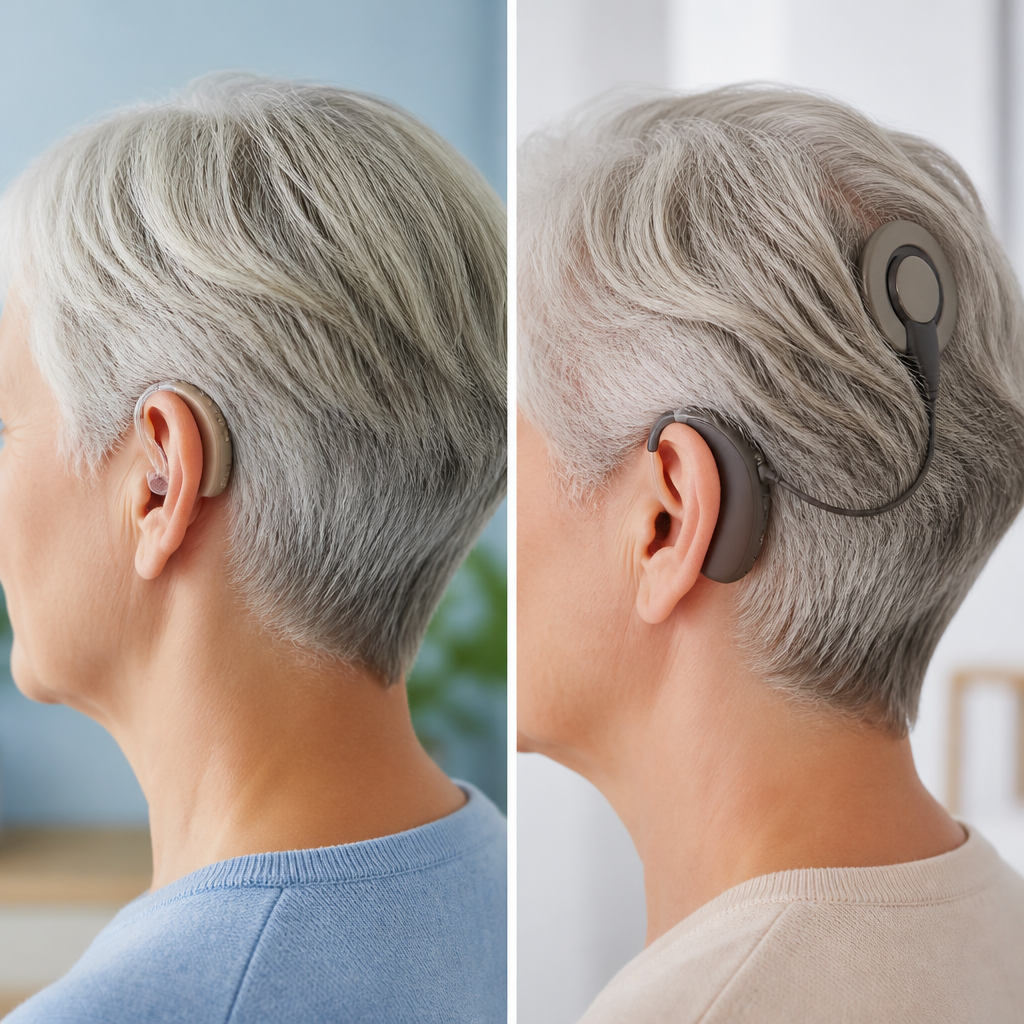

Artificial intelligence is reshaping accessibility by turning spoken, signed, and written language into formats more people can use, and that shift is especially important for the deaf community. In practical terms, AI is bridging communication gaps when it helps a deaf person follow a live meeting through captions, translates speech into text during a doctor visit, improves a video call with sign recognition, or summarizes complex information in plain language. Accessibility means designing tools, services, and environments that people with different abilities can use effectively. Communication access means the ability to receive and express information without depending on guesswork, delay, or another person to mediate every exchange. When those two ideas come together, AI stops being a buzzword and becomes a daily support system.
I have worked with captioning tools, transcription workflows, and assistive communication software long enough to see the pattern clearly: the best AI systems do not replace human connection, but they remove friction that used to make ordinary tasks exhausting. A parent-teacher conference, customer service call, airport announcement, or workplace training session can all become more usable when AI closes the gap between how information is delivered and how it is received. This matters because communication barriers affect education, employment, healthcare, civic participation, and personal independence. The World Health Organization estimates that more than 430 million people worldwide have disabling hearing loss, and that number is expected to rise. Any technology that improves communication access at scale has broad social value.
For the deaf community, the future of accessibility is not one single invention. It is an ecosystem of tools: automatic speech recognition, live captioning, natural language processing, sign language research, computer vision, voice synthesis, translation systems, and context-aware assistants built into phones, browsers, classrooms, and public spaces. Some tools are mature and widely deployed. Others are promising but still limited by data quality, linguistic diversity, or bias. Understanding where AI already works, where it still fails, and how to evaluate products honestly is essential for families, educators, employers, and advocates. This hub article explains the landscape, highlights the most useful applications, and clarifies what to watch as AI and accessibility continue to evolve.
What AI communication tools already do well
AI already improves everyday communication in several reliable ways. The strongest current use case is automatic speech recognition, often shortened to ASR. ASR converts spoken language into text, enabling live captions for meetings, classes, events, and videos. Tools such as Google Live Transcribe, Otter, Zoom captions, Microsoft Teams captions, and YouTube automatic captions have made real-time text access far more common than it was a decade ago. Accuracy has improved because modern systems use large acoustic models, language models, and context prediction to guess intended words even in imperfect audio conditions.
In my experience, AI captioning is most effective when the environment is controlled: one speaker at a time, a good microphone, limited background noise, and clear articulation. In that setting, captions can support job interviews, webinars, virtual classes, and team check-ins with minimal setup. They also help hearing participants by improving comprehension, note-taking, and retention. This universal design effect matters. Features built for deaf users often improve communication for everyone, which makes adoption easier inside organizations that might otherwise treat accessibility as an afterthought.
Another area where AI performs well is post-conversation processing. Meeting assistants can generate transcripts, highlight action items, identify speakers, and summarize next steps. For a deaf employee, that means less dependence on memory or incomplete notes. For a student, it means reviewing a lecture in searchable text rather than reconstructing missed details. Natural language processing also supports plain-language rewriting, grammar correction, and multilingual translation, which can help users who navigate more than one language or literacy context. These functions do not solve every access need, but they meaningfully reduce communication delays.
Where AI still struggles for deaf accessibility
Despite real progress, AI still fails in predictable ways that matter. Accuracy drops sharply with overlapping voices, regional accents, technical jargon, poor microphones, echo, and noisy environments such as transit stations, cafeterias, and hospital corridors. Names, acronyms, and domain-specific terms are frequent captioning errors. In healthcare, one wrong word can change meaning completely. In legal or educational settings, incomplete transcripts can create risk if people assume the text is definitive. AI output should be treated as useful access support, not as flawless documentation.
Sign language is an even more complex challenge. Sign languages are fully developed natural languages with their own grammar, spatial structure, and cultural context; they are not simply manual versions of spoken languages. Computer vision systems can detect hand shapes and movement patterns, but robust sign language recognition also requires understanding facial expressions, body posture, signing space, speed, and regional variation. American Sign Language, British Sign Language, and other sign languages differ significantly, so a model trained on one language does not automatically generalize to another.
I have seen many demos that look impressive in a controlled clip yet break down in real use. A signer with a different style, skin tone, camera angle, lighting condition, or signing speed can quickly expose weaknesses in a model. This is why accessibility professionals insist on testing with real users, not just benchmark scores. AI should augment interpreters, captioners, teachers of the deaf, and communication support staff, not push them aside before the technology is ready. Honest expectations are part of trustworthy accessibility planning.
How AI supports education, work, and healthcare
The clearest value of AI accessibility tools appears in high-impact settings where missed information carries a long-term cost. In education, live captions, lecture transcription, and AI-generated summaries can make classroom instruction more reviewable and less dependent on perfect note-taking. A deaf student can revisit a science lesson, search for terminology, and compare class discussion with assigned reading. Learning platforms can also auto-caption videos and flag missing accessibility elements, helping schools scale compliance with standards such as the Web Content Accessibility Guidelines.
In workplaces, AI can improve communication during onboarding, meetings, training, and informal collaboration. A distributed team using Teams or Zoom captions, shared transcripts, and searchable recordings gives deaf employees faster access to decisions and action items. I have found that the best implementations pair AI captions with meeting norms: mute when not speaking, use quality microphones, circulate agendas, and assign someone to correct critical terminology. Technology works better when process supports it. Without those habits, even strong tools underperform.
Healthcare is both promising and sensitive. AI transcription can help during intake, telehealth, and follow-up instructions, especially when paired with patient portals that store written summaries. Yet medical communication demands caution. Privacy rules, informed consent, and the need for precise language mean providers should not rely on generic consumer apps without proper review. For many encounters, qualified interpreters and human support remain essential. AI can improve access around the appointment, but it should be integrated into a broader communication accommodation plan.
Key AI accessibility tools and what they are best for
Choosing the right tool depends on setting, stakes, and user preference. Some tools excel at spontaneous conversation. Others are better for recorded media, educational review, or enterprise workflows. The table below summarizes common categories used in deaf accessibility planning.
| Tool category | Best use | Strengths | Limitations |
|---|---|---|---|
| Live captioning apps | Face-to-face conversations, lectures, travel | Fast setup, mobile, immediate text access | Noise and speaker overlap reduce accuracy |
| Video meeting captions | Remote work, virtual classes, webinars | Integrated with platforms, transcripts, speaker labels | Errors with jargon, accents, and unstable audio |
| Recorded media transcription | Training videos, courses, archives | Editable captions, searchable content, compliance support | Needs review before publication |
| AI note and summary tools | Meetings, appointments, study review | Action items, concise recaps, searchable records | May omit nuance or misidentify priorities |
| Sign recognition research tools | Experimental interaction and navigation | Potential for future multimodal access | Not yet reliable for broad real-world use |
For families and individuals, practical evaluation is simple: test the tool in the environments that matter most. Try it in a noisy restaurant, a parent conference, a hybrid work meeting, or a clinic waiting room. Measure not only word accuracy but response time, transcript export, privacy settings, battery drain, custom vocabulary support, and whether the text remains readable when people speak quickly. Accessibility is not just about whether a demo works. It is about whether communication becomes easier in real life.
Design principles that make AI accessibility trustworthy
The strongest AI accessibility systems are built around user control, transparency, and interoperability. User control means a person can turn features on quickly, adjust text size, save transcripts, correct vocabulary, and choose when information is stored or deleted. Transparency means the provider explains what the tool can and cannot do, how data is processed, and where human review is still needed. Interoperability means captions, transcripts, and summaries can move between platforms, learning systems, and documentation tools without locking users into one vendor.
Bias and inclusion also matter. Training data that underrepresents deaf speech patterns, signers with varied backgrounds, children, older adults, or multilingual users will produce uneven results. Accessibility teams should ask vendors how they test for demographic performance differences and whether they support custom terminology. Procurement should include deaf users in product trials, because lived experience reveals failure points that technical teams often miss. A high average accuracy score can hide unacceptable errors for the people who need the system most.
Security is another core design issue. Many AI tools send audio or video to cloud servers for processing. In schools, workplaces, and healthcare settings, that raises questions about retention, consent, and regulatory compliance. Decision makers should review encryption, storage policies, admin controls, and contractual safeguards before rollout. Trust grows when organizations treat accessibility tools with the same seriousness they give any other business-critical technology.
What the future of accessibility is likely to look like
The next phase of AI accessibility will be multimodal. Instead of handling only speech or only text, systems will combine audio, video, gesture, context, and user preferences in real time. A smart meeting room could detect who is speaking, display personalized captions on a phone or glasses, identify agenda terms, and generate a verified summary after the session. A transit app could convert public announcements into text, vibration alerts, and route-specific updates. A customer service kiosk could present spoken instructions as readable text while also supporting typed responses.
Wearables and ambient computing will likely expand access further. Smart glasses already show promise for heads-up captions, reducing the need to look down at a phone during conversation. On-device AI processing is also improving, which matters for privacy, speed, and use in low-connectivity environments. At the same time, sign language avatars, synthetic voices, and conversational agents will continue to develop, though they will need careful evaluation to avoid flattening linguistic nuance or excluding deaf culture from design decisions.
The most important future trend is not fully automated communication. It is collaborative intelligence: AI handling repetition, formatting, detection, and summarization while humans provide judgment, interpretation, and relationship. That model is more realistic and more respectful. When organizations adopt AI with that mindset, they create communication systems that are faster, more inclusive, and more resilient.
AI is bridging communication gaps by making information easier to see, search, review, and respond to across school, work, healthcare, and daily life. The biggest gains today come from live captions, transcripts, summaries, and platform-level accessibility features that reduce the effort required to follow conversations and media. The biggest caution is that accuracy still depends on context, data quality, and thoughtful implementation. Deaf accessibility improves most when AI is paired with human support, clear policies, and testing by real users.
As a hub for AI and the future of accessibility, this topic should guide every related decision: which tools deserve deeper reviews, which settings need stronger safeguards, and which emerging products are promising versus premature. If you are evaluating technology for the deaf community, start with actual communication barriers, not product marketing. Test tools in real conditions, involve deaf users early, and build systems that prioritize control, privacy, and reliability. Done well, AI does more than automate tasks. It opens access.
Frequently Asked Questions
How is AI helping bridge communication gaps for deaf and hard of hearing people?
AI is helping bridge communication gaps by converting information from one format into another in real time, making conversations, media, and services easier to access. For deaf and hard of hearing people, that often means speech-to-text captions during meetings, classes, appointments, and public events. Instead of relying only on a human note-taker or waiting for a transcript later, a person can follow the discussion as it happens. AI can also improve communication by powering sign language recognition tools, generating summaries of fast-moving conversations, and simplifying dense written content into clearer language.
What makes this especially important is that communication barriers often appear in everyday situations, not just formal settings. A quick conversation at work, a virtual doctor visit, a customer service call, or a group video meeting can all become more accessible when AI helps translate spoken, signed, and written information into usable formats. While these tools do not replace interpreters, captioners, or broader accessibility planning, they can reduce friction and create more opportunities for full participation.
What are the most common real-world uses of AI for accessibility in communication?
Some of the most common uses are live captioning, speech-to-text transcription, sign recognition, automated translation, and content summarization. Live captioning is one of the clearest examples because it allows a deaf person to follow a conversation in real time during video calls, workplace meetings, classrooms, and public presentations. AI transcription tools are also valuable in healthcare, where they can turn a doctor’s spoken explanations into text during an appointment, making it easier to review important instructions and ask informed follow-up questions.
Another practical use is summarization. AI can take a long or complex conversation and turn it into a plain-language recap, which helps when information is delivered too quickly or includes technical terms. In video communication, AI may support accessibility features such as speaker identification, noise filtering that improves caption quality, and sign-related tools that enhance understanding in multilingual or mixed-format interactions. Together, these applications show how AI can support communication before, during, and after a conversation, rather than only at one stage.
Can AI replace sign language interpreters or human captioners?
In most cases, no. AI is a powerful support tool, but it should not be seen as a complete replacement for qualified sign language interpreters, CART providers, or human captioners. Human professionals bring cultural understanding, contextual judgment, and the ability to interpret nuance, tone, emotion, and specialized vocabulary with a level of accuracy that AI still struggles to match. This is especially true in high-stakes environments such as medical care, legal proceedings, education, mental health services, and workplace discussions involving detailed or sensitive information.
A more realistic and responsible view is that AI expands access where human support may not be immediately available. It can provide faster captions, improve convenience, and make spontaneous interactions more manageable. However, automated tools can still make mistakes with names, accents, overlapping speech, technical terminology, and sign variations. The best accessibility approach often combines AI with human expertise, giving people multiple ways to access communication depending on the setting and their individual preferences.
What should organizations consider before using AI communication tools for accessibility?
Organizations should focus on accuracy, privacy, inclusivity, and user choice. Accuracy matters because poor captions or weak transcription can create new misunderstandings instead of solving communication barriers. Before adopting a tool, it is important to test it in realistic conditions, including different speakers, accents, background noise levels, industry-specific terms, and fast-paced group conversations. Privacy is equally important, especially in healthcare, education, and workplace settings where conversations may contain personal or confidential information.
Inclusivity means recognizing that no single tool works for everyone. Some deaf individuals prefer captions, others rely on sign language, and many use a combination of communication methods depending on the context. Organizations should avoid treating AI as a one-size-fits-all fix and instead offer flexible options that include human accommodations when needed. It is also wise to gather feedback directly from deaf and hard of hearing users, because accessibility works best when the people affected are part of the decision-making process. In practice, the strongest strategy is to use AI as one part of a broader accessibility plan, not the entire plan.
What are the limitations of AI when it comes to bridging communication gaps?
AI has made major progress, but it still has clear limitations. Automated captions can lag behind speech, miss words, or misinterpret speakers in noisy environments. Sign recognition technology is improving, but sign languages are complex, visual, and deeply tied to facial expressions, body movement, grammar, and regional variation. That means AI may not always capture the full meaning of signed communication accurately. Written summaries can also leave out context or oversimplify important details, especially when conversations are emotional, technical, or rapidly changing.
There are also broader concerns around bias, training data, and accessibility design. If AI systems are not trained on diverse communication styles, they may perform better for some users than others. A tool may work well in a quiet demo but fail in a real meeting with interruptions, poor lighting, multiple speakers, or specialized vocabulary. That is why the most effective use of AI is practical and balanced: it should enhance access, not promise perfect communication. When paired with thoughtful design, human support, and ongoing feedback from the deaf community, AI can make communication significantly more inclusive while still acknowledging its limits.