
AI tools are changing deaf education by making communication, instruction, assessment, and access more immediate, personalized, and scalable. In this context, deaf education includes teaching deaf and hard of hearing students in schools, colleges, workplace training, and lifelong learning settings, using approaches that may include sign language, spoken language, captioned media, visual supports, assistive listening systems, and bilingual models. Artificial intelligence matters here because it can process speech, text, images, and video in real time, helping remove delays that have historically limited participation. I have worked with accessibility teams evaluating classroom technology, and the biggest shift is practical: tools once reserved for specialists are now embedded in everyday platforms, from meeting apps to learning management systems.
The importance of this change is hard to overstate. Deaf learners have always relied on planning, accommodation requests, interpreters, note takers, and teacher flexibility. Those supports remain essential, but AI can strengthen them by reducing friction at the point of learning. A lecture can be captioned live. A recorded lesson can be transcribed, translated, summarized, and searched. A science diagram can be described visually and paired with signed explanation. A parent conference can be made more accessible across languages and communication preferences. These gains improve not only access, but also timing, confidence, and independence, which directly affect academic outcomes and engagement.
AI in deaf education does not refer to a single product. It includes automatic speech recognition for captions and transcripts, natural language processing for summaries and translation, computer vision for sign language research, generative systems that adapt reading levels or create visual supports, and analytics that help teachers spot where students are getting stuck. Popular tools now used in education and accessibility workflows include Microsoft Teams and PowerPoint live captions, Google Meet captions, Otter, Zoom captioning, YouTube automatic captions, ReadSpeaker, Grammarly, ChatGPT, and emerging sign avatar systems. Some tools are mature and useful today; others are promising but still limited.
This hub article explains how AI and the future of accessibility intersect in deaf education, where the technology delivers clear value, where caution is necessary, and how schools can use these tools responsibly. It covers classroom instruction, family communication, assessment, accessibility design, sign language support, and implementation strategy. For readers building a broader understanding of technology and tools for the deaf community, this page connects the major themes: communication access, educational equity, teacher workflows, and the long-term role of inclusive design. The central point is straightforward: AI works best in deaf education when it extends human expertise instead of trying to replace it.
Real-time access in classrooms and online learning
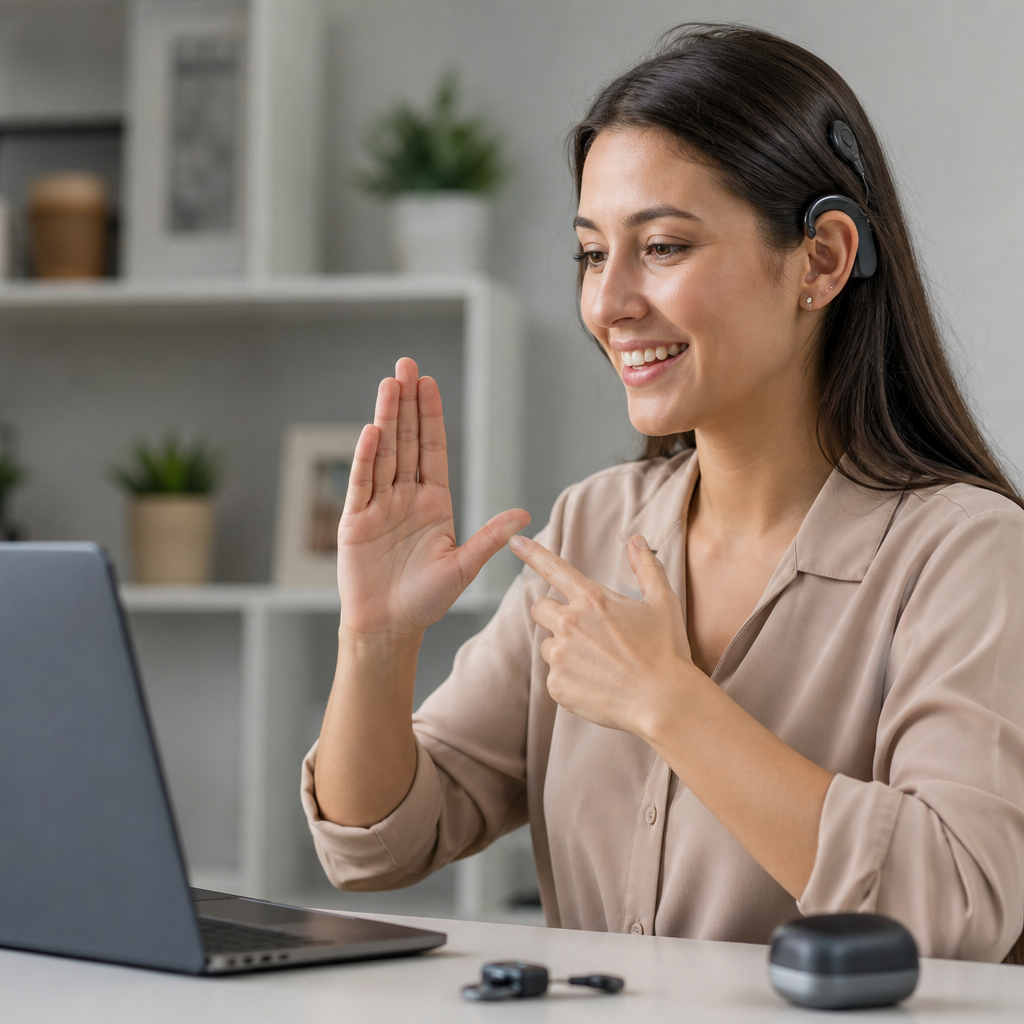
The most immediate impact of AI tools in deaf education is real-time access to spoken content. Automatic speech recognition converts speech into captions during lessons, assemblies, tutoring sessions, and video calls. When accuracy is high and latency is low, students can follow instruction without waiting for post-class notes or recordings. In practice, I have seen live captions change the pace of participation. Students ask more questions when they can confirm what was said in the moment. Teachers also become more aware of their own clarity, pacing, and turn-taking because caption errors reveal when audio quality or classroom management is poor.
Major platforms have made this easier. Google Meet and Microsoft Teams offer built-in live captions, while Zoom supports captions and transcript features through native settings or integrations. Otter and similar services add searchable notes, speaker identification, and meeting summaries. In higher education, these tools are especially useful for seminars and office hours, where unscripted discussion can otherwise become inaccessible quickly. In K-12 settings, they support mainstream classrooms, substitute-led lessons, and school events where interpreters may not always be available. A recorded lecture with searchable transcript also helps students review vocabulary, names, formulas, and assignment instructions independently.
Accuracy, however, depends on context. AI captions perform best with clear audio, one speaker at a time, strong microphones, and familiar vocabulary. They struggle with overlapping speech, heavy accents, noisy rooms, proper nouns, and specialized terms such as anatomical language, legal terminology, or advanced mathematics. That limitation matters because deaf education often includes precisely the moments where one misunderstood word changes the lesson. The practical solution is layered access: combine AI captions with professional captioning, interpreters, visual agenda slides, and shared notes when the stakes are high. AI is strongest as a force multiplier, not a universal replacement for human support.
AI for literacy, reading support, and language development
AI also supports literacy development, which remains a central priority across deaf education. Many deaf and hard of hearing learners navigate differences between signed languages and written spoken languages, making vocabulary, syntax, inference, and background knowledge especially important. Natural language tools can simplify dense text, generate glossaries, explain idioms, and create multiple versions of the same passage at different reading levels. Used well, this helps teachers scaffold content without watering it down. A history chapter can be rewritten in clearer language, then paired with visuals and discussion prompts while keeping the core concepts intact.
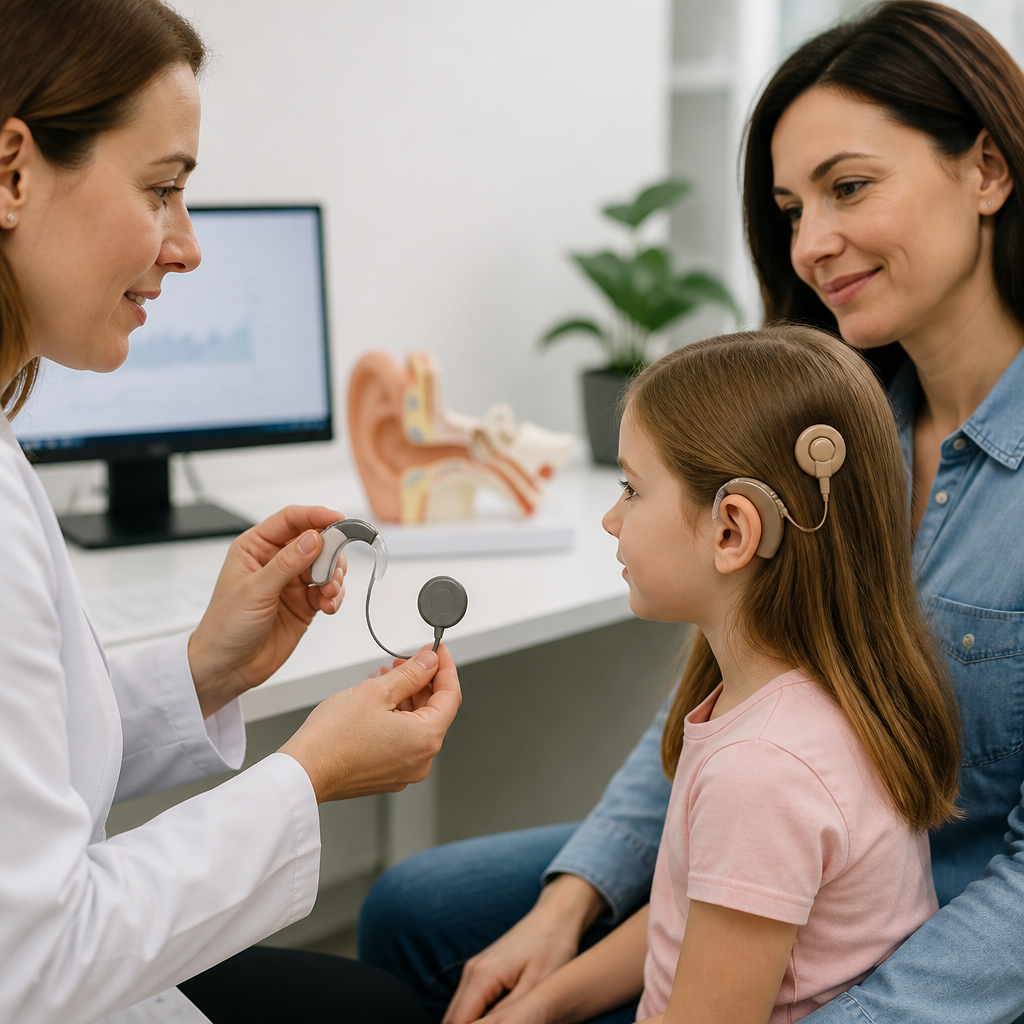
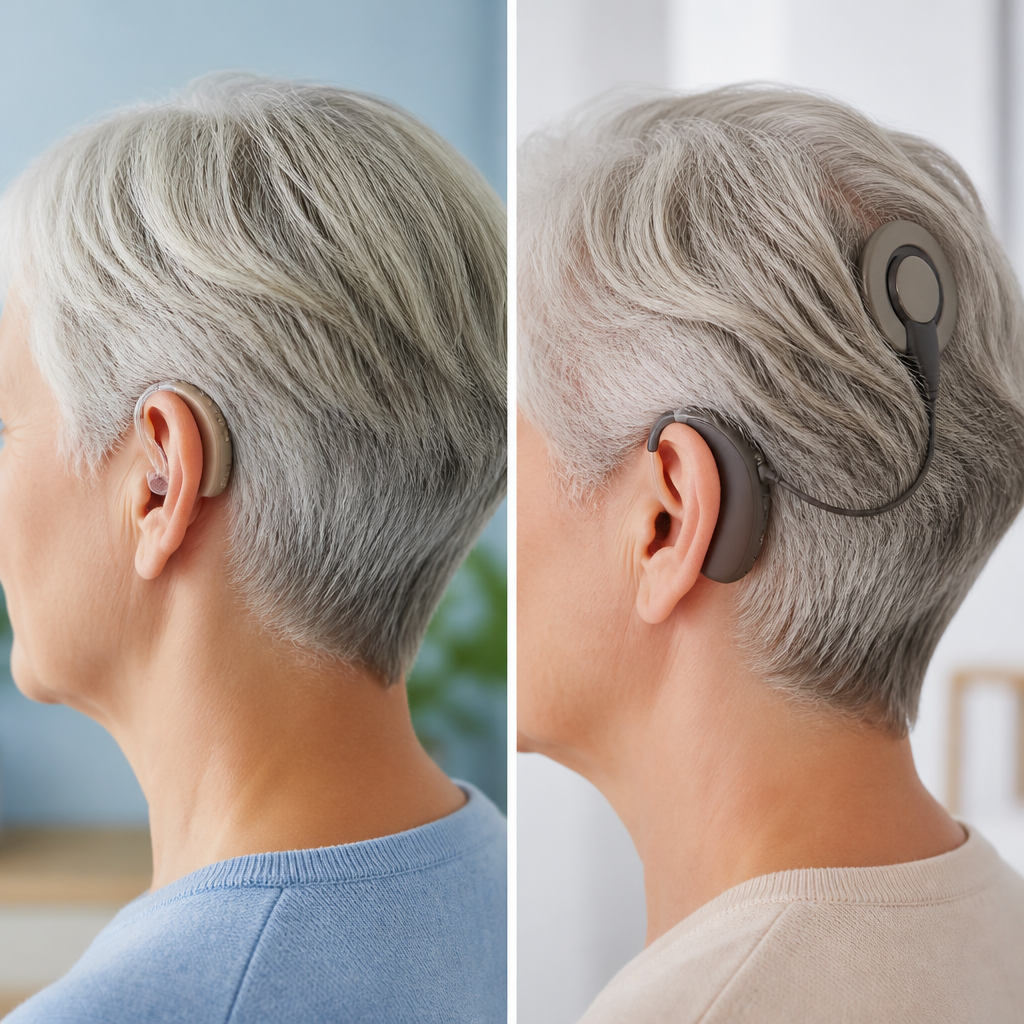
Text-to-speech and speech-to-text tools add another layer. For students who use residual hearing, cochlear implants, or multimodal language strategies, hearing text read aloud while seeing it highlighted can reinforce decoding and phrasing. Dictation tools help students express ideas before revising grammar and structure. Grammar support platforms such as Grammarly can identify sentence-level issues, though teachers should review suggestions carefully because correction engines often privilege standard hearing-centric language patterns and may not respect bilingual language development. The goal is not to erase difference, but to expand access to academic writing conventions when those conventions affect grades, exams, and future opportunity.
Generative systems are increasingly useful for teacher preparation. A teacher can upload a passage and ask for pre-teaching vocabulary, comprehension questions, visual analogies, and a plain-language summary. In my experience, this saves planning time, especially for content teachers who are not specialists in deaf education but still need to make chemistry, civics, or literature accessible. The best results come when teachers treat AI output as a draft, then refine it using knowledge of the student’s language profile, communication mode, and prior knowledge. Personalization matters because no model can infer the full context of a learner from text alone.
Sign language technology: progress, promise, and limits
Sign language technology generates enormous interest, but it requires careful evaluation. Researchers are using computer vision and machine learning to recognize signed input, classify handshapes, track movement, and build datasets for educational tools. Sign avatar systems attempt to render signed output from text, often for basic announcements, dictionaries, or guided content. These developments are valuable because they increase attention and investment in signed accessibility, yet they are not equivalent to fluent human signing. Signed languages have grammar, nonmanual markers, regional variation, discourse features, and cultural context that current consumer systems do not consistently capture.
That means schools should be cautious about claims that AI can replace interpreters or qualified teachers of the deaf. In practice, the most reliable uses today are narrower. AI can help index sign language video libraries, support vocabulary lookup, tag educational media, or power beginner practice tools. It can also assist researchers analyzing movement patterns or identifying gaps in learning resources. For example, a school creating a signed science glossary may use AI to organize clips by topic and search term, but final review should still come from fluent signers and educators. Quality control is not optional when students are learning core concepts.
The distinction between assistive and authoritative use is critical. If a tool helps a student find a relevant signed explanation faster, that is promising. If it presents automatically generated sign output as definitive instruction, risk rises sharply. Mis-signed negation, tense, or classifier use can distort meaning in ways hearing educators may miss. The future is likely hybrid: better sign search, better video annotation, more corpora for training, and targeted classroom supports, but continued reliance on Deaf professionals for language-rich teaching. That outcome would still be transformative because discoverability and production efficiency are major barriers today.
Teacher workflow, accessibility design, and inclusive implementation
One reason AI tools are changing deaf education so quickly is that they help teachers and support staff handle accessibility work at scale. Preparing captions, transcripts, alt text, plain-language instructions, visual schedules, and differentiated materials takes time. AI reduces that production burden. A teacher can generate a transcript from a lecture video, turn it into a study guide, pull key terms into a quiz, and export parent-facing summaries in multiple languages. Accessibility coordinators can audit media libraries for missing captions. Instructional designers can test whether a lesson depends too heavily on uncaptioned audio or unexplained classroom discussion.
| Use case | AI tool type | Best benefit | Main limitation |
|---|---|---|---|
| Live lessons | Speech recognition captions | Immediate access to spoken instruction | Errors in noise or overlapping speech |
| Recorded courses | Transcripts and summaries | Searchable review and study support | Needs editing for technical vocabulary |
| Reading assignments | Text simplification and glossaries | Improves comprehension of dense text | May remove nuance if overused |
| Signed resources | Video tagging and sign lookup | Faster discovery of relevant explanations | Not equal to fluent signed instruction |
| Family communication | Translation and drafting tools | Broader school-home access | Requires human review for accuracy |
Implementation works best when accessibility is built into routine practice rather than treated as an emergency fix. Schools should define caption standards, microphone protocols, review processes, and privacy rules before rolling tools out widely. They should also train teachers to speak clearly, share materials in advance, repeat student questions, and avoid relying on audio-only directions. Those habits improve outcomes even when AI performs well, and they protect access when it does not. Compliance frameworks such as the ADA, Section 504, IDEA, and WCAG remain relevant because technology does not remove the legal duty to provide effective communication.
Data governance is equally important. Many AI platforms process voice, video, and student writing in the cloud, which raises questions about consent, retention, bias, and procurement. Districts and institutions should ask whether audio is stored, whether models train on user data, whether vendors sign education privacy agreements, and how corrections can be made when transcripts are wrong. For deaf students, mistakes are not abstract. A flawed transcript can affect attendance disputes, discipline records, assignment interpretation, or exam preparation. Responsible adoption therefore requires procurement scrutiny, pilot testing, and direct feedback from deaf students and educators.
What the future of accessibility in deaf education looks like
The future of accessibility in deaf education will be multimodal, personalized, and more embedded in everyday systems than in standalone assistive products. Students will expect captions, transcripts, visual summaries, searchable video, and language supports to appear by default inside the platforms where learning already happens. Teachers will increasingly design once and publish in multiple accessible formats. Deaf students will move more easily between classroom discussion, recorded review, independent reading, and family communication because AI will connect those pieces instead of leaving them fragmented across separate services and accommodation requests.
Several developments are especially likely. Captioning will improve through domain adaptation, where systems learn school-specific vocabulary such as biology terms, local place names, or student names. Video platforms will become better at chaptering, concept extraction, and question answering over transcripts. Sign language datasets will expand, improving search and educational indexing even if full translation remains limited. Generative tutoring will support content review by rephrasing explanations, producing worked examples, and identifying prerequisite knowledge gaps. At the same time, the strongest programs will keep human expertise at the center: interpreters, Deaf mentors, teachers of the deaf, captioners, speech-language professionals, and accessibility staff.
The strategic opportunity is not to chase every new tool. It is to build a durable accessibility system that uses AI where it is dependable and keeps human oversight where meaning, language, and rights are at stake. Schools that do this well start with actual student needs, test tools in realistic classroom conditions, measure outcomes beyond vendor demos, and revise practices based on evidence. If you are evaluating AI tools that are changing deaf education, focus on one question above all: does this tool give deaf learners faster, clearer, more equitable access to learning without taking control away from them? Start there, pilot carefully, and build from what works.
Frequently Asked Questions
How are AI tools changing deaf education in practical, everyday ways?
AI tools are changing deaf education by making learning more immediate, more personalized, and easier to access across many settings. In practical terms, that includes automatic captioning for live classes and recorded lessons, speech-to-text tools for lectures and discussions, AI-supported note-taking, language translation features, visual content generation, and adaptive learning platforms that adjust instruction based on student performance. For deaf and hard of hearing learners, these tools can reduce delays in communication and give faster access to information that hearing students often receive instantly.
In classrooms, AI can support teachers by turning spoken instruction into readable text in real time, helping students follow whole-group discussion more effectively. It can also make multimedia lessons more accessible by generating captions, summaries, and keyword highlights. In online and hybrid learning, AI can improve access to webinars, training modules, and recorded content by offering searchable transcripts, visual prompts, and language support. For workplace training and lifelong learning, AI helps scale accessibility so that deaf learners are not dependent on a single interpreter, notetaker, or support professional for every learning interaction.
Just as important, AI is not only about access to speech. It can also support differentiated instruction by identifying patterns in comprehension, helping educators tailor pacing, vocabulary, and visual supports. When used well, AI strengthens communication, instruction, assessment, and participation. It does not replace teachers, interpreters, or deaf-centered educational approaches, but it can make those supports more efficient, responsive, and widely available.
What types of AI tools are most useful for deaf and hard of hearing students?
Several categories of AI tools are especially useful in deaf education, and each serves a different purpose. One of the most widely used is automatic speech recognition, which powers live captioning and transcription. These tools can provide near-instant text versions of lectures, meetings, class discussions, and training sessions. For many deaf and hard of hearing students, that means better access to spoken content in both academic and professional settings.
Another important category is AI-enhanced video accessibility. These tools can generate captions for recorded lessons, improve transcript quality, organize content into sections, and make videos searchable by topic or phrase. Some systems also support visual learning by summarizing long recordings into key points, which can be especially helpful for review and study. AI writing and reading supports are also valuable. They can help students clarify written instructions, define unfamiliar vocabulary, rephrase complex text into more accessible language, and support drafting or revision during assignments.
There are also AI tools being developed for sign language-related applications, including sign recognition, sign generation, and bilingual support between sign language and written language. While these technologies are still evolving and should be used carefully, they show promise in specific contexts such as practice, navigation, and supplemental communication support. In addition, AI can be integrated into assistive listening systems, personalized tutoring platforms, and assessment tools that track progress over time. The most useful AI tools are usually the ones that fit naturally into a learner’s communication preferences, educational goals, and daily environment rather than trying to force one mode of access on everyone.
Can AI replace sign language interpreters, teachers of the deaf, or other specialized support professionals?
No, AI should not be viewed as a replacement for sign language interpreters, teachers of the deaf, captionists, speech-language professionals, or disability support staff. These professionals bring judgment, cultural knowledge, linguistic expertise, and human responsiveness that AI simply does not fully replicate. Deaf education is not just about converting speech into text. It involves language development, communication access, identity, social interaction, academic planning, and the ability to respond to nuance in real time. Human professionals remain essential in all of those areas.
What AI can do is extend and strengthen the work of support teams. For example, AI-generated captions can improve access in informal situations where a live captionist is not available. Transcripts can help students review content after class. AI note summaries can reduce cognitive load during fast-paced instruction. Teachers can use AI tools to create differentiated materials more quickly, while interpreters and accessibility staff can use them as supplementary resources. In that sense, AI is often most effective as a support layer rather than a substitute.
It is also important to recognize that current AI systems can make mistakes, especially with technical vocabulary, fast speakers, overlapping conversation, accents, names, and sign language complexity. In high-stakes settings such as exams, counseling, legal communication, or major academic instruction, relying on AI alone can create serious access gaps. The strongest approach is a human-centered model in which AI improves efficiency and reach, while trained professionals maintain quality, accuracy, and learner advocacy.
What are the biggest benefits and limitations of using AI in deaf education?
The biggest benefits of AI in deaf education are speed, scalability, personalization, and flexibility. AI can provide rapid access to information through captions, transcripts, summaries, and adaptive supports. It can help educators create accessible materials faster and help students revisit content in forms that match their needs, such as simplified text, visual organization, or repeated review. AI can also make support more scalable across schools, colleges, workplace training programs, and remote learning environments where specialized services may be limited.
Another major benefit is personalization. AI-powered systems can analyze how a student interacts with learning materials and adjust instruction accordingly. That might mean changing reading complexity, recommending review topics, highlighting vocabulary, or identifying where a student may be missing key concepts. For deaf and hard of hearing learners, personalized access is especially valuable because there is no one-size-fits-all communication model. Some students use sign language, some use spoken language, some rely heavily on captions, and many use a combination of supports.
At the same time, AI has real limitations. Automatic captions are not always accurate. Sign language technologies are still less mature than speech-based tools and may not reflect the full grammar, regional variation, or cultural richness of signed languages. AI systems can also introduce bias if they are trained on incomplete or unrepresentative data. Privacy is another concern, especially when tools collect voice, video, biometric, or learning performance data. Finally, there is a risk that institutions may adopt AI for efficiency without fully consulting deaf users about whether the tools actually improve access. The best results come when AI is tested carefully, monitored for quality, and used alongside established accessibility practices.
How should schools, colleges, and training programs choose AI tools for deaf education?
Choosing AI tools for deaf education should begin with access needs, not with technology trends. Schools and training programs should first ask what barriers learners are experiencing in communication, instruction, assessment, and participation. Then they should evaluate whether a tool improves access in a meaningful, reliable way. Important criteria include caption accuracy, support for multiple communication modes, ease of use, compatibility with existing platforms, privacy protections, and the ability to customize settings for individual learners.
It is essential to involve deaf and hard of hearing students, educators, interpreters, disability service teams, and families in the selection process. A tool that looks impressive in a product demonstration may perform poorly in a real classroom with rapid discussion, specialized terminology, or mixed communication preferences. Pilot testing in authentic learning environments is one of the best ways to see whether a tool actually works. Institutions should also review how well the tool handles visual presentation, transcription quality, language complexity, and integration with supports such as sign language services, captioned media, and assistive listening systems.
Long-term planning matters too. Effective implementation requires training, technical support, clear accessibility policies, and regular evaluation. Institutions should not assume that buying an AI product automatically creates inclusion. The tool must fit into a broader educational strategy that respects deaf learners’ language rights, communication preferences, and academic goals. When schools and organizations choose AI with those principles in mind, they are far more likely to use the technology in ways that expand opportunity rather than simply automate existing barriers.