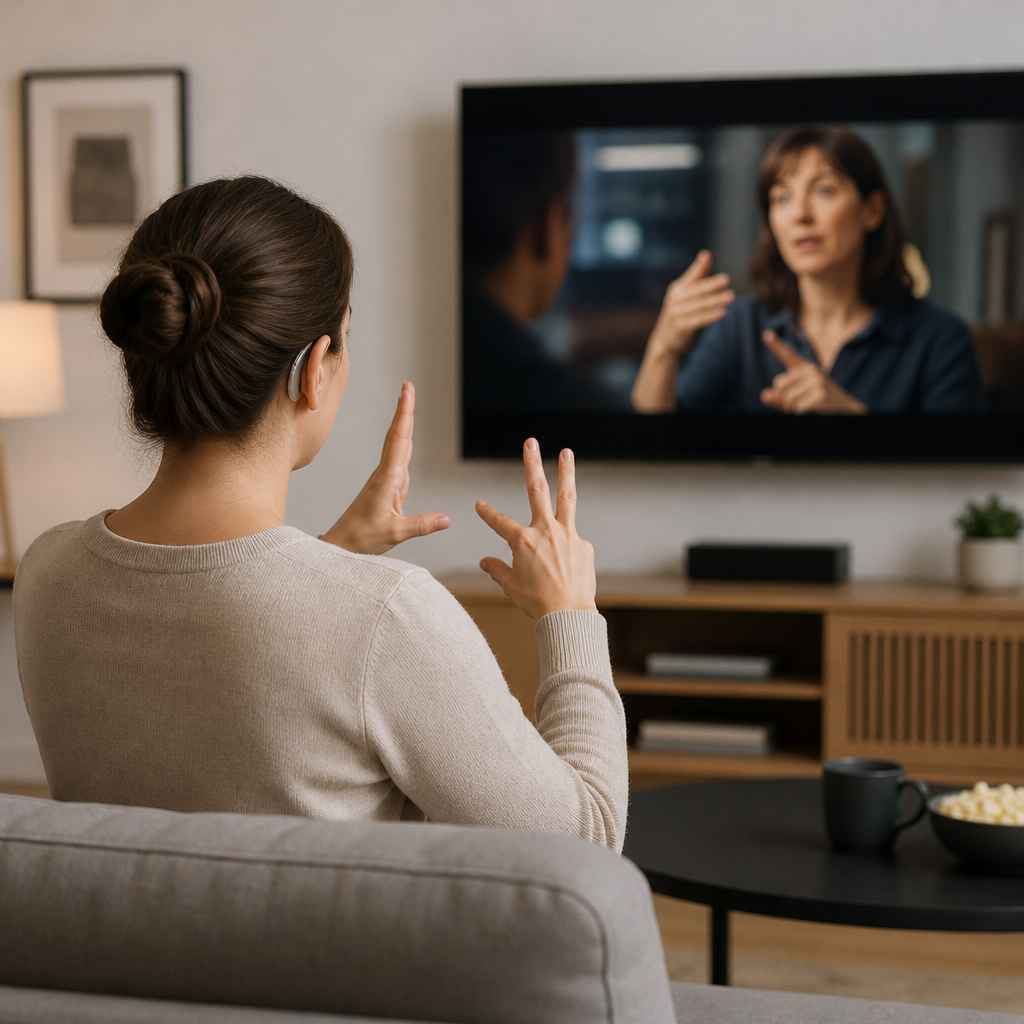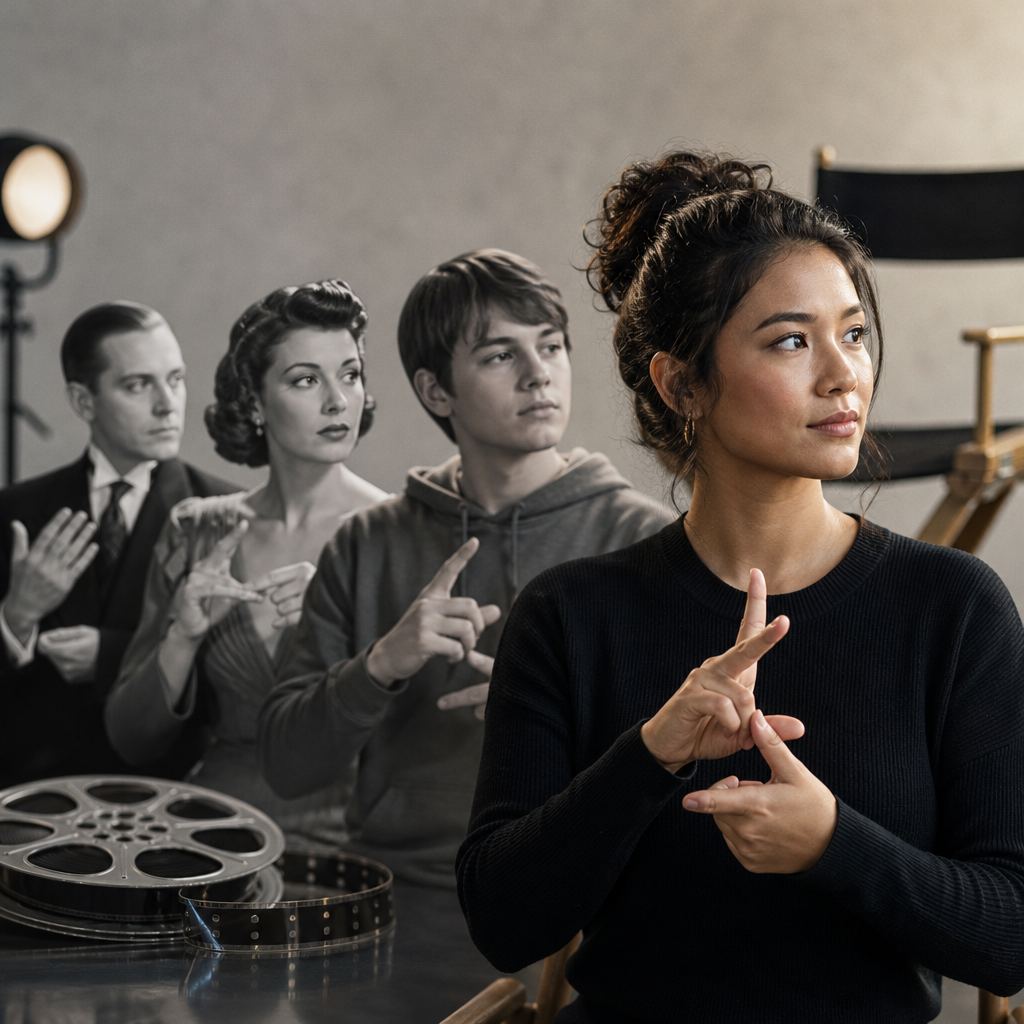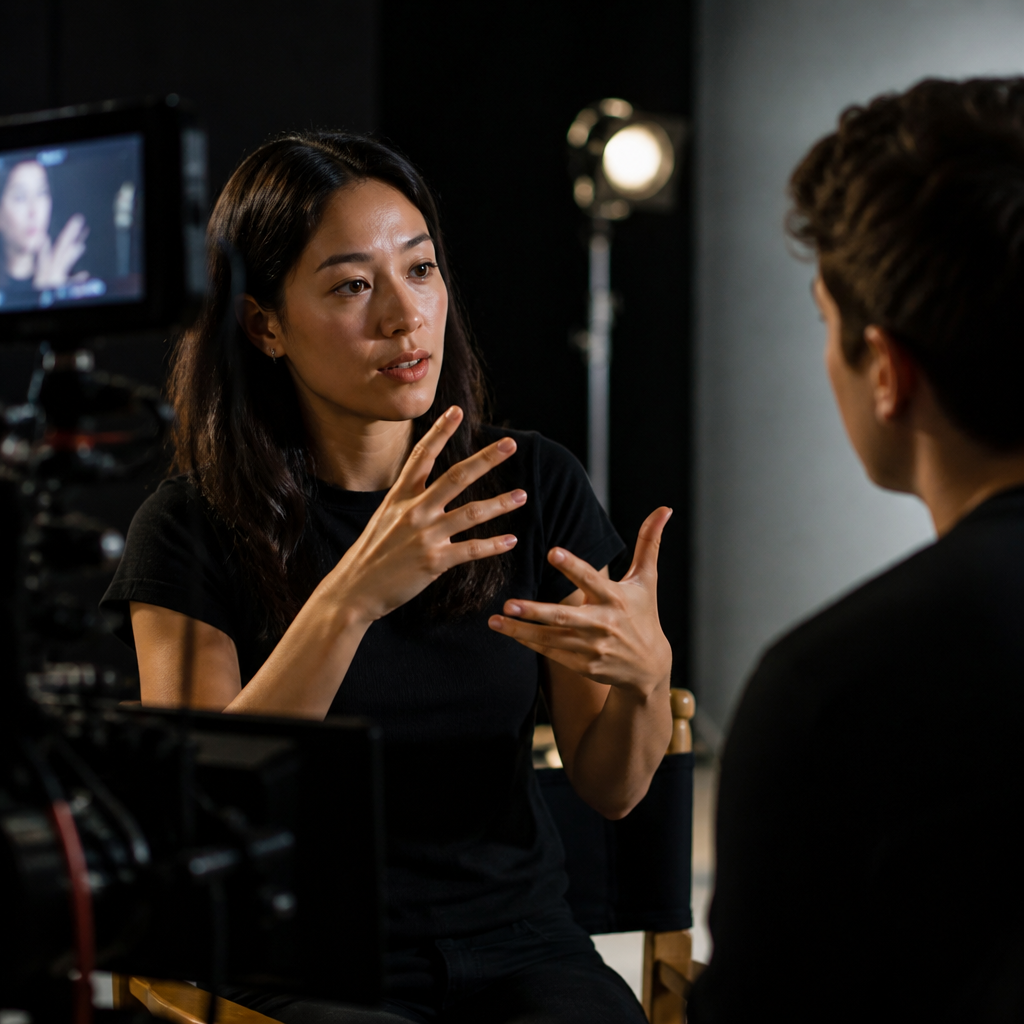

Authentic casting in deaf roles shapes whether film, television, theater, and advertising present deaf people as full human beings or flatten them into symbols. In practice, authentic casting means hiring deaf performers to play deaf characters and building productions around accessible communication, qualified sign language support, and culturally informed direction. Deaf representation in media includes who appears onscreen, who writes and directs, how signed languages are used, what stories get financed, and whether deaf audiences can participate as viewers and creators. I have worked on accessibility reviews for scripted and unscripted projects, and the pattern is clear: when productions cast authentically, performances become more precise, dialogue gains social texture, and audience trust rises. This matters because media teaches hearing audiences what deafness is, often before they ever meet a deaf person. It also matters because deaf viewers notice instantly when signing is inaccurate, assistive devices are treated as props, or a character’s life is reduced to struggle. Authentic casting is not a narrow hiring preference. It is the foundation of credible storytelling, better business decisions, and fair access to opportunity across the entertainment industry.
Deaf representation in media has improved, but it remains uneven. A few high-profile successes have shown what is possible, while many productions still rely on hearing actors, simplified scripts, or consultants brought in too late to influence the work. The result is a split landscape: one set of projects treats deaf characters as central participants in a social world with language, identity, humor, and conflict; another treats them as devices for inspiration, pity, or plot mechanics. As this hub page explains, authentic casting affects creative quality, audience reception, industry employment, and the long-term public understanding of deaf culture. It also connects to linked issues such as captioning, sign language interpretation, children’s programming, documentary ethics, newsroom inclusion, and casting pipelines. For editors, producers, students, and advocates, this topic is not abstract. It determines which careers open up, which stereotypes survive, and which stories finally become believable enough to endure.
What authentic casting means in deaf roles
Authentic casting in deaf roles begins with a simple principle: deaf characters should, by default, be played by deaf actors. That principle sounds obvious, yet it requires operational detail to work. Casting notices must be accessible and distributed through deaf talent networks. Auditions must permit signed responses, interpreters, self-tapes with visual framing, and enough time for communication. Once hired, actors need direct access to directors, scene partners, costume teams, and intimacy coordinators without communication bottlenecks. On set, authenticity also depends on Deaf consultants, dialogue coaches fluent in the relevant sign language, and editors who understand that signed performance carries meaning through timing, eye gaze, body orientation, and spatial grammar, not just through words translated into captions.
It is equally important to define what authentic casting is not. It is not asking a hearing actor to learn a few signs and calling that representation. It is not treating one deaf consultant as a substitute for hiring deaf talent. It is not assuming all deaf people sign the same way, use the same technology, or identify culturally in the same terms. Deaf communities are diverse across race, region, class, education, and communication preference. American Sign Language differs from British Sign Language, and both differ from Auslan, Langue des Signes Française, and dozens of other signed languages. A production that gets this wrong may think it is being inclusive while actually broadcasting obvious errors to the very audience it claims to represent.
Why authentic casting improves performance and story credibility
Performance credibility is the most immediate impact of authentic casting. Deaf actors bring lived physical fluency to signed dialogue, turn-taking, visual attention, and conversational pacing. They know when a character would tap a shoulder, flick a light, use line of sight, or reposition in a room to maintain communication. Those choices are not decorative. They define relationships, social tension, and realism in the same way accent, gesture, and silence define hearing characters. When a hearing actor imitates signing, the hands may move, but the language often lacks grammatical structure, rhythm, and embodied confidence. Viewers may not articulate the problem technically, yet they sense stiffness and distance.
Story credibility improves as well because deaf performers often identify script problems before shooting begins. I have seen scenes rewritten after deaf actors flagged implausible school settings, inaccurate audiology language, and family interactions that no signing household would stage that way. A line as small as “Can you read lips from across the room?” can reveal whether writers understand that lipreading is limited, tiring, and context dependent. A scene where everyone talks while walking away from a deaf character can be realistic if the exclusion is intentional, but it is amateurish if the production does not know why the scene feels wrong. Authentic casting catches those mistakes early and turns them into better drama instead of accidental misinformation.
Industry evidence and notable examples
Several landmark projects demonstrate the business and artistic value of authentic casting in deaf roles. Marlee Matlin’s Academy Award for Children of a Lesser God established decades ago that deaf performance is not niche talent but award-level work. More recently, CODA cast Troy Kotsur, Marlee Matlin, and Daniel Durant in the central deaf family, and Kotsur won the Academy Award for Best Supporting Actor. The film’s emotional force came not from generic disability framing but from family dynamics expressed through ASL, conflict over interpretation labor, and the tension between shared language at home and hearing institutions outside it. Those are details authentic casting made legible.
Television offers similar lessons. Switched at Birth employed deaf actors including Katie Leclerc, Sean Berdy, and Marlee Matlin, and it integrated signing into mainstream serialized storytelling for multiple seasons. In theater, the Deaf West revival of Spring Awakening showed how bilingual staging can expand rather than limit artistic ambition. Documentaries and children’s media have also progressed when producers involve deaf talent from the start. The broader point is not that every project must tell the same type of story. It is that authentic casting repeatedly correlates with critical recognition, stronger word of mouth, and longer cultural relevance because the work feels inhabited rather than simulated.
| Production | Authentic casting element | Impact on representation |
|---|---|---|
| Children of a Lesser God | Marlee Matlin in a central deaf role | Demonstrated that deaf performers can lead prestige drama at the highest level |
| CODA | Deaf actors cast as deaf family members | Presented ASL-centered family life with emotional and cultural specificity |
| Switched at Birth | Recurring deaf cast and extensive signing onscreen | Normalized deaf characters in long-form mainstream television |
| Deaf West productions | Deaf and hearing performers integrated in staging | Expanded public understanding of bilingual performance language |
Common harms caused by inauthentic casting
Inauthentic casting harms both representation and employment. First, it removes scarce lead and supporting roles from deaf actors in an industry that already offers limited access. Second, it often reproduces stereotypes: the isolated tragic figure, the miraculous lipreader, the angry silent child, or the saintly person used to teach hearing characters empathy. Third, it distorts language itself. Poor signing onscreen teaches hearing audiences to associate sign language with pantomime rather than a complete linguistic system with grammar, regional variation, and cultural norms. That is not a minor artistic flaw. It changes public expectations in schools, workplaces, and families.
There are also practical harms inside productions. Hearing actors cast in deaf roles typically need intensive language coaching, close camera management, and extensive postproduction work to cover errors. Even then, scenes may remain unconvincing. A production that avoids hiring deaf talent to reduce perceived complexity usually creates more complexity later. The false economy shows up in reshoots, consultant conflicts, audience criticism, and reputational damage. From a labor perspective, repeated exclusion keeps deaf performers from accumulating credits, union standing, agency representation, and the informal relationships that drive casting. In that sense, every inauthentic choice compounds a structural barrier, not just a single missed opportunity.
Beyond casting: writing, directing, and access behind the camera
Authentic casting is essential, but deaf representation in media cannot stop there. Scripts improve when deaf writers or story editors shape character goals, family dynamics, and institutional settings. Direction improves when filmmakers understand visual language and stage scenes for sightlines rather than only for spoken overlap. Cinematography choices matter because tight framing can cut off signing space, while overactive editing can destroy linguistic continuity. Sound design matters too. Some projects use near-silence as a cliché for deaf perspective, even though many deaf people experience sound differently through residual hearing, hearing aids, cochlear implants, vibration, or memory. Accurate representation requires more imagination, not less.
Backstage and off-camera roles are just as important. Producers need interpreters for rehearsals, table reads, costume fittings, and safety briefings. Closed captioning and real-time speech-to-text tools support mixed hearing environments. Stage managers and assistant directors should know how communication will function during fast schedule changes. When these systems are planned from preproduction, the set becomes more efficient for everyone. I have watched teams become markedly sharper once they shifted from ad hoc accommodation to deliberate access design. The creative payoff is immediate: fewer misunderstandings, clearer blocking, stronger trust, and performances that are not drained by constant communication repair.
How audiences, critics, and educators should evaluate deaf representation
Audiences often ask a basic question: how can you tell whether deaf representation in media is authentic? Start with five checks. Who is playing the deaf role? Who wrote the script and advised on sign language? Is the signing fluent and contextually appropriate? Does the character have goals beyond deafness? Does the story show social environments accurately, including access barriers without making them the entire personality? Critics should also examine whether captions are integrated thoughtfully, whether camera work respects signed communication, and whether deaf characters interact with one another in ways that suggest a real community rather than symbolic isolation.
Educators and programmers can use these criteria to build stronger syllabi, festivals, and media literacy discussions. Compare a film that uses deafness as a metaphor with one that presents deaf life as lived experience. Ask students what assumptions the camera makes about communication. Note whether institutions such as schools, courts, hospitals, and workplaces are portrayed with realistic access practices. These questions move discussion beyond praise for mere inclusion. They treat deaf representation as a craft issue, a labor issue, and a cultural issue at once. That broader evaluation framework helps audiences reward the projects that do the work properly and pushes the industry toward higher standards.
The future of deaf representation in media
The future of deaf representation in media will be shaped by talent pipelines, technology, and decision-making power. Training programs for deaf actors, interpreters with entertainment specialization, accessible acting classes, and early casting outreach can enlarge the pool of performers and reduce the industry excuse that qualified talent is hard to find. Technology can help when used correctly: remote auditions widen access, captioned dailies improve review, and visual communication tools streamline production. But technology is not a substitute for authority. Real change happens when deaf creators become executive producers, showrunners, casting directors, development executives, and critics with sustained influence over what gets made.
For anyone building a more accurate media landscape, the lesson is straightforward. Authentic casting in deaf roles delivers better performances, more credible stories, fairer employment, and deeper audience trust. It strengthens every linked conversation under the wider topic of media, representation, and awareness, from children’s television and journalism to awards campaigns and streaming platform commissioning. If you commission content, cast talent, teach media studies, or simply choose what to watch, use that influence carefully. Support projects led by deaf performers and creators, ask specific questions about access and language, and expect representation that is precise enough to stand up to deaf audiences themselves. That is the standard worth funding, reviewing, and sharing.
Frequently Asked Questions
What does authentic casting in deaf roles actually mean?
Authentic casting in deaf roles means hiring deaf performers to play deaf characters and supporting that choice with production practices that respect deaf communication and culture. It is not only about who appears onscreen or onstage. It also involves creating an environment where deaf actors can do their best work through accessible auditions, qualified sign language interpreters or deaf communication specialists when needed, visually clear blocking, and direction that understands how signed languages function. In strong productions, authentic casting is treated as a creative and logistical commitment rather than a symbolic gesture.
At a deeper level, authentic casting recognizes that deafness is not a costume or a dramatic device. Deaf people bring lived experience, language knowledge, and cultural nuance that can shape a character in ways a hearing performer usually cannot replicate fully. Signed languages have their own grammar, rhythm, and expressive qualities, and deaf performers often understand instinctively how to make those elements feel natural in a scene. That authenticity affects everything from timing and eye contact to emotional emphasis and relationships between characters.
It also matters behind the scenes. Authentic representation becomes stronger when deaf writers, directors, consultants, coaches, and crew members are involved in shaping the story. When productions include deaf perspectives at multiple levels, they are less likely to reduce characters to stereotypes such as the inspirational hero, the isolated victim, or the “silent” outsider. Instead, they can portray deaf people as complete human beings with humor, conflict, ambition, intimacy, and individuality.
Why is authentic casting in deaf roles so important for representation?
Authentic casting matters because media strongly influences how audiences understand communities they may not know personally. When deaf roles are played by deaf actors, audiences are more likely to see deaf characters as real people rather than simplified ideas about disability. The performance can reflect everyday communication choices, social dynamics, and cultural details that make representation richer and more accurate. This helps move stories away from pity, inspiration clichés, or plots that treat deafness as something to be “overcome.”
For deaf viewers, the impact is especially significant. Seeing deaf performers in meaningful roles can be validating, affirming, and empowering. It signals that deaf people belong in the center of stories, not only at the margins. It can also create a sense of recognition that goes beyond visibility. Viewers may notice familiar signing styles, communication barriers presented realistically, or family interactions that feel true to life. That kind of representation can build trust with audiences who have often been misrepresented or excluded.
Authentic casting also benefits hearing audiences by broadening their understanding of deaf identity. It challenges assumptions that deafness is defined solely by loss or limitation. Instead, it can present deaf people as members of a linguistic and cultural community with distinct experiences and perspectives. Over time, repeated authentic portrayals can influence public attitudes, improve expectations around accessibility, and normalize the presence of deaf talent across film, television, theater, and advertising.
How does casting deaf actors improve the quality of a production?
Casting deaf actors can improve a production artistically, culturally, and practically. From a performance standpoint, deaf actors often bring a natural command of signed language, visual storytelling, and embodied communication that gives scenes greater depth and credibility. Their timing, spatial awareness, facial expression, and use of gaze are frequently integral to how deaf characters realistically interact with others. These details are not minor; they shape the emotional truth of scenes and can elevate the entire production.
Authentic casting can also sharpen the writing and directing process. Deaf performers may identify moments that feel false, overly explanatory, or based on hearing assumptions about deaf life. Their feedback can help refine dialogue, staging, and character behavior so the story becomes more believable. In collaborative environments, this leads to better creative decisions, not just more politically correct ones. Productions that listen to deaf talent often discover new visual possibilities and more compelling ways to tell stories.
On a broader level, authentic casting can strengthen audience reception and industry credibility. Viewers increasingly expect thoughtful representation, and critics often pay attention to whether productions cast responsibly. A project that demonstrates care in its casting and accessibility practices is more likely to be seen as serious, respectful, and contemporary. That can improve word of mouth, expand audience reach, and distinguish a production in a crowded media landscape. In short, authenticity is not a limitation on creativity; it is often a source of better storytelling.
What are the common problems when hearing actors are cast in deaf roles?
When hearing actors are cast in deaf roles, the most common problem is that the portrayal can feel imitative rather than lived-in. Even talented actors may rely on external markers of deafness without fully understanding the language, culture, or daily realities of deaf experience. This can result in performances that flatten deaf characters into symbols of struggle, resilience, or difference instead of portraying them as layered people. Signed language may appear awkward or inaccurate, and scenes involving communication can lose realism quickly.
Another issue is missed opportunity. Casting a hearing actor in a deaf role means a deaf performer is denied access to a part that directly reflects their identity and expertise. This matters in an industry where deaf actors have historically had limited opportunities. Because meaningful roles are already scarce, each high-profile casting decision sends a message about who is considered bankable, valuable, and worthy of visibility. Repeatedly choosing hearing actors can reinforce exclusion even when a production claims to care about representation.
There are also narrative consequences. Stories shaped around hearing assumptions often center the emotional journey of hearing characters, turning the deaf character into a lesson, obstacle, or source of inspiration. Without authentic input, productions may mishandle signed language, ignore accessibility realities, or frame deafness in overly medicalized terms. None of this is inevitable, but it becomes more likely when deaf people are not meaningfully included. The result is often a weaker story and a less trustworthy representation.
What should productions do beyond casting deaf actors to ensure authentic deaf representation?
Authentic representation requires more than a single casting decision. Productions should build accessibility and deaf cultural understanding into every phase of the project, from development through post-production and marketing. That includes making auditions accessible, hiring qualified interpreters or communication professionals when appropriate, allowing enough time for multilingual rehearsal processes, and ensuring directors and department heads understand how visual communication affects blocking, pacing, and shot design. Accessibility should be planned from the beginning, not added at the last minute.
It is also important to include deaf professionals behind the scenes. Deaf writers, consultants, directors, acting coaches, and producers can help shape stories that avoid stereotypes and reflect real variation within deaf experiences. Not all deaf people communicate in the same way, have the same relationship to signed language, or share the same cultural background. Involving deaf creatives helps productions move beyond a one-size-fits-all portrayal and creates room for complexity, specificity, and originality.
Finally, productions should think about representation as an ongoing relationship with audiences, not just a creative choice inside one project. That means using accurate captioning, promoting deaf talent visibly, and engaging with deaf communities respectfully rather than only during controversy or awards season. The strongest work treats deaf representation as part of a broader commitment to equity, access, and artistic excellence. When that happens, authentic casting does more than improve one role. It helps reshape industry standards and creates better stories for everyone.