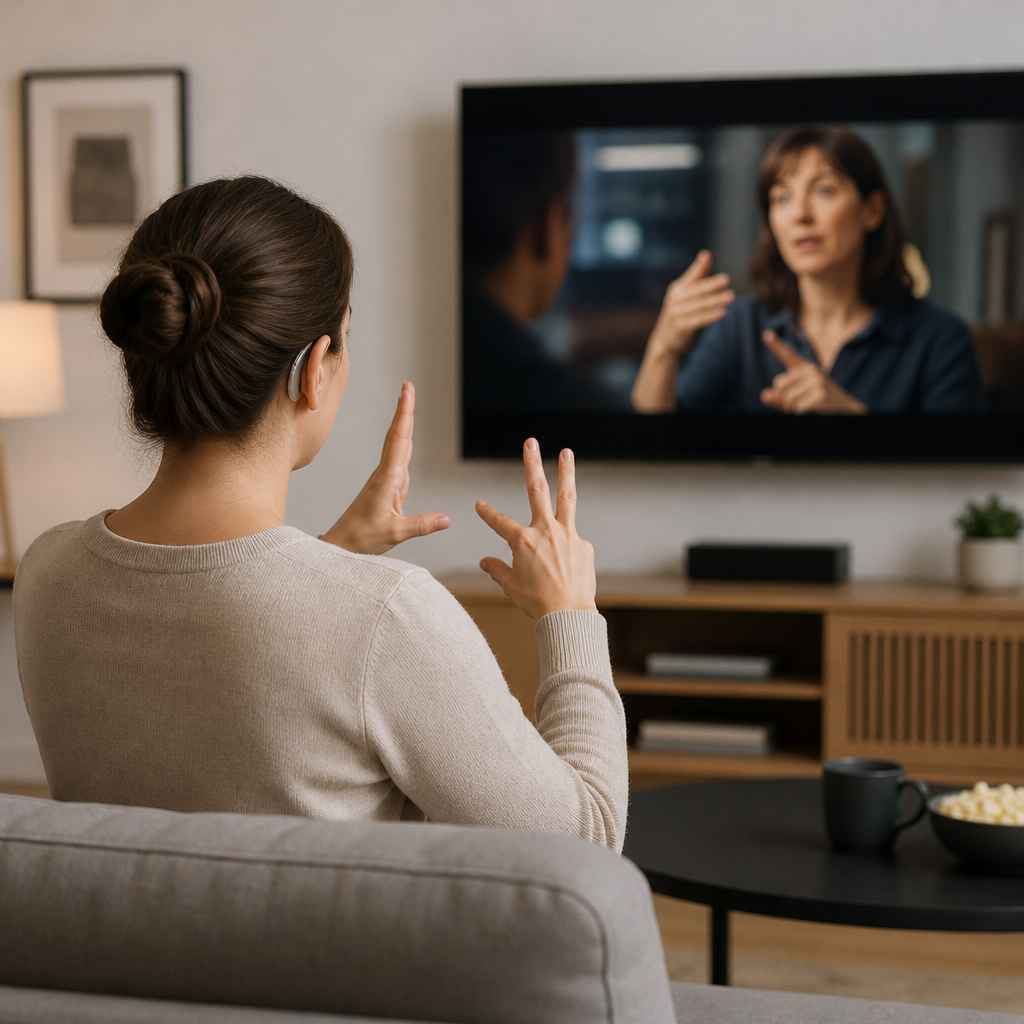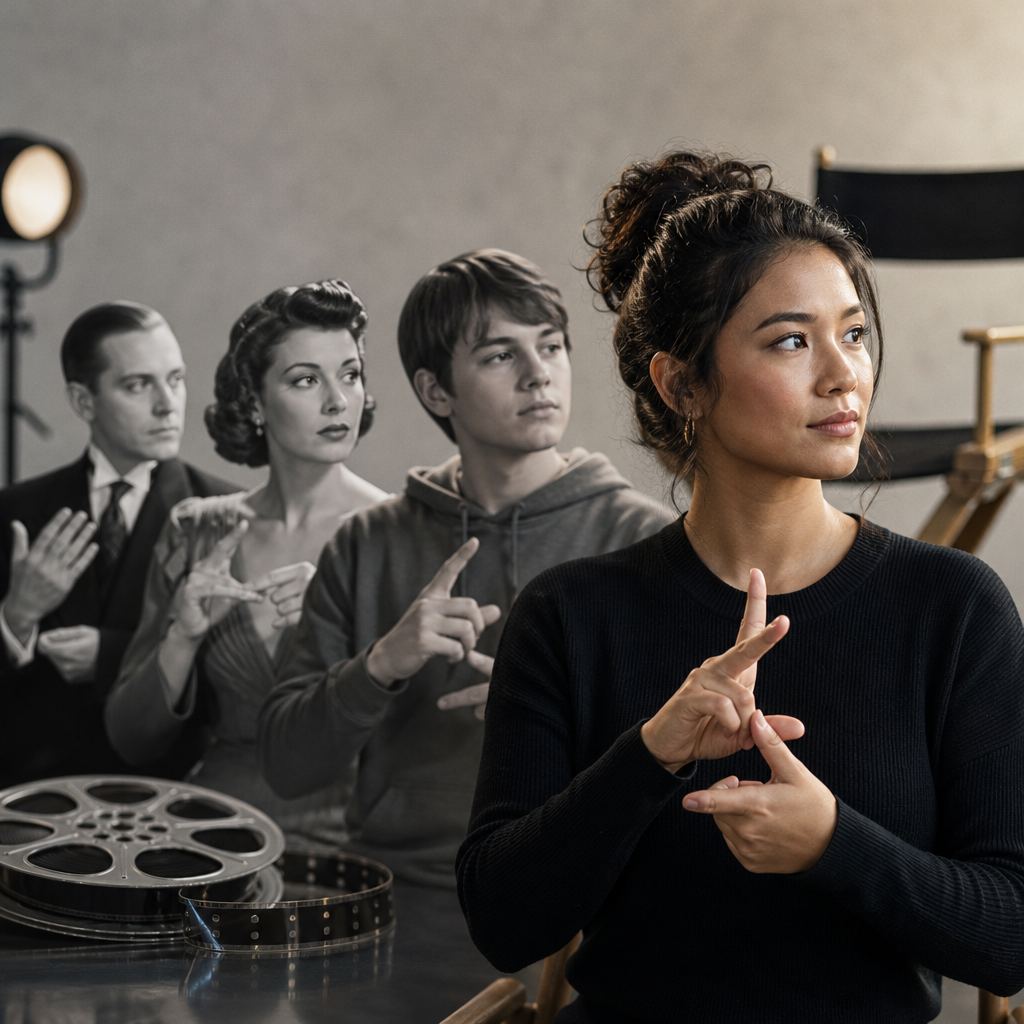
Deaf representation in media shapes how hearing audiences understand Deaf people and how Deaf audiences see their own lives reflected back to them. In practical terms, representation means who appears on screen, who creates the story, what language choices are made, and whether Deaf identity is portrayed as a deficit, a culture, or a full human experience. Accuracy matters because film, television, news, streaming video, podcasts, advertising, and social platforms do more than entertain. They influence casting decisions, school attitudes, workplace expectations, public policy, and even how families respond when a child is identified as deaf or hard of hearing.
When I assess whether Deaf representation in media is accurate, I look at several concrete factors. Does the production cast Deaf actors in Deaf roles? Are sign languages treated as complete languages with grammar, regional variation, and cultural meaning? Is captioning present, readable, and synchronized? Are Deaf characters given agency beyond their hearing loss, or are they reduced to symbols of inspiration, tragedy, or silence? These questions matter because Deaf communities are not monolithic. They include people who use American Sign Language, British Sign Language, Auslan, Langue des Signes Française, and many other signed languages; people with cochlear implants and people without them; late-deafened adults, DeafBlind people, oral deaf people, and multilingual signers.
Public understanding has often lagged behind lived reality. For decades, mainstream media relied on familiar but distorted frames: the isolated deaf child, the heroic teacher, the miraculous technology, or the courtroom witness who cannot communicate. Those stories were easy for hearing creators to tell because they centered hearing perspectives. In contrast, more accurate work shows Deaf life as social, linguistic, political, and creative. It depicts interpreters properly, includes Deaf consultants in development, and allows signed conversations to unfold naturally instead of treating them as narrative obstacles. That shift is not cosmetic. It changes whose knowledge counts.
This hub explores Deaf representation in media as a broad field rather than a single checklist. It covers common stereotypes, signs of authentic storytelling, the role of Deaf creators, accessibility standards, children’s programming, news coverage, and the impact of platforms such as TikTok, YouTube, Netflix, and broadcast television. It also connects related topics readers often search for, including caption quality, Deaf actors in Hollywood, sign language in film, disability casting ethics, and how to evaluate media portrayals critically. If you want a direct answer, here it is: Deaf representation in media is improving, but it is still uneven, and accuracy depends less on good intentions than on who has power in the room.
What accurate Deaf representation actually looks like
Accurate Deaf representation starts with a simple principle: Deaf people are not failed hearing people. They are individuals situated within languages, communities, institutions, and identities. In media practice, that means a Deaf character should have a believable communication profile, relationships with other Deaf or signing people when appropriate, and a life that is not entirely organized around hearing validation. In my experience reviewing productions and outreach campaigns, the strongest portrayals are specific. They show whether a character signs fluently, uses interpreters, speaks orally, switches modes depending on context, or navigates inaccessible spaces strategically.
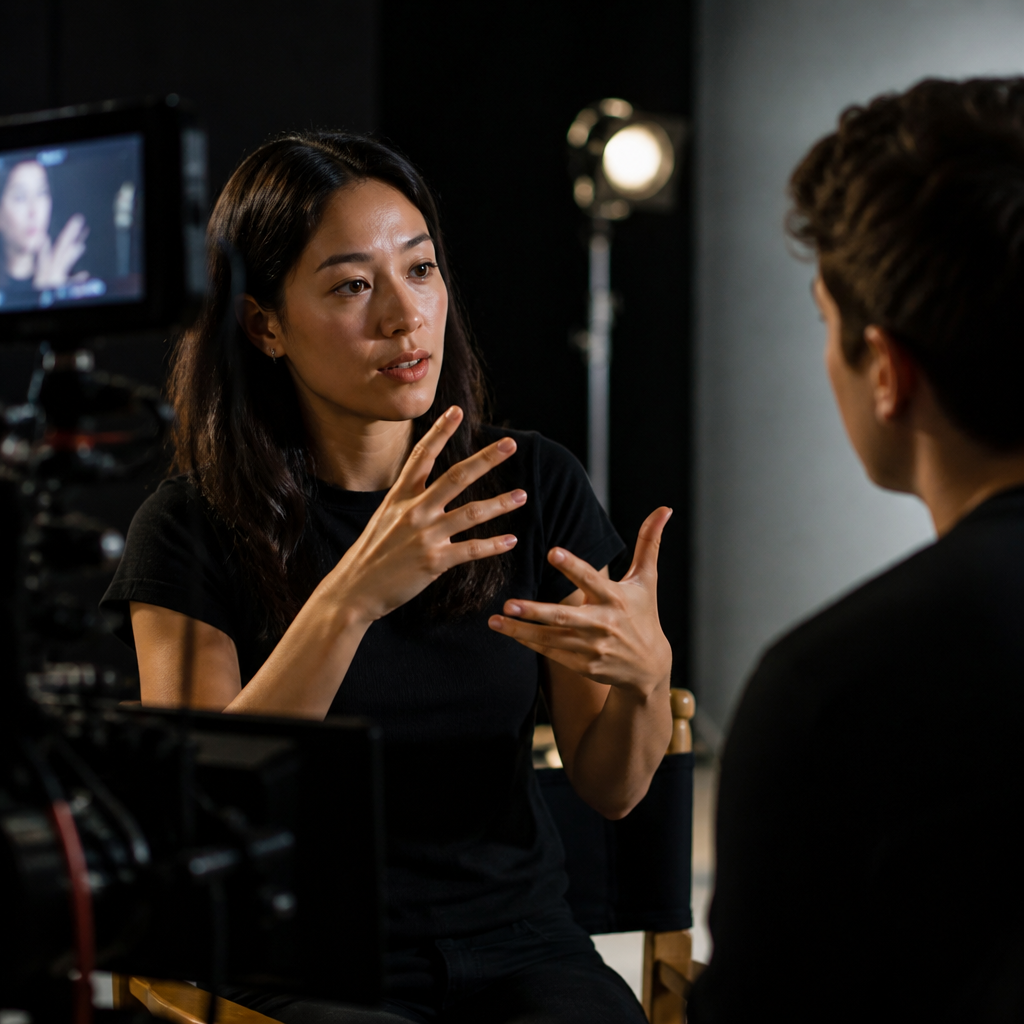
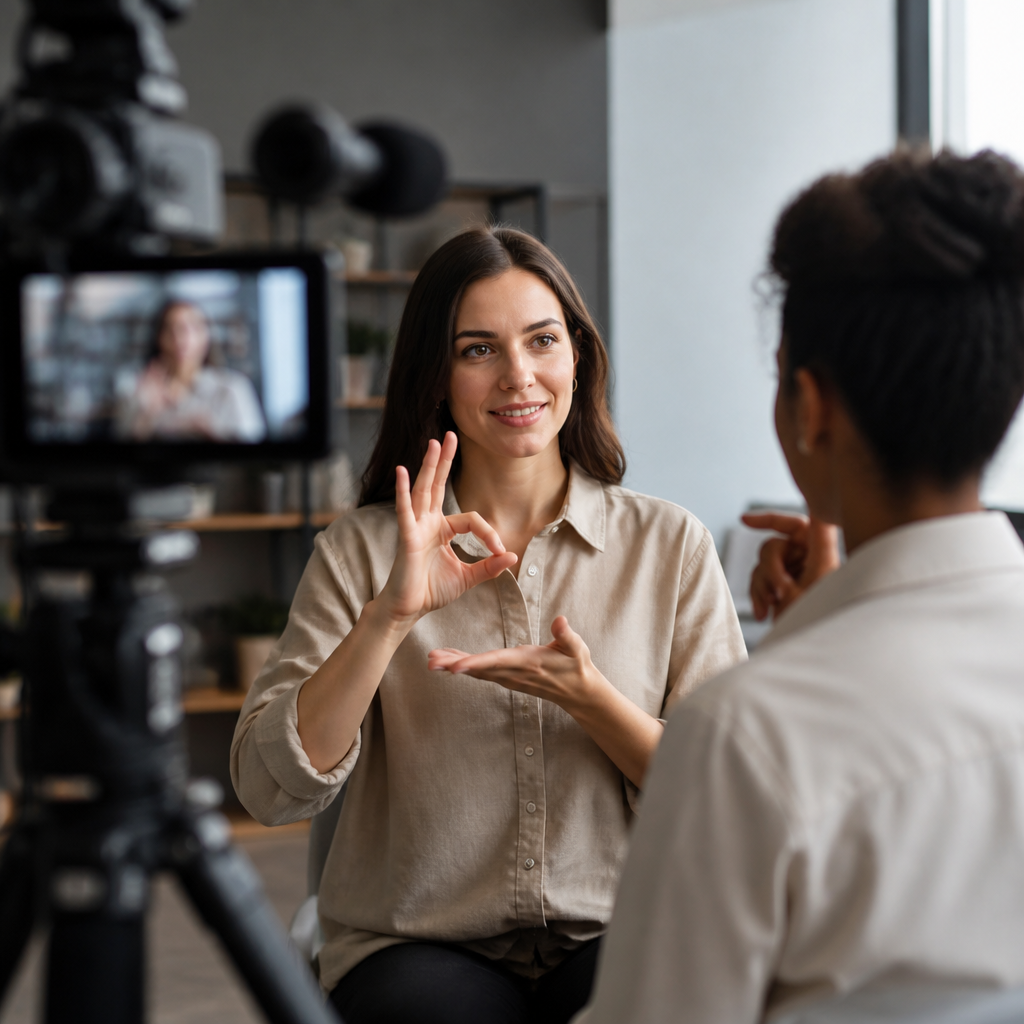
Authenticity also requires linguistic accuracy. Sign languages are not universal, and they are not pantomime. American Sign Language has its own syntax, discourse markers, and facial grammar. A script that translates English word-for-word into signs will usually look unnatural. Productions that hire Deaf language consultants catch these errors early. They also avoid a common mistake: staging signed dialogue as if it were spoken dialogue, without regard for sightlines, turn-taking, lighting, or camera framing. If the audience cannot see the hands and face clearly, the scene fails not only aesthetically but linguistically.
Character depth is another core standard. Accurate representation gives Deaf characters goals, flaws, humor, sexuality, work, friendships, and disagreement. A Deaf detective, parent, musician, lawyer, athlete, or teenager should be allowed the same narrative complexity hearing characters receive. The benchmark is not perfection; it is dimensionality. Films such as CODA gained attention partly because Deaf family members were funny, stubborn, loving, and contradictory. At the same time, many Deaf critics noted that even praised works can still tilt toward hearing emotional arcs. Accuracy is therefore not binary. It exists on a spectrum shaped by casting, writing, direction, and editorial control.
Where media often gets Deafness wrong
The most persistent inaccuracy is the medical-only frame. Stories often present deafness purely as a problem to be fixed through surgery, speech training, or exceptional perseverance. That frame erases Deaf culture and suggests that the best possible outcome is resemblance to hearing norms. Another recurring problem is inspiration framing, where Deaf characters exist to teach hearing audiences gratitude or patience. This is emotionally effective for broad audiences, but it distorts reality by flattening the Deaf character into a lesson.
Media also misrepresents communication. I have seen countless scenes where a Deaf character lip-reads every sentence flawlessly in poor lighting from across a room. In reality, lipreading is limited, exhausting, and highly context dependent. English speech sounds such as p, b, and m look similar on the lips, and many words are visually indistinguishable. Likewise, movies routinely show interpreters behaving unrealistically, adding personal opinions, withholding content, or functioning as family therapists. Professional interpreting is governed by ethics, role boundaries, and situational protocols, especially in legal, medical, and educational settings.
Another major error is exclusion at the production level. Hearing actors are still cast in Deaf roles, and hearing writers often create Deaf characters without Deaf collaboration. The result is usually visible: awkward signing, implausible family dynamics, and dialogue that treats deafness as an abstract issue instead of a lived experience. News media can be equally flawed. Coverage may focus on a “heartwarming” moment when a signer helps someone in public while ignoring systemic topics such as interpreter shortages, inaccessible emergency alerts, or employment discrimination under disability law.
How casting and creators affect authenticity
If you want to predict accuracy, look first at who holds creative authority. Deaf actors bring embodied knowledge that cannot be replicated through coaching alone. They understand pacing in signed conversation, how attention is gained visually, and how code-switching happens between Deaf and hearing spaces. Casting Deaf performers in Deaf roles is therefore not only an inclusion issue; it is a craft issue. The difference shows up in micro-behaviors a camera captures immediately.
Writers’ rooms and production teams matter just as much. When Deaf creators are present from development through postproduction, they can challenge false assumptions before they harden into plot. They can identify whether a school scene reflects oralist history, whether a family dinner dynamic feels true, or whether a caption style supports the intended rhythm of a joke. Consulting at the end is better than nothing, but it is not enough. Accurate representation is usually built upstream.
| Production choice | Common weak approach | Stronger accurate approach |
|---|---|---|
| Casting | Hearing actor plays Deaf role after short sign coaching | Deaf actor cast, with dialect and language support as needed |
| Writing | Deafness used mainly as plot obstacle | Character has goals beyond access barriers |
| Language | Signed English presented as natural ASL | Native or fluent sign use reviewed by Deaf consultants |
| Cinematography | Hands cut off, face obscured, rapid edits | Framing preserves signs, facial grammar, and turn-taking |
| Accessibility | Auto-captions only, poor timing | Edited captions, sound cues, speaker labels, testing |
Industry examples support this pattern. Marlee Matlin’s career demonstrated decades ago that Deaf actors can carry complex dramatic work. More recently, Troy Kotsur’s performance in CODA showed how authentic signing, timing, and emotional precision can shift mainstream expectations. On television, series that include Deaf actors and recurring sign use tend to produce more believable interactional detail than one-off episodes built around disability-themed plots.
Accessibility, captions, and the difference between inclusion and accuracy
Accessibility is related to representation, but the two are not identical. A film can portray Deaf characters respectfully and still fail Deaf viewers through poor captions. Conversely, a show with excellent captions can still rely on stereotypes. Strong media does both. Captions should be accurate, synchronized, complete, and readable, following widely accepted broadcasting and streaming practices. In the United States, the Federal Communications Commission sets quality expectations for accuracy, synchronicity, completeness, and placement for television captions, and major streaming platforms increasingly use detailed caption style guides.
Quality matters because captions are not a decorative add-on. They carry plot information, speaker identification, song lyrics, sound effects, and timing cues. Auto-generated captions remain useful for scale, but they frequently mishandle names, jargon, dialect, and overlapping speech. For Deaf viewers, these errors can distort meaning just as badly as muffled audio does for hearing viewers. In documentaries and news, caption mistakes can misstate facts. In comedy, they can ruin punch lines. In educational content, they can block comprehension entirely.
Accurate representation also considers visual accessibility in the frame itself. Fast cutting, dark lighting, and off-screen dialogue undermine signed communication. When a scene includes both spoken and signed language, editors need to preserve enough visual duration for signed utterances to be perceived. This is one reason Deaf-led productions often feel more legible: they are designed for the eye, not adapted for it afterward.
How different media formats shape Deaf representation
Film, television, journalism, advertising, and social media each create different pressures. In film, Deaf characters have historically appeared in prestige dramas and issue-based narratives, which can produce seriousness at the expense of ordinary life. Television has offered more room for recurring characters, family dynamics, and workplace storytelling, though network constraints sometimes flatten complexity. Children’s programming can be especially influential because it normalizes sign language early. When a signing character appears regularly rather than in a “special episode,” young viewers learn that Deaf presence is ordinary.
News media plays a distinct role because it frames real-world legitimacy. Accurate reporting includes qualified Deaf sources, visible interpreters when appropriate, and context about policy, education, and access rights. During emergencies, failures become obvious. Missing interpreters at press briefings, inadequate captioning, or delayed alert systems do not just misrepresent Deaf people; they endanger them. Public health briefings during COVID-19 made this painfully clear in multiple countries, prompting legal challenges and stronger advocacy around communication access.
Social platforms have changed the landscape dramatically. Deaf creators on TikTok, YouTube, and Instagram now bypass traditional gatekeepers, explain misconceptions directly, and model a far wider range of identities than legacy media usually provides. Viewers can learn about name signs, Deaf school culture, hearing aid maintenance, DeafBlind communication, or caption etiquette from people living it. That does not eliminate misinformation, but it reduces dependence on hearing intermediaries and has pushed mainstream producers to catch up.
How to evaluate Deaf representation critically
A useful evaluation framework asks five direct questions. First, who created this story, and were Deaf people involved in meaningful decision-making? Second, how is sign language shown: as a real language, a prop, or a shortcut for emotion? Third, does the character have agency and complexity beyond deafness? Fourth, are access tools such as captions, interpreters, and visual design handled competently? Fifth, what larger message does the story leave behind about Deaf life?
These questions help readers, educators, and programmers move beyond vague praise. A well-intended portrayal may still reinforce harmful ideas if it centers cure narratives or depicts Deaf adulthood as lonely by default. A small independent project may be more accurate than a major studio release if it gets language, community, and power relationships right. That is why this hub matters. It connects the cultural critique of Deaf representation in media with practical viewing skills, industry standards, and the growing body of Deaf-led storytelling now available across platforms.
The overall answer is clear. Deaf representation in media has become more visible and, in some cases, far more accurate than it was twenty years ago. Yet visibility alone is not enough. Accurate portrayal depends on Deaf participation, linguistic precision, accessible design, and a willingness to move beyond stereotypes that still shape casting, scripts, and news framing. When media gets these elements right, audiences gain more than inclusion. They gain a truer account of language, identity, and human experience.
Use this page as your starting point for the wider Media, Representation & Awareness topic. Explore related articles on Deaf actors, sign language on screen, caption quality, Deaf culture in documentaries, and common myths in news coverage. The more critically you watch, the easier it becomes to recognize the difference between symbolic inclusion and authentic representation.
Frequently Asked Questions
What does accurate Deaf representation in media actually mean?
Accurate Deaf representation goes far beyond simply including a Deaf character on screen. It means portraying Deaf people as full human beings with varied identities, relationships, careers, communication styles, and perspectives rather than reducing them to a medical condition, a source of inspiration, or a plot device for hearing characters. In strong representation, Deafness is not framed only as a loss or obstacle. It is understood as part of a cultural, linguistic, and social experience that can include community, history, humor, pride, and shared language.
Accuracy also depends on how communication is shown. Media that takes Deaf experience seriously pays attention to signed languages, interpreters, captions, visual storytelling, and the reality that not all Deaf people communicate in the same way. Some use sign language as their primary language, some are oral, some use cochlear implants or hearing aids, and some move across multiple communication environments. Good representation reflects that diversity instead of presenting one “universal” Deaf experience.
Just as importantly, accurate representation is shaped behind the scenes. Who writes the script, directs the performances, consults on language use, and makes casting decisions matters a great deal. A story can appear respectful on the surface and still miss essential truths if Deaf people are not involved in creating it. The most credible portrayals usually come from projects that include Deaf actors, Deaf writers, Deaf consultants, and production teams willing to build accessibility into the creative process from the start.
Why is Deaf representation in media so important for both Deaf and hearing audiences?
Representation matters because media helps build public understanding. For many hearing viewers, a film, television show, news report, or social media clip may be their first meaningful exposure to Deaf people. If that exposure is shallow or inaccurate, it can reinforce misconceptions, such as the idea that Deaf people are isolated, helpless, universally eager to be “fixed,” or unable to lead complex, independent lives. When media gets it right, it can replace stereotypes with a more informed view of Deaf people as individuals and as members of a vibrant linguistic and cultural community.
For Deaf audiences, the stakes are personal as well as social. Seeing oneself reflected accurately can be affirming, especially in a media environment that has historically centered hearing norms. It can validate sign language, family experiences, education struggles, professional ambitions, and everyday life in ways that feel recognizable rather than distorted. Accurate representation tells Deaf viewers that their stories are worth telling on their own terms, not merely as side notes in hearing-centered narratives.
Representation also has practical consequences. Media influences attitudes in schools, workplaces, healthcare settings, and public policy discussions. If Deaf people are routinely portrayed as less capable or constantly dependent, those portrayals can shape expectations in real life. On the other hand, nuanced representation can support better awareness of accessibility, communication rights, and the value of inclusion. In that sense, representation is not just symbolic. It affects how people are treated, understood, and included in everyday society.
What are the most common ways media gets Deaf representation wrong?
One of the most common problems is turning Deafness into a simplistic tragedy. Stories often focus almost entirely on what a Deaf character cannot hear rather than who that person is. This approach can make the character feel defined by loss instead of by personality, relationships, goals, or cultural identity. Another frequent mistake is using Deaf characters mainly to inspire hearing audiences, as if their purpose is to teach patience, gratitude, or emotional growth to others. That framing strips Deaf characters of depth and agency.
Media also gets it wrong when it treats Deaf people as a monolith. Not every Deaf person signs, not every Deaf person has the same relationship to technology, and not every Deaf person sees Deafness in the same way. Some identify strongly with Deaf culture, while others move between Deaf and hearing worlds in different ways. Flattening all of that into a single “typical” Deaf experience produces a version of representation that may seem inclusive but is actually misleading.
Casting and language choices are another major issue. When hearing actors are cast in Deaf roles without meaningful Deaf involvement, performances may rely on imitation rather than lived understanding. Similarly, inaccurate or awkward signing, unrealistic interpreter use, and scenes that ignore how visual communication works can undermine credibility. Media can also fail by excluding Deaf creators from decision-making, which often results in dialogue, storylines, and emotional beats that feel designed from an outside perspective. These errors may not always be obvious to hearing viewers, but they are often immediately noticeable to Deaf audiences.
How can you tell whether a movie, show, or campaign offers authentic Deaf representation?
A good starting point is to look at who is involved. Authentic representation usually includes Deaf actors in Deaf roles and Deaf professionals behind the camera, including writers, consultants, directors, coaches, or producers. Their presence does not guarantee perfection, but it strongly increases the likelihood that the portrayal will reflect lived experience rather than assumption. Productions that openly discuss collaboration with Deaf creatives are often more intentional about nuance, language accuracy, and accessibility.
It also helps to examine how the Deaf character is written. Is the character complex, with motivations and flaws unrelated to Deafness? Does the story allow the character to make meaningful choices, maintain relationships, and exist as more than a lesson for hearing people? Are communication methods portrayed realistically and respectfully? Strong representation tends to show the practical realities of visual communication without making them the only source of drama. It treats sign language as a real language, not as a symbolic gesture or cinematic accessory.
Another sign of authenticity is whether the work respects Deaf perspective rather than merely observing it from the outside. The camera, pacing, sound design, captioning decisions, and social interactions can all signal whether the story is inviting audiences into Deaf experience or simply pointing at it. Finally, pay attention to how Deaf viewers respond. Reviews and commentary from Deaf critics, creators, and community members are invaluable because they often identify strengths and problems that mainstream coverage overlooks. If Deaf audiences broadly recognize themselves in the portrayal, that is usually one of the strongest indicators that the representation is doing something right.
Has Deaf representation in media improved, and what still needs to change?
Yes, Deaf representation has improved in noticeable ways over the past several years. There is greater public awareness of Deaf actors, more recognition of signed languages as legitimate languages, and more willingness among some filmmakers and platforms to center Deaf stories rather than treat them as side narratives. Certain recent films, television series, documentaries, and digital creators have helped expand what audiences expect from Deaf representation. They have shown that Deaf characters can carry complex stories and that accessibility and artistic quality can strengthen each other rather than compete.
Even so, progress remains uneven. Many portrayals still rely on hearing-centered assumptions, and truly Deaf-led storytelling is still less common than it should be. Representation often improves most in isolated high-profile projects while routine casting, production, and commissioning practices lag behind. There is still a need for more Deaf writers, more Deaf decision-makers in development and production, and more roles that allow Deaf performers to play a wide range of characters, not only characters whose entire identity revolves around Deafness.
What needs to change most is the industry mindset. Deaf inclusion should not be treated as a special exception or a one-time gesture toward diversity. It should be part of standard storytelling practice. That means investing in Deaf talent pipelines, consulting early rather than after mistakes are made, building accessibility into every stage of production, and trusting Deaf people to tell their own stories. When media moves in that direction, representation becomes not just more accurate, but more creative, more compelling, and more honest about the full range of human experience.