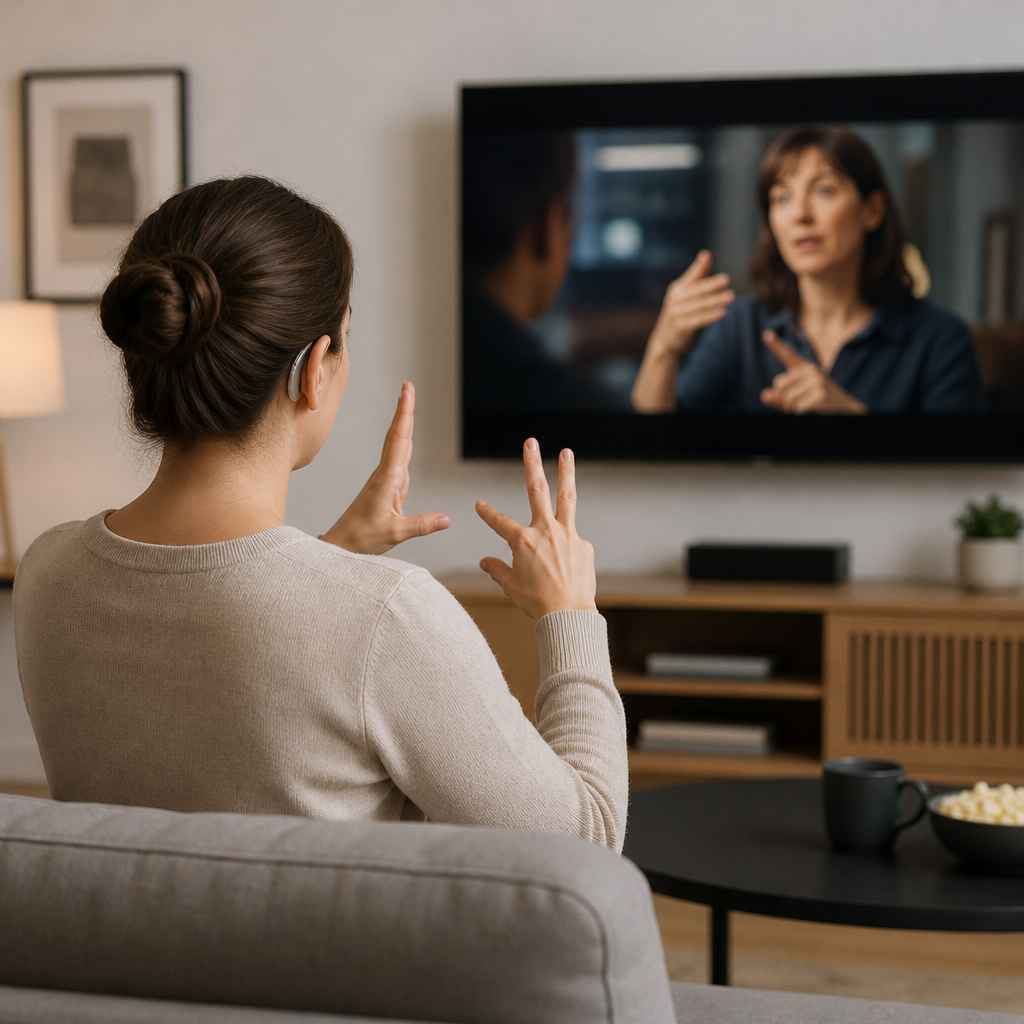
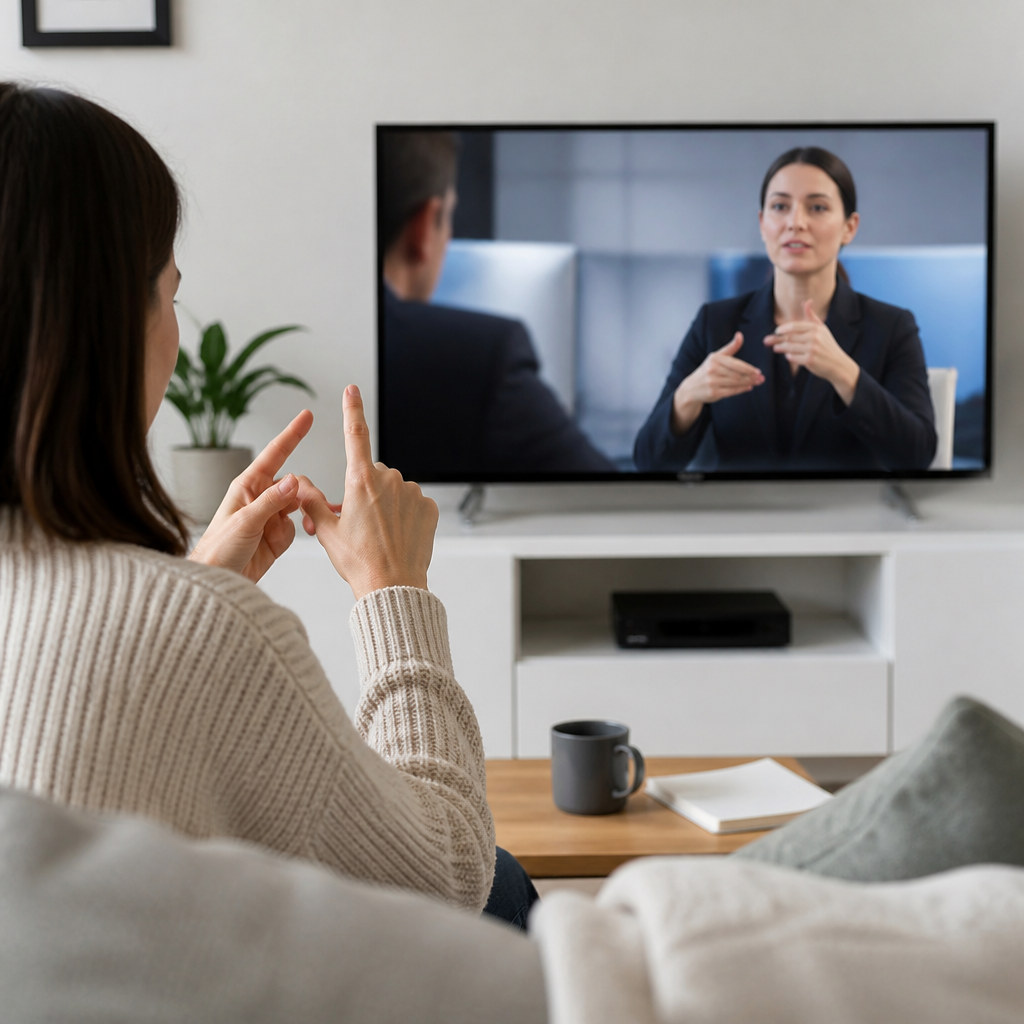
Media shapes public understanding of deaf people long before most hearing individuals meet a deaf classmate, colleague, neighbor, or leader. Film, television, news, advertising, social media, and children’s programming all transmit ideas about what deafness means, how deaf individuals communicate, and whether deaf lives are defined by limitation or by culture, language, and community. Deaf representation in media refers to how deaf people, Deaf culture, sign languages, assistive technology, and deaf experiences are portrayed across storytelling and informational formats. That representation matters because repeated portrayals influence hiring decisions, classroom expectations, policy debates, accessibility standards, and everyday social interactions. I have worked on accessibility reviews for digital content and have seen how a single inaccurate scene can reinforce years of misunderstanding, while one well-produced portrayal can normalize interpreters, captions, and signed communication for broad audiences.
At the center of this discussion is an essential distinction: many people use deaf as an audiological term, while Deaf often refers to a cultural and linguistic identity connected to sign language and community. Not every deaf person identifies the same way, and media often collapses this diversity into one simplified narrative. Some deaf people use American Sign Language, British Sign Language, or other national sign languages; some rely on spoken language, lip reading, cochlear implants, hearing aids, cued speech, or multiple methods. Good media representation reflects that variety without treating deafness as a problem to be solved in every storyline. Poor representation, by contrast, turns deaf characters into symbols of tragedy, inspiration, dependence, or superhuman resilience. Because media works at scale, those symbols shape assumptions far beyond entertainment. Understanding how media shapes perceptions of deaf individuals is the first step toward more accurate, respectful, and useful representation.
Why representation matters in everyday life
Media representation matters because audiences use it to fill gaps in personal knowledge. In practice, many hearing viewers have minimal direct exposure to deaf adults in positions of authority, romance, parenthood, expertise, or humor. If the only deaf character they have seen is isolated, passive, or defined by a medical plotline, that image becomes a mental shortcut. I have seen this play out in workplace training sessions where managers assumed a deaf employee could not participate in group discussions until someone explained interpreters, live captions, or text-based collaboration tools. Those assumptions are not random; they are often learned from repeated media patterns.
Representation also affects deaf audiences themselves. For children especially, seeing a deaf character with agency can influence self-esteem, language pride, and long-term expectations. Research in disability studies and media psychology consistently shows that representation contributes to identity formation and perceived social belonging. When deaf viewers see sign language treated as complete and expressive rather than secondary, they receive confirmation that their communication is valid. When deafness is presented only as a burden on hearing relatives, the message is equally clear and far more damaging. Accurate portrayals can support inclusive education, better customer service, and broader public acceptance of accessibility practices such as captioning and interpreter use.
Common stereotypes and why they persist
Several stereotypes dominate deaf representation in media. The first is the tragedy narrative, in which deafness is framed as a devastating loss that defines a person’s entire life. The second is the inspirational narrative, where a deaf character exists mainly to motivate hearing people through perseverance. The third is the dependence stereotype, which assumes deaf individuals cannot function without rescue, translation, or protection from hearing people. Another persistent trope casts deaf characters as socially isolated, emotionally incomplete, or unusually gifted in compensatory ways. These shortcuts persist because they are easy for writers to communicate quickly, especially when they lack lived experience or meaningful consultation.
News media can reinforce the same problems through framing. Headlines often center on what deaf people “overcome” rather than what systems fail to provide. A school without interpreters may be presented as a story about a heroic student instead of an institutional accessibility gap. Advertisements may use sign language as a visual device without accuracy or cultural context. Even well-intentioned documentaries can drift into voyeurism if they focus exclusively on medical decisions, family conflict, or emotional reaction shots. The result is a narrow public script: deafness as deficiency first, identity second. Correcting that script requires not only more deaf characters but also better narrative habits from editors, producers, marketers, and journalists.
What accurate deaf representation looks like
Accurate deaf representation begins with treating deaf people as full participants in society rather than as educational devices for hearing audiences. That means showing deaf characters with careers, relationships, flaws, humor, preferences, and independent goals that do not always revolve around hearing status. It also means portraying communication realistically. In strong productions, sign language is not reduced to a few symbolic gestures; it has grammar, emotion, pacing, regional variation, and social context. Subtitles and captions should convey not just dialogue but tone, speaker changes, and relevant sound cues. Authenticity improves further when deaf actors play deaf roles and when deaf writers, consultants, interpreters, and crew members are included throughout development and production.
One useful test is whether a story respects deaf cultural norms instead of translating everything through a hearing lens. Deaf communities often place high value on visual access, direct communication, name signs, collective space, and the legitimacy of signed languages. A realistic scene might show a deaf family arranging sight lines at a dinner table, using light cues instead of vocal calls, or negotiating mixed hearing-deaf communication styles in a workplace. Those details matter because they move representation from abstraction to lived reality. They also teach hearing audiences practical facts without turning the story into a lesson. The best portrayals make deaf life visible in ordinary, specific ways.
How film and television influence public beliefs
Film and television remain the strongest image-making forces because they combine narrative emotion, repeated exposure, and cultural prestige. A single award-winning drama can define public conversation for years, especially if viewers assume it reflects typical deaf experience. Casting decisions are central here. When hearing actors play deaf characters, performances often rely on imitation and selective silence rather than deeply embodied communication. By contrast, productions that cast deaf actors tend to show more natural signing, more credible physical awareness, and more nuanced interaction with hearing environments. Audiences may not always identify the technical differences, but they absorb the overall credibility.
Television series can be especially influential because they create familiarity over time. A recurring deaf character who signs, dates, works, argues, jokes, and leads gradually normalizes deaf presence. Children’s television has an outsized effect because early exposure shapes baseline assumptions about disability and difference. Streaming platforms have improved opportunities for niche and international stories, allowing audiences to encounter deaf characters outside older network formulas. Still, progress is uneven. Many productions include one deaf storyline yet fail to address caption quality, signed dialogue framing, or behind-the-scenes inclusion. Representation is most persuasive when the entire production process supports it, not when deafness is added as surface diversity.
News, social media, and the speed of perception
News and social platforms shape perceptions differently from scripted media because they present themselves as immediate reality. A viral clip of a deaf athlete, student, or customer interaction can influence millions of viewers in hours. That speed creates opportunity and risk. Social media has allowed deaf creators to explain sign language, call out inaccessible events, review captions, and share daily life without editorial gatekeeping. Many hearing users now learn basic concepts such as the difference between sign language and pantomime directly from deaf educators online. This direct communication has corrected misconceptions that mainstream media left unchallenged for decades.
At the same time, short-form platforms reward emotional simplification. Clips are often stripped of context, turning nuanced experiences into inspiration bait or outrage content. News outlets sometimes amplify these distortions when they embed viral videos without consulting deaf sources. Crisis reporting illustrates the stakes clearly: emergency broadcasts without interpreters or accurate captions can literally exclude deaf audiences from safety information. During public health briefings and severe weather events, visual accessibility is not a courtesy; it is core infrastructure. The perception shaped by media here is practical and political. When accessibility is consistently visible in news coverage, audiences begin to expect it everywhere else.
Patterns that help or harm representation
| Media pattern | What audiences learn | Likely effect on perceptions of deaf individuals |
|---|---|---|
| Deaf character exists only for a hearing person’s growth | Deaf lives matter mainly as moral lessons for others | Reduces agency and reinforces paternalism |
| Accurate signing, captions, and deaf casting | Deaf communication is complete, natural, and legitimate | Builds respect for language and authenticity |
| News framing centered on “overcoming disability” | Barriers are personal challenges rather than access failures | Shifts responsibility away from institutions |
| Deaf professionals shown in ordinary settings | Deaf people participate fully across careers and communities | Expands expectations in schools and workplaces |
| Inaccurate or absent captions and interpreters | Accessibility is optional or secondary | Normalizes exclusion and lowers standards |
The role of language, captions, and accessibility
Language access is not a side issue in deaf representation; it is the mechanism through which representation becomes usable. Many hearing professionals still confuse subtitles and captions, but the distinction matters. Captions are designed for accessibility and typically include non-speech information such as music cues, speaker identification, and meaningful sounds. High-quality captions improve comprehension for deaf and hard of hearing viewers, second-language audiences, and viewers in sound-off environments. Industry practice increasingly depends on tools such as broadcast caption encoders, ASR-assisted workflows, and human quality control, but automation alone remains unreliable for names, overlap, tone, and signed content.
Sign language representation requires equal care. Different sign languages are distinct natural languages, not manual versions of spoken language. Treating them as interchangeable is a serious error. Camera framing matters too: if signing hands or facial grammar are cut off, meaning is lost. In live events, qualified interpreters should be positioned for visibility, with lighting and screen placement considered from the start. Standards such as the Web Content Accessibility Guidelines have helped digital publishers think more systematically about captions, transcripts, and media alternatives. Better accessibility does more than serve existing deaf audiences; it teaches the wider public that deaf communication belongs in mainstream spaces by design, not exception.
How creators and brands can improve deaf representation
Improving deaf representation in media starts before casting and continues after publication. Writers should research deaf history, identity, education debates, and communication diversity early enough to shape the concept, not merely decorate it. Producers should hire deaf consultants with decision-making influence, not symbolic visibility. Casting directors should actively seek deaf performers for deaf roles and consider deaf talent for roles where hearing status is irrelevant. Editors should review whether scenes rely on tired emotional beats, such as the miraculous first sound or the saintly hearing helper, and replace them with choices grounded in actual experience. Newsrooms should add deaf sources to expert databases rather than quoting only parents, doctors, or advocacy intermediaries.
Brands and publishers also need operational discipline. Caption every video accurately. Budget for interpretation in campaigns and live events. Test social clips for visual clarity and reading speed. If sign language appears in creative assets, verify it with qualified native signers. Measure representation not just by character count but by role depth, screen time, and narrative power. I have found that the most successful teams treat accessibility and representation as part of quality assurance, similar to legal review or brand consistency. That approach prevents reputational damage while producing better content for everyone. For organizations building authority in media, representation is not a trend line item. It is a standard of professional competence.
Why better representation benefits everyone
How media shapes perceptions of deaf individuals comes down to repetition, credibility, and detail. When deaf representation in media is shallow, audiences learn shallow lessons: that deafness is tragic, exceptional, or inconvenient. When representation is accurate, specific, and inclusive, audiences learn something far more useful: deaf people are diverse, capable, and fully present in every part of society. That shift influences how teachers design classrooms, how employers plan meetings, how journalists frame stories, and how families understand language access. It also gives deaf viewers the basic respect of seeing themselves portrayed as complete human beings rather than narrative devices.
The central benefit of better media representation is practical understanding. Good portrayals normalize captions, interpreters, signed languages, deaf leadership, and mixed communication environments. They reduce stigma by replacing myths with familiarity. They also raise the standard for future content, because audiences begin to recognize authenticity and question stereotypes. If you publish, commission, market, or share media, review the deaf stories in your orbit with a sharper eye. Support productions led by deaf talent, expect accurate accessibility, and choose coverage that reflects deaf people as they live, work, communicate, and lead. Better representation starts with better decisions, and every media decision teaches someone how to see.
Frequently Asked Questions
1. Why does media representation of deaf individuals matter so much?
Media representation matters because it often becomes the first and most influential source of information hearing audiences receive about deaf people. Before many people ever meet a deaf classmate, coworker, teacher, or neighbor, they have already absorbed ideas from movies, television, news stories, advertisements, social media, and children’s programming. Those repeated images help shape assumptions about whether deafness is seen as a tragedy, a medical condition to be fixed, a communication barrier, or a rich cultural and linguistic identity connected to community and sign language.
When representation is narrow or inaccurate, it can reinforce harmful stereotypes. For example, media has often portrayed deaf characters as isolated, helpless, inspirational for simply existing, or dependent on hearing people to “save” them. These portrayals can reduce deaf individuals to a single trait and ignore the diversity of deaf experiences. In real life, deaf people include professionals, parents, artists, athletes, activists, students, leaders, and creators from every social and cultural background. Their lives are not defined by limitation alone, and many identify strongly with Deaf culture, sign languages, and community values.
Accurate representation has the opposite effect. It can normalize sign language, challenge myths about intelligence and ability, and help audiences understand that deaf people communicate in many ways, including signed languages, spoken language, writing, lip reading, interpreters, and assistive technology. Strong representation also supports self-image among deaf children and teens, who benefit from seeing people like themselves portrayed as capable, multidimensional, and fully human. In that sense, media does not just reflect public attitudes toward deaf individuals; it actively helps create them.
2. What are the most common stereotypes about deaf people in media?
Several stereotypes appear repeatedly in media portrayals of deaf individuals, and each one can distort public understanding. One of the most common is the “tragic deaf person” narrative, where deafness is treated as a life-defining loss rather than one aspect of identity. In these stories, the character’s main function is to evoke pity, and their value is often measured by how closely they can adapt to hearing norms. This framing ignores the fact that many deaf people do not see themselves as broken or incomplete, especially those who identify with Deaf culture and use sign language as a primary language.
Another frequent stereotype is the “inspirational deaf person,” sometimes called inspiration-based storytelling. In these portrayals, deaf individuals are praised for doing ordinary things, such as attending school, working, parenting, or pursuing hobbies, as if their existence is extraordinary solely because they are deaf. While this may seem positive on the surface, it can be patronizing and can shift attention away from systemic barriers like inaccessible communication, lack of captioning, or exclusion from decision-making spaces.
Media also often presents deaf characters as isolated from community, when in reality many deaf individuals are part of vibrant social networks built around sign language, shared experiences, cultural traditions, and advocacy. Another stereotype is the “communication miracle” trope, where the emotional climax centers on a hearing person learning a few signs or on a deaf person overcoming deafness through technology. Although hearing aids, cochlear implants, captioning, and other tools can be valuable, reducing deaf life to a technological solution oversimplifies a much more complex reality. Deaf people are not all the same, and media becomes more responsible when it moves beyond clichés and shows deaf individuals as fully developed people with varied identities, communication styles, ambitions, and perspectives.
3. How can film, television, and news coverage portray deaf individuals more accurately?
More accurate portrayal begins with including deaf people in the creative and editorial process. That means hiring deaf actors to play deaf roles, consulting Deaf cultural experts, involving deaf writers and producers, and ensuring sign language use is authentic rather than performative or incorrect. Representation improves significantly when deaf individuals have a voice in shaping how their lives, language, and communities are presented. Without that input, even well-intentioned content can rely on outdated assumptions or create stories centered more on hearing comfort than deaf reality.
Film and television can improve accuracy by showing deaf characters with full lives rather than making deafness their only defining trait. A realistic deaf character may navigate family relationships, work, friendship, humor, love, frustration, ambition, and identity just like anyone else. Their deafness may influence how they move through the world, but it does not need to be the sole source of conflict or emotional meaning. It also helps when media depicts communication realistically, including interpreters, captioning, text-based communication, signed conversations, and the everyday adjustments that make interaction accessible.
News coverage has its own responsibilities. Reporting on deaf individuals should avoid framing them as either victims or heroes by default. Instead, journalists should prioritize context, accuracy, and language that respects identity. For instance, coverage should recognize that many deaf people belong to a linguistic and cultural minority, not simply a disabled group defined only by medical needs. News stories should also seek deaf sources directly rather than relying only on hearing parents, doctors, teachers, or advocates to speak on their behalf. The most accurate coverage treats deaf people as experts in their own experiences and recognizes that access, inclusion, and representation are public issues, not personal shortcomings.
4. What role do sign language, Deaf culture, and assistive technology play in media perceptions?
Sign language, Deaf culture, and assistive technology all shape how audiences understand deaf lives, but media often handles these topics unevenly. Sign language is especially important because it is far more than a set of gestures; it is a complete language with grammar, nuance, regional variation, emotional expression, and deep cultural meaning. When media presents sign language respectfully and accurately, it helps viewers recognize that deaf communication is not inferior to spoken language. It also challenges the false idea that communication barriers exist because deaf people are lacking something, when in many cases the real issue is society’s failure to create accessible environments.
Deaf culture adds another crucial dimension. Many deaf individuals identify not simply through hearing level but through shared language, history, community traditions, values, and experiences. Media that ignores Deaf culture may portray deafness only through a medical lens, focusing on diagnosis, intervention, and correction. By contrast, media that includes cultural context can show deaf schools, social spaces, artistic expression, advocacy, humor, and identity formation. This broader perspective helps audiences understand that for many people, being Deaf is not merely about what they cannot hear but about belonging to a community with its own rich heritage.
Assistive technology also strongly influences public perceptions. Hearing aids, cochlear implants, captions, video relay services, and visual alerts are often valuable tools, but they should not be portrayed as magical solutions that erase all barriers. Technology can improve access, but it does not remove the need for accommodations, inclusive attitudes, or respect for sign language and Deaf identity. Media tends to oversimplify technology by making it the center of the story, as though deaf people become more “successful” only when they function more like hearing people. A more balanced portrayal shows technology as one possible resource among many, not as the sole measure of communication, independence, or worth.
5. How can better media representation improve inclusion for deaf individuals in everyday life?
Better media representation can lead to real-world inclusion by changing what hearing people expect, understand, and value. When audiences regularly see deaf individuals portrayed as competent, expressive, intelligent, and socially connected, they are less likely to make uninformed assumptions in schools, workplaces, healthcare settings, and public life. Representation can teach people that access is not a special favor but a basic part of equitable participation. That includes practices such as providing captions, offering interpreters when needed, maintaining visual accessibility, and being open to different communication methods.
Improved media representation also helps reduce stigma. If deafness is consistently portrayed as shameful, tragic, or limiting, hearing audiences may approach deaf people with discomfort, pity, or low expectations. Those attitudes can affect hiring, education, friendship, and leadership opportunities. On the other hand, when media presents deaf individuals as multidimensional people with agency and authority, it becomes easier for the public to recognize exclusion as a social problem rather than a personal defect. This shift matters because inclusion depends not only on awareness but on changing everyday behavior and institutional decisions.
For deaf viewers themselves, better representation can be affirming and empowering. Seeing deaf actors, sign language, Deaf families, and authentic community experiences reflected on screen can strengthen self-confidence and belonging, especially for children and young adults. It can also encourage broader cultural literacy by showing that deaf people are not a monolith and that deaf experience intersects with race, gender, class, nationality, and other identities. Ultimately, better media representation supports a more informed society—one that understands deaf individuals not through stereotype or sentimentality, but through respect, accuracy, and genuine inclusion.