
Creating an inclusive workplace for deaf employees starts with understanding that access is not a favor, a perk, or a special exception. It is a core condition of equal participation at work. In practice, workplace accessibility means designing communication, meetings, training, technology, and physical spaces so deaf and hard of hearing employees can do their jobs without avoidable barriers. I have helped teams audit hiring flows, rewrite meeting norms, and fix inaccessible tools, and the pattern is always the same: when access is built in early, performance improves for everyone, not only for deaf staff.
Deaf employees are not a single, uniform group. Some use sign language as their primary language. Some rely on spoken language, hearing aids, cochlear implants, lip reading, captions, or text-based communication. Some identify culturally as Deaf and participate in Deaf community and language traditions; others describe themselves as hard of hearing and may not use sign language. An inclusive workplace for deaf employees recognizes this range and avoids assuming one solution fits all. The best approach is individualized support within a system that is accessible by default.
This matters because communication is the operating system of work. Hiring, onboarding, safety briefings, project planning, casual feedback, performance reviews, client calls, and promotions all depend on access to information. If critical information is delivered only through spoken announcements, uncaptioned video, or fast-moving meetings without interpretation, deaf employees are pushed to spend energy decoding instead of contributing. That leads to missed details, slower advancement, and preventable exclusion. It also creates legal and reputational risk for employers under disability rights laws and equal employment obligations.
Accessibility is broader than accommodation. Accommodation responds to an individual need, such as booking an American Sign Language interpreter for a training session or providing real-time captioning for a town hall. Accessibility addresses the system itself, such as requiring captions on all company videos, documenting meeting decisions in writing, choosing collaboration tools with transcript support, and training managers to communicate clearly. A strong workplace accessibility strategy combines both. This hub article explains the foundations: accessible recruitment, inclusive communication, meeting design, technology choices, culture, compliance, and continuous improvement across the employee lifecycle.
Build accessibility into recruitment, hiring, and onboarding
An inclusive workplace for deaf employees begins before the first interview. Job postings should state that accommodations are available throughout the hiring process and provide more than one contact method, including email or text relay options. Application systems must work with screen readers and allow candidates to request interpretation, captioning, or alternative interview formats without friction. I have seen strong candidates drop out simply because the invitation said, “Call this number if you need assistance.” That small design choice signals that access was an afterthought.
Interview planning should be explicit. If a candidate requests an interpreter, confirm the language needed, meeting platform, agenda, and number of participants. If the interview is virtual, test spotlighting, pinning, and caption placement in Zoom, Microsoft Teams, or Google Meet so the candidate can see both interpreter and speakers. If the interview is in person, arrange seating, lighting, and turn-taking so visual communication is possible. Hiring teams should send questions or case prompts in advance when feasible. This is not lowering standards; it is reducing noise that has nothing to do with job capability.
Onboarding is where inclusion becomes visible. Provide written onboarding schedules, captioned orientation videos, accessible LMS content, emergency procedures in text form, and a clear process for requesting support. Assign a manager who understands communication preferences and an onboarding buddy who knows how to use the agreed tools. If benefits briefings, compliance modules, and IT setup happen through rapid spoken instruction, the employee starts behind. When onboarding materials are structured, captioned, and documented, new hires gain confidence faster and managers spend less time correcting preventable misunderstandings later.
Create communication norms that do not depend on hearing
The most effective workplace accessibility changes are often simple operating rules. Use written follow-up after verbal decisions. Share agendas before meetings and notes after. Ask one person to speak at a time. Identify speakers in group calls. Face the room when talking, avoid covering your mouth, and do not rely on lip reading as a primary method because it is incomplete and fatiguing. If something important is announced verbally, post it in the team channel or email. These practices help deaf employees, but they also improve clarity across multilingual, remote, and distributed teams.
Managers should ask about communication preferences early and revisit them as work changes. One employee may want ASL interpretation for all-hands meetings, while another prefers CART captioning for technical discussions because domain-specific terminology appears on screen in real time. Another may rely on Slack, shared documents, and scheduled one-on-ones rather than impromptu desk conversations. The key is not to force a single method. The key is to create a communication plan tied to recurring work: team stand-ups, client presentations, training, social events, incident response, and performance conversations.
Written communication must also be high quality. Short, vague messages like “Can you jump on a quick call?” exclude people when the real issue could be handled asynchronously with context. Better practice is to write the purpose, deadline, and decision needed. For example: “Client reported an invoicing error in account 4421. Please review line items 3 through 6 and comment by 2 p.m. Eastern.” Clear writing reduces the need for clarifying back-and-forth and creates a searchable record. In every accessibility audit I have led, better writing proved to be one of the highest-return inclusion improvements.
Make meetings, training, and events accessible by default
Meetings are where many deaf employees encounter the densest concentration of barriers. Accessibility should be planned as part of meeting operations, not negotiated minutes before start time. For recurring meetings, document whether interpretation, CART, auto-captions, note-taking, or a hybrid setup is required. For larger events, contract providers early and share agendas, slide decks, speaker names, and specialized vocabulary in advance. Interpreters and captioners perform better when they can prepare for product names, acronyms, legal terms, and technical language. That preparation materially improves accuracy.
During meetings, assign roles. A facilitator manages turn-taking. A note-taker captures decisions and action items. A producer handles technical issues such as pinning interpreters, enabling captions, and monitoring chat for questions. In hybrid meetings, ensure remote participants can see every in-room speaker and any whiteboard content. Use microphones consistently, because caption quality depends on clean audio even if the deaf employee is not listening directly. If videos are shown, they must include synchronized captions. If discussion happens around the video, pause afterward so participants can respond without competing audio and visual streams.
| Workplace activity | Minimum accessible practice | Stronger practice |
|---|---|---|
| Job interview | Provide captions on request | Offer interpreter or CART, share questions and logistics in advance |
| Team meeting | Enable live captions | Use agenda, facilitator, notes, and interpreter or CART when needed |
| Training video | Add captions | Add captions, transcript, visual descriptions, and searchable materials |
| Emergency alert | Email follow-up | Multichannel text alerts, visual alarms, and written procedures |
| Performance review | Discuss verbally | Share written framework, allow preferred communication mode, document outcomes |
Training and social events deserve the same rigor. Learning platforms should support captions, transcripts, keyboard navigation, and downloadable materials. Workshops should include accessible Q&A methods, not just spoken audience questions. Offsites, holiday events, and networking sessions often get overlooked, yet they shape belonging and career mobility. If informal access is poor, deaf employees may miss relationship-building that influences promotions. Inclusion is measured not only by whether someone can technically attend, but by whether they can participate fully, contribute in real time, and build the same professional capital as colleagues.
Choose technology and physical spaces that support visual access
Technology decisions can either remove barriers or harden them into daily workflow. Collaboration suites such as Microsoft Teams, Zoom, Google Meet, Slack, and Notion should be evaluated for live captions, transcript retention, chat persistence, notification options, and compatibility with interpreting workflows. Auto-captions have improved significantly, especially for general business speech, but they still make errors with accents, names, jargon, and cross-talk. For high-stakes contexts such as legal training, disciplinary meetings, safety instruction, or technical certification, human CART or interpreters remain the more reliable option.
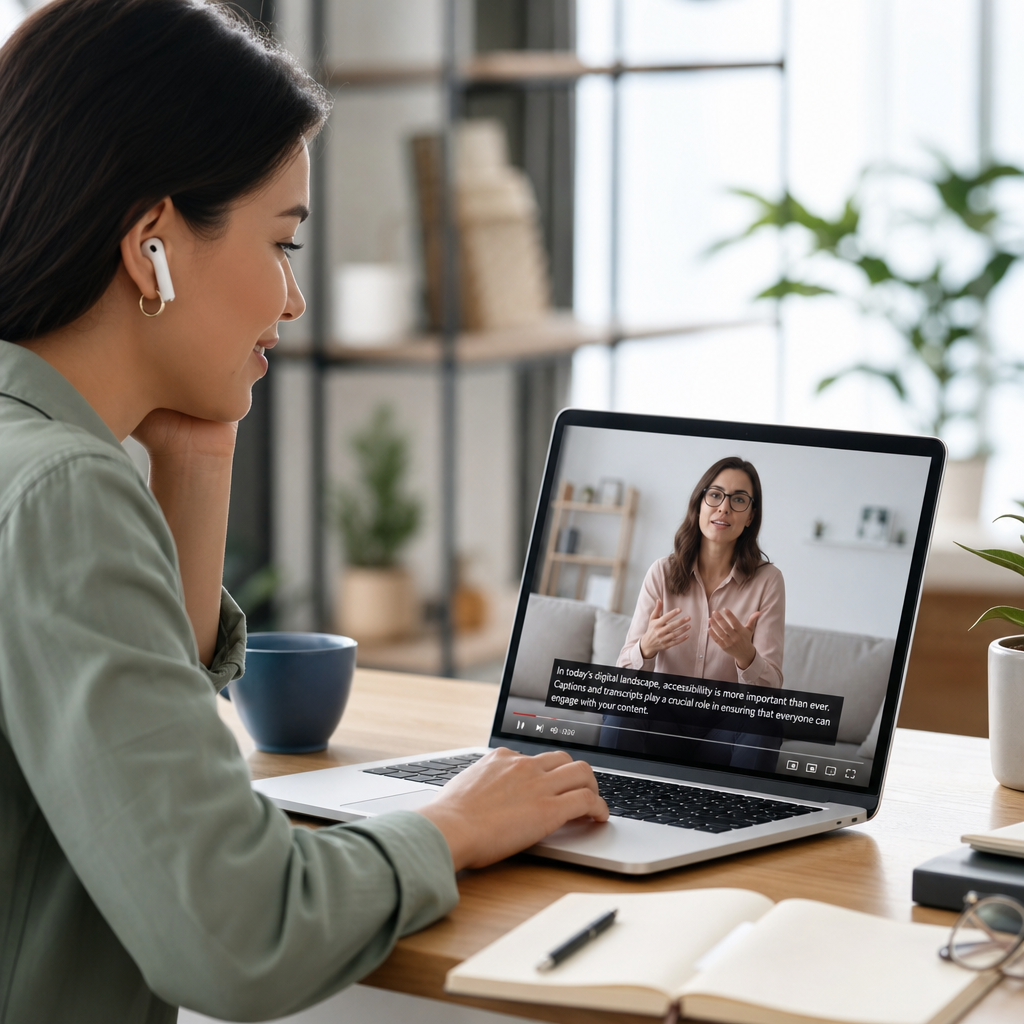
Video content should be captioned as a publishing requirement, not by exception. Use accurate captions with speaker identification and meaningful sound cues when relevant. Tools like Otter, Rev, Verbit, 3Play Media, and native platform captioning can speed production, but final quality control matters. I recommend establishing a simple service-level agreement: no internal or external video goes live without reviewed captions and a transcript. This standard prevents the familiar scramble when a deaf employee joins a team and everyone suddenly asks where inaccessible recordings are stored.
Physical workspace design also matters. Good lighting supports visual communication. Transparent masks may be useful in some environments, though not as a complete solution. Visual alarm systems, digital signage, and text-based alerting are essential for emergency communication. Reception desks, meeting rooms, and training spaces should minimize glare and allow sightlines between speakers and interpreters. In open offices, impromptu spoken updates can exclude deaf employees unless teams use shared channels for announcements. Workplace accessibility is strongest when the environment assumes that important information must be visible, persistent, and easy to revisit.
Strengthen management, culture, and compliance
Managers are the difference between a policy on paper and inclusion in practice. They should know how to arrange accommodations promptly, protect confidentiality, and avoid placing the burden on the employee to educate the whole team. They also need to understand common failure points: talking while turning away, changing meeting times without updating interpreters, relying on inaccessible phone calls, or praising “great communication” while excluding someone from hallway conversations where decisions are actually made. Manager training should cover disability etiquette, communication planning, and accessible performance management using concrete scenarios.
Culture is built from repeated signals. Do leaders model caption use even when no deaf employee is visible in the room? Are company videos captioned by default? Are promotion pathways equitable for employees who may be excluded from informal networking? Employee resource groups can help surface issues and advise on priorities, but they cannot replace accountable operations. Inclusion should appear in procurement checklists, event planning, manager scorecards, and internal communications standards. When accessibility is treated as infrastructure, not charity, deaf employees spend less time advocating for basics and more time advancing business goals.
Compliance provides the floor, not the ceiling. In the United States, the Americans with Disabilities Act requires reasonable accommodation and non-discrimination, while Section 504 and Section 508 shape access in federally funded or federal contexts. Other countries have comparable frameworks, such as the Equality Act in the United Kingdom and the Accessible Canada Act. Global employers should map local legal requirements, but they should not wait for a formal request to fix obvious barriers. A practical workplace accessibility program tracks requests, response times, vendor quality, training completion, and employee feedback, then uses those metrics to improve systems continuously.
Creating an inclusive workplace for deaf employees is ultimately about designing work so communication does not depend on chance, hearing ability, or insider knowledge. The most effective employers start with accessible hiring, continue with clear communication norms, make meetings and training accessible by default, and choose technology and spaces that support visual access. They train managers, measure outcomes, and treat inclusion as an operational standard. The result is not only compliance. It is better documentation, clearer decision-making, stronger retention, and a workplace where talented people can contribute without spending energy overcoming avoidable barriers.
If you lead workplace accessibility efforts, use this article as your hub and turn it into an action plan. Audit one stage of the employee lifecycle this month: recruiting, onboarding, meetings, training, technology, or emergency communication. Identify the barriers, fix the recurring ones first, and document the standard so access does not depend on memory or goodwill. Inclusive design for deaf employees makes work more usable for everyone, and the organizations that act on that reality build stronger teams, stronger trust, and better long-term performance.
Frequently Asked Questions
What does an inclusive workplace for deaf employees actually look like in practice?
An inclusive workplace for deaf employees is one where access is built into everyday operations instead of added only after a problem appears. In practice, that means communication systems, meetings, training, technology, and physical spaces are designed so deaf and hard of hearing employees can fully participate without having to constantly request workarounds. A genuinely inclusive workplace does not treat accessibility as a courtesy or an exception. It treats access as a normal part of how work gets done.
This shows up in small and large ways. Meetings include live captions, clear turn-taking, visual agendas, and shared notes. Videos are captioned accurately. Training materials are available in accessible formats. Important updates are documented in writing instead of being delivered only through spoken announcements. Hiring and onboarding processes are reviewed to remove barriers, from interview scheduling to orientation sessions. Managers know how to communicate directly and respectfully with deaf employees, and coworkers understand basic meeting norms that make participation easier for everyone.
It also means the workplace is proactive. Instead of waiting for a deaf employee to point out every inaccessible tool, strong organizations audit their systems in advance. They check whether conferencing platforms support reliable captions, whether emergency alerts are visual as well as audible, whether customer-facing roles can be done effectively with accessible communication tools, and whether internal processes assume that hearing is the default. The goal is not just compliance. The goal is equal participation, equal information, and equal opportunity to contribute, lead, and advance.
How can employers make meetings more accessible for deaf and hard of hearing employees?
Accessible meetings start with planning, not improvisation. One of the most effective steps is to build accessibility into standard meeting practices for everyone. That includes sending an agenda in advance, sharing documents before the meeting, using platforms that support high-quality live captions, and making sure participants know basic communication expectations. When meeting access is normalized across the organization, deaf employees are not singled out and managers are less likely to forget essential supports.
During the meeting, structure matters. Ask people to speak one at a time, identify themselves before speaking in larger groups, avoid talking over one another, and make sure cameras are on when possible so facial expressions and visual cues are available. If an interpreter or captioner is being used, allow for the pacing that makes communication effective rather than rushing through discussion. It also helps to assign a note-taker or provide written summaries afterward so key decisions and action items are documented clearly.
Employers should also understand that not every deaf employee uses the same communication methods. Some may prefer captions, some may use sign language interpreters, some may rely on written follow-up, and many may use a combination depending on the setting. The best approach is to ask what access method works best for that employee in that context and then consistently provide it. Meeting accessibility is not a one-time accommodation. It is an ongoing operational practice that improves participation, reduces misunderstandings, and leads to better collaboration across the team.
What are the most common workplace barriers deaf employees face?
Many of the most common barriers are communication barriers that hearing teams often do not notice. Important information may be shared casually in hallways, during side conversations, or through spoken updates with no written follow-up. Meetings may move quickly, with multiple people speaking at once. Video calls may rely on auto-captions that are inaccurate or unavailable. Training sessions may use uncaptioned videos or instructors who speak while facing away from the audience. These issues may seem minor in isolation, but together they create a workplace where deaf employees have to work harder just to access the same information others receive automatically.
Another major barrier is the assumption that accessibility can be handled reactively. In many workplaces, deaf employees are expected to identify every issue, request every adjustment, and explain repeatedly why a tool or process does not work. That creates an unfair burden. It shifts responsibility from the organization to the individual employee. Over time, this can affect job performance, confidence, participation in team culture, and even career growth, especially if access problems interfere with visibility, networking, or leadership opportunities.
There are also structural barriers in hiring, onboarding, emergency planning, and advancement. Interviews may be scheduled without enough time to arrange interpreting or captioning. Orientation may be delivered verbally with limited written support. Emergency systems may depend on alarms without visual alerts. Performance conversations may happen in inaccessible formats. Even social events can become exclusionary if they are designed around noisy verbal interaction without accessible communication options. Recognizing these patterns is essential because the problem is rarely a single inaccessible moment. More often, it is a workplace design issue that repeatedly treats hearing as the default standard.
What accommodations or accessibility supports should employers consider for deaf employees?
There is no single checklist that fits every deaf employee, but there are several common supports employers should be prepared to provide. These may include qualified sign language interpreters, real-time captioning services, reliable live captions for virtual meetings, captioned video content, written summaries of key discussions, visual alert systems, accessible phone and messaging alternatives, and technology that supports direct communication. In some cases, workspace adjustments such as better lighting, seating arrangements that improve sightlines, or quieter meeting settings can also make a meaningful difference.
The key is to think beyond the narrow idea of accommodation as a special add-on. Accessibility supports should be connected to the actual tasks of the job and the real communication demands of the workplace. For example, a deaf employee in a highly collaborative role may need consistent captioning and meeting norms that reduce cross-talk. Someone in a training-heavy environment may need all learning materials captioned and provided in advance. A manager or team lead may need accessible tools for presentations, performance reviews, and cross-functional communication. Effective support depends on understanding the employee’s role, communication preferences, and the systems they need to navigate every day.
Employers should also remember that the process matters as much as the support itself. The best results usually come from direct, respectful conversation with the employee rather than assumptions about what they need. Accessibility should be reviewed when job duties change, when new software is introduced, and when workplace processes are redesigned. A support that works well in one setting may be insufficient in another. Treating accessibility as an ongoing part of workplace operations helps ensure deaf employees are not just present, but fully equipped to succeed and advance.
How can managers and HR teams support deaf employees without making inclusion feel performative?
The most effective support begins with consistency, not symbolism. Deaf employees do not need managers to make grand statements about inclusion if everyday systems remain inaccessible. What matters more is whether meetings are accessible by default, whether communication is documented clearly, whether tools are audited before rollout, and whether managers respond quickly when barriers are identified. Inclusion becomes performative when organizations focus on appearances, awareness campaigns, or one-time gestures without fixing the routine practices that shape employees’ actual experience at work.
Managers and HR teams can avoid this by building accessibility into their standard operating habits. Ask employees what support they need, then follow through reliably. Review hiring, onboarding, training, team communication, and performance management for hidden barriers. Make sure managers know how to work effectively with interpreters or captioning services. Do not rely on deaf employees to educate the entire organization or to repeatedly justify why access matters. Responsibility for inclusion belongs to leadership and systems, not just to the people affected by exclusion.
It is also important to approach support with professionalism and respect. Speak directly to the deaf employee, not to an interpreter or companion. Do not frame accessibility as inconvenient, expensive, or optional. Avoid congratulating the organization for doing what equal participation already requires. Instead, create a culture where feedback is welcome, problems are fixed promptly, and access is treated as part of quality workplace design. When managers and HR teams take that approach, inclusion stops being a slogan and becomes something employees can see in how the workplace actually functions every day.